

The Reality of Federal Drug Rehab: Direct vs. Indirect Support
Many people ask, are there federal drug rehab centers? The answer is nuanced. While the U.S. government doesn’t typically operate rehabs for the general public, it plays a massive role in funding and supporting addiction treatment nationwide.
Here’s a quick overview of how the federal government supports drug and alcohol rehabilitation:
- Direct Federal Facilities: Limited to specific systems like the Department of Veterans Affairs (VA) for veterans and the Bureau of Prisons (BOP) for inmates.
- Federal Funding for State/Local Programs: This is the primary method. Federal grants (from agencies like SAMHSA) and programs like Medicaid provide significant funds to state-run or private non-profit facilities.
- Regulation & Oversight: Federal agencies set standards for treatment programs.
- Resource Provision: Websites like FindTreatment.gov help people locate treatment.
The federal government acts as a major funding source, meaning many “government-funded” rehab programs are actually state or locally run, with federal money making them possible.
At Addiction Helpline America, we specialize in navigating these questions, connecting individuals to vital addiction treatment resources. Our mission is to provide compassionate guidance for those seeking recovery.
Basic are there federal drug rehab centers glossary:
Instead of directly owning facilities, the federal government’s involvement is primarily through funding, policy, and oversight. This creates a vast network of state-funded, local, and private programs that receive federal support. This indirect approach ensures treatment options are available across all states, from Alabama to California, allowing for local adaptation while benefiting from national resources.
Federal funds flow to states through mechanisms like block grants, which support a wide array of addiction services. A facility may not have “federal” in its name, but it could be operating thanks to federal dollars. This system addresses a significant public health challenge. In 2022, of the 54.6 million people needing substance use treatment, only 13.1 million received it, underscoring the critical role of government funding in expanding access. For more information, explore our resources on comprehensive rehab programs.
Understanding Government’s Role in Addiction Treatment
The federal government addresses substance use disorders primarily through the Substance Abuse and Mental Health Services Administration (SAMHSA), part of the U.S. Department of Health and Human Services. SAMHSA’s Center for Substance Abuse Treatment (CSAT) works to ensure access to effective treatment. You can learn more about CSAT’s mission on their official website.
SAMHSA also provides resources like FindTreatment.gov, a confidential treatment locator authorized by the 21st Century Cures Act. Its data is kept current by SAMHSA’s National Substance Use and Mental Health Services Survey (N-SUMHSS), ensuring the information is accurate for users in any state, from Arizona to Washington.
How Federal and State-Funded Programs Differ
The main difference between federal and state-funded programs is administration versus funding source. The federal government provides financial backing, but states are largely responsible for administering the funds and overseeing local treatment services.
- Federal Funding: This comes from federal grants (e.g., from SAMHSA) and programs like Medicaid, which are allocated to states with specific guidelines.
- State Administration: State agencies integrate federal funds with state budgets and Medicaid reimbursements, distributing them to providers like state facilities, non-profits, and community organizations.
- Program Variability: Because states manage the funds, program specifics like eligibility and services vary significantly from one state to another, such as between California and Maine.
This collaborative model means federal policies set a national standard, but the accessibility of “government-funded” rehab is shaped at the state and local levels. For state-specific help, you can find state-specific rehab hotlines for your area.
So, Are There Federal Drug Rehab Centers You Can Attend?

So, are there federal drug rehab centers that anyone can attend? For the general public, the answer is typically no. The federal government doesn’t run public-facing rehabs but instead focuses its direct efforts on specific populations.
For everyone else, federal support comes as funding for state and community-based programs. This approach ensures that even without a “Federal Rehab” sign, government-supported treatment is available in your local area, its existence often made possible by federal dollars.
Programs Within the Federal Justice System
Direct federal involvement in substance abuse treatment is found within the federal justice system. The Bureau of Prisons (BOP) offers evidence-based care to help incarcerated individuals. Key programs include:
- Residential Drug Abuse Program (RDAP): The BOP’s most intensive program, this is a nine-month, half-day treatment model in a separate unit. Research shows it significantly reduces recidivism and relapse.
- Nonresidential Drug Abuse Treatment: A 12-week, group-based program using Cognitive-Behavioral Therapy (CBT) for those with shorter sentences.
- Community Treatment Services (CTS): This program helps individuals transition back to their communities by connecting them with local treatment providers for addiction, mental health, and family counseling to prevent relapse after treatment.
These programs demonstrate direct federal intervention for a specific population, proving that effective treatment reduces drug use and improves lives.
Addiction Treatment for Special Populations
The federal government also provides direct care to other specific groups.
- Veterans: The U.S. Department of Veterans Affairs (VA) offers comprehensive healthcare, including vital Substance Use Disorder (SUD) programs. VA facilities are a prime example of direct federal care, addressing unique challenges like co-occurring PTSD and addiction. Learn more in a complete guide to veterans addiction treatment.
- Vulnerable Groups: Federal grants often prioritize pregnant women, parents, and individuals with co-occurring mental health disorders (dual diagnosis). Supporting these groups helps break cycles of addiction and provides integrated care for lasting recovery.
These focused efforts show that addiction requires customized approaches for different populations.
How Federal Initiatives Support Rehabilitation
Federal initiatives also provide crucial indirect support for rehabilitation.
- The Supplemental Nutrition Assistance Program (SNAP) allows authorized DAA (Drug Addiction or Alcoholic) treatment programs to help residents apply for benefits. The benefits go to the resident, ensuring they have access to food during treatment. You can read the federal law on DAA treatment programs for details.
- The U.S. Department of Housing and Urban Development (HUD) provides funds that help those in recovery who are facing homelessness. HUD grants can create supportive, substance-abuse-free housing, building a stable foundation for recovery.
These initiatives create a supportive network that makes it easier for people to succeed in treatment.
Navigating the System: How to Find and Qualify for Government-Funded Treatment
Finding and paying for addiction treatment can feel puzzling. You might wonder, “are there federal drug rehab centers” that are easy to access? The government provides many resources to help you find and qualify for funded treatment, and Addiction Helpline America can make this process clearer for you.
How to Find Government-Funded Rehab Centers
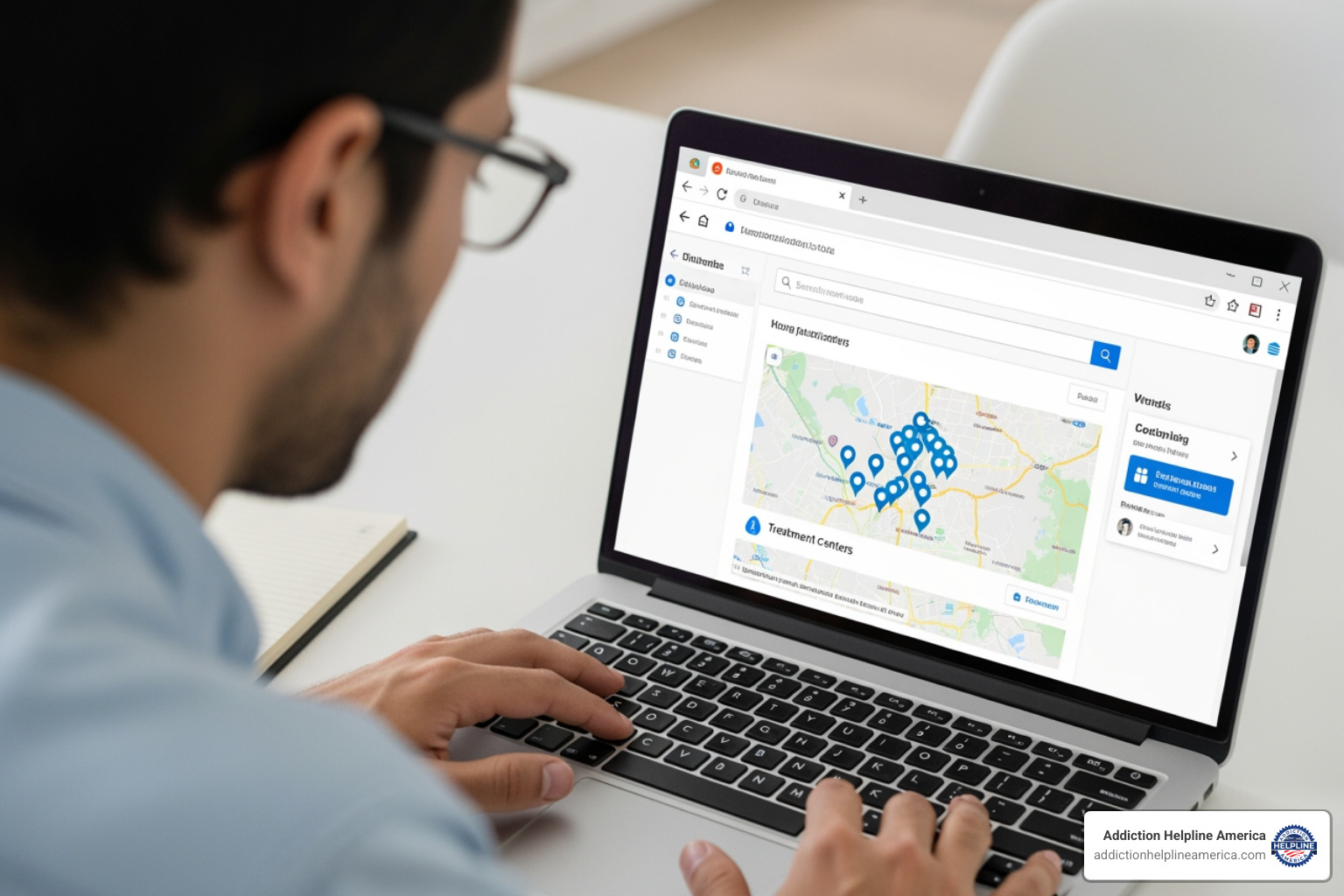
The federal government offers user-friendly tools to find substance use disorder treatment.
- FindTreatment.gov: This is SAMHSA’s confidential online tool for searching centers by location, care type, and payment options. Its information is updated annually. A helpful FindTreatment.gov Overview video is also available.
- SAMHSA’s National Helpline: A free, 24/7 confidential line that connects you to local treatment centers, support groups, and community organizations.
- State Health Department Websites: These sites list licensed providers and explain state-specific programs and access requirements.
Here’s a quick list of key resources to keep handy:
- SAMHSA’s National Helpline (1-800-662-HELP (4357)): Available 24/7 for treatment referral and information.
- FindTreatment.gov: SAMHSA’s online treatment locator.
- 988 Suicide & Crisis Lifeline: Call or text 988 for free and confidential support for people in distress, 24/7.
Who Qualifies for Federal or State-Funded Drug and Alcohol Rehabilitation?
Qualification rules for government-funded rehab vary by state, as states manage the funds. However, common eligibility criteria include:
- Proof of income: To demonstrate financial need, as programs often serve low-income individuals.
- Lack of adequate insurance: These programs often act as a safety net.
- Proof of legal residency: To confirm you live in the state providing the service.
- Addiction history documentation: To determine the appropriate level of care and confirm a SUD diagnosis.
Some programs prioritize specific populations like pregnant women or those with co-occurring disorders. Even with no insurance, help is available. Our guide explains how to get addiction help with no insurance.
The Role of Medicare and Medicaid
Medicare and Medicaid are crucial for accessing addiction treatment.
- Medicare: This federal program for people 65+, certain younger people with disabilities, and those with End-Stage Renal Disease is widely accepted by rehabs. It typically covers inpatient/outpatient care, partial hospitalization, and medications. Learn more about Medicare coverage.
- Medicaid: A joint federal-state program for low-income individuals and other qualifying groups. While benefits vary by state, the Affordable Care Act (ACA) made SUD treatment an “essential health benefit,” meaning Medicaid often covers detox, inpatient, and outpatient services, greatly reducing or eliminating costs.
Understanding your coverage is a key step. See our guide to the costs of drug rehab for more on potential costs.
Government-Funded vs. Private Rehab: Making the Right Choice for You
When exploring addiction treatment, you’ll find both government-funded and private rehabs. Both aim for recovery but offer different experiences. The right choice depends on your specific needs, finances, and desired environment.
Understanding the differences in waitlists, amenities, cost, and care levels is key to an informed decision. We can help you sort through it all. To get a sense of what’s available, explore our list of top-rated rehabs.
[TABLE] Comparing Government-Funded and Private Rehab
| Feature | Government-Funded Rehab | Private Rehab |
|---|---|---|
| Cost | Low-cost or free, often based on income | Higher cost, varies widely, often covered by private insurance |
| Wait Times | Often long waitlists due to high demand and limited funding | Typically immediate admission, sometimes within 24-48 hours |
| Amenities | Basic, functional facilities, shared rooms, fewer luxury comforts | Private rooms, improved amenities, recreational facilities, gourmet meals |
| Therapies | Evidence-based, standard treatments, core therapeutic modalities | Wider range of therapies, holistic options, specialized niche treatments |
| Staff Ratio | Higher patient-to-staff ratio due to resource constraints | Lower patient-to-staff ratio, more individualized attention |
Potential Drawbacks of State-Funded Programs
While state-funded programs are a lifeline for those seeking low-cost options, it’s important to know their potential limitations:
- Funding Limitations: Strict budgets can affect length of stay or service variety.
- Long Waiting Lists: High demand and limited funding often lead to long waits for admission.
- Fewer Amenities: Facilities are functional, focusing on essentials, with shared rooms and fewer luxuries.
- Less Individualized Care: A higher patient-to-staff ratio may mean less one-on-one time.
- Geographic Limitations: You may be required to attend a program within your state.
Despite these challenges, any treatment is more effective than none. Government-funded options provide vital care to millions. Learn more by understanding different drug rehab programs.
Services Offered in Government-Funded Centers
Despite budget constraints, government-funded centers offer a comprehensive range of science-backed services:
- Detoxification: Medically supervised withdrawal management to ensure safety and comfort. Learn more about drug detox centers.
- Inpatient Care (Residential Treatment): 24/7 structured care and support, ideal for those needing a supervised environment.
- Outpatient Programs: Flexible options like Partial Hospitalization (PHP) and Intensive Outpatient (IOP) that allow you to live at home.
- Medication-Assisted Treatment (MAT): Combines medications with counseling, highly effective for opioid and alcohol use disorders. Find providers via SAMHSA’s Buprenorphine Practitioner Locator.
- Therapy and Counseling: Individual and group sessions using methods like CBT and Motivational Interviewing.
- Peer Support: Integration of groups like AA and NA to build community.
- Dual Diagnosis Treatment: Integrated care for co-occurring addiction and mental health conditions.
These core services form the foundation of recovery.
Frequently Asked Questions about Government-Funded Rehab
Navigating government-funded rehab can bring up many questions. Here, we answer some of the most common ones to help clarify the process.
What is the first step to get into a state-funded rehab?
The first step is to contact your state’s substance abuse agency or SAMHSA’s National Helpline. These resources will guide you to the right services in your state. You will then undergo a screening process to assess your needs and eligibility. This typically involves verifying your income, residency, and the severity of your addiction to match you with the most appropriate care.
Are there free drug and alcohol helplines I can call?
Yes, several free, confidential helplines offer immediate support. SAMHSA’s National Helpline at 1-800-662-HELP (4357) is available 24/7 for treatment referrals and information nationwide. For immediate distress, the 988 Suicide & Crisis Lifeline is also available 24/7 by call or text. For a more detailed list, explore our page on free drug and alcohol helplines.
How does a treatment facility get government funding?
While direct federal rehabs are rare, facilities receive government funding by becoming part of a supported network. This involves meeting specific standards, such as:
- Being licensed or certified by their state’s substance use agency.
- Receiving federal grants, often from SAMHSA, to support specific programs.
- Accepting Medicare or Medicaid, which requires meeting federal and state healthcare program standards.
- Participating in national surveys like SAMHSA’s N-SUMHSS to be listed on directories like FindTreatment.gov.
By meeting these requirements, facilities become key players in the government-funded network.
Your Path to Recovery Starts with the Right Information
So, are there federal drug rehab centers you can walk into? As we’ve explored, the answer is nuanced. While direct federal facilities for the public are rare, the U.S. government provides massive support through funding and resources that make addiction treatment accessible.
Federal dollars are the engine behind state-funded programs, which are a lifeline for communities nationwide. Understanding these options—from specialized programs for veterans to local state-funded centers—is the first step on your healing journey.
The most vital message is that help is available, no matter your financial situation. You are not alone. Addiction Helpline America is here to guide you through these options and connect you with a program that fits your unique needs. Let us help you find your path forward.