

Why Finding the Right Psychiatric Hospital Quickly Can Save Lives
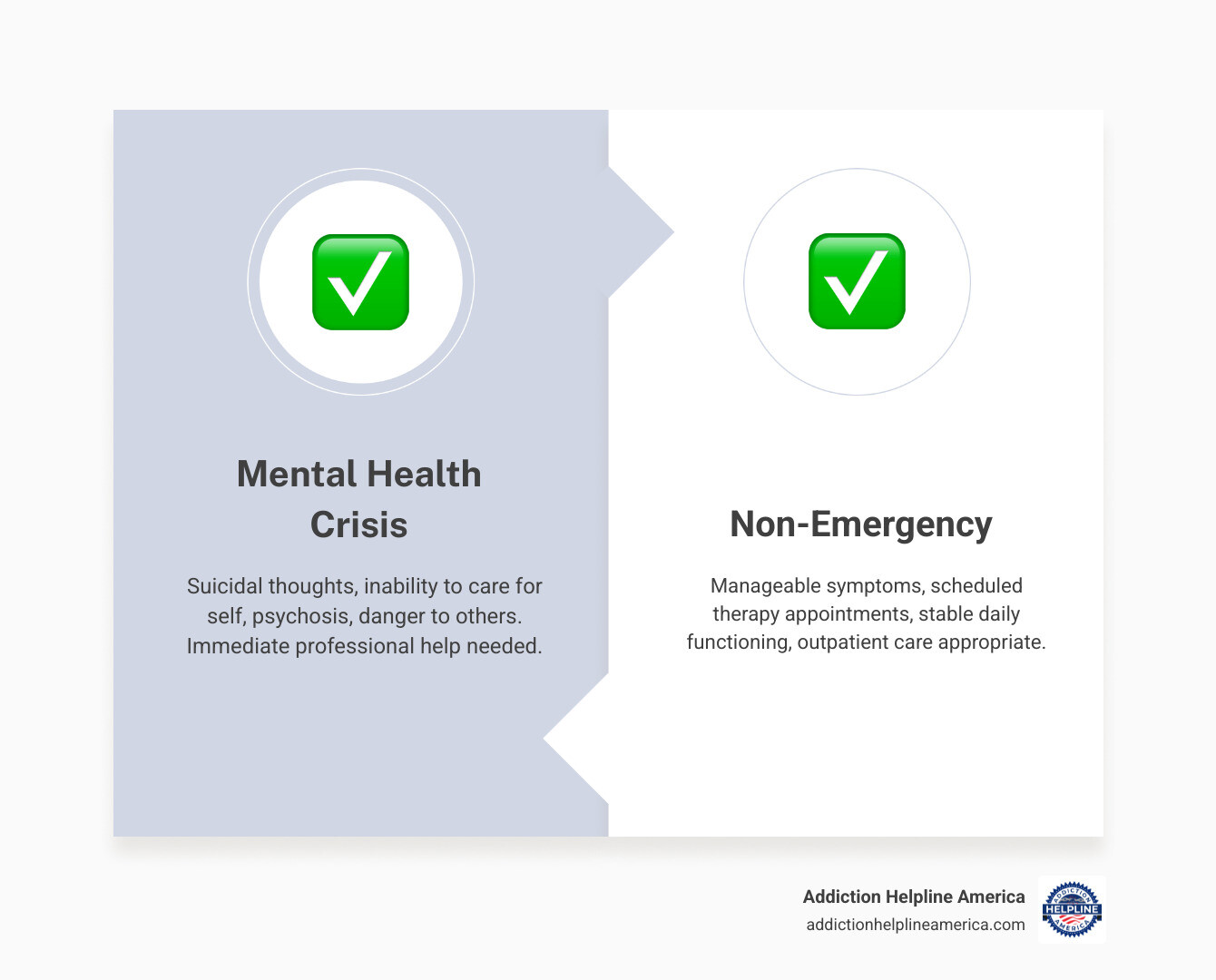
Searching for a psychiatric hospital near me often happens during a crisis, such as severe mental health symptoms or suicidal thoughts. When immediate help is needed, time is critical. Finding the right care quickly can be the difference between tragedy and recovery.
Immediate Actions:
- Call 988 – The National Suicide Prevention Lifeline for crisis intervention.
- Search state mental health directories – Find accredited facilities in your area.
- Contact your insurance provider – Verify coverage and get referrals to in-network hospitals.
- Visit the nearest emergency room – If safety is an immediate risk.
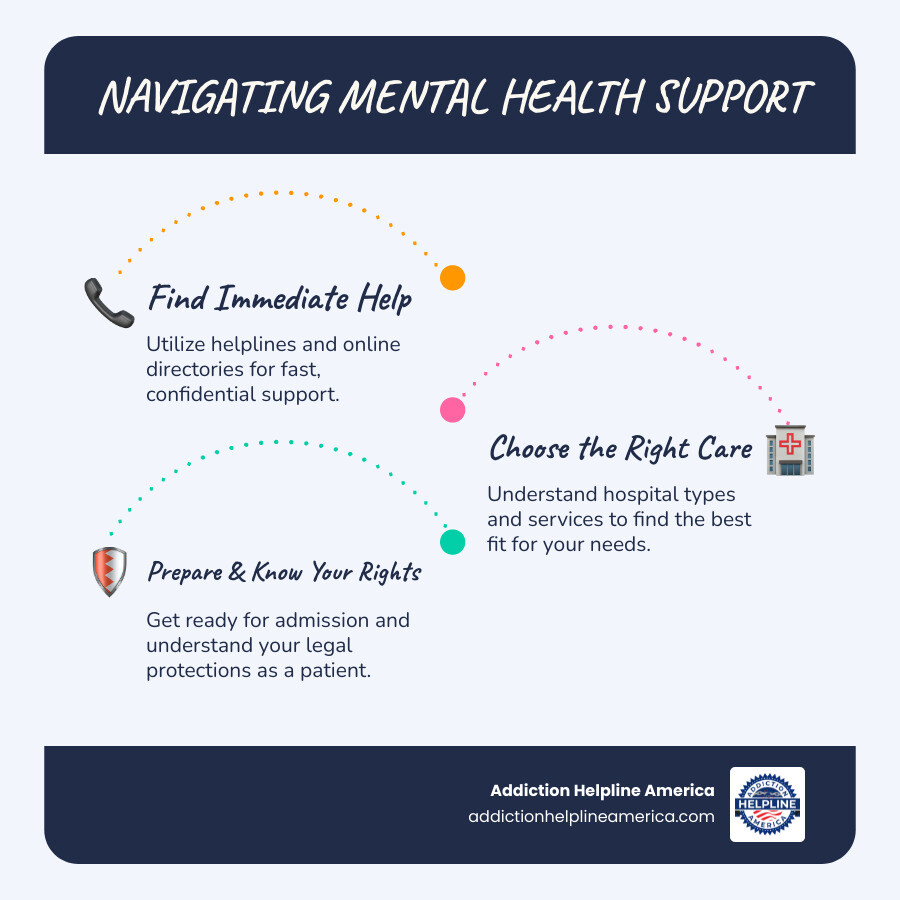
Navigating the options for inpatient treatment, crisis stabilization, or outpatient programs can be overwhelming. This guide simplifies the process into three steps to help you find quality psychiatric care now, so you can focus on what matters most: getting help and starting recovery.
At Addiction Helpline America, we’ve helped thousands of individuals and families find appropriate *psychiatric hospital near me services. Our team connects people with vetted treatment facilities nationwide, providing confidential support 24/7.*
Similar topics to psychiatric hospital near me:
Step 1: Use Immediate Helplines and Online Directories
When you’re urgently searching for a psychiatric hospital near me, you need fast, reliable information. The quickest way to get help is by using national helplines and online directories designed for these critical moments. They connect you with trained professionals who can provide immediate support and guide you to the right local facility.

National helplines are available 24/7 and are completely confidential:
- National Suicide Prevention Lifeline: Dial or text 988 for immediate support for suicidal thoughts or severe emotional distress.
- SAMHSA’s National Helpline: Call 1-800-662-HELP (4357) for free, confidential treatment referrals and information in English and Spanish.
How to Find a Psychiatric Hospital Near You
Beyond national hotlines, state and local resources are invaluable for finding a psychiatric hospital near me. These agencies maintain lists of accredited facilities and can provide up-to-date information on availability.
- State Mental Health Departments: Most states have a Department of Mental Health (or a similar agency) with an online directory of licensed psychiatric facilities. For example, New York’s Office of Mental Health (OMH) provides a Directory of OMH Facilities.
- County Behavioral Health Services: Many counties operate their own psychiatric hospitals or crisis centers, often prioritizing local residents for faster admission. A quick search for “[Your County] behavioral health services” can yield local options.
- 211 Service: Dialing 211 or visiting their website connects you to a wide range of local health and human services, including mental health facilities.
- Targeted Online Searches: Use specific search terms to narrow your results, such as “crisis stabilization unit near me,” “inpatient mental health treatment,” or “dual diagnosis treatment center.”
At Addiction Helpline America, our Professional Help Directory complements these resources by offering personalized guidance. We help you steer your options and connect with the right care from our extensive network of vetted treatment centers across the country.
Step 2: Understand Hospital Types and Services Offered
Once you’ve identified potential facilities, it’s important to understand the different types of psychiatric hospitals and the services they offer. This helps ensure the treatment philosophy aligns with your specific needs, as not all hospitals are the same.

When searching for a psychiatric hospital near me, you’ll find several types of facilities:
- Public Psychiatric Hospitals: These are state-run facilities that provide care to individuals who may not have private insurance or who require long-term stabilization. They focus on evidence-based, person-centered care with the goal of community reintegration.
- Private Behavioral Health Centers: These are privately owned and operated, often offering a wider range of specialized programs and amenities. They frequently emphasize a comprehensive, multidisciplinary approach to treatment.
- University-Affiliated Hospitals: These institutions, like Yale New Haven Psychiatric Hospital, combine high-quality patient care with cutting-edge research and clinical trials, often providing access to the latest treatments.
Levels of Care and Specialized Programs
Psychiatric hospitals offer a spectrum of services to meet varying levels of need. Understanding these options will help you find the best fit.
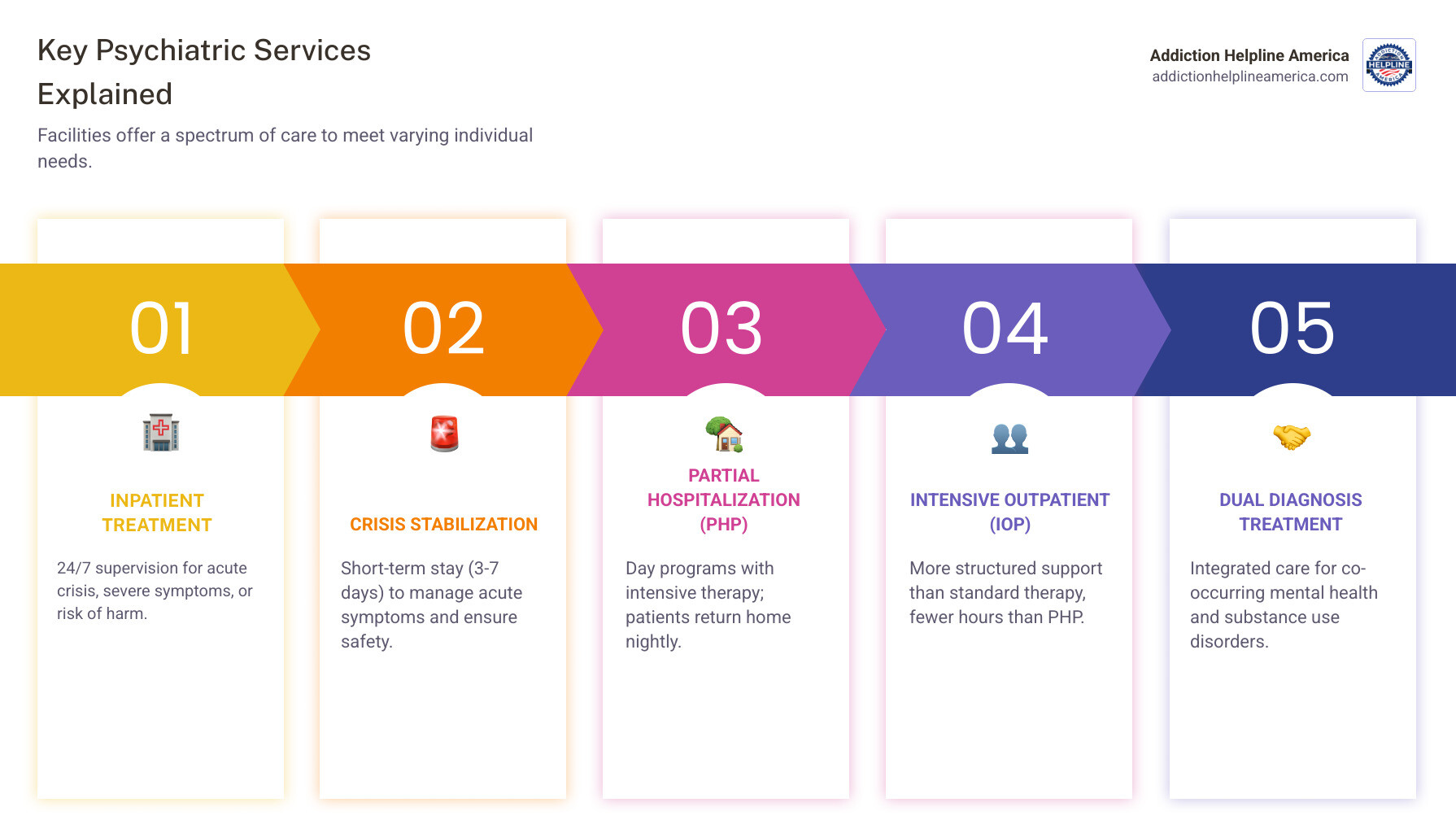
- Inpatient Treatment: This is the highest level of care, providing 24/7 supervision and intensive therapy in a secure environment for individuals in acute crisis.
- Crisis Stabilization: A short-term inpatient stay (typically 3-7 days) focused on managing acute psychiatric symptoms and ensuring safety before transitioning to a lower level of care.
- Partial Hospitalization Programs (PHP): Day programs where patients attend structured therapy for several hours a day, multiple days a week, but return home at night.
- Intensive Outpatient Programs (IOP): A step down from PHP, these programs offer fewer hours of therapy per week but provide more support than traditional outpatient care.
- Detoxification: For individuals with co-occurring substance use disorders, many psychiatric hospitals offer medically supervised detox to manage withdrawal symptoms safely.
- Dual Diagnosis Treatment: Specialized programs that address both mental health conditions and substance use disorders at the same time.
- Specialized Therapies: Many facilities offer specific treatments like Cognitive Behavioral Therapy (CBT), Dialectical Behavior Therapy (DBT), and Eye Movement Desensitization and Reprocessing (EMDR) for trauma.
- Geriatric and Adolescent Psychiatry: Programs custom to the unique needs of older adults and young people, often including family therapy and educational support.
| Level of Care | Description | Typical Duration | Ideal For -|
| Inpatient Treatment | 24/7 supervised care in a secure hospital setting for acute mental health crises. | A few days to several weeks | Individuals who are a danger to themselves or others, or are experiencing severe symptoms that cannot be managed in a less restrictive environment. -|
| Partial Hospitalization (PHP) | Structured, intensive day treatment programs where patients attend therapy for several hours a day, 5 days a week, and return home at night. | 2-4 weeks | Individuals who need more support than traditional outpatient therapy but do not require 24-hour supervision. Often used as a step-down from inpatient care. -|
| Intensive Outpatient (IOP) | A step-down from PHP, offering group and individual therapy for a few hours a day, several days a week. | 6-12 weeks | Individuals who need structured support but have work, school, or family commitments. Also serves as a transition from more intensive programs. -|
| Outpatient Therapy | Regular, scheduled individual or group therapy sessions, typically once or twice a week. | Ongoing, as needed | Individuals with stable symptoms who need ongoing support, skill-building, or maintenance therapy. -|
Step 3: Prepare for Admission and Know Your Rights
Finding a psychiatric hospital near me is the first step. Preparing for admission and understanding your rights will ensure the process is as smooth as possible and that you or your loved one receives respectful, effective care.

Here’s what to consider before admission:
- Admission Criteria: Inpatient care is for individuals who are a danger to themselves or others, or whose symptoms are too severe for outpatient treatment. Contact the hospital’s admissions department to understand their specific requirements.
- Insurance Verification: Before admission, confirm your insurance coverage. Most hospitals accept private insurance, Medicaid, and Medicare, but it’s crucial to verify your plan with both the hospital and your insurance provider. Many facilities also offer self-pay options.
- What to Bring: Pack for comfort and safety. Essentials include:
- Comfortable clothing without drawstrings or belts.
- Identification and insurance information.
- A list of current medications and dosages.
- Basic, non-aerosol toiletries in plastic containers.
- A book or journal.
- Avoid bringing electronics, sharp objects, or outside food, as these are typically not allowed.
What to look for in a psychiatric hospital near me?
When choosing a psychiatric hospital near me, look for these signs of quality care:
- Accreditation and Licensing: Ensure the hospital is accredited by organizations like The Joint Commission or CARF International and licensed by the state. This guarantees they meet high standards for safety and care.
- Multidisciplinary Teams: Quality facilities employ a team of professionals, including psychiatrists, psychologists, nurses, and therapists, to provide comprehensive, well-rounded treatment.
- Evidence-Based Treatment: The hospital should use scientifically-backed therapies like Cognitive Behavioral Therapy (CBT), Dialectical Behavior Therapy (DBT), and trauma-informed care.
Understanding Patient Rights and Privacy
Your rights are protected during your stay. Key rights include:
- Confidentiality: Your medical information is protected by federal law (HIPAA). Hospitals are legally obligated to maintain your privacy. You can often find detailed privacy policies on their websites, such as the Privacy Policy provided by UHS.
- Dignified Treatment: You have the right to be treated with respect. Many states have an Office of Recipient Rights (ORR) to advocate for patients.
- Communication & Grievances: Facilities have policies for visiting hours and phone calls. If you have concerns, you have the right to file a complaint without fear of reprisal.
We encourage you to ask questions about these policies when you contact a psychiatric hospital near me. A transparent facility will be happy to provide this information.
Finding a Psychiatric Hospital Near Me: A State-by-State Resource Guide
While national hotlines are a great start, here are direct links to resources in several states to help you find a psychiatric hospital near me.
Resources in the Northeast
- New York: New York State Office of Mental Health (OMH), Local Mental Hygiene Departments, New York Psychiatric Institute
- Connecticut: State-Operated Inpatient Treatment Facilities, Yale New Haven Psychiatric Hospital
Resources in the Midwest
- Michigan: State of Michigan Psychiatric Hospitals, Behavioral Health Connections Michigan
- Indiana: Oaklawn Mental Health & Addiction Center
- Colorado: Colorado Department of Human Services – Mental Health Institutes
Resources in the South and West
- Georgia: Georgia Crisis and Access Line (GCAL) (1-800-715-4225)
- California: San Diego County Psychiatric Hospital, 211CA, UCSF Langley Porter Psychiatric Hospital
- Alabama: Bryce Hospital
- Alaska: Alaska Psychiatric Institute
- Arizona: Arizona State Hospital
- Arkansas: Arkansas State Hospital
Frequently Asked Questions about Psychiatric Hospitals
When you’re searching for a psychiatric hospital near me, questions naturally arise. Here are answers to some of the most common ones.
What should I bring with me to the hospital?
Packing for a psychiatric hospital stay focuses on safety and comfort.
- Essentials: Bring your ID, insurance card, and a list of current medications.
- Clothing: Pack comfortable, casual clothes without drawstrings or belts. Slip-on shoes are a good choice.
- Personal Items: Bring basic toiletries in non-glass, non-aerosol containers. You may also want a book or journal.
- What to Leave at Home: Electronics, sharp objects, and outside food are generally not allowed. Always check with the facility for their specific list of permitted and prohibited items.
How long is a typical stay?
The length of your stay depends on your individual needs and treatment plan.
- Crisis Stabilization: Typically lasts 3-7 days, focusing on immediate safety.
- Acute Inpatient Care: Can range from a few days to several weeks, depending on the severity of symptoms and progress in treatment.
- Individualized Plans: Your care team will create a personalized treatment plan and adjust your length of stay as you progress. Discharge planning starts early to ensure a smooth transition back home or to a lower level of care.
What is the difference between voluntary and involuntary admission?
Understanding the type of admission is key when looking for a psychiatric hospital near me.
- Voluntary Admission: This is when you choose to seek treatment and sign yourself into the hospital. It’s the most common type of admission, and you generally have the right to request to leave.
- Involuntary Commitment: This is a legal process for individuals who are a danger to themselves or others and are unwilling or unable to seek help. It involves strict legal safeguards to protect the individual’s rights, including the right to legal counsel. State laws vary, but the primary goal is always to ensure safety.
For more detailed information, our team at Addiction Helpline America can provide confidential guidance.
Conclusion
Finding a psychiatric hospital near me during a crisis can feel overwhelming, but you’ve already taken a courageous first step by seeking information. Recovery is possible, and the right care can make all the difference.
Remember these key steps:
- Use immediate resources like the 988 Lifeline and online directories.
- Understand the different types of hospitals and levels of care to find the right fit.
- Prepare for admission and know your rights to ensure a smooth and respectful process.
You don’t have to steer this journey alone. At Addiction Helpline America, we provide free, confidential support to help you find the right treatment. Our team has helped thousands of families connect with vetted treatment facilities across the country, and we’re here for you 24/7.
Taking the first step is often the hardest. But once you do, you’ll find that help is available, hope is real, and healing is within reach. If you or someone you care about needs support right now, please reach out. Find professional help for mental health and addiction through our dedicated resources. Your journey to wellness starts with a single phone call, a single click, a single decision to say “yes” to help.
You deserve to feel better. Let us help you find the way forward.