Drug and alcohol detox programs are medically supervised services that help your body safely clear substances like alcohol, opioids, and benzodiazepines — while managing the withdrawal symptoms that come with stopping use.
Here’s a quick overview of what to know:
| Question | Quick Answer |
|---|---|
| What does detox do? | Removes substances from the body and manages withdrawal symptoms |
| Who needs it? | Anyone with physical dependence on alcohol, opioids, benzos, or other substances |
| How long does it take? | Typically 3 to 7 days, sometimes up to 10+ days |
| Is it safe to detox alone? | No — withdrawal from alcohol and benzodiazepines can be life-threatening |
| What comes after detox? | Transition to inpatient rehab, outpatient programs, or ongoing treatment |
| Does insurance cover it? | Often yes — Medicare, Medicaid, and most private plans offer coverage |
Detox is not the same as completing addiction treatment. It’s the critical first step — stabilizing your body so that real, lasting recovery work can begin. Withdrawal from certain substances, especially alcohol and benzodiazepines, can cause seizures, hallucinations, or even death without proper medical care. That’s why choosing the right program matters.
Whether you’re looking for help for yourself or a loved one, navigating detox facilities can feel overwhelming. This guide breaks it all down clearly.
At Addiction Helpline America, we’ve helped countless individuals and families find safe, effective drug and alcohol detox programs — and our helpline is available 24/7, free and completely confidential. We’re here to help you take that first step with confidence.
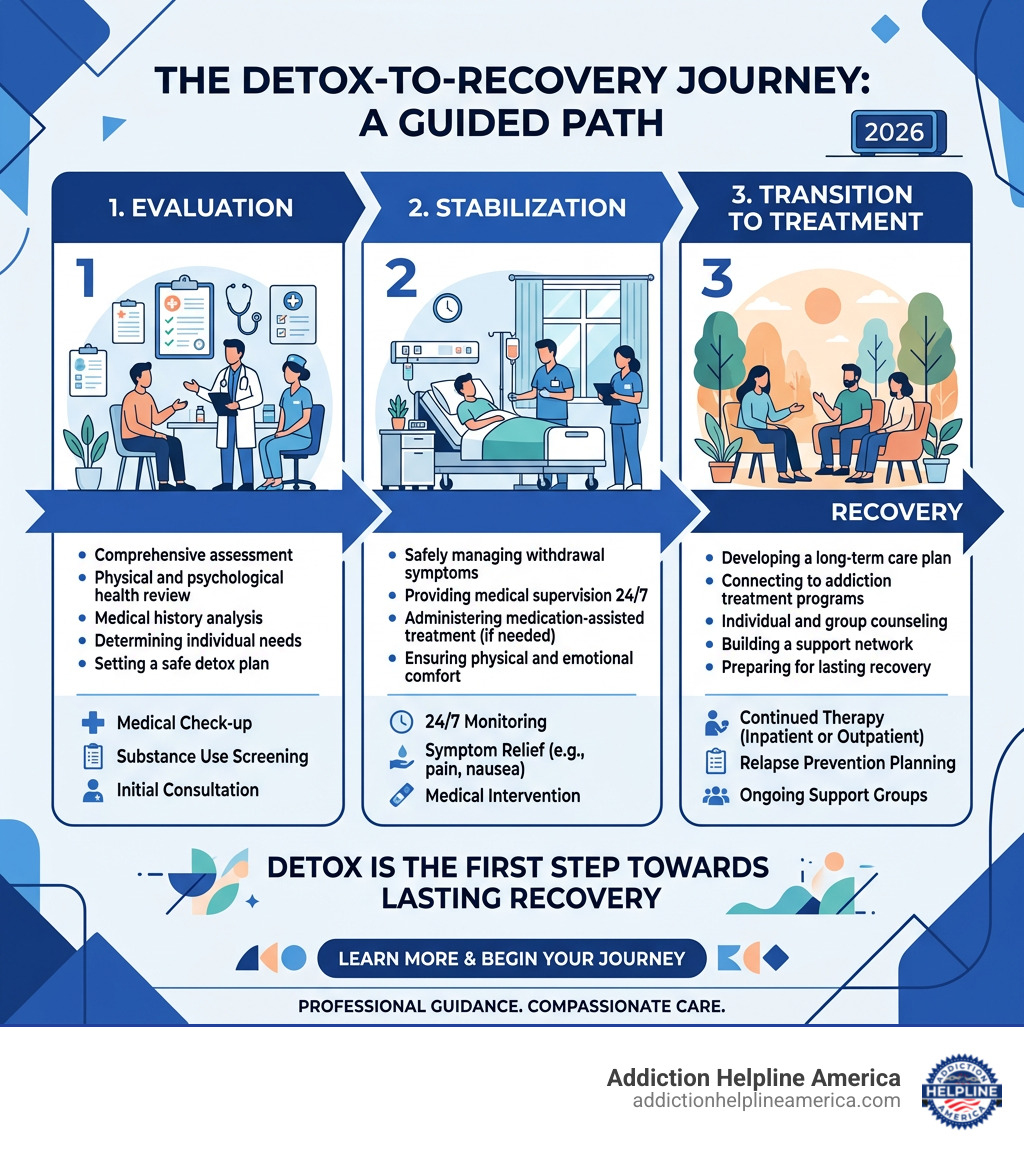
When we talk about drug and alcohol detox programs, we are referring to a structured medical intervention designed to manage the acute physical symptoms of withdrawal. It is much more than just “quitting”; it is a clinical process that ensures your safety while your body recalibrates to functioning without substances.
Medical necessity is the cornerstone of these programs. For many, stopping “cold turkey” isn’t just uncomfortable—it’s dangerous. Professional programs follow strict safety protocols, providing 24/7 supervision by licensed medical staff who monitor vital signs and psychological wellbeing. According to research on Addiction Recovery: A Systematized Review – PMC, a systematized approach to recovery significantly improves long-term outcomes.
The process generally follows three essential phases:
Why can’t you just do this on your couch? The answer lies in risk mitigation. Withdrawal from alcohol and benzodiazepines can trigger Delirium Tremens (DTs), a severe condition characterized by hallucinations, seizures, and high blood pressure. Without immediate medical intervention, DTs can be fatal.
By choosing a Detox in Hospital or a specialized medical facility, you ensure that doctors are on hand to manage complications the moment they arise. Continuous vital sign monitoring allows the staff to adjust your care in real-time, keeping you stable and as comfortable as possible.
Modern medicine has made detox significantly more humane. FDA-approved medications are often used to ease cravings and dampen painful physical symptoms.
While some look for a “quick fix” through Rapid Detox Programs Ultimate Guide, most experts agree that a standard medical taper is the safest and most effective route for long-term health.
The timeline for detox varies based on the substance used, the duration of use, and your unique medical profile. Generally, most patients stay in a detox program for 3 to 7 days, though some residential programs extend this to 10 days for complex cases.
| Substance | Withdrawal Start | Peak Symptoms | Duration |
|---|---|---|---|
| Alcohol | 6–24 hours | 48–72 hours | 5–7 days |
| Opioids | 8–24 hours | 3–5 days | 7–10 days |
| Benzos | 1–4 days | Week 2 | Weeks/Months (requires taper) |
Choosing between inpatient and outpatient care depends on the severity of the addiction and the risk of complications.
Regardless of the level, the goal is always the same: stabilization. According to The Continuing Care Model of Substance Use Treatment – PMC – NIH, the most successful recoveries involve a seamless transition from detox into a long-term treatment plan. We can help you find Local Detox Centers Connecting You to Recovery Resources that fit your specific needs.
When we evaluate the “top” drug and alcohol detox programs, we look for facilities that offer more than just a bed. The best programs provide holistic, evidence-based care.
Key features of high-quality facilities include:
If you are looking for specific regional options, you might consider highly-regarded programs like Serenity House Detox Minneapolis MN, the Bellevue Hospital Center Detoxification Services New York NY, or The Detox Center Boca Raton FL. These facilities are known for their rigorous medical standards and compassionate environments.
The cost of detox shouldn’t be a barrier to saving your life. Many programs offer sliding scale fees based on income, and public options are available.
For those in specific regions, programs like the Meridian Detox Unit Gainesville FL or DMC-ODS services provide vital community support. You can also use the SAMHSA Find Help tool to locate state-funded resources.
Addiction Helpline America is a free and confidential service. We can help you verify your insurance and find a program that fits your budget and your needs.
In short: No. Detoxing at home, especially from alcohol or benzodiazepines, carries extreme risks. Without medical supervision, you are at risk for life-threatening seizures and Delirium Tremens. Additionally, the lack of professional support makes you much more likely to relapse during the painful peak of withdrawal. Always consult a medical professional before attempting to quit any substance.
Most patients complete the physical detox phase in 3 to 7 days. However, residential programs often suggest a 5 to 10-day stay to ensure emotional stabilization. Factors that influence this timeline include the type of substance used, how long you’ve been using it, your age, and your overall physical health.
Yes, in most cases. Medicare Part A covers inpatient stays, and many private insurance companies recognize detox as a critical medical service. Because Addiction Helpline America works with a vast network of providers, we can help you find a facility that is in-network for you, minimizing your out-of-pocket costs.
Taking the first step toward recovery is a brave decision. Drug and alcohol detox programs provide the safety, medical expertise, and compassionate support you need to navigate the hardest part of the journey.
At Addiction Helpline America, we are dedicated to connecting you with the right care. Whether you need a 24/7 medical facility or a residential program with integrated therapy, we provide personalized, confidential guidance at no cost to you.
Your recovery journey doesn’t have to be walked alone. Call us today, and let’s find the right path forward together. We are available 24/7 to help you start your new life.