
Understanding Drug Detox: The First Step Toward Recovery
Drug detox, also known as medically managed withdrawal, is the process of safely removing drugs or alcohol from your body while managing withdrawal symptoms. According to the National Institute on Drug Abuse (NIDA), it is designed to manage the acute and potentially dangerous physiological effects of stopping drug use. Here’s what you need to know:
- Medical supervision to manage withdrawal symptoms safely
- First step in addiction treatment, not a standalone cure
- Duration: Typically 3-10 days, depending on the substance and severity
- Three phases: Evaluation, Stabilization, and Preparation for ongoing treatment
Why Medical Detox Matters:
- Prevents life-threatening complications like seizures and delirium tremens
- Provides 24/7 monitoring and medication-assisted treatment
- Reduces discomfort and increases chances of successful recovery
- Prepares you for comprehensive addiction treatment
Detox addresses physical dependence, but lasting sobriety requires ongoing treatment for the psychological and behavioral aspects of addiction. While withdrawal can be uncomfortable, medical professionals use proven interventions—including medications and therapies—to keep you safe and as comfortable as possible.
Attempting to detox at home without medical supervision can be dangerous or fatal, particularly for alcohol, benzodiazepines, and opioids. The Substance Abuse and Mental Health Services Administration (SAMHSA) warns that unmanaged withdrawal can lead to severe risks like dehydration, seizures, and cardiac complications, which is why professional detox programs provide a crucial safety net.
At Addiction Helpline America, we help individuals and families take the first step toward recovery. We offer free, confidential guidance to connect you with a medical detox program custom to your needs. Our experienced team understands this is a courageous step and provides 24/7 compassionate, judgment-free support.
Understanding Detoxification: The Foundation of Recovery
Detoxification, or “withdrawal management,” is the process of safely managing the acute physical symptoms of withdrawal when someone stops using drugs or alcohol. While often used interchangeably, drug detox and drug rehabilitation are distinct phases of addiction treatment.
Detox vs. Rehabilitation
Detoxification focuses on the physical aspect of addiction, addressing the body’s physiological dependence to ensure physical stability and safety.
In contrast, rehabilitation (rehab) addresses the psychological, social, and behavioral components. After detox, rehab provides the tools and therapies needed to understand addiction’s root causes, develop coping skills, and build a sober lifestyle.
Drug detox is the first step, not a cure. As NIDA emphasizes, “Detoxification alone with no follow-up is not treatment.” Lasting recovery requires addressing the underlying psychological issues; without it, the chances of relapse after detox are significantly higher. Detoxification, therefore, sets the stage for comprehensive, long-term treatment.
How Long Does Drug Detox Take?
The duration of drug detox varies, typically from a few days to several weeks. Key factors include:
- Type of substance: Different drugs have varying half-lives and withdrawal profiles.
- Severity of addiction: The duration and intensity of use impact withdrawal.
- Individual health: Overall physical and mental health, including co-occurring disorders.
- Method of detox: Medically supervised detox can manage symptoms more efficiently.
Here are some typical timelines for common substances, based on clinical guidance from SAMHSA’s Treatment Improvement Protocol (TIP) 45:
Alcohol detox timeline: Withdrawal can begin 6-12 hours after the last drink, with symptoms like tremors and anxiety. Seizures are a risk within 48 hours. The most severe form, delirium tremens (DTs), can appear in 24-72 hours with confusion and hallucinations. Acute symptoms often subside within a week.
Benzodiazepine detox timeline: For short-acting benzodiazepines, withdrawal may start in 6-8 hours and improve by day 5. For long-acting types, symptoms can last 3-4 weeks. Severe withdrawal may require a detox timeline of 10-14 days or longer.
Opioid detox timeline: For short-acting opioids (like heroin), withdrawal emerges within 6-12 hours and subsides in 5-7 days. For longer-acting opioids, symptoms may appear 2-4 days after the last dose and last 10-20 days. While rarely fatal, it is very uncomfortable.
The Role of Tapering in Detox
Tapering is a method of gradually reducing a substance’s dosage over time, rather than stopping abruptly (“cold turkey”). This approach is a cornerstone of safe drug detox for certain substances, as it helps the body adjust slowly and minimizes the severity of withdrawal symptoms.
Tapering is typically used for substances where abrupt cessation carries significant risks, as outlined by the World Health Organization (WHO):
- Benzodiazepines: Abrupt cessation can cause seizures and severe anxiety. Tapering is the standard of care.
- Opioids: Tapering with medications like methadone or buprenorphine can ease notoriously uncomfortable withdrawal symptoms.
- Alcohol: For moderate to severe dependence, tapering can prevent dangerous complications like seizures and DTs.
Medical supervision is required for any tapering regimen. A healthcare professional creates a personalized schedule, monitors progress, and adjusts dosages to ensure safety and comfort.
The Critical Importance of Medically Supervised Drug Detox

When overcoming substance dependence, safety is paramount. Medically supervised drug detox is a critical component of care that prevents dangerous, even fatal, complications during withdrawal.
Safety first: Medical detox provides a controlled environment where trained professionals can anticipate, monitor, and manage withdrawal reactions.
Preventing complications: With 24/7 medical monitoring, life-threatening emergencies like seizures, severe dehydration, or delirium tremens can be prevented or immediately addressed.
Medical monitoring: Vital signs are continuously checked, and the individual’s physical and mental state is closely observed for immediate intervention.
Professional support: Beyond physical monitoring, medical detox offers invaluable emotional and psychological support from compassionate healthcare professionals.
Dangers of At-Home Detox
While detoxing at home may seem appealing, it carries significant and often life-threatening risks. We strongly advise against it, especially for certain substances.
- Unmanaged withdrawal: Symptoms can quickly escalate from uncomfortable to critical.
- Seizures: Abrupt cessation of alcohol and benzodiazepines can trigger grand mal seizures.
- Delirium Tremens (DTs): The most severe form of alcohol withdrawal, DTs involve severe confusion and hallucinations and can be fatal if untreated. According to a study in the New England Journal of Medicine, DTs occur in about 5% of patients who experience alcohol withdrawal.
- Dehydration and heart complications: Vomiting and diarrhea can cause rapid dehydration, leading to electrolyte imbalances and potentially fatal cardiac issues.
- Stroke risk: The extreme physiological stress of unmanaged withdrawal increases the risk of stroke.
- Fatal outcomes: Attempting to detox from alcohol or benzodiazepines at home can be fatal. For opioids, the intense discomfort often leads to relapse, which carries a high risk of overdose due to lowered tolerance—a danger highlighted by the CDC.
- Relapse risk: Overwhelming discomfort and cravings often lead to rapid relapse.
Professional medical detox provides the essential safety net to steer this vulnerable period safely.
Common Withdrawal Symptoms During Drug Detox
Withdrawal symptoms vary by substance, use history, and individual factors. In a medically supervised drug detox setting, these symptoms are managed to ensure patient comfort and safety. The following table is adapted from guidelines provided by SAMHSA.
| Substance Category | Common Physical Symptoms | Common Psychological/Emotional Symptoms |
|---|---|---|
| Opioids | Flu-like symptoms (runny nose, watery eyes, body aches, fever, chills), nausea, vomiting, diarrhea, muscle aches, insomnia, yawning, sweating, goosebumps | Intense cravings, anxiety, agitation, irritability, restlessness, depression |
| Alcohol | Tremors (shakes), sweating, headache, nausea, vomiting, rapid heart rate, high blood pressure, seizures, Delirium Tremens (DTs) | Anxiety, agitation, irritability, confusion, hallucinations (visual, auditory, tactile), disorientation |
| Benzodiazepines | Insomnia, headache, muscle pain, nausea, vomiting, sweating, heart palpitations, seizures, tremors | Anxiety, panic attacks, irritability, extreme psychological distress, paranoia, hallucinations, depression, difficulty concentrating |
| Stimulants | Fatigue, increased appetite, slowed movements, restless sleep/insomnia, muscle aches | Depression (often severe), intense cravings, anxiety, anhedonia (inability to feel pleasure), suicidal ideation, irritability |
Side Effects and Special Considerations
Even with medical supervision, drug detox involves side effects as the body adjusts. While dangerous symptoms are managed, some discomfort is often unavoidable.
Unavoidable symptoms:
- Nervousness or anxiety
- Insomnia
- Mood swings
- Nausea and body discomfort
- Poor sleep and difficulty concentrating
These challenging symptoms are why professional support is vital for comfort and relapse prevention.
Detox during pregnancy: Detox with medical supervision is an absolute must for pregnant women, as withdrawal can be harmful to the fetus. SAMHSA warns that abrupt cessation can cause preterm labor or fetal distress. Specialized medical teams work to stabilize the mother and protect the fetus, often using specific medications to manage withdrawal safely. Opioid and alcohol detox pose the most risks and require careful, medically supervised protocols.
If you or a loved one are pregnant and struggling with substance use, please reach out immediately. We can help you Find a specialized detox program that prioritizes the health of both mother and child.
The Medical Detox Process: A Step-by-Step Guide

The medical model of drug detox is a structured, evidence-based approach to guide individuals safely through withdrawal. This process, outlined by the National Institute on Drug Abuse (NIDA), is overseen by a clinical staff of physicians and nurses, ensuring 24/7 care and personalized treatment.
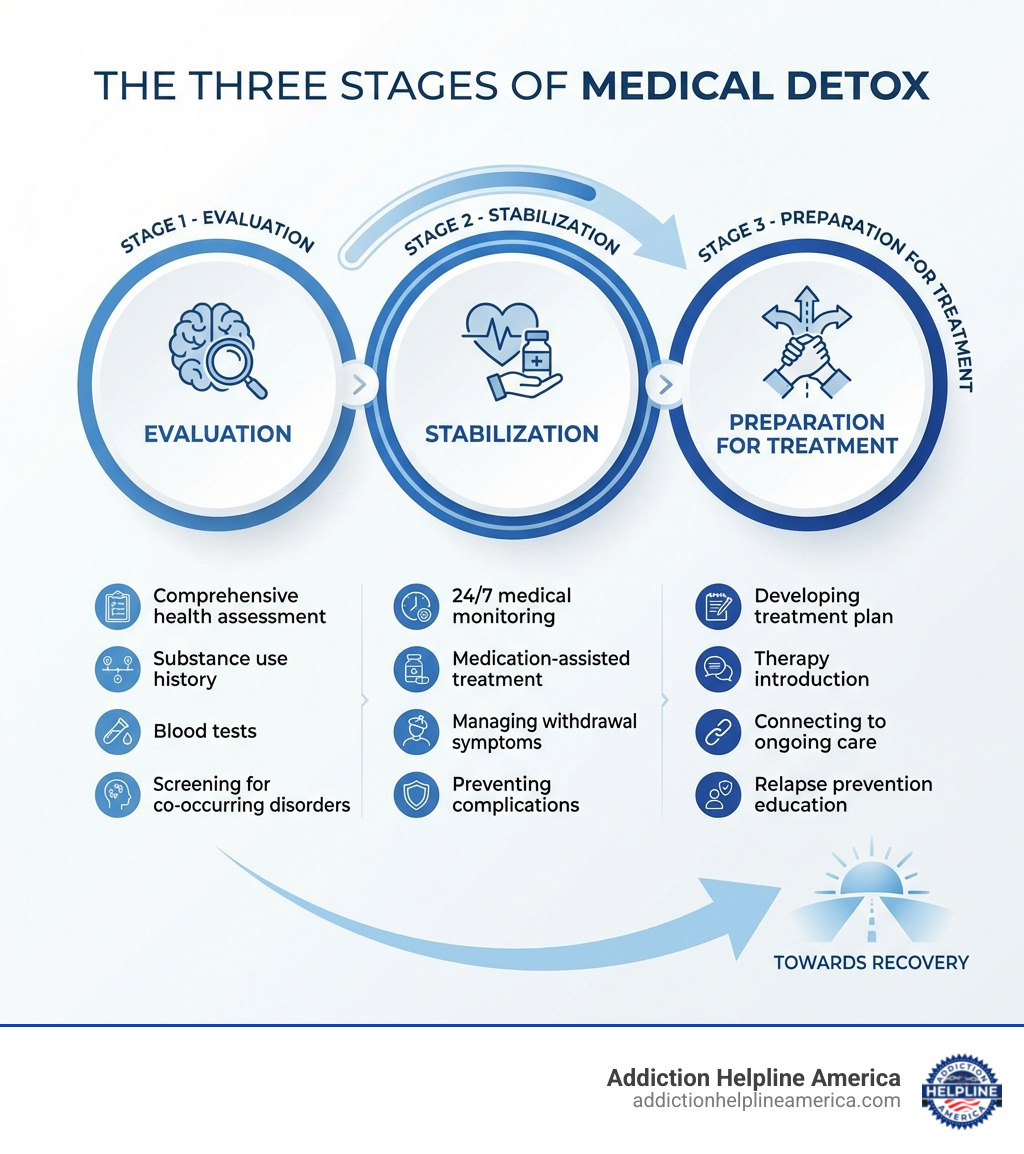
The process is broken down into three essential stages:
Stage 1: Comprehensive Evaluation
The journey begins with a thorough evaluation to develop a safe and effective detox plan.
- Patient screening: A detailed assessment of physical and mental health upon admission.
- Physical health assessment: A complete physical exam, including vital signs.
- Mental health assessment: Evaluation for co-occurring disorders like depression or anxiety.
- Blood tests: To measure drugs in the system and assess organ function.
- Substance use history: A comprehensive history of substances used, duration, and dosages.
- Co-occurring disorders: Identifying these issues is vital for integrated care.
Stage 2: Stabilization with Medical Support
After evaluation, the focus shifts to managing withdrawal symptoms and stabilizing the patient. The goal is to prevent harm and ensure comfort.
- Managing withdrawal: Continuous monitoring and interventions to alleviate discomfort.
- Preventing harm: Medical staff are prepared to respond to severe complications.
- Medication-Assisted Treatment (MAT): A cornerstone of modern detox. As defined by SAMHSA, MAT uses medications with counseling and behavioral therapies to treat substance use disorders. Doctors may prescribe medications (e.g., benzodiazepines for alcohol withdrawal, buprenorphine for opioid withdrawal) to reduce symptoms and cravings.
- Comfort and safety: The team provides a supportive and therapeutic environment.
Stage 3: Preparation for Continued Treatment
Detox is essential but rarely sufficient for long-term recovery. It clears the body but doesn’t address the psychological drivers of addiction. The final step is preparing the individual for ongoing addiction treatment.
- Detox is not enough: Lasting sobriety requires treating the psychological aspect of addiction.
- Psychological treatment: Therapies help individuals understand their addiction and develop coping skills.
- Counseling and therapy: Individual and group sessions provide support and education.
- Support groups: Connecting with peer groups like Narcotics Anonymous (NA) or Alcoholics Anonymous (AA) provides community.
- Transition to rehab: Patients are familiarized with the treatment process and linked to a comprehensive program like inpatient rehab, which offers the best chance of success after detox. Learn more and Explore inpatient rehab options.
Life After Detox: Building a Foundation for Lasting Sobriety
Completing drug detox is a monumental first step, but the recovery journey continues by treating the whole person—mind, body, and spirit. This next phase focuses on building a foundation for lasting sobriety, developing coping skills, and preventing relapse.
Next Steps in Addiction Treatment
After detox, comprehensive addiction treatment addresses the psychological dependence and behavioral patterns. Options include:
- Inpatient rehab: A structured, 24/7 supportive environment.
- Outpatient programs: PHPs and IOPs allow individuals to live at home while attending treatment.
- Individual therapy: One-on-one sessions to explore personal triggers and coping strategies.
- Group counseling: A supportive community for sharing experiences and gaining insights.
- 12-step programs: Programs like AA and NA offer a spiritual framework and peer support.
- Family therapy: Helps heal relationships and build a supportive home environment.
Supporting Your Body’s Natural Healing
Alongside professional treatment, supporting your body’s natural healing can significantly improve recovery. Holistic approaches complement medical detox and sustain progress.
- Holistic support: Integrating physical, emotional, and spiritual well-being.
- Nutritional counseling: A healthy diet is crucial. As MedlinePlus notes, good nutrition can help heal the body and improve mood during recovery.
- Hydration: Staying well-hydrated is essential. While individual needs vary, aiming for adequate fluid intake, as recommended by health authorities like the Mayo Clinic, supports physical recovery.
- Balanced diet: Focus on whole foods and limit processed items, sugar, and caffeine.
- Physical exercise: Boosts circulation and aids in toxin elimination.
- Stress management: Techniques like meditation and yoga are invaluable.
- Sleep hygiene: Aim for 7-9 hours of quality sleep nightly, a guideline supported by the CDC, to help the brain heal and regulate mood.
Long-Term Benefits of Completing Detox
Embracing full recovery, starting with drug detox, yields profound benefits:
- Improved physical health and mental clarity
- Stable mood and reduced cravings
- Rebuilding relationships
- Increased energy and motivation
Navigating the Practicalities of Drug Detox
Choosing drug detox and subsequent treatment involves navigating practical considerations. We are here to help you plan for treatment, overcome barriers, and make an informed choice. Our nationwide network helps you Find a detox facility near you.
The Cost and Insurance Coverage for Drug Detox
The cost of drug detox varies based on the facility, level of care, and program length. Inpatient detox is generally more expensive than outpatient options.
Insurance coverage: Under the Affordable Care Act (ACA), most health insurance plans must cover substance use disorder treatment as an “essential health benefit,” as specified by Healthcare.gov. This includes plans through the marketplace, Medicaid, and Medicare. We can help you understand your benefits. Verify your insurance coverage now for a confidential assessment.
Financial assistance options: For those with limited or no insurance, many facilities offer payment plans, and government grants may be available. We provide free guidance to explore all options.
The Risks of Rapid and Ultra-Rapid Detox
Some methods promise a “quick fix,” like rapid and ultra-rapid detox. As experts, we strongly advise against these methods due to their significant risks and questionable efficacy.
- Expensive and not covered by insurance: These programs are costly and usually not covered by insurance due to their experimental, high-risk nature.
- High risk: Ultra-rapid detox, performed under general anesthesia, carries substantial risks. SAMHSA has issued advisories against this practice, citing a “lack of data on safety and effectiveness” and reports of serious adverse events, including death.
- Anesthesia complications: General anesthesia adds another layer of risk, especially for individuals whose health is already compromised.
- Continued withdrawal symptoms: Many patients still experience withdrawal symptoms after the procedure.
- Not a magic bullet: Dr. Nora Volkow, Director of NIDA, has stated that overcoming addiction requires long-term strategies, not quick fixes. These methods fail to address psychological dependence, leading to high relapse rates compared to traditional, medically supervised detox followed by rehab.
We firmly believe that safe and effective recovery is a journey, not a shortcut.
Conclusion: Take the First Step Today
Choosing drug detox is a brave, life-changing first step toward recovery. It provides a safe, medically supervised way through the initial phase of withdrawal. However, detox is just the beginning. Comprehensive treatment that addresses the psychological, emotional, and social aspects of addiction is key to achieving lasting sobriety.
Recovery is a lifelong journey of hope and healing. We know this first step is overwhelming, but you don’t have to do it alone.
At Addiction Helpline America, we provide free, confidential, and personalized guidance to help you or your loved one find the right recovery program. Our vast network of treatment centers means we can connect you to specialized support nationwide, from medical detox in Phoenix, Arizona, to inpatient rehab in Los Angeles, California, or an outpatient program in Miami, Florida.
Reach out to us today. Our compassionate team is available 24/7 to answer your questions and help you take that crucial first step towards a healthier future.
The information provided is for educational purposes and should not replace professional medical advice. Always consult with healthcare providers before beginning any detox program.