Addiction treatment options vary based on the type of substance, severity of use, and individual needs. Here is a quick overview of the main paths to recovery:
| Treatment Type | What It Involves | Best For |
|---|---|---|
| Outpatient Programs | Therapy and counseling while living at home | Mild to moderate SUD |
| Intensive Outpatient (IOP) | 9+ hours/week of structured sessions | Moderate SUD or step-down care |
| Residential Rehab | 24/7 structured care in a live-in facility | Moderate to severe SUD |
| Hospital Inpatient | Medical supervision in a hospital setting | Severe SUD with health complications |
| Medication-Assisted Treatment (MAT) | FDA-approved medications like methadone, buprenorphine, or naltrexone | Opioid and alcohol use disorders |
| Behavioral Therapy | CBT, DBT, motivational interviewing, and more | All SUD types, often combined with MAT |
| Support Groups | 12-step programs, SMART Recovery, peer support | Long-term recovery maintenance |
If you or someone you love is struggling, you are far from alone. In 2022, more than one in six Americans aged 12 or older reported experiencing a substance use disorder. That is tens of millions of people — and the good news is that effective, proven treatment exists.
Addiction is not a moral failure. It is a complex, chronic condition that affects the brain — and like other chronic illnesses such as diabetes or hypertension, it can be managed successfully with the right care. The path to recovery looks different for everyone, but taking that first step toward understanding your options is where it begins.
At Addiction Helpline America, our team of addiction specialists and recovery advocates has helped countless individuals and families navigate their addiction treatment options — connecting them to the right care, at the right time, in a free and completely confidential way. In this guide, we break down everything you need to know so you can make an informed, confident decision about next steps.
Before diving into the various addiction treatment options, it is helpful to understand what we are actually treating. A Substance Use Disorder (SUD) is a chronic, relapsing brain disease. As Dr. Nora Volkow, Director of the National Institute on Drug Abuse (NIDA), explains, “Addiction is a chronic, relapsing brain disease that is characterized by compulsive drug seeking and use, despite harmful consequences.” It isn’t just about “willpower”; it involves functional changes to the brain’s reward system. When someone uses substances repeatedly, the brain begins to prioritize the substance over natural rewards like food or social interaction.
Medical professionals use the DSM-5 (Diagnostic and Statistical Manual of Mental Disorders) to diagnose SUD. According to the American Psychiatric Association, they look for specific criteria, such as:
The causes of SUD are multifaceted. Genetic risk factors play a role, but so do environmental influences like adverse childhood experiences (ACEs) or easy access to substances. If left untreated, SUD can lead to severe complications, including overdose, cardiovascular disease, cancer, and worsening mental health issues. This is why professional intervention is so critical. You can find more info about drug and treatment to better understand these complexities.
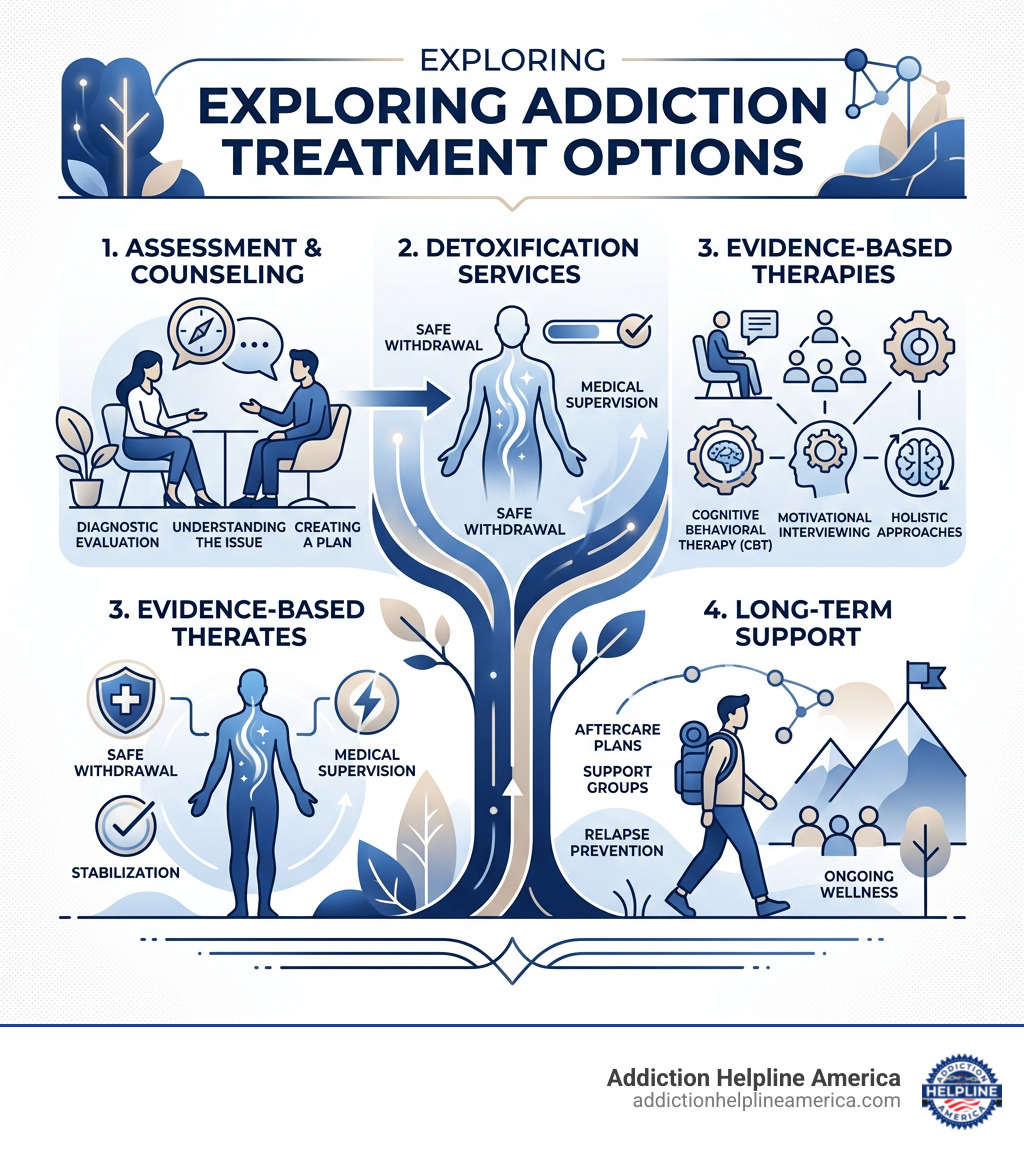
When we talk about “evidence-based” care, we mean treatments that have been scientifically proven to work. Research from the National Institute on Drug Abuse (NIDA) emphasizes that no single treatment is right for everyone. Effective treatment must address the “whole person,” not just their drug use. This includes attending to their medical, psychological, social, and vocational needs.
Dr. George Koob, Director of the National Institute on Alcohol Abuse and Alcoholism (NIAAA), notes that “The goal of treatment is not just to stop the drinking or drug use, but to help people build a life that is worth living without substances.” One of the most important findings in addiction science is that duration matters. Research has shown most people need at least three months of treatment to significantly reduce or stop their substance use. The best results are often seen when patients remain engaged for even longer periods. Whether you are looking for local help or specialized care, understanding the Principles of Drug Addiction Treatment: A Research-Based Guide can help you vet potential programs. For those requiring the highest level of supervision, you can find more info about drug rehab near me inpatient services.
Choosing between inpatient and outpatient care is often the first major decision a family makes.
For many, medications are a literal lifesaver. Medications for Opioid Use Disorder (MOUD) and Medications for Alcohol Use Disorder (MAUD) help normalize brain chemistry, block the euphoric effects of substances, and relieve physiological cravings.
Commonly used medications include:
It is important to remember that these medications are not “trading one addiction for another.” They are evidence-based tools that help people stabilize so they can focus on the psychological work of recovery. You can learn more about medications for addiction treatment to see how they might fit into a recovery plan.
While medications treat the physical side of addiction, behavioral therapies treat the mind. These therapies help patients modify their attitudes and behaviors related to drug use and increase healthy life skills. According to the American Psychological Association (APA), behavioral therapy is a cornerstone of recovery, providing tools to manage triggers and prevent relapse.
Some of the most effective therapies include:
You can explore more info about types of addiction therapy to see which approach resonates with your needs.
We often say that addiction is a family disease. It affects everyone in the household, creating patterns of codependency, resentment, or fear. Family therapy is a vital component of the “whole-patient” approach. It helps heal relationships, improves communication, and teaches family members how to support their loved one without enabling the disorder. To learn how to navigate these difficult dynamics, check out more info about family therapy in addiction recovery.
Recovery doesn’t end when a 30-day program does. Because addiction is a chronic condition, long-term management is essential. Relapse rates for substance use are similar to those for other chronic illnesses (about 40% to 60%), according to the National Institute on Drug Abuse (NIDA). This means a relapse isn’t a “failure”—it’s a sign that treatment needs to be adjusted or resumed.
Support systems play a massive role in preventing relapse:
Having a solid plan for aftercare—such as sober living or ongoing counseling—is the best way to ensure long-term success. If you are a family member looking to help, there is more info about helping family with addiction available to guide you.
One of the biggest barriers to seeking help is the stigma surrounding addiction. Many people fear being judged or “labeled.” We want to be clear: seeking help is an act of immense strength. As noted by SAMHSA, reducing stigma is essential for encouraging individuals to seek the life-saving care they need. The earlier someone receives intervention, the better their long-term prognosis.
To find quality care, you can use several reputable resources:
For a broader look at the landscape of care in the coming year, read our more info about mental health services guide 2025.
Addiction is treatable but not “curable” in the traditional sense. It is a chronic condition that requires ongoing management. However, with long-term abstinence and proper care, the brain can recover significant function. According to the National Institute on Drug Abuse, relapse is often a part of the process and should be treated as a signal to re-engage with medical professionals.
The most common signs include an inability to stop using despite wanting to, developing a tolerance (needing more to get the same effect), experiencing withdrawal symptoms when stopping, and having the substance interfere with work, family, or health.
You can use the SAMHSA treatment locator or call a confidential helpline. At Addiction Helpline America, we can help you verify insurance and find a facility that fits your budget and location.
Navigating addiction treatment options can feel overwhelming, but you don’t have to do it alone. Whether you need a high-intensity residential program or a flexible outpatient schedule, the right path is out there. Recovery is a journey, not a destination, and professional intervention is often the bridge to a healthier, happier life.
If you’re ready to take the next step, Addiction Helpline America is here to provide free, personalized, and confidential guidance 24/7. We can help you find the right fit for your unique situation. For those in specific areas, you can also find a San Antonio drug treatment center or explore our guides for other major cities. Your new life is waiting—reach out today.