
Why Outpatient Treatment Matters for Your Recovery Journey
Outpatient treatment offers a flexible, effective path to recovery from substance use disorders and co-occurring mental health conditions. If you’re exploring your options, here’s what you need to know:
Quick Overview: What is Outpatient Treatment?
- Definition: Treatment that doesn’t require overnight stays – you live at home and attend scheduled therapy sessions
- Types: Ranges from Partial Hospitalization (20+ hours/week) to Intensive Outpatient (9-20 hours/week) to Standard Outpatient (1-9 hours/week)
- Who it’s for: People with mild to moderate addiction, strong support systems, stable housing, and low risk of severe withdrawal
- Services: Individual counseling, group therapy, family support, medication management, and evidence-based therapies like CBT
- Cost: Generally less expensive than inpatient care as it does not include costs for lodging
- Effectiveness: Research shows outcomes are comparable to residential treatment for appropriately matched individuals
Seeking help for addiction is a sign of strength, not weakness. Many people worry that treatment means putting their life on hold. That’s where outpatient treatment shines. As Dr. Alena Petrova, an addiction medicine specialist, states, “The power of outpatient treatment lies in its ability to integrate recovery into a person’s real life. Patients learn coping skills in therapy and immediately apply them at home, at work, and with their families, which reinforces learning and builds lasting resilience.”
Whether you’re struggling with alcohol, drugs, or behavioral addictions, outpatient programs provide structured support without requiring you to step away from your responsibilities. You can attend treatment and still go to work, care for family, or attend school.
The evidence is clear: Studies show Intensive Outpatient Programs lead to significant reductions in substance use. In fact, according to clinical trials reviewed by the Substance Abuse and Mental Health Services Administration (SAMHSA), 50-70% of participants report abstinence at follow-up, with success rates comparable to residential treatment for properly matched clients.
At Addiction Helpline America, we’ve helped thousands of individuals and families steer the confusing landscape of treatment options. Our addiction specialists provide free, confidential guidance 24/7 to connect you with the right outpatient program for your unique situation. We know every recovery journey is different and are here to help you find your best path.
The following sections will walk you through everything you need to know about outpatient treatment—from understanding program types to choosing the right center and taking the first steps toward wellness.
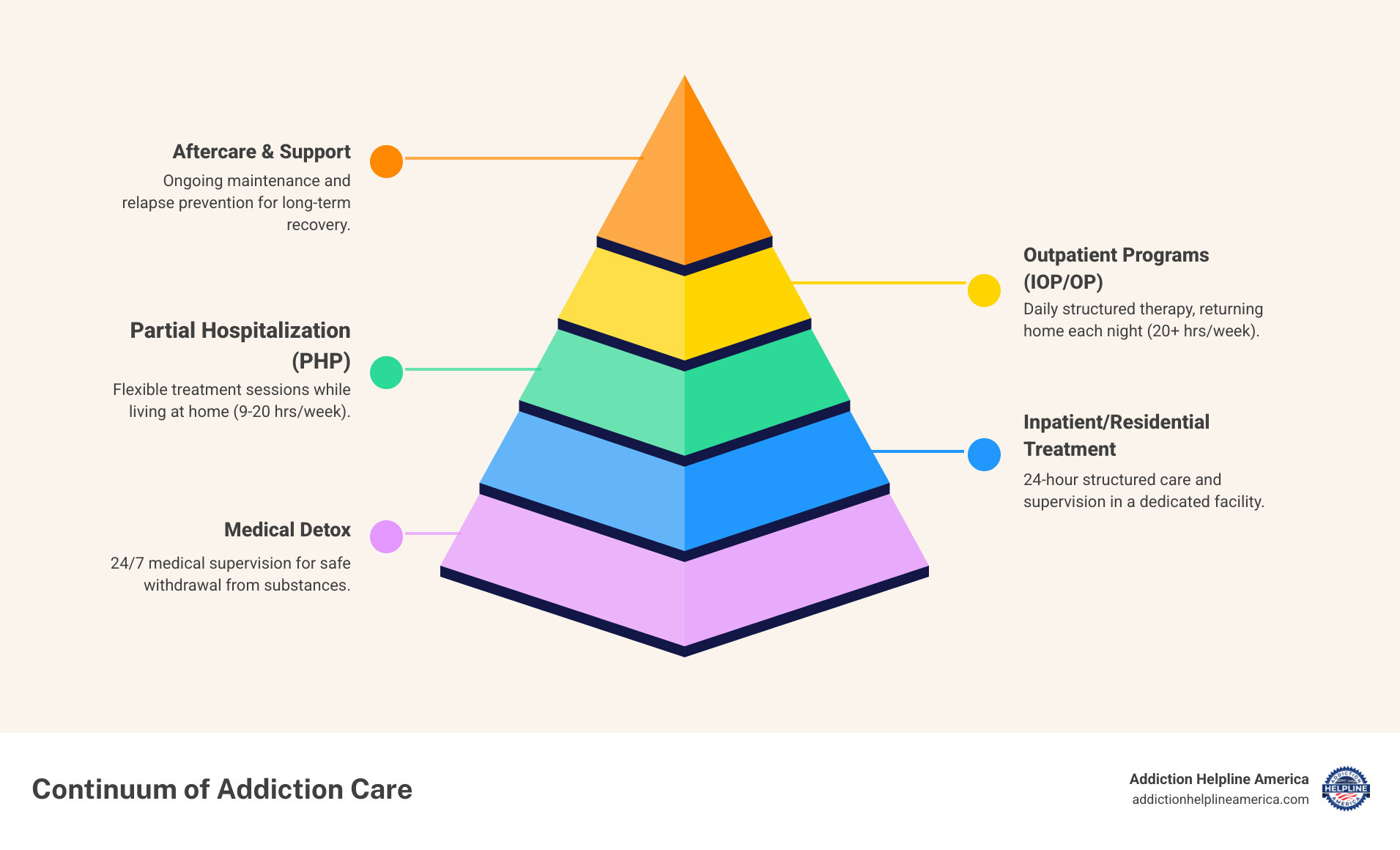
Quick look at outpatient treatment:
Understanding Outpatient Treatment: A Flexible Path to Recovery
Outpatient treatment is a cornerstone of modern addiction care, allowing individuals to seek recovery while maintaining their daily lives. Unlike inpatient programs, outpatient treatment lets you live at home and attend scheduled therapy sessions at a facility. This approach means you can continue with work, school, or family responsibilities, integrating recovery into your everyday routine.

Outpatient programs use the same clinical principles as residential treatment, ensuring effective care. They focus on counseling, education, and support, helping individuals develop skills to handle daily problems without substance use. For a deeper understanding of addiction itself, you might find our Beginner’s Guide to the Definition of Addiction helpful.
What are the different types of outpatient treatment?
Outpatient programs come in various formats, differing in intensity and weekly time commitment. These levels of care, as defined by frameworks like The ASAM Criteria, allow for a custom approach, ensuring individuals receive the right amount of support. The three main types are:
-
Partial Hospitalization Programs (PHP): Often called “day treatment,” PHPs are the most intensive form of outpatient care, typically involving 20 or more hours of treatment per week. PHPs provide structured clinical therapies and medical oversight, but patients return home at night. They are an excellent option for those needing intensive support without 24-hour supervision.
-
Intensive Outpatient Programs (IOP): IOPs offer significant support with less time commitment than a PHP. They require 9-19 hours of treatment per week for adults. IOPs focus on relapse management, coping strategies, and building support systems, making them ideal for those balancing recovery with daily responsibilities.
-
Standard Outpatient Programs (OP): This is the least intensive option, with fewer than 9 hours of treatment per week (often 1-2 sessions). Standard OPs are suitable for individuals with mild addictions, those stepping down from more intensive programs, or as a long-term maintenance solution.
Here’s a quick comparison of these types:
| Program Type | Intensity Level | Hours per Week | Ideal Candidate |
|---|---|---|---|
| Partial Hospitalization (PHP) | Highest | 20+ hours | Needs intensive daily therapy but doesn’t require 24/7 supervision; stable home environment |
| Intensive Outpatient (IOP) | Moderate-High | 9-19 hours | Needs significant structure while balancing daily responsibilities; strong motivation |
| Standard Outpatient (OP) | Lowest | <9 hours (often 1-2 sessions/week) | Mild addiction; stepping down from higher care; long-term maintenance; strong support |
The Effectiveness of Intensive Outpatient Programs (IOPs)
The efficacy of outpatient treatment, particularly IOPs, is supported by a strong evidence base. As Dr. Marcus Thorne, a licensed clinical social worker, explains, “The continuum of care is not a rigid ladder but a flexible pathway. A patient might start in a PHP, step down to an IOP, and then transition to standard outpatient for long-term maintenance. This adaptability is key to meeting the patient’s needs as they evolve in their recovery.”
A 2014 review published in Psychiatric Services concluded that there is substantial evidence for the effectiveness of IOPs, finding them as effective as inpatient treatment for many individuals. This robust evidence base, as detailed in comprehensive literature reviews like SAMHSA’s Substance Abuse: Clinical Issues in Intensive Outpatient Treatment, highlights the value of IOPs. To learn more about how different treatments measure up, explore our insights on Addiction Treatment Success Rates.
Standard vs. Intensive Outpatient Treatment
The primary difference between standard outpatient treatment and IOPs is the level of care and time commitment. Both are crucial parts of the treatment continuum.
-
Standard Outpatient (OP): This is the least intensive option, offering 1-2 group therapy sessions a week. It’s great for those with milder SUDs, individuals needing ongoing support after a more intensive program, or for long-term sobriety maintenance.
-
Intensive Outpatient Program (IOP): IOPs provide a higher level of care, requiring 9-19 hours of treatment per week. These programs offer more frequent and structured sessions, including individual, group, and family therapy. IOPs are often a primary treatment for moderate SUDs or a “step-down” from a PHP or inpatient program.
The choice between standard and intensive outpatient care depends on the SUD’s severity, co-occurring mental health issues, and the individual’s support system. Our guide on Rehab Duration: Complete Guide offers more insights into treatment timelines.
Choosing Your Path: Outpatient vs. Inpatient Treatment
Deciding between outpatient treatment and inpatient treatment is a significant step. Both have merits, and the right choice depends on personal circumstances.

Key differences include living arrangements, supervision level, and cost. Inpatient treatment means staying at a facility with 24/7 monitoring, ideal for severe addictions or unstable home environments. Outpatient treatment allows you to live at home and attend scheduled sessions, offering more flexibility to apply new skills in real-time. For a deeper dive into inpatient options, check out our Inpatient Therapy Programs guide.
Who is a Good Candidate for Outpatient Care?
While inpatient care offers intensive support, outpatient treatment is a powerful option for many. As psychologist Dr. Sarah Jenkins notes, “A strong candidate for outpatient care is someone with high motivation and a stable, supportive home life. The ability to practice recovery skills in your own environment is a huge advantage, but that environment must be safe and conducive to healing.”
You might be a good candidate for outpatient care if you:
- Have a mild to moderate Substance Use Disorder (SUD).
- Possess a strong support system of family and friends.
- Maintain a stable, trigger-free living environment.
- Are highly motivated for change and committed to recovery.
- Have a low risk of severe withdrawal (otherwise, medical detox may be needed first).
- Are transitioning from inpatient care as a step-down level of support.
- Need to maintain daily responsibilities like work, school, or family care.
Benefits and Cost-Effectiveness of Outpatient Programs
A compelling aspect of outpatient treatment is its flexibility and affordability.
- Affordability: According to the National Institute on Drug Abuse (NIDA), addiction treatment is cost-effective, and outpatient models eliminate the high cost of residential housing.
- Maintain Responsibilities: Programs are designed to work around your schedule, allowing you to continue with your job, school, and family obligations.
- Apply Skills in Real-Time: Outpatient care provides immediate opportunities to practice new coping skills in your daily environment.
- Family Involvement: Many programs encourage family participation through therapy and education, strengthening your support system.
- Insurance Coverage: Thanks to the Mental Health Parity and Addiction Equity Act (MHPAEA), most insurance plans are required to cover substance use and mental health services with the same level of benefits as medical care, making outpatient treatment accessible.
Understanding that addiction is a complex issue, sometimes considered a disability, highlights the importance of accessible treatment. Learn more in our article, Drug Addiction: A Disability.
Inside an Outpatient Program: Services, Therapies, and Support
Committing to an outpatient treatment program means engaging in a comprehensive, individualized journey to wellness. These programs offer whole-person care, focusing on your overall well-being and equipping you with tools for lasting recovery through a holistic approach. To explore various treatment options, check out our guide to Best Rehab Programs.
Core Services and Therapeutic Approaches
Outpatient treatment programs offer a rich array of services and evidence-based therapies, as recommended by leading health organizations like SAMHSA, to address the multifaceted nature of addiction:
- Individual Counseling: One-on-one sessions to explore personal challenges and develop coping strategies.
- Group Therapy: A cornerstone of treatment, offering peer support and shared experiences.
- Family Therapy: Involving loved ones to heal relationships and build a stronger home support system.
- Drug/Alcohol Education: Understanding the science of addiction to inform recovery.
- Medication Management: Using medication-assisted treatment (MAT) to manage cravings and withdrawal.
- Vocational Support: Assistance with job searching, skill development, and employment.
Evidence-based therapies form the backbone of outpatient treatment:
- Cognitive Behavioral Therapy (CBT): Helps identify and change negative thought patterns and behaviors linked to substance use. It’s also used in contexts like CBT for Postpartum Depression.
- Dialectical Behavior Therapy (DBT): Focuses on developing skills in mindfulness, emotional regulation, and distress tolerance.
- Motivational Interviewing (MI): A client-centered approach to strengthen motivation for change.
Addressing Co-Occurring Disorders (Dual Diagnosis)
It’s common for substance use disorders to co-occur with mental health conditions like depression, anxiety, or PTSD. According to the National Institute on Drug Abuse (NIDA), about half of individuals who experience a mental illness during their lives will also experience a substance use disorder and vice versa. This is known as a “dual diagnosis.”
“Integrated treatment is non-negotiable for dual diagnosis,” says Dr. David Chen, a psychiatrist at a dual diagnosis center. “Treating addiction without addressing the underlying anxiety or depression is like patching a leak in a boat without fixing the hole. For lasting recovery, you must treat the whole person, not just one symptom.” Outpatient treatment programs are increasingly equipped to offer this integrated treatment, addressing both conditions simultaneously for more effective, sustainable recovery.
If you’re looking for support for mental health alongside addiction, our resources on Outpatient Depression Treatment Centers Near Me and Major Depression Treatments: Ultimate Guide can guide you.
The Role of Aftercare and Family Involvement
Recovery is a lifelong journey that continues after a structured outpatient treatment program ends. Continuing care, or aftercare, is crucial. Aftercare groups reinforce learned skills, provide ongoing support, and help prevent relapse. These might include ongoing therapy, mutual-support groups (like AA/NA), and relapse prevention planning.
Family involvement is another vital component. Engaging families in treatment through education and therapy strengthens the individual’s support system and helps heal family dynamics. Understanding how to support a loved one is invaluable, whether they are navigating addiction or other challenges, such as those discussed in Borderline Personality Disorder Therapies.
Recognizing the Need for Help: Signs of Addiction
The first step to recovery is recognizing there’s a problem. “Acknowledging the problem is often the hardest part,” says recovery coach Michael Carter. “Many people associate addiction with hitting ‘rock bottom,’ but the reality is that the earlier you recognize the signs—like relationships suffering or work being neglected—the sooner you can get help and prevent more severe consequences. Reaching out is an act of profound self-care.”
Understanding the signs of a substance use or behavioral addiction can empower you to seek support. Our Alcoholism Guide provides comprehensive information on one common form of addiction.
Signs of a Substance Use Disorder (SUD)
A substance use disorder can manifest in various ways, with signs often aligning with the diagnostic criteria established by the American Psychiatric Association in the DSM-5. Common signs include:
- Neglecting Responsibilities: Failing to meet obligations at work, school, or home.
- Relationship Issues: Causing arguments or distrust with family and friends.
- Increased Tolerance: Needing more of the substance to get the same effect.
- Withdrawal Symptoms: Experiencing physical or psychological discomfort when not using.
- Inability to Quit: Wanting to stop but being unable to do so.
- Risky Behaviors: Engaging in dangerous activities like driving while impaired.
- Life Revolves Around Use: Planning daily activities around obtaining and using substances.
Understanding Behavioral Addictions
Addiction isn’t always tied to a substance. Behavioral addictions involve a compulsive urge to engage in an activity despite negative consequences. Common examples include addiction to:
- Gambling
- Shopping
- Gaming
- Exercise
These can be just as disruptive as substance use disorders. The good news is that behavioral addictions are also effectively treated in outpatient treatment settings using therapies like CBT and group support to help individuals regain control.
How to Find and Choose the Right Outpatient Treatment Program
Taking the first step to find help is monumental but can feel overwhelming. We’re here to simplify the process.
Researching options and asking the right questions are key to finding a program that fits your needs. Our How to Find Rehab: Complete Guide and Drug Rehab Facilities Near Me Guide offer broader insights into the search.
Key Questions to Ask a Treatment Center
“When evaluating programs, it’s crucial to look beyond the brochure,” advises Dr. Emily Vance, a director of clinical outreach. “Ask about their specific approach to relapse prevention and aftercare. A quality center will have a robust plan for continuing support, as recovery is a long-term process, not a one-time event.”
When considering an outpatient treatment program, ask about:
- Licensing and Accreditation: Is the facility licensed by the state and accredited by organizations like CARF or The Joint Commission?
- Staff Credentials: Are counselors and medical staff certified in addiction medicine (e.g., by ASAM)?
- Therapies Used: What evidence-based therapies do they use (CBT, DBT, etc.)? Do they offer individual, group, and family therapy?
- Program Schedule: What is the program’s duration and weekly schedule? Can they accommodate work or school?
- Aftercare Support: What continuing care is available after the program ends?
- Cost and Insurance: What is the total cost, and what insurance do they accept? Are there payment plans?
- Family Involvement: How are family members included in the treatment process?
- Co-occurring Disorder Treatment: Does the program treat mental health conditions like depression or anxiety?
Finding Local and Online Treatment Services
Finding the right outpatient treatment program isn’t a solo journey. Addiction Helpline America provides free, confidential guidance to help you find the right program from our nationwide network. We can help you steer local and online treatment options.
- Addiction Helpline America: We are available 24/7 to connect you with suitable programs.
- Online Directories: Websites like SAMHSA’s online treatment locator can help you find facilities.
- Insurance Provider: Your insurance company can provide a list of in-network providers.
- Telehealth Options: Remote addiction treatment has expanded access to care. Our Addiction Help Online: Complete Guide has more details.
Ready to explore your options? We encourage you to reach out and Find Intensive Outpatient Treatment that fits your needs.
Frequently Asked Questions about Outpatient Treatment
Here are answers to some common questions about outpatient treatment.
How long does outpatient rehab last?
The duration of outpatient treatment varies based on program type, individual progress, SUD severity, and any co-occurring mental health conditions. According to the National Institute on Drug Abuse (NIDA), remaining in treatment for an adequate period of time is critical for success.
- Standard Outpatient (OP): Can last for several months to a year or more.
- Intensive Outpatient Programs (IOP): Typically last several weeks to a few months.
- Partial Hospitalization Programs (PHP): Generally shorter and more intensive, often lasting several weeks.
Treatment timelines are guided by clinical milestones rather than fixed schedules. For a comprehensive look at treatment timelines, see our Rehab Duration: Complete Guide.
Will my insurance cover outpatient treatment?
Yes, in most cases, insurance covers outpatient treatment. Federal laws like the Mental Health Parity and Addiction Equity Act (MHPAEA) and the Affordable Care Act (ACA) require most group health plans to provide coverage for these essential health benefits.
Coverage varies by plan, network status, and deductibles. We recommend contacting your provider directly, or let Addiction Helpline America verify your benefits. For those without insurance, many facilities offer sliding-fee scales, payment plans, or help finding low-cost options.
What if I need detox?
If you are concerned about withdrawal, the first step is a comprehensive assessment.
- Medically Managed Detox: For severe physical dependence (e.g., on alcohol, benzodiazepines, or opioids), inpatient medical detox may be necessary first to ensure safety. As noted by the World Health Organization (WHO), withdrawal from certain substances can be severe and life-threatening.
- Outpatient Detox: Some centers can manage mild withdrawal symptoms on an outpatient basis, often with medication.
- Continuum of Care: You can transition to an outpatient program once you are medically stable after completing a higher level of care like detox.
Medication-assisted treatment (MAT) can be significant in managing withdrawal and cravings. Learn more in our guide, What is Medication Assisted Treatment?.
Conclusion: Your Personalized Path to Recovery Starts Now
We’ve explored outpatient treatment, from its flexible program types to its proven effectiveness and comprehensive services. We hope this guide shows that recovery is possible and can be integrated into your life without sacrificing what you value.
Every step toward wellness is a victory. You are not alone; millions have found lasting recovery, and you can too. At Addiction Helpline America, we believe in personalized, compassionate support. Our team offers free, confidential guidance to connect you with the right outpatient treatment program from our nationwide network.
Don’t let uncertainty hold you back. If you or a loved one is struggling, reach out today. A brighter, healthier future is within reach.