

Understanding the Price of Recovery: An Overview
How much does rehab cost is one of the most pressing questions for anyone considering addiction treatment. Here’s what you need to know:
Quick Answer: Rehab Cost Ranges
| Treatment Type | Typical Cost Range (Sourced from industry data) |
|---|---|
| Medical Detox | $250-$800 per day ($1,750-$5,600 for 7 days) |
| Inpatient Rehab (30 days) | $5,000-$20,000 |
| Inpatient Rehab (60-90 days) | $12,000-$60,000+ |
| Outpatient Programs | $1,400-$10,000 per month |
| Intensive Outpatient (IOP) | $3,500-$11,000 for 3 months |
| Partial Hospitalization (PHP) | $7,000-$20,000 per month |
While costs vary widely, the financial burden of untreated addiction—including spending on substances, legal fees, lost wages, and medical bills—typically far exceeds the cost of treatment. According to the National Institute on Drug Abuse (NIDA), every dollar invested in addiction treatment programs yields a return of between $4 and $7 in reduced drug-related crime, criminal justice costs, and theft. When savings related to healthcare are included, total savings can exceed a ratio of 12 to 1.
As Dr. Nora Volkow, Director of NIDA, states, “We must continue to make sure that all people with substance use disorders are treated with compassion and have access to the treatments and resources they need to achieve and maintain recovery.”
Most insurance plans now cover addiction treatment as an essential health benefit under the Affordable Care Act. For those without insurance, numerous options exist including state-funded programs, sliding scale fees, payment plans, and scholarships. Free and confidential resources like Addiction Helpline America can help you steer these options.
The type of care you need directly impacts cost. Inpatient programs with 24/7 medical supervision cost more than outpatient programs where you live at home. Luxury facilities with resort-like amenities can exceed $80,000, while basic programs may cost under $10,000. Location also matters, with facilities in high cost-of-living areas generally being more expensive than those in rural regions, a fact supported by data from the Kaiser Family Foundation on regional cost variations.
At Addiction Helpline America, we’ve guided thousands of individuals and families through the complex landscape of addiction treatment costs, helping them find quality care that fits their budget. Our free, confidential service connects you with appropriate treatment options regardless of your financial situation, because we believe cost should never be a barrier to recovery.
Breaking Down Rehab Costs by Treatment Type
When exploring how much does rehab cost, it’s crucial to understand that there isn’t a single price tag. The total cost is heavily influenced by the type and intensity of care required. From immediate detoxification to long-term outpatient support, each phase of treatment comes with its own financial considerations. We’ll break down the general costs associated with each level of care to give you a clearer picture.

How much does detox cost?
Detoxification, or medical detox, is often the first critical step in addiction recovery. It involves medically supervised withdrawal from substances, ensuring safety and comfort as the body rids itself of toxins. This phase is essential for managing potentially severe withdrawal symptoms and preparing an individual for further treatment. Our resources on detox provide more information on what to expect.
Typically, the cost of detox is separate from the main rehab program. According to the National Center for Drug Abuse Statistics (NCDAS), daily costs for drug detoxification can range from $250 to $800. For a standard 7-day detox program, you might expect to pay between $1,750 and $5,600. Admission fees, which can sometimes be between $3,000 and $4,000, might also be an additional upfront cost to consider.
The Cost of Inpatient & Residential Rehab
Inpatient, or residential, rehab programs offer a highly structured environment where individuals live at the facility for the duration of their treatment. This level of care provides 24/7 medical supervision, therapy, and support, making it ideal for those with severe addictions or co-occurring mental health disorders. The costs generally include housing, meals, and all therapeutic activities.
For a 30-day inpatient program, costs can generally range from $5,000 to $20,000. For extended stays, such as 60- to 90-day programs, the total cost can increase significantly, typically ranging from $12,000 to $60,000 or even upwards of $80,000 for some luxury options. You can learn more about these comprehensive programs through our guide to residential rehab programs.
The Cost of Outpatient Rehab Programs
Outpatient rehab offers a flexible alternative for those who need addiction treatment but also wish to maintain their daily responsibilities, such as work, school, or family commitments. While individuals live at home, they attend scheduled therapy sessions and group meetings at a treatment facility. The cost of outpatient rehab varies depending on the intensity of care.
There are several levels of outpatient care:
- Partial Hospitalization Programs (PHPs): These are the most intensive form of outpatient care, often running for several hours a day, five days a week. PHPs are suitable for individuals who need a high level of clinical support but do not require 24/7 supervision. At private facilities, PHPs may cost between $350 to $450 per day, with overall program costs ranging from $7,000 to $20,000 per month.
- Intensive Outpatient Programs (IOPs): IOPs offer a step down from PHPs, providing fewer hours of treatment per week. They are designed for individuals who need structured support while having more flexibility. A three-month intensive outpatient program often costs between $3,500 and $11,000. Our resources on Intensive outpatient programs (IOPs) provide further details.
- Standard Outpatient Programs (OPs): These are the least intensive, typically involving weekly therapy sessions. They are often used as a step-down from more intensive programs or for those with mild substance use disorders. General outpatient rehab can range between $1,400 to $10,000 over a 30-day period, and a three-month outpatient program can cost around $5,000.
Medication-Assisted Treatment (MAT) Costs
Medication-Assisted Treatment (MAT) combines FDA-approved medications with counseling and behavioral therapies to treat substance use disorders. The Substance Abuse and Mental Health Services Administration (SAMHSA) considers MAT a highly effective, evidence-based approach. It is particularly effective for opioid and alcohol addictions, helping to manage cravings and reduce the risk of relapse. Common medications include methadone, buprenorphine (often combined with naloxone as Suboxone), and naltrexone for opioid use disorder, and acamprosate, disulfiram, or naltrexone for alcohol use disorder.
The cost of MAT can vary. For example, a 2016 study published in the journal Addiction found that methadone treatment for opioid use disorder ranged from $4,277 to $13,395 annually. According to NIDA, a year-long methadone treatment for heroin users costs around $4,700 per patient. These costs typically cover the medication itself, as well as regular clinical visits and counseling. For more information on MAT, including Suboxone treatment, please visit our dedicated page More info about MAT.
What Factors Influence How Much Does Rehab Cost?
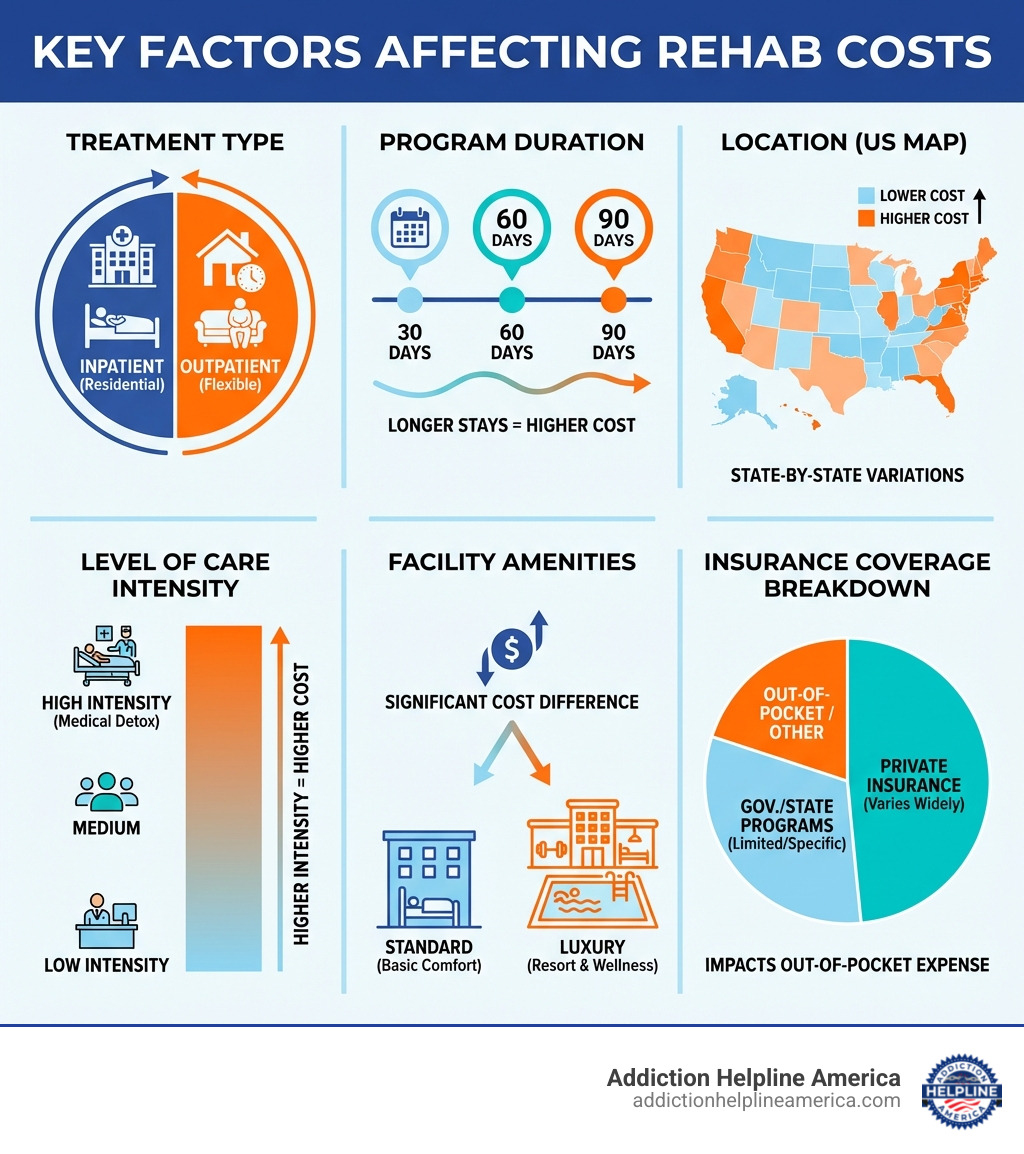
Understanding how much does rehab cost involves more than just looking at average prices. Several key factors contribute to the wide range of costs you might encounter. These elements can significantly impact the overall expense, making it important to consider each one when planning for treatment.
How does the length of stay affect the total cost of rehab?
The duration of a treatment program is one of the most significant determinants of its overall cost. Simply put, the longer you stay, the higher the total cost will be. This is because longer programs incur more expenses for accommodation, meals, therapy sessions, and medical supervision.
While a 30-day program might serve as a base cost, many individuals benefit from longer stints in recovery. The National Institute on Drug Abuse (NIDA) notes that for most patients, a treatment duration of less than 90 days is of limited effectiveness. For instance, if a 30-day inpatient program costs an average of $12,500, a 60-day program could easily double that, and a 90-day program could nearly triple it. While the upfront cost is higher, the long-term benefits of sustained sobriety and reduced relapse risk often make the extended stay a worthwhile investment.
How does location impact rehab costs?
Just like real estate, the location of a rehab facility plays a major role in its pricing. Facilities in areas with a higher cost of living, such as major metropolitan areas or desirable coastal regions, tend to be more expensive. This is due to higher operational costs, including rent, utilities, staff salaries, and resources. Conversely, facilities in rural or less expensive regions might offer more affordable rates.
For instance, inpatient drug rehab in Los Angeles generally costs between $5,000 and $20,000 for a 30-day program, with a three-month outpatient program estimated at about $5,000. These figures reflect the higher cost of living in that area. While national averages provide a baseline, specific cities like a drug rehab in Los Angeles, a drug rehab in Miami, or an alcohol treatment in Denver, will have their own unique pricing structures influenced by local market dynamics and facility offerings.
Do amenities and specialization increase the cost?
Absolutely. The level of amenities and the specialization of treatment programs significantly contribute to the overall cost of rehab. Many facilities offer a range of amenities, from basic comforts to luxury features, which can dramatically impact pricing.
- Improved Amenities: High-end facilities often resemble resorts, offering amenities such as private suites, gourmet meals prepared by chefs, swimming pools, spas, fitness centers, and scenic views. These comforts are designed to create a more relaxing and therapeutic environment, but they come at a premium. Luxury rehabs, for example, can cost $80,000 or more for a program.
- Specialized Therapies: Beyond standard counseling, some centers offer specialized treatments like equine therapy, art therapy, yoga, mindfulness, trauma-informed care, or executive programs custom for professionals. These specialized services require additional staff expertise and resources, adding to the program’s cost.
- Unique Programs: Facilities might also specialize in treating specific populations (e.g., adolescents, LGBTQ+ individuals, veterans) or co-occurring disorders, which may involve a more integrated and resource-intensive approach.
As addiction treatment consultant John D. Clapp, PhD, advises, “While amenities can enhance comfort, the core of effective treatment lies in evidence-based therapies and qualified staff. A patient’s primary focus should be on the quality of clinical care offered, not just the luxury of the surroundings.” When considering a rehab facility, it’s important to weigh the benefits of these amenities and specializations against your budget and clinical needs. Our guide on How to Choose the Right Rehab can help you steer these choices.
How to Pay for Rehab: Insurance, Financing, and Affordable Options
The question of how much does rehab cost often brings financial concerns to the forefront. However, we want to assure you that a lack of funds should never be a barrier to seeking life-saving treatment. There are numerous avenues available to help cover the costs of addiction recovery, from leveraging insurance benefits to exploring various financing options and even free resources.
Using Insurance to Cover Rehab Costs
Thanks to the Affordable Care Act (ACA) and the Mental Health Parity and Addiction Equity Act (MHPAEA), most insurance plans are required to provide coverage for substance use disorder treatment that is comparable to coverage for general medical care. As explained on Healthcare.gov, this has significantly expanded access to care for many Americans.
- In-Network vs. Out-of-Network: Your out-of-pocket costs will largely depend on whether the facility is in-network with your insurance provider. In-network facilities typically result in lower costs, while out-of-network providers may require you to pay a larger portion, or even the full amount, upfront.
- Deductibles and Copays: Be aware of your plan’s deductible (the amount you must pay before insurance starts covering costs) and copays (a fixed amount you pay for a service after your deductible is met).
- Government-Funded Insurance:
- Medicare is a federal health insurance program for individuals aged 65 and older, or those with certain disabilities. It can cover various addiction treatment services.
- Medicaid provides free or low-cost health coverage for low-income individuals and families. Coverage for addiction treatment through Medicaid varies by state.
- Verifying Your Policy: The best way to understand your coverage is to contact your insurance provider directly. They can provide details on what types of treatment are covered, for how long, and what your estimated out-of-pocket expenses will be. Many treatment centers also have an admissions team that can assist you in verifying your benefits and understanding your policy.
Paying for Rehab Without Insurance
If you don’t have health insurance, or if your policy doesn’t cover enough of the cost, don’t despair. There are still many options available to make treatment affordable:
- Sliding Scale Fees: Many rehab facilities offer a sliding scale, where the cost of treatment is adjusted based on your income and ability to pay.
- Payment Plans: Some centers allow you to pay for treatment in installments over time, making the upfront cost more manageable.
- Rehab Scholarships: Various organizations and even some treatment centers offer scholarships or hardship funds to help individuals cover treatment costs.
- Healthcare Loans: Specialized medical loans are available through private companies or partnerships with treatment centers, designed to finance healthcare expenses.
- Government Grants: Federal and state governments, particularly through agencies like the Substance Abuse and Mental Health Services Administration (SAMHSA), offer grants that can help fund addiction treatment for qualifying individuals.
- Crowdfunding: Online platforms can help you raise funds from friends, family, and your community to support your recovery journey.
Are There Free or Low-Cost Rehab Options?
Yes, absolutely! Financial limitations should never prevent anyone from getting the help they need. We are committed to helping you find these vital resources.
- State-Funded Facilities: Many states operate or fund addiction treatment centers that offer free or very low-cost services to residents, especially those with limited income or specific needs. These facilities are an excellent option for those targeting drug rehab in Florida or alcohol treatment in Colorado, for example.
- Non-Profit Organizations: Numerous non-profit organizations and community health centers provide affordable or free addiction treatment services, often supported by donations and grants.
- Faith-Based Programs: Some religious organizations offer free or low-cost recovery programs that integrate spiritual guidance with addiction treatment.
- 12-Step Support Groups: Programs like Alcoholics Anonymous and Narcotics Anonymous are free to attend and provide invaluable peer support for long-term recovery. While not formal treatment, they are a crucial part of many recovery journeys.
- National Drug Helpline: Resources like the National Drug Helpline can connect you to free and low-cost treatment options in your area.
At Addiction Helpline America, we can help you steer these options, providing free, confidential, and personalized guidance to find state-funded, non-profit, or other low-cost programs that fit your needs.
Is Rehab Worth the Investment? Comparing Costs vs. Long-Term Value
When considering how much does rehab cost, it’s natural to focus on the immediate financial outlay. However, view addiction treatment not as an expense, but as a crucial investment in your future. The long-term costs of untreated addiction almost always far outweigh the cost of rehab.
Let’s break down the hidden and often devastating costs of addiction:
- Substance Expenses: The direct cost of purchasing drugs or alcohol can quickly spiral out of control. According to the CDC, the economic cost of excessive drinking includes billions spent on alcoholic beverages. A heavy drinker consuming a 12-pack a day can spend over $3,000 annually on alcohol alone. A 2019 study in the American Journal of Drug and Alcohol Abuse found that individuals with opioid use disorder spent an average of $1,200 per month on heroin.
- Lost Wages and Productivity: Addiction often leads to decreased job performance, absenteeism, and ultimately, job loss. This results in significant lost income and career stagnation.
- Legal Fees and Fines: Substance abuse frequently leads to legal troubles, including DUIs, arrests, and incarceration. The cost of a first-time DUI, for example, can quickly amount to $10,000 or more in legal fees, court costs, and increased insurance rates, according to estimates from legal and financial experts.
- Medical Bills: Chronic substance abuse takes a severe toll on physical and mental health. Overdoses, accidents, and long-term health issues (such as liver damage, heart disease, or mental health disorders) can result in exorbitant medical bills, emergency room visits, and ongoing prescription costs.
- Workplace Drug Testing: Many states allow companies to conduct drug tests following workplace accidents, potentially leading to job loss and further financial instability.
In contrast, the long-term benefits of recovery represent a profound return on investment:
- Improved Health: Sobriety leads to better physical and mental well-being, reducing healthcare costs in the long run.
- Career Advancement: With a clear mind and renewed focus, individuals can regain employment, advance in their careers, and achieve financial stability.
- Restored Relationships: Recovery helps rebuild trust and mend relationships with family and friends, leading to a stronger support system and improved quality of life.
- Financial Stability: By eliminating spending on substances and avoiding legal and medical fees, individuals can save money, manage finances effectively, and build a secure future.
As the National Institute on Drug Abuse (NIDA) confirms, every dollar invested in addiction treatment can yield a return of up to $12 in reduced crime, health care costs, and increased productivity. The value of reclaiming your life, health, and future is immeasurable.
Find the Right Treatment Program for Your Budget
We understand that navigating the financial aspects of addiction treatment can feel overwhelming. The question of how much does rehab cost is complex, influenced by the type and duration of care, the facility’s location and amenities, and whether you have insurance. However, we hope this guide has shown you that treatment is not only accessible but also a profoundly worthwhile investment in your long-term health and happiness.
Your recovery journey is unique, and so is your financial situation. Don’t let the perceived cost be a barrier to getting the help you deserve. The money, time, and emotional toll of untreated addiction far exceed any investment in recovery.
At Addiction Helpline America, we are dedicated to connecting you with the right support. Our service is free, confidential, and available 24/7. We offer personalized guidance to help you understand your options, verify insurance benefits, and find reputable addiction and mental health treatment centers within our vast network that fit your specific needs and budget. We’re here to ensure that financial concerns do not stand in the way of your path to recovery.
Take the first step towards a healthier, happier life today.
Find affordable treatment options now
Call our substance abuse hotline