Understanding the Financial Landscape of Drug Rehab in Los Angeles
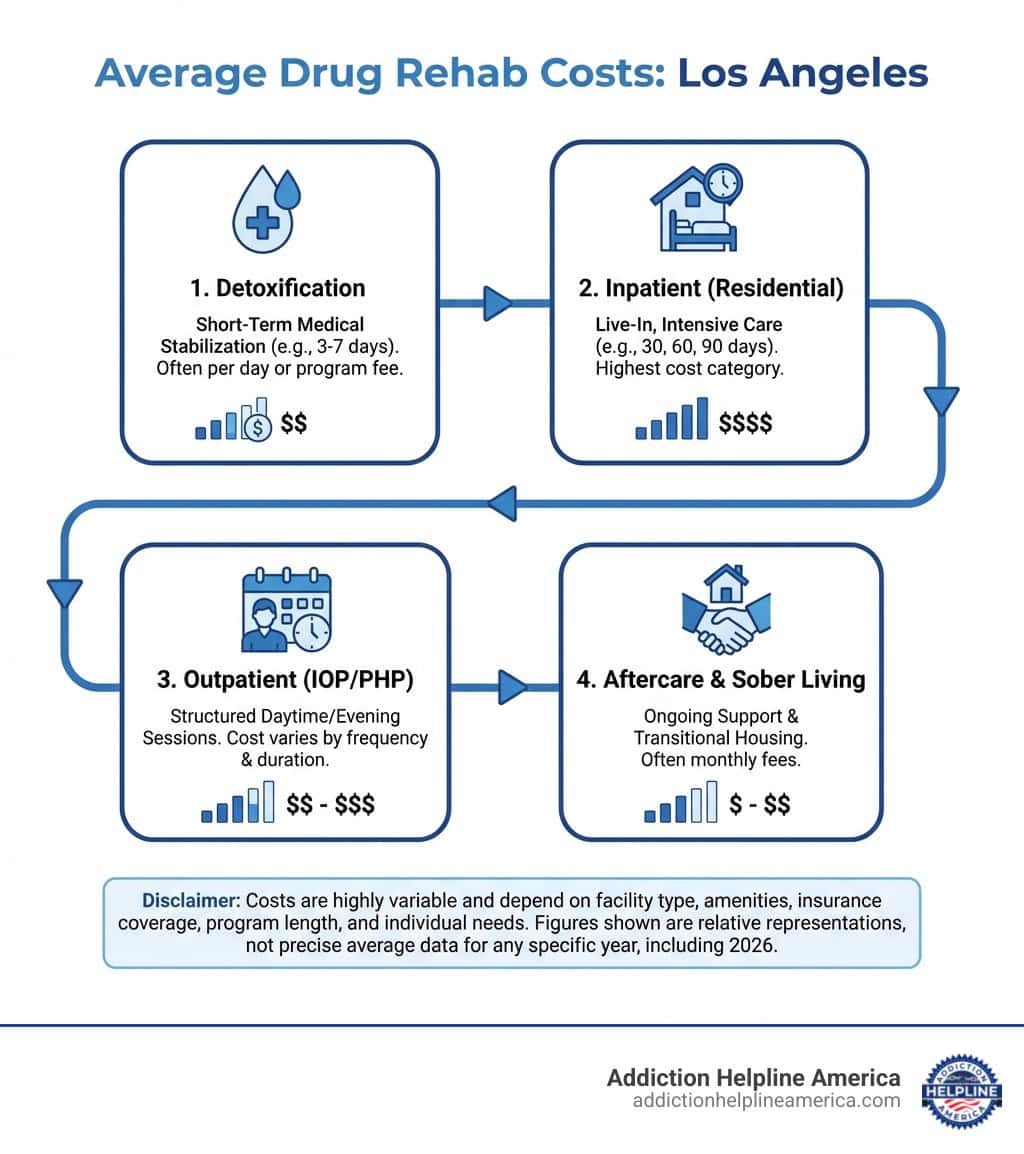
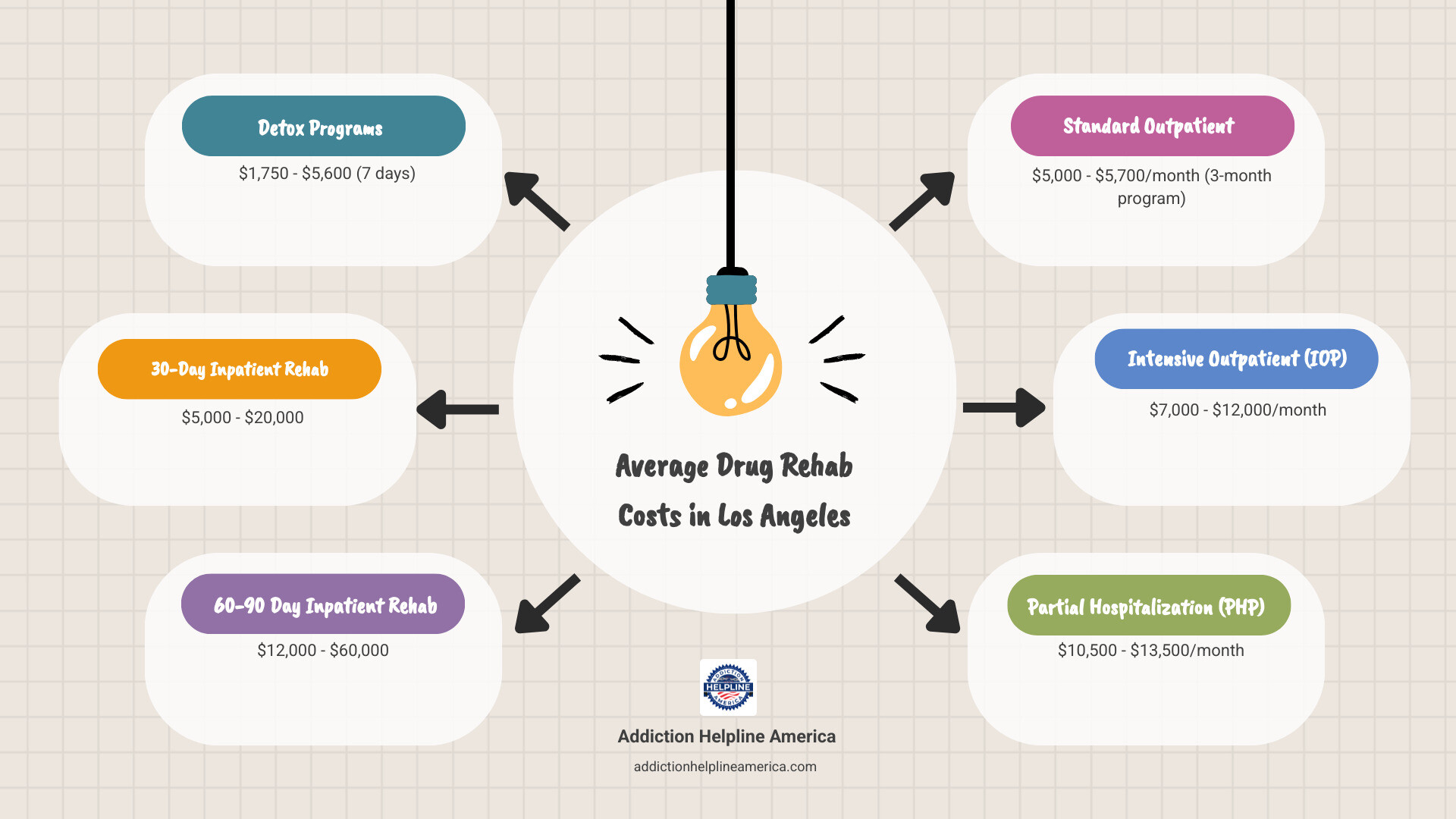
What are the average costs associated with drug rehab programs in Los Angeles? Drug rehab costs in Los Angeles vary widely based on the type of treatment and program duration. Here’s a quick breakdown:
| Treatment Type | Average Cost |
|---|---|
| Detox Programs | $1,750 – $5,600 (7 days) |
| Inpatient Rehab (30 days) | $5,000 – $20,000 |
| Inpatient Rehab (60-90 days) | $12,000 – $60,000 |
| Outpatient Programs (3 months) | $5,000 – $5,700/month |
| Intensive Outpatient (IOP) | $7,000 – $12,000/month |
| Partial Hospitalization (PHP) | $10,500 – $13,500/month |
| Sober Living | $1,500 – $2,000/month |
Seeking help for addiction is one of the most courageous decisions you or a loved one can make. But we know that understanding the financial commitment can feel overwhelming, especially when you’re already dealing with so much.
The good news? Understanding rehab costs doesn’t have to be complicated, and many options exist for every budget.
Los Angeles offers a wide range of addiction treatment programs, from state-funded facilities to luxury residential centers. California’s average residential rehab cost is $56,654 for a 30+ day stay, which places it at the 23rd most affordable state nationally. However, Los Angeles specifically can be more expensive due to the higher cost of living in this urban area.
This guide will walk you through:
- The actual costs of different types of rehab programs in Los Angeles
- What factors drive these prices up or down
- How insurance can help cover treatment
- Where to find affordable or even free options
- Why investing in recovery pays off in the long run
Remember: Multiple pathways exist to fund treatment, including insurance coverage, state-funded programs, sliding-scale fees, and payment plans. The most important thing is to take that first step toward recovery.
At Addiction Helpline America, we provide free and confidential support to individuals and families navigating what are the average costs associated with drug rehab programs in Los Angeles, connecting you with treatment options that fit both your clinical needs and your budget. We understand that the path to recovery can be challenging, which is why we’re here 24/7 to help you understand your options and take the next step.
A Breakdown of Average Drug Rehab Costs in Los Angeles
When we talk about the costs of drug rehab, it’s important to understand that California, and Los Angeles in particular, presents a unique landscape. While California ranks as the 23rd cheapest state for residential rehab nationally, with costs averaging out to $56,654 per person for a stay of 30+ days, the cost of living in Los Angeles is notoriously high. This often means that local treatment programs can sit slightly above national averages.
The price you pay for rehab will depend heavily on the type of care you need, the duration of your program, and the amenities offered. Let’s explore the specifics of what you can expect financially for different levels of care in the City of Angels.
Average Cost of Inpatient Drug Rehab in Los Angeles
Inpatient drug rehab, also known as residential treatment, provides a structured environment where individuals live at the facility 24/7 while receiving intensive therapy and medical support. This level of care is generally more expensive due to the comprehensive services included.
For a 30-day inpatient program in Los Angeles, you can typically expect costs to range between $5,000 and $20,000. These programs often include essential services such as room and board, all meals, 24/7 medical supervision and care, individual and group therapy sessions, and sometimes holistic therapies like yoga or creative writing.
If a longer stay is recommended for more complex cases or to ensure a stronger foundation for recovery, 60-day or 90-day inpatient programs can be significantly more expensive. These extended programs can see costs go upwards of $60,000 or more. Some residential treatment centers, especially those offering luxury amenities, may charge up to $80,000 or even higher for a full course of treatment. The average cost for residential treatment in California, based on 2019 state survey data, was around $57,193.
These costs cover a wide array of services designed to address every aspect of addiction. To get a clearer picture of what’s included and what to anticipate during your stay, we recommend exploring further resources on what to expect in rehab. For more detailed national statistics on rehab costs, you can also refer to the Average Cost of Drug Rehab – National Center for Drug Abuse Statistics. For more information on preparing for treatment, you can visit our guide: More info about what to expect in rehab.
Average Cost of Outpatient Drug Rehab in Los Angeles
Outpatient drug rehab programs offer a more flexible approach, allowing individuals to live at home or in sober living facilities while attending scheduled therapy sessions and groups. This flexibility often translates to lower costs compared to inpatient options.
-
Standard Outpatient Programs (OP): These programs typically involve a few hours of therapy per week, making them the least intensive and most affordable. While specific LA costs can vary, general outpatient rehab can average around $5,700 per month, or between $1,400 to $10,000 over a 30-day period. Many outpatient centers also offer a 3-month program for approximately $5,000 in total. In California, outpatient programs cost an average of $2,365 for a 30-day plan, or about $550 per week and $79 per day.
-
Intensive Outpatient Programs (IOP): IOPs provide a higher level of care than standard outpatient, with more frequent and longer sessions, often 3-5 days a week for several hours each day. For high-end IOPs in California, monthly totals can average $7,000 to $12,000, with daily costs ranging from $250 to $350. Elite clinics might even charge $500 to $650 daily.
-
Partial Hospitalization Programs (PHP): Also known as “Day Treatment,” PHPs offer the most intensive outpatient care, closely mimicking the structure of inpatient programs but without the overnight stay. Clients attend treatment for 5-8 hours a day, 5-7 days a week. Upscale PHP options in California typically cost $350 to $450 daily, averaging $10,500 to $13,500 for 30 days.
The total investment in outpatient care depends on the program’s length and intensity, and whether insurance coverage can offset some of the clinical services. To learn more about various treatment modalities and how they fit into the recovery journey, we invite you to explore our comprehensive guide: Find out more about addiction treatment centers.
The Cost of Detox and Specialized Programs
Detoxification, or “detox,” is often the crucial first step in addiction recovery, safely clearing substances from the body under medical supervision. The costs for detox services can vary based on the level of medical oversight required.

-
Medical Detox: The least expensive detox programs can start around $1,750 for a full course, while more intensive medical detox can cost anywhere from $250 to $800 per day. For a typical 7-day program, this could mean costs ranging from $1,750 to $5,600. A supervised medical detox at a private facility might average $575 per day.
-
Rapid Detox: This specialized and often controversial method involves using medication to accelerate the detox process, typically under anesthesia. Rapid detox costs significantly more, ranging from $5,000 to $10,000.
Beyond general detox and rehab, many individuals require specialized programs custom to their unique needs.
-
Dual Diagnosis Treatment: Many people struggling with addiction also have co-occurring mental health disorders (e.g., depression, anxiety, PTSD). Programs that address both addiction and mental health simultaneously are known as dual diagnosis programs. These integrated approaches are crucial for long-term recovery but can add to the overall cost due to the need for specialized therapists and psychiatric care. The complexity of treating both conditions simultaneously often necessitates a more comprehensive and thus more expensive treatment plan.
-
Substance-Specific Programs: Some programs focus on particular substances, such as opioids, alcohol, or stimulants, offering targeted therapies and medication-assisted treatment (MAT). For instance, year-long methadone treatment for heroin users costs around $4,700. It’s also worth noting the staggering financial burden of untreated addiction itself: a heroin addiction (1 gram/day) can cost over $55,000 annually, and a cocaine addiction (1 gram/day) more than $32,000 annually. These figures highlight why investing in rehab, even with its costs, is a sound financial decision in the long run.
Finding the right detox facility is a critical first step towards recovery. We can help you steer these options: Find the best detox facilities near you.
What Are the Average Costs Associated With Drug Rehab Programs in Los Angeles?
Understanding what are the average costs associated with drug rehab programs in Los Angeles is like trying to hit a moving target – it’s not a one-size-fits-all answer. The final price tag for addiction treatment is influenced by a constellation of factors, each playing a significant role in determining the overall investment in recovery. By solveing these variables, we can make more informed decisions and better prepare for the financial journey ahead.

How Program Duration and Intensity Impact Price
One of the most significant factors influencing rehab costs is the duration and intensity of the program. Generally, the longer and more intensive a program is, the higher the cost.
- Short-Term vs. Long-Term Programs: While 30-day programs are a common starting point, many experts and studies suggest that longer programs (60 or 90 days, or even more) often lead to better long-term outcomes and reduced relapse rates. However, extending a stay from 30 days to 90 days can increase the overall cost significantly, potentially tripling the initial expense. For example, a 30-day inpatient program might cost $5,000-$20,000, but a 60-90 day program can reach $12,000-$60,000 or more.
- Intensity of Care: As we discussed, outpatient programs (OP, IOP, PHP) vary in their intensity, with PHP offering the highest level of structured care outside of a residential setting, followed by IOP, and then standard OP. Each step down in intensity typically corresponds to a decrease in cost. For instance, a PHP in California might cost $10,500-$13,500 for 30 days, while a standard outpatient program could be around $2,365 for the same period.
It’s a bit like choosing a gym membership: a basic membership is cheaper, but a personal trainer package (more intensive) costs more. The key is finding the right balance between what you need for effective recovery and what you can afford. While shorter programs might seem more cost-effective initially, they may not provide enough time for comprehensive recovery, potentially leading to higher long-term costs due to relapse and repeated treatment. To understand the different lengths of programs and their implications for recovery, you can Learn more about how long rehab is.
Facility Amenities: Standard vs. Luxury Rehab
Just like hotels, rehab facilities come with a range of amenities, from basic and comfortable to extravagant and resort-like. These amenities play a direct role in shaping the program’s cost.
- Standard Rehab: A standard inpatient or residential rehab program in Los Angeles will typically include comfortable but not necessarily opulent accommodation, nutritious meals, access to common areas, and a focus on core therapeutic services. These facilities prioritize effective treatment over lavish extras, making them a more accessible option for many.
- Luxury Rehab: Luxury rehab programs in Los Angeles, often found in picturesque settings like Malibu, offer an liftd experience that can significantly increase the price. These centers can cost tens of thousands of dollars per month, or even more than $60,000 for a 30-day stay. What do you get for that price? Think private suites, gourmet meals prepared by executive chefs, spa services, swimming pools, state-of-the-art fitness centers, equestrian therapy, private yoga and meditation classes, and concierge-level services. These high-end amenities are designed to provide a more comfortable, private, and holistic healing environment, enhancing the overall treatment experience.
While luxury amenities can certainly make the recovery journey more comfortable, the quality of clinical care is paramount. Many standard facilities offer excellent, evidence-based treatment without the hefty price tag of a five-star experience. However, for those who value privacy, comfort, and a broader range of holistic offerings, luxury options provide a unique path to recovery. To explore these high-end options further, you can Explore luxury rehab programs.
How Location and Accreditation Affect What Are the Average Costs Associated With Drug Rehab Programs in Los Angeles?
The geographic location within Los Angeles, as well as the credentials of the facility, are critical cost drivers.
-
Location, Location, Location: Los Angeles is a sprawling metropolis with varying costs of living. A rehab facility situated in a prime coastal area like Malibu or an upscale neighborhood will undoubtedly command higher prices than one located inland or in a more suburban part of the county. The cost of real estate, staff salaries, and even food suppliers in these high-value areas directly translates to higher program fees. California, as a whole, has a higher cost of living, which generally pushes rehab costs above national averages.
-
Accreditation and Staff-to-Client Ratio: A facility’s accreditation is a seal of approval, indicating that it meets rigorous standards for quality of care and safety. Organizations like The Joint Commission (JCAHO) and CARF (Commission on Accreditation of Rehabilitation Facilities) provide these accreditations. Facilities that are accredited often invest more in highly qualified staff, evidence-based treatments, and robust safety protocols, which can contribute to higher costs. A lower staff-to-client ratio, meaning more individualized attention from therapists and medical professionals, also typically increases the program’s price. This ensures a more personalized and effective treatment experience.
Understanding these factors helps explain why the costs for what are the average costs associated with drug rehab programs in Los Angeles can vary so much. For further insights into how these elements contribute to the overall cost of rehab, we find the data from the National Center for Drug Abuse Statistics to be very informative.
Navigating Payment: Insurance and Affordable Options in Los Angeles
Paying for rehab is often a primary concern for individuals and families seeking help. It’s a significant investment, but we want to assure you that there are multiple pathways to make treatment accessible. From leveraging insurance benefits to exploring state-funded programs and financing options, recovery is within reach, regardless of your current financial situation.
How Insurance Coverage Affects Rehab Costs
One of the most impactful ways to reduce out-of-pocket expenses for addiction treatment is through health insurance.
- Affordable Care Act (ACA) Requirements: Thanks to the Affordable Care Act, addiction treatment is now considered an essential health benefit. This means that most insurance plans are required to cover substance use disorder treatment services on par with medical and surgical care. This parity ensures that you won’t face higher co-pays or stricter limits for addiction treatment than for other medical conditions.
- In-Network vs. Out-of-Network Providers: The amount your insurance covers will largely depend on whether the rehab facility is “in-network” or “out-of-network” with your specific plan. In-network providers have agreements with your insurance company to offer services at a negotiated rate, leading to lower out-of-pocket costs for you. Out-of-network providers, while still potentially covered, usually result in higher deductibles, co-payments, or a larger percentage of the cost being your responsibility.
- Verifying Your Benefits: Before committing to a program, it is crucial to verify your specific coverage with your insurance provider. We can help you with this process, ensuring you understand your benefits, deductibles, co-payments, and any limitations. This step is vital to avoid unexpected bills. Most insurance companies cover some form of addiction treatment, but policies vary widely. For example, if you have GEHA health insurance, you can check your specific rehab coverage details at Check your GEHA health insurance rehab coverage.
Are There Affordable or Free Drug Rehab Options in Los Angeles?
Yes! We firmly believe that financial limitations should never be a barrier to getting the help you need. Los Angeles, and California as a whole, offers a robust network of affordable and even free resources.
- State-Funded Programs (Medi-Cal): California’s Medicaid program, known as Medi-Cal, provides free or low-cost health care services, including substance use disorder treatment, for eligible low-income individuals and families. California has an extensive network of free and low-cost treatment options supported by Medi-Cal, state, and county funding. These programs offer a lifeline to those who might otherwise be unable to access care.
- Non-Profit Organizations: Many non-profit organizations and charities in Los Angeles operate rehab facilities or provide financial assistance. These organizations often receive grants and donations, allowing them to offer services at significantly reduced rates or even for free to those who qualify. The Salvation Army, for instance, is known for providing free rehab services in various locations.
- Sliding-Scale Fees and Payment Plans: Many treatment centers, both non-profit and private, offer sliding-scale fees based on your income and ability to pay. Additionally, some facilities provide in-house financing options or payment plans, allowing you to spread the cost of treatment over time.
- Financial Assistance and Scholarships: There are various grants and scholarships available from federal and state governments, as well as private foundations, specifically for addiction treatment. The Substance Abuse and Mental Health Services Administration (SAMHSA) is a great resource for finding state-funded programs and grants. You can learn more about their efforts and resources by visiting the Substance Abuse & Mental Health Services Administration (SAMHSA): National Survey of Substance Abuse Treatment Services 2020.
At Addiction Helpline America, we are dedicated to helping you steer these options. Our service is free and confidential, and we can connect you with programs that align with your budget.
What Are the Average Costs Associated With Drug Rehab Programs in Los Angeles for Specialized Groups?
The cost of rehab can also be influenced by programs designed for specific demographics or needs. These specialized programs ensure a more custom and effective approach to recovery.
Here are some examples of specialized programs you might find in Los Angeles:
- LGBTQ+ Friendly Rehab: These programs create a safe and affirming environment for individuals from the LGBTQ+ community, addressing unique challenges they may face. While the core treatment modalities are similar, the specialized support and culturally competent staff can influence pricing. For a complete guide to these vital services, explore our Complete guide to LGBTQ+ alcohol rehab.
- Youth Addiction Programs: Designed specifically for adolescents and young adults, these programs consider developmental stages and family dynamics. Costs can vary depending on whether it’s an outpatient program (where adolescent outpatient costs average around $3,278 in the US) or a more intensive residential setting.
- Veterans Programs: Many facilities offer programs custom for veterans, often addressing co-occurring PTSD and other service-related mental health issues. These programs are frequently covered by VA benefits. The VA Greater Los Angeles Healthcare System, for example, is a key resource for veterans seeking care. Find out more about their services here: VA Greater Los Angeles Healthcare System Bakersfield CBOC Bakersfield CA.
- Programs for Specific Professions: Some rehabs cater to professionals like healthcare workers, pilots, or executives, offering discreet services and flexible scheduling.
- Faith-Based Programs: These programs integrate spiritual principles and practices into the recovery process.
While specialized programs may sometimes have different funding structures or a higher cost due to highly specialized staff and resources, the goal is always to provide the most effective treatment for the individual.
The Long-Term Value: Why Rehab is a Worthwhile Investment
When considering what are the average costs associated with drug rehab programs in Los Angeles, it’s easy to focus solely on the upfront financial burden. However, we urge you to view rehab not as an expense, but as a crucial investment in your future. The benefits of recovery far outweigh the costs, especially when compared to the devastating long-term financial, emotional, and physical toll of untreated addiction.
The Financial Cost of Untreated Addiction
Addiction is a relentless thief, silently stealing not just health and relationships, but also significant financial resources. The cost of untreated addiction can quickly eclipse the cost of treatment.
- Costs of Substances: The direct cost of purchasing drugs or alcohol can be astronomical. For example, an alcoholic drinking a 12-pack a day spends over $3,000 a year on alcohol. A heroin addiction (1 gram/day) can cost over $55,000 annually, while a cocaine addiction (1 gram/day) exceeds $32,000 annually. These are just the purchasing costs, not including the ripple effects.
- Legal Fees and Fines: Addiction often leads to legal troubles, including DUIs, arrests, and other criminal charges. The associated legal fees, court costs, and fines can quickly accumulate to tens of thousands of dollars. We’ve explored these consequences in more detail in our guide on Read about the legal consequences of drugs.
- Lost Wages and Productivity: Addiction severely impacts employment. Lost jobs, decreased productivity, and frequent absences lead to significant loss of income and career stagnation. The financial cost of addiction itself (drugs, legal issues, lost productivity) can far exceed the cost of treatment.
- Healthcare Expenses: Untreated addiction leads to a host of physical and mental health issues, requiring costly medical interventions, emergency room visits, and long-term care for addiction-related illnesses.
When we consider the cumulative financial drain of addiction—from buying substances to legal battles, lost income, and healthcare—the price of rehab begins to look less like a burden and more like a wise, life-saving investment.
The ROI of Recovery: Health, Career, and Quality of Life
Investing in rehab offers a remarkable return on investment (ROI) that transcends mere dollars and cents. Recovery doesn’t just save money; it rebuilds lives.
- Improved Physical and Mental Health: Recovery brings a renewed sense of well-being. Improved physical health means fewer medical bills and a higher quality of life. Mental health stability allows for greater emotional resilience and happiness.
- Rebuilding a Career and Increasing Earning Potential: With sobriety comes clarity, reliability, and renewed motivation. Individuals in recovery often regain employment, advance in their careers, and significantly increase their earning potential, replacing lost wages with consistent income.
- Restoring Relationships with Family and Friends: Addiction strains and often shatters relationships. Recovery provides the opportunity to mend these bonds, fostering stronger, healthier connections with loved ones. For families seeking to support a loved one through this journey, our guide provides essential insights: A guide for families seeking addiction help.
- Long-Term Happiness and Stability: Recovery leads to a life of purpose, stability, and genuine happiness. It’s about regaining control, finding joy in everyday moments, and building a future free from the grip of addiction. The long-term benefits of rehab encompass substantial cost savings from overcoming addiction, improved mental and physical health, improved job performance, and an overall higher quality of life.
The cost of not treating addiction, including healthcare, legal, and productivity losses, should be considered when weighing overall value and health return. The investment in rehab is an investment in a healthier, more fulfilling future—a future where you or your loved one can thrive.
Take the First Step Towards Recovery Today
Navigating the complexities of what are the average costs associated with drug rehab programs in Los Angeles can feel like a daunting task. However, as we’ve explored, a wide spectrum of options exists to fit nearly every budget and clinical need. From luxury private facilities to state-funded programs and flexible outpatient care, the most crucial step is simply reaching out for help.
Investing in recovery is arguably the most important investment you can make—an investment in a healthier, more productive, and more fulfilling life. The financial costs of untreated addiction consistently outweigh the costs of treatment, making rehab a financially sound decision in the long run, not to mention the invaluable returns in health, relationships, and peace of mind.
At Addiction Helpline America, we are here to simplify this process for you. We provide free, confidential, and personalized guidance to help you understand your options and find a program in Los Angeles that aligns with both your clinical requirements and your financial situation. Our vast network of treatment centers ensures that we can connect you with the right support, 24/7.
Don’t let financial concerns delay the journey to recovery. We’re here to help you take that brave first step. Get a personalized and confidential assessment of your options today.