
Understanding Panic Attacks and the Path to Recovery
A therapist for panic attacks can help you identify triggers, develop coping strategies, and treat underlying causes through evidence-based approaches like Cognitive Behavioral Therapy (CBT). Here’s how to find the right support:
- When to seek help: Persistent worry, recurring panic attacks with physical symptoms, or avoidance behaviors that limit daily functioning
- What therapists do: Help you understand triggers, challenge catastrophic thoughts, and develop management strategies
- Types of therapy: CBT (most widely researched), exposure therapy, mindfulness-based approaches
- Where to find help: Psychology association directories (APA, ADAA), community mental health centers, online therapy platforms, insurance provider networks
- What to expect: Initial assessment, customized treatment plan, skills for long-term management
Panic attacks can feel like you’re dying. The racing heart, shortness of breath, and overwhelming dread arrive without warning, leaving you terrified of the next episode. For many people, these experiences become so debilitating that simple activities like taking a shower can feel impossible.
But here’s the critical truth: panic attacks are highly treatable, and you don’t have to fight this battle alone.
Research shows that therapies like CBT can significantly reduce panic attack frequency and intensity. Early intervention prevents symptoms from escalating into panic disorder and helps you regain control of your life. Whether your panic attacks come “out of the blue” or in response to specific triggers, a therapist for panic attacks can equip you with practical tools to manage symptoms and address root causes.
At Addiction Helpline America, we understand how panic and anxiety can feel overwhelming, and we’re committed to connecting individuals and families with the compassionate, evidence-based care they need. Our experience helping people steer mental health challenges, including finding a therapist for panic attacks, drives our mission to provide accessible resources and support for lasting recovery.
Recognizing the Need for Help: When Anxiety and Panic Take Over
Sometimes, it’s hard to tell if what you’re feeling is just everyday stress or something more. We all experience worry, but when anxiety and panic begin to dictate your life, it’s a clear sign that professional help can make a profound difference.

You might need to connect with a therapist for panic attacks if you experience:
- Persistent worry: If you find yourself caught in a cycle of constant, excessive worry about various aspects of your life (work, health, family, finances) that feels difficult to control, and this worry lasts for months, it’s a significant indicator. This isn’t just “overthinking”; it’s an overwhelming mental burden.
- Avoidance behaviors: Are you starting to avoid situations, places, or activities that you once enjoyed or that are necessary for your daily life? Perhaps you skip social gatherings, avoid public transportation, or even shy away from exercise because you fear triggering a panic attack. This avoidance can severely limit your life and personal growth.
- Recurring panic attacks with physical symptoms: If you’re experiencing sudden, intense episodes of fear accompanied by physical symptoms like a racing heart, shortness of breath, chest pain, or dizziness, especially if these attacks happen repeatedly, it’s time to seek professional guidance.
- Significant distress or impairment: If your anxiety or panic attacks are causing considerable distress, making it difficult to function at work, school, or in relationships, it’s a strong signal that you could benefit from therapy.
Untreated anxiety and panic attacks can lead to serious long-term consequences. What starts as occasional panic can escalate into panic disorder, where the fear of having another attack becomes a constant presence. This fear often leads to developing agoraphobia, a condition where individuals fear and avoid places or situations that might cause panic, helplessness, or embarrassment. This could mean avoiding leaving the house alone, crowds, enclosed spaces, or public transportation. Without intervention, your world can shrink, impacting your mental well-being, physical health, and overall quality of life.
Understanding mental health is the first step towards recovery. For more information on overall mental health awareness, you can visit our page on mental-health-awareness.
The Anatomy of a Panic Attack
A panic attack is a sudden, intense surge of fear or discomfort that reaches its peak within minutes, often accompanied by a host of frightening physical and psychological symptoms. While the experience is highly individual, common symptoms include:
- Racing heartbeat or heart palpitations: Feeling like your heart is pounding out of your chest.
- Shortness of breath or feeling of choking: A sense of suffocation or inability to get enough air.
- Chest pain or discomfort: This can be so severe it’s often mistaken for a heart attack.
- Dizziness, lightheadedness, or faintness: Feeling unsteady or like you might pass out.
- Trembling or shaking: Involuntary shaking of your body.
- Sweating: Breaking out in a sudden, cold sweat.
- Nausea or abdominal distress: An upset stomach or feeling sick.
- Fear of dying: A profound sense of impending doom.
- Feelings of unreality or being detached: Feeling “outside” your body or that things around you aren’t real.
- Tingling or numbness: Sensations in your extremities.
- Chills or hot flashes: Sudden changes in body temperature.
These symptoms can be incredibly frightening, making you feel like you’re losing control or experiencing a serious medical emergency. Panic attacks can occur “out of the blue,” for no apparent reason, or in response to a stressful situation. They typically last around 10 to 20 minutes, though in extreme cases, they can extend up to an hour.
It’s important to understand the difference between a panic attack and an anxiety attack. While often used interchangeably, there’s a distinction:
- Panic Attack: Characterized by a sudden, intense onset, reaching a peak quickly (within minutes), often feeling like it comes out of nowhere. The physical symptoms are usually more severe and debilitating.
- Anxiety Attack: While not a clinical term, it generally refers to a period of intense anxiety that builds gradually, often tied to a specific stressor or worry. The symptoms can be similar to a panic attack but are typically less intense and may last longer.
From Panic Attacks to Panic Disorder
When panic attacks become a regular, unwelcome visitor, and the fear of having another attack begins to dominate your life, you might be experiencing Panic Disorder. According to the Diagnostic and Statistical Manual of Mental Disorders (DSM-5), panic disorder is diagnosed when you experience recurrent, unexpected panic attacks, followed by at least one month of persistent worry about having additional attacks, or significant behavioral changes designed to avoid future attacks.
This constant apprehension about when the next attack will strike can lead to significant behavioral changes. You might start avoiding places where attacks have occurred, carrying “safety items” like water or medication, or always sitting near exits. These are common avoidances or behavioral changes seen in individuals with panic disorder, all designed to make you feel safer, but ultimately restricting your life.
Panic disorder can also co-occur with agoraphobia. The key difference between panic disorder and panic disorder with agoraphobia lies in the presence of this intense avoidance behavior:
- Panic Disorder: Involves recurrent, unexpected panic attacks and persistent worry about future attacks or their consequences.
- Panic Disorder with Agoraphobia: Includes the criteria for panic disorder, plus a marked fear or anxiety about at least two of the following five situations: using public transportation, being in open spaces, being in enclosed places, standing in line or being in a crowd, or being outside of the home alone. The individual actively avoids these situations because they fear they might have a panic attack and be unable to escape or get help. Agoraphobia can even occur without full-blown panic attacks, driven by the fear of panic-like symptoms.
The causes of anxiety and panic attacks are often a complex interplay of factors, including:
- Genetics: If a direct family member has a panic disorder, you can be up to eight times more likely to develop the condition. If a family member developed it before age 20, the likelihood could increase up to 20 times.
- Trauma: Exposure to trauma, whether in childhood or adulthood, can significantly increase the risk.
- Biochemical factors: Imbalances in brain chemicals can play a role.
- Environmental factors: Growing up in an environment with high stress, anxiety, or unrealistic expectations can contribute. Major life stressors, poor support systems, or difficult relationships can also be triggers.
Panic disorder is often detected and diagnosed during a person’s teenage or early adulthood (18-35) years, and women are more than twice as likely to develop it than men. For those struggling with both depression and anxiety, we offer resources and guidance on effective treatment options at treatment-for-depression-and-anxiety-2.
How a Therapist for Panic Attacks Can Help You Regain Control
The good news is that you don’t have to live under the shadow of panic attacks. A therapist for panic attacks can be your most powerful ally in reclaiming your life.

Seeking therapy early on offers numerous benefits:
- Reduced severity and prevention of future occurrences: Early intervention can significantly reduce the intensity and frequency of panic attacks, preventing them from escalating into a full-blown panic disorder.
- Improved overall well-being: Therapy helps individuals regain control, leading to a sense of empowerment, reduced anxiety, and a significant improvement in quality of life.
- Overcoming avoidance behaviors: A therapist can guide you through strategies to gradually confront and overcome the situations you’ve been avoiding, helping you step back into a fuller life. This process can be transformative, helping you go from fearing leaving your home to confidently engaging in activities you love.
- Identifying underlying causes: A skilled therapist can help you identify the roots of your struggles, whether they stem from past trauma, unresolved stress, or specific thought patterns. By addressing these underlying causes, therapy offers a more sustainable path to recovery rather than just symptom management.
- Building resilience: Therapy equips you with coping mechanisms and a deeper understanding of your anxiety, making you more resilient in the face of future stressors.
- Restoring quality of life: Therapy aims to help you enjoy life again, free from the constant worry and limitations imposed by panic attacks.
Evidence-Based Therapeutic Approaches
When it comes to treating anxiety and panic attacks, several therapeutic approaches have proven highly effective. Our goal is to connect you with a therapist for panic attacks who uses these evidence-based methods:
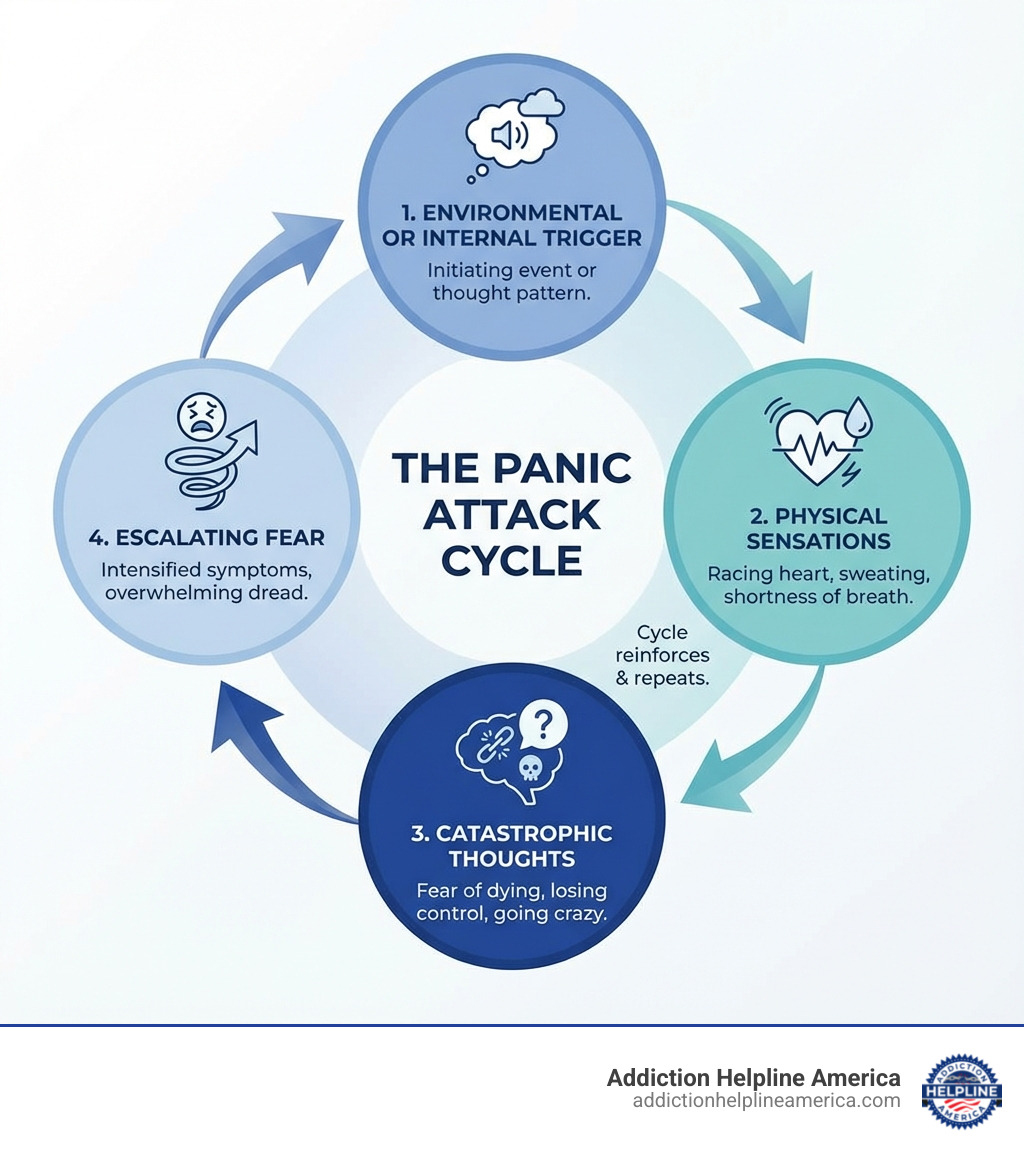
- Cognitive Behavioral Therapy (CBT): This is one of the most widely researched and recommended therapies for anxiety disorders, including panic attacks. CBT teaches you how to identify and change unhelpful thinking patterns and behaviors that contribute to your panic. For instance, if you experience a racing heart and immediately think, “I’m having a heart attack,” a CBT therapist will help you challenge that catastrophic thought and replace it with a more realistic one. You’ll learn to understand the connection between your thoughts, emotions, and physical sensations, empowering you to break the panic cycle.
- Exposure Therapy: Often a component of CBT, exposure therapy involves gradually and safely confronting the situations or physical sensations you fear. If you avoid crowded places due to fear of a panic attack, a therapist might guide you through imagining a crowded place, then watching videos, then visiting a mildly crowded area, until you can manage larger crowds. This systematic approach helps you learn that your fears are often unfounded and that you can cope with the sensations.
- Mindfulness-Based Therapies: These approaches teach you to be present and observe your thoughts and feelings without judgment. By practicing mindfulness, you can learn to accept panic attack sensations rather than fighting them, which can actually reduce their intensity. Observing thoughts like “I’m going to die” without engaging with them can be a powerful tool.
These therapies equip you with concrete skills and strategies to manage your anxiety, understand your triggers, and respond differently to the onset of panic. They are not just temporary fixes but tools for long-term well-being.
Complementary Treatments and Coping Strategies
While therapy is often the cornerstone of treatment, a holistic approach that includes medication and self-help strategies can be incredibly effective.
- Role of Medication: For many, medication can be a crucial part of managing panic disorder, especially in the initial stages to reduce severe symptoms and allow therapy to be more effective.
- SSRIs (Selective Serotonin Reuptake Inhibitors): These antidepressants are often the first-line medication for panic disorder and are FDA-approved for long-term treatment. They work by increasing serotonin levels in the brain, helping to regulate mood and anxiety.
- SNRIs (Serotonin-Norepinephrine Reuptake Inhibitors): Similar to SSRIs, SNRIs also help regulate mood and anxiety by affecting serotonin and norepinephrine. They are also FDA-approved for long-term treatment.
- Benzodiazepines: These anti-anxiety medications can provide rapid, short-term relief during acute panic attacks or periods of severe anxiety. However, they are typically prescribed for short durations due to the risk of dependence.
Medication decisions should always be made in consultation with a doctor or mental health professional, who can assess your individual needs and potential side effects. For more information on antidepressants, you can visit our page on antidepressants-inpatient-rehab-program.
- Non-Pharmaceutical Options: For those who prefer or need to avoid medication (e.g., pregnant individuals), or as a complement to other treatments, several non-pharmaceutical options can be highly beneficial:
- Coping Strategies: Developing targeted coping strategies can help reduce symptoms and regain a sense of control during an attack.
- Deep Breathing Exercises: Mindful, deep breathing can activate the parasympathetic nervous system, calming your body’s stress response. Inhale slowly through your nose, hold briefly, and exhale slowly through your mouth. This simple act can disrupt the anxious thought cycle.
- Grounding Techniques: These help you reconnect with the present moment when you feel detached or overwhelmed. Examples include the “5-4-3-2-1” technique (identifying 5 things you can see, 4 you can touch, 3 you can hear, 2 you can smell, and 1 you can taste) or focusing on the sensations of your feet on the ground.
- Lifestyle Adjustments: Simple changes can have a significant impact:
- Regular Exercise: Physical activity can reduce anxiety symptoms and improve mood.
- Healthy Diet: A balanced diet supports overall mental and physical health.
- Adequate Sleep Hygiene: Prioritizing consistent, restorative sleep can dramatically improve your ability to manage stress and anxiety.
- Limiting Caffeine and Alcohol: These substances can exacerbate anxiety symptoms.
- Yoga and Meditation: These practices promote relaxation and mindfulness.
- Coping Strategies: Developing targeted coping strategies can help reduce symptoms and regain a sense of control during an attack.
A holistic approach, combining professional therapy with medication (if needed) and self-care strategies, offers the best chance for long-term recovery and well-being.
Finding the Right Therapist for You
Starting on the journey to find a therapist for panic attacks can feel daunting, but with the right resources, it becomes much easier. The goal is to find a mental health professional who is not only qualified but also a good fit for your unique needs.
There are several types of mental health professionals who can help:
- Psychologists: Hold a doctoral degree (Ph.D. or Psy.D.) and specialize in diagnosing and treating mental health conditions through therapy. They cannot prescribe medication in most states.
- Psychiatrists: Are medical doctors (M.D.) who specialize in mental health. They can diagnose conditions, provide therapy, and prescribe medication.
- Licensed Professional Counselors (LPCs) or Licensed Mental Health Counselors (LMHCs): Hold a master’s degree and are trained to provide therapy for a wide range of mental health issues.
- Licensed Clinical Social Workers (LCSWs): Hold a master’s degree in social work and are trained to provide therapy, often with a focus on how social and environmental factors impact mental health.
Where to search for a therapist:
- Trusted Directories: Reputable online directories are excellent starting points. We recommend resources like:
- The Anxiety & Depression Association of America (ADAA): Find a Therapist
- The Society of Clinical Psychology (Division 12 of the APA): Find a CBT Therapist to locate professionals trained in evidence-based treatments.
- Psychology Today: A comprehensive directory where you can search for therapists by location, such as this search for Anxiety Therapists in Alabama.
- Insurance Networks: Contact your insurance provider directly or check their website for a list of in-network mental health professionals.
- Referrals: Your primary care physician can often provide referrals to therapists they trust. Friends or family who have had positive therapy experiences might also offer recommendations.
What to Look for in a Therapist for Panic Attacks
Finding the “right” therapist for panic attacks is a highly personal process. Here are key considerations:
- Specialization in Anxiety Disorders: Look for therapists who specifically list anxiety disorders, panic disorder, and phobias as their areas of expertise. Their experience in this field means they understand the nuances of panic attacks and the most effective treatments.
- Experience with CBT and Exposure Therapy: As discussed, these are considered gold standards for panic disorder. A therapist proficient in these approaches will be able to guide you through practical, evidence-based techniques.
- Therapeutic Fit and Rapport: This is crucial. You need to feel comfortable, understood, and safe sharing your deepest fears with your therapist. Many therapists offer a free initial consultation (often 15 minutes) to assess this fit.
- Questions to Ask in a Consultation:
- “What is your experience treating panic attacks and panic disorder?”
- “What therapeutic approaches do you use, and how do they work for panic?”
- “What should I expect during our sessions?”
- “How do you measure progress?”
- “What are your fees, and do you accept my insurance?”
- In-person vs. Online Therapy: Consider your preferences and logistical needs. Many therapists offer both in-person and virtual (telehealth) sessions. Online therapy can be a convenient and effective option, especially if you have mobility issues or live in a rural area.
Accessing Affordable and Publicly Funded Programs
Access to mental health care shouldn’t be a luxury. There are various avenues to find affordable or publicly funded support for panic attacks across the United States:
- Community Mental Health Centers (CMHCs): These centers often provide comprehensive mental health services, including therapy and medication management, on a sliding-scale fee based on your income.
- University Training Clinics: Many universities with psychology or counseling programs operate clinics where graduate students provide therapy under the supervision of licensed professionals. These services are typically high-quality and offered at a reduced cost.
- Government Resources: The Substance Abuse and Mental Health Services Administration (SAMHSA) offers a national helpline and a treatment locator tool that can help you find facilities and programs.
- SAMHSA’s National Helpline: National Helpline (1-800-662-HELP (4357))
- SAMHSA’s Behavioral Health Treatment Services Locator: National Substance Use and Mental Health Services Survey (N-SUMHSS)
- National Helplines and Support Services:
- 988 Suicide & Crisis Lifeline: 988 Suicide & Crisis Lifeline (Call or text 988 for free and confidential support 24/7).
- Disaster Distress Helpline: Disaster Distress Helpline (1-800-985-5990 for immediate crisis counseling related to disasters).
- Sliding-Scale Fees: Don’t hesitate to ask therapists if they offer a sliding scale based on income. Many private practitioners do.
- Employee Assistance Programs (EAPs): If you’re employed, check if your workplace offers an EAP, which often provides a limited number of free therapy sessions.
While specific structured programs vary by state and region, utilizing these national and local resources can significantly reduce the financial barrier to accessing quality mental health care.
Frequently Asked Questions about Therapy for Panic Attacks
What is the difference between a panic attack and an anxiety attack?
While the terms are often used interchangeably, there’s a distinction. A panic attack is a sudden, intense surge of fear or discomfort that peaks quickly, usually within minutes, and often feels like it comes “out of the blue.” The physical symptoms (like racing heart, shortness of breath, chest pain) are typically very severe. An anxiety attack, though not a formal clinical term, generally refers to a period of intense anxiety that builds gradually, often in response to a specific stressor. Its symptoms can be similar to a panic attack but may be less intense and can last longer. The key is the sudden, unexpected, and often overwhelming nature of a panic attack versus the more gradual, stress-response nature of an anxiety attack.
How does a therapist for panic attacks treat the root cause?
A skilled therapist for panic attacks doesn’t just address symptoms; they work to uncover and treat the underlying causes. Using approaches like Cognitive Behavioral Therapy (CBT), they help you:
- Identify Triggers: Pinpoint specific situations, thoughts, or sensations that precede your panic attacks.
- Challenge Fearful Thoughts: Panic attacks are often fueled by catastrophic interpretations of physical sensations (e.g., “my heart is racing, I must be dying”). Your therapist will guide you in challenging these irrational thoughts and replacing them with more realistic ones.
- Explore Underlying Issues: Through talk therapy, you can dig into deeper contributors such as past trauma, chronic stress, unresolved conflicts, or specific anxieties (like health anxiety). By understanding these foundational elements, you can develop healthier coping mechanisms and integrate new perspectives, ultimately reducing the likelihood of future attacks.
Is therapy or medication better for panic attacks?
Both therapy and medication are highly effective for treating panic attacks, and research indicates that a combination of the two is often the most effective treatment plan.
- Therapy (especially CBT): Is widely recognized as a highly effective, long-term solution. It empowers you with skills to understand, manage, and prevent panic attacks by changing thought patterns and behaviors. It teaches you how to cope, even when symptoms arise, and provides lasting tools.
- Medication (like SSRIs): Can be very helpful in managing the acute symptoms of panic disorder, reducing the frequency and intensity of attacks, and making it easier to engage in therapy.
The “better” option depends entirely on your individual needs, preferences, and the severity of your symptoms. For some, medication offers initial relief to stabilize symptoms before diving into therapy. For others, therapy alone is sufficient. Many find that combining both provides the most comprehensive and robust path to recovery. Your mental health professional can help you determine the best approach for you.
Conclusion: Take the First Step Towards a Calmer Future
Living with panic attacks can feel like being trapped in a constant state of fear, but we want you to know that hope and recovery are not just possible—they are within reach. Panic attacks are highly treatable, and with the right support from a therapist for panic attacks, you can learn to manage your symptoms, overcome avoidance behaviors, and regain control of your life.
Therapy empowers you with lifelong skills, changing how you respond to anxiety and panic. It’s an investment in your well-being, paving the way for a calmer, more fulfilling future. At Addiction Helpline America, we are dedicated to connecting individuals nationwide with the compassionate, evidence-based care they need. We understand the courage it takes to seek help, and we’re here to guide you every step of the way.
Don’t let fear dictate your life any longer. Take that courageous first step towards a brighter tomorrow.