
Introduction: Your Blueprint for Lasting Sobriety
A sobriety plan is a structured, written guide for living a substance-free life. It’s not just about stopping drug or alcohol use. It’s about building a new, healthy way of living. Think of it as your personal roadmap for recovery.
Why is having such a plan so important? Because it greatly increases your chances of staying sober long-term. The U.S. Department of Health and Human Services highlights these key benefits:
- Identify clear goals for your wellness.
- Outline specific steps to reach those goals.
- Consider both daily activities and bigger, long-term aspirations.
- Help you track your progress over time.
- Spot triggers and learn how to manage them effectively.
Many people try to recover without a formal plan. But recovery is a journey, not just a destination. It has ups and downs. Relapse is not an event, but often a process that can be halted with a clear plan. A written plan helps you steer these challenges. It gives you structure and support when you need it most.
It’s your blueprint for a resilient recovery.
At Addiction Helpline America, we understand the path to recovery can be challenging. Our team helps individuals and families create personalized sobriety plans, connecting them with vital resources and compassionate support for lasting recovery.
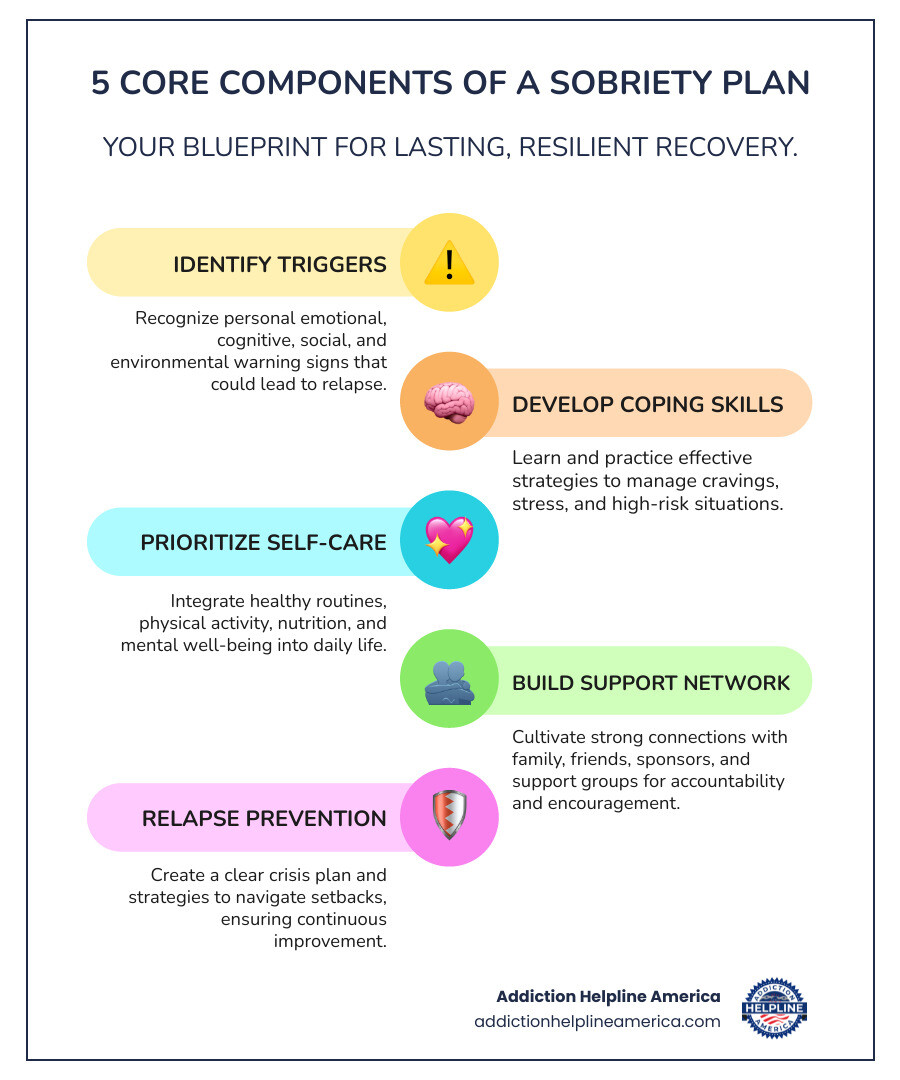
The Core Components of a Comprehensive Sobriety Plan
A sobriety plan is more than just a to-do list. It’s a living, breathing action plan that guides your entire wellness journey. Think of it as your personal GPS for recovery—helping you set clear goals, map out the steps to get there, and track your progress along the way.
This plan organizes what you’ve learned about your recovery into a concrete strategy, considering both daily activities and long-term aspirations. When stress or temptation hits, your sobriety plan becomes a reliable source of good ideas to keep you on track.
At Addiction Helpline America, we help you create a personalized plan that fits your unique needs. Because your recovery journey is yours alone, and your plan should reflect that.
Identifying Personal Triggers and Warning Signs
Understanding your personal triggers is the foundation of any effective sobriety plan. Triggers are those temptations that spark cravings for substance use. As the National Institute on Drug Abuse explains, these can include people, places, or things, and can be physical, mental, or emotional.
Relapse isn’t a sudden event. It’s a process that often begins with subtle shifts in feelings, thoughts, and behaviors—sometimes long before substance use occurs. Recognizing these early warning signs gives you the power to change course before you’re in real danger.
Emotional triggers are feelings that might pull you back toward substance use. These could be negative emotions like anger, boredom, stress, or loneliness. But they can also be positive feelings—some people want to “celebrate” good news with substances, while others might feel guilty about happiness and sabotage it. Your emotions are valid, but understanding how they affect your recovery is crucial.
Cognitive triggers are the thoughts that can lead you astray. Maybe you start remembering only the “good times” from your using days, conveniently forgetting the pain. Or perhaps you convince yourself that you’re “cured” and can handle just one drink or dose. These thought patterns can be sneaky, which is why monitoring them carefully is so important.
Social triggers involve certain people who might be connected to your past substance use. Ask yourself honestly: who are the people you’re most likely to use with? This doesn’t necessarily mean cutting everyone out of your life, but it might mean setting firm boundaries or avoiding certain social situations, at least in early recovery.
Environmental triggers are places or situations that remind you of using. This could be a specific bar, a certain neighborhood, or even a particular time of day. Knowing where you’re most likely to use allows you to plan alternative routes or activities.
A helpful acronym to remember common triggers is HALT: Hungry, Angry, Lonely, Tired. When you’re experiencing any of these states, you’re more vulnerable. But remember, your triggers are unique to you. Your sobriety plan should list your specific triggers and outline exactly how you’ll respond to each one.
Warning signs of relapse are the behavioral changes and attitude shifts that signal you’re approaching dangerous territory. These might include isolating yourself, skipping support meetings, or a general shift in how you feel about your recovery. The good news? These signs can be recognized and interrupted. By catching them early, you can take action before a slip occurs.
Developing Effective Coping Strategies
Once you know your triggers and warning signs, the next step in your sobriety plan is developing effective coping strategies. These are your personal tools for managing cravings, handling stress, and navigating high-risk situations without turning to substances.
Emotional management techniques give you healthy ways to process difficult feelings. Mindfulness teaches you to be intentional, accept your experience as it is, and live in the present moment. Deep breathing exercises can calm your nervous system when anxiety strikes. Activities like yoga, guided imagery, mindful eating, and body scans help you reconnect with yourself in a grounded way. Meditation isn’t about emptying your mind—it’s about observing your thoughts without judgment and letting them pass like clouds in the sky.
Behavioral strategies are the actions you take when faced with a trigger or craving. Sometimes the simplest approach works best: remove yourself from the triggering environment. Leave the party. Take a different route home. Call your sponsor or a trusted friend right away. Engage in a healthy, distracting activity that requires your full attention. These aren’t avoidance tactics—they’re smart survival skills.
Healthy activities and hobbies fill the void that substance use once occupied. Maybe you used to love painting, playing guitar, or hiking before addiction took over. Now’s the time to refind those passions. Or explore new ones. Exercise is particularly powerful—it releases natural endorphins that improve your mood and reduce cravings. Volunteering connects you with others and gives you a sense of purpose. These activities don’t just distract you from cravings; they remind you why sobriety is worth it.
Planning for high-risk situations means anticipating challenges before they arise. If you’re attending a social event where alcohol will be present, arrange to have a sober friend accompany you. Prepare polite but firm responses for when someone offers you a drink: “No thanks, I’m good with water.” Know your exit strategy if things get uncomfortable. The NIAAA’s Rethinking Drinking guide suggests keeping a written reminder of your reasons for changing handy when urges strike, or talking things through with someone you trust.
One powerful technique is learning to “ride out” urges like a wave. Cravings feel overwhelming, but they always pass. They rise, peak, and then fall—usually within 15 to 30 minutes. You don’t have to act on every feeling you have. You can observe it, acknowledge it, and let it move through you without giving in.
Your sobriety plan should detail which coping strategies work best for you in different situations. The more specific you are, the more helpful your plan will be when you need it most.
Building Your Foundation: Self-Care and Support Systems
Recovery isn’t just about putting down the bottle or saying no to drugs. It’s about building something new—a life that feels worth living, a life that supports your sobriety naturally. This is where holistic recovery comes in. It means taking care of your whole self: your body, your mind, and your spirit.
When you neglect your physical health or mental well-being, you’re essentially leaving cracks in your foundation. And those cracks? They’re where relapse can sneak in. That’s why your sobriety plan needs to include more than just avoiding triggers. It needs to include the positive things—the healthy routines that bring stability and structure, and the people who lift you up when things get hard.
Think of self-care and support systems as the two legs you stand on. You need both to stay balanced.

Integrating Self-Care and Healthy Routines
Self-care isn’t bubble baths and face masks (though if those help you relax, great!). It’s the daily commitment to treating yourself like someone worth taking care of. It’s medicine, not indulgence.
Let’s start with your physical health. When was the last time you had a proper check-up? Your body has been through a lot, and it deserves attention. Regular visits to your doctor help catch any issues early. Eating a healthy diet isn’t about restriction—it’s about giving your body the fuel it needs to heal and feel good. Your brain especially needs proper nutrition to rebuild after substance use.
Regular exercise is one of the most powerful tools in your recovery toolkit. It doesn’t mean you need to run marathons or lift heavy weights (unless you want to). Even a 20-minute walk around your neighborhood can reduce stress, improve your mood, and help you sleep better. Exercise releases endorphins—those natural feel-good chemicals that substances used to artificially provide.
Speaking of sleep, adequate sleep is non-negotiable. Aim for at least eight hours a night. When you’re tired, everything feels harder. Your emotions are more fragile, your judgment gets fuzzy, and cravings can feel overwhelming. A consistent sleep schedule stabilizes your mood and gives you the energy to face each day.
Your mental well-being deserves just as much attention as your physical health. Mental health therapy or counseling isn’t a sign of weakness—it’s a sign of wisdom. A therapist can help you work through the underlying issues that contributed to your substance use in the first place. They provide tools and perspective that you simply can’t get on your own.
Stress reduction techniques become essential skills in recovery. Mindfulness practices like yoga, guided imagery, and mindful breathing teach you to stay present instead of getting lost in anxious thoughts about the future or regrets about the past. These aren’t just trendy wellness buzzwords—they’re proven methods for managing the difficult emotions that life throws at you.
Creating healthy routines brings predictability to your days. When you were using, life was probably chaotic and unpredictable. Now, you get to create structure. Maybe you start each morning with coffee and a few minutes of quiet reflection. Maybe you cook healthy meals at specific times. Maybe you have a set bedtime routine that signals to your body it’s time to rest.
These routines might sound boring, but they’re actually incredibly comforting. They provide stability when everything else feels uncertain. They replace the old rituals of substance use with new, healthy patterns that support your recovery.
The Power of a Strong Support Network
Here’s a truth that might be hard to hear: you cannot do this alone. And that’s not a weakness—it’s just reality. Recovery requires accountability and encouragement from people who genuinely care about you.
Your support network is your safety net. These are the people you can call at 2 a.m. when you’re struggling. They’re the ones who celebrate your milestones and remind you why you started this journey when you forget.
Start building a support list right now. Write down actual names and phone numbers—don’t just think about it. Include family members who support your recovery (not everyone in your family might be healthy for you right now, and that’s okay). Add trusted friends who understand what you’re going through and won’t pressure you to use.
If you’re in a 12-Step program like Alcoholics Anonymous or Narcotics Anonymous, having a sponsor or mentor is invaluable. This is someone who’s been where you are and can guide you through the rough patches. They’ve made mistakes, learned from them, and can help you avoid some of the same pitfalls.
Therapists and counselors provide professional support that friends and family can’t. They’re trained to help you work through complex emotions and mental health challenges. They offer objective guidance without judgment.
Support groups connect you with people who truly get it. There’s something powerful about sitting in a room (or joining a virtual meeting) with others who understand your struggle firsthand. You don’t have to explain yourself or justify your feelings. Popular options include Alcoholics Anonymous and Narcotics Anonymous, but there are many other groups available depending on your needs and preferences.
A practical tip from relapse prevention experts: list at least five people you can call when you’re tempted to use. Put their numbers in your phone right now. The more connected you stay to your support network, the stronger your recovery becomes.
At Addiction Helpline America, we understand that building these foundations takes time and guidance. We’re here to help you connect with the resources and support systems that will make your sobriety plan not just a document, but a living, breathing part of your daily life.
How to Create and Maintain Your Personalized Sobriety Plan
Creating a sobriety plan is one of the most powerful steps you can take on your recovery journey. It’s your chance to truly take control, prepare for challenges, and lay out a clear strategy for a substance-free life. Think of it as your personal guide, always there to remind you of your strength and commitment.
But here’s the secret: your sobriety plan isn’t a rigid rulebook set in stone. It’s a living, breathing document that will change and grow right along with you. It’s designed to be dynamic, helping you achieve lasting success.

Step-by-Step Guide to Writing Your Sobriety Plan
Ready to put pen to paper (or fingers to keyboard)? This process is all about honest self-reflection and smart planning. Let’s walk through it together:
- Gather Your Information and Get Organized: Start by creating a special spot for all your recovery tools. This could be a binder or a dedicated digital folder. Fill it with important contact numbers, meeting schedules, and any notes from therapy or support groups. Having everything in one place makes it easy to find when you need it most.
- Take Time for Self-Assessment: Before you write anything down, ask yourself some honest questions. What truly motivates you to make this change? What challenges might pop up along the way? Can you truly commit to the steps you’re about to create? Think about your hopes and dreams for the future—what does a sober, fulfilling life look like to you? This deep dive helps you connect with your “why” and strengthens your resolve.
- Define Your Goals Clearly: Now, it’s time to write down your goals. These should include both the small, daily steps you want to achieve and your bigger, long-term dreams for wellness. The NIAAA offers a helpful Alcohol Reduction Plan Template that can get you started, prompting you to consider things like, “What are my goals?” and “When will I begin my plan?”
- Identify Your Triggers and Plan Your Attack: Go back to your list of personal triggers—those people, places, things, feelings, or thoughts that make you want to use. Next to each one, write down a specific strategy for how you’ll handle it. For example, if a certain bar is a trigger, your plan might be to take a different route home or call a friend when you pass it.
- Develop Your Coping Skills: List all the healthy ways you’ve learned (or plan to learn!) to deal with stress and cravings. This could include mindfulness practices, exercise, engaging in hobbies, or specific techniques like the SMART Recovery DENTS tool. It’s a good idea to keep track of how often you use these skills and how well they work for you.
- Integrate Self-Care into Your Life: Outline exactly how you’ll prioritize your well-being. This covers your physical health—like eating well, exercising, getting enough sleep, and regular check-ups—and your mental health, such as therapy, stress reduction techniques, or relaxation practices.
- Build Your Strong Support Network: Create a contact list of people you can call when you’re struggling or just need a boost. This should include family, trusted friends, a sponsor or mentor, your therapist, and contact information for support groups like AA or NA. Having these numbers handy is like having a safety net.
- Design a Relapse Crisis Plan: This is a super important part of your sobriety plan. It’s a specific, step-by-step guide for what you’ll do if you find yourself in a high-risk situation or if a slip occurs. Who will you call first? Where will you go? What immediate actions will you take to get back on track? Thinking through this beforehand can make all the difference.
- Consider Commitment and Consequences: While optional, some people find it helpful to write down their commitment to the plan and even consider what the personal consequences might be if they don’t stick to it. This can add an extra layer of dedication.
- Put Your Plan into Action: Once it’s written, don’t just let it sit there! Use your sobriety plan every day as an organized reminder of your confidence and deep commitment to your recovery.
Adapting Your Sobriety Plan for Long-Term Success
Recovery is a journey, not a sprint. Your sobriety plan isn’t a finished project; it’s a living, breathing guide that should grow and change with you.
- Regular Check-Ins are Key: Especially in early recovery, it’s a good idea to review your plan every week. As you gain more confidence and stability, you might switch to monthly check-ins. Always revisit your plan after any big life changes or unexpected events, too. It’s like checking your map to make sure you’re still on the right path.
- Keep Your Goals Fresh and Your Skills Sharp: As you achieve your initial goals, celebrate them, then set new ones! You’ll constantly be learning more about yourself and what works best for your recovery. Don’t be afraid to tweak your coping skills and strategies. What helped you yesterday might need a little update for tomorrow.
- Prepare for Roadblocks and Learn from Setbacks: It’s normal to hit bumps in the road. If a slip happens, it doesn’t mean you’ve failed! Instead, see it as a chance to learn. Do a “post-mortem” analysis: think about why it happened, what went wrong, and what you can do differently next time. The most important thing is to get right back on track, be kind to yourself, and reach out for help immediately.
- Accept Continuous Improvement: Your sobriety plan is your personal tool for always getting better. It empowers you to learn from every experience, strengthen your commitment, and steadily build a more resilient, fulfilling, and wonderfully sober life.
Frequently Asked Questions about Sobriety Plans
Creating a sobriety plan raises natural questions. You might wonder how often to update it, what matters most, or whether you need professional help. Let’s address these common concerns.
How often should I review my sobriety plan?
Think of your sobriety plan as a living, breathing document—not something you write once and file away. In the early days of recovery, when everything feels new and sometimes overwhelming, we recommend looking at your plan weekly. This frequent check-in helps you stay grounded and spot what’s working (and what isn’t) while it’s still fresh in your mind.
As you build confidence and your sobriety feels more stable, you can ease into monthly reviews. But here’s the thing: life doesn’t always follow a neat schedule. After any major life event—a job change, a relationship shift, a loss, or even a positive milestone—pull out your plan and revisit it. The same goes for any setback or moment when triggers feel particularly strong.
Your recovery journey evolves, and your plan should evolve with it. Regular reviews keep it relevant and useful, not just a piece of paper gathering dust in a drawer.
What’s the most important part of a sobriety plan?
If we had to choose one element that makes or breaks a sobriety plan, it’s personalization. Your plan needs to be uniquely yours—custom to your specific triggers, your coping skills, your support network, and your goals. What helps your friend stay sober might not resonate with you at all, and that’s perfectly okay.
Beyond personalization, honesty in your self-assessment is crucial. You need to be real with yourself about what triggers you, what situations put you at risk, and where you need support. And speaking of support, having a strong and accessible support system that you can actually reach when you need them makes all the difference between a plan that sits on paper and one that genuinely works in real life.
Your plan also needs to be actionable. Vague intentions like “be healthier” don’t give you much to work with when you’re facing a craving at 2 a.m. Specific, concrete steps—”call my sponsor,” “go for a walk,” “use my breathing exercises”—give you a clear path forward when your thinking gets cloudy.
Can I create a sobriety plan on my own?
Yes, you absolutely can start outlining a sobriety plan on your own. Many helpful resources and templates exist to guide you through self-assessment and initial planning. The NIAAA’s Alcohol Reduction Plan Template is one excellent starting point.
That said, we strongly encourage working with a professional—whether that’s a therapist, an addiction counselor, or someone at a treatment center. Why? Because they bring an objective perspective you simply can’t have about yourself. They can spot patterns you might miss, help you identify blind spots, address any mental health conditions that might be tangled up with your substance use, and connect you with resources you didn’t know existed.
Professional guidance doesn’t mean you’re not capable. It means you’re smart enough to get all the support available to increase your chances of success. At Addiction Helpline America, we offer free, confidential, personalized guidance to help you find the right support, no matter where you are in the United States. Sometimes just talking through your situation with someone who understands can make the path forward so much clearer.
Conclusion: Take the First Step Towards a Resilient Recovery
You’ve explored the ins and outs of creating a sobriety plan, and now you know just how powerful this tool can be. Crafting your own plan is truly one of the most proactive and empowering steps you can take on your unique recovery journey. It’s more than just a piece of paper; it’s a commitment to yourself, a clear statement that you’re ready to accept a healthier, substance-free life.
With a well-thought-out sobriety plan in hand, you’ll gain a sense of confidence and clarity that can make all the difference. It transforms the often abstract idea of staying sober into concrete, actionable steps, giving you a clear path forward. You’ll know what to do when challenges arise, and you’ll have a guide to celebrate your successes.
Your sobriety plan is a living document. It’s meant to grow and change right along with you. Think of it as your personal blueprint for resilience, designed to not only guide you through tough moments but also to help you truly thrive. And the best part? You absolutely don’t have to steer this path alone.
At Addiction Helpline America, we’re dedicated to helping you find your way. We’re here to connect you with the right resources and compassionate support needed to create and put your personalized sobriety plan into action. Take that courageous first step today towards a strong and resilient recovery. You can also learn more about relapse prevention strategies and find how our free, confidential, and personalized guidance can help you find the perfect recovery program.