Drug detox is the medically supervised process of safely removing drugs or alcohol from your body while managing withdrawal symptoms. Here’s what you need to know:
What is Drug Detox?
Why Medical Detox Matters:
Common Withdrawal Symptoms:
The journey to recovery begins with understanding that detox addresses physical dependence, but lasting sobriety requires ongoing treatment for the psychological and behavioral aspects of addiction. While withdrawal can be uncomfortable, medical professionals use proven interventions—including medications and therapies—to keep you safe and as comfortable as possible throughout the process.
The reality is sobering: attempting to detox at home without medical supervision can be dangerous or even fatal, particularly for alcohol, benzodiazepines, and opioids. Rapid dehydration, seizures, and cardiac complications are real risks. Professional detox programs provide the safety net you need during this vulnerable time.
At Addiction Helpline America, we’ve helped thousands of individuals and families steer the critical first step of recovery through our free, confidential guidance connecting people to appropriate medical detox programs custom to their specific substance use and health needs. Our experienced team understands that choosing to pursue drug detox is both courageous and overwhelming, and we’re here to support you 24/7 with compassionate, judgment-free assistance.
Detoxification is the process of safely managing the acute physical symptoms of withdrawal when someone stops using drugs or alcohol. It’s often referred to as “withdrawal management” to reduce stigma and emphasize the clinical nature of the process. While often used interchangeably, drug detox and drug rehabilitation are distinct phases of addiction treatment, each serving a unique purpose in the journey to recovery.
Detox vs. Rehabilitation
Detoxification focuses primarily on the physical aspect of addiction. It addresses the body’s physiological dependence on a substance, aiming to clear the drug from the system and manage the often uncomfortable and sometimes dangerous withdrawal symptoms. This phase ensures physical stability and safety.
In contrast, rehabilitation, or rehab, addresses the psychological, social, and behavioral components of addiction. Once the body is stable, rehab provides the tools, therapies, and support structures necessary to understand the root causes of addiction, develop coping mechanisms, and build a sustainable sober lifestyle. While detox is about getting the substance out of the body, rehab is about keeping it out and rebuilding a life free from its grip.
Drug detox is the first step, not a cure. We often emphasize that successful recovery is a longer process. As experts in the field, we know that without addressing the underlying psychological issues, the chances of relapse after detox are significantly higher. Detoxification, therefore, sets the stage for the comprehensive, long-term treatment that follows.
The duration of drug detox is not a one-size-fits-all answer. It’s influenced by a complex interplay of individual and substance-specific factors. Generally, detox programs can range from a few days to several weeks.
Duration factors:
Several key elements determine how long the detox process will take for an individual:
Let’s look at some typical timelines for common substances:
Alcohol detox timeline: Withdrawal symptoms from alcohol can begin as early as 6-12 hours after the last drink. These initial symptoms might include tremors, anxiety, and nausea. Seizures are a serious risk, often occurring within the first 48 hours. The most severe form of alcohol withdrawal, delirium tremens (DTs), can manifest within 24-72 hours, characterized by confusion, disorientation, agitation, and hallucinations. While initial symptoms may level off within a week, some psychological symptoms can persist.
Benzodiazepine detox timeline: Benzodiazepines, often prescribed for anxiety or sleep disorders, can lead to prolonged withdrawal. For short-acting benzodiazepines, withdrawal symptoms might appear within 6-8 hours, improving by day 4 or 5. However, for long-acting benzodiazepines, symptoms may not resolve for 3-4 weeks. Severe withdrawal can require a timeline of 10 to 14 days or longer.
Opioid detox timeline: Opioid withdrawal symptoms typically emerge within 6-12 hours after the last dose for short-acting opioids (like heroin) and generally subside within 5-7 days. For longer-acting opioids, withdrawal symptoms might appear 2-4 days after the last dose and can last 10-20 days. While rarely fatal, opioid withdrawal can be uncomfortable, presenting with flu-like symptoms, muscle aches, and severe cravings.
While the acute physical detox period can be relatively short, the body’s readjustment and the management of cravings or protracted withdrawal symptoms can take much longer, emphasizing the need for ongoing support.
Tapering is a carefully controlled method of gradually reducing the dosage of a substance over time, rather than stopping abruptly. This approach is a cornerstone of safe and effective drug detox for certain substances, as it helps the body adjust slowly to the absence of the drug.
Gradual reduction: The primary goal of tapering is to minimize the severity of withdrawal symptoms. By slowly decreasing the amount of the drug, the central nervous system has time to re-regulate itself, preventing the sudden shock that “cold turkey” cessation can cause.
Avoiding shock and preventing severe withdrawal: For substances that profoundly affect brain chemistry, an abrupt stop can trigger severe and potentially life-threatening reactions. Tapering helps to mitigate these risks, making the detox process more manageable and safer for the individual.
Tapering is typically used for substances where abrupt cessation carries significant risks or extreme discomfort:
Medical supervision is absolutely required for any tapering regimen. A healthcare professional will create a personalized tapering schedule, monitor the individual’s progress, and adjust dosages as needed to ensure safety and comfort. This expert oversight is vital to prevent complications and ensure the best possible outcome.

When it comes to overcoming substance dependence, safety is paramount. Medically supervised drug detox is not just a convenience; it’s a critical component of care that can mean the difference between a safe, successful withdrawal and dangerous, even fatal, complications.
Safety first: The body’s reaction to the sudden absence of a drug can be unpredictable and severe. Medical detox provides a controlled environment where trained professionals can anticipate, monitor, and manage these reactions. This proactive approach ensures the individual’s well-being throughout the challenging withdrawal phase.
Preventing complications: Many substances can cause life-threatening complications during withdrawal, such as seizures, severe dehydration, cardiac arrhythmias, or delirium tremens. With 24/7 medical monitoring, these emergencies can be prevented or immediately addressed, significantly reducing risks.
Medical monitoring: In a supervised setting, vital signs are continuously checked, and the individual’s physical and mental state is closely observed. This allows for immediate intervention if any symptoms become too severe or if new medical issues arise.
Professional support: Beyond physical monitoring, medical detox offers invaluable emotional and psychological support. The presence of compassionate healthcare professionals can alleviate anxiety, provide reassurance, and help individuals steer the intense emotional landscape of withdrawal.
The dangers of attempting to quit “cold turkey” are well-documented. For many, this can be a perilous path.
While the idea of detoxing at home might seem appealing due to privacy or cost concerns, it carries significant and often life-threatening risks. We cannot stress enough that attempting to detox at home, especially from certain substances, is extremely dangerous and rarely recommended.
Unmanaged withdrawal: Without medical guidance, withdrawal symptoms can quickly escalate from uncomfortable to critical. What might start as mild anxiety or nausea can rapidly progress.
Seizures: For substances like alcohol and benzodiazepines, abrupt cessation can trigger grand mal seizures. These are not only terrifying but can lead to serious injury or even death.
Delirium Tremens (DTs): This is the most severe form of alcohol withdrawal, affecting about 5% of individuals. Characterized by severe confusion, hallucinations, and autonomic instability, DTs can lead to stroke, heart attack, and death if left untreated.
Dehydration and heart complications: Vomiting and diarrhea are common withdrawal symptoms, leading to rapid dehydration. This, in turn, can cause electrolyte imbalances and strain the heart, leading to potentially fatal cardiac issues.
Stroke risk: The extreme physiological stress of unmanaged withdrawal can lift blood pressure and heart rate to dangerous levels, increasing the risk of stroke.
Fatal outcomes: Tragically, attempting to detox from alcohol or benzodiazepines “cold turkey” can be fatal due to the severe complications mentioned above. Even for opioids, while rarely fatal, the intense discomfort can lead to relapse, and a return to drug use after a period of abstinence carries a high risk of overdose due to decreased tolerance.
Relapse risk: The overwhelming discomfort and cravings experienced during unmanaged withdrawal often lead to rapid relapse. This is particularly dangerous as tolerance may have decreased, increasing the likelihood of an accidental overdose.
Professional medical detox provides the essential safety net, medical interventions, and emotional support needed to steer this vulnerable period safely.
Withdrawal symptoms can vary greatly depending on the substance, the duration and intensity of use, and individual physiological factors. However, there are some commonalities. In a medically supervised drug detox setting, these symptoms are closely monitored and managed to ensure patient comfort and safety.
| Substance Category | Common Physical Symptoms | Common Psychological/Emotional Symptoms |
|---|---|---|
| Opioids | Flu-like symptoms (runny nose, watery eyes, body aches, fever, chills), nausea, vomiting, diarrhea, muscle aches, insomnia, yawning, sweating, goosebumps | Intense cravings, anxiety, agitation, irritability, restlessness, depression |
| Alcohol | Tremors (shakes), sweating, headache, nausea, vomiting, rapid heart rate, high blood pressure, seizures, Delirium Tremens (DTs) | Anxiety, agitation, irritability, confusion, hallucinations (visual, auditory, tactile), disorientation |
| Benzodiazepines | Insomnia, headache, muscle pain, nausea, vomiting, sweating, heart palpitations, seizures, tremors | Anxiety, panic attacks, irritability, extreme psychological distress, paranoia, hallucinations, depression, difficulty concentrating |
| Stimulants | Fatigue, increased appetite, slowed movements, restless sleep/insomnia, muscle aches | Depression (often severe), intense cravings, anxiety, anhedonia (inability to feel pleasure), suicidal ideation, irritability |
These symptoms highlight why medical supervision is so vital. Even with the best care, some discomfort is often unavoidable, but professional teams work diligently to minimize suffering and prevent dangerous complications.
Even with expert medical supervision, drug detox can present a range of side effects as the body adjusts to the absence of the substance. While the most dangerous symptoms are mitigated, some discomfort is often unavoidable.
Unavoidable symptoms: Patients commonly experience:
These symptoms, though not life-threatening, can be very challenging and are a primary reason why professional support is so important for maintaining comfort and preventing early relapse.
Detox during pregnancy: This is a particularly sensitive area that demands immediate and specialized medical attention. Detox with medical supervision is an absolute must for pregnant women, as withdrawal symptoms can be particularly harmful to the fetus. Abrupt cessation can cause significant stress, potentially leading to preterm labor, fetal distress, or other severe complications. Medical teams specializing in addiction during pregnancy work to stabilize the mother and protect the fetus, often using specific medications to manage withdrawal safely. Opioid detox and alcohol detox usually pose the most risks to the fetus, necessitating careful, medically supervised protocols.
If you or a loved one are pregnant and struggling with substance use, please reach out immediately. We can help you Find a specialized detox program that prioritizes the health of both mother and child.

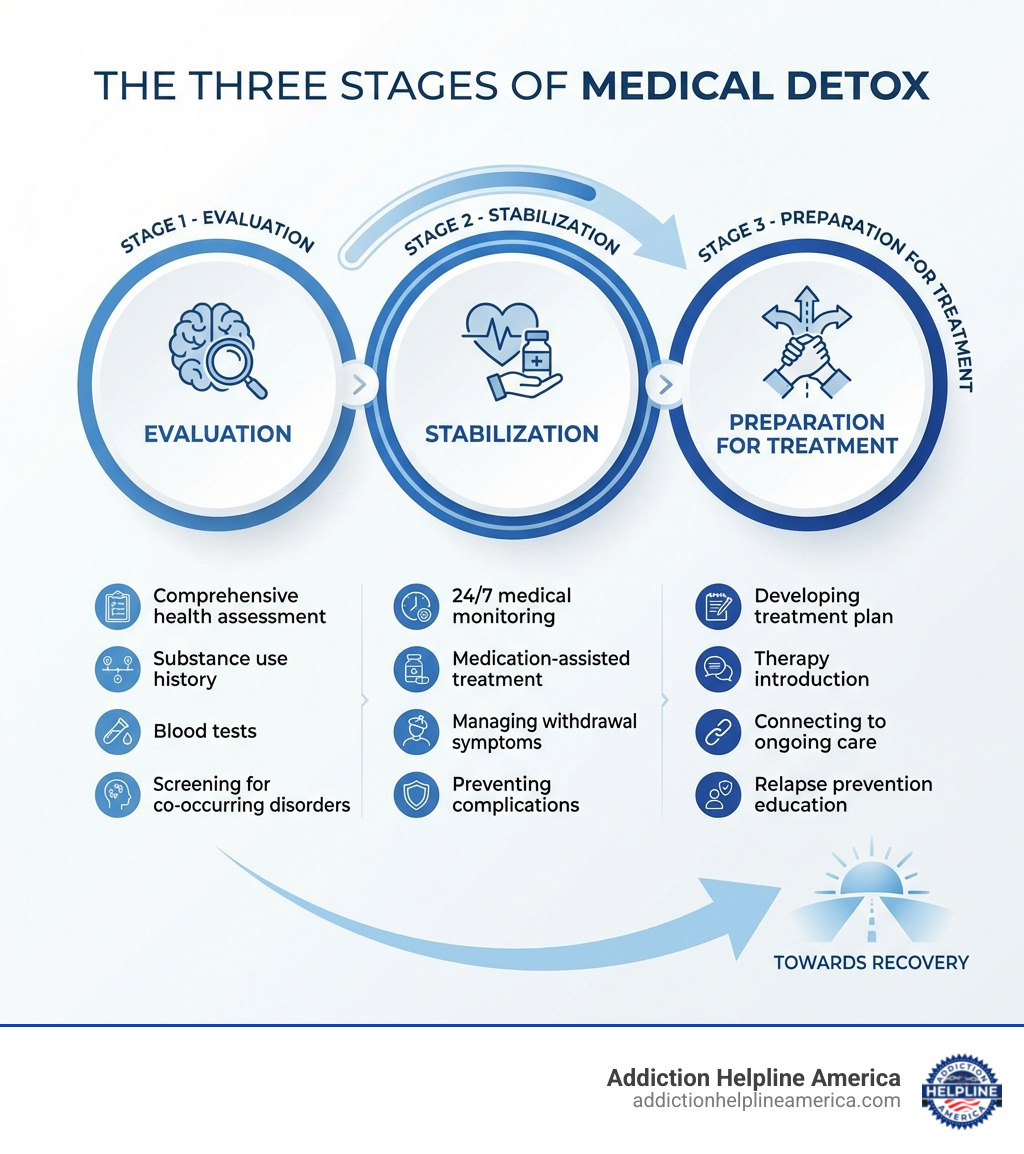
The “medical model” of drug detox is a structured, evidence-based approach designed to safely guide individuals through withdrawal. This process is typically overseen by a clinical staff comprising physicians, nurses, and other healthcare professionals, ensuring 24/7 care and personalized treatment custom to each patient’s unique needs.
The medical detox process is generally broken down into three essential stages:
The journey begins with a thorough understanding of the individual’s health status and substance use history. This initial evaluation is crucial for developing a safe and effective detox plan.
Once the evaluation is complete, the focus shifts to safely managing withdrawal symptoms and stabilizing the patient. The goal of stabilization is to prevent any form of harm to the patient while making them as comfortable as possible.
Detoxification, while essential, is rarely sufficient on its own for long-term recovery. It clears the body, but it doesn’t address the psychological and behavioral patterns that drive addiction. The final step of detox is to prepare the individual for the next crucial phase: ongoing addiction treatment.
Completing drug detox is a monumental achievement, but it’s the first chapter, not the whole story. The recovery journey extends far beyond detoxification, focusing on treating the whole person—mind, body, and spirit. This next phase is dedicated to building a strong foundation for lasting sobriety, developing essential coping skills, and actively preventing relapse.
After the physical stabilization achieved during detox, the focus shifts to comprehensive addiction treatment. This phase addresses the psychological dependence and behavioral patterns associated with substance use.
Alongside professional treatment, supporting your body’s natural healing processes can significantly improve recovery and overall well-being. While medical detox is vital for acute withdrawal, holistic approaches can complement and sustain progress.
Embracing the full spectrum of recovery, starting with drug detox and continuing with comprehensive treatment, yields profound and lasting benefits that transform lives:
Taking the step towards drug detox and subsequent treatment involves navigating several practical considerations. We are here to help you plan for treatment, overcome potential barriers, and make an informed choice that aligns with your needs and circumstances. Our extensive network allows us to help individuals nationwide. To find a facility that meets your needs, you can Find a detox facility near you.
The cost of drug detox and subsequent addiction treatment is a common concern for many individuals and families. It varies significantly based on several factors:
Insurance coverage: Most health insurance plans, including those offered through the Affordable Care Act (ACA) marketplace, Medicaid, and Medicare, provide some level of coverage for substance use disorder treatment, including detox. This is because SUD treatment is recognized as an “essential health benefit.” We can help you steer your insurance benefits. For a quick and confidential assessment of your coverage, you can Verify your insurance coverage now.
Financial assistance options: For those without insurance or with limited coverage, there are still options. Many facilities offer payment plans, and government grants (distributed by agencies like SAMHSA) can help cover treatment costs. We are committed to connecting you with free and confidential guidance to explore all available options.
In the past, some methods emerged promising a “quick fix” for addiction, such as rapid and ultra-rapid detox. However, as experts, we strongly advise against these methods due to their significant risks and questionable efficacy.
We firmly believe that safe and effective recovery is a journey, not a shortcut.
The decision to pursue drug detox is a brave and life-changing one. It marks the critical first step on the path to recovery, offering a safe and medically supervised way to steer the challenging initial phase of withdrawal. However, as we’ve explored, detox is just the beginning. Comprehensive treatment that addresses the psychological, emotional, and social aspects of addiction is key to achieving lasting sobriety.
Recovery is a lifelong journey, but it is a journey filled with hope, healing, and the potential for a fulfilling life free from the grip of addiction. We understand that taking this first step can feel overwhelming, but you don’t have to do it alone.
At Addiction Helpline America, we are dedicated to providing free, confidential, and personalized guidance to help you or your loved one find the right recovery program. Our vast network of treatment centers across the country means we can connect you to the specialized support you need, whether it’s medical detox in Phoenix, Arizona, inpatient rehab in Los Angeles, California, or an outpatient program in Miami, Florida, or any of our numerous locations nationwide.
Reach out to us today. Our compassionate team is available 24/7 to answer your questions, ease your concerns, and help you take that crucial first step towards a healthier, happier future.
The information provided is for educational purposes and should not replace professional medical advice. Always consult with healthcare providers before beginning any detox program.