
Why Residential Drug Treatment Centers Offer the Highest Level of Care
Residential Drug Treatment Centers provide 24/7 structured care in a safe, substance-free environment designed specifically for healing from addiction. If you’re searching for treatment options, here’s what you need to know:
Key Features of Residential Treatment:
- 24-hour supervision and support in a non-hospital setting
- Structured daily schedules including therapy, counseling, and skill-building
- Safe, trigger-free environment away from substances and negative influences
- Comprehensive services including medical detox, individual therapy, group counseling, and family support
- Typical duration ranges from 30 days to 90+ days or longer, depending on individual needs
- Treats co-occurring disorders like depression, anxiety, and trauma alongside addiction
Residential treatment is often recommended for individuals with severe substance use disorders, those who have struggled with outpatient care, or anyone who needs medical supervision during early recovery.
At Addiction Helpline America, we’ve helped thousands of individuals and families steer the overwhelming process of finding the right treatment. Our team of addiction specialists and recovery advocates understands the unique landscape of Residential Drug Treatment Centers and provides free, confidential guidance 24/7 to connect you with the care you need.
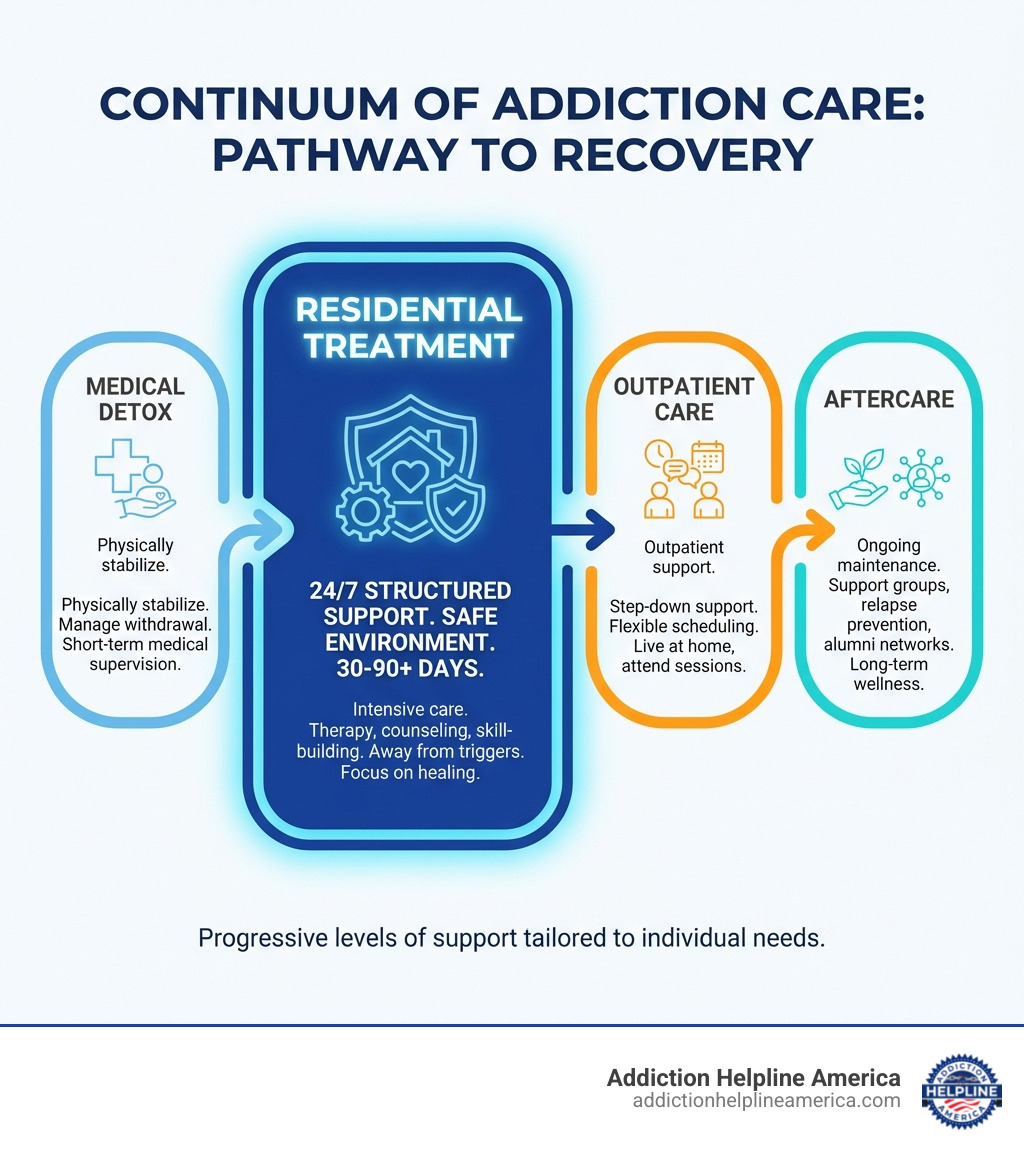
The path to recovery starts with understanding your options. Residential treatment sits at the highest level of the continuum of care, offering intensive support when you need it most. Whether you’re seeking help for yourself or a loved one in Los Angeles, knowing what these programs offer—and how they differ from other levels of care—can make all the difference in achieving lasting sobriety.
What is Residential Treatment and Who Is It For?
Residential addiction treatment, often referred to as residential rehab, is a comprehensive level of care where individuals live at a facility while receiving treatment for a substance use disorder and any co-occurring mental health conditions. It provides a unique, immersive experience away from the daily stressors and triggers of home life, allowing for complete focus on healing and recovery. This setting offers 24/7 structured care in a non-hospital, substance-free environment, making it the highest level of care for many struggling with addiction.
Our goal at Addiction Helpline America is to connect you with effective treatment. We understand that navigating the complexities of addiction can be overwhelming, and we’re here to offer free, confidential, and personalized guidance to help you find the right recovery program. For a deeper dive into this level of care, explore our guide on Residential Drug Treatment Centers.
The Difference Between Residential and Inpatient Rehab
The terms “residential rehab” and “inpatient rehab” are often used interchangeably, and indeed, residential treatment centers are a type of inpatient care. However, there are subtle distinctions that can be important when choosing a program.
Inpatient treatment traditionally refers to programs provided in a hospital setting, offering 24/7 medical monitoring and care, often for acute stabilization during detoxification. These programs are typically short-term and highly intensive.
Residential treatment, while still providing 24/7 support and supervision, often occurs in a more home-like, less clinical environment. It focuses on ongoing recovery, behavioral therapies, and skill-building in a communal setting. While some residential programs include medical detox, the primary emphasis shifts to therapeutic interventions rather than constant medical oversight for acute conditions. Residential stays tend to be longer than typical hospital-based inpatient programs.
Here’s a quick comparison:
| Feature | Residential Rehab | Inpatient Rehab |
|---|---|---|
| Setting | Non-hospital, home-like, communal environment (e.g., converted home, dedicated facility) | Hospital-based, clinical setting |
| Intensity | High level of structured care, focus on therapeutic interventions and skill-building | Very high level of care, focus on acute medical stabilization and immediate safety |
| Duration | Can be longer-term (30 days to a year or more), depending on individual needs and progress | Typically shorter-term (e.g., 7-30 days), for acute phases of treatment |
| Medical Monitoring | 24/7 supervision, medical staff available, may include clinically managed detox with 24-hour support | 24/7 medically supervised care, often for complex medical needs or severe withdrawal symptoms |
| Atmosphere | More comfortable, less sterile, emphasizes community and daily routines | More clinical, focuses on medical necessity and stabilization |
Understanding these differences can help you determine the most appropriate level of care for your unique situation. For more details on varying levels of care, including outpatient options, see our guide on Inpatient vs Outpatient Rehab.
Signs You or a Loved One Might Need Residential Treatment
Deciding on residential treatment is a significant step, and it’s often considered when other less intensive forms of care haven’t yielded lasting results. Here are some key indicators that residential care in Los Angeles might be the best path forward:
- Failed attempts at outpatient care: If you or a loved one has tried outpatient programs or individual therapy but continues to relapse, the immersive and structured environment of residential treatment could provide the breakthrough needed.
- Unstable or triggering home environment: A home environment filled with stressors, negative influences, or easy access to substances can make sustained sobriety incredibly challenging. Residential rehab offers removal from these triggers, creating a safe space for healing. This is particularly crucial for individuals lacking stable housing or employment.
- Co-occurring mental health disorders: Many individuals struggling with addiction also grapple with mental health conditions like anxiety, depression, or trauma. These “dual diagnoses” require integrated treatment that addresses both conditions simultaneously. Residential centers are uniquely equipped to provide this comprehensive, integrated care. For information on managing mental health alongside addiction, see our resources on Major Depression Treatments.
- Severe substance use disorder: For those with a long history of substance use, physical dependence, or addiction to potent drugs, the intensive support and medical oversight available in a residential setting are often essential for safe detoxification and effective long-term recovery.
- Need for medical supervision: Withdrawal from certain substances (like alcohol, opiates, or benzodiazepines) can be dangerous and even life-threatening. If medical supervision is required to manage withdrawal symptoms safely, a residential program that includes medically-supervised detox is vital.
If these signs resonate with your experience or that of a loved one, know that our compassionate team at Addiction Helpline America is here to help you explore options for Residential Drug Treatment Centers in Los Angeles.
How Long is Residential Treatment?
The duration of a stay in a Residential Drug Treatment Center is not one-size-fits-all; it’s highly individualized and depends on a variety of factors, including the severity of the addiction, the presence of co-occurring disorders, prior treatment history, and the individual’s progress.
Common program lengths include:
- Short-term programs: These can range from 28 to 30 days, 60 days, or 90 days. A 30-day program, for instance, offers an intensive initial period of stabilization and therapy. You can learn more about these options at 30 Day Inpatient Rehab Programs.
- Long-term programs: For more severe or chronic addictions, programs can extend to 120 days, six months, a year, or even longer. These longer stays provide ample time for deeper therapeutic work, skill development, and the solidification of new, healthy habits. Explore options for extended care at Best 60 Day Rehabs Near Me.
Research from the National Institute on Drug Abuse (NIDA) consistently shows that longer periods in treatment are generally associated with more successful outcomes. While any treatment length can be beneficial, studies indicate that a stay of 90 days or more often leads to better long-term sobriety rates. The key is to remain in treatment for the duration of the program, allowing for sustained engagement with therapies and the development of robust coping mechanisms. Our team can help you understand the recommended duration based on your specific needs.
A Day in the Life: The Structure of Residential Rehab
One of the defining features and significant benefits of a Residential Drug Treatment Center is its highly structured daily schedule. This structure is intentionally designed to eliminate boredom and downtime, which can be dangerous triggers for individuals in early recovery. By filling each day with purposeful activities and therapies, residential rehab helps individuals build healthy routines, develop new coping skills, and maintain a singular focus on their recovery journey.

A Typical Daily Schedule
While specific schedules may vary slightly between facilities, a typical day in a residential treatment center in Los Angeles often follows a rhythm designed to promote healing and self-findy.
-
Morning Routine (e.g., 6:30 AM – 9:00 AM):
- Wake-up and personal hygiene.
- A nutritious breakfast, often shared communally, fostering a sense of community.
- Morning meditation, mindfulness practice, or light exercise to start the day with clarity and focus.
- Morning process groups or educational sessions, setting intentions for the day.
-
Late Morning to Afternoon Activities (e.g., 9:00 AM – 5:00 PM):
- Group Therapy: These sessions are a cornerstone of residential treatment, providing a safe space for peers to share experiences, offer support, and learn from one another under the guidance of a therapist.
- Individual Counseling: One-on-one sessions with a dedicated therapist allow for personalized exploration of underlying issues, trauma, and specific coping strategies.
- Educational Workshops: Learning about the science of addiction, relapse prevention, communication skills, and healthy relationships.
- Skill-Building Sessions: Practical workshops focusing on life skills, vocational training, or stress management techniques.
- Holistic Therapies: Many centers incorporate alternative and complementary therapies such as yoga, art therapy, music therapy, equine-assisted therapy, or recreational activities to promote overall well-being.
- Lunch, often a communal meal, providing another opportunity for connection and support.
-
Evening Routine (e.g., 5:00 PM – 11:00 PM):
- Dinner, again, usually a group meal.
- 12-Step Meetings (or similar peer support groups): Participation in groups like Alcoholics Anonymous (AA) or Narcotics Anonymous (NA) is common, introducing individuals to external support networks vital for long-term recovery.
- Downtime/Personal Reflection: Time for journaling, reading, or quiet contemplation.
- Structured activities like movie nights, games, or social gatherings to build healthy recreational habits.
- Lights out, ensuring adequate rest for physical and mental restoration.
This consistent, predictable routine helps individuals acclimate to a sober lifestyle, replacing old destructive habits with new, positive ones. It’s truly a transformative environment.
The Importance of a Trigger-Free Environment
Imagine trying to recover from a broken leg while constantly being asked to run a marathon. That’s what it can feel like to try to overcome addiction in an environment filled with triggers. One of the most profound benefits of a Residential Drug Treatment Center is the complete removal from daily stressors, negative influences, and easy access to substances that fuel addiction.
In a residential setting, you are immersed in a substance-free bubble, allowing your brain and body to heal without constant temptation. This structured environment provides:
- Removal from daily stressors: The pressures of work, relationships, financial worries, and social circles are temporarily set aside, allowing for undistracted focus on personal recovery.
- Peer support community: You’re surrounded by individuals who understand your struggles because they are going through similar experiences. This fosters a powerful sense of belonging, empathy, and mutual accountability, creating a supportive mini-society focused on sobriety.
- 24-hour supervision: Constant oversight by trained professionals ensures safety, provides immediate support during difficult moments, and helps prevent relapse. This round-the-clock care is a critical safeguard, especially in the early, vulnerable stages of recovery.
- Focus without distractions: With external distractions minimized, individuals can dig deep into therapy, self-reflection, and skill-building, laying a solid foundation for long-term sobriety.
This deliberate creation of a safe, contained, and supportive space is instrumental in breaking the cycle of addiction and empowering individuals to build a new, healthier life. For more tips on maintaining sobriety in various environments, check out our guide on Staying Sober Tips.
Core Components and Benefits of Residential Drug Treatment Centers
Residential Drug Treatment Centers offer a comprehensive and holistic approach to addiction recovery, recognizing that substance use disorder is a complex disease affecting the whole person – mind, body, and spirit. Our network of centers in Los Angeles and beyond uses a multidisciplinary care team to deliver custom, whole-person treatment, addressing not just the addiction itself but also its underlying causes and co-occurring issues.

Key Services in Residential Drug Treatment Centers
The range of services provided in residential settings is designed to support individuals through every stage of their recovery journey:
- Medically-supervised Detox and Withdrawal Management: For many, the first step is safe detoxification. Residential programs often include medically-supervised detox, where medical professionals monitor vital signs and administer medications to ease uncomfortable and potentially dangerous withdrawal symptoms. This ensures a safe and more comfortable transition into the therapeutic phase of treatment.
- Evidence-Based Therapeutic Modalities: The core of residential treatment lies in therapy. Programs use a variety of proven, evidence-based approaches to help individuals understand their addiction, develop coping mechanisms, and change destructive behaviors. These may include:
- Individual Therapy: One-on-one sessions with a licensed therapist to explore personal triggers, past traumas, mental health concerns, and develop personalized strategies.
- Group Counseling: Facilitated group sessions where peers share experiences, practice communication skills, and build a supportive community.
- Family Therapy: Involving family members in the healing process can repair damaged relationships, improve communication, and create a supportive home environment for long-term recovery.
- Cognitive Behavioral Therapy (CBT): Helps individuals identify and change negative thought patterns and behaviors contributing to substance use.
- Dialectical Behavioral Therapy (DBT): Focuses on emotional regulation, distress tolerance, interpersonal effectiveness, and mindfulness.
- Motivational Interviewing (MI): Helps individuals explore and resolve ambivalence about changing their behavior.
- Holistic Therapies: Many centers complement traditional therapies with practices like yoga, meditation, art therapy, or recreational activities to promote overall well-being and stress reduction.
For more information on these approaches, see our guide on Evidence-Based Therapeutic Modalities.
- Medication-Assisted Treatment (MAT): For certain addictions, MAT combines FDA-approved medications with counseling and behavioral therapies. Medications can help reduce cravings, alleviate withdrawal discomfort, and prevent relapse. This approach has proven highly effective for opioid and alcohol use disorders. Learn more about specific MAT options like methadone in our Methadone Clinic Complete Guide.
Treating Co-Occurring Disorders (Dual Diagnosis)
It’s a common misconception that addiction occurs in isolation. In reality, a significant number of individuals with substance use disorders also struggle with co-occurring mental health conditions, often referred to as a “dual diagnosis.” These can include:
- Anxiety disorders
- Depression
- Post-Traumatic Stress Disorder (PTSD)
- Bipolar disorder
- And other mental health challenges.
Residential Drug Treatment Centers are particularly well-suited to treat dual diagnoses because they offer an integrated approach. This means that both the substance use disorder and the mental health condition are treated simultaneously, by the same clinical team, and within the same treatment plan. This integrated care is crucial because symptoms of one condition can exacerbate the other, making recovery much harder if only one is addressed. Our comprehensive guide on Mental Health and Substance Use Disorders provides more context. For specific support, explore our resources on Treatment for Depression and Anxiety.
The Primary Benefits of Choosing Residential Rehab
Choosing a Residential Drug Treatment Center offers a multitude of benefits that contribute to higher success rates and sustained recovery:
- Immersive, Focused Healing: By removing individuals from their everyday environment, residential treatment allows for complete immersion in the healing process, free from distractions and temptations.
- 24/7 Medical and Emotional Support: Round-the-clock access to medical professionals and therapists ensures that any physical or emotional crises can be addressed immediately, providing a sense of safety and security crucial for vulnerable individuals.
- Community of Peers: Living alongside others who are also committed to sobriety creates a powerful support system. This peer community fosters empathy, reduces feelings of isolation, and provides opportunities for shared learning and mutual encouragement.
- Development of Coping Skills: Through intensive therapy and structured activities, individuals learn and practice healthy coping mechanisms to manage stress, triggers, and cravings without resorting to substance use.
- High Accountability: The structured environment and constant supervision inherent in residential programs provide a high level of accountability, which is often necessary for individuals to break old patterns and establish new, healthier habits.
- Proven Effectiveness: Research, including reports from the National Institute on Drug Abuse (NIDA), consistently demonstrates that individuals who enter and remain in addiction treatment experience significant improvements. They show decreased or stopped substance use, reduced criminal activity, and improved social, psychological, and and occupational functioning. This scientific evidence underscores why residential treatments are often more effective than other techniques, especially for those with severe addictive behaviors, due to their intensive programming, 24-hour supervision, and program length.
Navigating Costs, Insurance, and Finding a Program in Los Angeles
Understanding the financial aspects of addiction treatment and finding the right facility in Los Angeles can seem daunting. However, at Addiction Helpline America, we’re dedicated to simplifying this process. We provide free, confidential guidance to help you steer costs, understand your insurance benefits, and connect you with suitable Residential Drug Treatment Centers in the Los Angeles area.
Understanding the Potential Costs
The cost of residential rehab can vary significantly. Factors influencing the total expense include:
- Location: Facilities in metropolitan areas like Los Angeles may have different pricing structures compared to those in other regions.
- Amenities: Luxury facilities offering private rooms, gourmet meals, spa services, or unique recreational activities will naturally be more expensive than standard programs.
- Program Length: As discussed, residential programs can range from 30 days to a year or more. Longer stays will incur higher total costs.
- Level of Care: Programs offering extensive medical detox, specialized therapies, or a high staff-to-client ratio may also have higher fees.
While costs can be substantial, many centers offer various payment options, including sliding fee scales, financing plans, and scholarships. And remember, our helpline services at Addiction Helpline America are always free and confidential. For a deeper understanding of how these costs are managed, refer to our Rehab Insurance Coverage guide.
Using Insurance for Treatment
Health insurance is a crucial resource for covering the cost of residential addiction treatment. The Affordable Care Act (ACA) mandates that most insurance plans must cover mental health and substance use disorder services as essential health benefits. However, the extent of coverage can vary greatly depending on your specific plan (e.g., PPO, HMO, EPO, POS) and provider.
Here’s how to approach using your insurance:
- Verify Your Benefits: This is the most important step. Our admissions navigators at Addiction Helpline America can help you confidentially verify your insurance coverage quickly and easily, explaining what your plan will cover for residential treatment in Los Angeles.
- Understand Your Plan’s Details: Pay attention to deductibles, co-pays, co-insurance, and out-of-pocket maximums. Some plans may require pre-authorization for residential stays.
- Public Insurance Options: If you have public insurance, such as Medicare or Medicaid, you may also have significant coverage for behavioral health services. Medicare Part A covers inpatient services, while Part B covers outpatient and intensive outpatient programs. If you’re eligible for both Medicare and Medicaid, you might have even more comprehensive coverage. We encourage you to contact your State Medical Assistance (Medicaid) office to understand specific state-level benefits. For those with UMR insurance, our UMR Insurance Rehab Coverage guide provides specific insights.
Don’t let concerns about cost deter you from seeking help. Our team is here to assist you in understanding your financial options and finding a program that fits your budget and insurance coverage.
How to Find the Right Residential Drug Treatment Centers in Los Angeles
Finding the ideal Residential Drug Treatment Center in Los Angeles involves careful consideration of several factors to ensure the program aligns with your or your loved one’s specific needs. As a free and confidential helpline, Addiction Helpline America is uniquely positioned to guide you through this process using our vast network of trusted facilities.
Here is a list of factors we recommend considering:
- Location: While the article focuses on Los Angeles, you might consider whether a local center or one slightly further away would be more beneficial. Some individuals find removing themselves from their immediate environment helpful.
- Staff Credentials and Expertise: Ensure the facility employs licensed and experienced professionals, including medical doctors, psychiatrists, therapists, and counselors. A multidisciplinary team is a sign of comprehensive care.
- Treatment Methods and Philosophy: Look for centers that use evidence-based therapies (like CBT, DBT, MAT) and whose treatment philosophy resonates with your values. Some centers may offer specialized tracks for specific demographics (e.g., veterans, LGBTQ+ individuals, women) or types of addiction.
- Accreditation: Check for accreditation from recognized bodies like the Commission on Accreditation of Rehabilitation Facilities (CARF). CARF accreditation signifies that a facility meets rigorous standards for quality and patient care.
- Integrated Care for Co-Occurring Disorders: If mental health issues are present alongside addiction, choose a center that offers integrated dual diagnosis treatment.
- Aftercare Planning: A reputable residential center will emphasize comprehensive aftercare planning to support long-term recovery. This includes strategies for transitioning to lower levels of care, sober living arrangements, and ongoing support groups. Our guide on Post Rehab Aftercare can provide more context.
- Cost and Insurance Acceptance: As discussed, confirm that the center accepts your insurance or offers viable payment options.
- Amenities and Environment: While not the primary focus, the environment should feel safe, comfortable, and conducive to healing.
At Addiction Helpline America, we specialize in providing personalized guidance to help you find the right Residential Drug Treatment Centers in Los Angeles. Our network is extensive, and our service is completely free and confidential. We can help you identify centers that meet these criteria and connect you directly. Start your search today by visiting our dedicated page for rehab centers in Los Angeles.
Frequently Asked Questions about Residential Rehab
We understand you likely have many questions when considering residential treatment. Here are answers to some of the most common inquiries we receive at Addiction Helpline America.
Are cell phones allowed during treatment?
Policies regarding cell phone use in Residential Drug Treatment Centers vary significantly from one facility to another. Many centers implement an initial “blackout period,” often lasting the first 7 days, during which patients cannot use their phones or contact the outside world. This is designed to help individuals fully immerse themselves in treatment, focus on detoxification and adjustment, and minimize external distractions and temptations.
After this initial period, some centers may allow limited phone access during designated times, while others might require phones to be stored and only permit communication through facility phones or supervised devices. The goal is always to create an environment conducive to healing and self-reflection. It’s essential to clarify the specific cell phone policy with any center you are considering.
Can my family visit me?
Family involvement is often a critical component of long-term recovery, and most Residential Drug Treatment Centers do allow family visitations. However, similar to cell phone policies, visitation rules can vary:
- Initial Restrictions: Some facilities may restrict visitations during the first week or two to allow the patient to acclimate to the program and focus on their early recovery.
- Scheduled Visits: Visitations are typically scheduled on specific days and times.
- Family Therapy: Many programs integrate family therapy sessions, which are highly encouraged. These sessions help repair relationships, improve communication, and educate family members on how to best support their loved one’s recovery.
- Importance of Support: A strong, supportive family system can significantly aid in recovery, so centers usually strive to facilitate healthy family engagement within structured guidelines.
Always check with the specific residential center in Los Angeles about their visitation policies and how family therapy is integrated into their program.
What happens after I complete the program?
Completing a Residential Drug Treatment Center program is a significant achievement, but it’s just one step in the lifelong journey of recovery. Effective residential centers prioritize robust aftercare planning to ensure a smooth transition and continued support:
- Transition to Lower Levels of Care: Many individuals transition from residential treatment to less intensive programs, such as Partial Hospitalization Programs (PHPs) or Intensive Outpatient Programs (IOPs), where they can continue therapy while gradually reintegrating into daily life.
- Sober Living Homes: For those who need continued structure and a supportive, substance-free environment, sober living homes provide a bridge between residential treatment and complete independence.
- Addiction Support Groups: Participation in peer-led support groups like Alcoholics Anonymous (AA), Narcotics Anonymous (NA), or other recovery communities is highly encouraged. These groups provide ongoing peer support, accountability, and a sense of belonging. Find local resources through our Addiction Support Groups Near Me guide.
- Relapse Prevention Strategies: Aftercare plans typically include strategies for identifying and managing triggers, developing healthy coping mechanisms, and knowing who to reach out to in times of challenge.
- Ongoing Therapy and Counseling: Continuing individual or group therapy after residential treatment can provide consistent support and help address any emerging issues.
The goal of aftercare is to provide continued structure, support, and accountability to reduce the risk of relapse and empower individuals to maintain long-term sobriety. Our team at Addiction Helpline America can help you connect with resources for comprehensive aftercare planning in Los Angeles.
Take the First Step Towards Recovery Today
Choosing to enter a Residential Drug Treatment Center is a courageous and life-altering decision. These programs offer an unparalleled opportunity for immersive healing, providing a safe, structured, and supportive environment where individuals can address the root causes of their addiction, develop essential coping skills, and build a strong foundation for lasting sobriety. The comprehensive care, integrated treatment for co-occurring disorders, and dedicated peer community are all designed to foster long-term wellness and a renewed sense of hope.
We understand that taking this first step can feel overwhelming, but you don’t have to steer it alone. At Addiction Helpline America, we are committed to providing free, confidential, and personalized guidance to help you or your loved one find the right recovery program in Los Angeles. Our compassionate admissions navigators are available 24/7 to answer your questions, discuss your options, and connect you with trusted Residential Drug Treatment Centers that meet your specific needs.
Don’t wait to start your journey toward a healthier, more fulfilling life. Contact our 24/7 helpline for confidential guidance by visiting our Los Angeles rehab page or explore our general Addiction and Rehab Hotlines for immediate assistance. Your path to recovery begins now.