
Why Finding the Right Rehab in New Orleans Can Save Your Life
Rehabs in new orleans offer a lifeline to individuals and families struggling with substance use disorders. If you’re searching for help, here’s what you need to know immediately:
Quick Guide to New Orleans Rehab Options:
- Types of Programs Available: Medical detox, inpatient residential (30-90 days), intensive outpatient (IOP), partial hospitalization (PHP), and sober living homes
- Cost Range: Outpatient programs run $1,000-$10,000; inpatient treatment costs $5,000-$50,000
- Free or Low-Cost Options: State-funded facilities like Bridge House (men) and Grace House (women) offer no-cost treatment; sliding-scale fees available at many centers
- Insurance Coverage: Most private insurance, Medicaid, and Medicare plans cover addiction treatment
- Top-Rated Facilities: NOLA Detox and Recovery Center, Odyssey House Louisiana, Bridge House/Grace House, and Integrity Behavioral Management
You don’t have to face addiction alone. New Orleans offers comprehensive treatment options, from detox to long-term residential programs. Treatment centers provide evidence-based care custom to your situation, regardless of your insurance or financial status.
Many facilities offer specialized services like dual diagnosis treatment for co-occurring mental health conditions, medication-assisted treatment (MAT), and trauma-informed care. The city’s continuum of care ensures you can access everything from detox to aftercare support locally.
Cost shouldn’t be a barrier. State-funded rehabs offer free treatment for those with no income, and many centers provide scholarships, payment plans, or sliding-scale fees. Priority admission is often available for pregnant women and other vulnerable populations.
At Addiction Helpline America, we’ve guided thousands of individuals and families through the process of finding effective rehabs in new orleans that match their unique needs and circumstances. Our team provides free, confidential support 24/7 to help you take that critical first step toward recovery. We understand the journey ahead because we’ve walked alongside countless others facing the same challenges you’re confronting right now.
Rehabs in new orleans terminology:
Understanding the Types of Rehab Programs in New Orleans
Finding the right support means matching a program to your unique situation. Addiction treatment isn’t “one-size-fits-all”; it’s a “continuum of care” that provides customized support at every step of your recovery journey, from initial detox to long-term aftercare.

Let’s explore the common types of drug rehab programs you’ll find in New Orleans:
Detoxification (Detox) is often the first step, focusing on safely managing physical withdrawal symptoms under medical supervision. This is crucial for substances like alcohol, where withdrawal can be life-threatening. Facilities like NOLA Detox and Recovery Center and Odyssey House Louisiana offer medically supervised or supported detox. Learn more about detox in new orleans.
Inpatient Residential Programs provide 24/7 care in a structured, substance-free environment. This is ideal for those needing high supervision and a break from daily triggers. Bridge House (men) and Grace House (women) offer long-term programs, often for those with limited resources. Odyssey House Louisiana provides a 28-day intensive inpatient program focused on sobriety and life skills.
Outpatient Programs (OP) are flexible, allowing you to live at home while attending regular therapy sessions. This lets you maintain work, school, or family commitments during treatment.
Intensive Outpatient Programs (IOP) offer more care than standard outpatient without an overnight stay. You’ll attend several hours of therapy multiple days a week. NOLA Detox, Odyssey House Louisiana, and Integrity Behavioral Management are among the many centers offering IOPs.
Partial Hospitalization Programs (PHP) are more intensive than IOPs, with treatment lasting several hours daily, similar to a workday. You return home in the evenings, receiving strong support without a full residential stay.
Sober Living Homes are structured, substance-free environments that support the transition back to independent living after intensive treatment. Odyssey House Louisiana operates a network of these homes. Find out more about New Orleans sober living options.
Aftercare Planning is vital for long-term recovery. It involves ongoing support like continued therapy, support groups, and alumni programs to help you maintain sobriety after formal treatment ends.
Typical Length of Stay
The length of your stay in treatment depends on your individual needs, addiction severity, and chosen program.
For inpatient duration, programs typically last 30 to 90 days. Long-term residential options, like those at Bridge House and Grace House, can extend beyond 90 days and may include vocational training.
Outpatient duration for programs like IOP and PHP can range from a few weeks to six months or more. The flexible scheduling helps you balance treatment with daily responsibilities.
The Importance of Dual Diagnosis Treatment
Addiction often co-occurs with mental health conditions, a situation known as a “dual diagnosis.” About 50% of people with substance use disorders also have a mental health condition. Integrated treatment, which addresses both issues simultaneously, is vital for lasting recovery.
Common co-occurring mental health conditions include:
- Anxiety disorders
- Depression
- Bipolar disorder
- Post-traumatic Stress Disorder (PTSD)
- Other conditions related to past trauma
Many rehabs in new orleans, including Odyssey House Louisiana, Integrity Behavioral Management, and NOLA Detox, offer integrated dual diagnosis treatment, addressing both addiction and underlying mental health challenges.
Specialized Services Available
Beyond the main levels of care, many rehabs in new orleans offer unique services to meet individual needs:
- Comprehensive Care Models: Organizations like Odyssey House Louisiana provide a full continuum of care, from detox to housing and healthcare, all under one roof.
- Vocational Training: Programs like those at Bridge House Inc. include vocational training to help individuals gain job skills and reintegrate into the community.
- Medically-Supervised Detox Centers: Facilities like NOLA Detox and Odyssey House Louisiana provide medically monitored detox to safely manage potentially dangerous withdrawal symptoms.
- Holistic Therapies: Many centers offer holistic therapies that treat the whole person—mind, body, and spirit—to complement traditional counseling.
- Family Involvement in Treatment: Since addiction affects the whole family, many programs offer family therapy and resources. Support groups like Al-Anon Family Groups, Nar-Anon, and Parents of Addicted Loved Ones (PAL) are also available.
- Aftercare Support: Quality rehabs provide robust aftercare support, including referrals to sober living, ongoing therapy, and peer recovery networks to promote long-term success.
Navigating the Cost of Addiction Treatment
The cost of addiction treatment can feel overwhelming, but it shouldn’t be a barrier to seeking help. Investing in recovery is an investment in your future health and happiness, and many options exist to make it accessible.

The cost of drug rehab in New Orleans varies based on several key factors:
- The type of program: Inpatient residential programs are generally more expensive than outpatient options because they include accommodation, meals, and 24/7 care.
- The level of care: The cost is affected by whether you need medical detox, standard outpatient, IOP, or PHP.
- How long you stay: Longer programs have a higher overall cost but are often more effective for lasting recovery.
- The amenities and services: Luxury facilities with private rooms, gourmet meals, or unique therapies will cost more than basic programs.
Average Cost of Rehabs in New Orleans
On average, addiction treatment in New Orleans costs around $59,468, which is comparable to the state ($56,822) and national ($57,193) averages. However, actual costs can vary widely:
- Outpatient programs can range from $1,000 to $10,000.
- Inpatient rehabs in New Orleans typically range from $5,000 to $50,000.
This broad spectrum means there are options to fit many different budgets.
Affordable Drug Rehab Options in New Orleans
No one should be denied treatment due to cost. New Orleans offers several pathways to affordable or free drug rehab:
- State-Funded Rehabs: Supported by government grants, these centers offer free or low-cost treatment. Costs may be free for those with no income or based on a sliding scale. To qualify, you’ll need to provide proof of residency, income, and insurance status. Priority is often given to pregnant women and other vulnerable groups.
- Non-Profit Support: Organizations like Bridge House (men) and Grace House (women) provide treatment to those who cannot afford private care, including individuals who are homeless or uninsured.
- Sliding-Scale Fees: Many centers adjust treatment costs based on your income, making it more affordable.
- Scholarships and Grants: Some facilities and non-profits offer scholarships or grants to help cover costs. Always ask about these options.
- Odyssey House Louisiana (OHL): As a Medicaid Enrollment Site, OHL helps low-income and underserved individuals access care, regardless of their ability to pay.
Using Insurance and Other Payment Options
Using insurance can significantly reduce the financial burden of rehab.
- Private Health Insurance: Federal law requires most health insurance plans to cover substance use disorder treatment.
- In-network vs. Out-of-network: In-network providers have a contract with your insurer, usually resulting in lower out-of-pocket costs. Out-of-network providers may require you to pay upfront and seek reimbursement. PPO plans often cover some out-of-network care, while HMOs typically do not.
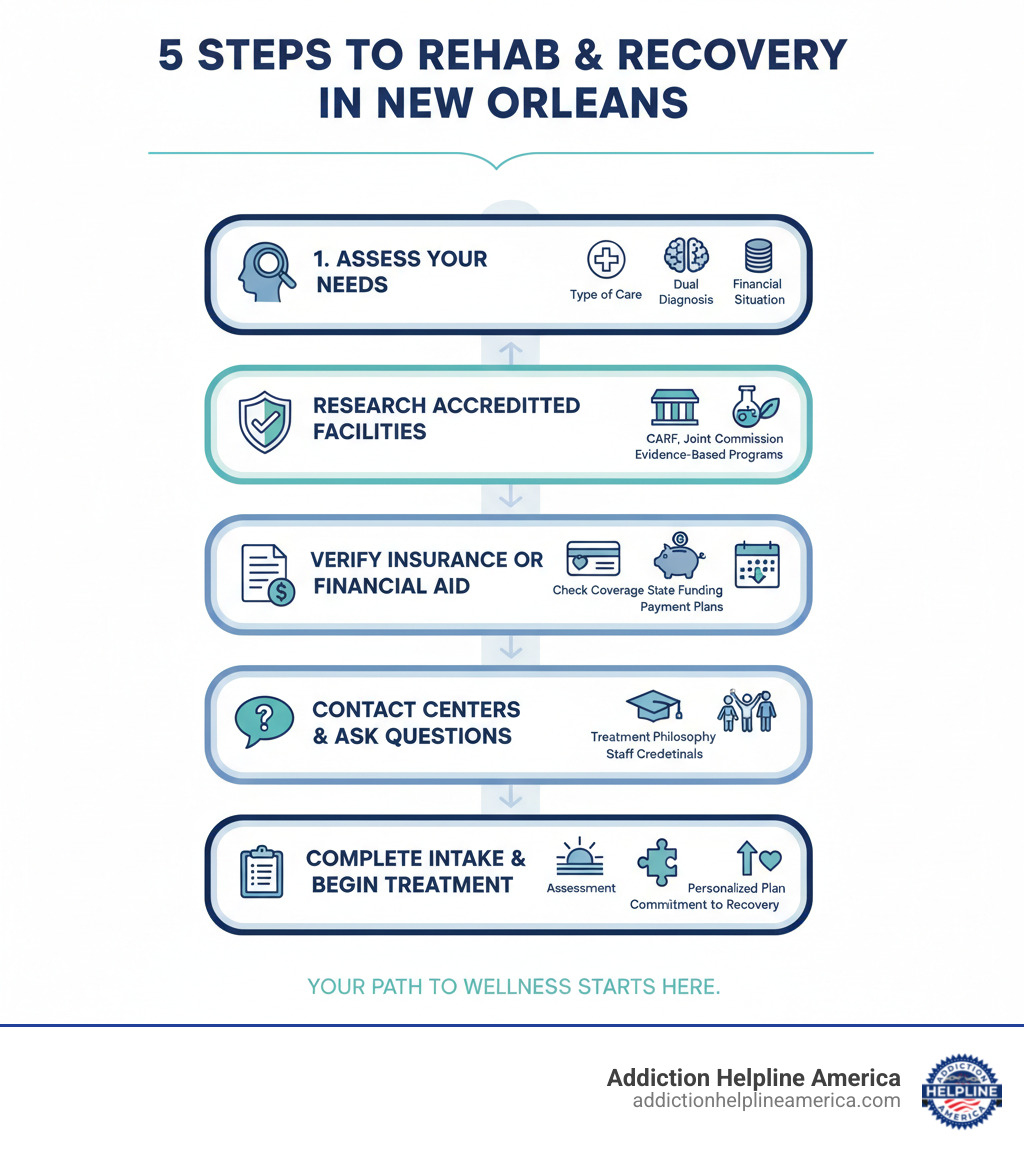
- Verifying Benefits: Always check with your insurance provider before starting treatment to understand your specific coverage, deductibles, and co-pays.
- Medicaid and Medicare: These government programs often cover a wide range of addiction treatment services. Facilities like Odyssey House Louisiana accept Medicaid.
- Payment Plans: Many centers offer payment plans, allowing you to pay for treatment in installments.
- HIPAA: Your private health information is protected by the Health Insurance Portability and Accountability Act of 1996 (HIPAA) and cannot be shared without your consent.
How to Choose the Right Rehabs in New Orleans for Your Needs
Choosing the right rehab is a critical decision in your recovery. There is no single “best” program; the goal is to find a center that fits your unique needs and circumstances.

Your personal recovery path depends on factors like the substance used, duration of addiction, co-occurring mental health issues, and your personal situation. Effective rehabs in new orleans begin with a thorough assessment to create a personalized plan.
Key Factors to Consider
When evaluating rehabs in new orleans, consider these key factors:
- Accreditation: Look for accreditation from organizations like CARF International or The Joint Commission. This indicates the facility meets high standards for quality and accountability. For example, Bridge House and Grace House are CARF-accredited.
- Evidence-based therapies: Ensure the program uses scientifically proven methods like Cognitive Behavioral Therapy (CBT), Motivational Interviewing, and Dialectical Behavior Therapy (DBT).
- Staff credentials and licensing: Inquire about the qualifications, licensing, and experience of the clinical staff. You deserve care from trained professionals.
- Treatment philosophy: Understand the center’s approach. Some use a 12-step model, while others are more holistic. Find a philosophy that resonates with you.
- A comprehensive continuum of care: The best programs support you through every phase of recovery, from detox to aftercare. Odyssey House Louisiana is an example of a provider offering a full continuum of care.
- Recovery support programs: Check for robust aftercare planning, alumni programs, and connections to community support groups to aid your lifelong recovery journey.
Finding and Contacting a Center
Reaching out can be hard, but there are several ways to find the right treatment center.
- Your primary care physician or a mental health professional can provide trusted referrals based on your medical history.
- Online resources like Addiction Helpline America provide comprehensive information. Our team offers free, confidential, 24/7 guidance to connect you with the right program from our vast network.
- The admissions process usually starts with an assessment of your substance use and health history to determine the appropriate level of care.
- Ask detailed questions about programs, costs, insurance, staff, and aftercare. A quality center will welcome your questions; vagueness is a red flag.
Here are some contacts for prominent facilities:
- Odyssey House Louisiana: Call 504-446-1111 for their residential and outpatient services in New Orleans and Slidell.
- Bridge House and Grace House: For long-term residential programs for men and women, call their intake department at 504-821-7120.
- NOLA Detox and Recovery Center: For immediate needs, call or text 504-446-1111. They offer free transportation from surrounding areas.
Support for Lasting Recovery
Recovery is a lifelong journey that continues after treatment. Connecting with ongoing support networks is vital for maintaining long-term sobriety.
The recovery community offers many support options:
- Alcoholics Anonymous (AA) and Narcotics Anonymous (NA) are 12-step programs for alcohol and drug addiction.
- SMART Recovery is a non-12-step alternative using behavioral therapy techniques.
- Al-Anon Family Groups and Nar-Anon offer support for families and loved ones.
- Dual Recovery Anonymous (DRA) is a 12-step program for those with co-occurring disorders.
- Substance-specific groups like Cocaine Anonymous (CA) and Crystal Meth Anonymous (CMA) are also available.
For additional help, the Substance Abuse and Mental Health Services Administration (SAMHSA) (800-662-4357) and the NAMI Helpline (800-950-6264) are excellent resources.
Reaching out for help is a sign of strength. Whether you call us at Addiction Helpline America or a center directly, that first call can change everything.
Frequently Asked Questions about Rehab in New Orleans
It’s normal to have questions when considering treatment. Here are answers to some of the most common concerns about rehabs in new orleans.
Will I lose my job if I go to rehab?
Fear of losing your job shouldn’t stop you from seeking help. Legal protections are in place to safeguard your employment.
- The Americans with Disabilities Act (ADA) protects you from being fired for seeking treatment for a substance use disorder and requires employers to provide reasonable accommodations.
- The Family and Medical Leave Act (FMLA) allows eligible employees to take up to 12 weeks of unpaid, job-protected leave for addiction treatment.
- Confidentiality is protected by the Health Insurance Portability and Accountability Act (HIPAA), meaning your employer will not be notified of your treatment without your consent.
Most residential facilities do not permit remote work during treatment. This policy is designed to help you focus completely on healing without outside distractions.
What should I bring with me to rehab?
Packing for rehab is simple, but rules vary by facility. Always check with the center before you pack. Here’s a general guide:
- What to Bring: Bring a photo ID, your insurance card, any prescription medications in their original bottles, a week’s worth of comfortable clothing, and unopened, alcohol-free toiletries. A journal, books, and a small amount of cash are also usually allowed.
- What to Leave at Home: Do not bring illicit drugs, alcohol, weapons, products containing alcohol (like some mouthwashes), outside food or drinks, or unapproved over-the-counter medications.
- Electronics Policy: Most residential facilities will hold your phone and other electronics during your stay. This policy minimizes outside distractions, helping you focus completely on your recovery.
Can I visit a loved one in rehab?
Your support for a loved one in treatment is important, even when visitation policies seem restrictive.
Most facilities allow visitation, but rules vary. Expect an initial “blackout period” of 14 to 30 days with no outside visits. This allows your loved one to detox, settle in, and focus on their initial recovery.
Many centers offer family therapy programs. These guided sessions are often a more meaningful way to participate in recovery, helping to heal relationships and address family dynamics.
Facilities also have specific rules for phone calls and letters, designed to protect the patient and support their treatment goals.
You can support recovery from a distance by writing letters, being available for approved calls, and educating yourself about addiction. Support groups like Al-Anon Family Groups and Nar-Anon are invaluable resources for your own healing and understanding.
These boundaries create the space your loved one needs to do the life-changing work of recovery. Your patience is one of the greatest gifts you can give.
Conclusion: Your Path to Recovery in The Big Easy
The thought of recovery can be overwhelming, but hope and healing are within reach in New Orleans. The diverse programs offered by rehabs in New Orleans are designed to meet you where you are on your journey.
New Orleans offers a comprehensive support network for sobriety. From medically-supervised detox in New Orleans and structured inpatient residential programs to flexible outpatient options, there is a program custom for you, including crucial aftercare support.
Don’t let financial concerns be a barrier. New Orleans provides many pathways to affordable care, including no-cost, state-funded options like Bridge House and Grace House. Many centers accept private insurance, offer sliding-scale fees, and work with Medicaid/Medicare. Facilities like NOLA Detox and Recovery Center and Odyssey House Louisiana are committed to making treatment accessible.
Taking that first step might feel like the hardest part, but it’s also the most courageous. Recovery isn’t just possible—it’s a journey you don’t have to walk alone. At Addiction Helpline America, we are passionately committed to providing free, confidential, and personalized guidance. We’re here 24/7 to help you connect with the right alcohol and drug addiction treatment in New Orleans that truly fits your unique needs and circumstances.
Your healthier, happier future starts now. Don’t wait; reach out today.
Find personalized alcohol and drug addiction treatment in New Orleans today