
Why Understanding Outpatient Counseling Matters for Your Recovery Journey
Outpatient counseling services provide flexible mental health and substance use disorder treatment without requiring an overnight stay at a facility. Here’s a quick overview of what that means:
- Live at home: Attend scheduled sessions without overnight stays.
- Flexible scheduling: Fit appointments around work, school, and family.
- Comprehensive care: Access therapy, medication management, and more.
- Treats many conditions: Get help for anxiety, depression, SUDs, and co-occurring disorders.
- Variable intensity: Choose from weekly sessions to intensive programs (IOPs).
- Insurance accepted: Often covered by Medicaid, Medicare, and private insurance.
If you or a loved one is struggling, outpatient counseling offers a path forward while maintaining your daily routine. This care supports recovery through evidence-based therapies like Cognitive Behavioral Therapy (CBT), medication-assisted treatment, and peer support—all designed to help you reclaim your life.
The beauty of outpatient care lies in its accessibility. You don’t need to put your life on hold to get help. Whether you’re dealing with depression, trauma, or substance use, outpatient services provide professional support that adapts to your needs.
At Addiction Helpline America, we connect individuals and families with outpatient counseling services that offer the compassionate care needed for lasting recovery. We understand the challenge of finding the right treatment while navigating daily responsibilities, and we’re here to guide you.
Related content about outpatient counseling services:
Understanding the Fundamentals of Outpatient Care
Outpatient counseling services describe a form of mental health and substance use treatment that fits into your life. Unlike inpatient programs where you stay overnight, outpatient care means you live at home and attend scheduled therapy sessions at a clinic during the day. This flexibility is crucial for those who can’t step away from work, school, or family obligations.

The core idea is that recovery happens best when you can integrate new skills into your everyday life. You learn coping strategies in therapy and immediately apply them in your real-world environment. This model is also more affordable than residential treatment since it doesn’t include costs for room and board, making it accessible to more people.
Outpatient Treatment: Supporting Ongoing Recovery
Outpatient counseling services are built to support you as a whole person with responsibilities, relationships, and a life that continues as you heal. The structure offers several key advantages:
- Living at home provides the comfort and familiarity of your own space and the support of nearby family and friends.
- Flexible scheduling, including evening or weekend appointments, ensures you don’t have to choose between treatment and your responsibilities.
- Integration with daily life allows you to practice coping strategies in real-time situations, making the skills you learn more practical and sustainable.
- Affordability opens doors for many who might otherwise struggle to access treatment, as outpatient care is less costly than residential programs.
This approach is suitable for a wide spectrum of mental health and substance use concerns, providing professional support while you continue living your life.
Signs You Might Benefit from Counseling
Recognizing when you need support is a sign of strength. If you’re wondering whether outpatient counseling services are right for you, certain experiences suggest it’s time to reach out.
- Persistent sadness or anxiety: If feelings of hopelessness, emptiness, or constant worry last for weeks or months, it’s more than just a bad mood. Depression and anxiety are treatable medical conditions.
- Struggling to cope with stress: When you find yourself turning to substances, isolation, or other harmful coping mechanisms, counseling can help you build healthier tools.
- Relationship problems: Frequent conflicts, disconnection, or poor communication with loved ones can improve significantly with professional guidance.
- Using substances to cope: If you rely on alcohol, drugs, or prescription medications to manage your feelings, outpatient counseling can provide a path to recovery.
- Overwhelming grief and loss: When grief prevents you from functioning in daily life, counseling offers a safe space to process these emotions.
- Symptoms of trauma: Flashbacks, nightmares, and severe anxiety are often signs of PTSD. Trauma-informed care can help you heal from past experiences.
- Major life transitions: Job changes, divorce, or becoming a parent can be destabilizing. A counselor’s support can make these journeys smoother.
- Other behavioral changes: Losing interest in activities you once enjoyed, significant changes in sleep or appetite, or difficulty concentrating are also important signs.
If any of these resonate with you, consider it a sign to seek help. At Addiction Helpline America, we help people find the right outpatient counseling services to support their recovery. You deserve to feel better, and help is available.



Conditions Treated and Therapeutic Approaches
Outpatient counseling services are designed to address a wide range of mental health conditions and substance use disorders, meeting you where you are in your journey. Effective programs understand that recovery involves treating the whole person—considering physical, emotional, and environmental factors.
If you’re experiencing a mental health crisis, please seek immediate help. While outpatient counseling provides long-term support, urgent situations require immediate attention. You can reach out to trained crisis counselors anytime by calling or texting 988, or by visiting mental health crisis resources for more options.
Common Conditions Addressed
Outpatient counseling helps people manage symptoms and improve their quality of life across a diverse range of conditions.
- Anxiety and Depression: These are among the most common reasons people seek counseling. Therapy helps you understand triggers and learn practical techniques for managing thoughts and moods.
- Bipolar Disorder: Outpatient care combines therapy and medication management to help you find stability and manage mood swings.
- Post-Traumatic Stress Disorder (PTSD): Trauma-informed care provides a sensitive and understanding approach to healing from traumatic experiences.
- Eating Disorders: Counseling addresses the psychological factors behind anorexia, bulimia, and binge eating disorder, promoting a healthier relationship with food and body image.
- Substance and Alcohol Use Disorders (SUD/AUD): Specialized programs combine therapy, education, and support to help you achieve and maintain sobriety.
- Obsessive-Compulsive Disorder (OCD): Therapy can help you manage intrusive thoughts and repetitive behaviors, reducing their impact on your daily life.
- Co-occurring Disorders: Many people experience both a mental health and substance use disorder. Integrated treatment addresses both conditions simultaneously for true healing.
Counseling also provides support for grief, relationship conflicts, and stress from major life transitions.
Types of Therapy in an Outpatient Setting
Outpatient counseling services use a variety of evidence-based therapeutic approaches. Your treatment plan will be customized to your needs, often combining several methods for the best results.
- Individual Therapy: These confidential, one-on-one sessions with a licensed therapist form the foundation of most treatment plans, providing a safe space to work toward your goals.
- Group Therapy: Connecting with others who share similar experiences provides a powerful sense of community, validation, and shared learning.
- Family and Couples Counseling: This approach brings loved ones together to improve communication, resolve conflicts, and build a stronger support system at home.
- Cognitive Behavioral Therapy (CBT): A widely used and effective therapy for many conditions, CBT helps you identify and change negative thought patterns and behaviors.
- Solution-Focused Brief Therapy (SFBT): This goal-oriented method focuses on finding solutions and building on your existing strengths, rather than dwelling on past problems.
- Trauma-Informed Care: This approach recognizes the widespread impact of trauma and integrates that understanding into every aspect of treatment, prioritizing safety, trust, and empowerment.
Other specialized approaches include Dialectical Behavior Therapy (DBT) and motivational interviewing. Your provider will work with you to design a treatment plan that fits your unique situation. At Addiction Helpline America, we’re here to help you find the outpatient counseling services with the right combination of therapies for your healing journey.
The Structure of Outpatient Programs and Specialized Support
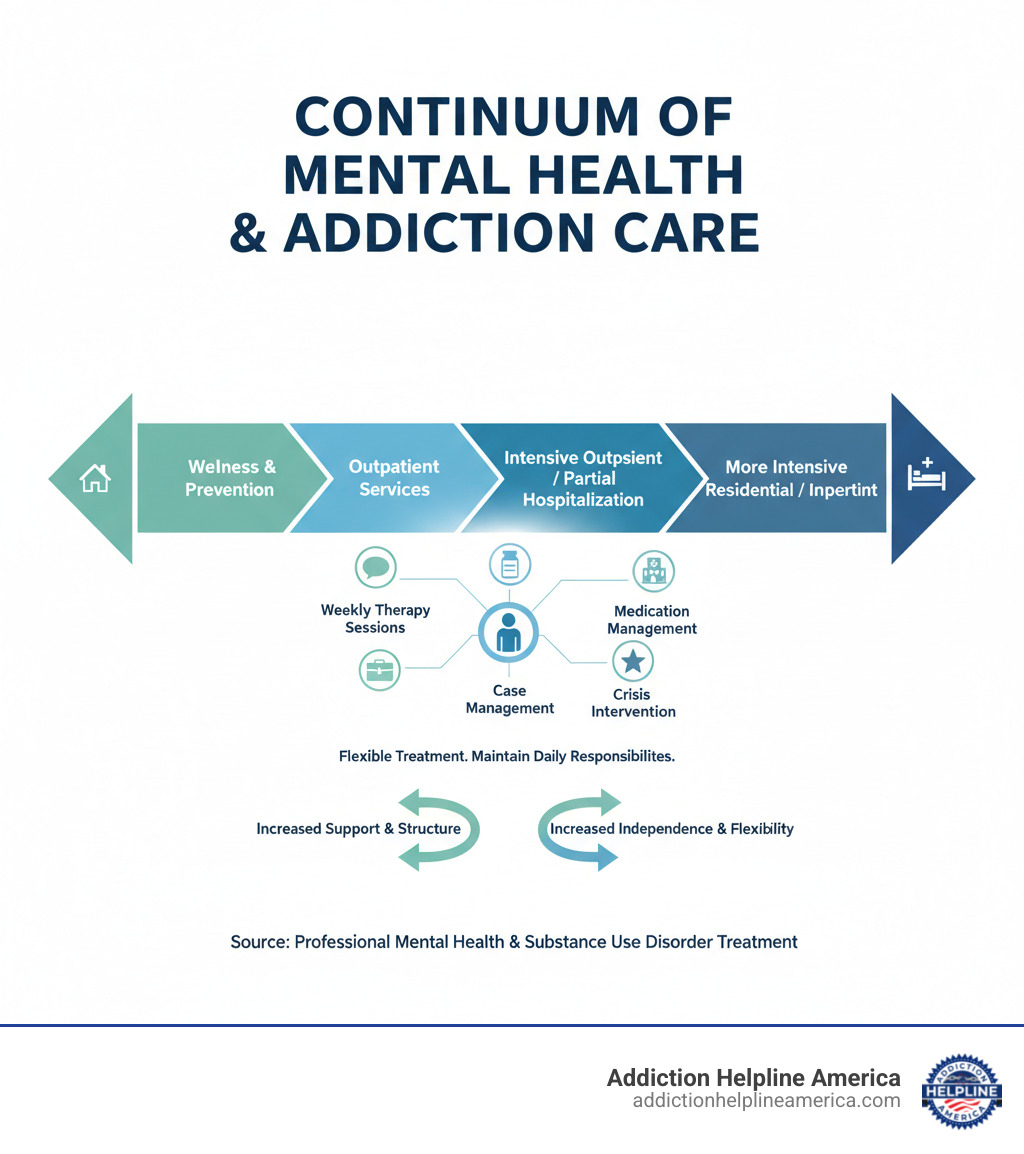
Outpatient counseling services are not one-size-fits-all. Programs are designed with different levels of intensity to meet you where you are in your recovery. The best programs offer integrated care that addresses your whole life—mental and physical health, housing, employment, and support systems.

Levels of Outpatient Care
Outpatient care exists on a spectrum of intensity. A behavioral health professional will help determine which level is right for you.
- Standard Outpatient Programs (OP): This is the most flexible option, typically involving one or two weekly therapy sessions. It’s ideal for those with stable symptoms or for maintaining recovery long-term without disrupting daily life.
- Intensive Outpatient Programs (IOPs): Offering a higher level of support, IOPs usually involve 9 to 20 hours of treatment per week. This structure is a middle ground for those who need more than weekly therapy but don’t require 24/7 supervision.
- Partial Hospitalization Programs (PHPs): Also known as day treatment, PHPs provide the most intensive outpatient care. You’ll spend several hours a day, often five days a week, in structured treatment, returning home each evening. This works well as a step-down from inpatient care or as an alternative to hospitalization.
The Role of Medication and Case Management
Effective treatment often involves more than talk therapy. Medication management is a key component for many, where psychiatrists or nurse practitioners prescribe and monitor medications to manage symptoms like depression, anxiety, or cravings. This is often coordinated with your primary care doctor.
Case management is another vital service. A case manager acts as your guide, connecting you with community resources for practical needs like housing, food assistance, legal help, or employment support. This holistic approach ensures you’re not just treating symptoms but building a stable foundation for long-term wellness.
Specialized Programs for Diverse Needs
Many providers offer specialized care for specific populations, recognizing that a cookie-cutter approach doesn’t work for everyone.
- Youth and adolescent programs use age-appropriate approaches, often including family involvement and school coordination.
- Veterans’ programs provide culturally competent care that understands the unique stressors faced by service members.
- LGBTQ+ affirming programs offer safe spaces to address mental health concerns related to identity, discrimination, or stigma.
- Court-ordered programs help individuals meet legal requirements while addressing underlying issues like anger management or parenting skills.
- Family support programs offer education and support for loved ones, helping them create a home environment that fosters recovery.
- Culturally specific services ensure that language and cultural backgrounds are respected, making care accessible to diverse communities, including immigrant and refugee populations.
Whatever your background, there’s an outpatient counseling services program designed with people like you in mind. At Addiction Helpline America, we help you find that right fit—the program that understands your unique situation and gives you the best chance at lasting recovery.
Navigating Your Path to Outpatient Counseling Services
Taking the first step toward getting help can feel daunting, but finding the right outpatient counseling services is a manageable process. We’re here to walk you through finding a provider, understanding insurance, and knowing what to expect at your first appointment.
With the right information and guidance, you can find care that feels comfortable, accessible, and genuinely helpful.
How to Find the Right Provider for Outpatient Counseling Services
Finding a therapist you trust is key to effective treatment. Here are a few places to start:
- Ask your primary care doctor. Your doctor knows your health history and can often provide a trusted referral for mental health professionals.
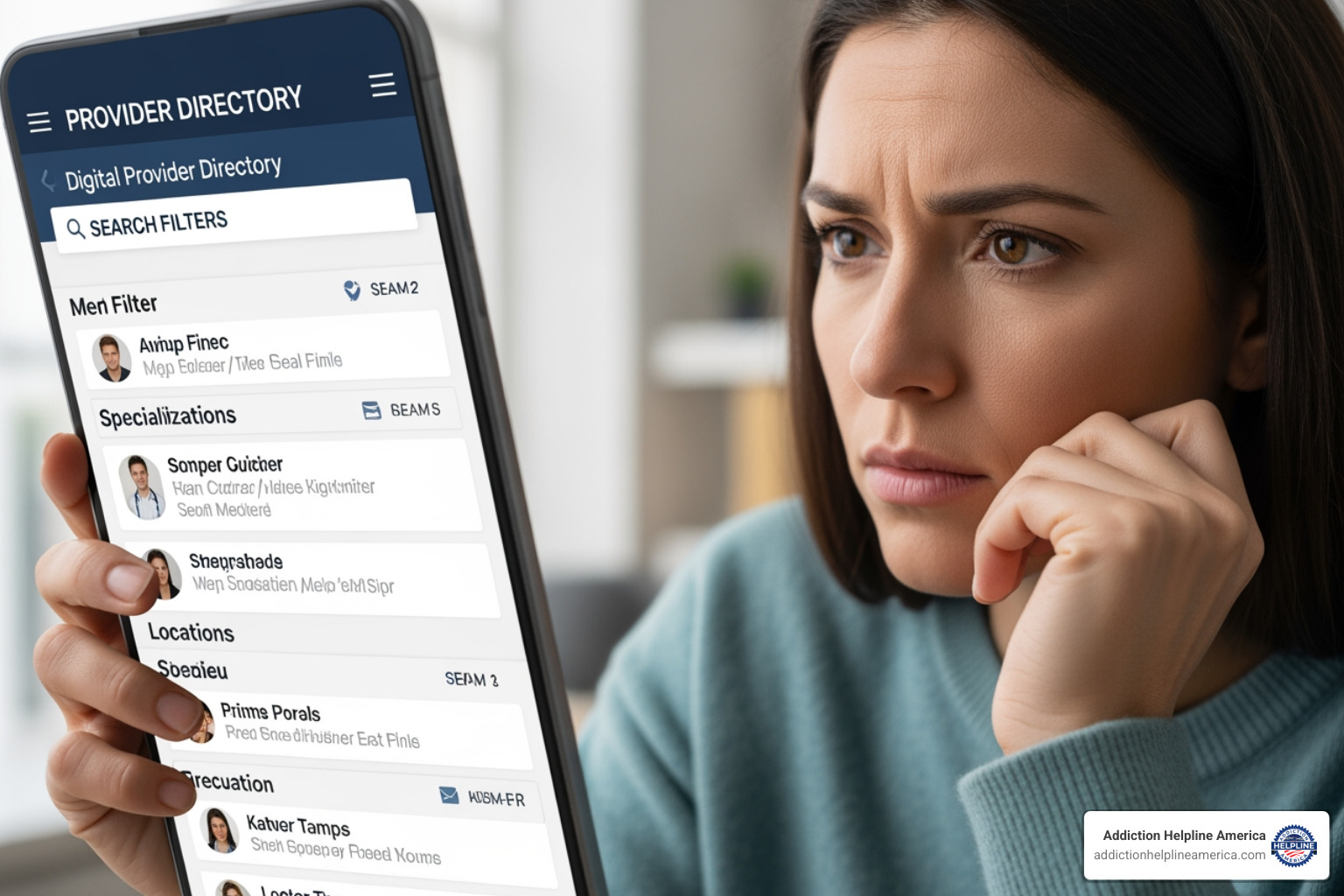
- Check your insurance company’s directory. Most insurer websites have searchable lists of in-network providers, which will be your most affordable option. You can filter by location, specialty, and therapy type.
- Use national and state helplines. Organizations like SAMHSA (the Substance Abuse and Mental Health Services Administration) offer a confidential national helpline to locate treatment facilities. If you’re in crisis, the 988 Suicide & Crisis Lifeline is always available.
- Look into community mental health centers. These centers provide comprehensive services, often on a sliding scale based on income, making them accessible for those with limited or no insurance.
At Addiction Helpline America, our mission is to simplify this process. Our Treatment Locator connects you with treatment centers nationwide. We offer free, confidential guidance to match you with a trusted provider from our network.
Understanding Insurance Coverage and Costs
Understanding your insurance coverage for outpatient counseling services is crucial. Fortunately, Mental Health Parity Laws require most health plans to cover mental and behavioral health treatment the same way they cover physical health care. This means your plan can’t impose stricter limits or higher copayments for therapy than for other medical services. You can learn about your behavioral health care rights to ensure you get the coverage you’re entitled to.
Even with parity laws, you’ll likely have some out-of-pocket costs, such as copayments or deductibles. Choosing an in-network provider will always be more affordable than an out-of-network one. If you have Medicaid or Medicare, these programs typically cover a wide range of outpatient services.
If you’re worried about cost, ask providers about sliding scale fees, which adjust the price based on your income. Don’t let financial concerns stop you from seeking help.
What to Expect in Your First Outpatient Counseling Session
It’s normal to feel nervous before your first therapy appointment. This initial session is primarily about getting to know each other and setting a course for your treatment.
- Intake and Paperwork: You’ll start by filling out forms with your basic information, medical history, and consent for treatment.
- Assessment: Your therapist will ask questions about your current concerns, symptoms, and personal history to get a full picture of what you’re dealing with.
- Goal Setting: You’ll work together to define what you hope to achieve through therapy. This collaboration helps shape your treatment plan.
- Building Rapport: The connection you have with your therapist is vital. Use this first session to see if you feel comfortable and understood. It’s okay if it’s not a perfect fit—finding the right provider is essential.
- Confidentiality: Your therapist will explain that everything you share is confidential, with a few legal exceptions, such as immediate risk of harm to yourself or others. This is protected by laws like HIPAA.
Think of your first appointment as laying the foundation for your path to wellness. It’s a starting point worth showing up for.
Frequently Asked Questions about Outpatient Counseling
We understand you might have more questions as you consider outpatient counseling services. Here, we address some common inquiries to help you feel more informed and confident in your decision.
How long does outpatient counseling typically last?
The duration of outpatient counseling services is highly personalized and depends on your needs, the severity of your condition, and your goals. There’s no one-size-fits-all timeline.
- Brief Treatment Models: Some programs focus on short-term, solution-focused therapy, often lasting for a set number of sessions (e.g., 12-20) to address specific problems quickly.
- Long-Term Therapy: For more complex or chronic conditions, therapy can extend for many months or even years, providing sustained support for deeper issues and personal growth.
- Goal-Oriented Progress: Treatment length is often tied to your progress. As you achieve milestones and build coping skills, the frequency of your sessions may decrease.
Your provider will work with you to create a personalized treatment plan and adjust it as you progress. The ultimate goal is to empower you to manage your well-being independently.
Are outpatient counseling services confidential?
Yes, confidentiality is a cornerstone of outpatient counseling services and is protected by law and ethical codes.
- HIPAA: In the U.S., the Health Insurance Portability and Accountability Act (HIPAA) sets national standards to protect your sensitive health information from being disclosed without your consent.
- Patient Privacy: What you discuss in therapy, your records, and even the fact you are receiving services are kept private.
- Exceptions to Confidentiality: There are a few legally mandated exceptions. Therapists are required to report information in cases of an immediate threat of harm to yourself or others, suspected child or elder abuse, or a court order.
- Informed Consent: Your therapist will review these limits with you during your first session, so you are fully aware of how your information is handled.
Trust and privacy are crucial for effective therapy, and providers are committed to upholding these principles.
Can outpatient services treat severe mental illness or addiction?
Yes, outpatient counseling services play a critical role in treating severe mental illness and addiction, often as part of a comprehensive continuum of care.
- Continuum of Care: Individuals with severe conditions might start with inpatient or residential treatment for stabilization, then transition to outpatient services as a “step-down” for ongoing support while reintegrating into daily life.
- Long-Term Management: For chronic conditions, outpatient therapy, medication management, and case management provide the sustained support needed to manage symptoms and prevent relapse.
- Intensive Programs: Higher levels of outpatient care, like Intensive Outpatient Programs (IOPs) and Partial Hospitalization Programs (PHPs), are specifically designed for individuals who need significant structure and support without 24/7 supervision.
- Coordinated Services: Outpatient programs often coordinate with other healthcare providers and social services to address all aspects of an individual’s well-being, from housing to physical health.
The effectiveness of outpatient care for severe conditions depends on consistent engagement with the treatment plan and a strong support system.
Conclusion
If there’s one thing to take away from this guide, it’s this: outpatient counseling services are an accessible and effective lifeline. They offer a path to heal and grow while keeping your feet firmly planted in your daily life. Whether you’re facing anxiety, depression, addiction, or trauma, outpatient care meets you where you are.
The flexibility of this approach allows you to learn new coping skills and immediately practice them in your real-world environment. This integration makes recovery more sustainable. With comprehensive support ranging from individual therapy to case management, these services are designed to address your well-being from every angle.
We believe deeply in the power of therapy to transform lives. Recovery is not just possible—it’s within your reach.
At Addiction Helpline America, we’re here to make that journey easier. We know how overwhelming it can be to find the right help, which is why we offer free, confidential, and personalized guidance. Our team connects people just like you to trusted outpatient counseling services across the country. You don’t have to do this alone.
If you’re ready to take that first brave step, we’re ready to walk with you. Reach out today, and let us help you find the support and care you deserve. Your path to wellness starts now.
Explore different types of treatment programs