

Why Outpatient Alcohol Treatment Offers Hope and Flexibility
Outpatient alcohol treatment is a recovery program that provides professional help for alcohol use disorder while you live at home and maintain daily responsibilities. Unlike residential programs, it involves attending scheduled therapy sessions and then returning home, blending recovery with real life.
Quick Overview: Key Facts About Outpatient Alcohol Treatment
- What it is: Treatment for alcohol use disorder that doesn’t require overnight stays at a facility
- Time commitment: Ranges from 1-2 hours per week (standard outpatient) to 20+ hours per week (partial hospitalization)
- Main types: Standard Outpatient (OP), Intensive Outpatient Program (IOP), and Partial Hospitalization Program (PHP)
- Who it’s for: Individuals with mild to moderate alcohol use disorder who have a stable home environment and strong motivation
- Core components: Individual and group therapy, medication support, family counseling, and relapse prevention training
- Major benefit: Allows you to work, care for family, and practice recovery skills in real-world situations
- Cost: Generally more affordable than inpatient treatment; often covered by insurance
Seeking help is the first step. Many people believe treatment requires leaving everything behind for a residential facility, but that isn’t always necessary. Research shows that outpatient programs can be just as effective as inpatient care for many individuals, with some intensive programs reporting abstinence rates from 50% to 70%.
The beauty of outpatient treatment is its flexibility. You can schedule therapy around your job and family, maintaining privacy and stability. You learn coping skills and immediately practice them in your daily life, with professional support to guide you.
Recovery doesn’t always demand a total break from your routine. For many, outpatient treatment is a practical, effective path forward. At Addiction Helpline America, we connect individuals with the right level of care, including comprehensive outpatient alcohol treatment options that fit into real lives. We’re here to help you understand your options and find the support that works for you.
Common Outpatient alcohol treatment vocab:
Understanding the Levels of Outpatient Care

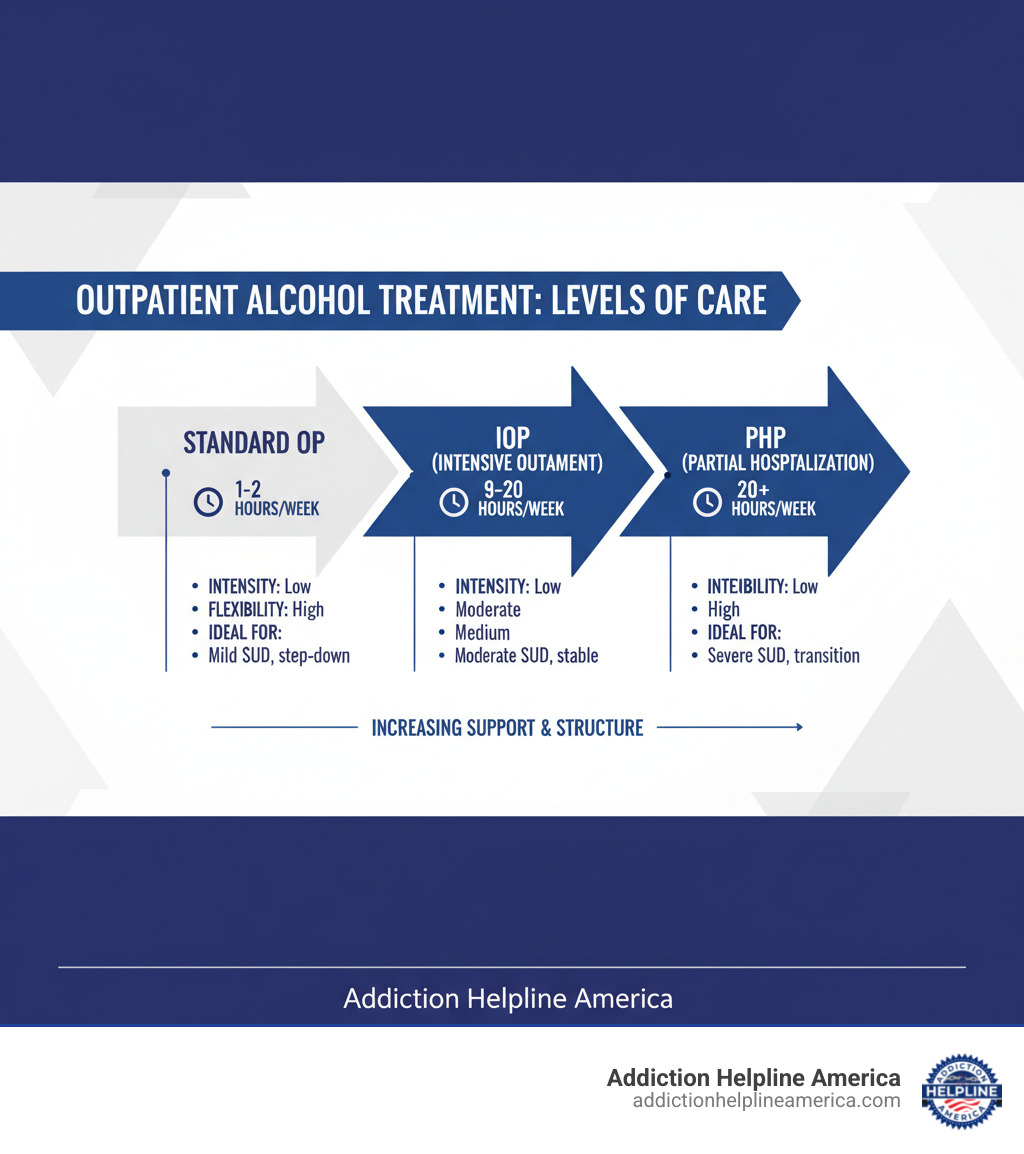
Not everyone needs the same intensity of care. Outpatient alcohol treatment comes in different levels, forming a “continuum of care” that adapts to your journey. You might start at a higher intensity and step down as you progress, or step up if you need more structure. This flexibility ensures your treatment matches your changing needs.
Standard Outpatient Programs (OP)
Standard Outpatient Programs are the most flexible option, ideal for those with a mild alcohol use disorder or as a step-down from more intensive care. A Standard OP involves regular office visits, usually just 1-2 sessions per week, each lasting one to two hours. The low intensity allows you to maintain your daily routine while participating in individual and group counseling. The focus is on building practical coping skills to manage cravings, handle stress, and prevent relapse.



Intensive Outpatient Programs (IOP)
An Intensive Outpatient Program (IOP) is a good fit when you need more support than weekly check-ins but don’t require 24/7 supervision. IOPs offer structured treatment while allowing you to live at home. You’ll typically attend sessions 3-5 days per week, for a total of 9-20 hours. Group therapy is the core of most IOPs, providing peer support and a safe space to practice new behaviors. This is supplemented with individual counseling and psychoeducation to learn about addiction and recovery. Most experts recommend a minimum of 90 days in an IOP to build a strong foundation.
Partial Hospitalization Programs (PHP)
Partial Hospitalization Programs (PHPs), or “day treatment,” are the highest level of outpatient alcohol treatment. They offer care comparable to an inpatient program, but you return home each evening. This level is suitable for those transitioning from residential treatment, at high risk of relapse, or dealing with co-occurring mental health challenges.
PHPs require a significant time commitment—at least 20 hours per week, often structured as 4-8 hours of treatment per day, 5-7 days a week. This intensity allows for medical monitoring to manage physical health concerns and integrated psychiatric support for co-occurring conditions like anxiety or depression. This dual diagnosis care treats both your alcohol use and mental health simultaneously. Most PHPs last for at least three months before you step down to a less intensive level of care.
Comparing IOP and PHP
Choosing between an IOP and PHP can be confusing. Here’s how they differ:
| Feature | Intensive Outpatient Program (IOP) | Partial Hospitalization Program (PHP) |
|---|---|---|
| Intensity (Hours/Week) | 9-20 hours per week | At least 20 hours per week (often 4-8 hours daily) |
| Duration | 2 months to 1 year (recommended minimum 90 days) | At least 3 months |
| Primary Focus | Structured group therapy, individual counseling, skill-building | Intensive daily therapy, medical oversight, psychiatric support |
| Medical Services | Some medication management, routine monitoring | Regular medical monitoring, medication administration, psychiatric care |
| Ideal Candidate | Stable home environment, completed detox, need structured support while maintaining work/family responsibilities | Transitioning from inpatient care, high relapse risk, co-occurring mental health disorders, need daily supervision without overnight stays |
The right level of care depends on your unique situation. The good news is that you’re not locked into one level forever; treatment can flex as your needs change.
Is Outpatient Treatment the Right Choice for You?
Deciding on the best path to recovery is a personal choice. Outpatient alcohol treatment offers a unique blend of structure and flexibility, but it’s crucial to know if it aligns with your needs. Key factors to consider include having a supportive home environment, a strong motivation to change, and significant work or family obligations you can’t put on hold. Outpatient care is also generally more cost-effective than inpatient options and provides a chance for real-world skill application by letting you practice new coping strategies in your daily life.
Benefits of Outpatient Alcohol Treatment
Outpatient care offers distinct advantages that help many people reclaim their lives while staying connected to their world. The primary benefit is flexibility, with scheduling that can accommodate your job, school, or family life. This makes treatment more affordable than 24/7 residential care, and many health insurance plans offer coverage.
Outpatient programs allow you to maintain employment and schooling, which helps build self-esteem and shows that recovery is possible without pausing your life. Many programs also emphasize family involvement through therapy and education, helping your loved ones learn how to provide effective support. For those who value discretion, outpatient treatment offers greater privacy. Most importantly, you get to practice new skills in real-time, applying coping mechanisms from therapy directly to your daily environment to build lasting sobriety.
Potential Drawbacks and When to Seek Higher Care
While outpatient treatment is a great solution for many, it isn’t for everyone. It’s important to recognize its limitations, especially if you have a severe addiction or an unstable living situation. An unstable home environment where others use alcohol can make recovery extremely difficult. Similarly, those with a severe AUD or a high risk of relapse may need the 24/7 supervision of an inpatient program.
A critical factor is the risk of alcohol withdrawal. Suddenly stopping heavy, prolonged drinking can trigger dangerous symptoms like severe tremors, a racing heart, seizures, or delirium tremens. If you are at risk for severe withdrawal, medical detox or inpatient care is crucial for your safety. While some outpatient programs offer detox for milder cases, severe withdrawal always requires professional medical supervision.
Likewise, if you struggle with severe co-occurring mental health disorders (like severe depression or trauma), especially with suicidal thoughts or self-harm, an inpatient program may be needed for stabilization before transitioning to outpatient care.
Signs you need inpatient care:
- You’re experiencing suicidal thoughts or severe self-harm ideation.
- You’re having psychotic episodes or severe disorientation.
- You have unmanaged medical conditions that could worsen during withdrawal.
- You lack a safe, stable, and substance-free home environment.
- You’ve tried outpatient care before but haven’t been able to maintain abstinence.
Who is an Ideal Candidate for Outpatient Treatment?
Outpatient alcohol treatment is often an excellent fit for individuals who meet certain criteria:
- You have a mild to moderate AUD, meaning your alcohol use is a concern but you can still function day-to-day.
- You have a strong support system of friends or family who encourage your recovery.
- You have completed detox, if necessary, and are medically stable.
- You are genuinely motivated for recovery and ready to participate actively in treatment.
- You have a stable living situation that is safe, predictable, and substance-free.
What Happens During Outpatient Alcohol Treatment?

When you begin outpatient alcohol treatment, your journey starts with a clinical assessment. This is a conversation to discuss your health history, substance use, and recovery goals. This helps the team understand your situation and recommend the right level of care.
Based on this assessment, you’ll collaborate on a personalized treatment plan. This roadmap outlines the specific therapies, medications, and support services that will form the core of your recovery. Effective outpatient treatment relies on evidence-based therapies—approaches proven by research to help you understand the root of your drinking, develop healthier coping skills, and build a foundation for a sober life.
The Central Role of Therapy
Therapy is the heartbeat of outpatient alcohol treatment. You’ll engage in individual therapy for one-on-one sessions in a private space to explore personal triggers and thought patterns. Group therapy is also a powerful component, allowing you to connect with peers who understand your struggles, reducing feelings of isolation.
Because addiction affects the whole family, family counseling is often included to improve communication, rebuild trust, and educate loved ones. You’ll likely encounter therapies like Cognitive Behavioral Therapy (CBT), which helps you replace negative thoughts and behaviors with healthier coping skills, and Motivational Interviewing (MI), which boosts your internal drive to change. Many programs also encourage connecting with peer support groups like Alcoholics Anonymous (AA) or SMART Recovery® for ongoing community support.
Medication-Assisted Treatment (MAT) in Outpatient Settings
Medication-Assisted Treatment (MAT) combines counseling with specific, FDA-approved medications to treat alcohol use disorder. These medications can be very effective at reducing cravings and preventing relapse, making it easier to focus on your therapeutic work.
Common medications include:
- Naltrexone: Blocks the pleasurable effects of alcohol and reduces cravings.
- Acamprosate: Eases the uncomfortable symptoms of long-term withdrawal, such as anxiety and unease.
- Disulfiram: Causes an unpleasant physical reaction if you drink alcohol, acting as a strong deterrent.
All FDA-approved medications for AUD are non-addictive support tools used to manage a chronic medical condition, much like taking medication for asthma or diabetes.
Addressing Co-Occurring Mental Health Disorders
It’s common for alcohol use disorder to co-occur with mental health conditions like anxiety, depression, or PTSD. This is often called a “dual diagnosis.” Effective recovery requires integrated treatment that addresses both conditions simultaneously. Many outpatient alcohol treatment programs, especially PHPs, are designed for this. Your plan may include psychiatric care and medication management for mental health conditions, creating a holistic path to overall well-being.
Navigating Your Path to Recovery
Finding the right outpatient alcohol treatment program doesn’t have to be overwhelming. Let’s walk through the process of finding care, understanding costs, and planning for long-term success.
How to Find a Reputable Outpatient Alcohol Treatment Program
When searching for a quality program, you want to ensure they use evidence-based treatments like Cognitive Behavioral Therapy (CBT) or Medication-Assisted Treatment (MAT). These are methods backed by research that help people recover.
Look for facilities with proper licensing and accreditation from organizations like The Joint Commission or CARF, as this indicates they meet high standards of care. The staff credentials are also important; treatment should be provided by licensed and experienced therapists, counselors, and medical professionals.
Ask about the program’s treatment philosophy. It should be patient-centered and create individualized plans that adapt to your progress. Practical considerations like flexible scheduling with evening or weekend sessions are also key. If you’re dealing with mental health challenges, confirm the program offers integrated treatment for co-occurring disorders.
To find a program, you can start by speaking with your doctor or contacting your insurance provider. You can also use the federal treatment locator at FindTreatment.gov to view options near you. For free, confidential, and personalized guidance, our team at Addiction Helpline America can help you steer these choices and connect you with vetted programs from our vast network that match your specific needs.
Understanding Cost and Insurance Coverage
The good news is that outpatient alcohol treatment is generally more affordable than inpatient care, and insurance often provides coverage. Your first step should be to verify your benefits by calling your insurance provider to ask about coverage for substance use services. Understand the cost differences between in-network and out-of-network providers, as staying in-network typically means lower costs.
If you don’t have insurance, most facilities offer private pay options, and many provide sliding scale fees based on your income. You may also qualify for state-funded programs designed to ensure cost is not a barrier to recovery. Under the Affordable Care Act, most health plans are required to cover substance use services, and public programs like Medicaid and Medicare often do as well.
The Importance of Aftercare and Continuing Care
Completing an outpatient program is a huge accomplishment, but recovery is an ongoing journey. Long-term sobriety thrives on continued support.
A solid relapse prevention plan, created during treatment, is your roadmap for handling triggers and cravings. Many treatment centers offer alumni programs to keep you connected to a supportive community. Continued participation in support groups like Alcoholics Anonymous or SMART Recovery ae offers free, ongoing peer accountability.
For some, transitioning to a sober living home provides a structured, substance-free environment in early recovery. You can also continue with ongoing therapy sessions to reinforce coping skills and address new challenges. Recovery is a process, and having the right support makes all the difference.
Frequently Asked Questions about Outpatient Alcohol Treatment
It’s natural to have questions when starting your recovery journey. Here are answers to some common inquiries about outpatient alcohol treatment.
How long does outpatient alcohol treatment last?
The duration is flexible and custom to your individual needs and progress. An Intensive Outpatient Program (IOP) often lasts from 2 months to a year, with a 90-day minimum frequently recommended. A more intensive Partial Hospitalization Program (PHP) typically runs for at least 3 months.
Treatment doesn’t have a fixed end date. Many people continue with aftercare and ongoing support for years, as longer engagement in care is linked to better long-term outcomes.
Can I keep working while in an outpatient program?
Yes. One of the biggest advantages of outpatient alcohol treatment is that it’s designed to fit into your life. Most programs offer flexible scheduling, including morning, evening, and weekend sessions, so you can continue to work, attend school, or care for your family. This allows you to apply your new coping skills to real-world situations immediately while still receiving professional support.
What is the success rate of outpatient alcohol treatment?
The success rates for outpatient alcohol treatment are very encouraging. For many people, especially those with mild to moderate AUD and a stable home, it can be just as effective as inpatient care.
Research shows that Intensive Outpatient Programs (IOPs) can achieve abstinence rates between 50% and 70%. A 2024 study found a 77.4% remission rate for those in intensive outpatient care. Success depends on matching the treatment intensity to your needs, your personal motivation, and your continued engagement with aftercare.
Conclusion
Recovery from alcohol use disorder is a real possibility. The journey begins one step at a time, and you don’t have to walk it alone. Outpatient alcohol treatment offers a flexible, effective, and accessible path for many people to reclaim their lives.
Outpatient care meets you where you are. Whether you need a gentler approach like a Standard Outpatient Program (OP), a more structured Intensive Outpatient Program (IOP), or the robust support of a Partial Hospitalization Program (PHP), there is a level of care designed for you. This means you can get the help you deserve while managing your work, family, and daily life.
Taking the first step takes immense courage, but it is the most powerful one you can make. At Addiction Helpline America, we are here to guide you through your options, answer your questions, and connect you with reputable outpatient alcohol treatment programs nationwide.
Your path to a brighter future is waiting. Start today.
Find personalized rehabilitation services today