
A Flexible Path to Recovery
Outpatient alcohol rehab is a treatment approach that allows individuals with alcohol use disorder to get professional help while living at home and maintaining daily responsibilities. Unlike inpatient programs requiring residential stays, outpatient care offers scheduled therapy sessions, giving you the flexibility to balance recovery with work, school, and family.
What You Need to Know About Outpatient Alcohol Rehab:
- Definition: Treatment for alcohol addiction without overnight stays at a facility
- Flexibility: Attend therapy while living at home and continuing daily activities
- Levels of Care: Ranges from intensive (20+ hours/week) to standard (1-2 sessions/week)
- Who It’s For: Those with mild to moderate alcohol use disorder, strong home support, and low risk of severe withdrawal
- Cost: Generally $1,400-$10,000 for a 30-90 day program, often covered by insurance
- Effectiveness: Studies show 50-70% abstinence rates at follow-up, comparable to inpatient care
If you’re facing alcohol addiction, you’re not alone, and help is available without putting your life on hold. Outpatient programs provide evidence-based therapies like Cognitive Behavioral Therapy (CBT), group counseling, and medication support, all while you live at home. This approach works well for people with a stable, supportive home environment who are motivated to change.
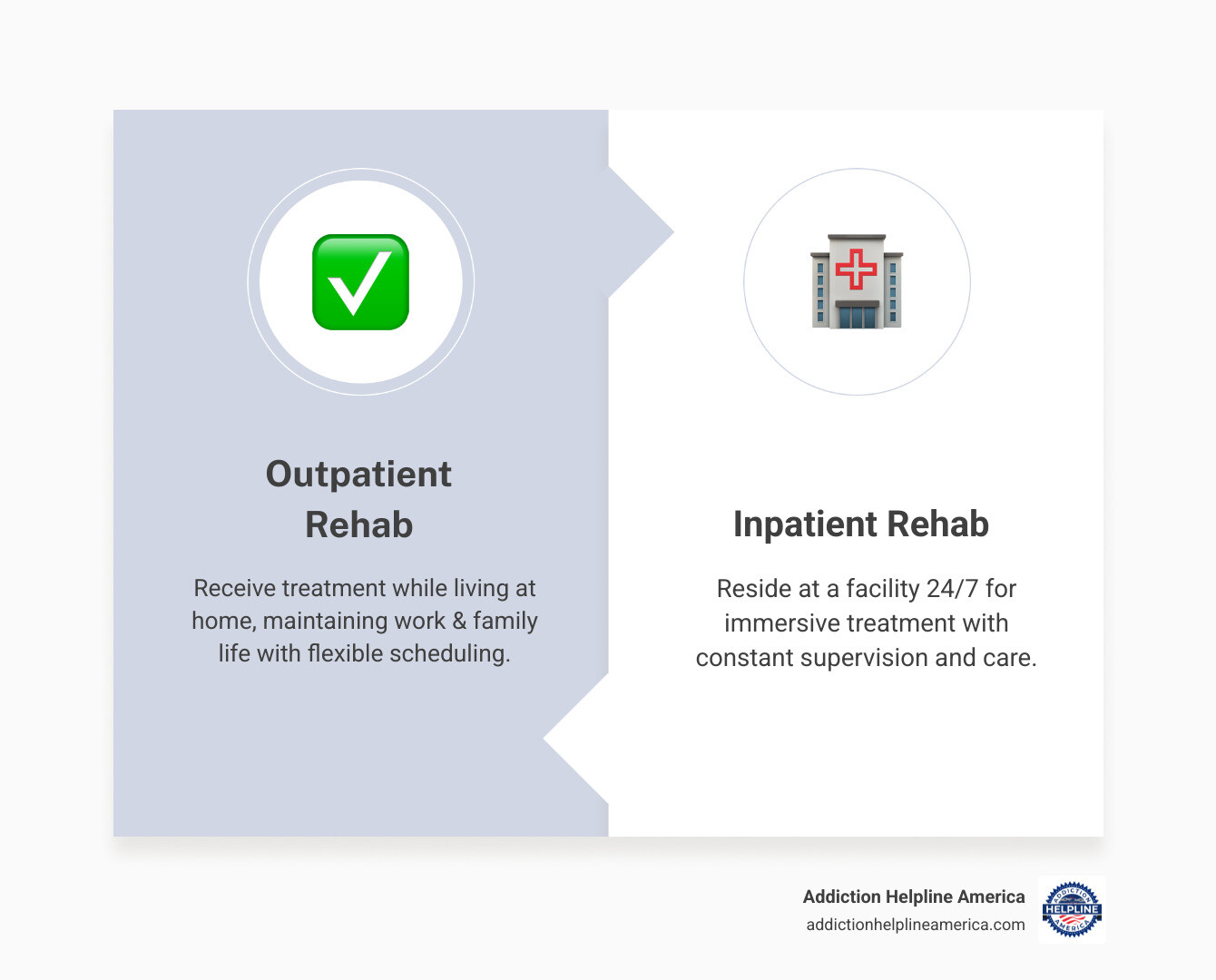
The key difference between outpatient and inpatient rehab is where you sleep. Inpatient programs provide 24/7 medical supervision in a residential setting, while outpatient programs allow you to return home each evening. Both offer quality care—the right choice depends on your situation, addiction severity, and support system.
At Addiction Helpline America, we’ve helped thousands find recovery from alcohol addiction by connecting them with outpatient programs that fit their unique needs. Our team is available 24/7 for free, confidential assessments to help you understand your options—call us at 844-561-0606.
This guide provides clear, straightforward information to help you understand your options and make an informed decision about your recovery.
Quick look at outpatient alcohol rehab:
Understanding the Levels of Outpatient Care
Outpatient alcohol rehab is not a one-size-fits-all solution. Treatment exists on a continuum of care, often called a stepped-care model. Programs are designed to meet varying needs, from intensive daily support to less frequent maintenance. The goal is to provide the most appropriate level of care, allowing individuals to step up or down in intensity as their recovery progresses.

This approach ensures you receive the right amount of support. For example, someone leaving an inpatient program might transition to a more intensive outpatient option, while a person with a milder alcohol use disorder could start with a less demanding schedule.
Unsure which level is right for you? Call Addiction Helpline America at 844-561-0606 for a free assessment.
Most Intensive Outpatient Level
The most intensive form of outpatient alcohol rehab is a Partial Hospitalization Program (PHP), also known as Day Treatment. These structured programs are for individuals who need significant support but not 24/7 medical supervision. They often serve as a bridge from inpatient care or a step-up for those needing more support than an Intensive Outpatient Program (IOP).
In a PHP, you attend treatment for at least 20 hours per week, often in 5-6 hour blocks on 5-6 days a week. This intensive schedule allows you to return home each evening. PHPs are beneficial for individuals with co-occurring mental health disorders, as they often include integrated psychiatric support and medication management. They focus on stabilizing behaviors and reinforcing coping skills.
Find the right intensive outpatient program—call us at 844-561-0606.
Moderate Outpatient Level
Intensive Outpatient Programs (IOPs) are a step down in intensity from PHPs. They offer a balance between dedicated treatment and reintegration into daily life. IOPs typically require 9-20 hours of treatment per week, spread across 3-5 days, with sessions lasting about 3 hours.
This level of outpatient alcohol rehab is for those stable enough to live at home but still needing substantial support. Group therapy is a major component, providing a peer community for sharing experiences. IOPs allow you to continue working or caring for your family while engaging in recovery. Research shows IOPs can lead to abstinence rates of 50% to 70% at follow-up, comparable to inpatient programs for many people.
Learn more about moderate outpatient options by calling 844-561-0606.
Standard Outpatient Level
The least intensive level is a Standard Outpatient Program (OP). These programs are often used as continuing care after an IOP or PHP, or for individuals with milder alcohol use disorders. Standard outpatient involves fewer than 9 hours of treatment per week, often just 1-2 sessions weekly.
The focus is on relapse prevention, reinforcing coping skills, and providing long-term support. It allows maximum flexibility to apply skills in real-world situations while maintaining sobriety with ongoing professional guidance. These groups might meet once a week, offering a consistent source of support and accountability.
For ongoing support, call Addiction Helpline America at 844-561-0606.
Is Outpatient Alcohol Rehab the Right Choice for You?
Deciding on the best path to recovery is a personal decision, and outpatient alcohol rehab isn’t suitable for everyone. It’s crucial to assess whether its flexibility aligns with your specific needs.
| Good Candidates for Outpatient Rehab | Those Who Might Need More Intensive Care |
|---|---|
| Mild to moderate Alcohol Use Disorder | Severe or long-standing alcohol addiction |
| Strong, supportive home environment | Unstable or unsupportive living situation |
| Highly motivated for recovery | Low motivation or frequent relapses |
| Medically stable | High risk of severe withdrawal symptoms |
| Ability to manage cravings independently | History of dangerous withdrawal complications |
| Work, school, or family commitments | Needs 24/7 medical or psychiatric supervision |
| No severe co-occurring mental health issues | Severe co-occurring mental health disorders |
| Reliable transportation to sessions | Lacks reliable transportation |
Call to Action: Not sure if outpatient rehab is right for you? Call 844-561-0606 for a free, confidential assessment.
Benefits of Choosing an Outpatient Program
Choosing outpatient alcohol rehab offers several compelling advantages:
- Affordability: Outpatient treatment is significantly cheaper than inpatient care because it doesn’t include lodging costs. This makes quality care more accessible and is often more easily approved by insurance.
- Flexibility for Work and School: A key benefit is the ability to continue your daily life. You can maintain your job, attend classes, or fulfill family obligations, as many programs offer flexible evening or weekend sessions.
- Maintaining Family Routines: Staying at home allows you to be present for your family, which helps maintain crucial family dynamics and allows loved ones to be involved in your recovery.
- Applying Skills in Real-World Settings: Outpatient rehab lets you immediately apply coping strategies learned in therapy to your daily life and receive feedback in your next session.
- Strong Community Support: You remain connected to your community and personal support network. This real-world interaction can reinforce healthy behaviors and provide a sense of normalcy.
- Proven Effectiveness: For many, especially those with mild to moderate AUD, outpatient alcohol rehab can be as effective as inpatient care, with studies showing comparable abstinence rates.
Find the benefits of outpatient rehab—call us at 844-561-0606.
Who Is a Good Candidate?
Outpatient alcohol rehab is an excellent option if you have:
- Mild to Moderate AUD: Your alcohol use disorder does not require 24/7 medical supervision.
- Strong Support System at Home: A stable, supportive home environment is critical for success.
- High Motivation for Recovery: Your personal commitment and desire to change are paramount.
- Medically Stable: You are in good physical health and not at high risk for severe alcohol withdrawal.
- Low Risk of Severe Withdrawal: Outpatient alcohol rehab does not typically include medical detox. If you anticipate significant withdrawal, inpatient detox is usually recommended first.
Find out if you’re a good candidate—call Addiction Helpline America at 844-561-0606.
Potential Challenges and When to Seek Guidance
While beneficial, outpatient alcohol rehab has potential challenges:
- Lack of 24/7 Supervision: You return home each day without constant medical or clinical oversight, which can be difficult if you face intense cravings.
- Distractions at Home: Your home environment may present triggers or distractions that make it harder to focus on recovery.
- Unstable Living Environment: A chaotic or unsupportive home life may not provide the necessary protection for early recovery.
- Severe Co-occurring Mental Health Disorders: While many outpatient programs offer integrated care, severe conditions may require inpatient treatment for close monitoring.
- High Risk of Severe Withdrawal Symptoms: Severe alcohol withdrawal can be life-threatening, making medical detox in a hospital or specialized facility crucial before starting outpatient care.
If these challenges resonate with you, it’s a sign to seek guidance. A professional assessment can determine if a different level of care is more appropriate.
If you’re unsure about your needs, call Addiction Helpline America at 844-561-0606 for a free, confidential assessment and help finding the right outpatient program.
What to Expect: A Look Inside an Outpatient Alcohol Rehab Program
Once you’ve decided outpatient alcohol rehab is the right fit, you might wonder what it entails. While programs vary, most high-quality facilities share common elements. We’re here to explain the process and give you a clear picture of what to expect.

Want to know what to expect? Call us at 844-561-0606 for details about outpatient programs.
A Typical Week in Treatment
A typical week in an outpatient alcohol rehab program is structured to provide comprehensive support while fitting into your life. The schedule depends on the level of care (PHP, IOP, or standard outpatient), but generally includes:
- Group Therapy Sessions: A cornerstone of treatment, these sessions with peers provide community, reduce isolation, and offer shared learning. Topics include coping skills, trigger identification, and communication.
- Individual Counseling: Regular one-on-one sessions with a licensed therapist are custom to your specific needs, helping you explore underlying issues and develop personalized coping strategies.
- Family Therapy: Many effective programs involve family members to help improve communication, rebuild trust, and educate loved ones on how to best support your recovery.
- Educational Workshops: These sessions provide information on the science of addiction, relapse prevention, healthy lifestyles, and stress management.
- 12-Step Integration: Many programs encourage participation in 12-step support groups like Alcoholics Anonymous (AA). These groups offer ongoing peer support and a framework for long-term sobriety.
An IOP might involve 3-hour sessions, 3 times a week, while a PHP could mean 5-6 hours of treatment daily, 5-6 days a week. As you progress, session intensity typically decreases.
Get a personalized treatment plan—call 844-561-0606.
Common Therapies and Treatments
Outpatient alcohol rehab uses evidence-based therapies proven to be effective in treating alcohol use disorder. These approaches help you understand the roots of your addiction and build a foundation for lasting sobriety.
- Cognitive Behavioral Therapy (CBT): This therapy helps you identify and change negative thought patterns and behaviors related to alcohol misuse. CBT equips you with practical skills to manage triggers and cravings. Studies show it can reduce substance use disorder symptoms by 60–80%.
- Motivational Interviewing (MI): This client-centered approach helps you resolve ambivalence about changing your drinking habits and strengthens your motivation for recovery.
- Family Therapy: Involving family is crucial for addressing relational dynamics and creating a supportive home environment. Programs integrating family therapy often have higher success rates.
- Support for Medications: Medication-Assisted Treatment (MAT) combines FDA-approved medications with therapy. For alcohol use disorder, medications like Naltrexone, Acamprosate, and Disulfiram can reduce cravings and support abstinence. MAT can significantly improve treatment outcomes.
Many programs also incorporate other approaches like Dialectical Behavioral Therapy (DBT), trauma-informed care, and holistic therapies to support overall well-being.
Learn more about therapies offered—call Addiction Helpline America at 844-561-0606.
Program Duration, Cost, and Insurance
Understanding the practical aspects of outpatient alcohol rehab is essential for planning your recovery.
Treatment Length: The duration of treatment is highly individualized, depending on the severity of the AUD, your progress, and other personal factors. Programs can range from 30 to 90 days, with some extending for more complex cases. Longer treatment durations are generally associated with better outcomes.
Cost Factors: The cost of outpatient alcohol rehab varies based on the level of care, location, and services. Generally, it is more affordable than inpatient treatment. Private pay rates for a 30-day program can range from $1,400 to $10,000.
Insurance Coverage: Most health insurance plans, including private insurance, Medicaid, and Medicare, are required to cover substance use services under the Affordable Care Act (ACA). However, coverage details like deductibles and co-pays vary. To understand your coverage, contact your insurance provider or let a treatment center’s admissions team verify your benefits. This confidential process clarifies what your plan covers, helping you plan financially.
Call Addiction Helpline America at 844-561-0606 for a free insurance check and help understanding your options.
Aftercare and Continued Support
Completing an outpatient alcohol rehab program is a major achievement, but aftercare is crucial for maintaining sobriety.
- Relapse Prevention Planning: You’ll work with counselors to develop a personalized plan that identifies triggers and outlines coping strategies.
- Sober Living Homes: These homes can provide a structured, supportive environment that bridges the gap between rehab and independent living.
- Alumni Programs: Many treatment centers offer alumni programs for ongoing connection and support through events and mentorship.
- Ongoing Support Groups: Continued participation in mutual support groups like AA is highly encouraged for long-term recovery.
Consistent engagement with aftercare resources significantly increases the likelihood of long-term sobriety.
For help finding aftercare resources and ongoing support, call us at 844-561-0606.
How to Find a Reputable Program and Get Help Now
Finding the right outpatient alcohol rehab program can feel overwhelming, but we’re here to simplify the process. A reputable program is key to successful recovery. We connect individuals nationwide with vetted addiction and mental health treatment centers.
Start your search for a reputable outpatient program—call Addiction Helpline America at 844-561-0606.
Key Qualities of a High-Quality Program
When evaluating outpatient alcohol rehab programs, look for these indicators of quality:
- Licensing and Accreditation: Ensure the facility is licensed by the state and accredited by organizations like CARF or The Joint Commission, which signify high standards of care.
- Evidence-Based Practices: The program should use therapies backed by scientific research, such as CBT, MI, and MAT.
- Qualified Staff: Look for programs with licensed and credentialed professionals, including therapists, counselors, and medical staff.
- Individualized Treatment Plans: A quality program will develop a personalized treatment plan custom to your unique needs and goals.
- Aftercare Support: A reputable program provides robust aftercare planning and resources for long-term recovery.
Steps to Find Treatment
Navigating the options for outpatient alcohol rehab can be complex, but we’re here to help. Here are the steps you can take:
- Get a Professional Assessment: The first step is a clinical assessment to determine the most appropriate level of care.
- Ask Your Doctor for a Referral: Your primary care physician can be an excellent resource for referrals to reputable programs.
- Use Your Insurance Provider’s Directory: Most insurance companies offer online directories of in-network facilities.
- Or call Addiction Helpline America at 844-561-0606 for a free, confidential assessment and placement guidance. We specialize in connecting individuals across Alabama, Alaska, Arizona, Arkansas, California, Colorado, Connecticut, Delaware, Florida, Georgia, Hawaii, Idaho, Illinois, Indiana, Iowa, Kansas, Kentucky, Louisiana, Maine, Maryland, Massachusetts, Michigan, Minnesota, Mississippi, Missouri, Montana, Nebraska, Nevada, New Hampshire, New Jersey, New Mexico, New York, North Carolina, North Dakota, Ohio, Oklahoma, Oregon, Pennsylvania, Rhode Island, South Carolina, South Dakota, Tennessee, Texas, Utah, Vermont, Virginia, Washington, West Virginia, Wisconsin, Wyoming, and the District of Columbia with the right treatment centers.
Frequently Asked Questions about Outpatient Alcohol Rehab
We often hear similar questions from individuals exploring outpatient alcohol rehab. Here are some of the most common ones:
Can I keep working while in outpatient rehab?
Yes, outpatient alcohol rehab programs are designed with flexibility to allow clients to maintain their work, school, and family commitments. Many programs offer evening and weekend sessions to accommodate busy schedules. This allows you to integrate your recovery into your daily life rather than putting it on hold.
Contact us to find a program that fits your schedule.
Does outpatient rehab include detox?
Generally, standard outpatient alcohol rehab focuses on therapy and does not include medically monitored detox. Outpatient detox may be an option for those with mild to moderate withdrawal symptoms, but it requires careful medical assessment. For those at risk of severe withdrawal, which can be life-threatening, inpatient medical detox is usually required before starting an outpatient program. If you need help determining if you require detox, contact us for guidance.
How do I know which level of outpatient care I need?
Determining the right level of outpatient alcohol rehab care depends on factors like the severity of your alcohol use disorder, your medical history, and your living environment. A professional clinical assessment, often guided by criteria from the American Society of Addiction Medicine (ASAM), is the best way to determine whether a standard outpatient program, an Intensive Outpatient Program (IOP), or a Partial Hospitalization Program (PHP) is most appropriate for you.
Contact Addiction Helpline America for a free, confidential assessment.
Take the First Step Towards a Healthier Future
Recovery is a journey, not a destination. It’s a continuous process of growth, learning, and self-findy. Outpatient alcohol rehab offers a hopeful and effective path for many individuals seeking to overcome alcohol use disorder, providing the tools and support needed to build a healthier, more fulfilling life without disrupting your entire world.
You don’t have to do it alone. We understand that taking the first step can be the hardest, but support is available. Addiction Helpline America is here for you, offering confidential help and guidance every step of the way. Our caring specialists are ready to listen, answer your questions, and connect you with reputable outpatient alcohol rehab programs that align with your unique needs and circumstances.
Take action today – reach out to Addiction Helpline America to speak with a caring specialist and start your recovery journey. Help is available, and a better tomorrow is possible.