
Finding Hope and Healing While Staying Home
Outpatient Addiction Treatment Los Angeles offers individuals struggling with substance use disorders a path to recovery without leaving their daily lives behind. This flexible approach allows you to receive professional support, evidence-based therapy, and medical care while continuing to work, go to school, or care for your family.
Quick Overview: What You Need to Know
- Flexibility: Attend treatment sessions 2-6 days per week while living at home
- Levels of Care: Choose from Partial Hospitalization (PHP), Intensive Outpatient (IOP), or Standard Outpatient programs
- Cost: Generally more affordable than residential treatment; most insurance plans cover outpatient services
- Duration: Programs typically last 4 weeks to 6 months, custom to your needs
- Who It Helps: Ideal for those with strong home support, work/school commitments, or transitioning from inpatient care
Los Angeles offers a rich network of outpatient programs that combine professional clinical support with the freedom to maintain your responsibilities. You’ll find evidence-based therapies like Cognitive Behavioral Therapy (CBT) and Dialectical Behavior Therapy (DBT), alongside holistic approaches such as yoga and meditation. Many programs also address co-occurring mental health conditions like anxiety, depression, and trauma—treating the whole person, not just the addiction.
The city’s diverse recovery community provides unique advantages. From beachside wellness activities to specialized dual diagnosis treatment centers, LA’s outpatient landscape reflects the understanding that recovery looks different for everyone. Evening and weekend program options ensure that seeking help doesn’t mean sacrificing your job or education.
Addiction Helpline America has connected thousands of individuals and families to quality Outpatient Addiction Treatment Los Angeles programs through our free, confidential service. Our experienced team understands the local treatment landscape and can guide you to programs that match your specific needs, insurance coverage, and recovery goals.
Understanding Outpatient Addiction Treatment in Los Angeles
When considering addiction recovery, one of the first decisions is often between inpatient and outpatient care. Both offer valuable paths to healing, but they cater to different needs and circumstances. Understanding these distinctions is crucial for finding the right fit for you or your loved one.
What is Outpatient Treatment vs. Inpatient Residential Care?
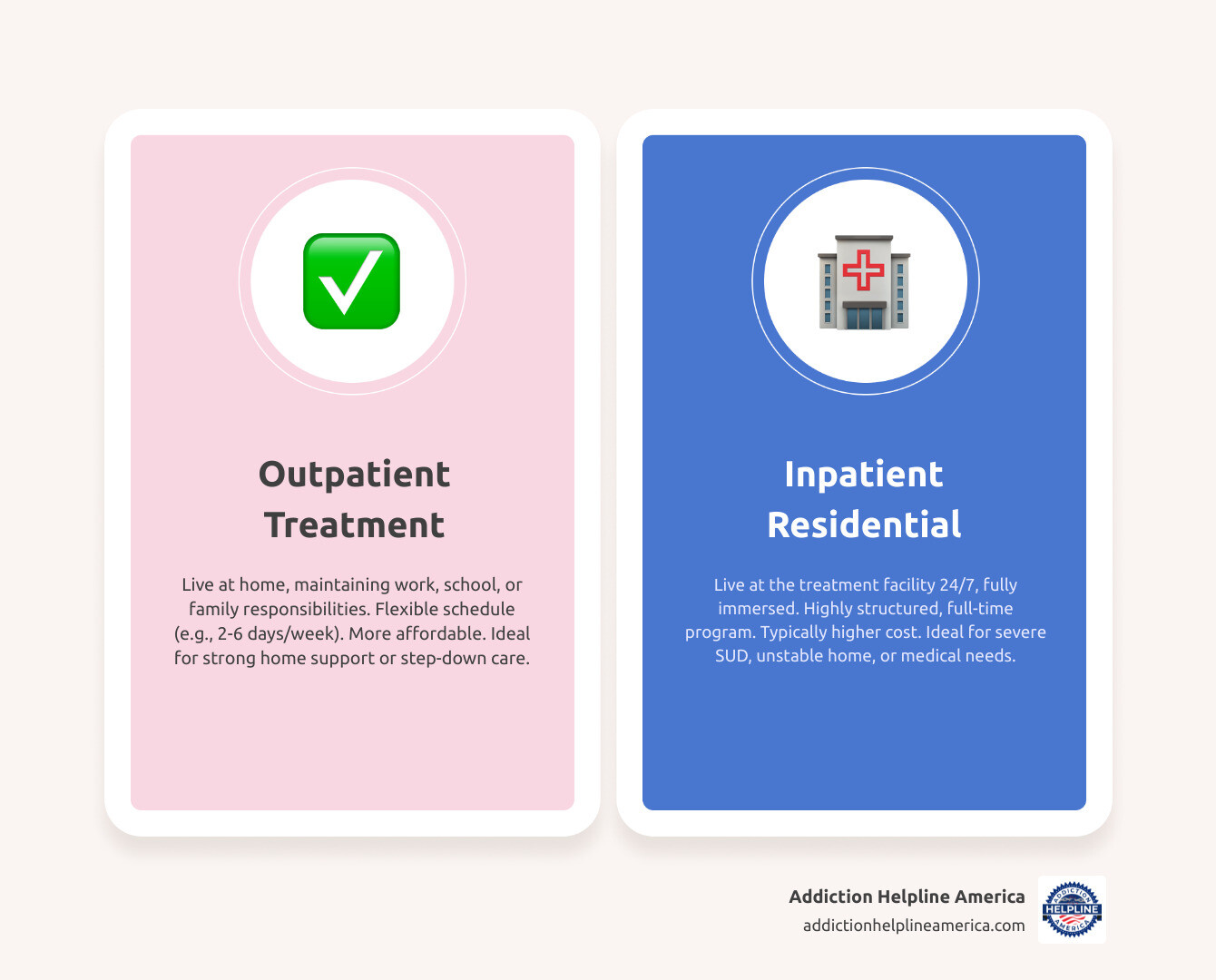
At its core, outpatient addiction treatment provides therapeutic and medical care without requiring an overnight stay in a facility. This means individuals continue to live at home or in a sober living environment while attending scheduled treatment sessions. It’s a fantastic option for those who need to maintain their daily routines, responsibilities, and connections to their community.
In contrast, inpatient or residential care involves living at a treatment facility 24 hours a day, 7 days a week. This immersive environment provides constant medical supervision, structured routines, and removal from external triggers. It’s often recommended for individuals with more severe addictions, unstable home environments, or those who require medically supervised detoxification.
The key difference truly lies in the living situation and the level of supervision. With outpatient care, you’re integrating recovery into your existing life, applying new coping skills in real-time. With inpatient care, the focus is on a complete immersion in healing, away from life’s usual demands. Both are effective, but their suitability depends on individual circumstances.
Here’s a quick comparison to help clarify these differences:
| Feature | Inpatient/Residential Care | Outpatient Care |
|---|---|---|
| Living Situation | Reside at the treatment facility 24/7 | Live at home or in a sober living environment |
| Supervision Level | Constant medical and therapeutic supervision | Scheduled sessions; live independently outside of treatment hours |
| Time Commitment | Full-time, immersive (typically 30-90+ days) | Part-time, flexible (e.g., a few hours, several days a week) |
| Cost | Generally higher, often around $1,000 per day | Generally lower, often a few hundred dollars a day |
| Ideal Candidate | Severe addiction, unstable home, co-occurring disorders requiring intensive support, need for detox | Strong home support, work/school commitments, less severe addiction, step-down from inpatient |
| Flexibility | Very limited, structured schedule | High, allows for balancing treatment with daily responsibilities |
Levels of Outpatient Care: PHP, IOP, and Standard OP
Outpatient Addiction Treatment Los Angeles isn’t a one-size-fits-all solution; it comes in various intensities, allowing for a custom approach to recovery. These different levels of care ensure that as individuals progress, their treatment can adapt, providing just the right amount of support.
-
Partial Hospitalization Program (PHP): Often considered the highest level of outpatient care, PHP offers a robust treatment schedule that closely resembles inpatient care but without the overnight stay. Clients in PHP typically attend treatment 5 days per week for 6 hours per day. During these intensive sessions, they participate in a mix of individual, group, and family therapy. This level is ideal for individuals who need significant structure and support, perhaps as a step-down from inpatient care, but have a stable home environment.
-
Intensive Outpatient Program (IOP): IOPs provide a flexible yet comprehensive treatment option. Clients usually attend treatment 3-5 days per week for approximately 3 hours per day. These programs are designed to accommodate work, school, or family obligations, often offering sessions in the morning, afternoon, or evening (for example, from 10:00 AM to 1:00 PM or 6:00 PM to 9:00 PM). IOPs are excellent for those who have completed PHP or residential treatment and are ready for more independence, or for individuals with less severe substance use disorders who require more than standard outpatient support.
-
Standard Outpatient Programs (OP): The least intensive level of outpatient care, standard OP programs are designed for individuals who have achieved a good level of stability in their recovery. Clients might attend a group twice a week and have one individual therapy session per week. This level is often a “step-down” from IOP, providing ongoing support and relapse prevention strategies while allowing for maximum personal and professional involvement. It’s about maintaining sobriety and integrating recovery fully into daily life with continued professional guidance.
This step-down model of care is a thoughtful way to ensure that individuals receive continuous support while gradually reintegrating into their lives, building resilience and independence every step of the way.

Core Services and Therapies in Los Angeles Programs
The effectiveness of Outpatient Addiction Treatment Los Angeles programs stems from the comprehensive and evidence-based services they provide. These services are designed to address not just the addiction itself, but also the underlying factors contributing to substance use, ensuring a holistic path to lasting recovery.
Evidence-Based Therapies for Lasting Recovery
Outpatient centers in Los Angeles use a range of proven therapeutic modalities to help individuals develop coping skills, process trauma, and build a foundation for long-term sobriety. Some of the most common and effective include:
- Cognitive Behavioral Therapy (CBT): This therapy helps individuals identify and change negative thought patterns and behaviors that contribute to substance use. It’s about learning new ways to respond to triggers and stressors.
- Dialectical Behavior Therapy (DBT): DBT focuses on teaching skills in four key areas: mindfulness, distress tolerance, emotion regulation, and interpersonal effectiveness. It’s particularly effective for individuals struggling with intense emotions and co-occurring mental health conditions. Some facilities in Los Angeles specialize in DBT-focused treatment.
- Individual Counseling: One-on-one sessions with a therapist provide a safe space to explore personal issues, trauma, and specific challenges related to addiction. This personalized attention is crucial for addressing unique needs.
- Group Therapy: Sharing experiences and insights with peers in a supportive group setting can reduce feelings of isolation, build community, and offer diverse perspectives on recovery.
- Family Involvement: Addiction impacts the entire family system. Many programs in Los Angeles emphasize family therapy and education to help loved ones understand addiction, set healthy boundaries, and rebuild trust.
- Holistic Therapies: Beyond traditional talk therapy, many Los Angeles programs integrate holistic approaches like yoga, meditation, and sound baths. These practices support mental, physical, and spiritual well-being, fostering a balanced recovery.
These therapies, combined with educational sessions and lectures on the behavioral, psychological, and medical consequences of addiction, equip individuals with the tools they need to steer life sober. If you’re looking for specialized therapy options, we can help you explore what’s available. Learn about specialized therapy options available through Addiction Helpline America.
The Critical Role of Dual Diagnosis Support
It’s a common misconception that addiction exists in a vacuum. In reality, many individuals struggling with substance use also contend with co-occurring mental health disorders, often referred to as a “dual diagnosis.” These can include conditions like anxiety, depression, PTSD, and bipolar disorder. Trying to treat addiction without addressing these underlying mental health issues is like trying to fix a leaky faucet without turning off the water – it’s unlikely to lead to a lasting solution.
Effective Outpatient Addiction Treatment Los Angeles programs understand this intricate connection. They offer integrated treatment plans that address both the substance use disorder and any co-occurring mental health conditions simultaneously. This whole-person healing approach recognizes that mental health and addiction are intertwined and must be treated as such. For example, if anxiety fuels a person’s alcohol use, treating the anxiety directly while also addressing the drinking habits leads to a much stronger recovery foundation.
Many Los Angeles centers are equipped with professional clinicians and licensed therapists who are experts in dual diagnosis. They create personalized care plans that effectively target each condition, optimizing the healing process. Our team can connect you with programs that specialize in this integrated approach. Find dual diagnosis support through Addiction Helpline America.
Aftercare and Long-Term Support for Sobriety
Completing an outpatient program is a monumental achievement, but it’s not the end of the recovery journey. In fact, many view it as the beginning of a new life. That’s why aftercare and long-term support are indispensable components of successful Outpatient Addiction Treatment Los Angeles programs.
Aftercare planning typically begins during treatment, focusing on developing robust relapse prevention strategies. This involves identifying triggers, developing healthy coping mechanisms, and building a strong support network. Many programs offer continuing aftercare support, such as structured groups and alumni programs, which provide ongoing connection and mentorship. Alumni programs, in particular, can offer invaluable support through real-life success stories and a community that understands the challenges of maintaining sobriety.
Sober living resources, such as recovery bridge housing, also play a vital role for many. These environments provide a safe, drug-and-alcohol-free place to live while transitioning to full independence. They offer structure, accountability, and a supportive community, especially for those whose home environment might not be conducive to early recovery.
Building a sober community is paramount. Whether through 12-Step programs, peer support groups, or alumni networks, connecting with others who share similar experiences fosters a sense of belonging and mutual encouragement. This ongoing support helps individuals steer the inevitable ups and downs of life in recovery, reinforcing the skills learned in treatment and preventing isolation. We believe that no one should walk the path of recovery alone.

Navigating the Logistics: Cost, Duration, and Insurance
Understanding the practical aspects of addiction treatment, including costs, program length, and how insurance works, is a crucial step in accessing care. We aim to make this process as clear and stress-free as possible.
Typical Cost and Duration of Outpatient Programs
One of the significant advantages of Outpatient Addiction Treatment Los Angeles is its cost-effectiveness compared to inpatient residential care. While inpatient programs can cost upwards of $1,000 per day, outpatient programs typically range from a few hundred dollars a day. This difference can make treatment much more accessible for many individuals and families.
The duration of outpatient treatment is highly personalized, reflecting the understanding that every individual’s journey to recovery is unique. Programs can last anywhere from 4 weeks to six months, with some individuals benefiting from ongoing support for even longer. The goal is to stabilize health, address the underlying reasons for addiction, and equip individuals with the knowledge and skills for lasting recovery, not just to meet an arbitrary timeline. Factors influencing the cost and duration often include the specific level of care (PHP, IOP, OP), the types of therapies included, and individual needs and progress.
How Insurance Covers Outpatient Addiction Treatment Los Angeles
Navigating insurance can feel overwhelming, but we’re here to help. The good news is that most health insurance plans, especially those offered by open exchanges created by the Affordable Care Act (ACA), cover intensive outpatient therapy. This means that a significant portion, if not all, of your treatment costs may be covered.
In California, Medi-Cal members who qualify can access substance use disorder services. Additionally, many private insurance plans, including PPO, HMO, and EPO plans, often provide coverage for outpatient addiction treatment. It’s always best to verify your specific insurance benefits directly with the treatment center or with a trusted resource like Addiction Helpline America. We can help you understand your coverage and maximize your benefits so you can focus on what truly matters: your recovery.
For more information on publicly funded options and resources, you can visit the L.A. County Public Health resources or check the California DHCS access lines to learn about county-specific access points for services.
Is Outpatient Treatment in Los Angeles Right for You?
Deciding whether Outpatient Addiction Treatment Los Angeles is the right path involves honest self-assessment and understanding the signs that indicate a need for help. We believe that seeking help is a sign of strength, and recognizing these indicators is the first step towards a healthier future.
Signs You or a Loved One Might Need Help
Addiction can manifest in many ways, and its signs often become increasingly noticeable over time. If you or someone you care about is exhibiting any of the following, it might be time to consider outpatient treatment:
- Neglecting Responsibilities: Failing to meet obligations at work, school, or home due to substance use.
- Relationship Issues: Experiencing conflict with family or friends, or withdrawing from loved ones.
- Increased Tolerance: Needing more of a substance to achieve the same effect.
- Withdrawal Symptoms: Experiencing physical or psychological discomfort when trying to stop or cut back on substance use.
- Changes in Behavior: Exhibiting secretive behavior, mood swings, loss of interest in hobbies, or changes in sleep patterns.
- Continued Use Despite Negative Consequences: Persisting in substance use even when it causes problems with health, finances, or relationships.
These signs indicate that substance use has moved beyond casual use and is impacting daily life in significant ways. Recognizing these patterns is crucial for prompting intervention and seeking professional help.
Who is an Ideal Candidate for Outpatient Addiction Treatment Los Angeles?
While outpatient treatment is a highly effective option, it’s not suitable for everyone. It generally works best for individuals who meet certain criteria, allowing them to thrive in this less restrictive environment:
- Strong Home Support System: Having a stable, drug-and-alcohol-free living environment and supportive family or friends who can encourage sobriety.
- High Motivation for Recovery: A genuine desire and commitment to stop using substances and engage fully in the treatment process.
- Need to Maintain Work or School: Individuals who cannot take extended leave from their jobs or educational pursuits due to financial or personal obligations. The flexibility of outpatient programs allows them to balance treatment with these responsibilities.
- Transitioning from Inpatient Care: For many, outpatient treatment serves as an excellent “step-down” from a more intensive inpatient program, providing continued support as they reintegrate into daily life.
- Mild to Moderate Substance Use Disorder: Individuals whose addiction is not severe enough to require 24/7 medical supervision or detoxification in a residential setting.
If these characteristics resonate with your situation or that of a loved one, Outpatient Addiction Treatment Los Angeles could be an ideal fit. Our team at Addiction Helpline America can help you determine the most appropriate level of care. Explore treatment options in Los Angeles.
Frequently Asked Questions about Outpatient Rehab in LA
We often hear similar questions from individuals and families exploring outpatient addiction treatment. Here are some of the most common ones, along with our answers, to help explain the process.
Can I keep my job while attending an outpatient program?
Absolutely! This is one of the primary benefits of choosing Outpatient Addiction Treatment Los Angeles. Programs are specifically designed to offer flexibility, allowing individuals to continue working, attending school, or caring for their families while receiving crucial support. Many centers offer evening and nighttime programs to accommodate various schedules.
Additionally, the Family and Medical Leave Act (FMLA) can provide certain job protections for individuals seeking addiction treatment, although the leave is generally unpaid. This means you can often take time off for treatment without fear of losing your job. We understand the importance of maintaining stability during recovery, and outpatient programs are structured with this in mind.
What makes addiction treatment in Los Angeles unique?
Los Angeles, a vibrant and diverse metropolis, offers a unique landscape for addiction treatment. The city boasts access to an extensive network of highly experienced clinicians, therapists, and medical professionals who bring a wealth of expertise to the field. This means you’ll find a wide range of specialized, evidence-based therapies custom to diverse needs.
Furthermore, LA’s diverse recovery community is a significant asset, fostering a strong sense of belonging and peer support. Many programs leverage the city’s natural beauty, incorporating holistic therapies like yoga and meditation, often in serene settings or with proximity to natural, healing environments like the beach. This combination of clinical excellence, community support, and wellness focus creates a truly comprehensive and unique recovery experience.
How do I get started and find a program?
Taking the first step is often the hardest, but we’re here to make it easier. The process typically begins with a confidential assessment, which helps determine the most appropriate level of care and program type for your specific needs. During this assessment, a treatment professional will discuss your history, current situation, and recovery goals.
Next, it’s important to verify your insurance coverage. Our team can assist with this, helping you understand your benefits and maximize coverage to reduce out-of-pocket costs. Finally, you’ll speak with a treatment professional who can guide you through the available options, answer your questions, and help you choose a program that aligns with your individual requirements and preferences. Our service at Addiction Helpline America is free, confidential, and designed to connect you with the right resources in Los Angeles. Find a Los Angeles rehab program now.
Conclusion: Take the First Step Towards a New Life
Outpatient Addiction Treatment Los Angeles offers a powerful and practical pathway to recovery, blending professional support with the ability to maintain your daily life. We’ve explored how this flexible approach, encompassing various levels of care from PHP to standard OP, provides comprehensive healing without the need for an overnight stay. From evidence-based therapies like CBT and DBT to critical dual diagnosis support and robust aftercare planning, these programs are designed for lasting sobriety.
The journey to recovery is deeply personal, and we understand that navigating the options, costs, and insurance can feel overwhelming. However, with the right information and support, recovery is not just a possibility—it’s an achievable reality. The benefits of outpatient treatment in Los Angeles—its flexibility, affordability, and comprehensive care custom to your unique needs—make it an excellent choice for many.
If you or a loved one are recognizing the signs of needing help, know that you don’t have to face it alone. Addiction Helpline America is dedicated to providing free, confidential, and personalized guidance to connect you with the right recovery program from our vast network of trusted treatment centers in Los Angeles.
Don’t let uncertainty hold you back from a healthier, happier future. Take the first step and find help in Los Angeles today.