
Taking the First Step Towards Recovery in NYC
NYC drug treatment centers offer a lifeline to thousands of individuals struggling with addiction each year. If you or a loved one needs help right now, here’s what you need to know:
Key Resources for Immediate Help:
- Call 844-561-0606 for free, confidential guidance from Addiction Helpline America
- Emergency Support: Dial 9-1-1 or visit your local emergency department for immediate medical crises
- Crisis Hotlines: National Suicide Prevention Lifeline (800-273-8255) and NYC Well (888-692-9355) provide 24/7 support
- Treatment Options: NYC offers inpatient detox, residential programs, intensive outpatient care, medication-assisted treatment, and specialized services for adolescents, pregnant women, and LGBTQIA+ individuals
The numbers are sobering. From 2000 to 2020, overdose deaths in New York City more than tripled. In 2020 alone, 2,062 New Yorkers died from drug overdoses. More than 20 million Americans live with substance use disorder, and about 8 million of them also struggle with co-occurring mental health conditions like depression or anxiety.
But here’s the truth: recovery is possible. Evidence-based treatment works. NYC drug treatment centers provide comprehensive care that addresses not just addiction, but your whole life—including housing, employment, mental health, and family relationships.
The right treatment can save your life. Whether you need medically supervised detox, intensive therapy, medication-assisted treatment, or ongoing support, NYC has options that can meet your needs. Many programs offer specialized care for specific populations and accept Medicaid, Medicare, and private insurance.
At Addiction Helpline America, we’ve helped countless individuals and families steer the complex landscape of NYC drug treatment centers to find the right fit for their unique situation. Our free, confidential service connects you with accredited treatment programs across the city, guiding you through every step of the recovery journey.
You don’t have to face this alone. Help is available right now.
Understanding Addiction: A Treatable Brain Disease
Addiction is a complex issue, but thanks to science, our understanding of it has evolved dramatically. We now recognize addiction not as a moral failing, but as a chronic, relapsing brain disease. This means that drugs and alcohol fundamentally change the brain’s structure and how it works, leading to compulsive drug-seeking and use despite harmful consequences. These brain changes can be long-lasting, making recovery a journey that often requires professional support. You can learn more about how our views on addiction have changed through the Science of Addiction.
The National Institute on Drug Abuse (NIDA) defines addiction as “a chronic, relapsing brain disease that is characterized by compulsive drug seeking and use, despite harmful consequences.” This definition underscores why professional intervention is so crucial. Just like other chronic diseases such as heart disease or asthma, addiction disrupts the normal functioning of an organ—the brain. For more information, you can refer to the National Institute on Drug Abuse (NIDA) definition.
A significant challenge in addiction treatment is the high prevalence of co-occurring mental health disorders. It’s estimated that about 8 million Americans living with substance use disorder also have one or more co-existing psychiatric diseases, such as depression or anxiety. This “dual diagnosis” makes treatment more complex, as both conditions need to be addressed simultaneously for effective, lasting recovery.
Reducing the stigma associated with addiction is vital. When we understand addiction as a disease, it fosters an environment of empathy and encourages individuals to seek help without shame. Many NYC drug treatment centers are actively working to create welcoming, non-judgmental spaces that promote healing for all patients.
The path to recovery is deeply personal, and there’s no one-size-fits-all solution. That’s why personalized care is so important. Effective treatment plans are custom to an individual’s unique needs, challenges, and goals, ensuring they receive the most appropriate and effective support.
A Guide to the Types of NYC Drug Treatment Centers
When facing addiction, understanding the different types of treatment available is the first step toward finding the right solution. NYC drug treatment centers offer a wide spectrum of services, often referred to as a “continuum of care,” designed to meet individuals at various stages of their recovery journey. From acute crisis intervention to long-term support, a full continuum of care ensures that as your needs evolve, your treatment can adapt with you.
Finding the right fit for your unique needs can feel overwhelming, but that’s where we come in. We understand the nuances of each program and can help you steer these options. Don’t hesitate to call us at 844-561-0606 to discuss your options confidentially.
Levels of Care: From Detox to Long-Term Support
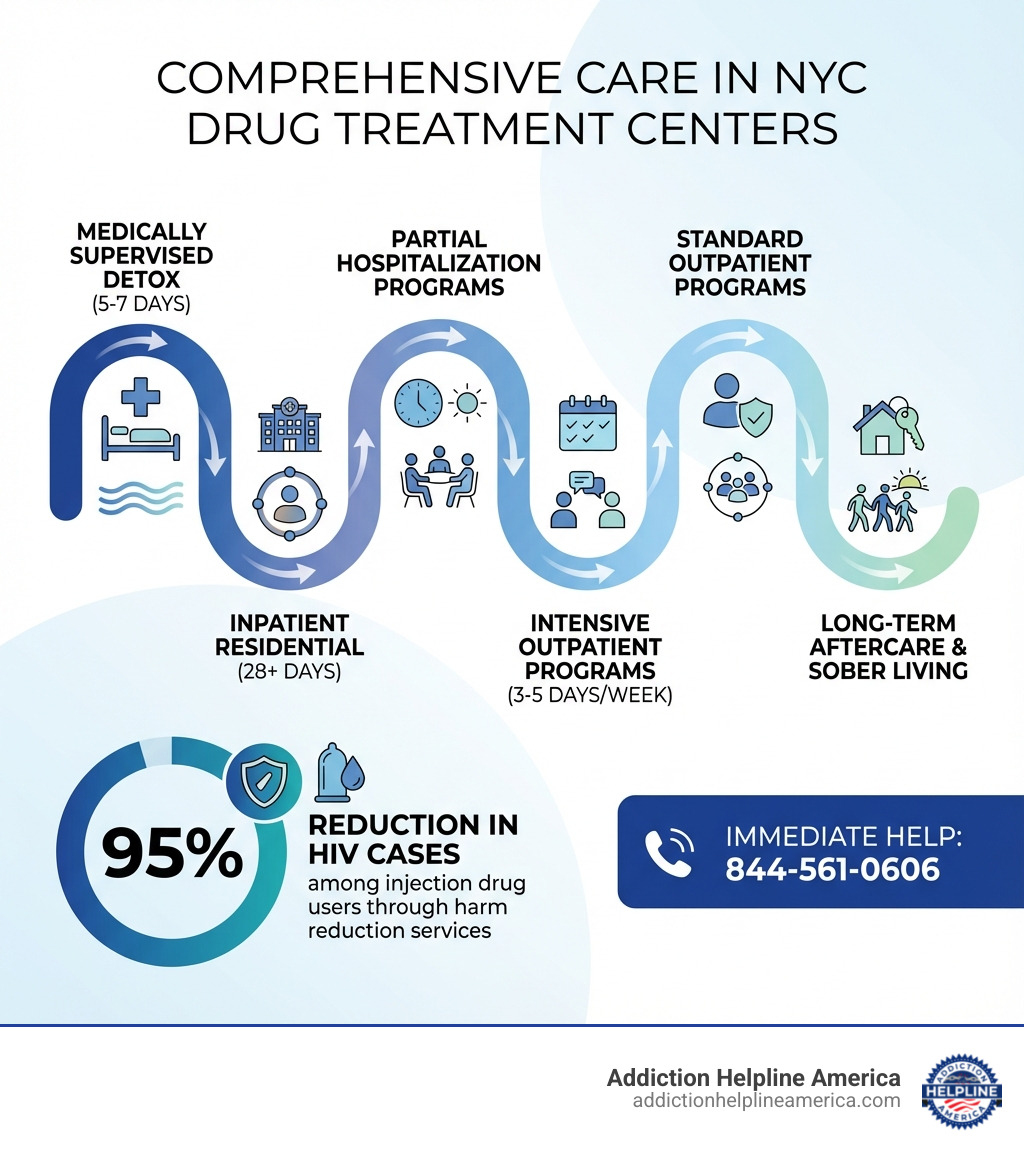
The journey to recovery often begins with detoxification and progresses through various structured environments. Here’s an overview of the levels of care you might encounter in NYC drug treatment centers:
- Medically Supervised Detoxification (Detox): This is often the first step, providing a safe and medically monitored environment to manage withdrawal symptoms. Detox typically lasts 5-7 days, depending on the substance and the individual’s physical condition. During this phase, medical professionals ensure comfort and safety as the body rids itself of addictive substances.
- Inpatient Residential Treatment: After detox, many individuals transition to inpatient programs. These facilities offer a structured, 24/7 therapeutic environment where patients live on-site. Inpatient rehab often lasts 28 days or longer, providing intensive therapy, counseling, and education in a drug-free setting. It’s an opportunity to develop coping skills and establish a routine without the distractions of daily life. For more detailed insights into this level of care, explore More info about Inpatient Treatments.
- Partial Hospitalization Programs (PHP): PHP offers a high level of structured care, similar to inpatient, but without overnight stays. Patients attend treatment sessions for several hours a day, typically five days a week, and return home in the evenings. This allows for intensive therapy while maintaining some connection to family and community.
- Intensive Outpatient Programs (IOP): IOP provides a step down from PHP, offering structured therapy sessions for fewer hours per day and fewer days per week (e.g., 3-5 days/week). This flexibility allows individuals to attend work or school while receiving ongoing support.
- Standard Outpatient Programs (OP): OP is the least intensive level of care, involving weekly therapy sessions and support groups. It’s often suitable for individuals with a strong support system and a stable living environment, or as a long-term maintenance program.
- Sober Living Homes: These are transitional housing options designed to support individuals in early recovery. Sober living environments provide a safe, supportive, and structured space for practicing long-term sobriety, often with peer support and accountability.
Specialized Programs for Diverse Needs
NYC drug treatment centers recognize that addiction affects everyone differently, and specialized programs are crucial for addressing unique challenges and demographics.
- Adolescent and Young Adult Programs: These programs are custom to the specific developmental, social, and emotional needs of younger individuals. They often integrate academic support with therapeutic interventions, such as Mount Sinai’s CARES program, which includes a full academic curriculum taught by NYC Department of Education teachers.
- Programs for Pregnant Women: Addressing substance use during pregnancy requires a sensitive and integrated approach. Programs like Mount Sinai’s Bridge Program collaborate with obstetrics and gynecology departments to provide comprehensive care. Odyssey House’s Family Center of Excellence even allows mothers with young children to stay together during treatment, offering on-site daycare and preschool. This specialized care ensures both maternal and fetal well-being. You can find more information on Treating Substance Use in Pregnancy.
- LGBTQIA+ Affirming Care: Due to societal stigma and trauma, individuals in the LGBTQIA+ community often experience higher rates of substance use disorder. Specialized programs, like those offered by Hazelden Betty Ford, provide affirming, compassionate, and inclusive environments, recognizing and addressing the unique challenges faced by this population.
- Services for Seniors: Older adults with substance use issues often have co-existing medical and psychiatric conditions, requiring specialized care from geriatric psychiatrists and mental health professionals.
- Culturally-Competent Care: Many centers, such as LESC, offer programs designed to be culturally competent, providing services in various languages or with an understanding of diverse cultural backgrounds. This ensures that treatment is accessible and effective for all New Yorkers.
The Role of Medication-Assisted Treatment (MAT) and Harm Reduction
Medication-Assisted Treatment (MAT) is a cornerstone of modern addiction recovery, particularly for opioid use disorder. MAT combines FDA-approved medications with counseling and behavioral therapies. Medications like methadone and buprenorphine are considered the gold standard for treating opioid use disorder, reducing cravings and withdrawal symptoms, and significantly lowering the risk of overdose and infectious diseases.
Beyond MAT, harm reduction strategies play a vital role in public health, especially in a dense urban environment like NYC. These services aim to reduce the negative consequences of drug use without necessarily requiring abstinence. Key harm reduction resources include:
- Naloxone for Overdose Reversal: Naloxone is a safe and effective medication that can rapidly reverse an opioid overdose. Many NYC drug treatment centers and community organizations provide naloxone kits and training to individuals and families, empowering them to save lives.
- Syringe Service Programs: These programs provide sterile syringes and injection supplies, safer smoking kits, fentanyl test strips, and safe disposal options. Access to sterile syringes has been incredibly impactful, helping to reduce the number of new HIV cases among injection drug users by 95% in the last 20 years.
- Overdose Prevention Centers (OPCs): Also known as supervised injection sites, OPCs offer a safe, supervised environment where individuals can consume previously obtained drugs. They provide sterile supplies, drug testing (including for fentanyl and xylazine), harm reduction counseling, and immediate medical intervention in case of an overdose.
- Fentanyl and Xylazine Test Strips: Given the unpredictable nature of the NYC drug supply, with fentanyl and xylazine increasingly present, testing drugs for these potent substances can help users make informed decisions and reduce overdose risk.
- Public Health Vending Machines: These machines offer anonymous, 24/7 access to essential harm reduction supplies like naloxone, fentanyl test strips, and safer sex kits, further increasing accessibility to life-saving resources.
The New York State Office of Addiction Services and Supports (OASAS) plays a crucial role in overseeing and operating many of these programs. You can find state-certified treatment programs through the Find an NYS OASAS Treatment Program search tool.
Integrating Mental Health: Treating Co-Occurring Disorders
As we discussed, addiction often goes hand-in-hand with mental health conditions. This phenomenon is known as a dual diagnosis or co-occurring disorders, meaning an individual has both a substance use disorder and a mental health disorder (like depression, anxiety, PTSD, or bipolar disorder) at the same time.
Treating these conditions separately is often ineffective because they can exacerbate each other. For example, someone with anxiety might use substances to self-medicate, while substance use can worsen anxiety symptoms. An integrated treatment approach is therefore essential. This means that both the addiction and the mental health disorder are treated concurrently by a coordinated team of specialists.
Effective integrated treatment in NYC drug treatment centers typically involves:
- Comprehensive Psychiatric Evaluation: A thorough assessment to accurately diagnose any underlying mental health conditions.
- Therapy: Individual, group, and family therapy sessions that use evidence-based approaches like Cognitive Behavioral Therapy (CBT) and Dialectical Behavior Therapy (DBT) to address both substance use patterns and mental health symptoms.
- Medication Management: For mental health conditions, appropriate psychotropic medications may be prescribed and monitored by a psychiatrist.
- Holistic Support: Programs often incorporate stress reduction techniques, mindfulness, and life skills training to build resilience and promote overall well-being.
By treating both conditions simultaneously, individuals have a much greater chance of achieving stable, long-term recovery and an improved quality of life. For those seeking specialized support for co-occurring disorders, you can explore More info about a dual diagnosis program.
Comparing 5 Top-Rated NYC Drug Treatment Centers

Choosing the “best” among NYC drug treatment centers is highly subjective, as the ideal program depends entirely on an individual’s unique needs, preferences, and circumstances. However, we can highlight some top-rated centers known for their comprehensive, evidence-based, and compassionate care. These facilities offer a diverse range of services, each with its own strengths.
We’ve partnered with a vast network of accredited treatment centers, and we’re here to help you understand what each offers. Call us at 844-561-0606 for a personalized recommendation that aligns with your specific situation.
Addiction Helpline America: Your Partner in Recovery
At Addiction Helpline America, we pride ourselves on being a crucial bridge between individuals seeking help and the NYC drug treatment centers that can provide it. We understand that navigating the complex landscape of addiction treatment can be daunting, especially during a time of crisis.
Our service offers:
- Comprehensive Support: We guide you through all levels of care, from initial assessment to finding long-term aftercare solutions.
- Personalized Placement: We take the time to understand your unique needs, financial situation, and preferences to match you with the most suitable program.
- Free, Confidential Assessments: Our compassionate recovery experts provide confidential assessments at no cost, helping you clarify your treatment options.
- Guidance for Families: Addiction impacts entire families, and we offer support and resources for loved ones seeking to help someone struggling.
- Access to a Wide Network: We connect you to a vast network of accredited NYC drug treatment centers, ensuring you have access to quality care.
Our mission is to simplify the search for effective treatment, making the first step towards recovery as smooth as possible. We are committed to providing free, confidential guidance to help you or your loved one find the right recovery program. To learn more about how we can support you, please visit Learn more about our services.
Center A: Holistic and Family-Focused Recovery (Partnered with Addiction Helpline America)
Odyssey House stands out among NYC drug treatment centers for its deeply holistic and family-focused approach to recovery. They believe that true healing encompasses not just abstinence, but rebuilding an entire life. Their philosophy emphasizes that everyone’s journey is unique, and personalized treatment plans are essential.
Key features of Odyssey House include:
- Long-Term Residential and Outpatient Options: They offer a continuum of care, with residential programs often lasting three to six months or longer, followed by robust outpatient support.
- Family Involvement Encouraged: Odyssey House recognizes the profound impact addiction has on families. Their Family Center of Excellence allows mothers with young children to stay together during treatment, providing on-site daycare and preschool.
- Vocational and Educational Support: Beyond clinical therapy, they help clients achieve life goals, offering education and job training, including TASC (high-school equivalency) completion, to support self-sufficiency.
- Focus on Life Skills and Relapse Prevention: Programs integrate arts, fitness, and comprehensive life skills to help individuals build a fulfilling life in recovery.
- Impressive Outcomes: A remarkable 85 percent of Odyssey House residential treatment clients meet ALL of their life goals as part of their treatment, demonstrating the effectiveness of their comprehensive approach.
Odyssey House aims to heal the whole person, supporting physical health, mental wellness, stable housing, family relationships, education, and employment. For more information about their residential programs and integrated care, see More info about a residential program.
Center B: Community-Based and Culturally Competent Care (Partnered with Addiction Helpline America)
The Lower Eastside Service Center (LESC) is a prominent example of NYC drug treatment centers that prioritize community-based and culturally competent care. LESC is driven by a mission to address the unique and changing needs of New Yorkers struggling with substance use disorder, mental illness, and homelessness. They believe that love is at the core of everything they do, fostering a truly welcoming and supportive environment.
Their offerings include:
- Supportive Housing: LESC understands that stable housing is fundamental to recovery, providing options for individuals on their journey.
- Vocational Training and Education: They offer vocational counseling, job training, and educational opportunities to help clients find purpose and gain independence.
- Services for Specific Populations: Notably, LESC offers a Continuing Day Treatment program specifically for Chinese dialect speakers, demonstrating their commitment to culturally sensitive care. They also have a Pregnant Women and Infants Program.
- Medication-Assisted Treatment (MAT): LESC provides both Medication Residence (MAT) and Medication-to-Abstinence Residence programs, offering flexible options for managing opioid dependence.
- Integrated Services: They co-locate chemical dependency, health, and mental health services, ensuring a holistic approach to recovery. This includes HIV early intervention and Hepatitis C services.
LESC’s person-centered, strengths-based, and trauma-responsive approach ensures that each individual receives care that addresses all aspects of their well-being. For more details on their extensive services, you can visit More info about their services.
Center C: Specialized Programs for Unique Needs (Partnered with Addiction Helpline America)
When it comes to NYC drug treatment centers offering highly specialized programs, Hazelden Betty Ford Foundation in New York is a leading example, particularly for its focus on the LGBTQIA+ community, alongside other custom services.
Key aspects of their specialized care include:
- Adolescent and Young Adult Programs: Recognizing the distinct challenges faced by younger individuals, they offer programs designed to engage and support this demographic effectively.
- LGBTQIA+ Affirming Care: People who identify as LGBTQIA+ often experience higher substance use disorder rates due to trauma and societal stigma. Hazelden Betty Ford provides an affirming, compassionate, and inclusive environment with specialized groups and clinicians who understand these unique needs.
- Programs for Pregnant Women: While not their primary focus in NYC, the broader network and best practices often extend to supporting pregnant individuals with substance use disorders, emphasizing safe and integrated care.
- Integrated Mental Health Services: They offer comprehensive mental health treatment alongside addiction care, addressing issues like depression, anxiety, trauma, and relationship problems through individual and group therapies, including DBT and CBT.
- Virtual Support Options: To improve accessibility and flexibility, Hazelden Betty Ford offers virtual outpatient mental health services and family programs, ensuring support can be accessed from anywhere.
Hazelden Betty Ford’s commitment to personalized, evidence-based treatment, combined with a focus on specific populations, makes them a vital resource in the NYC recovery landscape. For more information on their specialized programs and holistic approach, consider More info about specialized programs.
Center D: Evidence-Based and Integrated Treatment (Partnered with Addiction Helpline America)
NewYork-Presbyterian stands out among NYC drug treatment centers for its robust commitment to evidence-based and integrated treatment, particularly for individuals with complex needs, including co-occurring mental health conditions. Their approach is rooted in scientific validation and comprehensive care.
Highlights of their services include:
- Focus on Research-Backed Therapies: NewYork-Presbyterian uses scientifically validated treatment approaches, including Cognitive Behavioral Therapy (CBT) and motivational interviewing (reward-based therapy), to ensure effective outcomes.
- Inpatient and Outpatient Services: They offer a full continuum of care, from intensive inpatient rehabilitation at their Westchester Behavioral Health Center to various outpatient programs, including Partial Hospitalization Programs (PHP) and Continuing Day Treatment.
- Dual Diagnosis Expertise: Recognizing that about 8 million Americans with substance use disorder also have co-existing psychiatric diseases, NewYork-Presbyterian specializes in treating dual diagnoses. Their Smithers Center, for example, provides substance use treatment to adults with co-occurring mental health conditions, offering individual, group, and medical therapy.
- Cutting-Edge Research Opportunities: Their Substance Treatment and Research Service (STARS) at Columbia University provides free and confidential treatment through clinical trials, offering access to cutting-edge approaches for various addictions.
- Telehealth and Virtual Support Options: NewYork-Presbyterian is increasingly integrating digital health solutions to provide accessible care.
Their multidisciplinary teams, comprising psychiatrists, psychologists, and other specialists, develop individualized treatment plans based on comprehensive evaluations, addressing physical, psychiatric, psychosocial, spiritual, and vocational needs. For more details on their integrated and evidence-based care, explore More info about evidence-based care.
Your Path to Recovery: How to Find and Afford Treatment

Finding the right treatment program can feel like a monumental task, but it doesn’t have to be. We are here to guide you through the process, helping you overcome barriers and connect with the support you need. A single phone call can change everything. Call 844-561-0606 for a free, confidential assessment to start your journey.
How to Find the Right NYC Drug Treatment Centers for You
The journey to recovery is deeply personal, and the “right” treatment center is one that aligns with your specific needs. Here’s how to steer the search:
- Using the OASAS Provider Directory: The New York State Office of Addiction Services and Supports (OASAS) offers a comprehensive online directory. This is an excellent starting point to find state-certified and monitored treatment facilities across New York. You can search for programs based on location, type of service, and specific needs through the OASAS Provider and Program Search.
- Understanding Admission Criteria: Each level of care and facility will have specific criteria. For instance, some inpatient programs may require prior detoxification, while others, like Mount Sinai West, accept admissions 24/7 via the Emergency Department for all substance use disorders. State-operated centers often serve all New York State residents regardless of county of residence. Our experts can help clarify these requirements.
- Questions to Ask a Center: When you connect with a potential center, ask about their treatment philosophies, staff qualifications, patient-to-staff ratio, types of therapies offered (e.g., CBT, DBT, trauma-informed care), family involvement, aftercare planning, and specialized programs.
- Ensuring a Welcoming Environment: A supportive and non-judgmental atmosphere is crucial for healing. Look for centers that emphasize cultural competence, address stigma, and promote an inclusive environment for all patients, including those from diverse backgrounds or the LGBTQIA+ community.
Understanding the Cost and Payment Options
Concerns about the cost of addiction treatment should never prevent someone from seeking help. NYC drug treatment centers offer a variety of payment options and resources to make care accessible:
- Private Insurance: Many private insurance plans cover a significant portion of addiction treatment. Centers like Hazelden Betty Ford and NewYork-Presbyterian work with major insurers and are often recognized as “Centers of Excellence.” It’s crucial to verify your specific policy’s coverage directly with the provider or the treatment center.
- Medicaid and Medicare: New York State has robust programs through Medicaid and Medicare that cover addiction treatment services. Many facilities, including state-operated OASAS Addiction Treatment Centers, Odyssey House, and Bellevue Hospital Center, accept these forms of insurance, making treatment accessible to a wider population.
- State-Funded Programs: New York State directly operates 12 Addiction Treatment Centers (ATCs) across the state. These facilities provide individualized care to all New York residents, often with comprehensive services and aftercare planning.
- Sliding Scale Fees and Payment Assistance: Some non-profit organizations or community-based centers may offer services on a sliding scale based on income, or provide payment assistance programs.
- Verifying Your Insurance: This can be a complex process, but we can help. Our team at Addiction Helpline America can assist you in understanding your insurance benefits and connecting you with centers that accept your plan.
Free resources are also available throughout NYC, including harm reduction services and crisis hotlines. For information on low-cost options or to discuss your financial situation confidentially, please reach out. We can help you find More info about a low-cost option.
The Importance of Aftercare and Family Support
Completing a formal treatment program is a significant achievement, but it’s just one part of the recovery journey. Long-term recovery relies heavily on robust aftercare planning and ongoing support, both for the individual and their family.
- Relapse Prevention Planning: Effective treatment programs equip individuals with strategies to identify triggers, cope with cravings, and manage stress, all crucial for preventing relapse. This plan is often developed during the final stages of treatment.
- Alumni Groups and Peer Support Specialists: Many NYC drug treatment centers foster strong alumni networks, offering a community of individuals who have successfully steerd recovery. Peer support specialists, who have lived experience with addiction, provide invaluable guidance, mentorship, and encouragement.
- Family Counseling and Education: Addiction is a family disease, and healing often involves the entire family unit. Programs like those at Hazelden Betty Ford and Odyssey House offer family therapy sessions and educational programs to help loved ones understand addiction, work through difficulties, set healthy boundaries, and rebuild trust. This support is vital for creating a stable and supportive home environment conducive to long-term recovery. For more information on how families can get involved, see More info about a family program.
- Ongoing Therapy and 12-Step Meetings: Continued engagement in individual or group therapy, along with participation in 12-step programs (like Alcoholics Anonymous or Narcotics Anonymous), provides consistent support and accountability.
- Sober Living and Supportive Housing: For many, transitioning to a sober living environment or supportive housing after residential treatment offers a crucial bridge to independent living while maintaining a drug-free lifestyle.
Frequently Asked Questions about NYC Drug Treatment Centers
How long does rehab in NYC usually last?
The duration of rehab in NYC drug treatment centers varies significantly based on individual needs, the severity of the addiction, and the chosen level of care.
- Detoxification typically lasts 5-7 days.
- Inpatient residential treatment often ranges from 28 days to several months or even longer, depending on the program and individual progress.
- Outpatient programs (PHP, IOP, OP) can last for several months to a year or more, with intensity decreasing over time.
It’s important to view recovery as a continuous process, not a fixed endpoint. A comprehensive continuum of care, which transitions an individual through different levels of support, is often the most effective approach for sustained recovery.
What happens after I finish a treatment program?
After completing a formal treatment program, the focus shifts to aftercare and maintaining sobriety. This phase is crucial for long-term recovery and typically includes:
- Transition to Aftercare: Developing a personalized plan that outlines ongoing support needs.
- Sober Living Options: Moving into a sober living facility for a structured, supportive environment.
- Alumni Programs: Connecting with former patients of your treatment center for ongoing peer support and community.
- Ongoing Therapy: Continuing individual or group counseling to address underlying issues, develop coping mechanisms, and prevent relapse.
- 12-Step Meetings: Attending self-help groups like AA or NA for continued peer support and a structured recovery path.
- Peer Support Networks: Engaging with individuals who share similar experiences, offering mutual encouragement and understanding.
Can my family be involved in my recovery?
Yes, absolutely! Family involvement is not just encouraged but often considered vital for successful, long-term recovery. Addiction affects the entire family system, and healing often requires a collective effort. NYC drug treatment centers frequently offer:
- Family Therapy Sessions: Facilitated sessions to improve communication, address past hurts, and resolve conflicts.
- Educational Programs for Loved Ones: Workshops and seminars designed to help family members understand addiction as a disease, learn about healthy boundaries, and support their loved one without enabling.
- Rebuilding Relationships: Opportunities for families to work together to restore trust and create a supportive home environment.
- Setting Healthy Boundaries: Guidance for family members on establishing boundaries that promote the individual’s recovery and protect their own well-being.
Family support can be a powerful motivator and a critical component of a strong recovery foundation.
Conclusion: Hope and Help Are Available Today
The journey through addiction and into recovery is one of the most challenging yet rewarding paths an individual can take. In New York City, a vibrant and diverse array of NYC drug treatment centers stands ready to offer hope, healing, and a path forward. From medically supervised detox to specialized programs for every unique need, comprehensive care is available.
Recovery is a journey, not a destination. It’s a continuous process of growth, learning, and self-findy. You are not alone in this fight, and the support you need is closer than you think.
At Addiction Helpline America, we believe everyone deserves a chance at a fulfilling life free from the grip of addiction. Our purpose is to connect you with the right resources, providing free, confidential guidance and personalized recommendations from our vast network of accredited NYC drug treatment centers.
Take that courageous first step today. Call us at 844-561-0606 to find the right program for you. Your path to recovery starts now.