The Opioid Crisis in North Carolina: Finding a Path to Recovery
North Carolina Opioid Addiction Treatment Centers offer hope and healing for individuals and families affected by opioid addiction. If you’re searching for help right now, here’s what you need to know:
Quick Guide to NC Opioid Treatment Options:
- State-Operated Centers (ADATCs): Free or sliding-scale care available to all NC adults regardless of income
- Private Treatment Facilities: Offer specialized programs with various levels of care (detox, inpatient, outpatient)
- Medication-Assisted Treatment (MAT): Combines FDA-approved medications with counseling for best outcomes
- 24/7 Help Available: Call 988 for crisis support or contact local treatment centers directly
- Insurance Accepted: Most centers accept Medicaid, Medicare, TRICARE, and private insurance
The numbers are sobering: over 4,000 North Carolinians died from opioid overdoses in 2023. Behind each statistic is a person and a family affected by addiction. The good news is that recovery is possible. North Carolina has a wide range of treatment options, from state-funded facilities that serve anyone regardless of ability to pay, to specialized private centers. These centers provide everything from medical detox to long-term outpatient support, with many offering Medication-Assisted Treatment (MAT) that significantly improves recovery outcomes.
This guide breaks down the landscape of opioid addiction treatment in North Carolina, compares your options, and highlights seven excellent treatment centers. We’ll answer common questions about what treatment looks like, cost, and insurance coverage.
At Addiction Helpline America, we connect individuals and families with North Carolina Opioid Addiction Treatment Centers that fit their specific needs. We help steer insurance, financial options, and admissions, providing the confidential guidance you need to take the first step toward recovery.
Understanding the Landscape of North Carolina Opioid Addiction Treatment Centers
Navigating addiction treatment can feel overwhelming. In North Carolina, a diverse array of treatment centers offers various levels of care and specialized programs designed to address the complex nature of opioid addiction. Understanding these options is the first step toward effective recovery.
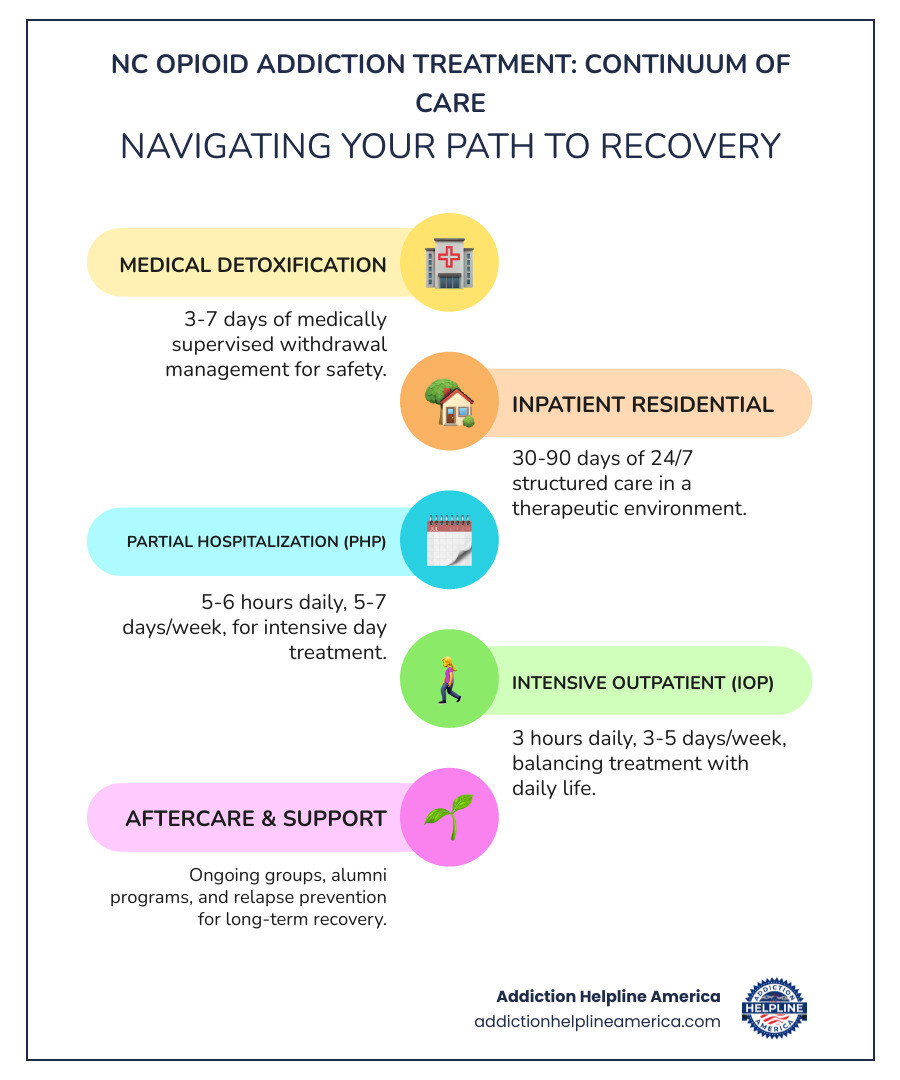
The continuum of care for opioid addiction typically begins with detoxification and can extend through various stages of therapy and ongoing support. Each level is designed to meet individuals at their specific point of need.
Detoxification (Detox): Often the first step, medically monitored detox helps individuals safely manage the acute physical symptoms of opioid withdrawal. Medical supervision is crucial, as withdrawal can be dangerous. Medications may be administered to ease symptoms and prepare the individual for the next phase of treatment.
Inpatient/Residential Treatment: Following detox, these programs provide a structured, 24/7 therapeutic environment away from daily triggers. Patients live at the facility and engage in intensive therapy, allowing for deep focus on recovery and skill-building.
Partial Hospitalization Programs (PHP): Known as “day treatment,” PHP offers intensive care for several hours a day, five to seven days a week. Patients return home in the evenings, providing a structured transition while reintegrating into their lives.
Intensive Outpatient Programs (IOP): A step down from PHP, IOPs offer more flexibility with sessions a few hours a day, three to five days a week. This allows individuals to maintain work or school responsibilities while receiving consistent therapeutic support focused on relapse prevention.
Outpatient Programs (OP): The most flexible option, outpatient treatment involves weekly sessions for those stable in their recovery. It is ideal for individuals transitioning from higher levels of care or who have strong home support.
Medication-Assisted Treatment (MAT): A highly effective approach, MAT combines FDA-approved medications (like buprenorphine, methadone, and naltrexone) with counseling. It helps reduce cravings and withdrawal symptoms, significantly improving treatment outcomes.
Specialized Programs and Approaches: Many North Carolina Opioid Addiction Treatment Centers offer specialized programs for unique needs, including:
- Trauma-Informed Care: Integrates therapies that address past traumatic experiences in a safe manner.
- Co-occurring Disorders (Dual Diagnosis): For individuals with both substance use and mental health conditions (like depression or PTSD), integrated treatment addresses both issues simultaneously.
- Programs for Specific Demographics: Some centers tailor programs for young adults, veterans, LGBTQ+ individuals, or pregnant women.
The Substance Abuse and Mental Health Services Administration (SAMHSA) and the National Institute on Drug Abuse (NIDA) continually emphasize the importance of comprehensive, evidence-based treatment. For more information on the opioid crisis and effective treatment strategies, we encourage you to visit NIDA’s website.
The Role of Medication-Assisted Treatment (MAT)
Medication-Assisted Treatment (MAT) is a highly effective, evidence-based approach for opioid use disorder. It combines FDA-approved medications like buprenorphine, methadone, and naltrexone with counseling. These medications work by reducing cravings, preventing withdrawal symptoms, and blocking the euphoric effects of opioids. This whole-patient approach helps individuals focus on therapy, develop coping skills, and build a supportive lifestyle, significantly improving treatment retention and reducing overdose risk. Many North Carolina Opioid Addiction Treatment Centers prioritize MAT in their programs.
If you are seeking a practitioner who can prescribe buprenorphine for opioid addiction, SAMHSA provides a helpful tool to find practitioners and treatment programs.
Comparing Types of North Carolina Opioid Addiction Treatment Centers
When exploring North Carolina Opioid Addiction Treatment Centers, you’ll encounter a variety of options, each with its own characteristics regarding cost, access, and amenities.
| Feature | State-Supported ADATCs (e.g., Julian F. Keith, Walter B. Jones) | Private Facilities (e.g., Wilmington TC, Pavillon, Insight Recovery) |
|---|---|---|
| Cost | Sliding scale; ability to pay does not affect admission; often free or very low cost for eligible individuals. | Varies widely; can be significant for luxury or specialized programs. |
| Access | Referrals via LME/MCOs or community providers; admission based on medical necessity; may have waitlists. | Direct admission often available; quicker intake processes depending on facility. |
| Amenities | Focus on essential medical and therapeutic services; practical, sometimes institutional settings. | Range from comfortable to luxury; may offer holistic therapies, private rooms, recreational activities. |
| Insurance | Accepts Medicaid, Medicare, and private insurance; payment adjusted based on sliding scale. | Accepts most major private insurance plans; some are in-network, others out-of-network; self-pay options. |
State-Supported Options: North Carolina’s Alcohol and Drug Abuse Treatment Centers (ADATCs), such as Julian F. Keith and Walter B. Jones, are vital to the state’s opioid response. They offer detox and treatment to all adults, with costs based on a sliding scale to ensure care regardless of ability to pay. Referrals typically come through Local Management Entities/Managed Care Organizations (LME/MCOs).
Private Facilities: Private centers often provide more amenities, specialized programs, and shorter wait times. They are typically accredited and may offer unique therapies or tracks for specific demographics. While costs can be higher, most accept a wide range of insurance plans (including Medicaid, Medicare, TRICARE, VA CCN, and most commercial plans) and may offer financial aid.
Top 7 Opioid Addiction Treatment Centers in North Carolina
Choosing the right treatment center is a deeply personal decision. At Addiction Helpline America, we’ve vetted numerous North Carolina Opioid Addiction Treatment Centers and partner with facilities that demonstrate a commitment to clinical excellence, compassionate care, and positive patient outcomes.
Based on our extensive research, we’ve identified seven top-tier partner centers across North Carolina that excel in providing opioid addiction treatment. These centers represent a range of services and specialized programs to meet diverse needs.

1. Addiction Helpline America Partner Center – Wilmington Area
Located in a region committed to combating the opioid epidemic, our partner center in the Wilmington area offers a comprehensive program ranked #1 in Newsweek’s list of Best Addiction Treatment Centers in North Carolina for 2025.
- Specialized Opiate Rehab & Detox: Offers a full continuum of care: medically monitored detox, residential, PHP, and IOP.
- Medication-Assisted Treatment (MAT): Integrates MAT as a core component of opioid treatment.
- Programs for Military/Veterans: Specialized “Operation Recovery” program for military, veterans, and first responders.
- Chronic Pain Program: Features “Foundations Training” for chronic pain and co-occurring opioid dependence.
- Highly Rated by Patients: Patients report positive experiences, with one calling it “the greatest decision he ever made.”
- Focus on Family: Emphasizes family involvement as fundamental for long-term recovery.
2. Addiction Helpline America Partner Center – Western NC
Nestled in the Western North Carolina mountains, this partner center is renowned for its holistic, patient-centered approach to recovery, treating the mind, body, and spirit.
- Holistic Mind-Body-Spirit Approach: Focuses on comprehensive healing for lasting sobriety.
- Residential Program: Offers a 6-week residential program (4-week minimum stay) in an immersive therapeutic environment.
- Low Counselor-to-Patient Ratio: A 1:6 counselor-to-patient ratio ensures personalized attention.
- High Recovery Rates: Reports that 91% of former residential patients remain in recovery after 12 months.
- Gender and Age-Specific Programs: Provides custom treatment for young adults, professionals, and gender-specific groups.
- CARF Accredited: Adheres to rigorous quality standards in addiction treatment.
- Medically Supervised Detox: Offers on-site detox for a safe and comfortable withdrawal process.
3. Addiction Helpline America Partner Center – Asheville
This partner center in Asheville was founded by clinicians who are deeply involved in daily client care, bringing a commitment to quality over quantity in treatment.
- Clinician-Founded & Operated: Founders engage with clients daily, ensuring a hands-on approach.
- Mindfulness-Based Approach: Uses comprehensive, integrative, and mindfulness-based strategies.
- Levels of Care: Offers Partial Hospitalization (PHP), Intensive Outpatient (IOP), and Outpatient (OP) programs.
- Focus on Quality Care: Prioritizes an exceptional treatment experience.
- Flexible Programs: IOP and OP programs offer flexibility for clients to manage life obligations while receiving structured support.
4. Addiction Helpline America Partner Center – Central NC
With multiple facilities in counties with high overdose rates, this partner center is on the front lines of the opioid epidemic, providing accessible and effective treatment.
- Locations in High-Need Counties: Three locations in North Carolina to directly address the opioid crisis.
- Accepts Medicaid/Medicare/TRICARE: Broad insurance acceptance, including VA CCN and most major commercial plans.
- Years of Experience: 20 years of experience, having treated over 300,000 patients.
- Same-Day Appointments: Offers same-day and virtual appointments for immediate access to care.
- High Patient Recommendation: Nearly 90% of patients would recommend them to a friend.
- 24/7/365 Access: A Patient Access Center is available around the clock for support and referrals.
5. Addiction Helpline America Partner Center – Greenville Area
As one of North Carolina’s state-operated Alcohol and Drug Abuse Treatment Centers (ADATCs), this facility provides essential services, ensuring financial barriers do not prevent access to treatment.
- State-Supported Options Available: Open to any adult in NC regardless of ability to pay, with rates on a sliding scale.
- Medically Monitored Detox: Provides short-term, medically monitored detoxification and crisis stabilization.
- Inpatient & Outpatient Opioid Treatment Program (OTP): Offers inpatient and outpatient OTP with Medications for Opioid Use Disorder (MOUD).
- Perinatal Program for Pregnant Women: Provides comprehensive care for pregnant patients with substance use disorders.
- Co-occurring Disorder Treatment: Offers psychiatric stabilization and treatment for co-occurring mental health disorders.
- Peer Support Services: Provides pre-admission and post-discharge peer support to aid in recovery continuity.
6. Addiction Helpline America Partner Center – Asheville Recovery
This Asheville partner center focuses on creating a supportive community and integrating proven recovery models to help individuals achieve lasting sobriety.
- Sober Living Programs: Offers structured sober living environments to support early recovery.
- 12-Step Focus: Integrates 12-step principles into its therapeutic approach.
- Peer Support: Emphasizes the power of peer support and a sense of community.
- Family Integration: Believes in the importance of family involvement for comprehensive healing.
- Highly Rated by Patients: Holds a 4.9 rating from over 430 reviews, with 8 years of experience.
- Comprehensive Care: Addresses various substances and co-occurring conditions.
7. Addiction Helpline America Partner Center – Southeastern NC
Our partner center in Southeastern North Carolina is dedicated to providing comprehensive, multidisciplinary care, specializing in co-occurring disorders.
- Co-occurring Disorder Care: Provides integrated treatment for substance use and mental health conditions.
- Inpatient and Outpatient Options: Offers both inpatient and intensive outpatient programs.
- Medically Managed Detox: Ensures a safe and medically supervised detoxification process.
- Aftercare Support: Provides robust aftercare planning and alumni resources.
- Accepts Private Insurance: Works with various private insurance providers.
- Holistic Approach: Focuses on the mind, body, and spirit to promote overall well-being.
- Personalized Treatment: Develops individualized programming for each patient’s unique needs.
How to Find and Access Treatment in North Carolina
Finding and accessing treatment can be a challenge, but centers are working to address common barriers related to cost, insurance, and stigma.
Common Barriers to Accessing Treatment and How Centers Are Addressing Them:
- Cost: Many North Carolina Opioid Addiction Treatment Centers address the expense of treatment by:
- Sliding Scale Fees: State-supported ADATCs offer rates based on an individual’s ability to pay.
- Payment Plans and Financial Aid: Private facilities often establish manageable payment plans or offer financial aid.
- Insurance: Navigating insurance can be complex, but centers help by:
- Acceptance of Various Plans: Most centers accept Medicaid, Medicare, TRICARE, VA CCN, and private commercial plans.
- Verification Services: Many centers will verify your insurance benefits to clarify out-of-pocket costs.
- NC Medicaid Custom Plans: Starting July 1, 2024, North Carolina’s “Custom Plans” under Medicaid will specifically cater to individuals with severe substance use disorders, improving access.
- Stigma: To combat the stigma that prevents many from seeking help, centers and communities offer:
- Stigma Reduction Campaigns: Initiatives like #ThisIsSober aim to reduce stigma by sharing recovery stories.
- Confidentiality: Treatment centers prioritize patient confidentiality, creating a safe space for healing.
- Law Enforcement Partnerships: Programs like the Nashville HOPE Initiative allow individuals to seek treatment with law enforcement assistance without fear of incarceration.
Finding Help: When you’re ready to find help, here are several resources:
- National Helplines: For immediate, confidential support and referrals, call the National Helpline at 1-800-662-HELP (4357). You can also call or text 988 for the Suicide & Crisis Lifeline.
- Online Directories: Resources like FindTreatment.gov allow you to search for facilities by location and services.
- Local Management Entities (LME/MCOs): For state-supported services, contacting your local LME/MCO is the gateway to referrals.
- Direct Contact: Many centers offer 24/7 hotlines or online contact forms for immediate assistance.
Resources for Families and Loved Ones
Addiction affects the whole family, and their involvement is crucial for recovery. If you’re supporting a loved one in North Carolina, these resources can help:
- Family Therapy: Many treatment centers offer family therapy to mend relationships and educate family members on providing effective support.
- Community Support Groups: Groups like Al-Anon and Nar-Anon offer a safe space for families and friends to share experiences and find support.
- Peer Support Services: Peer support connects those in recovery with mentors who have lived experience. Some centers, like Julian F. Keith ADATC, offer this pre- and post-treatment.
- NC Parent Resource Center: This center offers education and guidance for parents, engaging communities to reduce substance abuse through parent involvement.
- Crisis Intervention Nonprofits: Organizations like the JCANS Foundation in Wilson help families quickly find and access detox and rehab facilities.
- State-Specific Resources: The North Carolina Department of Justice provides a comprehensive list of resources at the NC DOJ Opioid Resources page.
You don’t have to go through this alone. Seeking support for yourself is just as important as helping your loved one.
Frequently Asked Questions about Opioid Rehab in NC
We often hear similar questions from individuals and families considering opioid rehab in North Carolina. Let’s address some of the most common concerns.
How much does rehab for opioid addiction cost in North Carolina?
The cost of opioid rehab in North Carolina varies widely. Factors influencing the price include the level of care, facility type (state-supported vs. private), program length, and amenities.
Insurance Coverage: Most North Carolina Opioid Addiction Treatment Centers accept insurance, which can significantly reduce out-of-pocket costs. This includes:
- Private Insurance: Many facilities are in-network with major providers like Blue Cross Blue Shield, Aetna, and Cigna.
- Medicaid and Medicare: State-funded programs and some private centers accept these plans. NC’s new “Custom Plans” under Medicaid, starting July 1, 2024, will further expand access.
- TRICARE and VA CCN: Specialized programs for military personnel and veterans often accept these.
Contact a treatment center to verify your insurance benefits and discuss potential costs. Many offer financial counseling, payment plans, or aid.
What happens during opioid detox?
Opioid detox is the first critical step in recovery, involving the safe management of physical withdrawal symptoms. Here’s what to expect:
- Medical Supervision: Detox must be medically monitored, as withdrawal symptoms (nausea, pain, anxiety) can be severe. Professionals ensure your safety and comfort.
- Medication-Assisted Withdrawal: Medications like buprenorphine or clonidine are often used to ease withdrawal symptoms and make the process more tolerable.
- Stabilization: The goal is to achieve physical stability so you can fully engage in the next phase of treatment. Detox is not a cure, but a necessary first step.
- Duration: Detox typically lasts from a few days to a week, depending on individual factors like the type and duration of opioid use.
- Preparation for Treatment: After detox, you will transition to the next level of care (e.g., inpatient or outpatient) to address the psychological aspects of addiction.
Will I lose my job if I go to rehab?
Fear of losing your job shouldn’t be a barrier to treatment. Federal laws protect employees who seek help for substance use disorders:
- Family and Medical Leave Act (FMLA): Eligible employees can take up to 12 weeks of unpaid, job-protected leave for medical treatment, including addiction rehab.
- Americans with Disabilities Act (ADA): The ADA prohibits employers from discriminating against you for seeking treatment for addiction, which can be considered a disability.
- Confidentiality: Strict privacy laws (like HIPAA and 42 CFR Part 2) prevent treatment providers from disclosing your information to an employer without your explicit consent.
- Employee Assistance Programs (EAP): Many companies offer confidential EAPs that can provide referrals and support for addiction treatment.
It’s advisable to check your company’s policies and speak with your HR department or an EAP counselor to understand your rights and confidentially arrange for leave.
Take the First Step Towards Recovery Today
The journey to recovery is profound. We hope this guide to North Carolina Opioid Addiction Treatment Centers has provided hope and clarity on the available paths. Recovery is a continuous journey where every step forward is a victory.
North Carolina has a robust network of support, from accessible state-funded facilities to innovative private centers. Whether you need medically supervised detox, intensive inpatient therapy, flexible outpatient programs, or the life-changing support of Medication-Assisted Treatment, options are available for you or your loved one.
At Addiction Helpline America, we believe that personalized treatment is crucial for success. We are here to provide free, confidential, and personalized guidance to help you find the right recovery program that aligns with your unique needs, preferences, and financial situation. Our vast network of partner centers across North Carolina is ready to welcome you.
Don’t let the complexities of finding treatment deter you. Take that courageous first step today. We are ready to listen, support, and connect you with the resources you need to begin your journey to a healthier, substance-free life.
Find a personalized opioid addiction treatment program in North Carolina