

Your Medical Privacy vs. Military Requirements
When considering the military, questions about your past can be overwhelming. A common concern is: can the military find out if you went to rehab? Understanding how your medical history intersects with military requirements is key to making informed choices.
Here’s a quick overview:
- Medical History Disclosure: Yes. During enlistment, you must provide a complete medical history and authorize the military to access your records, including rehab stays.
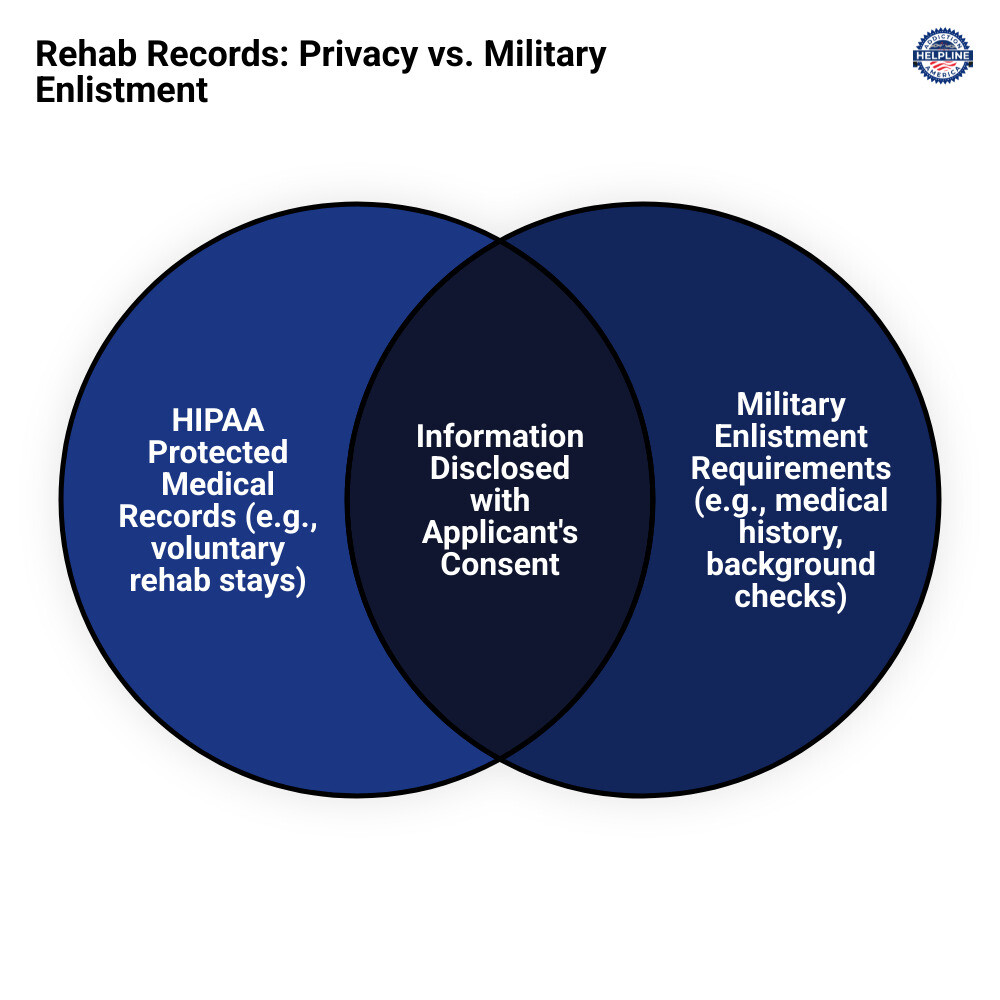
- Privacy Laws (HIPAA): Your rehab records are protected by HIPAA and can’t be shared without your consent. However, enlisting requires you to grant this consent.
- Criminal Records: No, a voluntary rehab stay is a medical event, not a criminal one. However, any criminal offenses related to substance abuse (like DUIs) will appear on background checks.
- Honesty is Best: The military values honesty. Being upfront about your rehab history is the best approach.
At Addiction Helpline America, we understand these complex concerns. Our mission is to provide clear, confidential guidance, empowering you to make the best decisions for your life.
Know your can the military find out if you went to rehab terms:
- how to find the right rehab center
- how to find rehab programs that accept insurance
- find addiction rehab
Understanding the balance between your privacy and the military’s need for health assessments is crucial. Let’s explore how much information is truly accessible.
Can the Military Access My Rehab Medical Records?
The short answer is yes, if you authorize it. When you enlist, you must provide a comprehensive medical history and grant permission for the Department of Defense (DoD) to access your medical records. Your application cannot proceed without this authorization.
This is where the Health Insurance Portability and Accountability Act (HIPAA) comes in. HIPAA protects your health information, and substance abuse treatment records have even stricter confidentiality protections under 42 CFR Part 2. This means your rehab records are confidential and require your written consent to be shared. However, the military enlistment process requires you to sign consent forms that specifically allow the DoD to access this history.
Does Attending Rehab Go on My Criminal Record?
No, voluntary participation in a drug or alcohol rehab program will not appear on your criminal record. Health records are separate from criminal records. Rehab is a medical event, not a criminal one, and won’t show up in routine employer background checks.
The only exception is if you were sent to court-ordered rehab as part of a sentence for a drug-related offense like a DUI. In that case, the court order itself may be part of your public criminal record, but the specific details of your treatment remain protected.
Are There Exceptions to Medical Privacy Rules?
While your medical information is strongly protected, access may be required in specific military contexts. For enlistment, signing a medical waiver is a condition of your application.
For active-duty members, military medical staff have access to your health records but cannot disclose them to your command without your permission. Exceptions to this confidentiality can arise in specific situations, such as:
- National Security: A more in-depth background review may be required for sensitive roles or security clearances.
- On-base Treatment: Records from military medical facilities are part of the military’s health system, though still confidential within it.
- Command-Directed Evaluations: A commander may order a medical evaluation if there are concerns about fitness for duty. The results could influence career decisions.
- Criminal Investigations: If substance use leads to criminal behavior (e.g., a DUI), the military will learn about it through public criminal records, which are separate from your private medical history.
Enlisting with a Past Rehab Stay: Honesty, Waivers, and What to Expect
A history of rehab doesn’t automatically end your dream of serving in the military. The military values integrity, and showing that you’ve overcome challenges can be seen as a strength. This section explains how to approach your past rehab stay during enlistment, how waivers work, and why requirements differ across branches.
How Honesty About Rehab History Affects Military Recruitment
The best path when speaking to military recruiters is always honesty. When you apply, you must authorize the release of your full medical history to the Department of Defense. Being open about any past rehab for substance use is essential.
Recruiters seek individuals who serve with honor. Hiding a rehab stay can be seen as a lack of integrity and is a major red flag. If the military finds you were dishonest, it can lead to serious consequences, including charges for fraudulent enlistment.
Being honest demonstrates maturity and responsibility. It allows you to frame your rehab experience as a journey of overcoming challenges, highlighting resilience and discipline—qualities highly respected in the military. It also enables your recruiter to assess your situation and guide you through the proper steps, including a potential medical waiver. For those in recovery, our guide on Therapy for Addiction offers valuable insights.
Disqualification and the Path to a Medical Waiver
A history of drug or alcohol addiction can be a disqualifying condition for military service, according to the Department of Defense’s Medical Standards for Military Service. Applications are reviewed on a case-by-case basis.
However, disqualification is not always permanent. You may be able to obtain a medical waiver, which is official permission to enlist despite a condition that would normally be disqualifying. To get a waiver, you must prove your past substance use issue is resolved and you are fit for duty. This often requires:
- Documenting sustained recovery: Proof of program completion and a significant period of sobriety.
- Undergoing medical evaluations: Additional medical or psychological tests to confirm your current health.
- Getting letters of recommendation: Support from employers, counselors, or community leaders.
- Demonstrating stability: Evidence of a stable life, such as steady employment or education.
The idea of supporting rehabilitated individuals, reflected in laws like the Americans with Disabilities Act (ADA), can sometimes play a role in the waiver process, though the military has its own standards.
Are There Stricter Rules for Certain Military Branches or Roles?
Yes, the rules and likelihood of obtaining a waiver can vary significantly by military branch and specific job. While the DoD sets overall standards, each branch (Army, Navy, Air Force, Marine Corps, Space Force) has its own recruiting needs and culture.
Roles that require high security clearances, involve sensitive duties (like pilots or intelligence), or are physically and mentally demanding (like special forces) will have much stricter medical and psychological standards. A history of substance abuse will be scrutinized more closely in these cases.
The military considers the type, severity, and recency of your substance use history. A single, isolated incident from many years ago may be viewed differently than a more recent or severe addiction. Always speak with a recruiter from the specific branch you’re interested in for the most accurate information.
So, Can the Military Find Out If You Went to Rehab? The Bottom Line

After reviewing medical privacy and military requirements, the answer to can the military find out if you went to rehab? is yes, they can and likely will. This isn’t about them spying on you; it’s a result of your own authorization and their standard review process designed to ensure every recruit is fit for service.
How the Military Finds a Rehab History
The military has several established methods for finding a rehab history during the enlistment process:
- Required Self-Disclosure: You are legally obligated to provide a complete medical history when you apply. This includes signing consent forms allowing the Department of Defense to access your medical records.
- Medical Record Review: Once you grant authorization, military medical personnel will conduct a thorough review of your records, which will uncover any treatment for drug addiction or mental health.
- Criminal Background Checks: While rehab itself isn’t a criminal matter, related offenses like DUIs or drug possession will appear on the military’s comprehensive background checks, leading to questions about substance use.
- Reference Checks: Information could potentially be shared by personal references who are contacted during the enlistment process.
What Are the Consequences of Lying About Rehab?
Honesty is the only policy for military enlistment. Attempting to conceal a rehab history can lead to severe consequences.
Lying on official documents is considered fraudulent enlistment, a serious offense under military law that can even lead to federal charges. If the deception is finded after you’ve enlisted, it could result in a dishonorable discharge. This carries lifelong repercussions, including the loss of all veterans’ benefits and significant challenges in finding civilian employment. It is always better to be upfront and explore the possibility of a waiver than to risk your future with deception.
Can the military find out if you went to rehab after you’ve already enlisted?
For active-duty service members, the situation is different. Your medical records are part of the military health system, but they are protected by strict confidentiality rules. Medical staff generally cannot disclose your health information to your command without your permission.
However, your rehab history might become known if you self-report for help, as the treatment will be documented. It may also become known if your command directs you to a medical evaluation due to performance concerns. In these cases, the focus is on ensuring you are fit for duty and getting you the help you need.
Navigating Drug Tests, Rejections, and Appeals
The path to military service includes strict requirements, especially regarding drug use. Understanding the drug testing policy, the consequences of failure, and your appeal options is crucial for any applicant.
What Are the Consequences of a Failed Military Drug Test?
The military has a zero-tolerance policy for drug use. The Department of Defense uses a thorough mandatory 26-panel drug testing for all applicants and service members to screen for a wide range of substances. You can learn more about this at Mandatory 26-panel drug testing.
For an applicant, a positive drug test results in:
- An immediate rejection from service.
- In some cases, an opportunity to reapply after a 90-day waiting period.
- A second failed drug test leads to permanent disqualification from all military branches.
For active-duty members, a failed drug test can lead to severe disciplinary action, including dismissal from the military. If you’re concerned about substance use, our guide on Understanding Drug Withdrawal Symptoms may be helpful.
Can I Appeal a Military Rejection Based on a History of Substance Abuse?
Yes, if you are rejected from military service due to a past struggle with substance abuse, you generally have the right to appeal the decision. This is your chance to demonstrate that you have recovered and are fit to serve.
The appeal process typically involves:
- Submitting a written appeal to the military branch, explaining why they should reconsider.
- Providing new evidence of your recovery and stability. This can include completion certificates from rehab, letters from counselors, proof of steady employment, and recent clean drug test results.
- Including letters of recommendation from respected community members who can speak to your character and commitment to a drug-free life.
- Showing documented sustained recovery. A longer period of sobriety and stability will strengthen your appeal.
Each appeal is reviewed individually. While success is not guaranteed, a well-prepared appeal demonstrates your determination and integrity. You can find official guidance on Appealing a recruiting decision.
Support Within the Ranks: Treatment for Active-Duty Military and Veterans

The military recognizes that service members and veterans can face challenges like substance abuse and mental health issues. The pressures of military life can contribute to these struggles, with studies showing that many personnel engage in unhealthy drinking and some misuse prescription drugs. Fortunately, a comprehensive support network is available.
What Substance Abuse Treatment Options Are Available?
Active-duty military members and veterans have access to a robust network of treatment services.
TRICARE, the healthcare program for service members and their families, provides comprehensive coverage for substance use disorders. This includes a wide range of services, such as:
- Medical Detoxification
- Inpatient and Residential Services
- Partial Hospitalization (PHP) and Intensive Outpatient (IOP) Programs
- Medication-Assisted Treatment (MAT)
- Aftercare services to support long-term recovery.
Additionally, the U.S. Department of Veterans Affairs (VA) offers extensive substance use treatment for veterans, often addressing co-occurring conditions like PTSD. It’s a sad fact that over 20% of veterans with PTSD also have a substance use disorder, making integrated care essential.
Many treatment programs specialize in dual-diagnosis for PTSD and other co-occurring disorders, providing holistic care. For ongoing peer support, Addiction Recovery Support Groups like AA and NA are invaluable. Our guide on Addiction Recovery Support Groups can help you find these resources.
Can the military find out if you went to rehab while on active duty?
If you are an active-duty service member, seeking help for substance abuse is a responsible step. The military’s primary goal is to ensure your health and fitness for duty.
When you self-report for help through military medical channels, your records are protected by HIPAA and strict military confidentiality rules. Medical staff cannot disclose the specifics of your treatment to your command without your permission. This is to encourage service members to seek help without fear of career repercussions.
While there are limited disclosure rules—your commander may be informed that you are receiving treatment for a medical condition affecting your fitness for duty—the focus is on rehabilitation. Seeking help voluntarily is viewed far more favorably than having an issue finded through a failed drug test or performance problem. If you are struggling, our Understanding Alcohol Addiction Guide provides helpful information.
Conclusion: Taking the Next Step in Your Career and Recovery
Navigating a military career with a rehab history is manageable with honesty, transparency, and a commitment to recovery. When you ask, “can the military find out if you went to rehab?”, the answer is yes, primarily because you are required to disclose this information during enlistment.
Don’t view this as a roadblock. See it as a chance to demonstrate your resilience and integrity. Overcoming addiction highlights discipline and responsibility—qualities the military values. While a history of substance abuse can be a disqualifying factor, medical waivers are often possible, and honesty is always the best approach. Hiding your past can lead to far more severe consequences.
For active-duty members, seeking help is a responsible step toward maintaining health and fitness for duty. For veterans, comprehensive support is available through the VA and other resources.
At Addiction Helpline America, we believe in the power of recovery and the bright future that awaits. We offer free, confidential, and personalized guidance to help you or a loved one find the right recovery program from our vast network of treatment centers.
Taking control of your future means taking control of your health. If you’re ready to explore treatment options or need guidance, we are here to help. Your journey to recovery and a purposeful life can start now. Let us help you Find the Right Rehab Center for Your Needs.