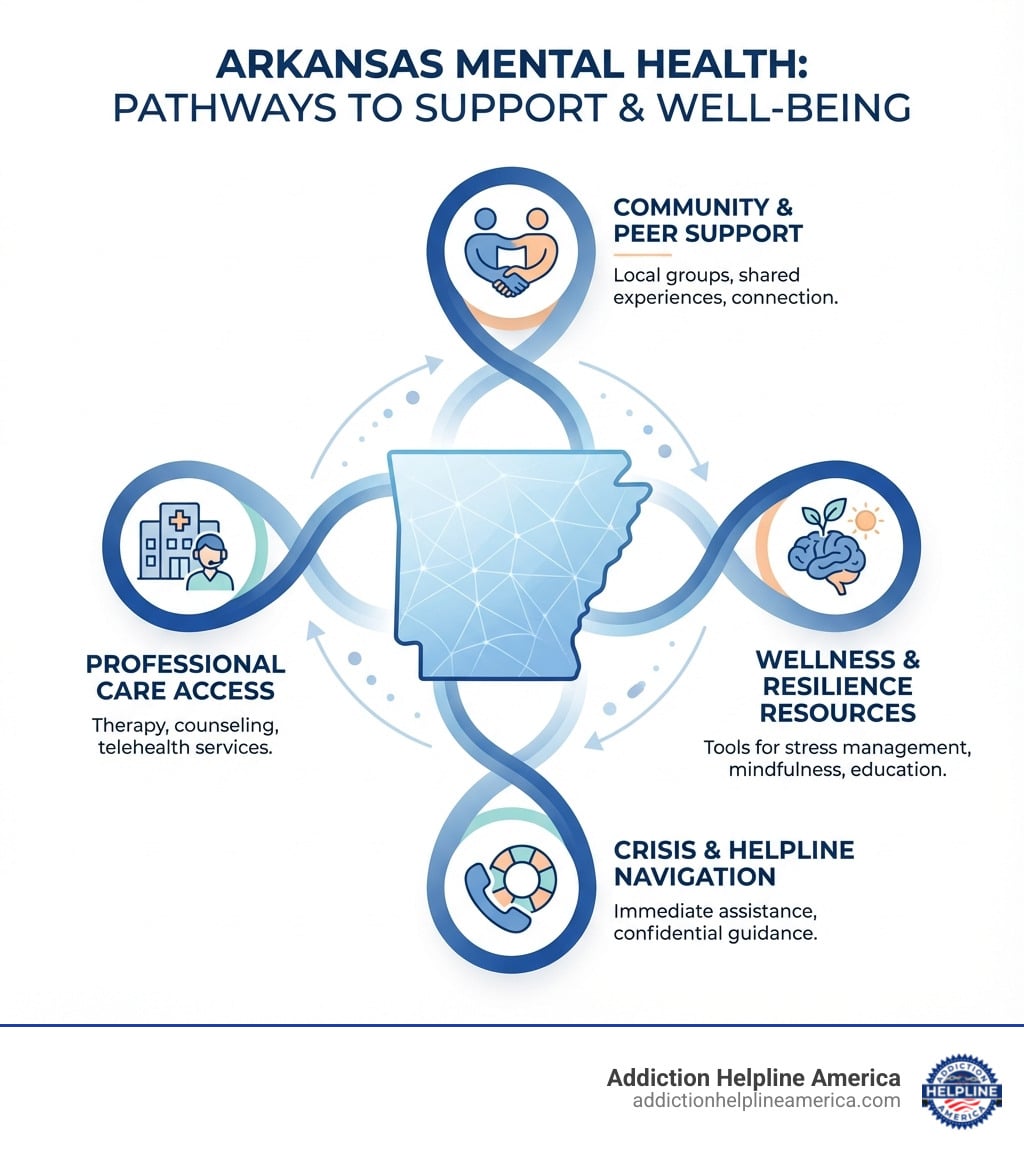
Understanding the Mental Health Crisis in Arkansas
Mental health Arkansas services are more critical than ever. Here’s what you need to know to find help:
Quick Access to Mental Health Resources in Arkansas:
- Crisis Support (24/7): Call or text 988 for the Suicide & Crisis Lifeline, or text HOME to 741741 for Crisis Text Line
- Find Treatment: Contact the Arkansas Department of Human Services at (501) 686-9164 or visit humanservices.arkansas.gov
- Community Mental Health Centers: Available in all 75 counties across Arkansas
- Cost Barriers: Many providers offer sliding-scale fees and accept Medicaid
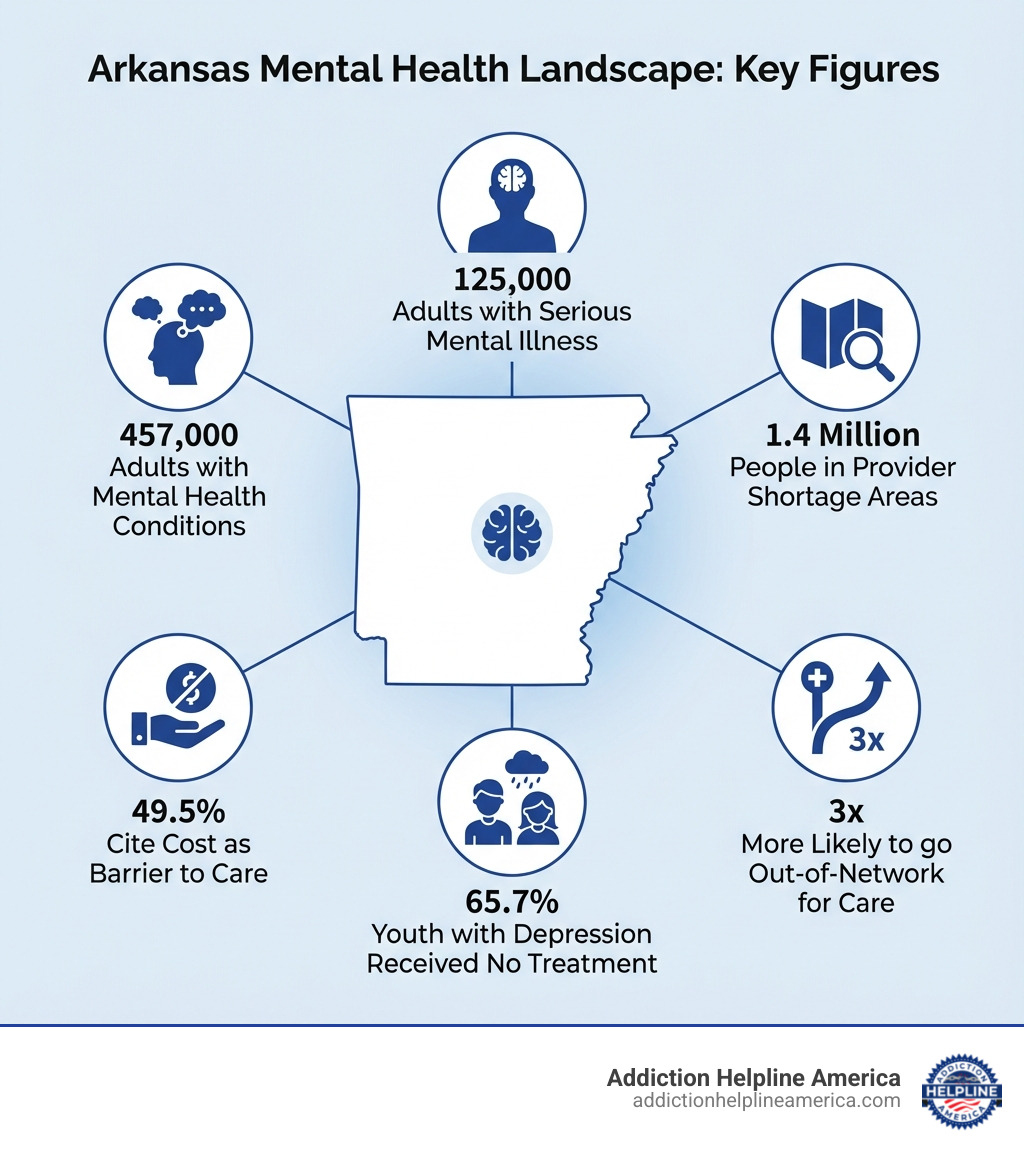
In Arkansas, 457,000 adults have a mental health condition, and 125,000 live with serious mental illness. The situation is dire for youth: 35,000 adolescents (ages 12-17) have depression, yet 65.7% received no care last year. Cost is the biggest obstacle, cited by nearly half of those unable to get help.
The COVID-19 pandemic worsened the crisis. By February 2021, 40% of Arkansas adults reported anxiety or depression symptoms, and 25% couldn’t get needed therapy. Compounding the issue, 1.4 million Arkansans live in areas with a shortage of mental health professionals, and residents are over three times more likely to be forced out-of-network for mental health care than for primary care.
Despite these challenges, there is hope. Arkansas provides a range of services, including Crisis Stabilization Units, peer recovery programs, telehealth, and specialized treatment centers. The state’s Office of Substance Abuse and Mental Health (OSAMH) coordinates resources through community providers and life-saving crisis intervention services.
Navigating the mental health system can be overwhelming. At Addiction Helpline America, we connect individuals and families with the right mental health Arkansas resources. We provide 24/7 support and personalized treatment referrals to guide you through every step of finding care.
The State of Mental Health in Arkansas
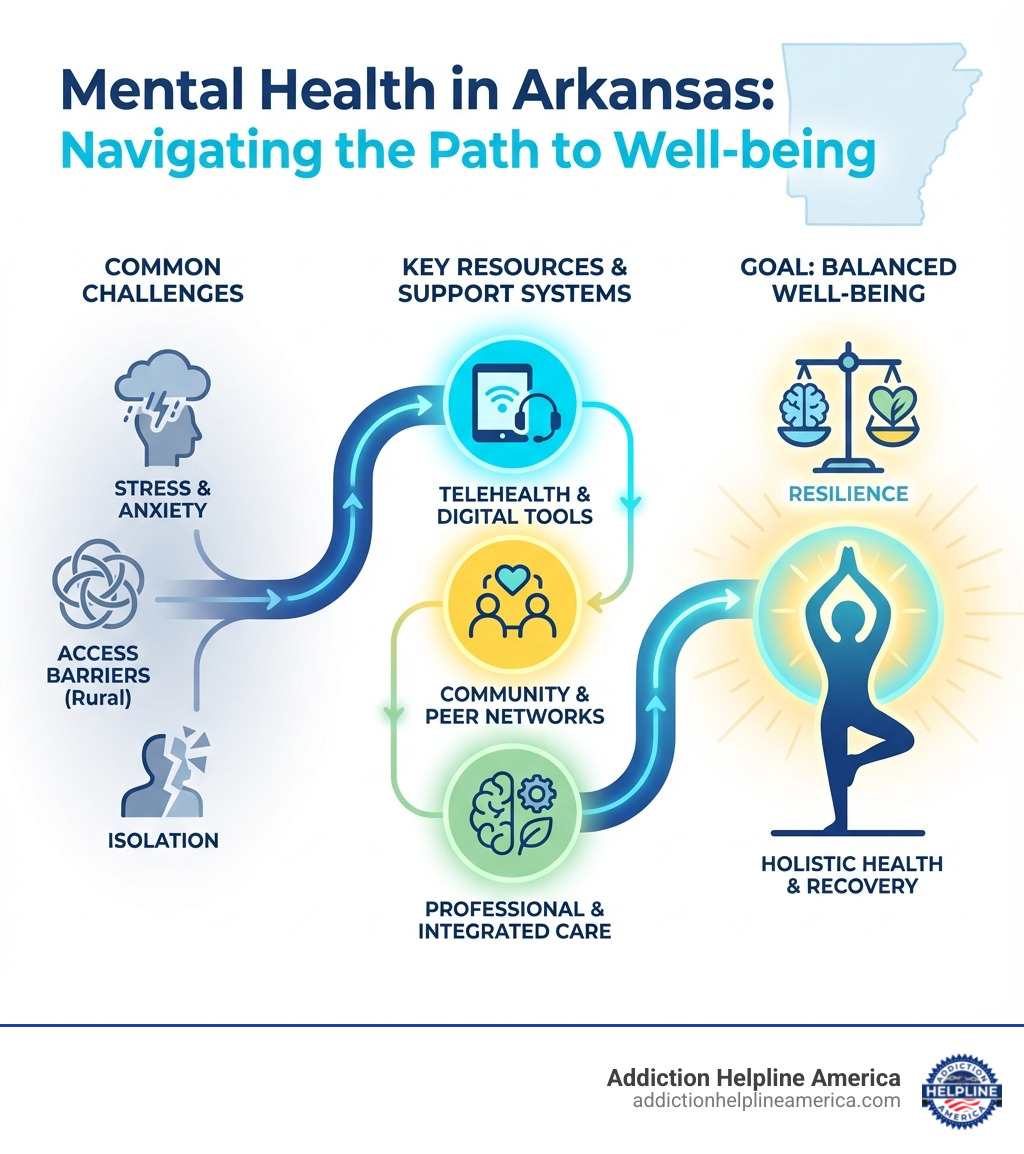
Mental health challenges affect communities across Arkansas. People throughout the state struggle with anxiety, depression, substance abuse, and suicidal thoughts. The most common issues in Arkansas mirror national trends: anxiety and depression are prevalent, along with serious mental illness and substance use disorders. The scope of these challenges highlights the urgent need for accessible care.
For a deeper look at how frequent mental distress affects Arkansans compared to other states, check out the data from America’s Health Rankings.
The Sobering Statistics
In Arkansas, 125,000 adults live with a serious mental illness that significantly interferes with daily life. The number rises to 457,000 adults when including all mental health conditions—roughly one in six. Young people are also struggling. Currently, 35,000 Arkansas teens (ages 12-17) have depression, but a staggering 65.7% received no treatment last year. Untreated depression can derail futures, as research shows affected high school students are twice as likely to drop out.
Suicide is a painful reality in the state. Last year, 554 Arkansans died by suicide, leaving families and communities grieving. Even more concerning, 106,000 adults in Arkansas had suicidal thoughts. Arkansas faces challenges similar to national trends, where over half of those with mental health conditions go untreated. In February 2021, 25% of Arkansas adults who needed therapy couldn’t get it, highlighting the real barriers to life-saving care.
Co-Occurring Substance Abuse Issues
Mental health and substance abuse issues are often connected, a pattern with devastating effects in Arkansas. Approximately 5% of Arkansans abuse alcohol, and 2.5% of residents struggle with illicit drug use. While the state has lower rates of drinking and drunk driving, it faces a significant battle with prescription drug and methamphetamine abuse.
Some smaller Arkansas cities report some of the nation’s highest prescription painkiller use rates. The opioid epidemic has hit the state hard, mirroring the national 50% surge in overdose deaths between 2019 and 2021. Treating co-occurring conditions like depression and addiction is complex but critical.
At Addiction Helpline America, we understand that substance abuse and mental health are often two sides of the same coin. Our team connects people to integrated treatment programs that address both challenges simultaneously, because treating one without the other rarely leads to lasting recovery.
If you or someone you love needs help, you can explore Arkansas Addiction and Rehab Hotlines to find immediate support. Recovery is possible, but it starts with reaching out.
Overcoming Barriers to Care in Arkansas
Finding mental health care in Arkansas can be overwhelming. Significant barriers, including cost, provider shortages, and stigma, stand between people and the help they need. Understanding these challenges is the first step to overcoming them. The financial toll of untreated mental health disorders impacts not just individuals but entire communities.
Understanding the Barriers to Mental Health in Arkansas
Cost is the single biggest obstacle to mental health Arkansas care. Of the 145,000 adults in Arkansas who couldn’t get needed care, nearly half—49.5%—cited affordability as the reason.
Insurance issues add to the difficulty. With 9.1% of Arkansans uninsured, many face the full cost of care. Even with insurance, affordability isn’t guaranteed. Arkansans are over three times more likely to use out-of-network providers for mental health than for primary care, leading to skyrocketing costs.
A shortage of professionals is another major barrier. A staggering 1.4 million people in Arkansas live in communities without enough mental health providers. This workforce shortage is especially acute in rural areas, causing long wait times and forcing people to travel long distances for appointments. Geographic isolation makes accessing care a logistical challenge.
Stigma is a powerful, invisible barrier. Fear of judgment from family, friends, or employers keeps many from speaking up. In some communities, seeking mental health support is still viewed as a weakness, causing people to suffer in silence. Finally, finding culturally competent care—providers who understand a patient’s background and values—is another challenge.
Navigating Insurance and Affordability
Despite these barriers, affordable mental health Arkansas services are available if you know where to look.
Medicaid is a lifeline for many low-income families, covering mental health and substance abuse treatment. It’s worth checking if you qualify, as eligibility has expanded.
Many non-profit and community providers offer sliding scale fees, adjusting the cost based on your income to make treatment accessible. Always ask providers about this common payment option.
When calling your insurance company, be prepared. Ask about your specific mental health benefits, referral requirements, deductibles, and co-payments. Confirm which providers are in-network to keep costs down, and inquire about session limits or telehealth coverage, which is vital for rural residents. Ask about pre-authorization for treatments or residential programs to prevent delays. Also, clarify your out-of-network coverage to understand what percentage your plan will cover and what you will owe.
These conversations are worth the effort to make informed decisions and avoid financial surprises. At Addiction Helpline America, we’re here to help you steer these complexities. We can connect you with providers who work with your insurance or offer affordable options, taking some of the burden off your shoulders.
Navigating Treatment Options and State Programs
When you’re ready for help, Arkansas offers a wide range of treatment options and state-supported programs. Understanding what’s available helps you find the right path. The Arkansas Department of Human Services (DHS) and its Office of Substance Abuse and Mental Health (OSAMH) work to connect people with these resources.

Types of Mental Health and Substance Abuse Services
Arkansas’s mental health Arkansas treatment landscape meets people where they are.
- Inpatient treatment provides 24-hour care in a safe, structured environment for those in crisis. Facilities like The BridgeWay offer specialized programs for all ages.
- Residential programs offer longer-term, live-in care focused on life skills and therapy. Millcreek of Arkansas, for example, provides this for young people.
- Outpatient programs offer flexibility for those who need intensive help while maintaining daily routines. These include Partial Hospitalization Programs (PHP) and Intensive Outpatient Programs (IOP).
- Telehealth services have expanded access, especially for rural residents. Phone or video appointments remove transportation barriers, and many providers like The BridgeWay offer remote care.
- Detoxification provides medically supervised withdrawal for substance abuse, often the first step in treatment. Explore options at various Arkansas Rehab Centers or find counseling at providers like Serenity Counseling Advocates Van Buren AR.
Integrated care systems like Arisa Health consolidate multiple providers to offer coordinated, comprehensive treatment.
The Role of the Arkansas DHS
The Arkansas Department of Human Services (DHS) is central to the state’s mental health services. Through its Office of Substance Abuse and Mental Health (OSAMH), it oversees prevention, treatment, and recovery support statewide. The Programs for Mental Health & Substance Abuse Issues – Arkansas Department of Human Services page offers a comprehensive look at DHS provisions.
- Community Mental Health Centers (CMHCs) are a highly accessible resource, with locations in all 75 counties. They offer a broad range of services, often on a sliding scale.
- The Arkansas State Hospital provides specialized inpatient psychiatric treatment for severe mental illnesses and plays a key role in the forensic evaluation system.
- Crisis Stabilization Units offer immediate support during acute mental health emergencies, providing a safe alternative to ERs or jail for individuals to stabilize.
- Peer recovery programs connect individuals with trained peers who have lived experience, offering guidance, hope, and practical support.
OSAMH also champions specialized services for women and oversees initiatives like Arkansas Peer Recovery and the Drug & Alcohol Safety Education Program (DASEP).
Key State Initiatives and Resources
Arkansas uses technology to expand access to mental health support.
- The Narcansas App puts substance abuse prevention and treatment information in your pocket.
- The Arkansas Drug Takeback Program provides safe locations to dispose of unused medications, preventing misuse.
- The Drug & Alcohol Safety Education Program (DASEP) offers educational resources for individuals with DUI charges.
- The Mental Health Crisis Plan App is a proactive tool that helps you create a personalized plan before a crisis hits.
These tools, combined with advocacy work, show Arkansas’s commitment to building a comprehensive system of care. At Addiction Helpline America, we help you steer these options to find the right treatment path.
Finding the Right Provider and Immediate Help
When you’re ready to get help, finding the right provider can feel overwhelming. However, there are clear paths to finding both ongoing care and immediate crisis support.
How to Find a Mental Health Provider in Arkansas
Finding the right mental health Arkansas provider starts with knowing where to look.
- Your primary care physician is an excellent starting point. They can provide referrals to in-network mental health specialists, ensuring coordinated care and lower costs.
- Online directories are also helpful. Addiction Helpline America offers extensive listings of providers that can be filtered by location, insurance, and specialty, simplifying your search.
- Community Mental Health Centers are highly accessible, with locations in all 75 counties. They offer a wide range of services, often on a sliding scale fee basis.
- Integrated health systems like Arisa Health consolidate multiple providers, allowing you to access a large network of services with a single call.
- For specialized needs, consider dedicated centers like Baptist Health Medical Center Malvern AR or Burrell Behavioral Health Harrison Clinic Harrison AR.
When evaluating providers, consider their specialty, therapeutic approach, and accepted insurance. It’s recommended to speak with a few before committing to find someone you’re comfortable with, which is key to recovery.
Resources for a Mental Health Crisis
If you or someone you know is in crisis, immediate help is available.
- The 988 Suicide & Crisis Lifeline is a primary support resource. Call or text 988 anytime for free, confidential help from trained counselors for any mental health crisis. You can also visit their website to Get 24/7 Help for Suicidal Thoughts and Behaviors.
- The Crisis Text Line is another effective option. Text HOME to 741741 to connect with a crisis counselor. In Arkansas, this service has facilitated over 36,400 conversations and initiated hundreds of active rescues and suicide de-escalations.
- For an immediate threat to life or safety, call 911. Emergency responders can handle mental health crises and connect you to intervention services.
- Other resources include mobile crisis response teams, which provide on-site assessment and de-escalation (contact your local Community Mental Health Center or call 988 to check availability), and Crisis Stabilization Units, which offer a safe, therapeutic alternative to hospitalization for short-term support.
Reaching out for help is a sign of strength. These mental health Arkansas crisis resources exist because recovery is possible.
Frequently Asked Questions about Mental Health Services in Arkansas
Searching for mental health Arkansas support can be confusing. Here are answers to some of the most common questions.
What is the first step I should take if I think I need mental health support in Arkansas?
Recognizing you need help is a brave first step. If symptoms persist for weeks and interfere with your daily life, it’s time to seek support.
- Your primary care doctor is an excellent place to start. They can rule out physical causes, provide referrals to specialists, and may prescribe initial treatment.
- If you’re not ready to see a doctor, consider a warm line for peer support (not for emergencies). Community Mental Health Centers in every county also offer initial assessments to help determine the right support for you.
- If you are in crisis, call or text 988 immediately for judgment-free support and guidance.
Are there free or low-cost mental health services available in Arkansas?
Yes. Cost should not be a barrier to care, and Arkansas has several affordable options.
- Community Mental Health Centers (CMHCs) in every county offer services on a sliding scale based on income. Many private therapists also offer sliding scale fees, so don’t hesitate to ask about payment options.
- Federally Qualified Health Centers (FQHCs) provide care regardless of ability to pay. University psychology or counseling programs may also offer low-cost therapy through their training clinics.
- NAMI Arkansas offers free peer support groups, which can be a valuable part of a wellness plan. Affordable support is within reach.
How can I support a friend or family member struggling with their mental health?
Supporting a loved one who is struggling is difficult, but your help matters immensely.
- Listen without judgment. Create a safe space for them to talk openly. Gently encourage them to seek professional help and offer practical support, like helping them find a provider or accompanying them to an appointment.
- Offer help with daily tasks like groceries or childcare. Learn about their condition to respond with more compassion; NAMI provides excellent educational resources for families.
- Most importantly, take care of yourself. Set healthy boundaries to avoid burnout. Consider programs like NAMI Family-to-Family, which are designed to support family members.
Your support can be a lifeline on their mental health Arkansas journey. You don’t need to have all the answers—you just need to show up with compassion.
Your Path to Wellness Starts Today
Educating yourself about the challenges and resources surrounding mental health Arkansas services is an important first step. While the challenges are real, recovery is possible, and you don’t have to do it alone.
A dedicated network of professionals and state programs exists to help Arkansans find healing. From crisis support via 988 to ongoing care at Community Mental Health Centers, help is available for every stage of the journey. The Arkansas DHS provides a foundation of care that includes Crisis Stabilization Units, peer support, and various treatment options like inpatient, outpatient, and telehealth services for all ages.
While cost and provider shortages are significant barriers, resources exist to overcome them. Options include sliding-scale fees, Medicaid, Community Mental Health Centers, and federally qualified health centers that serve all residents.
Navigating this system is overwhelming, which is why Addiction Helpline America is here to help. Our team provides free, confidential, and personalized guidance to connect you with the right recovery program from our extensive network. We consider your unique needs, insurance, and location to find appropriate care.
For those with co-occurring disorders, specialized treatment is key. Learn more about dual diagnosis treatment options to see how integrated care can lead to lasting recovery.
Your path to wellness can start today. The challenges you face do not define your future. With the right support, you can find your way forward. Hope is a real possibility—reach out and claim it.