

Luxury Inpatient Rehab: Selecting the Right Facility for Optimal Care
Luxury inpatient rehab combines premium mental health care with the comfort of a high-end resort setting—but it’s far more than just fancy amenities. Here’s what you need to know:
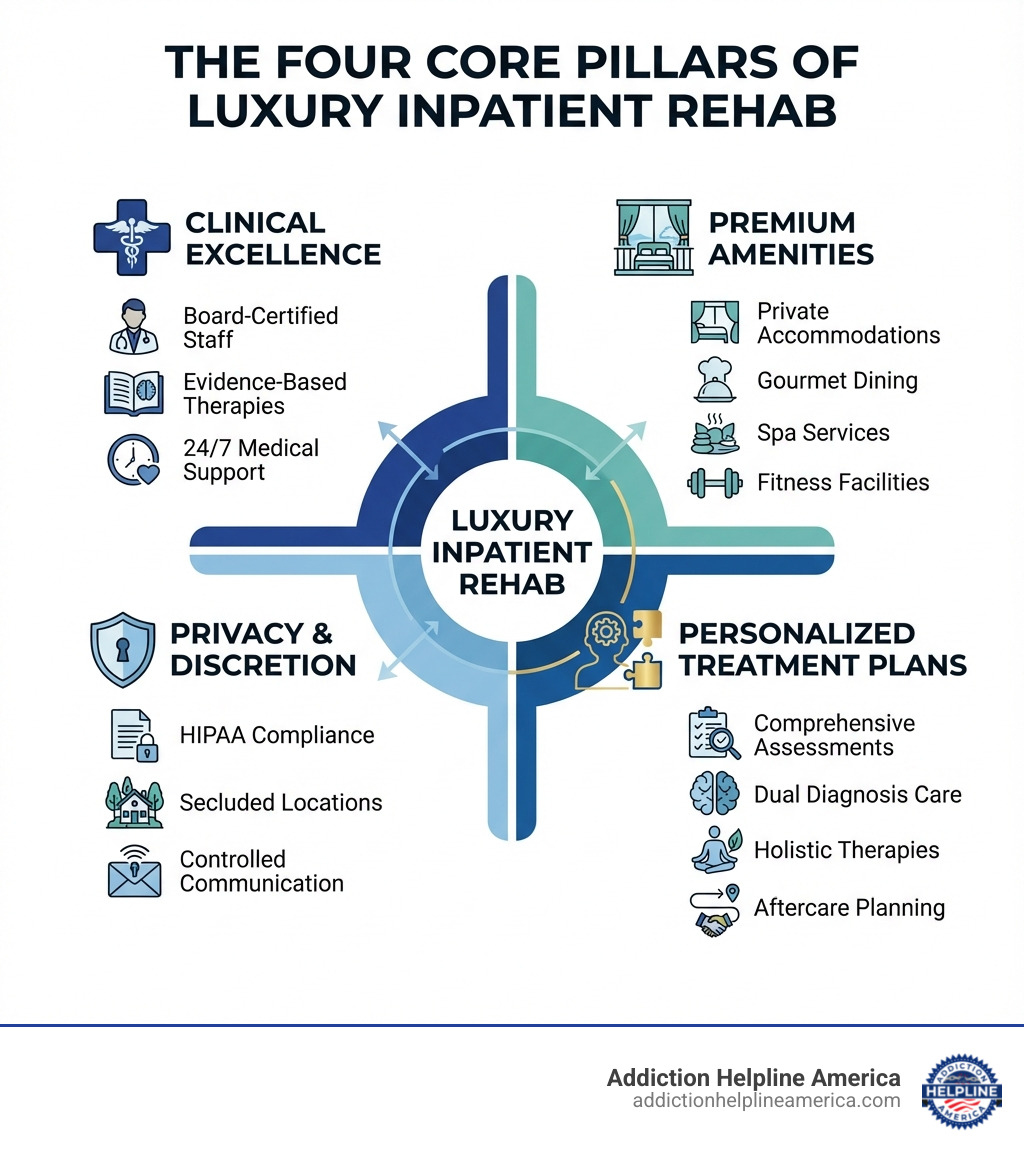
- Clinical Excellence: Top-tier medical staff, psychiatrists, and therapists available 24/7
- Personalized Care: High staff-to-client ratios (often 15:1 or better) and 30-40 hours of therapy weekly vs. 3-6 hours at standard centers
- Privacy & Discretion: Private rooms, HIPAA-protected confidentiality, secluded locations
- Holistic Approach: Evidence-based treatment plus yoga, meditation, massage, acupuncture, and gourmet nutrition
- Dual Diagnosis: Simultaneous treatment for addiction and co-occurring mental health conditions
- Cost Range: $30,000-$100,000+ per month, though many centers accept private insurance
When you or a loved one is struggling with addiction, the decision about where to seek treatment can feel overwhelming. You might be asking: What makes luxury rehab different from standard treatment? Is the higher cost worth it? Will insurance cover it? And most importantly—will it actually work?
The truth is, not all luxury rehab centers are created equal. Some focus primarily on amenities while skimping on clinical care. Others offer world-class treatment in a comfortable setting that removes distractions and supports healing. Understanding these differences before you commit can mean the difference between lasting recovery and relapse.
At Addiction Helpline America, we’ve helped thousands of individuals and families steer the complex landscape of addiction treatment, including connecting them with vetted luxury inpatient rehab programs nationwide. Our team of addiction specialists understands what to look for in a high-quality facility and can provide confidential guidance 24/7 at 844-561-0606.
Relevant articles related to Luxury inpatient rehab:
1. It’s More Than Just a Pretty Place: The Environment is Part of the Therapy
When we talk about luxury inpatient rehab, it’s easy to picture opulent settings and assume it’s all about indulgence. While the aesthetics are certainly a perk, the serene environment itself plays a crucial role in the healing process. Imagine trying to focus on deep personal work in a noisy, impersonal setting. It’s tough, right? Luxury facilities understand that a calming, beautiful backdrop can significantly reduce stress and promote a healing mindset. This isn’t just about comfort; it’s about creating an optimal space where individuals can truly focus on their recovery journey without external distractions.

Many of these centers are strategically located in breathtaking natural settings, like secluded beaches, tranquil mountain resorts, or peaceful country manors. These locations offer more than just a pretty view; they provide an escape from the triggers and pressures of daily life, allowing for a complete immersion in the therapeutic process. For instance, a facility with sweeping ocean views or located on a beautiful island can offer a sense of peace and perspective that’s hard to find in a traditional, suburban setting. We believe that when you feel safe, comfortable, and respected, you’re better equipped to engage with the challenging work of recovery.
What Defines a Luxury Rehab Setting?
So, what truly sets these environments apart? It’s a combination of thoughtfully designed spaces and services that cater to total wellness. Here’s what you can typically expect:
- Private Accommodations: Many luxury centers offer private rooms, ensuring personal space and quiet reflection, which is a significant departure from shared rooms common in traditional facilities. This privacy extends to having personal time for reflection, phone calls, and even using laptops when appropriate.
- Gourmet Dining: Forget bland, institutional food. Luxury rehabs often feature professional chefs who prepare nutritious, delicious, and often organic meals custom to individual dietary needs. This focus on high-quality nutrition supports physical healing and overall well-being.
- Concierge Services: From travel arrangements to personal errands, concierge services aim to remove any logistical burdens, allowing clients to fully concentrate on their treatment.
- Manicured Grounds: Beautifully maintained landscapes, often with gardens, walking trails, and peaceful outdoor spaces, encourage outdoor activity and mindfulness.
- Spa Treatments & Fitness Facilities: Beyond basic exercise equipment, you’ll often find yoga rooms, heated pools, full-service spas offering massages, acupuncture, and other therapeutic bodywork. These amenities are integrated into the treatment plan to promote relaxation, physical health, and stress management.
- Low Staff-to-Patient Ratios: This is a critical differentiator. Smaller client groups mean more personalized attention from staff, fostering a deeper connection and more custom care.
- Removing Distractions: The entire setting is designed to minimize external stressors and maximize focus on recovery. This can include anything from serene decor to policies that manage external communication, ensuring a truly immersive healing experience.
These elements collectively create an atmosphere where total wellness is prioritized, incorporating services like yoga, acupuncture, spa treatments, and nutritional counseling to support a holistic approach to recovery. Some centers even weave unique recreational activities like beach days or guided hikes into their programs, helping clients apply therapeutic lessons in real-world, enjoyable settings.
2. The Real Difference Is in the Quality and Depth of Care
While luxurious surroundings are certainly appealing, the true value of a high-end facility lies in the quality and depth of its clinical care. We’ve seen that a beautiful building is only as effective as the expertise within its walls. At luxury inpatient rehab centers, you’re not just paying for comfort; you’re investing in a higher caliber of medical and therapeutic professionals, more intensive individualized treatment, and a comprehensive approach to healing the mind, body, and and spirit.

Clinical excellence is paramount. These facilities typically boast highly educated and accredited professionals, including board-certified physicians, psychiatrists, licensed therapists, and specialists in various holistic modalities. They are dedicated to evidence-based treatment, ensuring that the care you receive is rooted in the most effective and scientifically proven methods for addiction recovery. Our goal at Addiction Helpline America is to connect you with programs that prioritize this rigorous clinical foundation. For more information on what constitutes effective treatment, you can review the Principles of effective addiction treatment.
Key Differences in Treatment Approach
The disparities between luxury and traditional rehab extend significantly into the actual treatment experience. Here’s a quick overview of what sets them apart:
| Feature | Luxury Inpatient Rehab | Traditional Inpatient Rehab |
|---|---|---|
| Staff-to-Client Ratio | Low (e.g., 1:1, 15:1) for personalized attention | Higher, less individualized attention |
| Individual Therapy Hours/Week | High (e.g., 4 sessions, 30-40 hours) | Lower (e.g., 1 session, 3-6 hours) |
| Staff Credentials | Highly educated, accredited, specialized professionals | Qualified, but potentially less specialized staff |
| Types of Therapy | Evidence-based, holistic (yoga, acupuncture, massage), experiential, adventure, trauma-informed, biomolecular restoration | Primarily evidence-based, fewer holistic/experiential options |
| Amenity Quality | Private rooms, gourmet dining, spa, fitness, concierge, serene locations | Shared rooms, standard meals, basic facilities, less scenic locations |
As you can see, the focus in luxury inpatient rehab is on individualized, intensive care. You might receive four individual counseling sessions per week, compared to just once a week in a traditional facility. This increased one-on-one time with therapists allows for deeper exploration of underlying issues and more custom strategies for recovery.
How Luxury Rehab Addresses Co-Occurring Disorders
It’s a common misconception that addiction exists in a vacuum. In reality, many individuals struggling with substance use disorders also grapple with co-occurring mental health conditions such as anxiety, depression, bipolar disorder, schizophrenia, or ADHD. This is often referred to as a dual diagnosis. Effectively treating addiction requires addressing these interconnected issues simultaneously.
Luxury rehab centers are particularly adept at providing integrated care for dual diagnoses. They employ specialized psychiatric teams who work alongside addiction counselors to develop comprehensive treatment plans. This means that if you’re struggling with both addiction and, say, depression, your treatment will target both conditions, recognizing how they influence each other. This holistic approach is crucial for long-term recovery, as ignoring one aspect can undermine progress in the other.
Moreover, many luxury facilities are highly skilled in trauma-informed care. They understand that addiction can often be a coping mechanism for past trauma. By addressing underlying trauma in a safe and supportive environment, clients can begin to heal the root causes of their addiction, rather than just managing the symptoms. Our team at Addiction Helpline America understands the profound impact of these issues, and we connect individuals with programs that truly address the complexities of addiction and co-occurring mental health challenges. If you need help finding a program that specializes in dual diagnosis and trauma-informed care, call our confidential helpline at 844-561-0606.
3. Understanding the True Cost of a Luxury Inpatient Rehab Program
Let’s be frank: luxury inpatient rehab comes with a price tag that can raise eyebrows. We understand that discussing costs can be uncomfortable, but have a clear picture upfront. The reality is that the improved amenities, personalized care, higher staff ratios, and specialized therapies contribute to a higher cost than traditional rehab facilities. However, viewing this as a significant investment in your health and future can reframe the conversation.
Monthly costs for inpatient rehab at luxury treatment centers typically range from $30,000 to over $100,000. For example, in Illinois, the average cost of a luxury rehab program is approximately $40,000 for a 30-day program, with the overall average cost of rehab for a resident being around $56,666. Without insurance coverage, a 30-day inpatient stay in Illinois can cost approximately $629.62 per day. This might sound daunting, but these figures often encompass an all-inclusive experience designed for maximum therapeutic benefit and comfort.
What’s Included and How to Pay
So, what exactly are you getting for this investment? Generally, the cost covers:
- All Therapies: This includes individual, group, and family therapy sessions, often with a much higher frequency than in traditional settings.
- Medical Care: Detoxification services, psychiatric consultations, and 24/7 medical supervision.
- Private Rooms: As discussed, many luxury centers offer private accommodations.
- Gourmet Meals: High-quality, chef-prepared meals custom to dietary needs.
- Holistic Treatments: Access to amenities like yoga, acupuncture, massage, fitness centers, and more.
- Aftercare Planning: Comprehensive strategies for maintaining sobriety post-discharge.
When it comes to payment, things can get a bit nuanced. While some luxury centers may not work directly with insurance providers, requiring upfront payment, many upscale addiction treatment centers do work with private insurance. This can make care more accessible than you might initially think. Coverage varies significantly by plan, so it’s crucial to verify your benefits. Most facilities also offer flexible payment options, including financing plans or sliding scale fees, to help make treatment more attainable.
We understand that navigating insurance and payment options can be a headache, especially during a stressful time. That’s why we’re here to help. If you’re wondering about your options, please don’t hesitate to Call Addiction Helpline America at 844-561-0606 for a confidential benefits check. We can help you understand what your insurance might cover and explore other payment solutions. For more detailed information on verifying your coverage, you can also check out our guide on how to Verify rehab insurance.
4. “One-Size-Fits-All” Doesn’t Apply: Specialized Programs Are Key
One of the most valuable aspects of luxury inpatient rehab is the recognition that recovery is not a “one-size-fits-all” journey. Every individual brings a unique set of circumstances, challenges, and responsibilities to treatment. High-end facilities excel at offering specialized programs and custom care plans designed to meet these diverse needs, ensuring a more relevant and effective path to sobriety.
For instance, consider the unique pressures faced by professionals or veterans. Their experiences, triggers, and recovery goals often differ significantly from the general population. A luxury center understands this and crafts programs that resonate specifically with these groups, addressing their particular concerns while still providing top-tier clinical care.
Programs for Executives and Professionals
We often hear from high-functioning individuals – CEOs, celebrities, athletes, and other professionals – who are hesitant to seek treatment due to concerns about their careers and public image. They need discretion, yes, but also the ability to maintain some level of connection to their work. This is where specialized executive-level luxury treatment options shine.
These programs are designed with the demands of a busy professional in mind:
- Business Amenities: Access to computers, business centers, and secure communication tools.
- Managed Communication: Policies that allow for scheduled time to use cell phones and laptops, enabling clients to stay in touch with critical work matters without compromising their focus on recovery.
- Discretion and Privacy: Improved confidentiality measures and secluded settings are paramount to protect their identity and reputation.
- Addressing Executive Burnout: Many professionals seek treatment not just for addiction but also for burnout and stress-related disorders that can lead to substance misuse. These programs provide strategies for sustainable work-life balance and stress management.
These facilities understand that removing all connection to work can be counterproductive for some, leading to increased anxiety rather than healing. They strike a balance, allowing for essential work duties to be managed discreetly while prioritizing the individual’s therapeutic progress.
Specialized Tracks for Groups like Veterans
Another group with highly specific needs is our veterans. The experiences of military service, including combat exposure, trauma, and the challenges of reintegrating into civilian life, can significantly contribute to substance use disorders. In fact, research shows that more than 1 in 10 Veterans have been diagnosed with a substance use disorder.
Luxury rehabs that offer veteran-specific programs are uniquely equipped to address these issues:
- Trauma-Informed Care: A deep understanding of PTSD and other trauma-related conditions common among veterans, with specialized therapies custom to these experiences.
- Military Culture Sensitivity: Staff members are often trained in military culture, creating an environment where veterans feel understood and respected.
- Peer Support: Connecting with other veterans in recovery can be incredibly powerful, fostering a sense of camaraderie and shared understanding.
- Addressing Grief and Loss: Support for processing the unique forms of grief and loss experienced during and after military service.
By offering these custom programs, luxury inpatient rehab ensures that treatment is not only effective but also deeply resonant with the individual’s lived experience, leading to more profound and lasting recovery. To confidentially discuss specialized treatment options for professionals or veterans, call Addiction Helpline America at 844-561-0606.
5. How to Vet a Facility and Choose the Right Luxury Inpatient Rehab
Choosing the right luxury inpatient rehab is one of the most critical decisions you’ll make on the path to recovery. With so many options available, do your homework and ask the right questions. We always say, a high price tag doesn’t automatically guarantee the best care. The goal is to find a facility that offers genuine clinical excellence within a supportive and comfortable environment. At Addiction Helpline America, we’re here to guide you through this process. If you need help finding a vetted program that meets your specific needs, please Call Addiction Helpline America at 844-561-0606.
What to Look For When Selecting a Center
When evaluating potential luxury rehab centers, consider these key indicators of quality and effectiveness:
- Accreditation: Look for facilities with recognized accreditations from reputable organizations like The Joint Commission or the Commission on Accreditation of Rehabilitation Facilities (CARF). These accreditations signify that the center meets rigorous standards for patient care, safety, and quality. LegitScript certification and membership in the National Association of Addiction Treatment Providers (NAATP) are also strong indicators of a reputable provider.
- Staff Credentials: Ensure the clinical team comprises highly educated, licensed, and experienced professionals. Don’t be afraid to ask about their qualifications and specializations.
- Evidence-Based Therapies: The core of any effective treatment program should be evidence-based therapies such as Cognitive Behavioral Therapy (CBT), Dialectical Behavior Therapy (DBT), Eye Movement Desensitization and Reprocessing (EMDR), and Motivational Interviewing. While holistic therapies are a wonderful complement, they should not replace proven clinical methods. These specialized substance abuse treatment facilities understand that comfort and privacy can make a big difference in your recovery journey. Your treatment plan will include evidence-based medical care.
- Client Reviews: Check independent review platforms and Google ratings. Facilities with consistently high ratings (4 stars and above) and positive testimonials often indicate a strong track record of client satisfaction and successful outcomes.
- Facility Photos: While not the sole determinant, a center’s photo gallery can give you a sense of its accommodations, amenities, and overall atmosphere. Look for clean, well-maintained, and inviting spaces.
- Low Staff-to-Client Ratio: A lower ratio means more individualized attention and a greater opportunity for personalized care. This often translates to more one-on-one therapy sessions and closer monitoring of your progress.
Key Questions to Ask an Admissions Team
Once you’ve narrowed down your options, a conversation with the admissions team is crucial. We encourage you to ask specific, probing questions to ensure the facility is the right fit. Here are some essential questions we recommend:
- What is the staff-to-client ratio? This will give you a clear idea of how much individual attention you can expect.
- How many hours of individual and group therapy would I receive each week? Compare this to the industry standards and your personal needs.
- Are private rooms available? If privacy is a priority, confirm the availability and cost of private accommodations.
- How do you ensure confidentiality during treatment? Understand their policies regarding HIPAA compliance and discretion.
- What is your approach to dual diagnosis treatment? If you have co-occurring mental health conditions, this is a non-negotiable question.
- How do you integrate a holistic approach to treatment? Ask for specific examples of holistic therapies offered and how they complement traditional treatment.
- Can I use my phone and laptop? Clarify their policies on electronic device usage, especially if you need to manage work or family responsibilities.
- What does aftercare planning involve? A robust aftercare plan is vital for sustained recovery, so understand how they support clients post-discharge.
- What clinical team members will work with me during the treatment process? Ask about the credentials and roles of the professionals you’ll be working with.
By asking these questions, you’ll gain a comprehensive understanding of the facility’s clinical philosophy, operational practices, and commitment to client well-being, helping you make an informed decision.
Frequently Asked Questions about Luxury Rehab
Is luxury rehab more effective than traditional rehab?
The effectiveness of any rehab program, whether luxury or traditional, ultimately hinges on the quality of its clinical care and the individual’s commitment to the process. However, luxury inpatient rehab often offers several advantages that can contribute to better outcomes. The higher staff-to-client ratios mean more individualized attention and therapy hours, which can lead to deeper therapeutic work. The comfortable, private, and distraction-free environments can foster greater engagement in treatment. Moreover, the emphasis on evidence-based treatment combined with comprehensive holistic care addresses the whole person, not just the addiction. While a high price tag doesn’t guarantee success, the resources available at luxury centers are often designed to support a more thorough and personalized recovery journey, focusing on long-term sustainability. For more on this, consider the principles of effective addiction treatment.
How do luxury rehabs ensure privacy?
Privacy and confidentiality are paramount in luxury inpatient rehab, especially for high-profile individuals or those who simply value their personal space. These centers go to great lengths to ensure discretion through several measures:
- HIPAA Compliance: All reputable rehab centers, including luxury ones, are bound by the Health Insurance Portability and Accountability Act (HIPAA), which protects patients’ sensitive health information. This means treatment, payment, and diagnoses cannot be released without patient permission.
- Secluded Locations: Many facilities are situated in remote or private settings, minimizing external exposure.
- Private Rooms: Offering individual accommodations reduces interactions with other clients and improves personal privacy.
- Controlled Communication Policies: Strict guidelines on phone and laptop usage, and visitor policies, help maintain a discreet environment.
- Non-Disclosure Agreements (NDAs): In some cases, staff and even other clients may sign NDAs to protect the identity of clients.
- Discreet Arrivals and Departures: Concierge services often include private transportation arrangements to ensure confidentiality from the moment a client arrives.
The goal is to create a secure and confidential space where clients can focus solely on their recovery without fear of judgment or public exposure.
How long is a typical stay?
The duration of a stay at a luxury inpatient rehab center is highly individualized and depends on a comprehensive assessment of the client’s needs, the severity of their addiction, and any co-occurring mental health conditions. While some programs may offer shorter stays, common durations include:
- 30-day programs: Often considered a foundational period for detox and initial therapeutic engagement.
- 60-day programs: Allow for deeper therapeutic work and the development of coping mechanisms.
- 90-day programs: Generally recommended for more complex cases, offering a prolonged period for stabilization, skill-building, and relapse prevention.
Longer stays, even extending to several months, are also available and often recommended for sustainable recovery, especially for those with chronic relapse patterns or severe co-occurring disorders. The focus is always on ensuring that the client has sufficient time to stabilize, engage meaningfully in treatment, and develop a robust aftercare plan before returning to their daily life. For those considering a more extended period of care, our guide on Long term inpatient options might be helpful.
Conclusion: Your Path to a Healthier Future
Choosing luxury inpatient rehab is a significant decision, one that we hope feels clearer and more manageable after exploring these key insights. It’s more than just a lavish setting; it’s an investment in a specialized environment, unparalleled clinical care, and a personalized path to recovery designed to address your unique needs. By prioritizing facilities that combine premium amenities with rigorous, evidence-based treatment and a compassionate, highly qualified staff, you’re setting the stage for profound and lasting change.
The goal is not just sobriety, but a healthier, more fulfilling life. The comfort and discretion offered by luxury centers can remove distractions, allowing you to fully immerse yourself in the healing process. We believe that everyone deserves access to the best possible care, and understanding what truly defines a high-quality luxury program is your first step.
At Addiction Helpline America, we are dedicated to connecting you with the right resources. Our team provides confidential guidance to help you steer your options and find a luxury inpatient rehab program that aligns with your vision of recovery. Don’t let uncertainty delay your journey to wellness; take the first step today. For more information on various treatment paths, explore our comprehensive guide on inpatient rehab programs.