Why an Intensive Outpatient Rehab Program Could Be Your Path to Recovery
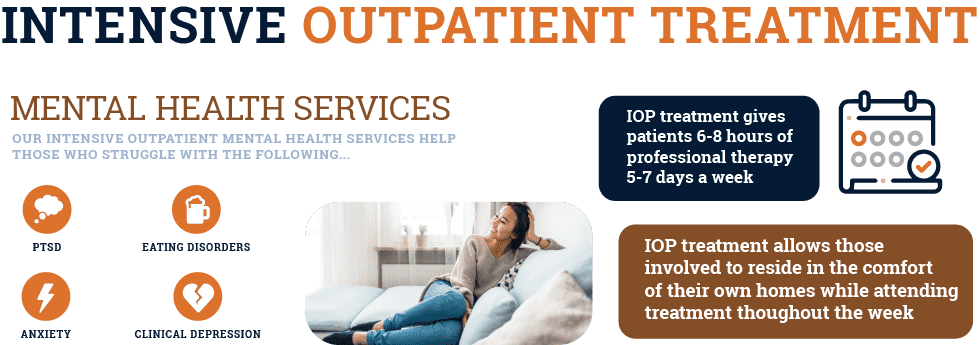
An intensive outpatient rehab program (IOP) is a structured treatment option for individuals with substance use disorders or mental health conditions. It’s designed for those who need more support than weekly therapy but don’t require 24/7 supervision. IOPs typically involve 9-20 hours of treatment per week, allowing you to live at home and maintain your daily responsibilities while receiving comprehensive care.
Key features of an IOP:
- Flexibility: Attend therapy sessions while keeping your job or caring for family.
- Structured support: Receive intensive group, individual, and family counseling.
- Evidence-based: Research shows IOPs are as effective as inpatient treatment for most people.
- Cost-effective: Less expensive than residential programs since you live at home.
- Real-world application: Practice recovery skills in your daily life with immediate professional support.
IOPs are a versatile part of the recovery journey. They can be an entry point into treatment, a step-down after inpatient care, or a step-up when traditional therapy isn’t enough. The path to recovery doesn’t have to mean leaving your life behind. An IOP provides the intensive care you need for alcohol, opioid, or mental health challenges while letting you stay connected to your support system at home.
At Addiction Helpline America, we’ve guided thousands of individuals toward the right intensive outpatient rehab program for their unique needs. Our team understands that choosing the right level of care is overwhelming, which is why we’re here to provide clear, compassionate guidance every step of the way.
Understanding the Intensive Outpatient Rehab Program Model
An intensive outpatient rehab program offers a way to get serious, structured help without putting your life on hold. Unlike inpatient programs where you live at the facility, an IOP lets you return home each day. It’s a middle ground that balances intensive care with real-world living.
An IOP typically requires 9 to 20 hours of treatment each week, spread across three to five days. This schedule provides in-depth therapeutic work without taking over your entire life. This model is powerful because it allows you to learn coping skills in therapy and immediately apply them at work or home, getting support for real-time challenges.
This level of care is a crucial part of the recovery journey. It can be a “step-down” to support your transition after inpatient treatment or a “step-up” when weekly therapy isn’t enough. For many, an IOP is the ideal starting point, especially with a stable and supportive home environment.
Who is a Good Candidate for an IOP?
An intensive outpatient rehab program is most effective for individuals in specific situations. It’s important to know if it’s the right fit for you.
- Moderate Needs: IOPs are ideal for those with moderate substance use or mental health conditions who are medically stable and don’t need 24/7 supervision.
- Strong Support System: A supportive home environment—whether from family, friends, or a sober living arrangement—is crucial, as you’ll be returning home after each session.
- Post-Inpatient Transition: Many people enter an IOP after completing inpatient or residential treatment to continue receiving structured support as they reintegrate into daily life. Our 30 Day Rehab Near Me Guide explains what that initial phase often looks like.
- Work/Family Flexibility: IOPs are designed for those who need to maintain work, school, or family responsibilities, with many programs offering morning or evening sessions.
- Low Relapse Risk: Candidates should have a relatively low risk of immediate relapse or dangerous behavior, as they manage their time independently between sessions.
IOP vs. Other Levels of Care
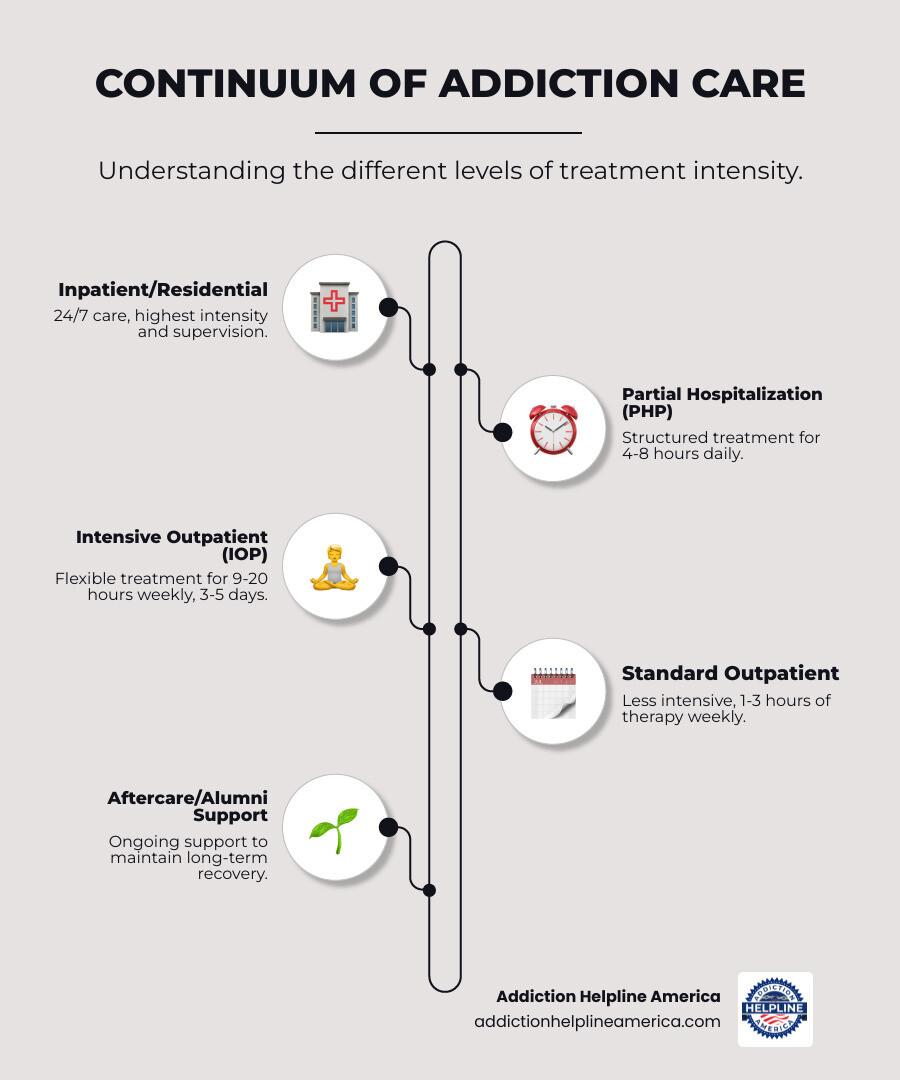
Addiction treatment exists on a continuum of intensity. An intensive outpatient rehab program sits in the middle, offering significant support without the total life disruption of inpatient care.
- Inpatient/Residential Treatment: This involves living at a facility 24/7 with constant supervision. It’s the most intensive and costly option, necessary for those with severe addiction or medical instability.
- Partial Hospitalization Program (PHP): A step down from inpatient, PHPs involve 4-8 hours of treatment daily (20-40 hours/week) while you live at home. It offers daily clinical oversight with more autonomy than inpatient care.
- Intensive Outpatient Program (IOP): With 9-20 hours of treatment weekly over 3-5 days, IOPs provide regular clinical support while you live at home and maintain your daily schedule.
- Standard Outpatient Therapy: The least intensive option, this typically involves 1-8 hours of therapy per week. It’s suitable for milder issues or as a step-down from a higher level of care.
Here’s how these levels compare:
| Level of Care | Living Situation | Hours Per Week | Level of Supervision | Cost Comparison | Autonomy Level |
|---|---|---|---|---|---|
| Inpatient/Residential | Reside at facility 24/7 | 24/7 (highly structured) | Constant medical/clinical | Highest | Lowest |
| Partial Hospitalization Program (PHP) | Reside at home | 20-40 hours (4-8 hours/day) | Daily clinical | High | Moderate |
| Intensive Outpatient Program (IOP) | Reside at home | 9-20 hours (3-5 days/week) | Regular clinical | Moderate | High |
| Standard Outpatient | Reside at home | 1-8 hours (1-3 days/week) | Weekly clinical | Lowest | Highest |
An assessment by a qualified professional is the best way to determine the right level of care for your specific needs. For a broader overview, see our guide on Drug Rehab.
Core Components and Therapies in an IOP
An intensive outpatient rehab program uses a multi-faceted approach to support recovery, combining various therapies and services to create a personalized treatment plan.
- Individual Therapy: Provides a confidential, one-on-one setting with a therapist to address personal challenges, process trauma, and develop custom coping strategies.
- Group Therapy: Often the core of an IOP, group sessions connect you with peers who understand your struggles. It’s a safe space to share experiences, practice communication skills, and receive honest feedback.
- Family Counseling: Helps rebuild trust and improve communication with loved ones. These sessions educate family members on how to best support your recovery journey.
- Psychoeducation: Educational workshops teach you the science of addiction and mental health, helping you understand triggers, cravings, and relapse warning signs.
- Case Management: A case manager acts as your advocate, helping you connect with community resources for housing, employment, or legal issues to support your life outside of treatment.
- Relapse Prevention: This training equips you with practical tools to handle cravings, manage high-risk situations, and create a concrete plan to maintain long-term recovery.
What Does a Typical Week in an IOP Look Like?
A week in an intensive outpatient rehab program is structured yet flexible. Most programs offer morning or evening sessions for about three hours, three to five days a week, allowing you to fit treatment around your existing schedule.
During your time in the program, you will engage in:
- Group Session Topics: Interactive sessions cover essential skills like managing emotions, improving communication, building healthy relationships, and developing coping strategies. These are not lectures but dynamic discussions and activities.
- Individual Counseling: Regular one-on-one appointments with your therapist are scheduled around group sessions to address personal issues and track your progress.
- Family Therapy Integration: Family sessions are integrated as needed to involve your support system in the healing process.
- Drug and Alcohol Monitoring: Regular, confidential testing provides accountability and helps reinforce your commitment to sobriety.
The structure of an IOP allows you to learn skills one day and apply them in your real life the next. For more on treatment approaches, visit our Drug Addiction Program page.



Therapeutic Approaches Used in IOPs
An intensive outpatient rehab program uses evidence-based therapies that are scientifically proven to be effective.
- Cognitive Behavioral Therapy (CBT): Helps you identify, challenge, and change the negative thought patterns and beliefs that drive substance use and mental health issues.
- Dialectical Behavior Therapy (DBT): Teaches skills in four key areas: mindfulness, distress tolerance, emotion regulation, and interpersonal effectiveness. DBT is a structured treatment proven to help manage intense emotions and reduce self-destructive behaviors.
- Motivational Interviewing (MI): A collaborative approach where a therapist helps you explore and resolve ambivalence about change, strengthening your personal motivation for recovery.
- 12-Step Facilitation: Introduces the principles of 12-Step programs like Alcoholics Anonymous (AA) and Narcotics Anonymous (NA), connecting you to a vast peer support community.
- Mindfulness-Based Techniques: Practices like meditation and breathing exercises teach you to observe thoughts and cravings without reacting, creating space to make healthier choices.
Quality IOPs tailor these methods to your needs. Learn more about proven methods at our Evidence Based Rehab resources.
Conditions Treated in an Intensive Outpatient Rehab Program
An intensive outpatient rehab program is versatile and equipped to treat a wide range of behavioral health challenges, often simultaneously.
- Substance Use Disorders (SUDs): IOPs provide comprehensive care for addiction to alcohol, opioids, stimulants, and other substances. Our Alcohol Abuse Treatment page has more specific information.
- Mental Health Disorders: IOPs are effective for conditions like depression, anxiety disorders, trauma and PTSD, and mood disorders (e.g., bipolar disorder) that require intensive support.
- Co-occurring Disorders (Dual Diagnosis): A key strength of IOPs is their ability to treat substance use and mental health disorders at the same time. This integrated approach is critical, as these conditions often fuel one another. Treating the whole person—not just one issue—is essential for lasting recovery.
Benefits, Effectiveness, and Aftercare
An intensive outpatient rehab program offers evidence-based care that works with your life, not against it. The benefits are practical, powerful, and designed for lasting success.

- Flexibility and Autonomy: You live at home and maintain your work, school, and family routines. Treatment is woven into your life, empowering you to prove that recovery is possible alongside your responsibilities.
- Applying Skills in Real-Time: What you learn in therapy can be immediately applied to real-life situations. This practical application builds genuine confidence and makes recovery skills second nature.
- Cost-Effectiveness: By eliminating the cost of room and board, IOPs provide the same high-quality therapy as residential programs at a fraction of the price, making care more accessible.
- Building a Support Network: You connect with peers who truly understand your experience. This judgment-free community often becomes a vital lifeline, offering support both inside and outside of therapy sessions.
For more information on different treatment approaches, explore our Substance Abuse Treatment page.
How Effective is an Intensive Outpatient Rehab Program?
The evidence is clear: intensive outpatient rehab programs are highly effective. For most individuals with substance use disorders, IOPs work just as well as traditional inpatient treatment.
Rigorous scientific studies confirm this. Research shows comparable outcomes to inpatient care, with patients achieving similar rates of success. Participants in IOPs demonstrate substantial reductions in alcohol and drug use and show significant improvements in mental health, quality of life, and overall functioning.
These findings prove that you don’t always need to leave your life behind to get better. The combination of intensive support and real-world practice offered by an IOP is a powerful formula for lasting recovery.
What Happens After Completing an IOP?
Finishing an intensive outpatient rehab program is a major accomplishment, but recovery is an ongoing journey. A quality IOP prepares you for this by creating a personalized aftercare plan before you graduate.
This roadmap for the next phase of your recovery may include:
- Step-Down to Standard Outpatient Care: Gradually reducing the intensity of treatment, such as moving to weekly individual therapy or a monthly support group.
- Alumni Programs: Staying connected to the treatment center and your peers through social events, workshops, and check-ins.
- Community Support Groups: Engaging with groups like AA and NA provides free, accessible peer support and accountability.
- Continued Individual Therapy: Working with a therapist to steer new life challenges as they arise.
- Relapse Prevention Strategies: Using the toolkit of coping skills and trigger management plans you developed during your IOP to steer difficult situations.
Your aftercare plan is custom to provide the right level of support to help you thrive. For guidance on related aspects of treatment, our Drug Detox page offers additional resources.
At Addiction Helpline America, we are committed to supporting you through every stage of recovery, from finding the right IOP to building a fulfilling life after treatment.
Frequently Asked Questions about IOPs
It’s natural to have questions when considering treatment. Here are answers to some of the most common questions we hear about intensive outpatient rehab programs.
How long does an IOP last?
The duration of an intensive outpatient rehab program is flexible and based on your progress. Most people attend for 2 to 6 weeks, but programs can extend for several months if needed.
Your treatment team will work with you to determine when you are ready to transition to a lower level of care, such as standard outpatient therapy. The goal is to ensure you feel stable and confident in your ability to use your new skills independently before moving on.
Can I keep my job while in an IOP?
Yes. In fact, this is one of the primary benefits of an intensive outpatient rehab program. IOPs are designed for flexibility, allowing you to get help without stepping away from your life.
Most programs offer morning and evening sessions to fit around work, school, or family commitments. This structure allows you to balance your daily responsibilities with your recovery, practicing new skills in real-time and building confidence for the future.
How much do IOPs cost and does insurance cover it?
The cost of an intensive outpatient rehab program varies by provider and location, but a typical range is $250 to $600 per week.
The good news is that most health insurance plans cover IOPs. The Mental Health Parity and Addiction Equity Act generally requires insurers to cover addiction and mental health treatment at the same level as other medical care. Your specific out-of-pocket cost will depend on your plan’s deductible, co-pays, and whether the provider is in-network.
Navigating insurance can be confusing, but we can help. Our team at Addiction Helpline America can verify your benefits and help you find a program that fits your budget. Many centers also offer payment plans. For more information, check out our Find Rehab Centers Complete Guide or visit HealthCare.gov for general coverage information.
Finding the Right Program and Taking the Next Step
Deciding to seek help is a courageous first step. The next is finding the right intensive outpatient rehab program that fits your unique needs, schedule, and circumstances. This is where we can help.
At Addiction Helpline America, our mission is to connect individuals nationwide with the best addiction and mental health treatment for them. We offer free, confidential, and personalized guidance to help you find not just any program, but the right program for your life. You don’t have to do this alone.
With a network of providers in all fifty states and the District of Columbia, we can help you find a local intensive outpatient rehab program that offers the specific therapies and scheduling flexibility you need. Whether you require evening sessions to accommodate your job or specialized care for co-occurring disorders, we can guide you to the right fit.
We also simplify the logistics. Our compassionate team can help you verify your insurance benefits, understand costs, and walk you through the admissions process. We remove the barriers so you can focus on what truly matters: your recovery.
Taking this step opens the door to a life of healing, growth, and wellness. Recovery is possible, and it starts with a single conversation. To learn more about your options, explore our guide to the different types of treatment programs.
If you’re ready to take the next step or simply want to talk, we’re here for you. Our Find Rehab Centers Complete Guide also offers valuable resources to help you make an informed decision. Let’s have that conversation together.