Why Intensive Outpatient Programs in Los Angeles Are a Vital Recovery Option
Intensive Outpatient Programs in Los Angeles offer a structured path to recovery that doesn’t require you to put your life on hold. These programs provide comprehensive mental health and addiction treatment while allowing you to maintain your job, continue your education, and live at home with your family.
Quick Overview: What You Need to Know About IOPs in LA
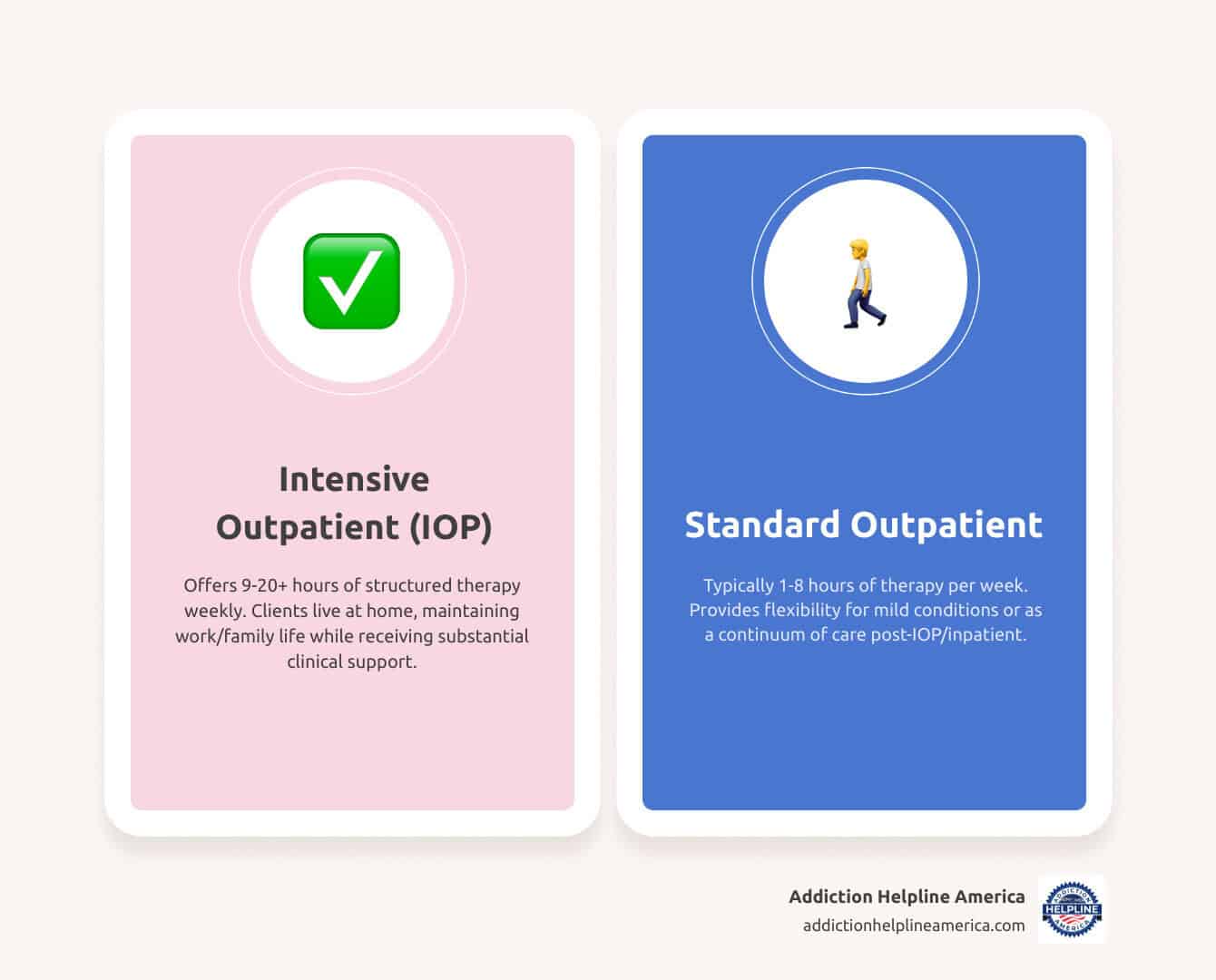
- Time Commitment: Typically 9 or more hours per week, spread across 3-5 days, as defined by the Substance Abuse and Mental Health Services Administration (SAMHSA).
- Schedule Flexibility: Morning, afternoon, or evening sessions available
- Treatment Includes: Individual therapy, group counseling, psychiatric care, family support, and skill-building
- Best For: Individuals stepping down from residential care, those needing more than weekly therapy, or people managing co-occurring mental health and substance use disorders
- Cost: Most major insurance plans accepted, often covered under the Mental Health Parity and Addiction Equity Act (MHPAEA); self-pay and sliding scale options available
- Duration: Several weeks to several months, based on individual progress
IOPs serve as a middle ground between full-time inpatient care and traditional once-a-week outpatient therapy. They’re designed for people who need intensive support but have a stable living environment and don’t require 24/7 medical supervision. Whether you’re dealing with depression, anxiety, substance abuse, trauma, or dual diagnosis, Los Angeles offers numerous programs custom to your specific needs.
“The real power of an IOP is that it allows individuals to build recovery capital in their natural environment,” states Dr. Elena Ramirez, a clinical psychologist specializing in addiction. “They learn coping skills in therapy in the morning and apply them at their job or with their family in the afternoon. This real-time practice is invaluable for creating lasting change.”
The flexibility of an IOP is particularly valuable in a city like Los Angeles, where maintaining employment and family connections while pursuing recovery can make the difference between success and relapse. You’ll receive the same evidence-based therapies—like Cognitive Behavioral Therapy (CBT) and Dialectical Behavior Therapy (DBT), which are supported by extensive research from organizations like the American Psychological Association—that are used in residential programs, but you’ll practice these skills in real-time as you steer your daily life.
At Addiction Helpline America, we’ve guided thousands of individuals and families through the process of finding the right Intensive Outpatient Programs in Los Angeles, offering free, confidential support to help you take the first step toward recovery. Our team understands the local treatment landscape and can connect you with programs that match your specific circumstances, insurance coverage, and recovery goals.
Understanding the Structure of Intensive Outpatient Programs in Los Angeles
When considering an Intensive Outpatient Program (IOP), understanding its structure is crucial. This section details the core components, therapies, and daily schedule of IOPs in the Los Angeles area, clarifying what to expect.
Key Components and Services in an LA IOP
Intensive Outpatient Programs in Los Angeles offer comprehensive services for mental health and substance use disorders. According to SAMHSA’s Treatment Improvement Protocol (TIP) 47, a quality IOP is characterized by a range of services. Programs are custom to individual needs, starting with a thorough assessment to define personal goals.
Here’s a list of common services and components you can expect:
- Group Therapy: Often the primary modality, group therapy provides a supportive peer environment to share experiences, learn skills, and build community.
- Individual Counseling: Regular one-on-one sessions with a licensed therapist provide personalized attention to explore specific issues, develop coping strategies, and track progress.
- Family Therapy: Sessions help improve communication, address family dynamics, and educate loved ones on how to support the recovery process, creating a stronger support system.
- Medication Management: For co-occurring disorders, integrated psychiatric services include evaluations and medication management to optimize treatment and minimize side effects.
- Skill-Building Workshops: Workshops focus on practical skills for long-term recovery, such as stress management, emotional regulation, communication, and relapse prevention.
- Case Management: The clinical team coordinates with other healthcare providers and regularly reviews treatment plans to ensure integrated care and track progress.
- Relapse Prevention Planning: This critical component focuses on identifying high-risk situations and developing strategies to prevent relapse and maintain long-term wellness.

A Typical Day and Program Intensity
The structure of an Intensive Outpatient Program in Los Angeles is intensive yet flexible, designed to integrate treatment into your daily life.
- Assessment Process: Your journey begins with a comprehensive assessment of your mental health, medical history, and goals. This helps the clinical team create a customized treatment plan. For dual diagnosis, this may include a psychiatric evaluation for diagnostic clarity.
- Program Schedule: IOPs involve multiple weekly therapy sessions, typically 3-5 days for 9-20 hours total. Sessions last 3-6 hours daily.
- Flexibility: Morning, afternoon, or evening sessions are often available to accommodate work or school schedules.
- Individual Progress Tracking: Your progress is continuously monitored, and treatment plans are reviewed weekly to ensure care remains effective.
- Transition Planning: Nearing completion, your team helps create a discharge and aftercare plan for a smooth transition back to daily life.
For more information about various treatment options available in California, explore our comprehensive guide: More info about California treatment options.
Evidence-Based and Holistic Therapies Used
Intensive Outpatient Programs in Los Angeles use evidence-based therapies backed by scientific research. Many also incorporate holistic therapies for a well-rounded approach.
“Relying on evidence-based therapies isn’t just best practice; it’s an ethical obligation,” states licensed therapist Mark Chen, LCSW. “We use treatments like CBT and DBT because decades of research show they work. They give clients tangible tools to manage their thoughts and emotions, which is the foundation of recovery.”
Common evidence-based therapies include:
- Cognitive Behavioral Therapy (CBT): Helps identify and change negative thought patterns and behaviors related to mental health or substance use, recognized as effective by the American Psychological Association.
- Dialectical Behavior Therapy (DBT): A type of CBT that teaches skills in mindfulness, distress tolerance, emotion regulation, and interpersonal effectiveness. It’s effective for BPD, trauma, and co-occurring disorders, as noted by the National Institute of Mental Health (NIMH).
- Motivational Interviewing: A client-centered approach to explore and resolve ambivalence about change, strengthening motivation for recovery.
- Trauma-Informed Care: Integrates approaches like Eye Movement Desensitization and Reprocessing (EMDR), an approach validated by the EMDR International Association, to help safely process trauma.
- Acceptance and Commitment Therapy (ACT): Helps you accept difficult feelings and commit to actions that align with your values.
- Solution-Focused Brief Therapy: Focuses on building solutions rather than dwelling on problems by using your strengths.
- Process-Based Therapy (PBT): Views clients as unique individuals capable of growth, tailoring interventions beyond diagnosis.
In addition to these, many Intensive Outpatient Programs in Los Angeles incorporate holistic therapies whose benefits as complementary treatments are being studied by institutions like the National Center for Complementary and Integrative Health (NCCIH):
- Yoga and Mindfulness: Promotes relaxation, stress reduction, and self-awareness.
- Art Therapy: Uses creative expression to explore emotions, reduce stress, and improve self-esteem.
- Experiential Therapy: Uses activities like adventure therapy to build confidence and practice new coping skills.
- Beat-Based Movement Therapy: Uses rhythm and movement to regulate emotions and release tension.
These diverse approaches ensure comprehensive treatment that addresses underlying issues and promotes overall well-being. For more details on evidence-based programs in California, visit: Information on evidence-based programs in California.
Who is an IOP For? Suitability, Benefits, and Comparisons
Choosing the right level of care is a critical step in your recovery journey. This section explores the ideal candidate for an IOP, the significant advantages of this level of care, and how it differs from other treatment options.
The Ideal Candidate for an IOP
Intensive Outpatient Programs in Los Angeles are not a one-size-fits-all solution, but they are incredibly effective for a specific group of individuals. According to clinical guidelines from organizations like the American Society of Addiction Medicine (ASAM), you might be an ideal candidate for an IOP if you:
- Have a Stable Living Environment: A supportive and safe home environment is crucial, as you’ll be returning home each day after sessions. This allows you to practice new skills in a real-world setting.
- Are Motivated for Recovery: IOPs provide structure and support, but they also require a significant level of personal commitment to engage in the therapeutic process.
- Are Stepping Down from Residential Care: IOPs are an excellent “step-down” option after completing a more intensive residential or inpatient program, providing continued support as you transition back to daily life.
- Need More Than Weekly Therapy: If traditional once-a-week therapy isn’t providing enough support, an IOP offers a higher level of care without requiring full-time commitment.
- Are Managing Co-Occurring Disorders: IOPs are highly effective for individuals dealing with dual diagnoses, such as substance abuse alongside depression, anxiety, or trauma (PTSD).
- Are Able to Manage Daily Life: This includes maintaining employment, continuing education, or caring for family. The program’s flexibility allows you to integrate treatment without putting your life on hold.
- Do Not Require 24/7 Medical Supervision: If you are medically stable and not at high risk of self-harm or severe withdrawal, an IOP can provide the necessary intensive support.
Conversely, an IOP is generally not suitable for individuals with severe, unmanaged mental illness or those at high risk of self-harm, who would likely benefit from a higher level of care like inpatient hospitalization or Partial Hospitalization Programs (PHP).

Key Benefits: Flexibility and Dual Diagnosis Treatment
Intensive Outpatient Programs in Los Angeles offer a compelling blend of flexibility and comprehensive care, which is especially impactful in a busy city like LA:
- Maintain Employment, Education, and Family Connections: IOPs allow you to live at home and continue with your job, school, or family responsibilities, minimizing life disruption and maintaining your support network.
- Practice Skills in Real-Time: Returning home after therapy lets you immediately apply new coping skills in a real-world context, which is invaluable for building resilience.
- Smoother Transition to Daily Life: “Transitioning from a residential program can be jarring,” explains Dr. Anya Sharma, a psychiatrist. “An IOP acts as a vital bridge, providing a high level of support while reintroducing the freedoms and responsibilities of daily life. This gradual step-down process is clinically proven to reduce relapse rates.”
- Reduced Cost Compared to Inpatient Care: IOPs are generally more affordable than residential programs because they don’t include costs for housing or 24/7 supervision.
- Simultaneous Treatment for Dual Diagnosis: The National Institute on Drug Abuse (NIDA) emphasizes that treating both substance use and co-occurring mental health conditions concurrently is more effective and improves long-term outcomes.
For a deeper dive into how integrated treatment can help, learn more about dual diagnosis treatment.
IOP vs. PHP vs. Traditional Outpatient Therapy
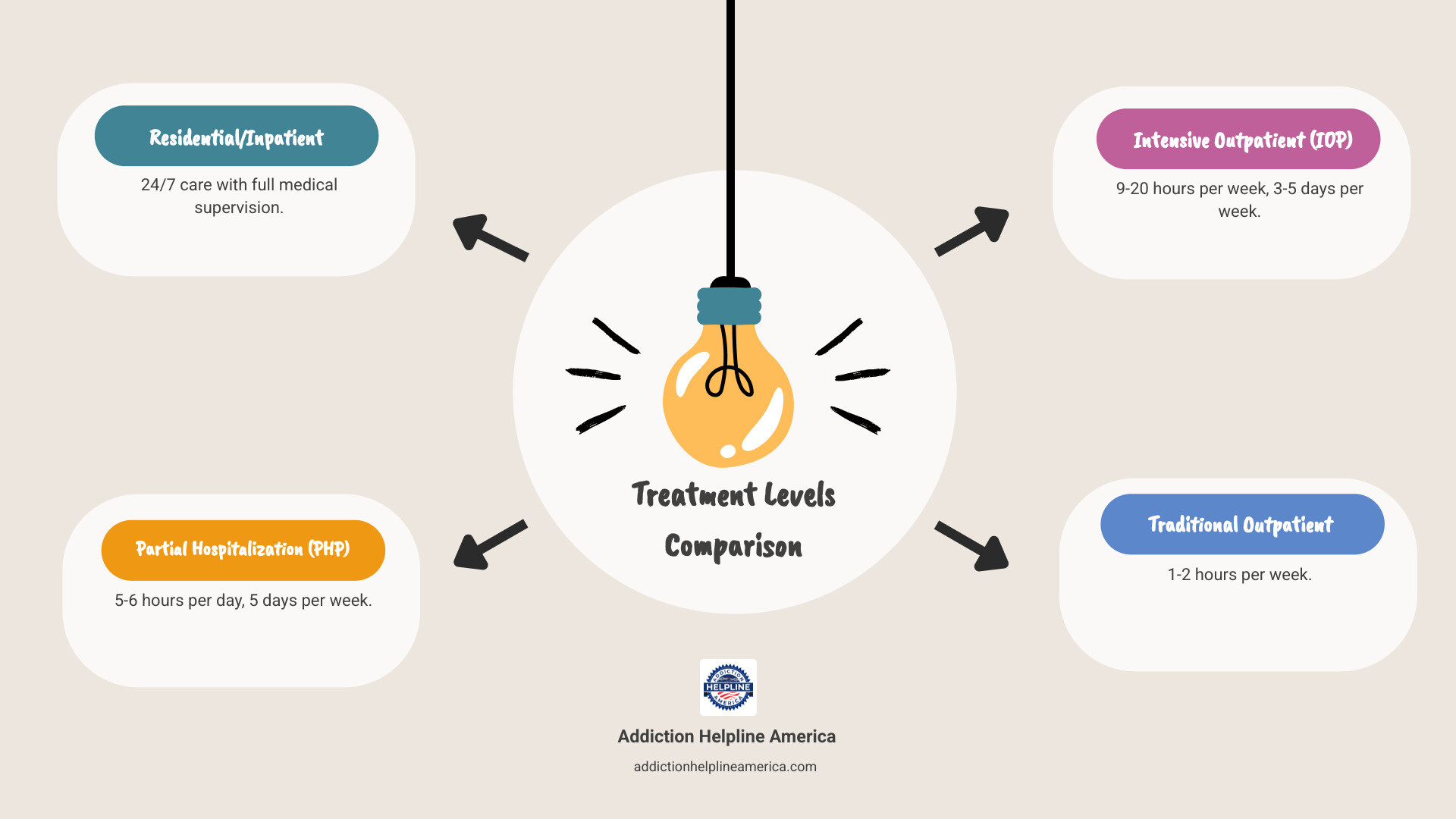
Understanding the different levels of care available is essential for making an informed decision. Here is a comparison based on the continuum of care defined by ASAM:
| Feature | Intensive Outpatient Program (IOP) | Partial Hospitalization Program (PHP) | Traditional Outpatient Therapy |
|---|---|---|---|
| Hours per Week | Typically 9-20 hours | Typically 20+ hours | 1-2 hours |
| Days per Week | 3-5 days | 5 days (sometimes 3-4 days) | 1 day |
| Level of Structure | High structure, but allows clients to live at home and maintain daily responsibilities. Intermediate level of care. | Very high structure, clients attend during the day and return home at night. Often a “step-down” from inpatient or “step-up” from IOP. | Low structure, typically once-weekly sessions. Clients manage daily life independently. |
| Services Included | Group therapy, individual therapy, family therapy, medication management, skill-building, case management, relapse prevention. | More intensive group and individual therapy, psychiatric services, medication management, experiential therapies, often includes catered meals. | Individual therapy, sometimes group therapy, medication management (if referred to a psychiatrist). |
| Ideal Candidate | Individuals stepping down from residential care, those needing more than weekly therapy, stable home environment, co-occurring disorders, able to work/study. | Individuals needing significant daily support but not 24/7 supervision, stepping down from inpatient, or those whose symptoms prevent full-time work/school but can function at home overnight. | Individuals with mild to moderate symptoms, stable mental health, strong coping skills, and a solid support system, who need ongoing maintenance or less intensive support. |
| Primary Goal | Provide intensive support while fostering independence and community integration. | Stabilize acute symptoms, prevent hospitalization, provide intensive intervention for complex issues. | Support personal growth, address specific issues, maintain mental wellness. |
How to Find and Choose the Right Intensive Outpatient Programs in Los Angeles
Navigating the treatment landscape can feel overwhelming, especially in a large city like Los Angeles with numerous options. Our goal is to help you find an IOP that aligns perfectly with your needs. This guide provides actionable steps for finding a quality program, understanding costs, and making an informed decision.
Steps to Selecting the Right Program
Choosing the right Intensive Outpatient Program in Los Angeles is a deeply personal decision. Here’s a step-by-step approach to help you make an informed choice:
- Assess Your Personal Needs: Before you start looking, take time to understand what you need. What are your primary concerns (substance use, depression, anxiety, trauma, dual diagnosis)? What kind of schedule flexibility do you require? What therapeutic approaches resonate with you?
- Verify Accreditations: Look for programs accredited by reputable organizations such as The Joint Commission or the Commission on Accreditation of Rehabilitation Facilities (CARF). These accreditations signify that the program meets high standards of quality and patient safety.
- Inquire About Staff Credentials: “When vetting a program, ask about their staff’s credentials and their specific experience with your issues,” advises Sarah Jenkins, a certified intervention professional. “Look for state licensing and accreditation from bodies like The Joint Commission or CARF, as this demonstrates a commitment to high standards of care and patient safety.”
- Ask About Treatment Philosophy and Approaches: Does the program use evidence-based therapies like CBT, DBT, ACT, or EMDR? Do they incorporate holistic therapies like yoga or art therapy? Are they trauma-informed? A program that integrates various modalities might offer a more comprehensive approach.
- Consider Program Specializations: Many Intensive Outpatient Programs in Los Angeles offer specialized tracks. Do you need a dual diagnosis program, a program for young adults, or one that caters to specific gender or LGBTQ+ needs?
- Read Reviews and Testimonials: While not the sole factor, client testimonials and reviews can offer insights into the program’s environment, the compassion of its staff, and the effectiveness of its treatment.
- Contact Programs for Initial Assessment: Most reputable IOPs will offer a free consultation or initial assessment. This is your chance to ask questions, learn about their specific program structure, and see if it feels like a good fit.
At Addiction Helpline America, we can help streamline this process by connecting you with a directory of trusted Los Angeles IOPs. Start your search here: Directory of Los Angeles IOPs.
Understanding Costs and Insurance Options in California
The cost of Intensive Outpatient Programs in Los Angeles can vary significantly, but understanding your options for payment is a crucial part of the decision-making process.
- Insurance Coverage: Most IOPs in Los Angeles accept major private and commercial insurance plans. The Mental Health Parity and Addiction Equity Act (MHPAEA) requires most health plans to cover mental health and substance use disorder treatment no more restrictively than medical treatment. It’s always essential to verify your specific insurance benefits directly with the program and your insurance provider.
- In-Network vs. Out-of-Network: Understand whether a program is in-network or out-of-network with your insurance. In-network providers typically result in lower out-of-pocket costs.
- Private Pay Options: If you don’t have insurance or prefer not to use it, private pay is an option. Costs for IOPs can range, with some programs listing monthly rates (e.g., $4,500-$6,500/month for an IOP, as seen in some listings).
- Sliding Scale Fees and Financing: Some programs may offer sliding scale fees based on income or financing options to make treatment more accessible. It’s always worth asking about these possibilities.
- Free Resources: Addiction Helpline America is a free and confidential service designed to help you steer these options and connect you with suitable programs without any cost to you.
For more information on California treatment centers and their payment options, visit: Learn more about California treatment centers.
Navigating Specialized Options in the Los Angeles Area
Los Angeles is a diverse city, and its treatment landscape reflects that, offering specialized Intensive Outpatient Programs designed to meet unique needs. This custom approach can significantly improve the effectiveness of treatment.
Here are some specialized options you might find:
- Specialized Programs for Professionals: These IOPs understand the unique pressures and confidentiality needs of working professionals, often offering flexible schedules and peer support groups custom to career-related stress.
- Gender-Specific Treatment: Some programs offer men’s-only or women’s-only groups and therapy, creating a safe space to address gender-specific issues, trauma, and societal pressures without the presence of the opposite gender.
- LGBTQ+ Affirming Programs: These programs provide a safe, understanding, and affirming environment for individuals in the LGBTQ+ community. SAMHSA notes the importance of such programs in addressing unique challenges related to identity, discrimination, and mental health.
- Young Adult Programs: Custom for individuals typically aged 18-26, these programs focus on developmental issues, career planning, and social skills pertinent to this age group.
- Trauma-Informed Care: Many IOPs integrate specific trauma therapies like EMDR (Eye Movement Desensitization and Reprocessing) to help individuals process past traumas that often underlie addiction or mental health issues.
- Dual Diagnosis Programs: As highlighted earlier, these programs are specifically designed to treat co-occurring mental health and substance use disorders simultaneously, recognizing their interconnectedness.
When seeking an Intensive Outpatient Program in Los Angeles, considering these specialized options can lead to a more personalized and effective recovery experience. For a comprehensive guide to specialized treatment options in Los Angeles, you can explore our resources: Guide to specialized treatment options in Los Angeles.
Frequently Asked Questions about IOPs in Los Angeles
We understand you likely have many questions about Intensive Outpatient Programs in Los Angeles. Here are answers to some of the most common ones we hear:
How long does an IOP program typically last?
The duration of an Intensive Outpatient Program in Los Angeles is not one-size-fits-all; it varies significantly based on individual needs, the severity of the condition, and personal progress. Typically, clients participate in an IOP for several weeks to several months. For example, the UCLA Dual Diagnosis Program is a structured 8-week outpatient program. Other programs might suggest a typical length of 30+ days. The exact duration is custom to each person’s treatment plan, ensuring they receive adequate support while making meaningful progress toward their mental health and recovery goals. Your clinical team will regularly assess your progress and work with you to determine the appropriate length of stay, as well as developing an aftercare plan for continued support.
Can I continue working or going to school while in an IOP?
Yes, absolutely! One of the primary benefits and design principles of Intensive Outpatient Programs in Los Angeles is their flexibility, which allows clients to maintain their daily responsibilities, including work and school. With various scheduling options, including morning, afternoon, and even upcoming evening sessions in some programs, you can attend therapy around your personal and professional commitments. This flexibility is a core component of the IOP model as described by treatment guidelines from agencies like SAMHSA. This ability to continue living your life while receiving intensive treatment is a key advantage of choosing an IOP.
What role does family therapy play in an IOP?
Family therapy plays a highly significant role in many Intensive Outpatient Programs in Los Angeles, and family involvement is often strongly encouraged. “Addiction and mental illness don’t happen in a vacuum; they impact the entire family system,” says Dr. David Lee, a licensed marriage and family therapist. “Family therapy is crucial because it helps heal relationships, teaches loved ones how to provide effective support, and dismantles enabling behaviors, creating a home environment that truly fosters recovery.”
The National Institute on Drug Abuse (NIDA) lists family therapy as one of its principles of effective treatment. The goals of family involvement in an IOP typically include:
- Improving Communication: Helping family members learn healthier ways to communicate and resolve conflicts.
- Healing Relationships: Addressing past hurts and dynamics that may have contributed to or been impacted by the individual’s mental health or substance use issues.
- Educating Family Members: Providing education about addiction, mental health disorders, and the recovery process, helping loved ones understand the challenges and how best to support their family member.
- Creating a Stronger Support System: By involving family, the program helps build a more informed and supportive home environment, which is crucial for long-term recovery and preventing relapse.
The support and understanding of loved ones can significantly improve the overall effectiveness of treatment and contribute to lasting recovery for everyone involved.
Conclusion: Take the Next Step on Your Recovery Journey
Intensive Outpatient Programs in Los Angeles offer a structured, effective, and flexible solution for individuals seeking recovery from substance use and mental health disorders. By combining evidence-based therapies with the ability to remain integrated in your community, these programs provide a powerful path toward lasting wellness. They bridge the gap between inpatient care and traditional therapy, empowering you to heal while maintaining your daily life. If you’re navigating depression, anxiety, trauma, or substance use, an IOP in Los Angeles can provide the comprehensive support you need without putting your life on hold.
Find Help Today
If you or a loved one are struggling, Addiction Helpline America can help you steer your options. We provide free, confidential, personalized guidance to connect you with the right recovery program from our vast network of trusted treatment centers in Los Angeles and across California. Don’t hesitate to reach out. Your journey to a healthier, more balanced life can start today.
- Find a Los Angeles IOP program today: Find a Los Angeles IOP program today
- For immediate assistance, you can also access these vital resources:
- California Substance Abuse Hotlines: California Substance Abuse Hotlines
- SAMHSA’s National Helpline: SAMHSA’s National Helpline (1-800-662-HELP (4357))
- National Suicide Prevention Lifeline: 988 National Suicide Prevention Lifeline