
What You Need to Know About Inpatient Depression Treatment
Inpatient depression treatment provides 24/7 care in a hospital or residential facility for individuals with severe depression requiring intensive support.
Quick Overview:
- What it is: Round-the-clock care in a safe, structured environment with constant medical supervision
- Who needs it: People with severe depression, suicidal thoughts, treatment-resistant symptoms, or inability to care for themselves
- Typical duration: 5-10 days for crisis stabilization, or 30-90 days for comprehensive treatment
- What’s included: Individual therapy, group counseling, medication management, and holistic activities
- When to seek help: If depression makes daily life impossible, if you’re thinking about self-harm, or if outpatient care hasn’t worked
Depression is the leading cause of disability globally, but it is a highly treatable condition. For those with severe symptoms or in a mental health crisis, inpatient treatment offers an intensive, supportive option for immediate relief and long-term recovery.
Unlike outpatient care, inpatient programs remove you from daily stressors. You’ll receive constant support from a team of psychiatrists, therapists, and nurses focused on your safety and healing.
At Addiction Helpline America, we’ve helped thousands find the right inpatient depression treatment centers nationwide. We understand this is an overwhelming step, and we’re here to guide you with compassion and confidentiality.
Need help now? Call Addiction Helpline America at 844-561-0606 for a free, confidential assessment.
Basic Inpatient depression treatment vocab:
Understanding Inpatient Depression Treatment: What It Is and Who It’s For
When depression becomes overwhelming or unsafe, inpatient depression treatment can be a lifeline. This specialized care provides a safe, structured environment for healing, away from daily pressures. The primary goal is crisis stabilization, ensuring your immediate safety with professional supervision and 24/7 support. This intensive care is for individuals needing constant monitoring to manage symptoms. It removes you from harmful situations, allowing you to focus solely on recovery with a dedicated team of professionals.

Call Addiction Helpline America at 844-561-0606 to discuss your options confidentially.
What is Inpatient Treatment vs. Outpatient Care?
The main difference between inpatient depression treatment and outpatient care is the level of support and supervision.
Inpatient treatment (residential treatment) means living at a specialized facility with 24/7 care and medical supervision. This immersive environment removes you from daily stressors, allowing you to focus on your mental health. The structured setting ensures immediate attention for any crisis, prioritizing safety.
Outpatient care allows you to live at home while attending scheduled therapy sessions. It offers more flexibility to maintain daily routines but lacks the intensive, round-the-clock supervision of inpatient care.
| Feature | Inpatient Treatment | Outpatient Care |
|---|---|---|
| Level of Care | 24/7 intensive supervision and medical support | Scheduled appointments, living at home |
| Environment | Structured, immersive, removed from external stressors | Flexible, integrated into daily life |
| Time Commitment | Full-time residency (days to months) | Part-time, typically a few hours per week |
| Ideal Candidate | Severe symptoms, suicidal risk, inability to function, treatment-resistant depression | Moderate symptoms, stable living situation, ability to manage daily life |
| Therapies | Daily individual, group, family, medication management, holistic approaches | Individual, group, family therapy, medication management (less frequent) |
| Safety | Constant monitoring, immediate intervention for crises | Relies on personal coping skills and external support network |
Not sure which is right for you? Contact Addiction Helpline America at 844-561-0606 for guidance.
Who is an Ideal Candidate for Inpatient Depression Treatment?
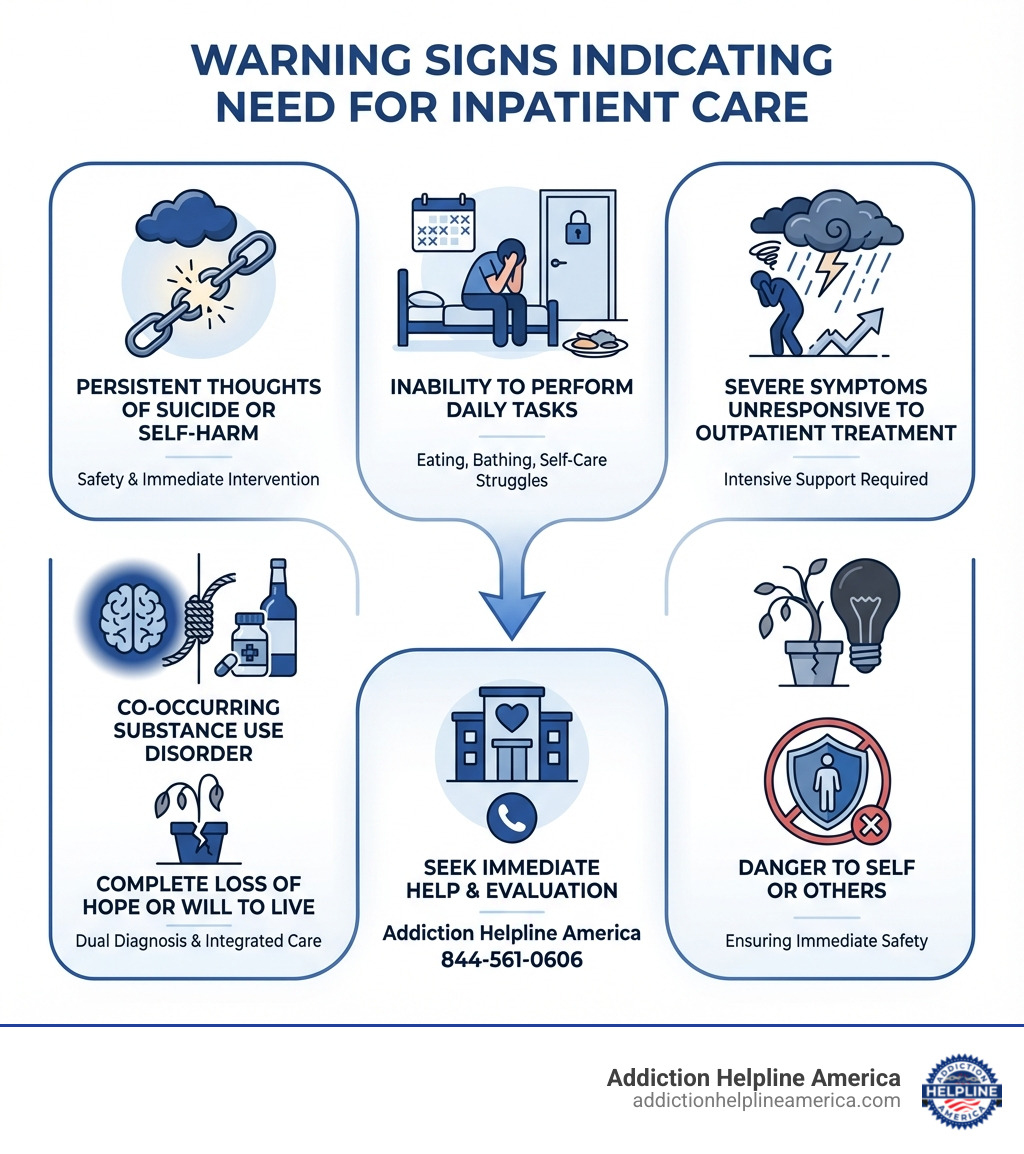
Inpatient depression treatment is for specific situations where a higher level of care is necessary. This intensive environment is beneficial for individuals who:
- Experience severe depression symptoms: When symptoms make it impossible to perform basic self-care like eating or bathing, inpatient care provides needed structure and support.
- Have treatment-resistant depression: If outpatient treatments haven’t worked, an inpatient setting offers a fresh, intensive approach with diverse therapies.
- Are at risk of harm to themselves or others: If you or a loved one have persistent suicidal thoughts or are a danger to others, immediate inpatient depression treatment provides a safe, supervised environment. If you are in crisis, please remember to use resources like the Suicide Hotline.
- Are unable to function in daily life: When depression disrupts relationships, work, or the ability to cope, inpatient care offers a respite to rebuild life skills.
- Have co-occurring disorders: Many people with depression also have anxiety, PTSD, or substance use disorders. Inpatient depression treatment facilities often specialize in integrated care, treating all conditions simultaneously. You can find More info about dual diagnosis treatment on our site.
The decision for inpatient depression treatment is made after a thorough assessment by mental health professionals. It’s a courageous step toward healing when other options are insufficient.
Take the first step—call Addiction Helpline America at 844-561-0606.
The Core Components of an Inpatient Program
A key strength of inpatient depression treatment is its multidisciplinary approach. A dedicated team of psychiatrists, therapists, nurses, and other specialists collaborates to create a personalized treatment plan for your unique needs. This integrated care model addresses all aspects of your health—mental, emotional, and physical—with a focus on holistic healing.
Our team at Addiction Helpline America can help you find the right program—call 844-561-0606.
Evidence-Based Therapies and Modalities
Inpatient depression treatment offers a robust array of evidence-based therapies designed to help you understand your depression, develop coping mechanisms, and build a foundation for long-term wellness.

Common therapeutic modalities include:
- Individual Psychotherapy: One-on-one sessions provide a safe space to explore personal challenges and underlying issues contributing to depression.
- Group Therapy: Sessions with peers foster a sense of community, reduce isolation, and allow for shared support and learning new communication skills.
- Family Counseling: With the patient’s permission, family therapy helps improve communication, educates loved ones about depression, and builds a stronger support system.
- Cognitive Behavioral Therapy (CBT): This therapy helps you identify and change negative thought patterns and behaviors contributing to depression, teaching practical coping skills.
- Dialectical Behavior Therapy (DBT): DBT teaches skills in mindfulness, emotion regulation, distress tolerance, and interpersonal effectiveness to manage intense emotions.
- Experiential Therapies: Many programs use creative approaches to complement traditional talk therapy. These can include:
- Art Therapy: Expressing emotions through various art forms.
- Music Therapy: Engaging with music to improve mood and reduce stress.
- Yoga and Mindfulness: Practices to promote relaxation and improve self-awareness.
Some facilities also offer advanced treatments like Electroconvulsive Therapy (ECT), Transcranial Magnetic Stimulation (TMS), and Ketamine therapy for treatment-resistant depression under strict medical supervision.
Learn more about these therapies by calling Addiction Helpline America at 844-561-0606.
Medication Management and Medical Support
Medication often plays a vital role in inpatient depression treatment. A psychiatrist will conduct an evaluation to determine the most appropriate medication regimen, which may involve starting, adjusting, or switching prescriptions. The 24/7 medical supervision allows for careful monitoring of medication effects and side effects, ensuring your safety. Inpatient programs also provide basic medical monitoring and can address co-occurring physical health issues. For those with co-occurring addiction and mental health challenges, comprehensive care is critical. You can learn more about addiction and mental health on our website.
Questions about medication management? Call us at 844-561-0606.
What Does a Typical Day Look Like?
Life in an inpatient depression treatment program is highly structured. A typical day provides stability and maximizes engagement in treatment. Your day will likely include a mix of individual and group therapy, educational workshops, and nutritious meals. Afternoons may involve recreational activities like yoga or art therapy. There is also time for personal reflection and family connection. Evenings often focus on relaxation before a structured bedtime, ensuring adequate rest for recovery. Medical staff are always available for support.
For details on daily life in treatment, call Addiction Helpline America at 844-561-0606.
The Path to Recovery: From Admission to Aftercare
The path to recovery is a continuous process. A good inpatient depression treatment program emphasizes seamless transitions and ongoing support to ensure long-term wellness, from admission through aftercare.
Start your journey—call Addiction Helpline America at 844-561-0606.
The Admission Process
The admission process for inpatient depression treatment is designed to be supportive and straightforward. It begins with a confidential assessment by mental health professionals to understand your needs and determine if inpatient care is appropriate. After a clinical evaluation, our team at Addiction Helpline America can assist with insurance verification. Finally, a personalized care plan is developed, outlining your treatment goals and therapies. We guide you through every step.
Our team can walk you through the process—call 844-561-0606.
How Long is Inpatient Treatment for Depression?
The duration of inpatient depression treatment varies based on individual needs and progress. There isn’t a one-size-fits-all answer, but here are common timeframes:
- Short-term stabilization: For acute crises, such as severe suicidal ideation, a stay might be 5 to 10 days to ensure safety.
- Typical programs: Comprehensive inpatient depression treatment programs often last around 30 days but can extend to 60 or 90 days depending on progress.
- Factors influencing stay: The length of your stay depends on the severity of your depression, your progress in treatment, and any co-occurring disorders.
The goal is to provide comprehensive care and equip you for sustained improvements, not to rush the process.
Find out what’s right for you—call Addiction Helpline America at 844-561-0606.
Aftercare Planning for Lasting Success
Effective aftercare planning is crucial to sustain the progress made during inpatient depression treatment. A detailed discharge plan is created before you leave, outlining the next steps.
Key components of aftercare include:
- Relapse prevention strategies: Identifying triggers and developing coping mechanisms to manage them.
- Step-down care: Transitioning to less intensive support like intensive outpatient (IOP) or partial hospitalization programs (PHP). Addiction Helpline America can help coordinate these types of programs.
- Support groups: Joining peer-led groups provides ongoing community and understanding.
- Ongoing therapy and medication management: Continuing therapy and check-ups with a psychiatrist is essential for long-term stability.
Our goal at Addiction Helpline America is to help you find a program with robust aftercare planning, ensuring a continuous network of support. You can explore options to Find the right treatment program for you on our website.
Let us help you plan for lasting recovery—call 844-561-0606.
How to Choose a Facility and Measure Effectiveness
Choosing the right inpatient depression treatment facility is a critical decision. It’s about finding a place where you feel safe, supported, and confident in the care you’ll receive. This involves asking the right questions and prioritizing quality and accreditation.
Need help choosing? Call Addiction Helpline America at 844-561-0606.
How to Choose the Right Inpatient Depression Treatment Center
When researching inpatient depression treatment centers, be thorough. Consider the following:
- Accreditation: Is the facility accredited by The Joint Commission or CARF? This signifies high standards of quality and safety.
- Staff Credentials and Experience: Are the psychiatrists, therapists, and nurses licensed and experienced in treating depression?
- Treatment Philosophies and Modalities: What types of therapies do they offer (CBT, DBT, etc.)? Do their approaches align with your needs?
- Personalized Treatment Plans: How are treatment plans individualized and adjusted based on progress?
- Aftercare Planning: What is their process for discharge planning and connecting patients with ongoing support?
- Family Involvement: How does the facility involve family through therapy or educational programs?
- Location and Environment: Does the environment feel safe and conducive to healing? Consider if you prefer a center close to home or one that offers distance from triggers.
- Cost and Insurance: What are the costs, and do they accept your insurance? Our team at Addiction Helpline America can help you verify your benefits.
- Patient-to-Staff Ratio: A lower ratio often means more personalized attention.
- Specializations: Do they have specialized programs for specific populations or co-occurring conditions?
Asking these questions will help you make an informed decision.
We can help you evaluate your options—call 844-561-0606.
How Effective is Inpatient Treatment for Depression?
Inpatient depression treatment is highly effective, especially for severe or treatment-resistant cases. The structured, supportive environment leads to significant improvements in symptoms and well-being.
- High efficacy for severe cases: For those at risk of self-harm or unresponsive to outpatient care, inpatient treatment offers superior safety and intervention. 24/7 supervision and removal from stressors allow for focused healing.
- Symptom reduction: Intensive therapy and medication management work to reduce depressive symptoms. Research supports the effectiveness of these programs for chronic depression. You can review this Scientific research on inpatient effectiveness.
- Improved coping skills: Patients learn and practice new coping mechanisms and emotional regulation techniques in a supportive setting.
- Building a foundation for recovery: Inpatient care integrates medical, psychological, and social support, laying a strong foundation for long-term recovery.
While recovery is an ongoing journey, inpatient depression treatment can be a critical turning point, providing the stabilization and skills needed for a healthier life.
Learn more about outcomes—call Addiction Helpline America at 844-561-0606.
Frequently Asked Questions about Inpatient Depression Treatment
How much does inpatient treatment cost and will my insurance cover it?
The cost of inpatient depression treatment varies by facility, location, and length of stay. Most insurance plans provide some coverage for mental health treatment under the Affordable Care Act (ACA) and the Mental Health Parity and Addiction Equity Act (MHPAEA). However, the extent of coverage depends on your specific plan. It’s crucial to contact your insurance provider to understand your benefits. Our team at Addiction Helpline America can assist with insurance verification to clarify potential costs. Many facilities also offer private pay options or financial assistance.
We can verify your insurance—call 844-561-0606.
What if I need to take time off work for treatment?
Taking time off work for inpatient depression treatment is a common concern, but protections are available. The Family and Medical Leave Act (FMLA) allows eligible employees to take up to 12 weeks of unpaid, job-protected leave for treatment. Your job is protected upon your return. Some employers also offer short-term disability benefits or Employee Assistance Programs (EAPs) for confidential guidance. Your confidentiality is protected by laws like HIPAA, so details of your diagnosis remain private.
Ask us about your options—call 844-561-0606.
What role does family play during treatment?
Family involvement is a critical component of successful inpatient depression treatment and long-term recovery. With the patient’s permission, facilities encourage participation through:
- Family therapy sessions: These sessions help improve communication and strengthen support systems.
- Educational programs for loved ones: Workshops teach family members about depression and how to best support their loved one.
- Building a supportive home environment for aftercare: Family plays a crucial role in creating a stable environment for the patient’s return, which includes understanding relapse prevention.
A strong family support system significantly contributes to healing and helps maintain progress made during treatment.
Find out how your family can be involved—call 844-561-0606.
Take the First Step Toward Healing
Inpatient depression treatment offers a profound opportunity for healing and stabilization when depression becomes overwhelming. It’s a courageous step to seek intensive help, providing a safe haven where you can focus entirely on your mental well-being. With a multidisciplinary team, evidence-based therapies, and a structured environment, inpatient care builds a strong foundation for recovery, even for the most severe or treatment-resistant cases.
Hope for recovery is a tangible reality with the right support. Addiction Helpline America is here to guide you through every question and every decision, connecting you with the best inpatient depression treatment centers across the country. We believe everyone deserves a chance to heal and live a life free from the debilitating grip of depression.
For free, confidential guidance in finding the right inpatient depression treatment center, contact Addiction Helpline America today.