

Understanding Inpatient Bipolar Treatment: A Path to Stability
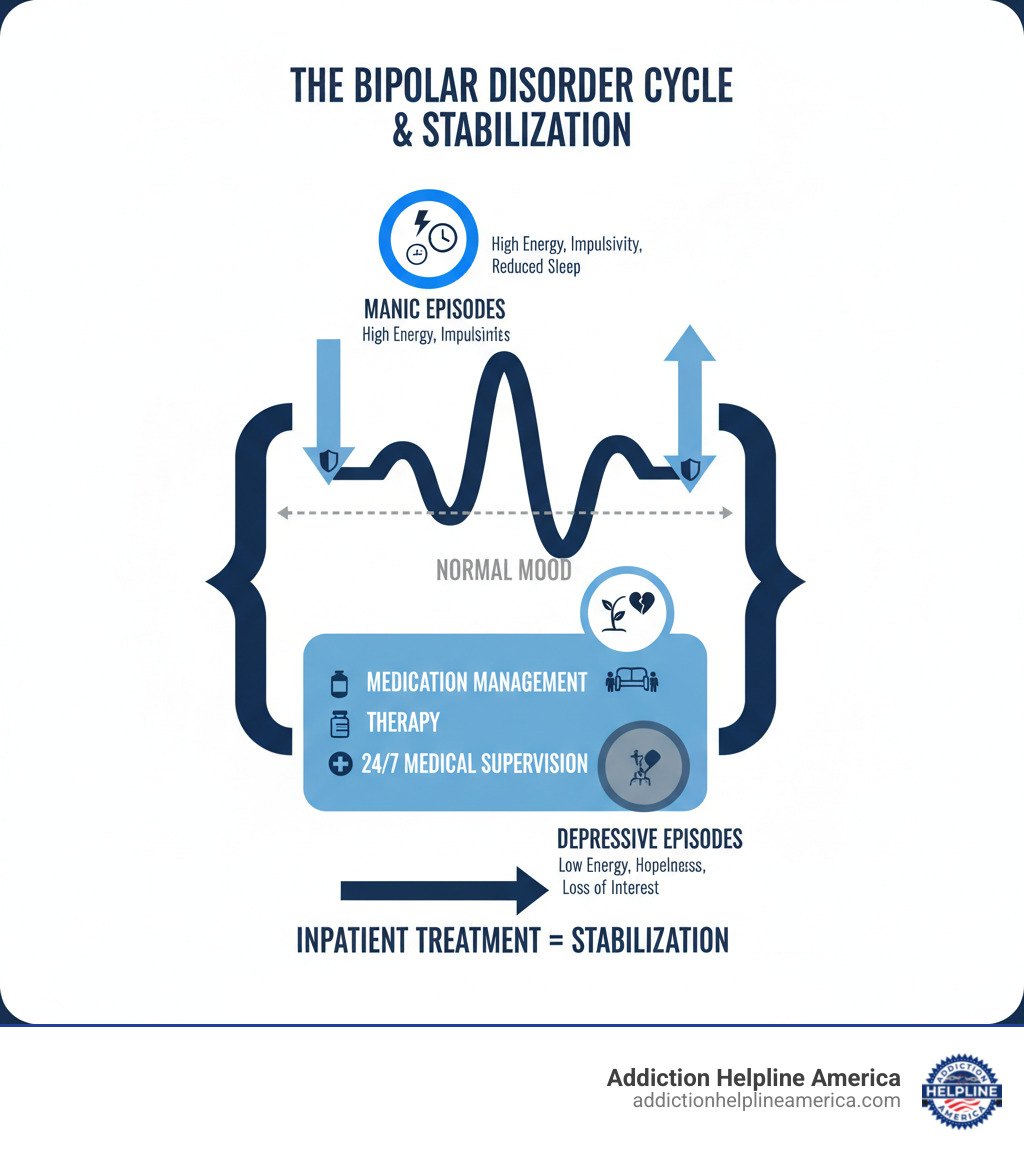
Inpatient bipolar treatment provides intensive, 24/7 care for individuals with severe bipolar disorder symptoms who need immediate stabilization. The extreme mood swings of bipolar disorder—from manic highs to depressive lows—can disrupt every aspect of life. When outpatient care isn’t enough, or when safety is at risk, inpatient treatment offers the intensive support needed to regain stability.
Key Components of Inpatient Bipolar Treatment:
- Crisis stabilization in a safe, supervised environment
- Medication management by psychiatrists to control mood swings
- Evidence-based therapies like CBT and DBT
- Treatment for co-occurring conditions such as substance abuse
- Typical duration of 5-12 days for acute care, or 2-4 months for residential programs
- Transition planning to outpatient care and community support
Inpatient care is recommended when:
- You’re experiencing suicidal thoughts or behaviors
- Severe mania is causing dangerous or impulsive actions
- Psychotic symptoms like hallucinations appear
- Co-occurring substance abuse complicates treatment
- Outpatient treatment hasn’t been effective
The good news is that bipolar disorder is highly treatable. With the right combination of medication, therapy, and support, people can manage their symptoms and live fulfilling lives. At Addiction Helpline America, we guide individuals and families to find appropriate inpatient bipolar treatment for mental health and co-occurring substance use. Our team connects you with verified centers nationwide, offering confidential, 24/7 support to help you take the first step toward recovery.
Inpatient bipolar treatment further reading:
When Is Inpatient Care Necessary for Bipolar Disorder?
Choosing inpatient bipolar treatment is a courageous step toward safety and healing, often made during a crisis. Hospitalization becomes necessary when symptoms are too severe to be managed at home. The primary goal is to keep the person safe, stabilize acute symptoms, and provide intensive, round-the-clock support.

Inpatient care is the right choice in several critical situations:
- Risk to Self or Others: This is the most urgent reason. If someone has suicidal thoughts, plans to harm themselves, or shows aggression, an inpatient setting provides immediate protection. People with bipolar disorder face a significantly higher suicide risk, making safety a top priority.
- Severe Mania or Mixed Episodes: During mania, a person might make impulsive decisions (e.g., reckless spending, risky behaviors) or neglect sleep and nutrition. A structured environment is essential to regain control.
- Psychotic Symptoms: Hallucinations or delusions, most common in Bipolar I disorder, require immediate medical attention in a supervised setting.
- Inability to Manage Self-Care: When depression or mania becomes so consuming that basic hygiene and meals are forgotten, inpatient care provides foundational support.
- Failed Outpatient Treatment: If therapy, medication adjustments, and other outpatient efforts aren’t working, inpatient treatment offers a more intensive, structured approach.
- Co-occurring Substance Abuse: Nearly half of people with bipolar disorder also struggle with alcohol use. An inpatient facility can provide medically supervised detox alongside mental health treatment, addressing both issues simultaneously. Our Inpatient Treatment Depression Anxiety Guide explores this dual approach.
- Complex Medication Changes: Adjusting medications can carry risks. 24/7 medical supervision makes this process much safer.
According to the NIMH statistics on bipolar disorder, nearly 3% of the population lives with this condition, and 83% of cases are classified as severe, underscoring the need for effective treatment.
Inpatient vs. Outpatient Treatment
Understanding the difference between inpatient and outpatient care helps clarify which approach fits your situation.
| Feature | Inpatient Treatment | Outpatient Treatment |
|---|---|---|
| Level of Care | Highest, 24/7 medical and psychiatric supervision | Lower, scheduled appointments, live at home |
| Environment | Structured, controlled, safe facility | Flexible, allows for daily life integration |
| Intensity | Intensive, daily therapy, constant monitoring | Less intensive, weekly or bi-weekly sessions |
| Purpose | Crisis stabilization, acute symptom management | Long-term management, relapse prevention, skill-building |
| Duration | Short-term (days to weeks) for acute; longer for residential | Ongoing for months or years |
| Who it’s for | Severe symptoms, safety risk, functional impairment | Stable symptoms, need for ongoing support, mild to moderate symptoms |
| Cost | Generally higher due to 24/7 care | Generally lower, more accessible |
Inpatient bipolar treatment is for acute crises, providing continuous medical supervision in a specialized facility. Outpatient treatment allows you to live at home while attending scheduled appointments, making it ideal for long-term management of stable symptoms. Think of inpatient care as the emergency room for mental health, while outpatient care is for ongoing maintenance. For a deeper comparison, see our guide on Drug Rehab: Inpatient vs Outpatient.
Types of Bipolar Disorder
Bipolar disorder manifests differently depending on the type. The DSM-5-TR outlines several categories.
- Bipolar I Disorder: Defined by at least one manic episode—an intense period of liftd mood and energy lasting at least a week, often requiring hospitalization. Depressive episodes are common but not required for diagnosis.
- Bipolar II Disorder: Involves at least one major depressive episode and at least one hypomanic episode (a milder form of mania). The depressive episodes are often the most debilitating aspect of Bipolar II.
- Cyclothymic Disorder: A chronic condition with numerous periods of hypomanic and depressive symptoms that don’t meet full criteria for an episode. These milder but persistent mood swings last for at least two years.
Knowing the specific type is crucial for creating an effective treatment plan. The Mayo Clinic provides additional information on defining bipolar disorder for further reading.



What to Expect from Inpatient Bipolar Treatment
Stepping into inpatient bipolar treatment means entering a structured, safe environment designed for healing. Free from outside stressors, the entire focus is on your recovery. The predictable daily routine—with regular meals, sleep schedules, and planned activities—helps regulate the body and mind, which is therapeutic for bipolar disorder.

A typical day includes a mix of group therapy, individual counseling, psychiatric check-ins, and educational workshops. What sets inpatient care apart is the 24/7 presence of medical and psychiatric staff. This constant supervision allows for real-time crisis management and immediate medication adjustments. You’ll also find powerful peer support from others who share similar struggles, creating a sense of validation and community. Upon arrival, the team creates an individualized treatment plan custom to your specific symptoms, history, and goals.
Primary Goals of Inpatient Bipolar Treatment
The treatment team focuses on several key objectives:
- Stabilizing Your Mood: The immediate priority is to bring you back to center from the extremes of mania or depression through medication and a calming environment.
- Reducing Your Symptoms: Intensive therapy and medication work to decrease the intensity of racing thoughts, sadness, or psychosis.
- Keeping You Safe: The facility provides a protective barrier, removing access to means of self-harm and offering constant supervision.
- Confirming or Refining Your Diagnosis: Close observation allows clinicians to make an accurate diagnosis, especially when co-occurring conditions are present.
- Finding the Right Medication Regimen: Psychiatrists can quickly adjust medications and monitor your response in a safe setting.
- Learning Coping Skills: You’ll gain practical tools to recognize warning signs, manage stress, and handle triggers.
- Education (Psychoeducation): Understanding your condition empowers you and your family, replacing fear with clarity.
Therapeutic Interventions Used
Inpatient bipolar treatment uses a combination of proven therapies custom to your needs.
- Individual Therapy: Provides a private space to work one-on-one with a therapist, exploring personal struggles and developing coping strategies.
- Group Therapy: Offers peer support and the realization you’re not alone. You can practice social skills and learn from others’ experiences.
- Family Therapy: Involves loved ones to improve communication, resolve conflict, and build a supportive home environment. Our guide on Family Therapy in Addiction Recovery explains this further.
- Cognitive Behavioral Therapy (CBT): Helps you identify and change negative thought patterns and behaviors that fuel mood episodes.
- Dialectical Behavior Therapy (DBT): Teaches skills in mindfulness, distress tolerance, emotion regulation, and interpersonal effectiveness, which are especially useful for intense emotions.
- Holistic Approaches: Therapies like art, music, yoga, and mindfulness support the healing of the whole person, complementing medical treatment.
The Role of Medication in Inpatient Bipolar Treatment
Medication is essential for most people with bipolar disorder, and an inpatient setting is ideal for getting it right. Medication management is intensive, with psychiatrists making adjustments based on daily observation.
- Mood Stabilizers: Medications like lithium, valproic acid, and lamotrigine are the foundation of treatment, working to prevent extreme mood swings.
- Antipsychotic Medications: Drugs like olanzapine and risperidone can help manage psychosis, agitation, and racing thoughts during manic episodes.
- Antidepressants: Used cautiously and almost always with a mood stabilizer to treat depressive episodes without triggering mania.
Staff monitor closely for side effects, addressing any issues promptly. Some facilities may use pharmacogenomic testing (genetic testing) to help predict which medications will be most effective for you. Medication is a long-term commitment, and inpatient care helps you understand its importance for preventing relapse.
Comprehensive Care and Planning for the Future
Inpatient bipolar treatment is a stepping stone toward a stable future. The goal is to provide comprehensive care that addresses all aspects of your well-being and equips you with a solid plan for life after you leave. This includes treating co-occurring conditions and creating a robust discharge plan.

Treating Co-Occurring Disorders
It’s common for bipolar disorder to co-exist with other conditions like substance abuse or anxiety disorders. These dual diagnoses must be treated together. Many inpatient programs offer integrated treatment to address both your bipolar symptoms and any substance use issues simultaneously. If substance abuse is present, treatment often starts with medically supervised detoxification. Our Detox Centers provide a safe environment for this first step. Afterward, the focus shifts to relapse prevention, where you’ll learn to identify triggers and develop coping strategies. Our Drug and Substance Abuse Treatment page offers more information.
Transitioning Back to the Community
A smooth transition back home is vital. This is achieved through a continuum of care designed to provide ongoing support.
This often involves step-down programs that bridge the gap between inpatient care and full independence. A Partial Hospitalization Program (PHP) offers structured treatment during the day while you live at home. Intensive Outpatient Programs (IOP) are less time-intensive but still provide significant clinical support. As you step down, support groups offer valuable peer encouragement. Before you leave, you’ll receive a personalized relapse prevention plan—your roadmap for continued success. For those needing extended support, a Long-Term Residential Program can be a great next step. You can explore options for Long Term Rehab Centers to see if this path is right for you.
How to Choose the Right Treatment Center
Choosing the right inpatient bipolar treatment center is a critical decision. It’s about finding a safe, supportive place that understands your needs.
Inpatient care offers significant advantages: immediate safety, intensive treatment with 24/7 medical supervision, rapid mood stabilization, a calming structured environment, and the ability to focus completely on recovery. Many centers also provide integrated care for co-occurring conditions.
Potential downsides include the cost, the disruption to daily life, and the limited autonomy within a structured setting. Regarding cost and insurance, prices vary, but many private insurance plans, Medicaid, and Medicare cover mental health treatment. Always check with your provider to understand your benefits. We can help you steer this; learn more at Will My Insurance Cover Drug Rehab?.
To make an informed choice, ask any facility you’re considering these important questions:
- What are your accreditations (like from the Joint Commission or CARF)?
- What is your staff-to-patient ratio, especially for psychiatrists and therapists?
- What specific types of therapy do you use, such as CBT, DBT, or family therapy?
- How do you manage medications, and how often will a psychiatrist see the patient?
- Do you have special programs for other issues like substance abuse or anxiety?
- What is the usual length of stay, and how do you decide how long someone needs to be there?
- What does the discharge planning process look like, and what aftercare programs do you offer?
- How can families be involved in the treatment process?
- What does a typical day’s schedule look like?
- What are the qualifications and experience of your clinical team?
- How do you handle medical emergencies or other physical health needs?
- What are your rules about visitors and communicating with people outside the facility?
- What is the total cost, and which insurance plans do you accept?
For a comprehensive guide, explore our Inpatient Rehabilitation Centers Near Me Guide.
Key Factors to Consider
When evaluating centers, focus on these key factors for quality care:
- Accreditation: Look for accreditation from organizations like The Joint Commission, which signifies high standards for patient care and safety.
- Licensing: Ensure the facility is licensed by the state, meaning it meets all state regulations.
- Staff Credentials: The clinical team should be licensed and experienced in treating bipolar disorder. A good staff-to-patient ratio allows for more personalized attention.
- Evidence-Based Approach: The center should use treatments proven effective by scientific research, like CBT and DBT.
- Dual Diagnosis Capability: A facility that can treat co-occurring substance abuse or other mental health issues is crucial for comprehensive recovery.
- Family Involvement: Quality programs offer family therapy and education to build a strong support system.
- Aftercare Support: A strong plan for after discharge—including referrals to outpatient therapy and support groups—is essential for long-term stability.
Frequently Asked Questions about Inpatient Bipolar Treatment
It’s natural to have questions when considering inpatient bipolar treatment. Here are answers to some common ones.
What is the typical duration of an inpatient stay for bipolar disorder?
The length of stay depends on individual needs.
- Acute Stabilization: For an immediate crisis, a hospital-based stay is often short, typically 5 to 12 days. The focus is on immediate safety and symptom control.
- Residential Care: For more comprehensive therapy and skill-building, residential programs may last 30 to 90 days or longer. This allows for deeper work on recovery and preparation for a stable life.
The treatment team determines the appropriate length of stay based on progress toward treatment goals.
What is a typical day like in an inpatient program?
A typical day is highly structured to promote stability. The schedule usually includes:
- Morning: Breakfast followed by meditation or yoga, then group therapy sessions on topics like coping skills or emotion regulation.
- Afternoon: Individual counseling, psychiatric appointments for medication management, and specialized activities like art therapy or educational workshops.
- Evening: Dinner followed by quieter time for reflection, journaling, or an evening support group.
This predictable routine helps regulate sleep and mood, which is a powerful tool in managing bipolar disorder.
Can my family be involved in my treatment?
Yes, family involvement is highly encouraged and is a key component of long-term recovery. Most quality facilities offer:
- Family therapy sessions to improve communication and resolve conflicts.
- Educational programs to help loved ones understand bipolar disorder and how to provide effective support.
- Scheduled visiting hours and clear communication policies to help you stay connected.
Research shows that strong family support significantly improves treatment outcomes and reduces the risk of relapse. Your family can become vital partners in your recovery journey.
Finding Hope and Healing
Living with bipolar disorder is challenging, but recovery is possible. When symptoms are severe, inpatient bipolar treatment can be the turning point.
Inpatient care provides immediate safety, intensive therapy, and expert medication management in a structured, 24/7 supervised environment. It’s not just about crisis management; it’s about gaining the tools and confidence to build a stable, meaningful life. You’ll learn essential coping skills, understand your condition through psychoeducation, and leave with a comprehensive aftercare plan to support your long-term progress.

Taking the first step is an act of courage. You deserve support, and you don’t have to do this alone.
At Addiction Helpline America, we offer free, confidential, personalized guidance to connect you with the right inpatient bipolar treatment program. Our team is available 24/7 to answer questions, verify insurance, and help you understand your options from our nationwide network of verified centers.
If you or someone you care about is struggling, please reach out today. We can help you explore different types of treatment programs and find the support that’s right for you. Hope and healing are within reach—let us help you take that first step.