Why Getting Sober Now Is the Most Important Decision You Can Make
Get sober now starts with understanding your path to recovery. Here’s what you need to know:
Immediate First Steps:
- Call for help – Contact a free, confidential helpline like 844-561-0606 for guidance
- Don’t quit cold turkey – Alcohol withdrawal can be dangerous and requires medical supervision
- Talk to a doctor – Get an assessment and learn about safe detox options
- Build your support network – Reach out to trusted friends, family, or support groups
- Find treatment – Explore options like inpatient rehab, outpatient programs, or medication-assisted treatment
Making the decision to get sober takes incredible courage. You’re not alone; nearly 49 million people in the U.S. have a substance use disorder. While many don’t receive the treatment they need, this gap doesn’t have to stop you.
Recovery is possible. Research shows treatment helps most people with alcohol use disorder reduce their drinking and rebuild their lives. Whether you feel trapped by alcohol, have damaged relationships, or experience daily withdrawal, sobriety can restore your health, relationships, and sense of purpose.
The journey starts with the hardest step: admitting you need help and reaching out for it.
Addiction Helpline America has years of experience guiding individuals and families through the critical process to get sober now, connecting them with evidence-based treatment options and compassionate support every step of the way. Our team understands the challenges you’re facing and is here to help you steer your path to recovery with dignity and hope.
Key terms for Get sober now:
Is It Time? Recognizing the Signs of Alcohol Addiction

Wondering if it’s time to get sober now? This question often follows real concern. Alcohol use disorder (AUD) is a medical condition, not a moral failing, defined by an inability to control alcohol use despite negative consequences. Recognizing the signs is the first step to recovery.
A healthcare provider can formally diagnose AUD. Consider if you or a loved one:
- Uses alcohol for longer or in larger amounts than intended.
- Has tried unsuccessfully to quit or cut back.
- Fails to fulfill major responsibilities due to alcohol use.
- Continues drinking despite it causing or worsening health problems.
- Experiences strong cravings for alcohol.
- Needs to drink more to get the same effect (tolerance).
- Has withdrawal symptoms like shakiness or trouble sleeping when not drinking.
- Has given up important activities to drink.
- Keeps drinking even if it causes trouble with family or friends.
- Has had an alcohol-related memory blackout.
Excessive alcohol use profoundly impacts physical and mental health, relationships, and finances. It’s the fourth leading cause of preventable death in the U.S., with 88,000 alcohol-related deaths annually. For more on how substances affect the body, see The Common Effects of Drug Addiction. If these signs resonate, it’s time to explore options to get sober now.
The Immediate and Long-Term Benefits of Sobriety
The decision to get sober now brings a cascade of life-changing benefits.
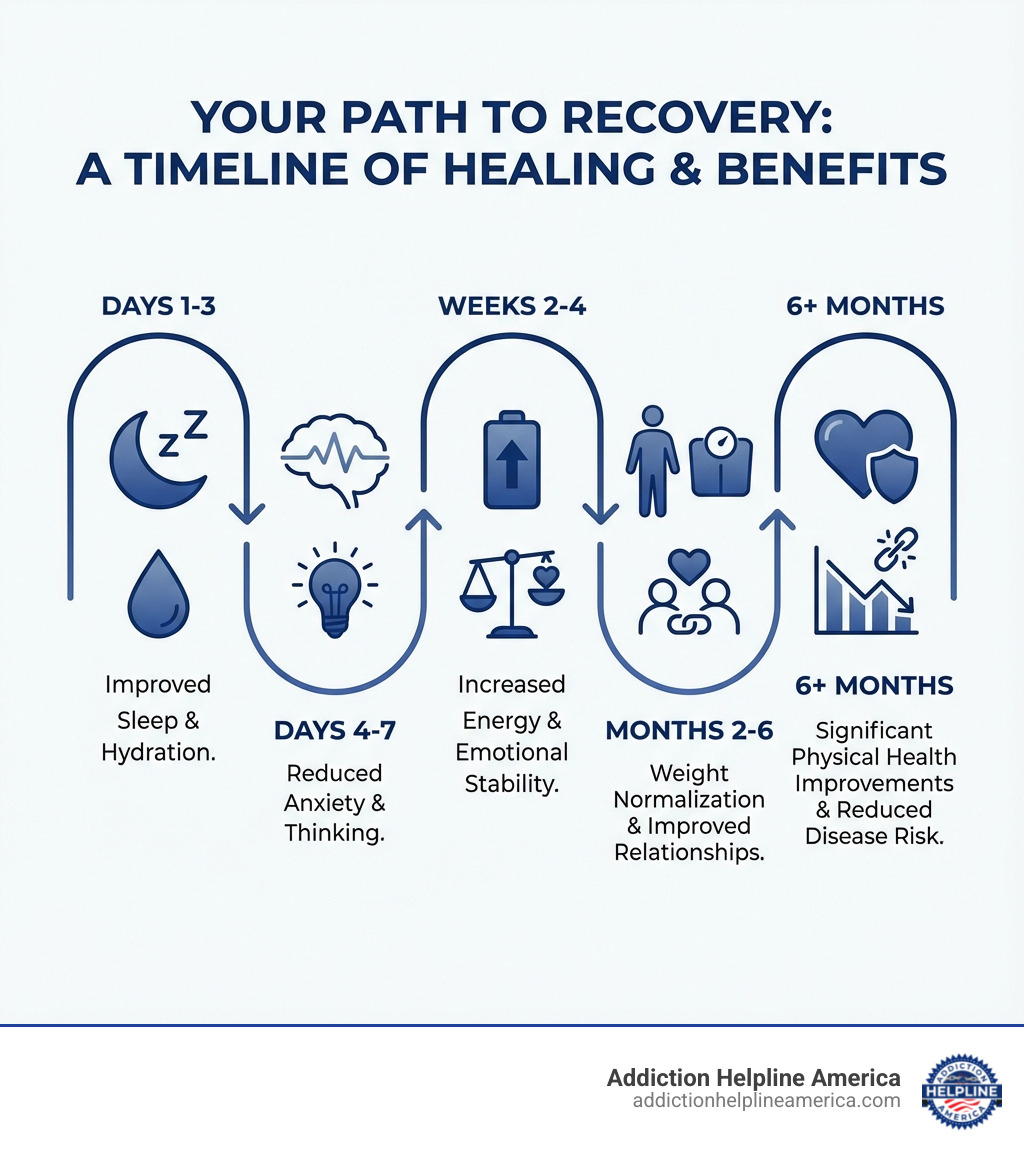
Immediate Benefits (Days to Weeks):
- Improved Physical Health: Your body begins to heal quickly, with better sleep, improved hydration, and reduced inflammation as it repairs damaged organs.
- More Energy and Better Sleep: Without alcohol disrupting sleep cycles, you’ll get more restorative rest, boosting daytime energy.
- Improved Mental Clarity: The fog of alcohol lifts, leading to sharper thinking and better concentration.
- Better Appearance: Quitting can reverse visible signs of heavy alcohol use, leading to a healthier complexion.
Long-Term Benefits (Months to Years):
- Emotional Stability: Sobriety helps you develop healthier coping mechanisms, leading to greater emotional balance and resilience.
- Rebuilding Relationships: Being more present and reliable allows you to mend strained relationships and build new, authentic connections.
- Financial Savings: You’ll save substantial money by not buying alcohol and avoiding related costs like legal troubles or lost work.
- New Hobbies and Passions: With more time and energy, you can refind old hobbies or explore new interests that add purpose to your life.
- Overall Health Improvement: Your immune system strengthens, the risk of various cancers decreases, and other chronic conditions like hypertension may improve.
Understanding the Role of Genetics and Environment
Addiction is a complex interplay of genetic and environmental factors.
Genetic Predisposition:
Genetics play a major role in addiction, contributing up to 50% of the risk for alcoholism. While a family history doesn’t guarantee addiction, it indicates a higher vulnerability. Research highlights the heritability of alcohol use disorders, with specific genes affecting how our bodies process alcohol and our risk of consuming more.
Environmental Triggers:
Our environment also plays a significant role:
- Social Circles: Peer pressure and being around heavy drinkers increases risk.
- Stress and Trauma: High stress or past trauma can lead to self-medicating with alcohol.
- Family History: Growing up with a parent who has AUD significantly increases a child’s risk.
- Co-occurring Mental Health Disorders: Conditions like depression and anxiety often co-occur with AUD. Using alcohol to cope can create a cycle that worsens both issues.
Understanding these factors isn’t about blame, but about gaining insight to create a comprehensive recovery strategy to get sober now.
The Path to Sobriety: Your First Steps to Get Sober Now
Deciding to get sober now is a monumental commitment to reclaim your life. While the urge to quit ‘cold turkey’ is strong, it’s extremely dangerous for regular, heavy drinkers. Abruptly stopping can cause Alcohol Withdrawal Syndrome (AWS), a life-threatening condition with symptoms ranging from tremors to seizures and delirium tremens (DTs).
For this reason, medically supervised detox is the safest first step. Professionals can manage withdrawal symptoms with medication, ensuring your safety and comfort, which provides a stable foundation for recovery.
If you or a loved one is ready to get sober now and needs immediate, confidential guidance, we encourage you to call our 24/7 helpline at 844-561-0606. Our compassionate advisors are ready to help.
How to Prepare to Get Sober Now
Once you commit to get sober now, preparation is key to setting yourself up for success.
- Inform Trusted Friends and Family: Share your decision with supportive people. Their encouragement is invaluable, but be cautious of anyone who might enable destructive habits.
- Remove All Alcohol and Paraphernalia: Eliminate temptations from your home and environment, including beverages, glasses, and other items associated with drinking.
- Identify Personal Triggers: Recognize the people, places, emotions, or situations that lead you to drink. Avoiding these triggers is critical, which may mean changing routines or declining certain invitations.
- Plan for Cravings: Cravings are normal and temporary, usually lasting 15-30 minutes. Have a plan to handle them, such as calling a friend, using a coping technique like deep breathing, or finding a distraction.
- Arrange Time Off: If you’re pursuing inpatient care or medical detox, arrange for time away from work or other responsibilities to focus fully on your recovery.
These preparatory steps are part of your First Steps to Recovery, laying a solid groundwork for the journey ahead.
Finding the Right Professional Help
Finding the right professional help is a critical step for anyone ready to get sober now, as it significantly increases the chances of sustained recovery.
- Consult a Doctor or Addiction Specialist: Your primary care provider is a great first step. They can assess your health, help create a treatment plan, and refer you to specialists. Organizations like AAAP, ASAM, and NIDA also offer resources.
- Understanding Different Levels of Care: Treatment isn’t one-size-fits-all; the right level of care depends on your specific needs.
- Detoxification: A medically supervised first step to manage physical dependence safely.
- Inpatient/Residential Treatment: Live at a facility for 30-90 days in a structured, supportive environment away from triggers. A California substance abuse treatment facility is one option for comprehensive care.
- Outpatient Programs: Live at home while attending regular treatment.
- Partial Hospitalization Programs (PHP): Intensive treatment for 20+ hours per week.
- Intensive Outpatient Programs (IOP): Flexible treatment for 9-19 hours per week.
- Find a Program That Fits: Consider cost, licensing, and therapies offered. Look for programs with research-based methods. Resources like the NIAAA and SAMHSA locators can help, as can our team at Addiction Helpline America. For more, see our Rehab Near Me Complete Guide.
- Affordable Care Options: Cost shouldn’t be a barrier. Health insurance, financial assistance, sliding scale payments, and state-funded programs can make treatment affordable. Our Free Drug Rehab Centers Guide 2025 offers more information. Addiction Helpline America is a free, confidential service that connects you to the right program.
Building Your Sobriety Toolkit: Treatment and Support

After taking the courageous step to get sober now, the next phase is building a “sobriety toolkit” of strategies and support systems for long-term recovery. Successful treatment combines several components, as individualized, evidence-based care is essential for the best outcomes. For a detailed overview, consult our Alcohol Rehab Treatment Options Complete Guide.
Formal Treatment Programs
Formal programs provide the structure and professional guidance needed to sustain recovery.
- Inpatient/Residential Rehab: These programs provide a highly structured, immersive environment for 30-90 days. Living at the facility removes you from daily triggers, allowing a complete focus on recovery. It’s ideal for severe addiction or unsupportive home environments.
- Outpatient Programs (PHP, IOP): These offer flexibility for those with a strong, sober home environment. PHPs are more intensive (20+ hours/week), while IOPs offer significant support with fewer hours (9-19 hours/week).
- Behavioral Therapies: These are the cornerstone of treatment, helping change thought patterns related to alcohol use.
- Cognitive-Behavioral Therapy (CBT): Teaches coping skills for high-risk situations.
- Motivational Improvement Therapy (MET): Increases motivation to change by resolving ambivalence about sobriety.
- Family Counseling: Involves loved ones to improve relationship dynamics and build a supportive home.
- Medication-Assisted Treatment (MAT): MAT combines FDA-approved, non-addictive medications (like Naltrexone) with therapy to reduce cravings and prevent relapse. This is a medical treatment for a chronic condition, not trading one addiction for another.
- Dual Diagnosis Treatment: Many people with AUD also have mental health disorders like depression or anxiety. Integrated treatment addresses both conditions simultaneously, which is essential for sustained recovery as they often exacerbate each other.
Why You Need a Support System to Get Sober Now
Trying to get sober now alone is isolating. A strong support system is critical for long-term success, as studies show it significantly improves the chances of completing treatment.
- The Power of Peer Support: Connecting with others who understand your struggle creates community and reduces isolation. Support groups offer a safe space to share experiences and find hope.
- Exploring Groups like Alcoholics Anonymous (AA) and SMART Recovery:
- Alcoholics Anonymous (AA): A fellowship with a proven 12-step program and a vast support network. Research confirms its efficacy for sobriety.
- SMART Recovery: (Self-Management And Recovery Training) focuses on self-empowerment with practical tools, appealing to those who prefer a non-12-step approach.
- Other groups include Women for Sobriety and LifeRing. See our Addiction Support Groups Ultimate Guide for more.
- The Role of Family and Friends: Loved ones provide crucial emotional support and accountability. Leaning on educated friends and family makes a huge difference. Our guide on Helping A Loved One With Addiction offers advice, and groups like Al-Anon support families.
Life in Recovery: How to Maintain Long-Term Sobriety
Achieving sobriety is a huge accomplishment, but recovery is a lifelong process of continuous growth. The focus shifts from stopping substance use to building a fulfilling life. For a deeper dive, explore our guide on Overcoming Addiction in 2025.
A solid relapse prevention plan is crucial. This involves understanding triggers, developing coping strategies, and maintaining a strong support network. A relapse is not a failure but an opportunity to learn and recommit to recovery. Adjusting therapy as needed is key to sustained sobriety.
One perspective is the ‘Addicted-Self Model’, which views addiction as a permanent condition managed only through complete abstinence. It suggests that for those with addiction, moderate use is never safe. This approach means accepting powerlessness over the substance and committing to lifelong avoidance, which is a key to long-term sobriety for many.
Managing Cravings and Building New Routines
Learning to manage cravings is a vital skill in recovery.
- Coping with Urges: Have a plan for cravings. Talk to a trusted person, find a distraction, or remind yourself of your reasons for getting sober. Journaling about gratitude can also be a powerful tool.
- ‘Urge Surfing’: This mindfulness technique involves observing cravings without judgment, like waves. Acknowledge the urge and its physical sensations, and let it pass. Urges typically only last 15-30 minutes.
- The Importance of a Daily Schedule: A consistent daily routine provides structure and helps fill time that might otherwise be spent on old behaviors.
- Healthy Diet and Regular Exercise: A balanced diet and physical activity can significantly improve mood, reduce stress, and curb cravings by releasing endorphins.
- New Hobbies and Sober Friends: Replace old habits with positive activities like joining a class or volunteering. Building a sober social network of people who support your recovery is crucial for forming genuine, meaningful relationships.
How Friends and Family Can Offer Support
The support of friends and family is invaluable when it’s constructive and empowering.
- Do’s and Don’ts for Loved Ones:
- DO educate yourselves about addiction and recovery.
- DO express concern in a caring, non-judgmental way.
- DO offer practical support and encourage professional treatment.
- DO practice self-care and seek your own support.
- DON’T make excuses for their behavior or enable their substance use.
- DON’T blame yourself for their addiction.
- DON’T lecture, shame, or guilt-trip them.
- DON’T expect instant results; recovery is a process.
- Family Therapy and Al-Anon: Family therapy improves communication and helps set healthy boundaries. Groups like Al-Anon offer a safe space for family members to find support and coping skills.
- Patience, Empathy, and Milestones: Recovery is a marathon. Patience and empathy are essential. Celebrate every milestone, no matter how small, to reinforce progress. Your support is a powerful motivator for someone striving to get sober now.
Frequently Asked Questions About Getting Sober
What are the risks of quitting alcohol ‘cold turkey’ at home?
Quitting ‘cold turkey’ after heavy, prolonged use is dangerous due to Alcohol Withdrawal Syndrome (AWS). The central nervous system, adapted to alcohol, goes into overdrive when it’s suddenly removed.
AWS symptoms can include:
- Mild (6-12 hours): Anxiety, tremors, headache, nausea, insomnia.
- Moderate (12-24 hours): Hallucinations, high blood pressure.
- Severe (48-72+ hours): Seizures and Delirium Tremens (DTs). DTs are a medical emergency with symptoms like severe confusion, rapid heart rate, and fever, and can be fatal without medical help.
Due to these dangers, medically supervised detox is strongly recommended. Professionals can provide medications to manage symptoms and ensure a safe withdrawal. If you are considering quitting, please consult a medical professional or call our helpline at 844-561-0606 to discuss safe options.
How do support groups like AA help with sobriety?
Peer support groups like Alcoholics Anonymous (AA) are crucial for helping people get sober now and maintain recovery. They provide:
- Safe Community: AA provides a non-judgmental community that combats the isolation of addiction.
- Shared Hope: Hearing personal stories of recovery offers inspiration and proof that it’s possible.
- Accountability: Regular meetings and fellowship provide structure and foster a commitment to sobriety.
- Sponsorship: An experienced sponsor offers one-on-one guidance and mentorship.
- Structured Program: The 12 Steps offer a clear framework for personal growth and sustained sobriety.
- 24/7 Support: Meetings and sponsors are available whenever needed, especially during a crisis.
Research consistently shows AA’s efficacy in supporting sobriety, making it a highly effective path to recovery for many.
How long does it take to feel better after quitting alcohol?
The timeline to feel better after quitting alcohol varies, but a general outline of improvements is as follows:
- First Week: Withdrawal symptoms peak in 24-72 hours. Despite this, you’ll notice better sleep, improved hydration, and less mental fog as your body detoxifies.
- First Month: Energy levels and mental clarity increase significantly. Mood becomes more stable as anxiety and depression lessen. Digestion and skin complexion also improve.
- Months to a Year and Beyond: Expect significant physical health benefits, including improved liver function and reduced risk of chronic disease. Mental health improves, relationships can be rebuilt, and a greater sense of purpose and fulfillment grows.
While the initial phase is challenging, the cumulative benefits of sobriety are profound and life-changing.
Your Journey to a Healthier Life Starts Today
The journey to get sober now is challenging, but it is entirely possible, and you are absolutely not alone. Taking that first step by asking for help is not a sign of weakness; it is a profound act of courage and self-love. It’s the moment we choose to reclaim our health, our relationships, and our future.
At Addiction Helpline America, we are dedicated to connecting you with personalized, confidential help. Our compassionate advisors understand the complexities of addiction and the unique needs of each individual seeking recovery. We are here to guide you through the process, helping you find the right program and support system that aligns with your specific situation and location, whether you’re in Alabama, Alaska, Arizona, California, Florida, or any of the states we serve.
Take control of your future. A healthier, more fulfilling life free from the grips of alcohol is within reach. Call our free, confidential helpline 24/7 at 844-561-0606. Our team is ready to listen, offer support, and connect you to the resources you need to get sober now. You can also explore addiction treatment options on our website to learn more about the paths to recovery available to you.