
Understanding the Financial Barriers to Addiction Recovery
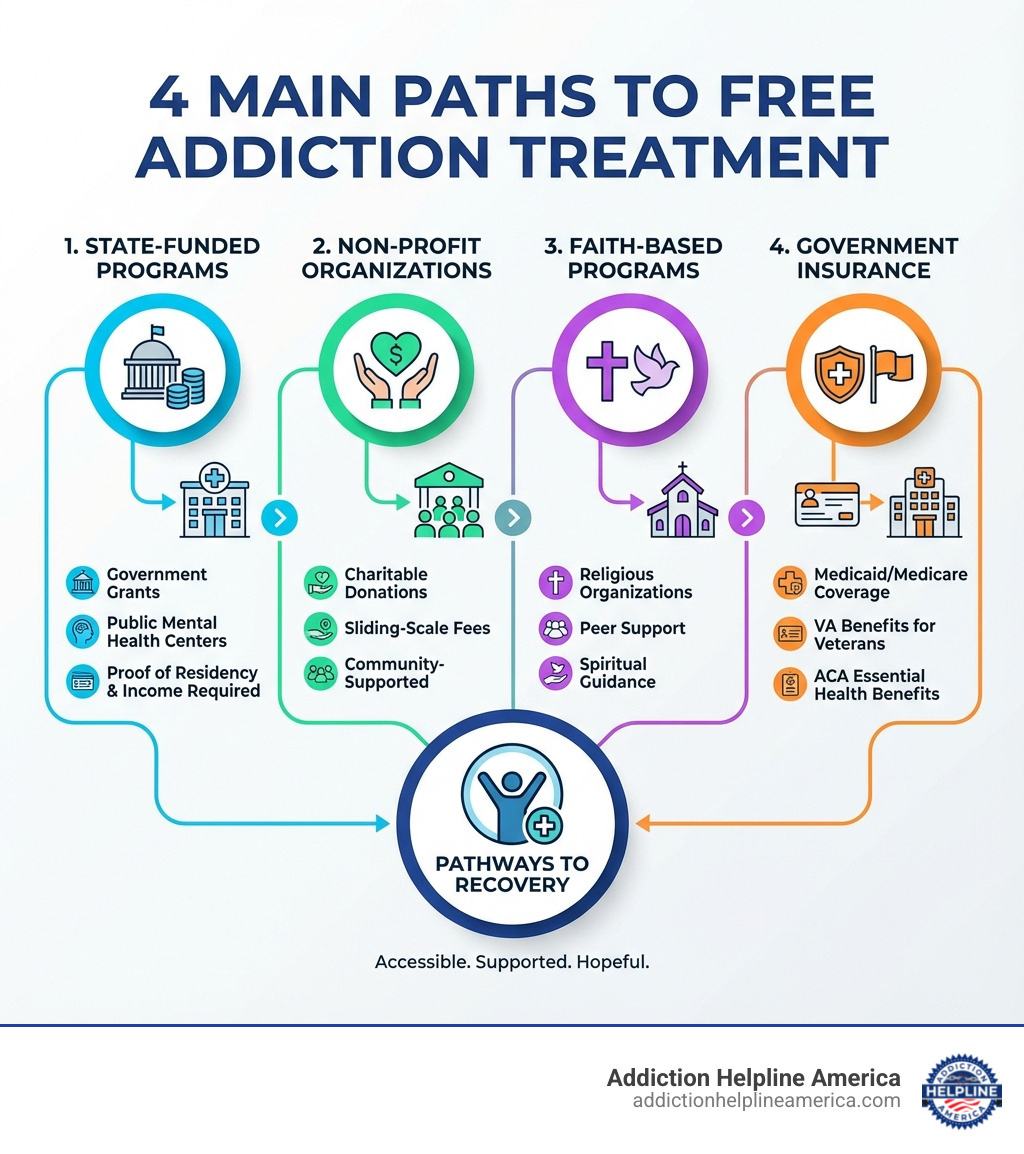
Are there any free drug treatment centers for people struggling with substance use disorders? The answer is yes—and understanding your options is the first step toward recovery. Free and low-cost help is available through:
- State-funded rehab programs that use government grants for eligible individuals
- Non-profit organizations offering free or sliding-scale services
- Faith-based programs providing recovery support, often at no cost
- Government insurance like Medicaid and Medicare
The cost of treatment is a major barrier, causing many of the 46.3 million Americans with a substance use disorder (in 2021) to avoid seeking help. However, government funding and charitable organizations make recovery possible regardless of your financial situation. A 2018 survey found that 45% of facilities offered free or minimal payment options.
These programs provide essential, evidence-based services like detox, counseling, and aftercare. At Addiction Helpline America, we connect individuals with resources that match their needs. Our 24/7 helpline at 844-561-0606 provides immediate, confidential guidance to help you take the first step.
Know your are there any free drug treatment centers terms:
Understanding Your Free and Low-Cost Treatment Options
Concerns about cost should never prevent someone from accessing life-saving treatment. Numerous free and low-cost options are available across the United States, supported by government funding, charitable donations, and community efforts. These programs ensure that effective treatment is available to everyone, regardless of their financial situation. Let’s explore the main types of free and low-cost treatment programs.
State-Funded and Government-Supported Rehab
State-funded rehab programs use state budgets, federal grants, and tax dollars to provide addiction treatment through public health centers. They offer essential, evidence-based care to residents who cannot afford it, including those with no income or insurance. Services can range from medically assisted detox and residential care to therapy and medication management. To qualify, you typically need to prove state residency, financial need, and legal U.S. residency. Priority may be given to certain groups, like pregnant women.
Call Addiction Helpline America at 844-561-0606 for help navigating state-funded options and to get connected to free or low-cost treatment centers.
Non-Profit and Faith-Based Programs
A vast network of non-profit and faith-based organizations also provides free or affordable addiction treatment, funded by donations and grants. Non-profits may offer scholarships or run their own low-cost programs, often using a sliding fee scale based on income.
Faith-based programs, like those offered by The Salvation Army, integrate spiritual principles into the recovery process. They emphasize a connection to a higher power, community, and peer support alongside therapy and life-skills training. While many of these programs are free, it’s important to note that not all provide medical services like supervised detox. If medical care is needed, we can help find a program that offers both.
Contact Addiction Helpline America at 844-561-0606 to learn about local non-profit and faith-based resources and get personalized recommendations.
Who Qualifies and What’s Required for Free Rehab?
Free rehab is a reality for many, but programs have specific eligibility criteria to serve those most in need. Understanding the qualifications and required documentation is a crucial step. Don’t let the application process deter you; we’re here to help.
Are there any free drug treatment centers I can qualify for?
The primary factor for qualifying is financial need. Programs are generally for individuals who:
- Have low income: You must verify your income to show you can’t afford private treatment.
- Lack health insurance: Free programs often target the uninsured or underinsured.
- Can prove state residency: State-funded programs require proof of legal residency in that state.
- Are U.S. citizens or legal residents: Some programs require proof of legal U.S. residency.
- Have a documented addiction history: A referral or record of your SUD may be needed.
- Belong to priority populations: Pregnant women, parents of dependent children, or those in the justice system may be prioritized.
Eligibility requirements vary significantly by state and program.
Call Addiction Helpline America at 844-561-0606 for a free eligibility assessment and to find out which free centers you may qualify for.
Essential Documentation for Your Application
To apply for free rehab, you’ll need to gather documentation to verify your eligibility. While the exact list varies, here’s what you generally need:
- Proof of Residency: A utility bill, driver’s license, or state ID.
- Proof of Income Status: Recent pay stubs, tax returns, or unemployment documentation.
- Personal Identification: A Social Security card, birth certificate, or photo ID.
- Medical Documentation: Records related to your substance use disorder and treatment history.
- Proof of Insurance Status: Your insurance card (like Medicaid/Medicare) or proof that you are uninsured. State requirements can be specific, like those for Indiana’s FSSA, which you can learn about at resources like this Indiana FSSA page.
Gathering these documents can feel overwhelming, but having them ready will speed up the application process.
Need help gathering documents? Call Addiction Helpline America at 844-561-0606 for step-by-step support.
So, are there any free drug treatment centers and what services do they offer?
Yes, free drug treatment centers are available and offer a comprehensive range of evidence-based services. While offerings vary, these programs are committed to providing effective care that addresses the physical, psychological, and social factors of addiction.

What Services Are Typically Included in Free Programs?
Free and low-cost centers typically provide a robust set of services, including:
- Medical Detoxification: Safe management of withdrawal symptoms under medical supervision. This is crucial for some substances but not offered at all free centers, so be sure to ask.
- Inpatient Residential Care: 24/7 live-in care in a structured, trigger-free environment, ideal for severe SUDs.
- Outpatient Programs (OP/IOP): Flexible therapy sessions while living at home. Intensive Outpatient Programs (IOPs) offer a higher level of care.
- Individual Therapy: One-on-one counseling to address the root causes of addiction and develop coping skills.
- Group Counseling: Peer support sessions to share experiences and learn from others in a safe setting.
- Medication-Assisted Treatment (MAT): Combines medication with therapy for opioid and alcohol use disorders.
- Relapse Prevention: Education on identifying triggers, managing cravings, and using healthy coping strategies.
- Aftercare Planning: A personalized plan for transitioning back to daily life, including referrals to support groups and ongoing therapy.
For a personalized list of free services near you, call Addiction Helpline America at 844-561-0606.
How to Find Free Drug and Alcohol Rehab Centers Near Me
To locate resources in your area, try these strategies:
- State Behavioral Health Agency Directory: Your state’s official government website often lists certified free or low-cost treatment providers.
- Local Health Departments: Your city or county health department can provide information on local community-based programs.
- Non-Profit Organizations and Community Centers: Local non-profits and community centers often provide direct services or referrals.
- Faith-Based Organizations: Local religious organizations may have recovery programs or connections to free faith-based rehabs.
Navigating these resources can be complex. That’s where we come in.
Or call our 24/7 helpline at 844-561-0606 for immediate, confidential assistance from Addiction Helpline America.
Inpatient vs. Outpatient Treatment: What’s the Difference?
Understanding the difference between “inpatient” and “outpatient” treatment is crucial for choosing the right path. Both are effective but designed for different levels of care.
| Feature | Inpatient/Residential Rehab | Outpatient Rehab |
|---|---|---|
| Location | Reside at the facility 24/7, providing a safe, structured, and drug-free environment away from daily triggers. | Live at home or in a sober living facility, attending scheduled therapy and counseling sessions at a treatment center. |
| Intensity | Highly structured and intensive, offering constant medical supervision, therapy, and support. This immersive approach is ideal for breaking cycles of addiction. | Flexible and less intensive, allowing individuals to maintain work, school, and family responsibilities while receiving treatment. |
| Best For | Individuals with severe substance use disorders, co-occurring mental health disorders, a history of relapse, or an unstable home environment. It offers the highest level of care and supervision. | Individuals with mild to moderate substance use disorders, a strong support system at home, and the ability to manage daily life while committing to treatment sessions. |
| Duration | Typically ranges from 30, 60, or 90 days, with some long-term residential programs extending for several months or even over a year. | Varies significantly, from several weeks to many months or even longer, depending on the individual’s progress and ongoing needs. |
Inpatient care offers an immersive environment to focus on recovery, while outpatient care provides flexibility to integrate treatment into daily life. The best choice depends on your addiction severity, circumstances, and support system.
Not sure which is right for you? Call Addiction Helpline America at 844-561-0606 for a free assessment.
Using Government Benefits and Other Financial Aid
Many people are unaware of the extensive financial support available for addiction treatment through government benefits and other aid programs. These resources are designed to make recovery accessible, regardless of financial limitations.
Does Medicaid or Medicare Cover Rehabilitation?
Yes, both Medicaid and Medicare cover drug and alcohol rehab. The Affordable Care Act (ACA) made substance use disorder treatment an “essential health benefit,” meaning most insurance plans must cover it. The ACA also prevents denial of coverage for pre-existing conditions like addiction. You can learn more at hhs.gov/healthcare/about-the-aca/index.html.
- Medicaid: This program for low-income individuals covers a wide range of addiction treatment services. Coverage and eligibility vary by state, and some may require a small co-payment. Always confirm that a rehab center accepts Medicaid.
- Medicare: This federal program for those 65 or older and younger people with certain disabilities covers services like inpatient rehab and outpatient mental health care under Parts A and B.
If you have or may be eligible for these programs, they are a powerful tool for accessing low-cost treatment.
Call Addiction Helpline America at 844-561-0606 to find facilities that accept your insurance and to get help with the application process.
Can I Use VA Benefits for Addiction Treatment?
Yes. Veterans Affairs (VA) benefits are a crucial resource for veterans, active military personnel, and their families. The VA provides robust coverage for substance use disorders, including detox, inpatient and outpatient care, MAT, and aftercare. The VA’s community care program also allows veterans to receive care at non-VA facilities, expanding treatment options. If you are a veteran or family member, you have earned these benefits.
Veterans and their families can call Addiction Helpline America at 844-561-0606 for help accessing VA-covered treatment and support.
What If I Don’t Qualify for Free Rehab?
If you don’t qualify for free rehab, don’t lose hope. Many affordable options exist. Explore these alternatives:
- Sliding Scale Fees: Many centers adjust treatment costs based on your income.
- Income-Based Payment Plans: Facilities may offer plans that break down the cost into manageable monthly payments.
- Private Scholarships and Grants: Organizations and foundations offer financial awards for addiction treatment.
- Facility-Specific Payment Plans: Ask treatment centers directly about their payment options; many are willing to create a plan that works for you.
The goal is to find effective treatment that is financially sustainable. Be open about your situation with providers.
Call Addiction Helpline America at 844-561-0606 to explore affordable options custom to your situation and get connected to financial assistance.
Frequently Asked Questions about Free Treatment
It’s natural to have many questions when considering free addiction treatment. We’ve compiled some of the most common inquiries to provide you with clear, concise answers.
What are faith-based rehab programs, and how do they differ?
Faith-based rehabs integrate spiritual principles like prayer and scripture into recovery. They differ from secular programs by emphasizing a connection to a higher power as central to healing. While they provide strong community support and life skills training, often for free, they may not offer medical services like supervised detox or MAT. If you need medical care, it’s crucial to confirm the program offers it or allows you to complete it elsewhere before admission.
For help finding a program that matches your beliefs and needs, call Addiction Helpline America at 844-561-0606.
How long is a typical stay in a free rehab program?
The length of stay depends on the program and your individual needs. There is no one-size-fits-all answer.
- Short-term programs: Typically 28-30 days for stabilization and foundational skills.
- Long-term residential programs: Can last from 60 days to a year or more, allowing for deeper therapeutic work.
- Outpatient programs: Duration varies from weeks to months, depending on your progress.
Your ideal length of stay is determined during an assessment. Longer programs are often linked to better long-term outcomes.
Call Addiction Helpline America at 844-561-0606 to discuss program lengths and what might be right for you.
Are there any free drug treatment centers that offer medical detox?
Yes, but not all free centers offer medical detox.
- State-funded facilities: Many provide medically supervised detox to safely manage withdrawal from substances like alcohol, opioids, and benzodiazepines.
- Faith-based and other non-profits: Many are not equipped for medical detox and may require you to complete it elsewhere before admission.
Always ask about detox services upfront. Withdrawing from certain substances without medical help can be extremely dangerous. If you are in crisis or experiencing severe withdrawal, seek emergency medical help or call/text the 988 Suicide & Crisis Lifeline at any time.
For help finding a free center with medical detox, call Addiction Helpline America at 844-561-0606.
Get the Help You Deserve Today
The journey to recovery is challenging but rewarding. While cost concerns can feel overwhelming, free and affordable treatment options are available and ready to welcome you.
Overcoming financial barriers to get help is a testament to your strength. You don’t have to steer this alone. Taking the first step is the bravest thing you can do. Our mission at Addiction Helpline America is to provide confidential support and connect you with the resources to make your recovery a reality.
The urgent need for accessible treatment is clear, and we are here to bridge the gap between you and the help you deserve. Contact Addiction Helpline America for free, confidential guidance and get connected to care today. Your new beginning is possible.