
Finding Hope: Free Addiction Treatment is Available Right Now
Free addiction treatment is available through state-funded programs, community-based resources, Medicaid coverage, and non-profit organizations across the United States. Here’s how to access it:
Quick Access to Free Treatment:
- Call 988 for immediate crisis support and treatment referrals (available 24/7)
- Use FindTreatment.gov to locate free facilities near you
- Contact your state’s health department for state-funded programs
- Apply for Medicaid if you meet eligibility requirements
- Reach out to faith-based organizations like Teen Challenge or The Salvation Army
- Call Addiction Helpline America at 844-561-0606 for confidential guidance
If you’re struggling with addiction and worried about the cost of treatment, you’re not alone. Approximately 21% of Americans (about 6 million people) will meet the criteria for a substance use disorder in their lifetime. The good news? Financial barriers should never prevent you from getting the help you need to recover.
Free addiction treatment exists through multiple pathways: government-funded programs, Medicaid, community organizations, and faith-based initiatives. These programs offer services such as detoxification, counseling, therapy, medication-assisted treatment, and support groups—often at no cost to qualified individuals.
The reality is simple: you don’t need money to start your recovery journey. Whether you’re struggling with alcohol, opioids, stimulants, or other substances, free treatment options are available in your community right now. While some programs have waiting lists, interim support through helplines, crisis services, and peer support groups can help you stay safe until a spot opens up.
The danger of waiting is real: attempting to detox on your own or “going cold turkey” can be life-threatening, especially with substances like alcohol, benzodiazepines, and opioids. Professional medical supervision during detox can prevent serious complications including seizures, dehydration, and heart failure.
At Addiction Helpline America, our mission is to connect individuals and families with vital free addiction treatment resources across the United States. We provide confidential support 24/7 and understand the urgency of your situation. Our team can help you steer the system to find immediate help through state-funded programs, Medicaid coverage, or community-based resources.
Understanding Your Options: Types of Free Addiction Treatment
Addiction is a complex disease, not a moral failing. Just like any other chronic illness, it requires professional treatment and ongoing support. The good news is that comprehensive care for substance use disorder (SUD) is available, and the cost should never be a barrier to seeking help. There are many no-cost options designed to provide individuals with the tools and support they need to achieve lasting recovery. For a broader understanding of how support can be accessed, explore our Free Addiction Support: Complete Guide.
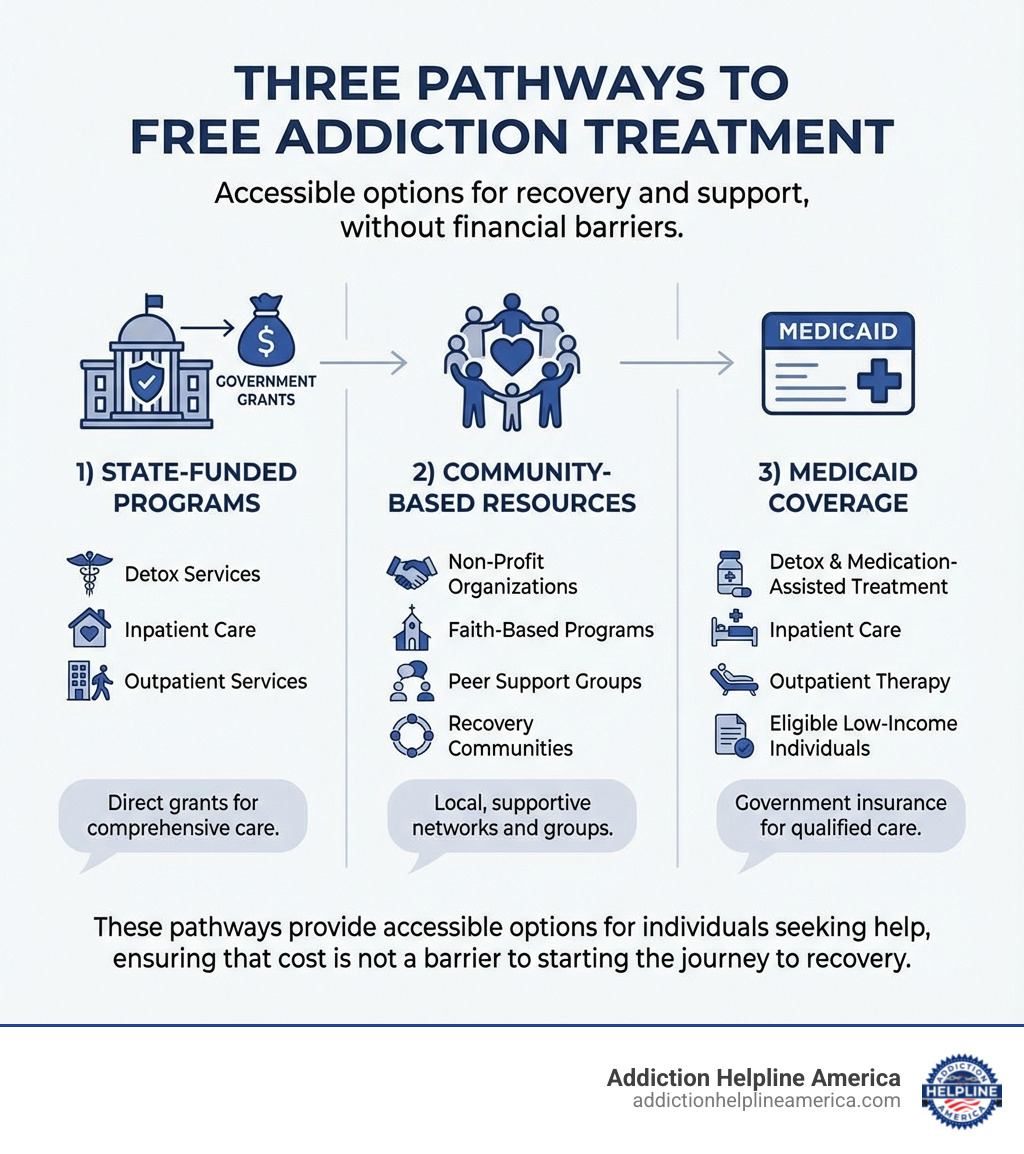
State-Funded and Government Programs
One of the primary avenues for free addiction treatment is through state-funded and government programs. These facilities receive funding from both federal and state governments, allowing them to offer essential services to individuals who cannot afford private treatment. State-funded programs are designed to fill a critical gap, ensuring that financial status doesn’t determine access to life-saving care.

The services offered by state-funded rehabs are often comprehensive and can include:
- Medically Supervised Detox: A safe and controlled environment to manage withdrawal symptoms.
- Inpatient and Residential Treatment: Structured living environments where individuals receive intensive therapy and support around the clock.
- Outpatient Programs: Flexible treatment options that allow individuals to live at home while attending therapy sessions and support groups.
- Counseling: Individual and group therapy sessions led by licensed addiction counselors.
- Medication to Reduce Withdrawals or Cravings: Medications like naltrexone, acamprosate, or disulfiram for alcohol dependence, and buprenorphine or methadone for opioid dependence, are often part of the treatment plan.
- Therapeutic Group Therapy for Addiction: Group sessions that foster peer support and shared experiences.
- Individual Counseling with an Addiction Counselor: One-on-one sessions to address personal challenges and develop coping strategies.
- DUI and DWI Programs: Education and treatment for individuals with substance-related driving offenses.
To find state-funded facilities, the Substance Abuse and Mental Health Services Administration (SAMHSA) provides a valuable Directory of Single State Agencies (SSAs) for Substance Abuse Services. These agencies can direct you to the nearest and most affordable treatment centers in your area, including our locations in states like California, Florida, Texas, New York, and many more.
Community-Based and Non-Profit Resources
Beyond state-funded programs, a vibrant network of community-based and non-profit organizations plays a crucial role in providing free addiction treatment and support. These resources are often deeply integrated into local communities and offer a variety of services, sometimes with a specific focus or approach.
A significant aspect of community support comes from peer-led recovery groups. Organizations like Alcoholics Anonymous (AA), Narcotics Anonymous (NA), and SMART Recovery offer free or low-cost support meetings based on mutual aid and shared experiences. These groups provide a powerful sense of belonging and accountability, proving that you don’t have to walk the path to recovery alone. We have compiled resources to help you find these groups in our Support Groups and Meetings guide.
Faith-based organizations also contribute significantly to free addiction treatment. Programs offered by local churches, religious charities, and larger organizations like Teen Challenge and The Salvation Army combine spiritual guidance with practical recovery tools. These programs often emphasize a holistic approach to healing, addressing not only the physical and psychological aspects of addiction but also the spiritual. Many provide structured living environments, counseling, and even vocational training to help individuals rebuild their lives.
For example, The Salvation Army offers free residential addiction treatment programs through its Adult Rehabilitation Centers, providing a comprehensive approach to recovery. Teen Challenge also offers long-term, faith-based rehabilitation centers across the country. These organizations often rely on donations and volunteers, making their services accessible to those with limited financial means.
How Medicaid Covers Addiction Treatment
Medicaid is a government-funded insurance program that stands as a cornerstone for accessing free addiction treatment for eligible individuals. It’s a game-changer for many, as it can cover a significant portion, often 100%, of addiction treatment costs. This means that for those who qualify, treatment that might otherwise be financially out of reach becomes completely accessible.
Medicaid eligibility is primarily based on income and family size, but it also extends to specific populations, including:
- Low-income individuals and families: Those whose income falls below a certain percentage of the federal poverty level.
- Pregnant women: Ensuring access to care during a critical time.
- People with disabilities: Providing necessary health services, including addiction treatment.
- Children and young adults: Offering coverage for a vulnerable population.
The scope of covered services under Medicaid for addiction treatment is extensive and typically includes:
- Detoxification: Medically supervised withdrawal management.
- Inpatient Care: Residential treatment programs where individuals live at the facility.
- Outpatient Therapy: Counseling and group therapy sessions while living at home.
- Medication-Assisted Treatment (MAT): Medications like buprenorphine, naltrexone, and methadone, combined with counseling and behavioral therapies, for opioid and alcohol use disorders.
- Behavioral Health Services: Individual and group counseling, family therapy, and other therapeutic interventions.
To learn more about Medicaid and how it can cover addiction treatment, including how to apply and check eligibility, we encourage you to visit our comprehensive guide: Learn more about Medicaid. You can also visit Healthcare.gov to find your state’s Medicaid program and application details, or apply online, by phone, or at a local assistance office.
How to Find and Access Free Addiction Treatment Programs
Finding help is often the hardest step, but taking that first leap is crucial. The good news is that there are numerous resources designed to guide you through the process of accessing free addiction treatment. Navigating the system might seem daunting at first, but with the right tools and information, you can connect with the support you need.

Using National Helplines and Crisis Lines
When you’re ready to seek help, helplines and crisis lines offer immediate, confidential, and often 24/7 guidance. These services are invaluable for getting quick information, emotional support, and treatment referrals.
- 988 Suicide & Crisis Lifeline: For immediate crisis support related to mental health or substance use, you can call or text 988 anytime, day or night. This free and confidential service connects you with trained crisis counselors who can provide support and direct you to local resources. You can learn more at 988 Suicide & Crisis Lifeline.
- SAMHSA’s National Helpline: The Substance Abuse and Mental Health Services Administration (SAMHSA) operates a National Helpline at 1-800-662-HELP (4357). This is a confidential, free, 24/7 information service, in English and Spanish, for individuals and family members facing mental and/or substance use disorders. They provide referrals to local treatment facilities, support groups, and community-based organizations. Find out more at SAMHSA’s National Helpline.
For personalized and free support, we at Addiction Helpline America are here for you. Call our free, confidential helpline at 844-561-0606 to speak with a compassionate specialist who can help you understand your options and connect you to treatment centers in your area, including our locations in major cities like Los Angeles, Chicago, Houston, and many more.
Locating Facilities with Online Directories
Online directories are powerful tools for finding free addiction treatment centers custom to your specific needs and location. These resources allow you to search for facilities, filter by payment options, and gather essential contact information.
- FindTreatment.gov: Operated by SAMHSA, this is a confidential and anonymous resource for individuals seeking treatment for mental and substance use disorders in the United States. It allows you to search for facilities by location and filter for various services and payment options, including those that offer free or sliding-scale care.
- SAMHSA’s Directory of Single State Agencies (SSAs): This directory provides contact information for state agencies responsible for substance abuse services. These agencies can offer invaluable information about state-funded programs and local resources.
- HRSA.gov’s Find a Health Center Tool: The Health Resources and Services Administration (HRSA) offers a tool to find health centers that provide free or low-cost care, which often includes substance use treatment.
To start your search, visit our Find a Rehab Center Near You guide. When you call a facility, it’s helpful to have key information ready to streamline the process:
- Your personal and contact information
- Proof of income or financial statements
- Proof of residency (e.g., utility bill, driver’s license)
- Any existing medical or mental health diagnoses
- Details about your substance use history
- Information about your insurance status (or lack thereof)
- Your employment status
Specialized Support for Opioid Dependence
The opioid crisis continues to impact countless lives across the nation. If you or a loved one is struggling with opioid dependence, specialized free addiction treatment options are available that focus on this unique challenge. These programs often incorporate Medication-Assisted Treatment (MAT), which is considered the gold standard for opioid use disorder.
MAT combines medications like buprenorphine, methadone, or naltrexone with counseling and behavioral therapies. This integrated approach helps to reduce cravings, prevent withdrawal symptoms, and improve long-term recovery outcomes.
Key resources for opioid dependence include:
- Opioid Treatment Program Directory: SAMHSA provides a directory to find programs that offer methadone for the treatment of opioid addiction. This is crucial for individuals seeking this specific form of MAT. You can access this directory here: Opioid Treatment Program Directory.
- Buprenorphine Practitioners: For those seeking buprenorphine treatment, which can be prescribed in an office setting, SAMHSA also offers a locator for practitioners and treatment programs providing this medication. Find a practitioner near you at Buprenorphine Practitioners.
- Naloxone Access: Naloxone is a life-saving medication that can reverse an opioid overdose. Many communities offer free naloxone kits and training. Check with your local health department or pharmacy for availability.
For more in-depth information on treatment approaches, refer to our Opioid Addiction Treatment Guide. We understand the urgency of opioid dependence and are ready to help you find the right support.
Navigating the System: Eligibility, Waitlists, and Alternatives
Starting the journey to recovery is a monumental step, and it’s normal to encounter practical challenges along the way. Understanding eligibility requirements, managing potential wait times, and exploring alternatives are all part of staying motivated and preparing for successful treatment and long-term recovery.
Common Eligibility Requirements for Free Addiction Treatment
While the exact criteria can vary between programs and states, most free addiction treatment facilities have specific eligibility requirements designed to ensure their services reach those most in need. Common factors include:
- Proof of Income/Financial Guidelines: Many free programs require applicants to demonstrate low income or financial hardship. This often involves providing pay stubs, tax returns, or other financial documentation.
- Lack of Insurance: Programs are primarily for individuals who are uninsured or underinsured and cannot afford treatment elsewhere.
- Proof of Residency: Applicants typically need to prove they are residents of the state or county where the program is located. This can include a driver’s license, utility bills, or other official documents.
- US Citizenship or Legal Residency: Federal and state-funded programs usually require applicants to be U.S. citizens or legal residents.
- Clinical Assessment: Most programs will conduct a thorough clinical assessment to determine the severity of the addiction and the appropriate level of care.
- Referral from a Professional: Sometimes, a referral from a licensed medical or mental health professional may be required.
- Agreement to Follow Program Guidelines: All programs will require a commitment to adhere to their rules and treatment protocols.
These requirements help programs allocate their limited resources effectively, prioritizing those who truly cannot access care through other means.
Managing Wait Times for Treatment
It’s an unfortunate reality that many free addiction treatment programs, especially those offering inpatient or residential care, can have waiting lists. The demand for these essential services often outstrips availability. Waiting times can vary widely, ranging from a few days to several weeks, or even months for highly sought-after programs.
However, a waitlist should not deter you from seeking help. Here’s how to manage them effectively:
- Stay Proactive and Communicate: Maintain regular contact with the facility. Call periodically to check on your application status and let them know you are still interested.
- Frequent Follow-Up: Be persistent without being aggressive. Your continued engagement can sometimes help you secure a spot sooner if one opens unexpectedly.
- Interim Support: While waiting, it’s crucial to find interim support. Attending free support groups like AA, NA, or SMART Recovery can provide immediate community and accountability. Helplines, like our own at Addiction Helpline America (844-561-0606), can also offer ongoing support and check-ins.
- Create a Safety Plan: Work with a trusted friend, family member, or mental health professional to develop a safety plan. This plan should identify triggers, coping strategies, and emergency contacts to help you avoid relapse while you await admission.
Alternatives if You Don’t Qualify for Free Addiction Treatment
If you don’t meet the strict eligibility requirements for completely free addiction treatment, or if the wait times are too long, there are still many affordable alternatives available to help you access care:
- Sliding-Scale Fees: Many healthcare professionals and treatment centers offer a “sliding-fee scale” payment option. This means the price you pay for services is adjusted based on your income, making treatment more affordable.
- Payment Plans: Some facilities offer payment plans, allowing you to pay for treatment in installments over time.
- Treatment Scholarships and Non-Profit Grants: Larger treatment centers, hospitals, and non-profit organizations often have funds available through scholarships or grants. These can significantly reduce or even cover the cost of treatment.
- Low-Cost Care at Health Centers: Federal Qualified Health Centers (FQHCs) and other community health centers provide primary care, dental care, and often mental health and substance use services on a sliding-scale or low-cost basis. You can find a health center near you using tools like HRSA.gov or through our own guide: Find a Health Center.
- Support Groups: As mentioned, 12-step programs (AA, NA) and SMART Recovery are free and accessible. They offer invaluable peer support and a structured path to recovery.
- Family and Friend Support: Trusted loved ones may be able to offer financial assistance, help you research options, or provide consistent emotional support.
The Dangers of Delay: Why Professional Help is Crucial
When facing addiction, the temptation to “handle it yourself” or attempt self-detox, also known as “going cold turkey,” can be strong. However, this approach carries significant and often life-threatening risks. Addiction is a medical condition, and professional medical supervision during detoxification is often essential for safety and successful recovery.
Risks of Alcohol and Benzodiazepine Withdrawal
Withdrawal from alcohol and benzodiazepines (such as Xanax, Klonopin, or Valium) can be particularly dangerous due to their impact on the central nervous system. These substances depress brain activity, and when they are suddenly removed, the brain can rebound into a state of overactivity, leading to severe and potentially fatal symptoms:
- Life-Threatening Seizures: Uncontrolled electrical activity in the brain can lead to grand mal seizures, which can cause injury or even death.
- Delirium Tremens (DTs): A severe form of alcohol withdrawal that includes rapid onset of confusion, disorientation, hallucinations, rapid heart rate, and high fever.
- Hallucinations: Visual, auditory, or tactile hallucinations can be terrifying and disorienting.
- Severe Anxiety and Panic Attacks: The body’s stress response goes into overdrive.
- Insomnia: Prolonged inability to sleep can exacerbate other withdrawal symptoms.
- Cardiovascular Issues: Rapid heart rate, high blood pressure, and even heart failure can occur.
For these reasons, medically-assisted detox is critical for alcohol and benzodiazepine dependence. Medical professionals can administer medications to mitigate withdrawal symptoms, prevent seizures, stabilize vital signs, and support you throughout the process.
Risks of Opioid Withdrawal
While opioid withdrawal is rarely life-threatening on its own, it is incredibly uncomfortable and can significantly increase the risk of relapse. The intense physical and psychological symptoms can be so severe that individuals return to drug use simply to alleviate the pain.
Common symptoms of opioid withdrawal include:
- Severe Discomfort: Muscle aches, bone pain, restless legs, and abdominal cramping.
- Intense Cravings: Powerful urges to use opioids, making sustained abstinence extremely difficult.
- Vomiting and Diarrhea: Leading to rapid dehydration and electrolyte imbalances.
- Flu-like Symptoms: Runny nose, watery eyes, and goosebumps.
- Anxiety and Depression: Significant mood disturbances.
The primary risk of attempting self-detox from opioids is the high likelihood of relapse. After a period of abstinence, tolerance to the drug decreases. If an individual relapses and uses the same amount of opioid they used before detox, the risk of fatal overdose is significantly higher. Professional treatment, often involving medication to manage symptoms and reduce cravings (like buprenorphine or methadone), provides a safer and more effective path to recovery.
Frequently Asked Questions about Free Addiction Treatment
We understand you likely have many questions about free addiction treatment. Here are answers to some of the most common ones we encounter.
What services are typically included in free rehab programs?
While services can vary, most free addiction treatment programs offer a comprehensive range of core services designed to support individuals through recovery. These commonly include:
- Medically Monitored Detox: A safe environment for withdrawal management, often with medication to ease symptoms.
- Individual Counseling: One-on-one therapy sessions to address underlying issues, develop coping skills, and set recovery goals.
- Group Therapy: Therapeutic sessions where individuals share experiences, build peer support, and learn from others in recovery.
- Relapse Prevention Education: Strategies and tools to identify triggers and prevent returning to substance use.
- Aftercare Planning: Development of a plan for continued support after completing the primary treatment program, which might include ongoing therapy, support groups, or sober living arrangements.
- Medication-Assisted Treatment (MAT): For opioid and alcohol use disorders, MAT (e.g., buprenorphine, naltrexone) is often integrated into the treatment plan, combined with counseling.
- Life Skills Training: Workshops focused on practical skills like budgeting, job searching, and healthy communication.
Many community programs also offer free or low-cost support groups like AA, NA, or SMART Recovery, which are vital components of long-term recovery.
Is support available for families of those with addiction?
Absolutely. Addiction is a family disease, impacting everyone involved. Support for families is a critical component of the recovery process, not just for the individual struggling with addiction, but for the well-being of the entire family unit. Many free addiction treatment programs, or affiliated community resources, offer:
- Family Programs and Counseling Sessions: These sessions help family members understand addiction, improve communication, and heal from the effects of the disease.
- Support Groups for Families: Organizations like Al-Anon and Nar-Anon provide a safe space for family members to share their experiences, find understanding, and learn coping strategies.
- Education on Addiction: Helping families understand the nature of addiction, its impact on the brain, and the recovery process.
- Guidance on Healthy Boundaries and Codependency: Addressing dysfunctional patterns that may have developed due to the addiction.
We believe that when families heal, individuals have a stronger foundation for lasting recovery.
Are there specific free programs for men or women?
Yes, gender-specific free addiction treatment programs are widely available and often highly beneficial. These programs are designed to address the unique needs, challenges, and experiences that men and women face in addiction and recovery.
- For Women: Programs for women often prioritize trauma-informed care, as many women with substance use disorders have a history of trauma or abuse. They may also focus on issues related to motherhood, childcare, and relationships, providing a safe and supportive environment free from gender-related distractions or pressures.
- For Men: Men’s programs may focus on healthy emotional expression, addressing societal expectations of masculinity, anger management, and building supportive male peer networks. These programs create an environment where men can openly discuss their struggles without fear of judgment.
Both types of gender-specific programs aim to create safe environments where individuals can focus on their recovery among peers who share similar life experiences, fostering deeper connection and more effective healing.
Your Journey to Recovery Starts Now
The journey to recovery from substance use disorder is a testament to strength and resilience. Recovery is possible, and the cost of treatment should never be a barrier to achieving a healthier, more stable life. Taking that first step can feel overwhelming, but you do not have to do it alone.
At Addiction Helpline America, we are dedicated to providing free, confidential, and personalized guidance to help you find the right recovery program. Our vast network of treatment centers across the country, including those offering free addiction treatment, ensures that we can connect you with support that matches your needs, location, and financial situation.
You deserve a future free from the grip of addiction. Whenever you are ready, reach out for help, explore our resources to find a rehab center near you, and take the next step toward rebuilding your life.