
Why Finding the Right Rehab in Florida Matters for Your Recovery Journey
Rehab in Florida offers a path to healing for thousands of people struggling with addiction each year. If you’re searching for treatment options, here’s what you need to know:
Quick Answer: What to Know About Rehab in Florida
- 772+ licensed facilities across the state offer diverse treatment options
- Full continuum of care available: detox, inpatient, outpatient (PHP/IOP), and aftercare
- Insurance typically covers mental health and addiction treatment in Florida
- Specialized programs exist for veterans, dual diagnosis, trauma, and specific age groups
- The “best” rehab is subjective — it’s the one that meets your specific needs
- Free, confidential help is available 24/7 through Addiction Helpline America at 844-561-0606
Choosing a rehab center during a crisis can feel overwhelming. You’re not just picking a facility; you’re choosing a treatment environment, a peer community, and therapies that will shape your recovery. There is no single “best” rehab for everyone. The key is finding a center that addresses your unique needs, such as co-occurring mental health disorders, trauma, or specific life circumstances.
Florida’s warm climate and coastal setting provide a healing backdrop, but what truly matters is the quality of care, the expertise of staff, and whether the program aligns with your recovery goals. Some people need the structure of long-term residential treatment. Others thrive in outpatient programs that let them maintain work and family responsibilities. Many start with medical detox before transitioning to less intensive levels of care.
At Addiction Helpline America, we connect individuals and families with effective Rehab in Florida options that match their needs. We provide free, confidential guidance through every step of the process. We know this first step takes courage, and we’re here to help you steer your options with compassion and expertise.
Rehab in Florida vocab explained:
Understanding the Different Levels of Care in Florida
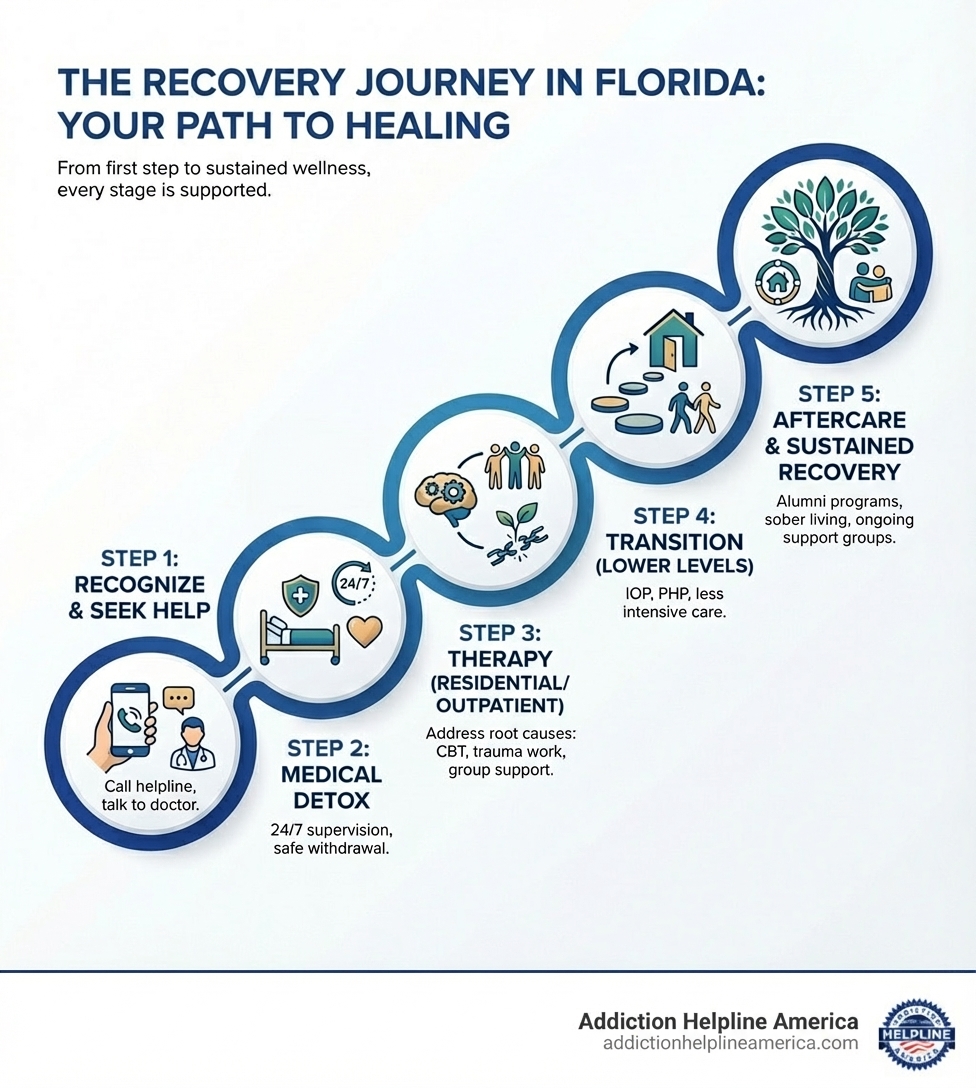
Addiction treatment isn’t a one-size-fits-all solution. A “continuum of care” offers a range of services designed to match the treatment intensity to an individual’s needs. Most people start at a higher level of care and “step down” to less intensive programs as they build coping skills. The goal is to find the right starting point for lasting recovery. Recognizing that Substance Use Disorder (SUD) is a treatable illness is the first step, and understanding these levels of care helps find the most effective path.
Medical Detox: The First Step
For many, the journey to recovery begins with medical detoxification, or “detox.” This is a crucial first step for individuals dependent on substances like alcohol, opioids, or benzodiazepines, where withdrawal can be uncomfortable and even life-threatening. During medical detox, individuals receive 24/7 medical supervision. Experienced medical professionals monitor vital signs, administer medications to ease withdrawal symptoms, and ensure safety. This phase safely stabilizes the body, preparing it for the therapeutic work ahead by clearing substances from the system in a controlled, supportive environment.
Inpatient / Residential Treatment
Once detox is complete, or if it isn’t medically necessary, many individuals transition to inpatient or residential treatment. This level of care offers a highly structured environment where patients live at the facility 24/7. The benefits are significant:
- 24/7 Support: Constant access to medical and therapeutic staff.
- Removing Triggers: Being away from daily environments and situations that might trigger substance use.
- Community Living: Living alongside peers on their own recovery journeys, fostering belonging and mutual support.
- Peer Support: Learning from and supporting others, which is a powerful aspect of healing.
This higher level of care is ideal for those with severe addiction, a history of relapse, or who need an immersive, distraction-free setting. It provides the time and space to focus entirely on recovery and address the root causes of addiction.
Outpatient Programs (PHP, IOP, Standard)
Outpatient programs offer more flexibility, allowing individuals to live at home while attending treatment. This is a vital option for those with a stable living situation, a strong support system, and responsibilities like work, school, or family. There are different intensities of outpatient care:
- Partial Hospitalization Programs (PHP): Often called “day treatment,” PHPs are the most intensive form of outpatient care. Patients typically attend treatment for 20 or more hours per week, often for several hours a day, multiple days a week. They receive comprehensive therapies similar to inpatient care but return home in the evenings.
- Intensive Outpatient Programs (IOP): IOPs offer a step down from PHP. Patients usually attend sessions for a minimum of 9 hours per week, typically 3-5 times a week. This allows for more integration back into daily life while still providing significant therapeutic support.
- Standard Outpatient: This is the least intensive level of outpatient care, involving fewer hours per week (e.g., 1-2 sessions). It focuses on maintaining sobriety, developing coping skills, and providing ongoing support as individuals steer independent living.
Outpatient programs are excellent for those transitioning from a higher level of care or for individuals who can balance recovery with daily life.
A Look at 7 Top-Rated Examples of Rehab in Florida
Disclaimer: The “best” rehab is one that fits your unique needs. This list highlights features of well-regarded centers to help you understand what to look for. For a personalized recommendation, call our helpline or visit our Florida rehab directory.
Florida is home to a vast network of addiction treatment centers, each with its unique strengths and specialties. While we don’t endorse any single facility as “the best” — because that choice is deeply personal — we can highlight the characteristics and programs offered by some highly-regarded centers to give you an idea of the diverse options available. This helps us understand what factors to consider when seeking Rehab in Florida.
Example 1: Comprehensive Care Center
Located in South Florida, some centers boast decades of experience in addiction and mental health treatment. They are known for holistic, personalized, and age- and gender-specific programming, understanding that different groups face distinct challenges. For instance, older adult recovery programs cater to the unique needs of that demographic. These facilities may offer specialized tracks for various populations, including discreet treatment for executives and professionals. They often have initiatives for veterans and first responders, and even support for pregnant women and new mothers. A key feature is an integrated model for co-occurring disorders, ensuring that conditions like depression, anxiety, and trauma are addressed alongside addiction. Their approach often incorporates neuroscience-based interventions and trauma-informed care.
Example 2: Family-Focused Recovery Facility
Other well-regarded organizations stand out for their strong emphasis on applying neuroscience and clinical research. Their approach often seeks to understand and treat the root causes of addiction and mental health conditions. They may offer comprehensive programs for both adults and adolescents, recognizing that young people require specialized care. With multiple locations throughout Florida, they provide accessibility to a wide range of individuals. A core component of their treatment is robust family programming, acknowledging that addiction impacts the entire family unit. They use evidence-based therapies like Cognitive Behavioral Therapy (CBT) and Dialectical Behavioral Therapy (DBT), alongside alumni support programs for long-term recovery.
Example 3: Luxury Wellness Retreat
For those seeking a premium experience, luxury wellness retreats in Florida offer a full continuum of care. From detox to residential and outpatient programs, they provide a seamless transition through different levels of support. Their approach is often characterized by a “concierge level of care” and neuroscience-based recovery programs. These facilities are noted for specialized tracks, including programs for individuals with complex medical needs or older adults, and others that cater to affluent individuals with a heightened level of discretion. Many feature state-of-the-art medical facilities with 24/7 staffed onsite medical detox, ensuring comprehensive care. The emphasis is on restoring health and relationships in a serene, supportive environment.
Example 4: Academic Medical Rehab Program
Some premier addiction treatment programs are affiliated with leading universities in Florida, integrating recovery principles with advanced academic research. They often serve patients from across the country, leveraging the capabilities of a major medical center. These facilities conduct ongoing research into addiction, ensuring patient care is informed by the latest science. Patients may benefit from a multidisciplinary assessment process, including clinical, psychiatric, and neuropsychological evaluations. The treatment approach is comprehensive, focusing on physical, emotional, and spiritual recovery. They use evidence-based treatments, may incorporate the 12-step method, and offer inclusive family therapy. This blend of research and compassionate care provides a robust foundation for sobriety.
Example 5: Trauma-Informed Healing Center
Nationally recognized centers in Florida specialize in treating co-occurring mental health, trauma, and addiction disorders. They understand that trauma and PTSD often underlie substance use, and their programs are designed to address these intertwined issues simultaneously. These centers offer a full range of treatment, including inpatient, outpatient (PHP/IOP), and on-site medical detox. Some are set apart by resort-style settings with luxury amenities like private pools, fitness studios, and meditation rooms, creating a rejuvenating environment. Their holistic wellness approach often incorporates therapies like yoga, art, and music therapy alongside evidence-based modalities like inner-child work and psychodrama. They also emphasize long-term rehab options for sustained recovery.
Example 6: Patient-Centered Addiction Treatment
Many facilities pride themselves on patient-centered addiction treatment, empowering individuals to “rewrite their story.” They provide a full spectrum of care, starting with medically supervised detox for a safe withdrawal. Their inpatient programs offer a structured environment for healing. A significant focus for some centers is specialized treatment for military personnel and veterans, acknowledging the unique challenges this population faces. They also offer gender-specific addiction treatment, recognizing that men and women may benefit from different therapeutic approaches. Dual diagnosis treatment, medication-assisted treatment (MAT), integrated trauma treatment, and 12-step programming are often part of their comprehensive offerings.
Example 7: Long-Term Sobriety Program
Well-established organizations with decades of experience are cornerstones of addiction and mental health treatment in Florida. They are committed to helping individuals achieve lasting sobriety through a full continuum of care, from detox and residential treatment to outpatient options and robust aftercare planning. Their longevity in the field speaks to their dedication. These centers emphasize personalized treatment plans, understanding that each journey is unique. They focus on teaching life skills, coping mechanisms, and relapse prevention strategies to equip patients for long-term success. The supportive community environment and connection through alumni initiatives are crucial components of their programs.
How to Choose the Right Florida Rehab for Your Needs
Choosing the right Rehab in Florida is one of the most important decisions you’ll make on your path to recovery. It’s a deeply personal choice, and what constitutes the “best” rehab is entirely subjective, depending on your unique circumstances, needs, and preferences. We believe that an informed decision is an empowering one.

When selecting a facility, it’s crucial to consider the treatment environment, the people you’ll be around, and the therapeutic modalities offered. The choice of a rehab center can be an empowering decision that sets individuals up for success in their recovery journey. We’re here to help you steer this process. Learn more about choosing a rehab in Florida.
Verifying Accreditation and Credentials
One of the most critical steps in choosing a rehab center is verifying its accreditation and credentials. This ensures that the facility meets recognized standards of quality and safety. Look for centers that are:
- Licensed by the Florida Department of Children and Families (DCF): This is a basic requirement for operating in the state and ensures compliance with state regulations.
- Accredited by The Joint Commission: This is a national standard for healthcare organizations, indicating a commitment to high-quality care and patient safety.
- CARF (Commission on Accreditation of Rehabilitation Facilities) accredited: CARF accreditation signifies that a program meets rigorous international standards for service quality, outcomes, and patient satisfaction.
These accreditations are not just badges; they represent a facility’s dedication to providing ethical, effective, and safe treatment. They offer a level of assurance that you or your loved one will receive care from qualified professionals in a well-regulated environment.
Considering Specialized Programs for Your Situation
Addiction rarely occurs in isolation. Many individuals have specific needs that require specialized programs. When researching Rehab in Florida, consider if any of these apply to you:
- Dual Diagnosis Treatment: This is paramount for individuals with co-occurring mental health disorders (like depression, anxiety, bipolar disorder, or PTSD) alongside a substance use disorder. Integrated care means both conditions are treated simultaneously, which is essential for lasting recovery.
- Veterans and First Responders: These populations often experience unique traumas and stressors. Specialized programs provide culturally competent care that addresses the specific experiences of these populations.
- Age-Specific Groups: Whether it’s young adults navigating early life challenges or older adults facing unique issues related to aging, age-specific groups can create a more relatable and supportive peer environment.
- Gender-Specific Benefits: Evidence suggests that men and women face distinct challenges and trauma manifestations. Gender-specific programs foster a safer, more open environment where individuals can discuss sensitive issues without the distractions or inhibitions that might arise in mixed-gender settings.
These specialized programs acknowledge that there is no one-size-fits-all approach to recovery and tailor treatment to maximize effectiveness for specific populations.
Evaluating Treatment Philosophies for the Best Rehab in Florida
The therapeutic modalities and treatment philosophies employed by a rehab center are central to its effectiveness. A good Rehab in Florida will use evidence-based practices that have been scientifically proven to be effective. Here are some common approaches to look for:
- Cognitive Behavioral Therapy (CBT): Helps identify and change negative thought patterns and behaviors linked to addiction.
- Dialectical Behavioral Therapy (DBT): Focuses on emotional regulation, mindfulness, and distress tolerance, which is highly effective for complex cases.
- Trauma-Informed Care (EMDR): Trauma-Informed Care recognizes the impact of trauma on addiction. Therapies like Eye Movement Desensitization and Reprocessing (EMDR) are often used to process traumatic memories.
- 12-Step Facilitation: Programs that integrate the principles of 12-step fellowships (like Alcoholics Anonymous or Narcotics Anonymous) to provide a framework for spiritual growth and peer support.
- Holistic Approaches: Many centers offer holistic practices like yoga, meditation, nutrition counseling, and art therapy to heal the mind, body, and spirit.
- Neuroscience-Based Treatment: Some facilities use neuroscience-based treatments and neurological tools to help restore healthy brain function.
The best approach often involves a combination of these therapies, custom to the individual. It’s about finding a center whose philosophy resonates with your personal beliefs and needs.
Navigating Costs and Insurance for Rehab in Florida
One of the most common concerns when considering Rehab in Florida is the cost. It’s a valid concern, but it’s important to view addiction treatment as an investment in your future and overall well-being. Financial barriers should not prevent anyone from seeking the help they need.

We understand that navigating payment options can be daunting, but many avenues exist to make treatment affordable.
Does Insurance Cover Addiction Treatment in Florida?
The good news is that most Florida insurance plans cover addiction treatment. Due to federal laws like the Mental Health Parity and Addiction Equity Act (MHPAEA), insurers must provide coverage for mental health and substance use treatment that is comparable to their medical coverage.
However, the extent of coverage can vary. It’s crucial to understand your specific plan, including:
- In-network vs. Out-of-network: Treatment at in-network facilities usually results in lower out-of-pocket costs.
- Deductibles and Co-pays: These are amounts you might need to pay before your insurance starts covering costs or a portion of the cost for each service.
- Pre-authorization Requirements: Some plans require prior approval for certain treatments.
Many reputable Rehab in Florida centers work with a wide range of insurance providers, making recovery more accessible. Common providers accepted include: Aetna, AmeriHealth, Cigna, Humana, United Healthcare (UHC), and ValueOptions.
We can help you verify your benefits quickly and confidentially. Verify your insurance coverage with Addiction Helpline America to understand what your plan covers.
Payment Options Without Insurance
If you don’t have health insurance, or if your plan doesn’t cover as much as you hoped, don’t despair. There are still many ways to access quality Rehab in Florida:
- Self-Pay: Many facilities offer flexible payment plans or discounts for those paying out-of-pocket.
- Sliding Scale Fees: Some centers adjust treatment costs based on an individual’s income and ability to pay, making care more affordable for low-income patients.
- Financing Options: Third-party lenders specialize in healthcare financing, allowing you to pay for treatment over time.
- State-Funded Programs: Florida has government-funded rehab centers that provide services to individuals who meet specific criteria, often based on income or lack of insurance.
- Scholarships: Some non-profit organizations and private rehabs offer scholarships or grants to help cover treatment costs for those in need.
The most important thing is not to let financial concerns be a barrier to seeking help. We can guide you through these options and help you find a suitable solution. Explore payment options for rehab by contacting us today.
Taking the First Step Towards Recovery
The decision to seek help for addiction is a brave and powerful one, a true sign of strength, not weakness. For many, it’s the most important decision of their lives. If you’re reading this, you’ve already taken a significant step by seeking information.
Starting the process can feel overwhelming, but we’re here to make it as smooth as possible. Our compassionate team offers confidential assessments to understand your unique situation and help you find a personalized match from our vast network of Rehab in Florida facilities. We’ll connect you with programs that align with your specific needs, preferences, and financial situation.
There is no one right way to heal, but taking that first step is always the most crucial. Recovery is possible, and a life free from the grip of addiction is within reach. We are committed to helping you find the right direction for care. Find the right rehab in Florida for you; For free, confidential help, call Addiction Helpline America at 844-561-0606.
Frequently Asked Questions about Florida Rehab
How many rehabs are in Florida?
Florida has a high concentration of treatment options, with over 772 licensed alcohol and drug rehabs across the state, offering a wide range of choices from luxury facilities to state-funded centers. This makes Florida one of the leading states for addiction treatment, providing diverse environments and specialized programs. See our Florida rehab directory.
What is dual diagnosis treatment?
Dual diagnosis, or co-occurring disorders treatment, is an integrated approach that simultaneously addresses both a substance use disorder and a mental health condition like depression, anxiety, or PTSD. This is crucial as these conditions often fuel each other; treating one without the other significantly reduces the chances of long-term recovery. Effective dual diagnosis programs ensure that both mental health and addiction are treated holistically, often using a combination of medication management, individual therapy, group therapy, and specialized therapeutic techniques like EMDR for trauma. Learn more about dual diagnosis.
What happens after I complete a rehab program?
Completing a rehab program is a significant milestone, but it’s just one part of the lifelong journey of recovery. Effective rehabs emphasize and provide comprehensive aftercare planning. This typically includes services and recommendations such as:
- Alumni Programs: Many centers offer alumni networks that provide ongoing support, events, and a sense of community among graduates.
- Sober Living Arrangements: These structured, supportive housing options help individuals transition back to independent living while maintaining sobriety.
- Continuing Care: This can involve stepping down to less intensive outpatient programs (IOP) or regular individual therapy sessions.
- Support Groups: Connection to peer-led support groups like 12-step programs (AA/NA) or other secular alternatives is vital for ongoing encouragement and accountability.
Aftercare is designed to help you maintain sobriety, develop healthy coping mechanisms, and successfully integrate back into your daily life, providing a safety net as you steer the challenges of recovery. Read about aftercare options.
Conclusion
Starting the recovery journey is a profound act of courage. As we’ve explored, Rehab in Florida offers a diverse landscape of treatment options, from specialized programs to a full continuum of care designed to meet your unique needs. While Florida’s environment can aid healing, the quality of care, dedicated staff, and a personalized approach make the real difference.
The “best” rehab is the one that aligns with your specific challenges and goals. Whether you need a luxury retreat, an academic program, or a trauma-informed center, a path to healing exists for you in Florida. Reaching out for help is the hardest but most rewarding step. We are here to provide free, confidential guidance to help you find the right care. Recovery is not just possible; it’s a reality waiting for you. For free, confidential help finding a treatment center, call Addiction Helpline America at 844-561-0606 today.