
Understanding CBT Therapy in Omaha: Your Questions Answered
CBT therapy Omaha is an effective, short-term treatment that helps you identify and change negative thought patterns affecting your emotions and behaviors. For issues like anxiety, depression, or substance use, Cognitive Behavioral Therapy (CBT) offers practical tools for immediate use, backed by extensive scientific research (Source: National Institute of Mental Health).
Quick answers for those seeking CBT in Omaha:
- What is it? A talk therapy focused on changing unhelpful thinking and behavior patterns
- How long does it take? Typically 5-20 weekly sessions (Source: American Psychological Association)
- What does it treat? Anxiety, depression, PTSD, addiction, OCD, phobias, and more
- Where can I find it? Licensed therapists, counseling centers, and treatment facilities throughout Omaha
- Does insurance cover it? Most major insurance plans cover CBT therapy
- Is online therapy available? Yes, many Omaha providers offer secure telehealth sessions
CBT helps you understand the link between your thoughts, feelings, and actions. A therapist guides you in challenging distorted thinking (like catastrophizing) and replacing it with a balanced perspective. You’ll learn lifelong coping skills to practice between sessions.
This therapy is structured and goal-oriented. You and your therapist will set clear goals and develop strategies to address specific problems. As one of the most effective evidence-based treatments, research confirms CBT’s success for many mental health and substance use disorders.
At Addiction Helpline America, we’ve helped thousands connect with quality CBT providers in Omaha and across the country. Our free, confidential helpline is available 24/7 to guide you toward the right CBT therapy Omaha resources for your unique situation.
What is Cognitive Behavioral Therapy and How Does It Work?
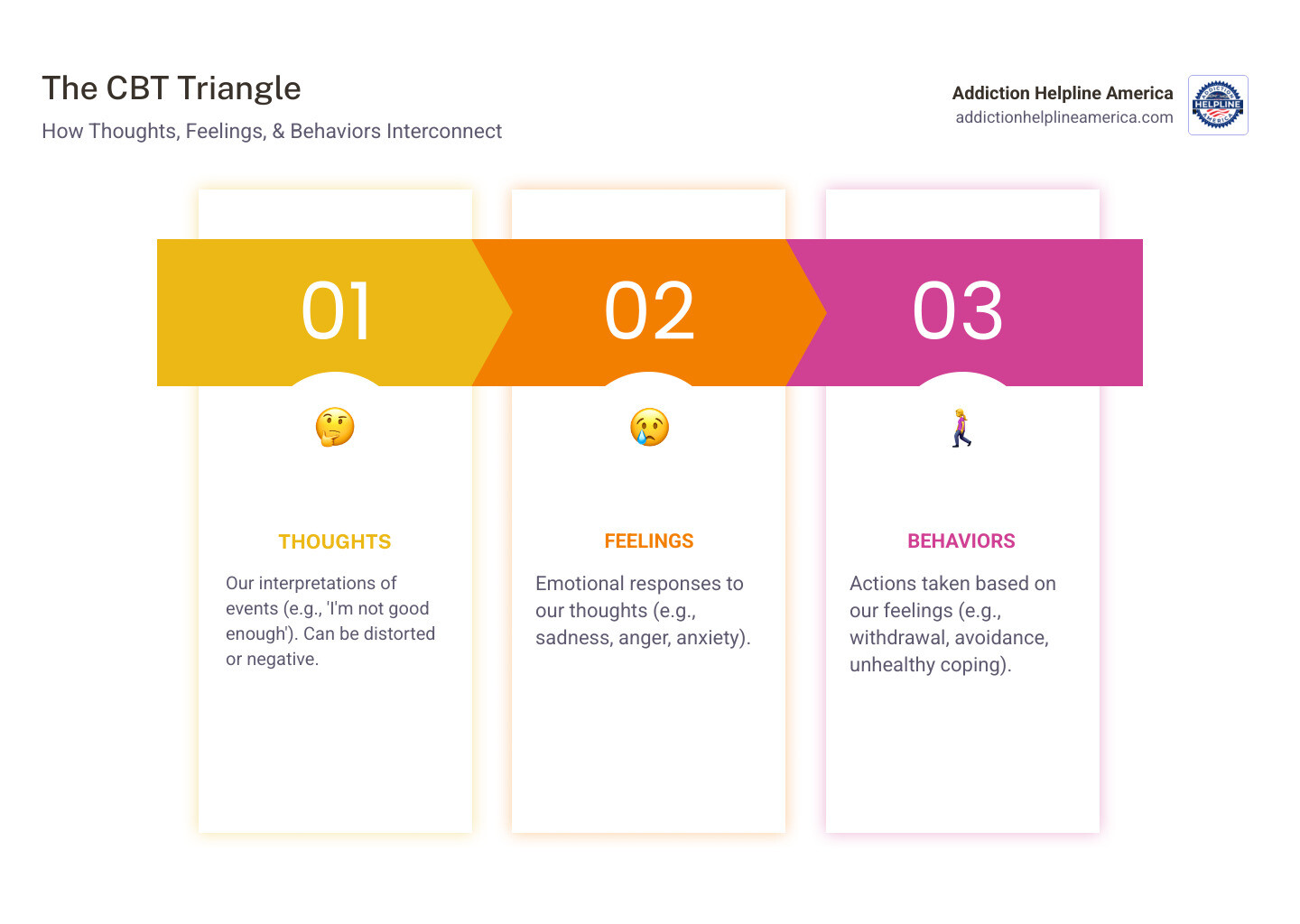
Cognitive Behavioral Therapy (CBT) is an evidence-based psychotherapy, or “talk therapy,” built on a simple principle: our thoughts, feelings, and behaviors are interconnected. By changing unhelpful thought patterns, you can improve your emotional well-being.
CBT operates on the idea that our perception of events, not the events themselves, dictates our feelings and actions. This short-term, goal-oriented therapy takes a practical approach to problem-solving. As Dr. Judith S. Beck, President of the Beck Institute for Cognitive Behavior Therapy, explains, “The goal of therapy is to solve the problems that you have in the present and to teach you skills to solve your own problems in the future.” In CBT therapy Omaha, you’ll work with a therapist to develop new, healthier strategies for current problems, equipping you with lifelong skills.
CBT works by helping you identify and evaluate “cognitive distortions”—irrational ways of thinking that negatively influence your emotions. A skilled CBT therapy Omaha provider will guide you in recognizing and challenging these patterns, replacing them with more constructive and logical perspectives.
For a deeper dive into how our thoughts, feelings, and behaviors interact, consider this cycle:
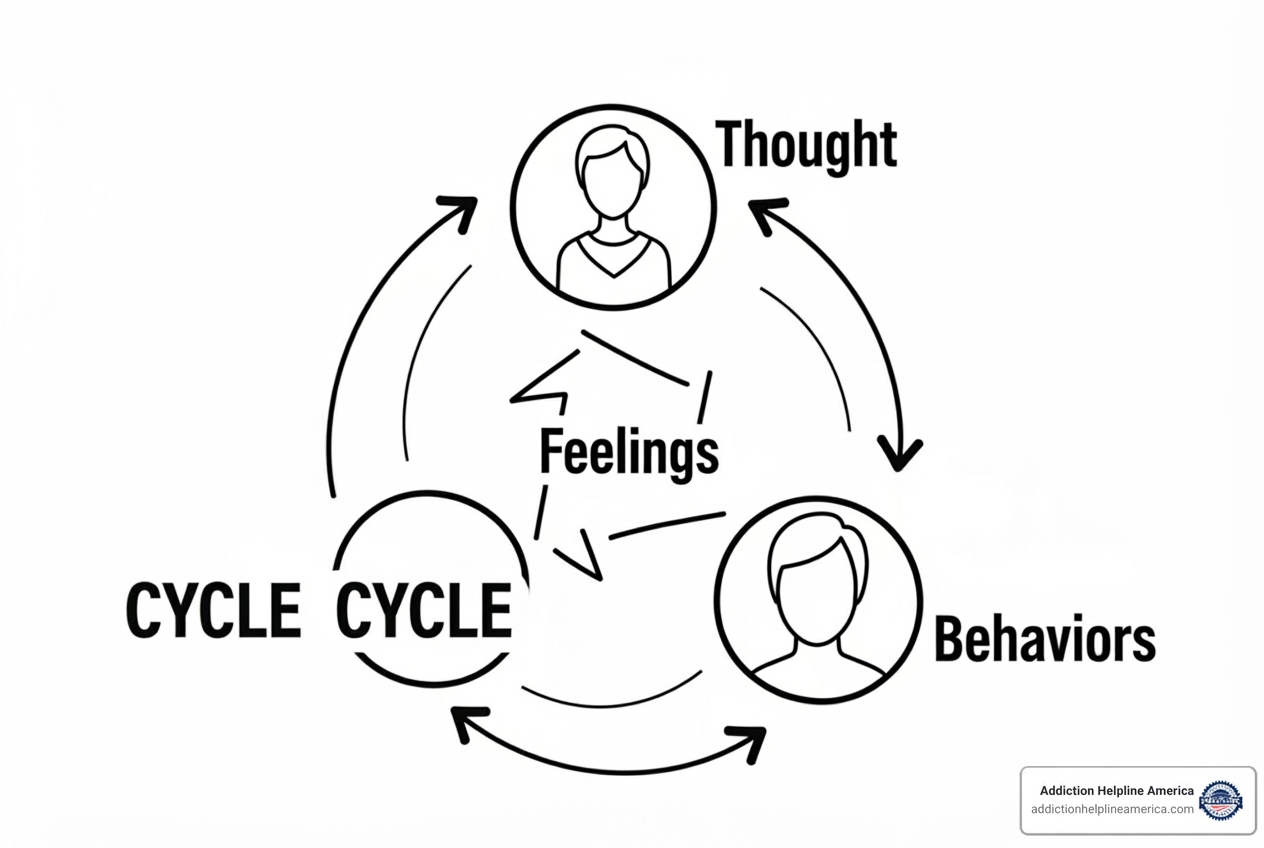
This diagram illustrates how a negative thought can trigger negative feelings, which in turn lead to unhelpful behaviors, ultimately reinforcing the original negative thought. CBT helps to break this cycle at any point, providing tools to interrupt and redirect these patterns. We encourage you to learn more about evidence-based therapies and their impact on mental health and addiction recovery.
The Core Techniques Used in CBT
CBT uses a diverse array of practical techniques to empower you with concrete skills for managing your mental health. According to the American Psychological Association, some core techniques you might encounter in CBT therapy Omaha include:
- Cognitive Restructuring: Identify, challenge, and replace distorted thoughts with more balanced alternatives. For example, changing “I always fail” to “Sometimes I face setbacks, which is normal.”
- Challenging Beliefs: Systematically examine and challenge deep-seated core beliefs (e.g., “I am unlovable”) using evidence from your life.
- Journaling: Use a thought record to write down triggering situations, thoughts, feelings, and behaviors to identify patterns.
- Relaxation Techniques: Manage physical symptoms of stress and anxiety with deep breathing, progressive muscle relaxation, and guided imagery.
- Mindfulness Practices: Focus on the present moment without judgment to observe thoughts and feelings, allowing for more intentional responses.
- Role-Playing: Practice new communication styles and behaviors in a safe environment with your therapist to build confidence for real-world situations.
- Behavioral Experiments: Test assumptions in real life. For instance, if you fear judgment for speaking up, you might test this in a low-stakes setting.
These techniques help you develop critical problem-solving skills and a greater sense of self-confidence.
What Mental Health and Substance Use Conditions Can CBT Treat?
CBT’s versatility makes it a highly effective treatment for a wide range of conditions. In CBT therapy Omaha, our network of providers often uses this approach to help individuals struggling with the following conditions, as outlined by the Mayo Clinic:
- Anxiety Symptoms: Addresses generalized anxiety, social anxiety, panic attacks, and phobias by challenging anxious thoughts and reducing avoidance behaviors. Learn more about our approach to anxiety treatment.
- Depression: Targets negative thought patterns like hopelessness and self-criticism to improve mood and encourage positive activities. Explore our resources for depression treatment.
- Trauma-Related Symptoms: Specialized forms like Trauma-Focused CBT help process traumatic memories and develop healthy coping skills for PTSD.
- Obsessive Thoughts and Compulsions (OCD): Uses Exposure and Response Prevention (ERP) to help individuals confront obsessions without performing compulsions. You can learn more about effective treatment options for OCD and related conditions.
- Substance Use and Addiction: As a leading therapy for addiction, CBT helps identify triggers, manage cravings, and address co-occurring disorders like anxiety or depression. If you’re seeking assistance, we can help you find help for addiction in Omaha.
- Disordered Eating Patterns: Addresses distorted thoughts about food and body image to foster a healthier relationship with eating.
- Mood Instability: Helps manage mood fluctuations in conditions like bipolar disorder by identifying warning signs and developing balancing strategies.
- Other Conditions: Also effective for sleep problems, relationship issues, anger management, and even chronic pain.
The Benefits of Seeking CBT in Omaha
Choosing CBT therapy Omaha is a transformative step that equips you with valuable skills that endure long after therapy concludes.
Here are some key advantages of engaging in CBT:
- Practical Skills for Life: CBT provides concrete tools you can apply immediately to manage stress and steer challenges.
- Building Resilience: Learning to challenge unhelpful thoughts builds mental strength, helping you bounce back from adversity.
- Improved Emotional Regulation: You learn techniques to calm your mind and body, leading to greater emotional stability and control.
- Better Communication: CBT improves communication by fostering clearer thought processes, which is beneficial in family and couples therapy.
- Short-Term Duration: As a short-term therapy (typically 5-20 sessions), CBT is an accessible and often more affordable option (Source: American Psychological Association).
- Proven Success Rates: Backed by extensive research, CBT has proven effective for a wide range of mental health conditions.
- Holistic Well-being: By fostering healthier thoughts and behaviors, CBT contributes to greater self-awareness and a more balanced life.

Why Choose an Evidence-Based Therapy?
Choosing an evidence-based therapy like CBT is crucial. “Evidence-based” means the therapy has been scientifically researched and proven effective for specific conditions.
Here’s why this approach is so important:
- Backed by Research: CBT’s effectiveness is supported by decades of scientific research, not just anecdotes. Organizations like the International OCD Foundation (IOCDF) recommend CBT as a primary, effective treatment for obsessive-compulsive disorder.
- Structured Treatment Plans: Your CBT therapy Omaha provider will use a systematic plan with specific goals custom to your needs, ensuring focused and efficient sessions.
- Measurable Progress: The structured, goal-oriented approach allows you and your therapist to track tangible improvements in your symptoms and behaviors.
- Effective for Many Concerns: Its science-backed efficacy for conditions from anxiety and depression to addiction makes it a reliable choice, as confirmed by the National Institute of Mental Health.
- Long-Term Coping Strategies: CBT teaches you enduring skills to manage future challenges independently, empowering you long after therapy ends. Our approach to mental health services at Addiction Helpline America emphasizes equipping individuals with these vital, lasting tools.
What to Expect from CBT Therapy Omaha
Starting CBT therapy Omaha means entering a collaborative process focused on your growth. While every journey is unique, here’s what you can generally expect from the evidence-based process.
CBT is a hands-on approach where your therapist acts as a guide and partner. You’ll work together to reframe unhelpful thoughts and develop adaptive behaviors. The American Psychological Association outlines a typical CBT journey:
- Initial Assessment: Your first few sessions will involve a thorough assessment of your current concerns, history, and goals to create a custom treatment plan.
- Setting Therapy Goals: A key part of CBT is setting specific, measurable, achievable, relevant, and time-bound (SMART) goals to guide your therapy.
- Structured Sessions: Sessions are typically structured, starting with a check-in and then focusing on a specific agenda item to maximize productivity.
- Active Participation: Success in CBT requires your active involvement. You’ll participate in discussions, exercises, and problem-solving.
- Homework Assignments: You’ll practice skills between sessions through “homework,” such as keeping a thought record or trying new behaviors, to apply learning to daily life.
- Therapist-Client Partnership: You and your therapist work as a team. They bring expertise in CBT, and you bring expertise on your life, creating a supportive partnership for growth.
How Long Does CBT Treatment Typically Last?
CBT is known as a short-term therapy, though the exact duration depends on individual needs.
- Short-Term Model: A typical course of CBT lasts about 5 to 20 weekly sessions, making it a focused and accessible option (Source: American Psychological Association).
- Factors Influencing Duration: The length of treatment depends on the severity of your symptoms, the complexity of the issues, and your commitment to practicing skills between sessions.
- Complex Issues: For more complex or chronic issues, therapy might extend beyond 20 sessions, but the focus remains on building lasting skills.
- Progress Evaluation: You and your therapist will regularly evaluate your progress toward your goals to determine when formal therapy can conclude.
Your First CBT Session in Omaha
Your first CBT therapy Omaha session is a chance for you and your therapist to get to know each other and map out your path forward. You can learn more about what to expect from therapy on our website.
Here’s what you can generally expect:
- Discussing Your History: Your therapist will ask about your reasons for seeking therapy, current challenges, and relevant personal history to get a comprehensive understanding.
- Identifying Key Problems: You’ll work together to pinpoint specific problems, including triggering situations, accompanying thoughts, and typical reactions.
- Establishing a Rapport: The first session is a chance to see if you feel comfortable and understood by your therapist. A strong therapeutic relationship is vital for progress.
- Understanding the Process: Your therapist will explain how CBT works, what to expect from sessions, and answer any questions you have.
- Setting Expectations: You’ll discuss the collaborative nature of CBT, the importance of active participation, and the role of homework.
- Creating a Treatment Plan: You will begin outlining initial goals and strategies, ensuring the therapy is custom to your needs. This is also your chance to assess if the therapist is a good fit.
Finding and Affording a CBT Therapist in Omaha
Finding the right CBT therapy Omaha provider is a crucial step. Omaha offers a variety of resources to connect you with qualified professionals, and understanding costs and insurance is the next step.
How to Find a Provider for CBT Therapy Omaha
When searching for a CBT therapist, consider these avenues:
- Online Directories: Use websites like Psychology Today to filter therapists in Omaha by specialty (CBT), insurance, and specific concerns like anxiety or addiction.
- Referrals from Doctors: Your primary care physician can often recommend reputable CBT therapists in the Omaha area.
- Professional Organizations: Organizations like the Association for Behavioral and Cognitive Therapies (ABCT) provide directories of licensed practitioners in your area.
- Telehealth Options: Many Omaha providers offer online therapy, providing flexibility and convenience. Research shows online therapy is as effective as in-person therapy for many conditions (Source: American Psychological Association).
- Verifying Credentials: Ensure your therapist is licensed. In Nebraska, look for credentials such as Psychologists (Ph.D., Psy.D.), Clinical Social Workers (LCSW), Licensed Independent Mental Health Practitioners (LIMHP), Licensed Professional Counselors (LPC), and Drug & Alcohol Counselors (LADC).
- Ask Questions: Schedule an initial consultation to ask questions and see if the therapist is a good fit.
Here’s a list of questions we recommend asking a potential therapist:
- What is your experience and training in CBT?
- What conditions do you specialize in treating with CBT?
- What does a typical CBT session with you look like?
- How long do you expect treatment to last for my specific concerns?
- What are your fees, and do you offer a sliding scale?
- Do you accept my insurance plan?
- Do you offer in-person or online sessions?
- How do you involve clients in setting goals and tracking progress?
At Addiction Helpline America, we can help you find a treatment center in Omaha today, including those that integrate CBT into their programs.
Costs and Insurance for CBT Therapy Omaha
Understanding the financial aspect of therapy is key to accessing care. The cost of CBT therapy Omaha varies, but most major insurance plans offer coverage.
- Typical Session Costs: Without insurance, therapy sessions in the U.S. typically range from $100 to $200 or more (Source: Forbes Health, 2023). Costs in Omaha will vary depending on the provider’s credentials and experience.
- Major Insurance Plan Coverage: Most major insurance plans in Nebraska cover mental health treatment like CBT. With insurance, your out-of-pocket cost may be just a co-pay ($0-$50). Always contact your provider to confirm your specific benefits.
- Self-Pay and Sliding Scale: If you don’t have or use insurance, you’ll pay the full rate. Some therapists offer a “sliding scale” fee based on your income to make therapy more affordable.
- Out-of-Network Benefits: Your plan might reimburse a portion of the cost for an out-of-network therapist. The therapist can provide a “superbill” for you to submit for reimbursement.
- Free and Confidential Guidance: Navigating costs can be difficult. Addiction Helpline America offers free, confidential help to connect you with providers that fit your financial situation. We can help you explore counseling center options and understand how to verify your insurance coverage for various treatment programs.
Frequently Asked Questions about CBT in Omaha
We often hear common questions about CBT therapy Omaha. Here are clear, concise answers to help you make informed decisions.
What is the success rate of CBT?
CBT has a strong track record of success, backed by extensive research, making it one of the most effective treatments available.
- Success Rate Factors: The success of CBT depends on the condition being treated, your commitment, and the therapist’s expertise. The American Psychological Association notes that CBT is effective for a wide range of problems, including depression, anxiety disorders, substance use problems, and more.
- Evidence of Effectiveness: Research consistently shows that CBT leads to significant improvement in functioning and quality of life. For many conditions, it is considered a first-line treatment. For adolescents, the APA states that CBT can be as effective as medication for treating depression and anxiety.
Is CBT conducted in person or online?
In Omaha, CBT is widely available both in-person and online, offering flexibility to fit your needs.
- In-Person Therapy: Traditional face-to-face sessions provide a direct, personal connection in a dedicated therapeutic space.
- Online Therapy (Telehealth): Online CBT has become popular for its convenience, allowing you to attend sessions from home. Many CBT therapy Omaha providers offer secure video sessions.
- Effectiveness: Multiple studies and organizations, including the American Psychological Association, have found that for many conditions like depression and anxiety, online therapy delivered by a licensed professional is just as effective as in-person therapy. The best format depends on your personal preference and lifestyle.
What is the difference between CBT and other therapies?
While many therapies aim to improve mental health, CBT has a distinct approach, as described by mental health experts at institutions like the NIMH and APA.
- CBT Focus:
- Present-Oriented: Focuses on current thoughts and behaviors rather than extensively analyzing the past.
- Goal-Oriented and Structured: Uses clear, collaborative goals and structured sessions with a specific agenda.
- Skills-Based: Teaches practical coping skills (e.g., cognitive restructuring, relaxation) that you can use independently for life.
- Comparison to Other Therapies:
- Psychodynamic Therapy: Tends to explore unconscious processes and how past experiences, particularly from childhood, shape current behavior.
- Dialectical Behavior Therapy (DBT): A type of CBT that adds a strong emphasis on emotional regulation, distress tolerance, and mindfulness, often used for borderline personality disorder and other conditions involving intense emotional dysregulation.
- Humanistic Therapies: Focus on personal growth and self-actualization, with the therapist providing empathy and unconditional positive regard to help the client find their own answers.
The “right” therapy depends on your unique needs. A consultation with a mental health professional can help determine if CBT is the best fit for you.
Take the First Step Towards Healing in Omaha
Facing challenges like anxiety, depression, or addiction can feel overwhelming, but you don’t have to do it alone. CBT therapy Omaha provides an evidence-based path to change your thought patterns and behaviors, equipping you with practical skills for a more resilient life.
We’ve seen countless individuals find hope through CBT, learning to manage difficult emotions and build a stronger sense of self. It’s about empowering you to take control of your mental health and thrive.
If you’re ready to see how CBT therapy Omaha can help you or a loved one, Addiction Helpline America is here. We offer free, confidential guidance to connect you with the right recovery programs and mental health services. Our network of professionals is ready to support your journey.
Don’t wait to get the help you deserve. Taking the first step is the most courageous one. Let us help you find your path to a healthier future.