
Understanding Your Search for Integrated Care
Dual diagnosis rehabs near me provide specialized, integrated treatment for people facing both mental health conditions and substance use disorders simultaneously. This approach addresses both issues together, rather than separately.
Quick Guide to Finding Dual Diagnosis Treatment:
- Contact a helpline – Call a 24/7 addiction helpline for immediate guidance.
- Verify insurance – Check if your insurance covers dual diagnosis treatment.
- Search directories – Use online locators like FindTreatment.gov.
- Ask providers – Request referrals from doctors or therapists.
- Check accreditation – Look for Joint Commission accreditation and state licensing.
- Evaluate options – Consider levels of care (detox, residential, outpatient).
If you’re using alcohol to cope with depression or drugs to quiet anxiety, you may be caught in a difficult cycle. You’re not alone—more than 9 million Americans face both a mental health condition and substance abuse at the same time. This is called a dual diagnosis or co-occurring disorder.
Treating just one issue often fails because the mental health condition fuels the substance use, and vice versa. Integrated treatment breaks this cycle by addressing both conditions together with a coordinated team, leading to lower relapse rates and better long-term outcomes.
Finding the right help starts with understanding what quality dual diagnosis treatment involves. This guide walks you through everything from recognizing the signs to choosing a facility and navigating insurance.
At Addiction Helpline America, we connect individuals with dual diagnosis programs from our nationwide network of accredited facilities. Our team provides free, confidential guidance to help you find dual diagnosis rehabs near me that offer evidence-based, integrated care for lasting recovery.
What is Dual Diagnosis and Why is Integrated Treatment Crucial?
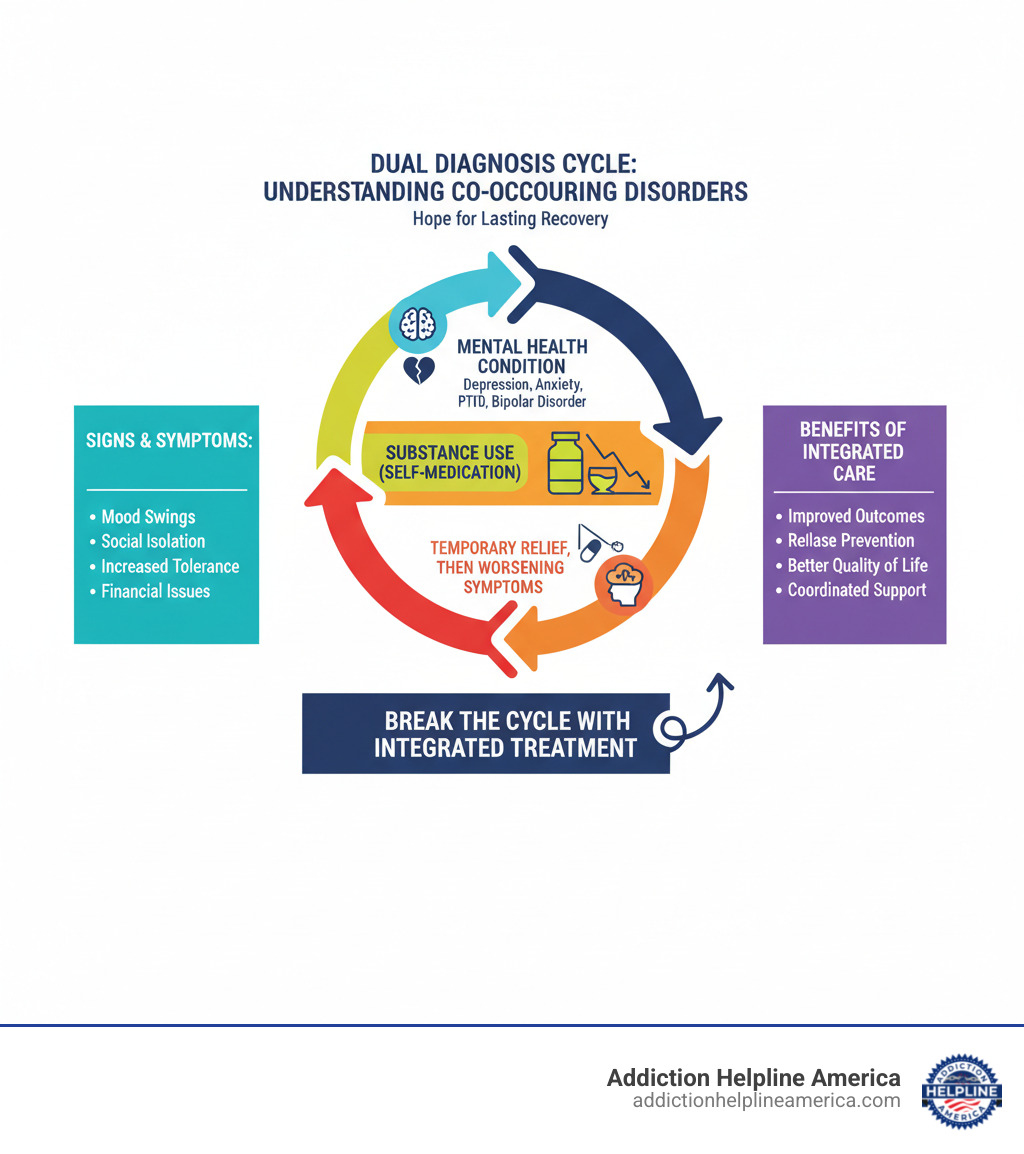
When someone struggles with both a mental health condition and a substance use disorder, it’s called a dual diagnosis or “co-occurring disorder.” The key takeaway is that two serious challenges are feeding off each other, making both worse.
Often, someone with anxiety, depression, or PTSD uses substances to quiet their thoughts or numb their pain. This is called self-medication. While it provides temporary relief, it ultimately worsens the underlying condition. Depression can deepen, and anxiety can spike, trapping the person in a cycle where the attempted solution becomes another problem.
This is why integrated treatment is essential for recovery.
Historically, mental health and addiction were treated separately, leading to high relapse rates as one untreated issue would trigger the other. We now know that treating both conditions at the same time, with one coordinated plan, is far more effective.
In an integrated model, your entire care team works together, understanding how your mental health and substance use are intertwined. The benefits are clear: your relapse risk drops significantly as you develop coping skills for both conditions. Your quality of life improves, leading to emotional stability and the ability to handle life’s challenges. Study after study confirms that people in integrated care have better long-term outcomes.
When you’re searching for dual diagnosis rehabs near me, you’re looking for facilities that treat both conditions as equally important parts of your recovery.
| Feature | Separate Treatment | Integrated Treatment |
|---|---|---|
| Approach | Mental health and SUD treated independently. | Both conditions treated simultaneously and coordinately. |
| Coordination of Care | Often fragmented, requiring client to steer multiple providers. | Cohesive, with a unified treatment plan and team. |
| Focus | May only address symptoms of one disorder. | Addresses underlying causes and symptoms of both. |
| Relapse Risk | Higher, as untreated issues can trigger substance use. | Lower, due to comprehensive coping skill development. |
| Effectiveness | Less effective for long-term recovery. | More effective for sustained recovery and well-being. |
| Client Experience | Can feel disjointed and overwhelming. | More supportive and empowering, addressing the whole person. |
The Prevalence of Co-Occurring Disorders
If you’re dealing with both mental health challenges and substance use, you are far from alone. According to SAMHSA, more than 9 million people in the United States experienced co-occurring disorders in 2019. This is not a rare issue; it’s a common challenge that modern treatment programs are designed to address.
Data from states like California highlights this trend. Between 2011 and 2015, about a third of clients in county mental health services had both a severe mental illness and a substance use disorder, and these numbers have been rising. This growing prevalence underscores why specialized dual diagnosis treatment is so important. At Addiction Helpline America, we’ve built a nationwide network of centers specializing in integrated care to meet this critical need.
Recognizing the Need for Dual Diagnosis Treatment

Figuring out if you or a loved one has a co-occurring disorder can be confusing, as symptoms often overlap. Recognizing the signs is the crucial first step toward getting the right support from dual diagnosis rehabs near me.
Common Signs of a Co-Occurring Disorder
Look for changes in behavior, mood, and daily functioning. It’s the combination of signs from both categories below that often indicates a dual diagnosis.
Mental health signs can include extreme mood swings, persistent feelings of hopelessness or panic, and social withdrawal. Other clues are significant changes in sleep or appetite, constant fatigue, trouble concentrating, and increased irritability. Risky behavior or talk of suicide requires immediate attention.
Substance use signs include an inability to control use, intense cravings, and developing a tolerance (needing more to get the same effect). A person may experience withdrawal symptoms when they stop, spend excessive time on substance-related activities, and neglect responsibilities. Continued use despite negative consequences to relationships or safety is another major red flag.
If these descriptions sound familiar, integrated dual diagnosis treatment is likely the most effective path to recovery.
The Connection Between Specific Conditions
Certain mental health conditions and substances are often linked, as people self-medicate specific symptoms. Understanding these pairings can clarify the need for integrated care.
- Anxiety and Alcohol: Alcohol may be used to calm nerves, but over time it worsens anxiety, creating a vicious cycle.
- Depression and Opioids: Opioids might offer a brief escape from depressive feelings, but they ultimately deepen the depression and lead to addiction.
- PTSD and Any Substance: People with PTSD often use substances to numb painful memories or escape flashbacks, which prevents true healing from the trauma.
- Bipolar Disorder and Stimulants/Other Drugs: Stimulants may be used to fight depressive phases, while other drugs are used to manage manic episodes. This destabilizes mood and worsens the disorder.
Recognizing how one condition triggers or worsens the other is key to understanding why integrated care is so important. For more details on these interactions, you can find information about dual diagnosis in Costa Mesa.
How to Find Dual Diagnosis Rehabs Near Me

Searching for dual diagnosis rehabs near me can feel overwhelming, but you don’t have to do it alone. At Addiction Helpline America, we simplify the process by providing free, confidential guidance to help you find the right program from our nationwide network of accredited centers.
Your doctor, therapist, or counselor can also be valuable allies, offering referrals to reputable local facilities. Online directories like FindTreatment.gov provide comprehensive lists of treatment centers. When choosing, consider location—some people thrive close to their support system, while others need a fresh start away from triggers.
Evaluating Potential Dual Diagnosis Rehabs Near Me
Once you have a list of potential facilities, evaluate them carefully. Look for these key indicators of quality care:
- Accreditation and Licensing: Ensure the facility is accredited by an organization like the Joint Commission and licensed by the state. This is a non-negotiable mark of safety and quality.
- Evidence-Based Therapies: The program should use treatments backed by scientific research to ensure they are effective for co-occurring disorders.
- Individualized Treatment Plans: Quality centers create a custom plan based on your specific mental health conditions, substance use patterns, and personal history.
- Staff Credentials: The team should include licensed professionals like psychologists, psychiatrists, and certified addiction counselors with specific experience in dual diagnosis.
- Continuum of Care: The best facilities offer a full range of services—from detox to aftercare—to support you through every stage of recovery and prevent relapse.
Levels of Care Available for Treatment
Dual diagnosis treatment is offered at different levels of intensity to match individual needs.
- Medical Detoxification: A safe, medically supervised process to manage withdrawal symptoms as substances leave the body. This is often the first step for physical dependence.
- Inpatient/Residential Treatment: 24/7 care in a structured, supportive environment away from daily triggers. It is ideal for severe disorders.
- Partial Hospitalization Program (PHP): Intensive treatment during the day (typically 5-7 hours, multiple days a week) while living at home or in sober living.
- Intensive Outpatient Program (IOP): A step down from PHP, with therapy sessions 3-5 times per week for a few hours, allowing clients to maintain work or school schedules.
- Standard Outpatient Programs: The least restrictive care, usually involving 1-2 therapy sessions per week to maintain recovery after more intensive treatment.
- Sober Living Homes: Transitional, drug-free residences that provide a supportive environment for practicing recovery skills after completing a formal program.
Therapeutic Modalities in Dual Diagnosis Rehabs Near Me
Effective therapies are the tools you’ll use to build a new life in recovery.
- Cognitive Behavioral Therapy (CBT): Helps you identify, challenge, and replace the negative thought patterns that fuel both mental health symptoms and substance use.
- Dialectical Behavior Therapy (DBT): Teaches skills in mindfulness, distress tolerance, emotion regulation, and interpersonal effectiveness, which are crucial for managing intense emotions without substances.
- Trauma-Informed Care: An approach that recognizes the high prevalence of trauma among individuals with co-occurring disorders and creates a safe, empowering treatment environment.
- EMDR (Eye Movement Desensitization and Reprocessing): A specialized therapy for processing traumatic memories, reducing their emotional intensity so they no longer trigger substance use.
- Family Therapy: Heals damaged relationships, improves communication, and educates loved ones to build a strong support system for long-term recovery.
- Holistic Approaches: Therapies like mindfulness, yoga, exercise, and nutrition support overall well-being and brain health, complementing traditional treatment.
- Medication Management: Psychiatrists prescribe and manage medications to stabilize mental health symptoms (e.g., antidepressants) or reduce cravings and prevent relapse (e.g., naltrexone).
For more information on evidence-based treatments, the National Institute on Drug Abuse offers extensive resources through their research programs.
Navigating Insurance and Payment for Treatment
Understanding how to pay for dual diagnosis rehabs near me is a common concern. The good news is that mental health parity laws require most insurance plans to cover mental health and substance use treatment similarly to medical care.
However, coverage varies by plan, treatment type, and facility, so it’s crucial to verify your benefits with your insurance provider. Ask about:
- Your deductible, co-pays, and co-insurance.
- In-network vs. out-of-network benefits.
- Pre-authorization requirements.
- Coverage for different levels of care (detox, inpatient, outpatient).
- Any lifetime maximums on benefits.
Options for Affording Treatment
If out-of-pocket costs are a worry, several options can help make treatment more affordable:
- Private Insurance: Most employer-provided or marketplace plans cover a portion of dual diagnosis treatment. We can help you verify your coverage.
- State and Federal Programs: Medicaid and Medicare offer significant coverage for eligible individuals. Check with your state or county to find covered facilities.
- Flexible Payment Options: Many rehabs offer financing, payment plans, or sliding scale fees based on income. Always ask the admissions team about financial options.
- Support from Addiction Helpline America: Our team provides free, confidential help to steer your insurance benefits, explore assistance programs, and find affordable care within our nationwide network.
Frequently Asked Questions about Dual Diagnosis Treatment
It’s normal to have questions as you begin this journey. Here are answers to some of the most common inquiries about dual diagnosis treatment.
What is the difference between “dual diagnosis” and “co-occurring disorders”?
These terms are often used interchangeably. “Co-occurring disorders” is the more current clinical term, but both refer to the same situation: having a substance use disorder and a mental health disorder at the same time. The key point is that this condition requires integrated treatment that addresses both issues together for effective recovery.
How long does a dual diagnosis program typically last?
The length of treatment is highly individualized and depends on the severity of your conditions, your progress, and clinical recommendations. While standard programs may last 30, 60, or 90 days, many people benefit from longer-term care. A common path is a 30-90 day residential stay followed by several months in a step-down program like PHP or IOP. The goal is to provide enough time to stabilize, learn coping skills, and build a strong foundation for lasting recovery.
What should I expect during the treatment process?
While specifics vary between dual diagnosis rehabs near me, the process is designed to be comprehensive and supportive. Here is a general roadmap:
- Initial Assessment: Your journey begins with a thorough biopsychosocial evaluation. A clinical team will review your medical history, mental health, substance use patterns, and social factors to understand your unique needs.
- Personalized Treatment Plan: Based on the assessment, the team creates a customized plan outlining your goals, therapies, and recommended level of care. This plan evolves as you progress.
- Structured Daily Activities: In residential care, a typical day includes individual and group therapy, educational workshops, holistic activities like yoga or mindfulness, and medication management if needed, all within a safe, healing-focused environment.
- Transitioning Levels of Care: As you gain stability, you will gradually move from more intensive programs (like inpatient) to less restrictive ones (like IOP), ensuring you have the right level of support at each stage.
- Aftercare Planning: Before you leave, you’ll work with your team to create a long-term recovery plan. This often includes ongoing therapy, support groups (like AA/NA), sober living arrangements, and relapse prevention strategies to sustain your progress.
Conclusion: Your Path to Integrated Recovery Starts Today
We’ve covered the essentials of dual diagnosis, from recognizing the signs to finding quality care. The most important takeaway is that while facing both mental health and substance use issues is a challenge, you don’t have to do it alone. With the right support, lasting recovery is a real possibility.
The cycle where one issue feeds the other can be broken. Integrated treatment addresses both your mental health and substance use simultaneously, building a foundation for true, long-term well-being. Choosing a program with proven therapies, a personalized plan, and a full continuum of care sets you up for a healthier future.
That’s where Addiction Helpline America comes in. Our mission is to provide free, confidential guidance and connect you with the right help from our vast network of accredited treatment centers across the country. We are your guide, ready to answer questions and help you take that brave first step.
Your journey to integrated recovery can begin today. Don’t let the search for dual diagnosis rehabs near me stop you from getting the help you deserve. Reach out to us. Let us make the process easier so you can start reclaiming your life.
Take the first step towards finding a dual diagnosis treatment facility.