
Understanding Your Options: The Path to Recovery Starts Here
Drug treatment programs are specialized services that help individuals overcome substance use challenges through medical care, counseling, and support. Since every healing journey is unique, understanding the spectrum of options is the first step toward finding what works for you.
Types of Drug Treatment Programs:
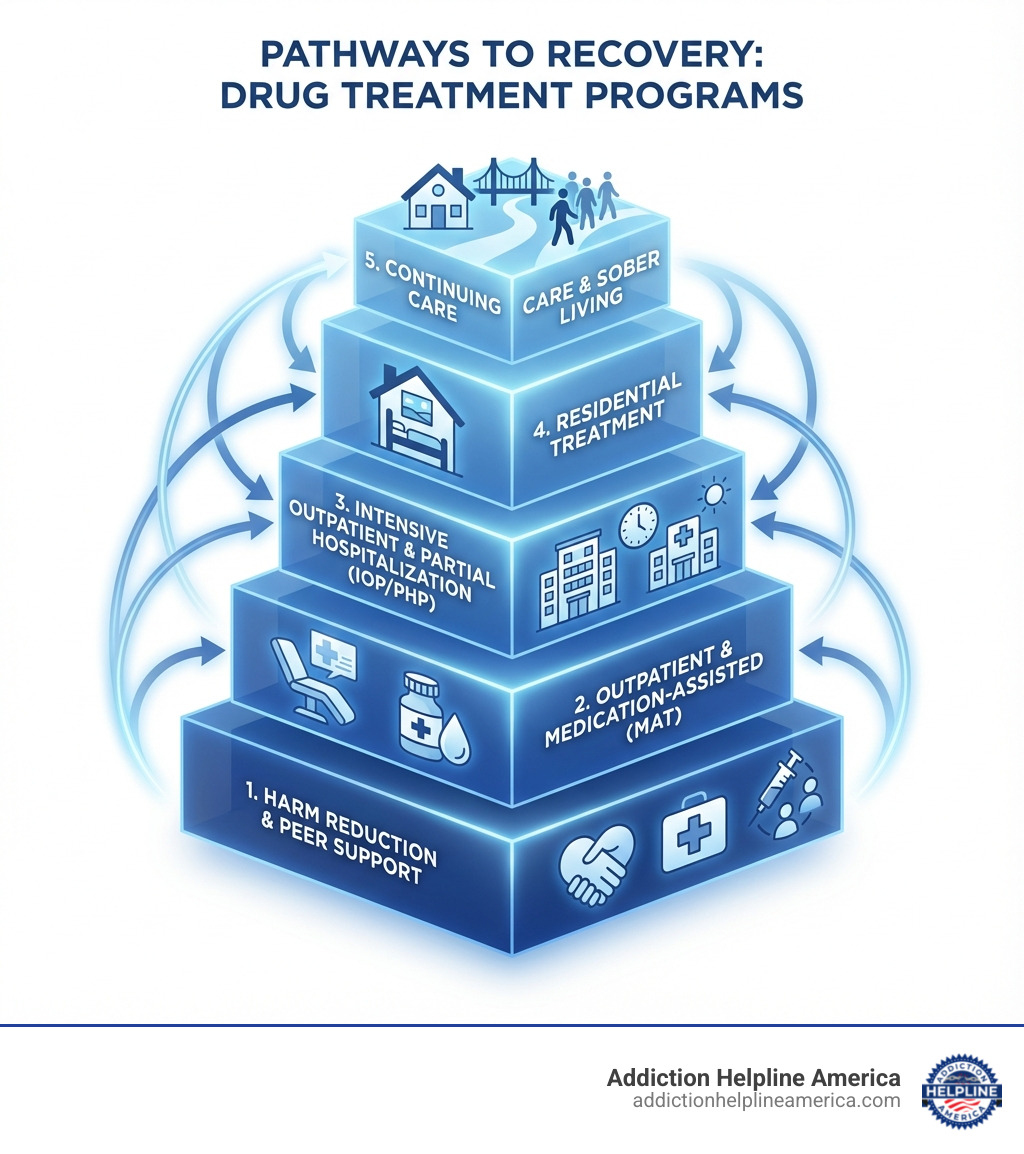
- Residential/Inpatient Treatment: Live-in care with 24/7 support.
- Outpatient Treatment: Attend sessions while living at home.
- Medication-Assisted Treatment (MAT): Uses FDA-approved medications to manage cravings.
- Detox/Withdrawal Management: Medically supervised process to safely clear substances from the body (3-7 days).
- Intensive Outpatient Programs (IOP): Multiple weekly sessions with more flexibility than residential care.
- Sober Living/Recovery Residences: Supportive housing for continued recovery.
Addiction affects millions of families, but recovery is possible. Asking for help is the hardest and most important step. At Addiction Helpline America, we provide confidential, 24/7 guidance to connect people with effective drug treatment programs that match their unique needs. This guide will walk you through the options so you can make an informed decision.
Must-know drug treatment programs terms:
The Core Spectrum of Drug Treatment Programs
Drug treatment programs are not one-size-fits-all. They exist on a spectrum because everyone’s needs are different. Some people require intensive, 24/7 support, while others benefit from flexible programs that accommodate work or family life. The most effective programs treat the whole person—mind, body, and spirit—addressing physical health, mental wellbeing, and life circumstances to foster lasting recovery.
Residential vs. Outpatient Treatment: The Fundamental Choice
One of the first decisions is choosing between residential (inpatient) and outpatient treatment. Both are effective but serve different needs.
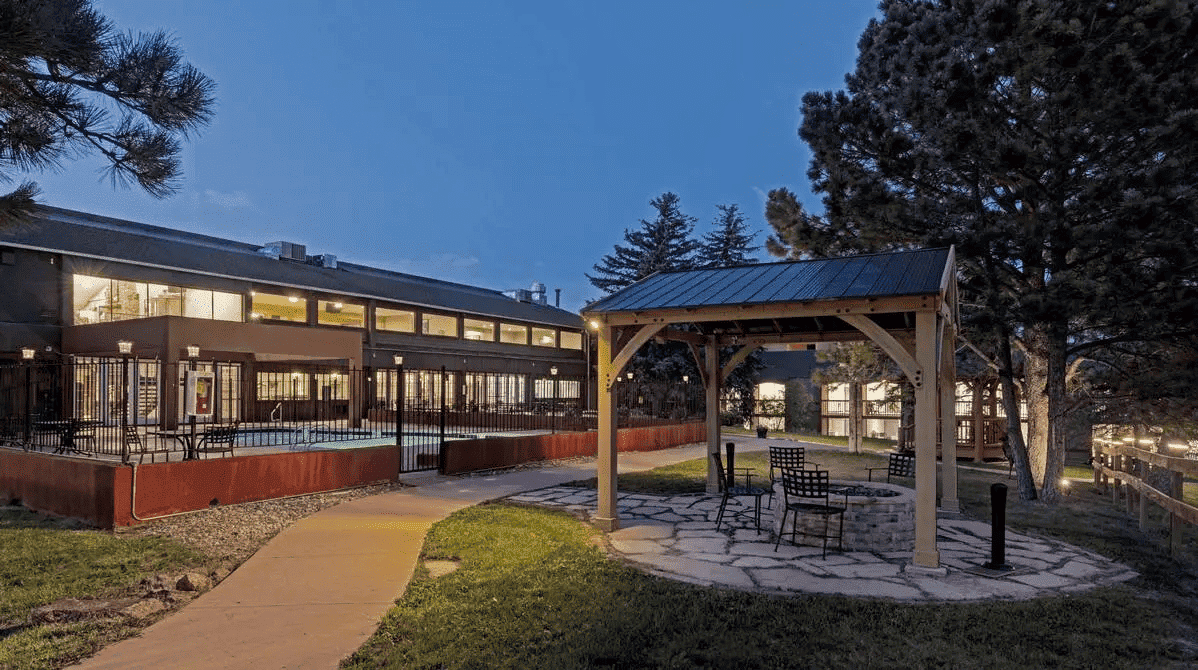
Residential treatment involves living at a facility for several weeks or months, providing a structured, 24/7 supportive environment away from daily triggers. This immersive approach is ideal for those with severe addiction or unstable home lives. Programs typically include intensive therapy, group counseling, and medical monitoring, with stays ranging from 28-day programs to longer-term care.
Outpatient treatment allows you to live at home and maintain daily responsibilities while attending scheduled therapy sessions. This flexibility is suitable for individuals with less severe addictions or strong support systems. Intensities vary:
- Partial Hospitalization Programs (PHP) offer intensive treatment for several hours a day, multiple days a week, while you return home at night.
- Intensive Outpatient Programs (IOP) are a step down, with fewer hours per week, focusing on developing real-world coping skills.
| Feature | Inpatient/Residential Treatment | Outpatient Treatment |
|---|---|---|
| Environment | Live at the facility, 24/7 supervision and support | Live at home, attend scheduled sessions |
| Intensity | Highly structured, intensive therapy, medical monitoring | Flexible schedule, varying intensity of sessions |
| Focus | Complete immersion in recovery, removal from triggers | Integrating recovery into daily life, maintaining responsibilities |
| Suitable For | Severe addiction, co-occurring disorders, unstable home environment | Less severe addiction, strong home support, post-inpatient care |
Choosing the right option depends on addiction severity, mental health status, and home environment. Our Drug Rehab Centers Guide can help clarify your options.
Levels of Care: From Detox to Long-Term Sober Living
Recovery is a journey with several stages, and drug treatment programs are designed to support you through each one.
- Withdrawal management (detox) is the medically supervised process of clearing substances from your system, which typically takes 3-7 days. Medical oversight is crucial to manage withdrawal symptoms safely. It’s an essential first step, but not a complete treatment. Learn more about Detox in Hospital.
- Stabilization services follow detox, addressing any acute medical or psychological issues to ensure you are stable enough for comprehensive treatment.
- Short-term residential treatment (12-42 days) provides intense, structured care to break the addiction cycle and teach initial recovery tools.
- Long-term residential treatment (several months to a year or more) is for those with severe or long-standing addiction, offering time to address deep-seated issues and rebuild life skills.
- Supportive recovery residences (sober living homes) bridge the gap between treatment and independent living. They offer a drug-free, structured environment where residents can practice recovery skills with peer support and accountability.
Understanding the Costs and Payment Options
Cost is a common concern, but it should not prevent you from seeking help. Many payment options exist for drug treatment programs.
- Insurance Coverage: The Affordable Care Act mandates that marketplace plans cover substance use disorder services. Many private plans also offer significant coverage, but benefits vary. Always call your provider to confirm your specific benefits.
- Private Pay: Paying out-of-pocket offers the most flexibility and privacy.
- State-Funded Programs: Publicly funded programs are available in every state for those who meet income-based eligibility requirements.
- Financial Assistance: Many centers offer scholarships, payment plans, or sliding-scale fees based on your ability to pay. Don’t hesitate to ask about financial options.
- Medicaid: In many states, Medicaid provides comprehensive coverage for substance use treatment. See our guide to Rehab Centers That Accept Medicaid.
Navigating these options can be complex. At Addiction Helpline America, we provide free, confidential guidance to help you find programs that fit your financial situation. Our guide on How Much Do Drug Rehab Centers Cost? offers more detail.
Specialized and Evidence-Based Treatment Approaches
Effective drug treatment programs go beyond just stopping substance use; they address the root causes of addiction. Using evidence-based practices—therapies scientifically proven to work—they create custom plans that treat the whole person. This includes therapies like Cognitive-Behavioral Therapy (CBT) and Dialectical Behavior Therapy (DBT) to change negative thought patterns and build coping skills.

Many people also face mental health challenges like anxiety, depression, or trauma alongside addiction. These co-occurring disorders must be treated simultaneously, as untreated mental health issues can fuel substance use and vice versa.
Medication-Assisted Treatment (MAT) for Opioid and Alcohol Use
Medication-Assisted Treatment (MAT) is a highly effective, research-backed approach that combines FDA-approved medications with counseling. It helps stabilize body chemistry, reduce cravings, and prevent overdose, allowing individuals to focus on therapy.
- For Opioid Use Disorder: Opioid Agonist Treatment (OAT) is the recommended first-line treatment. Medications include Buprenorphine (reduces cravings and is widely accessible), Methadone (administered in clinics to reduce cravings without a high), and Naltrexone (blocks the euphoric effects of opioids). You can find providers via the Opioid Treatment Program Directory.
- For Alcohol Use Disorder: Medications include Naltrexone (reduces cravings), Acamprosate (helps restore brain chemistry), and Disulfiram (causes an unpleasant reaction to alcohol, acting as a deterrent).
Culturally-Specific and Population-Focused Drug Treatment Programs
Recovery is more effective when treatment acknowledges a person’s identity and background. Specialized drug treatment programs are designed for specific populations, creating a safer and more relevant healing environment.
- Culturally responsive care incorporates cultural beliefs and may address historical trauma.
- Women’s rehab programs focus on issues like trauma, parenting, and gender-specific health needs. Learn more in our Women’s Rehab Programs: The Complete Guide.
- Veteran addiction treatment addresses military-related trauma like PTSD. See our Veteran Addiction Treatment: The Complete Guide.
- First responder rehab is custom to the unique stressors of police, firefighters, and paramedics. Read our First Responder Rehab guide.
- LGBTQ+ affirming care provides an inclusive space that addresses minority stress and identity challenges. Our LGBTQ Alcohol Rehab: The Complete Guide has more info.
The Importance of a Holistic and Dual-Diagnosis Approach
Addiction affects every aspect of life, which is why a holistic treatment approach is so powerful. It aims to heal on all levels—physical, mental, emotional, and spiritual. This can include yoga, art therapy, nutritional guidance, and physical activity to support overall well-being.
Dual diagnosis treatment is essential when a substance use disorder and a mental health condition exist together. Also known as integrated treatment, it addresses both conditions at the same time with a single, coordinated team. This prevents a cycle where one untreated condition undermines recovery from the other.
At Addiction Helpline America, we connect people with centers specializing in this integrated approach, including those offering Dual Diagnosis Costa Mesa services. We also offer guides on Major Depression Treatments, Treatment for Depression and Anxiety, and PTSD Inpatient Treatment. Addressing these root causes builds a stronger foundation for lasting recovery.
How to Find and Start a Treatment Program
Taking the first step toward recovery is courageous but can feel overwhelming. You don’t have to steer the complex system of drug treatment programs alone. Helplines and referral services exist to guide you. At Addiction Helpline America, we simplify this process, offering free, personalized guidance to help you find the right program from our network of centers across the nation.
The First Step: Assessment and Professional Referral
Before choosing a program, a professional assessment can provide clarity. Drug and Alcohol Assessment Services help determine the severity of the substance use disorder and identify any co-occurring conditions. A trained professional will talk with you about your substance use, health, and life circumstances to recommend the most appropriate level of care.
Referrals are based on factors like:
- Your age and health condition
- The substance used and previous treatment history
- Your social connections and support system
- Location and daily responsibilities
Speaking with a healthcare provider or calling a helpline is an excellent starting point. For families struggling to help an unwilling loved one, Intervention Services can facilitate a productive conversation about accepting treatment.
What to Look For in Drug Treatment Programs: Licensing and Accreditation
Not all facilities are equal. When evaluating drug treatment programs, verify their licensing and accreditation to ensure they meet standards for safety, quality, and ethical practice.
- State Licensing: This is non-negotiable. Every legitimate facility must be licensed by the state in which it operates. Unlicensed facilities are a major red flag.
- Accreditation: Look for accreditation from national organizations like CARF International. This indicates a commitment to excellence and evidence-based care. The SAMHSA National Directory, for example, only lists state-approved facilities.
A reputable facility will be transparent about its credentials.
Navigating Your Local and National Resources
More help is available than you might realize. You don’t have to sort through endless options on your own.
- Addiction Helpline America: We connect individuals nationwide to our network of addiction and mental health treatment centers. Our service is free, confidential, and provides personalized guidance to find the right fit for you.
- State Health Departments: Every state has an agency that provides lists of licensed facilities, information on state-funded programs, and referral services.
- SAMHSA: The Substance Abuse and Mental Health Services Administration (SAMHSA) offers a 2024 National Directory of Drug and Alcohol Use Treatment Facilities and a searchable database at FindTreatment.gov.
- National Helplines: The 988 Suicide & Crisis Lifeline offers 24/7 crisis support, while specialized Addiction and Rehab Hotlines can connect you directly to treatment resources. Searching for Behavioral Health Near Me can also help you find local providers.
These resources exist to guide you. The hardest part is often making the first call, but caring professionals are ready to help.
Building a Foundation for Lasting Recovery
Completing a drug treatment program is a monumental achievement, but it’s the beginning of a lifelong journey, not the finish line. Lasting recovery requires a strong foundation built on ongoing support, lifestyle changes, and a commitment to personal growth. A comprehensive post-treatment plan is essential for relapse prevention and long-term success.
The Role of Support Systems: Family and Peer Groups
No one stays sober in isolation. Strong support systems are critical for recovery.
Family involvement can be a powerful healing force. Many drug treatment programs offer family therapy to help rebuild trust, improve communication, and address issues like codependency. When families heal together, they create a home environment that supports sobriety.
Peer support provides a unique connection with others who have walked the same path. Addiction support groups like Alcoholics Anonymous (AA) and Narcotics Anonymous (NA) offer shared experience and accountability. Our guide to Addiction Support Groups Near Me can help you find local meetings. Peer support specialists, who have lived experience in recovery, offer practical advice and living proof that recovery is possible.
Harm Reduction as a Pathway to Healing
For those not ready for complete abstinence, harm reduction services offer a compassionate first step. This public health approach focuses on reducing the negative consequences of substance use, meeting people where they are without judgment. Any positive change is valued and supported.
Services can include needle exchanges, naloxone distribution to reverse overdoses, and education on safer use practices. Some communities offer Supervised Consumption and Overdose Prevention Services to prevent fatal overdoses. These harm reduction services keep people alive and engaged, gently guiding them toward more comprehensive drug treatment programs when they are ready.
Continuing Care: The Key to Sustaining Sobriety
Continuing care, or aftercare, bridges the gap between intensive treatment and independent living. It reinforces the skills learned in treatment and helps you steer real-world challenges.
Key components of a robust aftercare plan include:
- Alumni Programs: Keep you connected to a supportive recovery community.
- Sober Coaching: Provides individualized support and accountability.
- Ongoing Therapy: Allows for continued processing of emotions and challenges.
- Regular Check-ins: Help monitor progress and catch warning signs early.
- Supportive Recovery Residences: Sober living homes offer a structured, drug-free environment to practice recovery skills with a safety net.
At Addiction Helpline America, we connect you with programs that offer robust continuing care, ensuring you have the support needed for the long journey ahead.
Frequently Asked Questions about Drug Treatment Programs
It’s natural to have questions when considering drug treatment programs. Here are answers to some of the most common ones we hear.
How long do drug treatment programs typically last?
The length of treatment is custom to your specific needs. There is no one-size-fits-all timeline, as the goal is to provide enough time to build a solid foundation for recovery. Typical durations include:
- Detox/Withdrawal Management: 3 to 7 days.
- Short-Term Residential Programs: 12, 28, or 42 days.
- Long-Term Residential Treatment: 60 or 90 days, up to a year or more for severe cases.
- Outpatient Programs (IOP/PHP): A few weeks to several months, depending on intensity.
- Continuing Care/Sober Living: Can extend for many months or even years to support a gradual transition.
What is the difference between withdrawal management and detox?
Though often used interchangeably, these terms are different.
- Detoxification (detox) is the natural, physiological process of your body eliminating substances.
- Withdrawal management is the clinical and medical support provided during detox. It includes medical supervision and medications to ensure the process is safe and as comfortable as possible.
Withdrawal management typically lasts 3-7 days. It is a crucial first step, but it is not a complete treatment for addiction. It must be followed by therapy and counseling to address the underlying causes of substance use.
What is a “dual diagnosis” treatment center?
A dual diagnosis treatment center is a facility that specializes in treating both a substance use disorder and a co-occurring mental health condition (like depression, anxiety, or PTSD) at the same time.
This integrated care is critical because addiction and mental health are often intertwined. Treating only one condition leaves the other to undermine recovery. In a dual diagnosis program, a single, coordinated team addresses both issues simultaneously, creating a comprehensive plan that treats the whole person. This approach provides a much stronger foundation for lasting recovery.
At Addiction Helpline America, we can connect you with dual-diagnosis treatment centers that provide this essential integrated care.
Conclusion
Recovery is a deeply personal journey, and the right path looks different for everyone. We’ve explored the many types of drug treatment programs available, from residential and outpatient care to specialized approaches like medication-assisted treatment and dual-diagnosis care. The most important thing to remember is that you are not alone.
The right program isn’t just about stopping substance use—it’s about building a life you don’t need to escape from. While the options can seem overwhelming, you don’t have to figure it out on your own.
At Addiction Helpline America, we simplify the process. We offer free, confidential, personalized guidance to help you find the right drug treatment programs from our network of centers across every state. We listen without judgment and connect you with care that fits your unique needs.
Your recovery journey begins with a single step. We’re here to help you take it.