
Your Path to Recovery in Oklahoma Starts Today
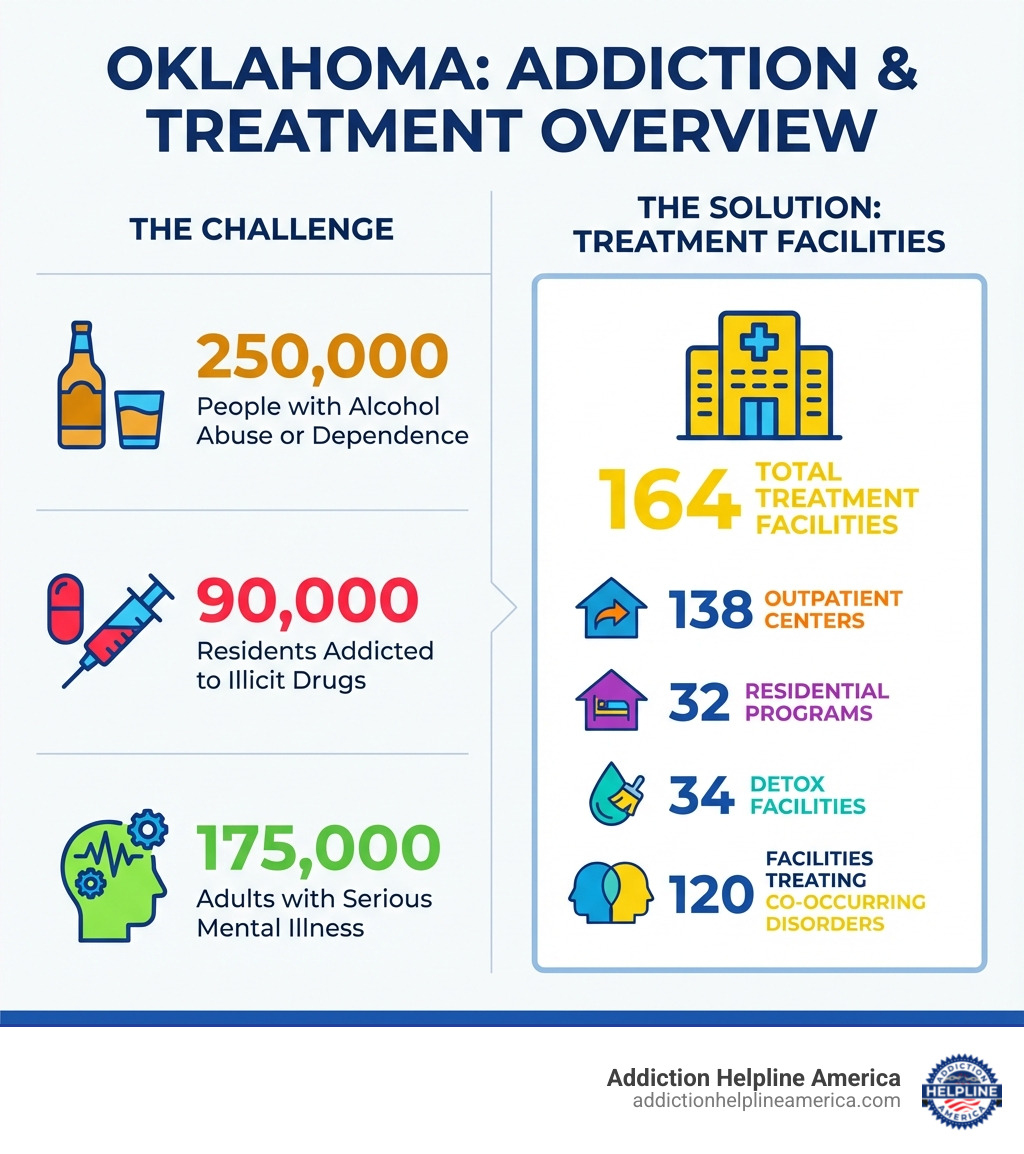
Drug treatment centers in Oklahoma offer comprehensive care for individuals struggling with substance abuse, ranging from medical detox and residential programs to intensive outpatient services and specialized dual diagnosis treatment. The state has 164 substance use treatment facilities, including 138 outpatient centers, 32 residential programs, and 34 detox facilities, with many accepting insurance, Medicaid, Medicare, and offering financial assistance.
Quick Guide to Oklahoma Drug Treatment Options:
| Treatment Type | Number of Facilities | Best For |
|---|---|---|
| Outpatient Treatment | 138 facilities | Maintaining work/family while in treatment |
| Residential/Inpatient | 32 facilities | Severe addiction requiring 24/7 care |
| Detox Services | 34 facilities | Safe withdrawal management |
| Co-Occurring Disorder Treatment | 120 facilities | Addiction plus mental health issues |
| Medication-Assisted Treatment (MAT) | 69 providers | Opioid or alcohol use disorder |
Oklahoma faces significant substance abuse challenges. Out of a population of 4 million, approximately 250,000 residents struggle with alcohol abuse, while 90,000 are addicted to illicit drugs. Methamphetamines remain particularly devastating, involved in nearly two-thirds of overdose deaths in 2020. Additionally, 175,000 adults in Oklahoma deal with serious mental illness, making co-occurring disorder treatment critical for lasting recovery.
The good news? Recovery is absolutely possible, and you don’t have to steer this journey alone.
Whether you’re seeking help for yourself or a loved one, understanding your options is the first step. Oklahoma’s treatment centers offer everything from serene, nature-based residential programs to flexible outpatient services that work around your schedule. Many facilities provide specialized care for veterans, women with children, young adults, and those with co-occurring mental health conditions. The average cost of treatment in Oklahoma is $54,475, but numerous payment options exist—including insurance coverage, Medicaid, Medicare, sliding scale fees, and financial aid programs.
Don’t let confusion or cost stop you from getting help. At Addiction Helpline America, we’ve spent years connecting Oklahoma residents with the right treatment centers for their unique needs, providing free and confidential guidance 24/7. Our team understands the landscape of drug treatment centers in Oklahoma and can help you find a program that fits your situation, budget, and recovery goals.
Learn more about drug treatment centers in oklahoma:
Understanding the Landscape of Addiction in Oklahoma
Oklahoma, often called the “Sooner State,” is a place of resilience and community. However, like many states across the nation, it faces significant challenges with substance abuse. Understanding these challenges is the first step toward finding effective solutions and supporting those in need.
Our state’s population stands at 4 million, and the statistics reveal a concerning picture. An estimated 250,000 residents struggle with alcohol abuse or dependence, while another 90,000 are battling addiction to illicit drugs. These numbers highlight the widespread impact of substance use disorder on families and communities throughout Oklahoma.
One of the most pressing concerns is the methamphetamine crisis. This powerful stimulant has been involved in nearly two-thirds of overdose deaths in Oklahoma in 2020, making it the most commonly abused substance in overdose fatalities. The dangers of prescription opioid abuse also continue to be a serious issue, alongside the growing threat of fentanyl, a synthetic opioid that is incredibly potent and often found mixed into other drugs, leading to accidental overdoses.
Beyond the immediate crisis, we also recognize the deep connection between addiction and mental health. Roughly 175,000 adults in Oklahoma contend with a serious mental illness. This overlap is crucial because mental health disorders can both contribute to and be exacerbated by substance abuse, creating a complex cycle that requires integrated care.

Commonly Abused Substances
In Oklahoma, a range of substances contribute to the addiction crisis, each with its unique challenges and treatment needs. Understanding which substances are most commonly abused helps us tailor treatment approaches for greater effectiveness:
- Alcohol: Alcohol remains one of the most widely abused substances, affecting a quarter of a million Oklahomans. Its accessibility and social acceptance can often mask the severity of dependence until it reaches a critical stage.
- Marijuana: Despite changing perceptions, marijuana is the most commonly cited drug among primary drug treatment admissions in the state, indicating a significant need for treatment for cannabis use disorder.
- Methamphetamines: As mentioned, methamphetamines are a major concern, particularly due to their high involvement in overdose deaths. The stimulant’s powerful effects can lead to rapid addiction and severe health consequences.
- Fentanyl: This highly dangerous synthetic opioid has infiltrated the drug supply, often unknowingly, contributing to a rise in overdose fatalities. Awareness and immediate medical intervention are critical for fentanyl addiction.
- Prescription Painkillers: The misuse of prescription opioids continues to be a problem, leading to dependence and often a transition to illicit opioids when prescriptions run out or become too expensive.
It’s also important to remember that these substance use disorders often do not occur in isolation. Many individuals struggle with co-occurring mental health disorders, making integrated treatment essential.
The Importance of Co-Occurring Disorder Treatment
When someone struggles with both a substance use disorder and a mental health condition, such as anxiety, depression, or trauma, it’s known as a dual diagnosis. This isn’t just two separate problems happening at once; these conditions often interact and exacerbate each other. For example, individuals might use substances to cope with mental health symptoms, or substance abuse might worsen an underlying mental illness.
The good news is that many drug treatment centers in Oklahoma understand this complex relationship. Our research shows that 120 facilities in Oklahoma indicate that they treat for co-occurring disorders. This means they offer an integrated care approach, where both the addiction and the mental health issues are treated simultaneously by a team of specialists. This holistic approach is far more effective than treating one condition in isolation, as it addresses the root causes and interconnected symptoms, leading to more sustainable recovery.
Treating anxiety, depression, and trauma alongside addiction is crucial for healing the whole person. We believe that true recovery encompasses mental, emotional, and physical well-being. If you or a loved one are facing this dual challenge, know that specialized help is available right here in Oklahoma.
Find help for co-occurring disorders
Comparing 5 Top-Tier Drug Treatment Center Archetypes in Oklahoma
Finding the right treatment center can feel like searching for a needle in a haystack. There are many excellent drug treatment centers in Oklahoma, each with its unique strengths and specialties. To help simplify your search, we’ve identified five archetypes of top-tier facilities based on our extensive research and experience. These archetypes represent common strengths and focuses you’ll find in Oklahoma’s recovery landscape, guiding you on what to look for based on your specific needs.
Our goal at Addiction Helpline America is to connect you with the perfect fit. We offer free, confidential, and personalized guidance to help you steer these options. Call us at 844-561-0606 to find a specific center that matches these qualities and your individual journey towards recovery.
1. The Holistic, Accredited Center
These centers stand out for their commitment to comprehensive, evidence-based care within a highly structured and supportive environment. They often boast impressive accreditations, signifying a commitment to the highest standards of quality and patient safety.
Key Features:
- Accreditations: Look for facilities with CARF (Commission on Accreditation of Rehabilitation Facilities) accreditation for programs like Detoxification/Withdrawal Management and Residential Treatment. Recognition from the Oklahoma Department of Mental Health and Substance Abuse Services (ODMHSAS) with a Special Distinction certification is also a strong indicator of excellence.
- Co-Occurring Disorders: These centers excel at treating co-occurring mental health disorders (dual diagnosis) alongside substance abuse, understanding that healing requires addressing both.
- Serene Campus Environment: Many accredited centers, like INTEGRIS Health Arcadia Trails, are situated in peaceful, natural settings, offering a tranquil backdrop conducive to healing and introspection. Think rolling hills, quiet lakes, and a campus designed for recovery.
- Comprehensive Care: They typically provide a full continuum of care, including medically supervised detox, residential inpatient programs, and intensive outpatient options.
- Therapeutic Modalities: Expect a blend of individual therapy, group therapy, family counseling, and often holistic therapies that address mind, body, and spirit. Medication-Assisted Treatment (MAT) may also be integrated.
These centers are ideal for individuals seeking a high-quality, well-rounded program that prioritizes clinical excellence and a supportive atmosphere.
Learn about holistic treatment options
2. The Long-Standing, Community-Based Program
For many, recovery thrives in an environment built on decades of experience, strong community ties, and the proven principles of mutual support. These centers often have a rich history of helping people reclaim their lives.
Key Features:
- Decades of Experience: With a history spanning 50 years or more, these programs have refined their approach and built a legacy of successful recoveries, like Valley Hope, which has been helping people since 1974.
- Supportive, Community-Focused Setting: They foster a strong sense of belonging and peer support, often in a rural, relaxed atmosphere that encourages connection and shared healing. The “milieu therapy” approach, where the entire environment is therapeutic, is often central.
- Strong 12-Step Integration: The principles of 12-Step programs (like AA and NA) are often woven into the fabric of their treatment, providing a framework for spiritual growth and ongoing recovery. Patients may receive introductions and facilitation to 12 Step meetings.
- Extensive Counseling: Patients can expect a high volume of therapeutic engagement, sometimes exceeding 40 hours per week of individual counseling, group therapy, and 12-Step sessions.
- Continuum of Care: These centers often provide medically-monitored detox, residential treatment, and family counseling, emphasizing a journey of recovery that extends beyond the initial stay.
This archetype is best suited for those who value tradition, a strong sense of community, and a comprehensive, immersive treatment experience.
3. The Technology-Integrated, Trauma-Informed Facility
In an evolving world, some centers accept innovation to offer personalized, data-driven treatment, often with a deep understanding of trauma’s role in addiction. These facilities leverage modern tools while prioritizing compassionate care.
Key Features:
- Data-Driven Care: These centers might integrate cutting-edge wearable technology and biotech solutions to gather biometric data, allowing for highly personalized and measurable treatment plans. This means recovery isn’t guesswork; it’s informed by your unique physiological and psychological responses.
- Trauma-Informed Approach: They recognize that addiction often stems from underlying trauma. Treatment is designed to address past experiences gently and effectively, helping individuals heal from the inside out.
- Dual-Diagnosis Focus: A strong emphasis is placed on treating co-occurring mental health disorders alongside substance abuse, ensuring comprehensive psychological and emotional healing.
- Specialized Support: Look for programs offering specialized tracks for specific populations, such as veterans or first responders, who often carry unique traumas and needs.
- Peer Support and Wellness Amenities: They foster a strong peer recovery support system and may offer creative therapies like art therapy, meditation, and recreational activities in a peaceful environment.
This type of center is ideal for individuals looking for a modern, personalized approach to recovery, especially those with a history of trauma or specific professional backgrounds.
Information on veteran support
4. The Specialized Urban Outpatient Clinic
Not everyone can commit to a residential stay, and that’s perfectly understood. Urban outpatient clinics offer flexibility, allowing individuals to maintain their daily responsibilities while receiving high-quality care.
Key Features:
- Intensive Outpatient (IOP) and Continuing Care: These programs provide structured therapy multiple times a week but allow patients to live at home. They are excellent for stepping down from residential care or for those who don’t require 24/7 supervision. Continuing care ensures ongoing support post-IOP.
- Flexible Schedules: Located in or near major cities like Oklahoma City, these clinics often offer day and evening appointments to accommodate work, school, and family commitments.
- Virtual Family Support: Many provide virtual family care options, allowing loved ones to participate in the recovery process regardless of their physical location, strengthening the family unit.
- Medication-Assisted Treatment (MAT): Urban clinics frequently offer MAT options, especially for opioid and alcohol use disorders, integrating FDA-approved medications with counseling and behavioral therapies.
- Accessibility: Their urban locations make them easily accessible via public transportation or short commutes, reducing logistical barriers to treatment.
This archetype is perfect for individuals who need to balance treatment with life’s demands, offering a blend of support, flexibility, and evidence-based therapies.
5. The Women-and-Children-Focused Sanctuary
Recognizing the unique challenges women face in addiction, these specialized centers provide a safe, nurturing environment, often with the ability to keep mothers and children together during treatment.
Key Features:
- Programs for Mothers with Children: Centers like the Tulsa Women and Children’s Center or Resonance Center for Women Inc. may offer facilities where mothers can reside with their young children, removing a significant barrier to seeking help.
- Support for Women’s Unique Needs: Treatment is custom to address gender-specific issues, including trauma, domestic violence, parenting challenges, and societal pressures that disproportionately affect women.
- Trauma-Informed Care for Women: A deep understanding of the prevalence of trauma in women’s lives informs all aspects of treatment, creating a safe space for healing without re-traumatization.
- Family Reunification Support: Beyond immediate treatment, these centers often provide resources and counseling to support healthy family dynamics and successful reunification, if applicable.
- Court-Ordered Programs: Some facilities, like Resonance Center for Women, specialize in working with women under court order, providing a structured pathway to recovery for justice-involved individuals.
These centers offer invaluable support for women, particularly mothers, ensuring they receive the specialized, empathetic care they need to recover and rebuild their lives.
Find supportive rehab options in Oklahoma
How to Pay for Addiction Treatment in Oklahoma
The cost of addiction treatment is a significant concern for many individuals and families. We understand that financial worries can feel overwhelming, but we want to assure you: don’t let cost be a barrier to recovery. There are numerous options available to help make treatment affordable and accessible.
The average cost for a person in Oklahoma seeking substance abuse treatment is $54,475. However, this is just an average, and the actual cost can vary widely. Several factors influence the price tag, including:
- Type of Program: Residential programs are typically more expensive than outpatient programs due to 24/7 care, accommodation, and meals.
- Length of Stay: Longer programs naturally incur higher costs.
- Services Included: Specialized therapies, medical detox, medication-assisted treatment (MAT), and amenities can impact the overall price.
- Facility Location and Amenities: Luxury facilities with extensive amenities will cost more than basic, community-focused centers.
- Insurance Coverage: Whether a facility is in-network or out-of-network with your insurance plan significantly affects your out-of-pocket expenses.
The first step is often to verify your insurance benefits. Many facilities have admissions teams that can help you understand what your plan covers. If you’re feeling lost, our team at Addiction Helpline America can also provide free, confidential guidance to help you steer these financial questions.

Navigating Payment Options for Oklahoma Rehab
Understanding the various ways to pay for drug treatment centers in Oklahoma is crucial. Here’s a breakdown of common payment options:
| Payment Option | Coverage Details | Eligibility | Pros | Cons |
|---|---|---|---|---|
| Private Insurance | Varies by plan (deductibles, co-pays, in/out-of-network) | Individuals with employer-sponsored or private health plans | Significant cost reduction | High deductibles, limited in-network options |
| Oklahoma Medicaid (SoonerCare) | Covers many addiction treatment services, including outpatient, inpatient, detox, MAT | Low-income individuals and families meeting state criteria | Low to no out-of-pocket cost | May have limited facility choices or waitlists |
| Medicare | Covers inpatient hospital stays, doctor visits, and some outpatient treatment | Individuals 65+, some younger people with disabilities | Covers essential medical/treatment costs | May not cover all treatment types (e.g., long-term residential) |
| Self-Pay/Financing | Direct payment from savings, loans, payment plans | Anyone, especially those without insurance or wanting specific facility | More choice of facilities, faster admission | High upfront cost, potential debt |
Insurance, Medicaid, and Other Financial Aid
Thanks to the Affordable Care Act (ACA) and the Mental Health Parity and Addiction Equity Act (MHPAEA), most health insurance plans are mandated to cover substance use and mental health services. This is a huge step forward in making treatment accessible.
- Private Health Insurance: If you have a private health insurance plan, understand your benefits. Many drug treatment centers in Oklahoma are in-network with major insurance providers like Aetna, Blue Cross Blue Shield, and Cigna. Being in-network means lower out-of-pocket costs for you. However, some plans may require you to pay a deductible or co-pay. Our team at Addiction Helpline America can help you steer this by verifying your insurance coverage, often in just a few minutes.
- Oklahoma Medicaid (SoonerCare): SoonerCare is Oklahoma’s Medicaid program, providing health coverage to eligible low-income individuals and families. It often covers a wide range of addiction treatment services, including inpatient, outpatient, and medication-assisted treatment. This can be a lifeline for those who wouldn’t otherwise be able to afford care.
- Medicare Coverage: For individuals aged 65 and older, or those with certain disabilities, Medicare can cover various addiction treatment services, including inpatient hospital stays, doctor visits, and some outpatient programs.
- Sliding Scale Fees, Grants, and Scholarships: Many non-profit drug treatment centers in Oklahoma offer services on a sliding scale, meaning the cost is adjusted based on your income. Additionally, some state and federal grants, as well as private scholarships, are available to help cover treatment expenses. Specific tribal governments in Oklahoma also offer recovery resources and financial aid for members of federally recognized Native American nations.
Financial concerns should never deter you from seeking help. We encourage you to reach out and explore all available options.
Verify your insurance coverage now
How to Find the Most Suitable Drug Rehab Center in Oklahoma
Finding the right drug treatment center in Oklahoma is a deeply personal journey. What works for one person may not work for another, and that’s perfectly okay! Our goal at Addiction Helpline America is to help you find a program that truly aligns with your unique needs, increasing your chances for a successful and lasting recovery.
The process begins with assessing your specific needs. Consider:
- Substance of Abuse: Are you struggling with alcohol, opioids, stimulants, or multiple substances? Some centers specialize in certain addictions.
- Severity of Addiction: Do you require medical detox, or is your addiction less severe, allowing for outpatient care?
- Co-Occurring Conditions: Do you also have a mental health disorder like depression, anxiety, or PTSD? Integrated dual diagnosis treatment is vital in such cases.
- Location Preference: Do you prefer a center close to home, or would a change of scenery in a more rural or urban setting be beneficial?
- Personal Values: Are there specific cultural, spiritual, or therapeutic approaches that resonate with you?
The importance of a personalized match cannot be overstated. A program that fits your individual circumstances will provide the most effective care and support. Don’t feel pressured to choose the first option you find. Take your time, ask questions, and allow us to help you find the best path forward. Call our 24/7 helpline at 844-561-0606 for a free assessment and personalized guidance.
Finding the Best Drug Treatment Centers in Oklahoma for Your Needs
Once you have a general idea of your needs, reaching out to admissions counselors is the next critical step. They are there to answer your questions and guide you through the process. Here are some key questions we recommend asking:
- What accreditations do you have? (Look for CARF, Joint Commission, ODMHSAS Special Distinction, LegitScript, NAATP membership.)
- What is your approach to dual diagnosis? (How do they treat co-occurring mental health disorders alongside addiction?)
- What therapies do you use? (Are they evidence-based? Do they offer individual, group, family, trauma-informed, or experiential therapies?)
- What is the patient-to-staff ratio? (A lower ratio often means more personalized attention.)
- What does aftercare planning involve? (How do they support long-term recovery after the program ends?)
- What are your payment options, and do you accept my insurance? (Be upfront about financial concerns.)
- Do you have specialized programs for veterans, women, young adults, or specific cultural groups?
- What is the typical duration of your programs (e.g., 30, 60, 90 days)?
Asking these questions will give you a clearer picture of whether a center is the right fit. You’re looking for a partner in your recovery journey, and finding the right one is worth the effort.
The Role of Aftercare and Transitional Housing
Completing an inpatient or intensive outpatient program is a monumental achievement, but it’s just one step on the path to lasting recovery. The period immediately following primary treatment is crucial for solidifying new habits and coping mechanisms. This is where aftercare and transitional housing play an indispensable role.
- Relapse Prevention Planning: Effective treatment centers will work with you to develop a robust relapse prevention plan. This involves identifying triggers, developing healthy coping strategies, and establishing a support system.
- Sober Living Homes: Also known as halfway houses, sober living homes provide a safe, structured, and drug-free environment for individuals transitioning back into independent living. They offer accountability, peer support, and a sense of community, helping residents practice sobriety in a real-world setting. Oxford House Stride, for example, offers such an environment.
- Continuing Care Groups: These can include ongoing group therapy, individual counseling, or participation in 12-Step meetings (like Alcoholics Anonymous or Narcotics Anonymous). These groups provide ongoing support, allow for sharing experiences, and reinforce recovery principles.
- Alumni Programs: Many drug treatment centers in Oklahoma offer alumni programs, connecting former patients with each other and with the treatment center for continued support, events, and mentorship. This fosters a strong, enduring recovery community.
- Building a Sober Support Network: Aftercare emphasizes building a strong network of sober friends, family, and mentors. This network provides encouragement, accountability, and a sense of belonging, which are vital for long-term sobriety.
The Oklahoma Department of Mental Health and Substance Abuse Services (ODMHSAS) also provides valuable resources and oversight for these crucial stages of recovery.
Official resources from the Oklahoma Department of Mental Health and Substance Abuse Services
Frequently Asked Questions about Oklahoma Rehab
We know you might have more questions as you explore options for drug treatment centers in Oklahoma. Here are answers to some common inquiries:
What amenities can I expect at Oklahoma drug rehab facilities?
The amenities offered by drug treatment centers in Oklahoma can vary significantly, ranging from basic, comfortable environments to more resort-like settings. However, many facilities strive to provide a comfortable and healing atmosphere. You can often expect:
- Serene, Natural Settings: Many centers, especially residential ones, are located in peaceful, private, or rural areas, offering a tranquil environment conducive to healing. Think campuses with walking trails, green spaces, and beautiful views.
- Private or Semi-Private Rooms: Accommodation typically includes private or semi-private rooms, providing a sense of personal space and privacy during treatment.
- Recreational Activities: To promote physical and mental well-being, facilities may offer activities such as sports fields, fitness centers, art therapy studios, meditation spaces, or even swimming pools.
- Nutritious Dining: Meals are usually prepared on-site, focusing on healthy, balanced nutrition to support physical recovery. Dietary restrictions are often accommodated.
- Common Areas: Comfortable lounges, group therapy rooms, and outdoor spaces are common, designed to foster community and reflection.
The focus is generally on creating an environment where individuals can feel safe, supported, and focused entirely on their recovery journey.
How do Oklahoma rehabs support veterans?
Oklahoma has a strong commitment to supporting its veteran population, and many drug treatment centers in Oklahoma offer specialized programs custom to their unique needs. These programs often include:
- Specialized Veteran Tracks: Dedicated programs or groups specifically for veterans, allowing them to connect with peers who share similar experiences.
- Trauma-Informed Care for PTSD: A deep understanding of post-traumatic stress disorder (PTSD) and other combat-related traumas, with therapies designed to address these complex issues alongside addiction.
- Staff Trained in Military Culture: Counselors and staff who are knowledgeable about military life, culture, and the specific challenges veterans face during and after service.
- Peer Support with Other Veterans: Opportunities for veterans to support each other, fostering a sense of camaraderie and understanding that can be incredibly therapeutic.
- Coordination with VA Benefits: Assistance in navigating Veterans Affairs (VA) benefits to ensure veterans receive the full scope of care they are entitled to. The Eastern Oklahoma VA Health Care System also provides direct services.
If you are a veteran or know one struggling with addiction, finding a program with these specialized supports can make a profound difference.
Find a veteran-supportive program
What is Medication-Assisted Treatment (MAT)?
Medication-Assisted Treatment (MAT) is an evidence-based approach that combines FDA-approved medications with counseling and behavioral therapies to treat substance use disorders, particularly opioid use disorder (OUD) and alcohol use disorder (AUD).
- Use of FDA-Approved Medications: Medications like buprenorphine, naltrexone, and methadone are used to reduce cravings, block the effects of opioids, or alleviate withdrawal symptoms, making recovery more manageable and reducing the risk of relapse.
- Combined with Counseling and Behavioral Therapies: MAT is not just about medication; it’s a holistic approach. The medications work in conjunction with individual and group counseling, as well as other behavioral therapies, to address the psychological and emotional aspects of addiction.
- Treats Opioid and Alcohol Use Disorders: MAT is highly effective for both OUD and AUD, helping individuals stabilize and engage more fully in their recovery process.
- Reduces Cravings and Withdrawal Symptoms: By addressing the physical components of addiction, MAT helps individuals focus on their therapy without the constant distraction and discomfort of cravings and withdrawal.
- A Key Part of Evidence-Based Treatment: Numerous studies have shown that MAT improves patient survival, increases retention in treatment, and decreases illicit drug use and criminal activity. It is considered the gold standard for treating opioid and alcohol dependence.
Many drug treatment centers in Oklahoma, especially outpatient clinics and those offering comprehensive medical detox, integrate MAT into their treatment plans.
Take the First Step Towards a New Life
We understand that seeking help for addiction can be daunting. The path to recovery often feels long and challenging, filled with uncertainty and fear. But we want to reassure you: recovery is possible, and you are not alone. Every day, countless individuals find their way to a brighter, healthier future, and you can be one of them.
Imagine a life free from the grip of addiction, where you can reconnect with loved ones, pursue your passions, and experience true peace. This brighter future awaits you, and the first step is often the hardest, but also the most courageous.
At Addiction Helpline America, we are here to walk alongside you. We provide free, confidential, and personalized guidance to help you steer the complex world of drug treatment centers in Oklahoma. Our team of compassionate specialists understands the landscape, the challenges, and most importantly, the hope that recovery brings. We will listen to your story, understand your needs, and connect you with the right program that aligns with your specific situation, all at no cost to you.
Don’t let another day pass in silence or struggle. Take that courageous first step.
Call 844-561-0606 now to speak with a caring specialist and start your journey towards a new life.