
Finding Hope and Healing in Los Angeles
Drug treatment centers in Los Angeles offer comprehensive care for individuals struggling with addiction, providing everything from medical detox to long-term recovery support.
Quick Guide to LA Treatment Options:
- Medical Detox Centers: Safe, supervised withdrawal management (typically 5-7 days)
- Residential/Inpatient Programs: 24/7 care in a structured environment (30-90+ days)
- Outpatient Services: Flexible treatment including PHP, IOP, and standard outpatient care
- Specialized Programs: Dual diagnosis treatment, trauma-informed care, holistic approaches
- Sober Living Homes: Transitional housing with peer support
- Free Resources: County-run programs, sliding scale fees, and Medicaid/Medicare acceptance
Key Facts:
- Los Angeles County has over 325 licensed rehab facilities
- An estimated 725,000 people in LA County need substance use treatment support
With more than 10 million residents, Los Angeles County has one of the largest populations needing substance use services in the nation. From government-funded programs to specialized private facilities, there are options in nearly every neighborhood.
Whether you’re facing addiction to alcohol, opioids, methamphetamine, or other substances, you are not alone. Recovery is possible, and the journey often begins with understanding what resources are available.
Addiction Helpline America has helped countless individuals and families steer drug treatment centers in Los Angeles, connecting them with appropriate care through free, confidential support services.
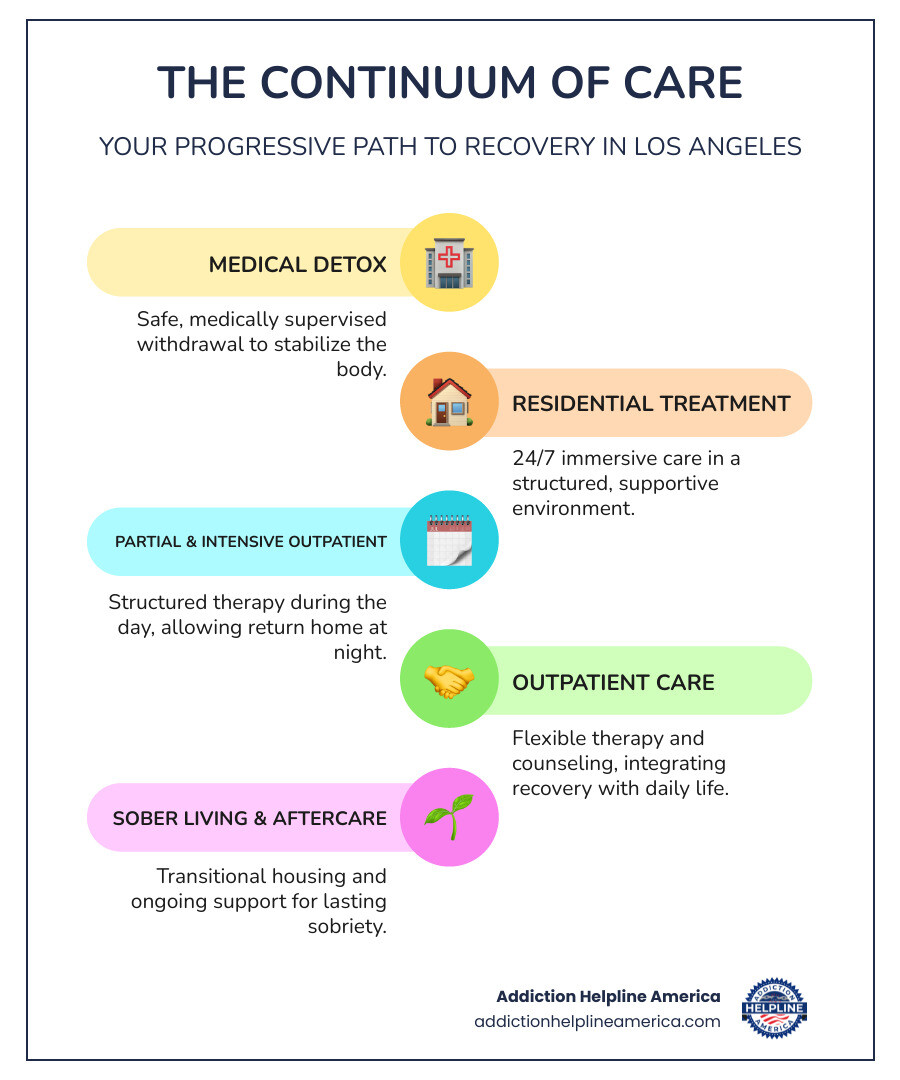
Handy drug treatment centers in Los Angeles terms:
Understanding the Need for Treatment in a Major City
Substance Use Disorder (SUD) is a complex medical condition, not a moral failing. It changes how the brain works and can lead to compulsive use despite harm. In Los Angeles, with its vast population, the prevalence of SUD is significant.
Approximately 50% of people with substance use disorders also experience conditions like anxiety, depression, or PTSD. This is known as a dual diagnosis, requiring integrated treatment that addresses both substance use and mental health together. For more scientific insights, see scientific research on co-occurring disorders.
The First Step: Recognizing the Signs
Recognizing that you or a loved one needs help is often the hardest, yet most vital, first step. Addiction can show up in many ways:
- Behavioral changes: Secretiveness, neglecting responsibilities, changes in social circles
- Physical symptoms: Changes in appearance, sleep, energy; withdrawal symptoms
- Psychological signs: Mood swings, anxiety, depression, irritability
- Impact on relationships: Conflict with loved ones, declining performance, job loss
Denial is common, but addiction is a powerful disease that often requires professional help. Reaching out is not weakness; it is a strong, life-affirming choice.
Why Los Angeles Can Be an Ideal Place for Recovery
Los Angeles offers unique advantages for individuals seeking healing:
- A vibrant recovery community with extensive AA, NA, and other support meetings
- Diverse therapeutic approaches including evidence-based and culturally sensitive care
- Sober-friendly attractions like beaches, museums, and parks
- Proximity to nature for outdoor therapy and mindfulness
To explore more about treatment options across the state, visit More info about California treatment options.
Navigating the Landscape of Drug Treatment Centers in Los Angeles

Finding the right drug treatment center in Los Angeles can feel overwhelming given the number of options. Understanding the continuum of care can make the process easier.
Levels of Care: A Path for Every Stage of Recovery
-
Medical Detox: Often the first step, providing medically supervised withdrawal management over 5-7 days. Find options like Find a detox center near you.
-
Inpatient/Residential Treatment: Structured, substance-free environment for 30-90+ days with therapy and support activities.
-
Partial Hospitalization Programs (PHP): Intensive day treatment with clients returning home at night.
-
Intensive Outpatient Programs (IOP): 9-20 hours weekly of therapy while maintaining work or family responsibilities.
-
Standard Outpatient Programs: Less frequent sessions for ongoing support.
-
Sober Living Homes: Drug-free residences providing structure and peer support.
-
Aftercare Support: Long-term recovery through ongoing therapy and support groups.
Specialized Programs for Unique Needs
Many drug treatment centers in Los Angeles offer specialized tracks:
- Dual Diagnosis Treatment: Integrated care for co-occurring disorders
- Trauma-Informed Care: Sensitive approaches to past trauma
- Holistic Therapies: Yoga, meditation, art therapy, nutrition support
- Gender-Specific Programs: Custom environments
- LGBTQ+ Affirming Care: Inclusive, culturally competent services
- Programs for Professionals: Confidential, flexible options
- Family Services: Therapy and education for loved ones
Explore specialized options at explore dual diagnosis treatment options.
How to Choose the Right LA Rehab for You
Choosing the right drug treatment center in Los Angeles is a personal decision. The goal is finding a program that feels safe, aligns with your values, and provides appropriate clinical care.
Verifying Credentials and Quality of Care
To protect yourself or your loved one:
- Accreditation: Look for Joint Commission (JCAHO) or CARF accreditation
- State Licensing: Verify licensing through California Department of Health Care Services (DHCS)
- Staff Qualifications: Confirm licensed therapists and medical staff
- Evidence-Based Practices: Ensure CBT, DBT, and MAT availability
- Patient Reviews: Consider alongside clinical quality measures
Understanding Costs and Insurance Coverage
| Level of Care | Typical Duration | Estimated Cost Range |
|---|---|---|
| Medical Detox | 5-10 days | $3,000 – $8,000 |
| Inpatient/Residential | 30-90 days | $10,000 – $60,000+ |
| Outpatient (IOP/PHP) | 30-90 days | $3,000 – $10,000 |
Payment Options:
- Private Insurance (PPO/HMO)
- Medicaid/Medi-Cal
- State-Funded Programs
- Self-Pay & Financing
Don’t let financial worries stop you from seeking help. Addiction Helpline America offers free, confidential insurance verification and assistance finding affordable programs.
Finding Treatment Resources in Los Angeles
This section provides a starting point for your search. For personalized guidance, Addiction Helpline America is always available.
Types of Treatment Resources
- County-Run Programs: Low or no-cost services through LA County Department of Public Health
- Private Residential Facilities: Specialized care with various amenities
- Outpatient Clinics: Flexible schedules for therapy and support
- Community Counseling Services: Non-profit agencies with sliding fee scales
Essential Support and Government Resources
- LA County SAPC: Primary resource for county-funded services
- SAMHSA: National helpline at 1-800-662-HELP (4357) and findtreatment.gov
- Local Support Groups: AA, NA, SMART Recovery throughout LA County
- View a comprehensive list of LA facilities
If you feel unsure where to begin, Addiction Helpline America can help you sort through these resources and choose the next step that feels right for you.
Finding Hope and Healing in Los Angeles
Drug treatment centers in Los Angeles offer comprehensive care for individuals struggling with addiction, providing everything from medical detox to long-term recovery support.
Quick Guide to LA Treatment Options:
- Medical Detox Centers: Safe, supervised withdrawal management (typically 5-7 days)
- Residential/Inpatient Programs: 24/7 care in a structured environment (30-90+ days)
- Outpatient Services: Flexible treatment including PHP, IOP, and standard outpatient care
- Specialized Programs: Dual diagnosis treatment, trauma-informed care, holistic approaches
- Sober Living Homes: Transitional housing with peer support
- Free Resources: County-run programs, sliding scale fees, and Medicaid/Medicare acceptance
Key Numbers:
- 325+ licensed rehab facilities in Los Angeles County
- Over 140 state-licensed treatment beds available through county-affiliated programs
- 373 recovery bridge housing beds available
- 725,000 people in LA County need treatment support
With over 10 million residents, Los Angeles County has one of the largest populations requiring substance use services in the nation. The need for accessible, quality treatment is great, but so is the network of care. Across the county, you will find government-funded programs, community-based services, and specialized private facilities serving diverse communities in every neighborhood.
Whether you are struggling with alcohol, opioids, methamphetamine, or other substances, you are not alone. Recovery is possible. Often, the first step is simply learning what resources are available and talking with someone who understands the system.
Addiction Helpline America has helped many individuals and families steer drug treatment centers in Los Angeles, connecting them with appropriate care through free, confidential support services. Our experienced team understands the unique challenges of seeking treatment in a large city and is ready to walk alongside you.
If you are ready to explore your options or just need someone to listen, call 844-561-0606 today.
Handy drug treatment centers in los angeles terms:
Understanding the Need for Treatment in a Major City
Substance Use Disorder (SUD) is a medical condition, not a character flaw. It affects how the brain processes reward, stress, and self-control, leading to ongoing use despite serious consequences. In a large, city like Los Angeles, with its immense population and constant activity, many people struggle with SUD—often in silence.
The Los Angeles-Long Beach-Santa Ana metro area sees an estimated 1.6 million people using illicit drugs in a given year. Yet behind every statistic is a person with a story, relationships, and the potential for recovery.
Co-Occurring Disorders and Integrated Care
Nearly half of people with a substance use disorder also live with a mental health condition such as anxiety, depression, bipolar disorder, or PTSD. This is commonly referred to as a dual diagnosis. Treating only one condition while ignoring the other can leave people vulnerable to relapse.
Integrated, dual-diagnosis care addresses both substance use and mental health at the same time. This approach can include therapy, medication management, and support groups designed for people facing both challenges. For more scientific information about co-occurring disorders, visit scientific research on co-occurring disorders.
The First Step: Recognizing the Signs
Signs of SUD can differ from person to person, but commonly include:
- Behavioral changes: Secretiveness, isolation, neglecting responsibilities, or withdrawal from activities once enjoyed.
- Physical symptoms: Noticeable changes in sleep, weight, or energy; frequent illnesses; or withdrawal symptoms like headaches, nausea, chills, or tremors when not using.
- Psychological signs: Increased anxiety, depression, irritability, mood swings, or paranoia.
- Impact on relationships and work: Growing conflict, broken trust, financial problems, job loss, or academic decline.
It is common to minimize these signs or hope things will improve on their own. Asking for help can feel scary, but it is also one of the most courageous steps you can take.
If you are not sure whether you or a loved one needs treatment, you do not have to figure it out alone. Call 844-561-0606 for a free, confidential assessment with Addiction Helpline America. A caring professional will listen, answer questions, and help you consider your options.
Why Los Angeles Can Be an Ideal Place for Recovery
Los Angeles offers a unique environment for healing and recovery:
- A vibrant recovery community with extensive AA, NA, and other support meetings.
- Access to many specialists, including addiction medicine doctors, psychiatrists, and therapists trained in evidence-based care.
- Diverse therapeutic approaches, from traditional talk therapy to culturally specific services and holistic modalities.
- Sober-friendly attractions, including beaches, museums, hiking trails, and family-friendly activities.
- Close proximity to nature, with mountains, coastline, and parks that support physical activity and stress reduction.
To see more about treatment options across California, visit More info about California treatment options or call 844-561-0606 to talk through which kind of program might be right for you.
Navigating the Landscape of Drug Treatment Centers in Los Angeles
Finding the right drug treatment center in Los Angeles can feel like a big task, but you do not have to do it alone. Understanding how the treatment system is structured can help you make clearer, more confident decisions.
Los Angeles offers care that spans from initial detox all the way through long-term aftercare. This continuum includes different levels of intensity, which can be adjusted as your needs change over time.
Levels of Care: A Path for Every Stage of Recovery
Here are the main levels of care you will encounter in the LA area:
-
Medical Detox (Withdrawal Management): Often the first step for substances like alcohol, benzodiazepines, or opioids. Detox provides 24/7 medical monitoring and medications when needed to manage withdrawal symptoms safely. Detox typically lasts 5-7 days. You can explore options such as Find a detox center near you.
-
Inpatient/Residential Treatment: After detox, some people benefit from staying in a structured environment with round-the-clock support. Residential programs typically run 30, 60, or 90 days and include therapy, education, and recovery-focused activities.
-
Partial Hospitalization Programs (PHP): PHP provides intensive treatment during the day while allowing you to return home or to sober living at night. It can be a step down from inpatient care or a starting point for those who do not need 24-hour supervision.
-
Intensive Outpatient Programs (IOP): IOP usually involves 9-20 hours of sessions each week. It offers strong support and skill-building while you work, attend school, or care for family.
-
Standard Outpatient Programs: Less intensive than IOP, outpatient care might involve weekly or biweekly sessions and is often used for ongoing support or as a step-down level of care.
-
Sober Living Homes: These are alcohol- and drug-free living environments where residents follow house rules, support each other, and practice living in recovery.
-
Aftercare Support: Ongoing therapy, alumni groups, and community meetings help maintain recovery and prevent relapse after formal treatment ends.
Specialized Programs for Unique Needs
Because Los Angeles is so diverse, many treatment centers offer specialized services, such as:
- Dual Diagnosis Treatment for co-occurring mental health and substance use disorders.
- Trauma-Informed Care that recognizes the impact of past trauma and promotes safety.
- Holistic Therapies, including yoga, meditation, art therapy, nutrition counseling, and neurofeedback.
- Gender-Specific Programs custom to experiences unique to specific genders.
- LGBTQ+ Affirming Care in a safe, inclusive environment.
- Programs for Professionals needing privacy and scheduling flexibility.
- Family Services, including therapy and education, to help rebuild trust and communication.
For help finding dual diagnosis or other specialized programs that match your needs, visit explore dual diagnosis treatment options or call 844-561-0606 to speak with a specialist.
How to Choose the Right LA Rehab for You
Choosing the right drug treatment center in Los Angeles is one of the most important choices you will make for your recovery. The right fit can increase your comfort, strengthen your motivation, and support better long-term outcomes.
When comparing programs, think about your needs, preferences, and practical realities like location, schedule, and cost.
Verifying Credentials and Quality of Care
To help ensure you receive safe, effective care, consider:
- Accreditation: Look for national accreditation from The Joint Commission (JCAHO) or CARF.
- State Licensing: Verify that the facility is licensed by the California Department of Health Care Services (DHCS). You can check licenses at the California Department of Health Care Services (DHCS).
- Staff Qualifications: Ask whether therapists and clinicians are licensed and whether there are addiction medicine physicians or psychiatrists on staff.
- Evidence-Based Practices: Look for approaches such as CBT, DBT, motivational interviewing, and Medication-Assisted Treatment (MAT) when clinically appropriate.
- Patient Reviews and Testimonials: These can provide insight into others’ experiences, though they should be considered alongside clinical quality measures.
If this feels like a lot to sort through, you do not have to do it alone. Addiction Helpline America can help you evaluate programs and ask the right questions. Call 844-561-0606 for free, confidential support.
Understanding Costs and Insurance Coverage
Costs vary, but having a general frame of reference can make conversations with providers easier.
| Level of Care | Typical Duration | Estimated Cost Range (Cash Pay) |
|---|---|---|
| Medical Detox | 5-10 days | $3,000 – $8,000 |
| Inpatient/Residential | 30-90 days | $10,000 – $60,000+ |
| Outpatient (IOP/PHP) | 30-90 days | $3,000 – $10,000 |
Common payment options include:
- Private Insurance (PPO/HMO): Many plans cover much of the cost of treatment.
- Medicaid/Medi-Cal: For eligible California residents, these programs cover substance use treatment.
- State-Funded Programs: County-funded services and sliding-scale programs based on income.
- Self-Pay & Financing: Payment plans and third-party financing options at some centers.
To understand your specific coverage and out-of-pocket costs, call 844-561-0606 for a free, confidential insurance verification and help matching with an affordable program.
A Directory of Los Angeles Treatment Resources
This section offers a starting point for finding drug treatment centers in Los Angeles and related supports. For personalized recommendations based on your needs, location, and insurance, you can always call Addiction Helpline America at 844-561-0606.
Finding Drug Treatment Centers in Los Angeles Neighborhoods
Los Angeles County includes many types of programs spread across multiple neighborhoods and communities, including:
- County-Run Programs: Services operated or funded by the Los Angeles County Department of Public Health, often low-cost or free for eligible residents.
- Private Residential Facilities: A wide range of private centers that vary in size, clinical focus, and amenities.
- Outpatient Clinics: Flexible programs offering therapy and support that can fit around work, school, or family responsibilities.
- Community Counseling Services: Non-profit and community agencies providing counseling, groups, and referrals on a sliding fee scale.
Examples of facilities in the Los Angeles area include:
- BHS Lincoln Heights Family Recovery Center
- Haven House Treatment in Los Angeles
- Alliance Recovery Drug & Alcohol Rehab
For a broader list of options, including other levels of care and specialties, you can also use Addiction Helpline America’s directory or speak directly with a helpline specialist.
Essential Support and Government Resources for Drug Treatment Centers in Los Angeles
- Los Angeles County Department of Public Health – Substance Abuse Prevention and Control (SAPC): Main access point for county-funded substance use services.
- Substance Abuse and Mental Health Services Administration (SAMHSA): National helpline and treatment locator at 1-800-662-HELP (4357) and findtreatment.gov.
- Local Support Groups: AA, NA, SMART Recovery, and other peer-led organizations that hold meetings throughout LA County.
- View a comprehensive list of LA facilities
If you are unsure which resource to start with, calling 844-561-0606 can help you sort through your options and connect quickly with appropriate support.
Navigating the Landscape of Drug Treatment Centers in Los Angeles
Finding the right drug treatment center in Los Angeles is easier when you understand how services are organized. Rather than being a single type of program, treatment is a continuum that can adapt as your needs change.
Los Angeles has programs for nearly every stage of recovery, from detox through aftercare. Knowing the main levels of care can help you and your loved ones make informed choices.
Levels of Care: A Path for Every Stage of Recovery
-
Medical Detox (Withdrawal Management): Detox is focused on managing withdrawal safely and as comfortably as possible under medical supervision. This stage is usually short-term (about 5-7 days). You can find options such as Find a detox center near you.
-
Inpatient/Residential Treatment: Residential rehab offers 24/7 support in a sober, structured environment. Programs typically last 30 to 90 days or longer and include therapy, recovery education, and wellness activities.
-
Partial Hospitalization Programs (PHP): PHP is often a step down from residential care or a higher level of outpatient care. It provides intensive treatment during the day, with evenings spent at home or in sober living.
-
Intensive Outpatient Programs (IOP): IOP offers several therapy sessions per week while allowing you to maintain many of your usual responsibilities.
-
Standard Outpatient Programs: Standard outpatient care involves less frequent visits and is often used for long-term support.
-
Sober Living Homes: These homes offer structured, substance-free living for people who are working on recovery and rebuilding their lives.
-
Aftercare Support: Alumni programs, ongoing counseling, and community-based recovery groups all help maintain sobriety over the long term.
Specialized Programs for Unique Needs
Many Los Angeles centers offer specialized services designed to address particular needs and backgrounds, including:
- Dual Diagnosis Treatment for people with co-occurring mental health and substance use disorders.
- Trauma-Informed Care that emphasizes safety, trust, and empowerment.
- Holistic Therapies such as yoga, meditation, art therapy, nutrition support, and neurofeedback.
- Gender-Specific Programs focusing on the unique experiences of specific genders.
- LGBTQ+ Affirming Care that is inclusive and culturally competent.
- Programs for Professionals with added privacy and flexible scheduling.
- Family Services, which help loved ones understand addiction, heal relationships, and support recovery.
To explore specialized dual diagnosis and other treatment options, visit explore dual diagnosis treatment options or call 844-561-0606 for guidance custom to your situation.
How to Choose the Right LA Rehab for You
Choosing a drug treatment center in Los Angeles can feel like a big decision, but you don’t have to make it alone. Focusing on key factors can help you select a program that feels safe, respectful, and clinically appropriate.
Verifying Credentials and Quality of Care
When researching rehabs:
- Accreditation: Look for Joint Commission (JCAHO) or CARF accreditation
- State Licensing: Confirm licensing through California Department of Health Care Services (DHCS)
- Staff Qualifications: Ask about licensed clinicians and medical staff
- Evidence-Based Practices: Check for CBT, DBT, and MAT availability
- Patient Reviews: Consider alongside official quality indicators
Understanding Costs and Insurance Coverage
| Level of Care | Typical Duration | Estimated Cost Range |
|---|---|---|
| Medical Detox | 5-10 days | $3,000 – $8,000 |
| Inpatient/Residential | 30-90 days | $10,000 – $60,000+ |
| Outpatient (IOP/PHP) | 30-90 days | $3,000 – $10,000 |
Common payment methods:
- Private Insurance (PPO/HMO)
- Medicaid/Medi-Cal
- State-Funded Programs
- Self-Pay & Financing
Don’t let financial fears keep you from reaching out. Addiction Helpline America offers free, confidential insurance verification and help finding a program that fits your financial situation. Recovery is possible, and support is available to guide you every step of the way.