Finding Hope and Help: Your Guide to Alabama’s Best Rehab Centers
Drug and alcohol rehab in Alabama offers a comprehensive network of treatment options for individuals and families facing addiction. With 155 treatment centers across the state, finding the right program can feel overwhelming—but help is available.
Quick Answer: Top Considerations for Alabama Rehab
- Location: Most centers cluster in Jefferson, Mobile, and Madison counties
- Cost: Average treatment cost is $58,607; daily rates range from $57 (outpatient) to $651 (inpatient)
- Insurance: 63% accept private insurance, 69% accept Medicaid, 39% accept Medicare
- Specialized Care: 82% of programs treat co-occurring mental health disorders
- Payment Options: 56% offer low-cost or free programs; 88% accept cash/self-payment
- MAT Availability: 21 certified Opioid Treatment Programs operate statewide
Alabama provides diverse options—from detox to outpatient care—to match your specific needs. The state’s Department of Mental Health regulates public substance use services to ensure accessible, quality care.
As Jenny T., a Bradford recovery program participant, shared: “If it wasn’t for Bradford and all the amazing people who have become a part of my family, I wouldn’t be here today nor have the courage to face my demons head-on and fight for living.”
At Addiction Helpline America, we guide individuals and families in finding effective drug and alcohol rehab in Alabama. Our team connects you with certified providers, verifies insurance, and offers confidential 24/7 support to help you take the first step toward recovery.
Recognizing the Signs: When to Seek Addiction Treatment
Recognizing the signs of drug and alcohol addiction is the first step toward seeking help. Addiction can manifest physically, behaviorally, and psychologically, with signs often becoming more pronounced over time.
Some common indicators that might suggest a need for professional treatment include:
- Physical Symptoms: Changes in appearance (weight loss/gain, poor hygiene), withdrawal symptoms (tremors, nausea), frequent illness, or unexplained injuries.
- Behavioral and Psychological Changes: Increased secrecy, mood swings, irritability, anxiety, depression, loss of interest in hobbies, or risky behaviors.
- Neglecting Responsibilities: Missing work or school, neglecting household duties, or failing to meet commitments to family and friends.
- Relationship Problems: Strained relationships, frequent arguments, isolation, and a breakdown of trust.
- Financial Issues: Unexplained financial difficulties, borrowing or stealing money, or neglecting bills.
- Failed Attempts to Quit: Repeatedly trying to stop using a substance without success, despite negative consequences.

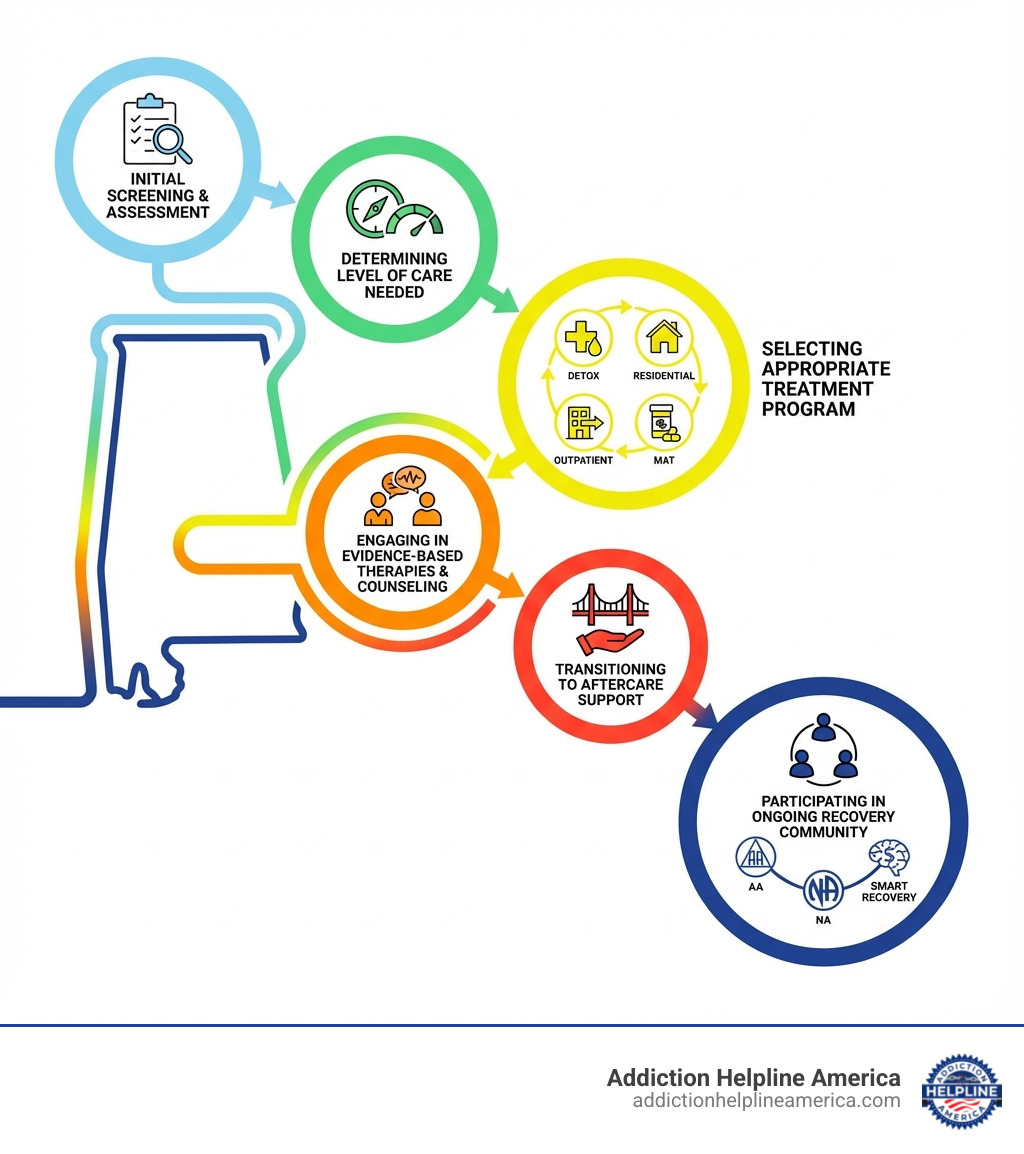
Early intervention is crucial to prevent more severe consequences. If you or a loved one show these signs, it’s time to seek help. The process in Alabama starts with a professional assessment to determine the right level of care, as outlined by the Alabama Department of Mental Health (ADMH). We can guide you through this process and connect you with providers for these vital first steps.
Navigating the Landscape of Drug and Alcohol Rehab in Alabama
Alabama provides a full continuum of care for substance use disorders, from detox to long-term support. The Alabama Department of Mental Health (ADMH) regulates public services, contracting with community providers to ensure quality and accessibility. While most of the state’s 155 treatment centers are in Jefferson, Mobile, and Madison counties, programs are available statewide.
Types of Treatment Programs
When considering drug and alcohol rehab in Alabama, you’ll find a variety of program types:
- Medical Detoxification: The first step for many, providing a safe, medically supervised environment to manage withdrawal symptoms.
- Inpatient/Residential Treatment: A structured, 24/7 program where patients live at the facility, receiving intensive therapy away from daily triggers.
- Outpatient Programs (OP): Allows individuals to live at home while attending scheduled therapy sessions, suitable for those with strong support systems.
- Intensive Outpatient Programs (IOP): More rigorous than standard outpatient, with several hours of treatment multiple days a week.
- Partial Hospitalization Programs (PHP): The most intensive outpatient option, with day-long treatment comparable to inpatient hours, while clients return home at night.
We can help you explore these options, including finding specific drug and alcohol rehab in Alabama centers like those in Columbiana, AL, that offer the right level of care for your journey.
Specialized Treatment for Unique Needs
Addiction treatment is not one-size-fits-all, and many individuals benefit from specialized programs.
A key specialization is co-occurring disorders (dual diagnosis), where a person has both a substance use disorder and a mental health condition. In Alabama, 82% of rehabs offer this integrated care. The ADMH ensures these services are available in many counties. For more on this approach, see Dual Diagnosis Anonymous (DDA).
Other specialized programs include:
- Women’s Health: Addressing unique issues like trauma and parenting. The ADMH prioritizes and may waive fees for pregnant women and mothers with dependent children.
- Veterans’ Programs: Incorporating trauma-informed care for challenges related to military service.
- Adolescent Programs: Focusing on developmental needs and family involvement.
- LGBTQ+ Friendly Programs: Providing a safe, affirming environment.
Medication-Assisted Treatment (MAT) in Alabama
Medication-Assisted Treatment (MAT) combines FDA-approved medications with counseling to treat substance use disorders, particularly for opioid and alcohol addiction. Medications like buprenorphine and methadone reduce cravings and withdrawal, helping individuals focus on therapy.
Alabama has 21 certified Opioid Treatment Programs (OTPs), and MAT services are available in many counties. This ensures access for those needing this evidence-based approach. We can help you find MAT options, such as Medmark Treatment Centers in Newton, AL, across the state.
How to Find the Best Rehab Centers in Alabama
Finding the “best” drug and alcohol rehab in Alabama means finding the right fit for your unique situation. Knowing what to look for can simplify the process.

What to Look for in a Drug and Alcohol Rehab in Alabama
When evaluating rehab centers, consider these key factors:
- Accreditation and Licensing: Look for accreditation from The Joint Commission or CARF, and state licensing from the Alabama Department of Mental Health. This ensures the center meets high standards.
- Evidence-Based Therapies: The program should use proven methods like Cognitive Behavioral Therapy (CBT), Dialectical Behavior Therapy (DBT), and Motivational Interviewing.
- Staff Credentials and Experience: Inquire about the qualifications of doctors, therapists, and counselors. Experienced, compassionate staff are key to effective treatment.
- Individualized Treatment Planning: The center should create a personalized treatment plan based on a thorough assessment of your specific needs and goals.
- Aftercare Planning: A quality program includes robust aftercare planning, such as referrals to sober living and support groups, to support long-term recovery.
At Addiction Helpline America, we can help you steer these criteria to find a center that aligns with your needs.
1. Centers with Comprehensive Dual Diagnosis Programs
Many people seeking drug and alcohol rehab in Alabama also have co-occurring mental health disorders. Comprehensive dual diagnosis programs are vital because they provide integrated treatment, addressing both the substance use disorder and conditions like depression or PTSD simultaneously.
Look for facilities that offer:
- On-site psychiatric services for diagnosis and medication management.
- Therapy that addresses both addiction and mental health.
- Staff trained in both addiction and mental health treatment.
With 82% of Alabama rehabs treating co-occurring disorders, finding integrated care is likely. We can help you explore options in Talladega, AL that use this holistic approach.
2. Top-Rated Residential Programs for Immersive Care
Residential treatment provides a structured, immersive environment away from daily triggers. It’s often recommended for those with severe addictions or who need to focus solely on recovery.
Key features of top-rated residential programs include:
- A 24/7 structured schedule of therapy and educational sessions.
- A strong peer support community.
- Life skills education for stress management and relapse prevention.
- A focus on building a foundation for long-term sobriety.
For this immersive level of care, we can help you find centers like Fresh Start Life Recovery and Transitional Program in Huntsville, AL, which offer dedicated residential support.
3. Leading Outpatient Services for Flexibility
For those who don’t require residential care or need to maintain daily responsibilities, outpatient services offer flexible yet professional support. They are ideal for individuals with strong home support or those transitioning from inpatient treatment.
Outpatient options include:
- Intensive Outpatient Programs (IOP): Structured treatment for several hours a day, a few days a week.
- Partial Hospitalization Programs (PHP): More intensive than IOPs, with day-long programming similar to inpatient care, but clients return home at night.
- Standard Outpatient Programs (OP): Fewer hours per week, ideal for ongoing support in later recovery stages.
Many centers offer evening and weekend programs. We can help you find flexible outpatient services, such as those provided by Altapointe Adult Outpatient Services in Mobile, AL, and other facilities across the state.
4. Facilities Offering Specialized Care (e.g., for Veterans)
Certain populations, like veterans, face unique challenges requiring specialized care. Many Alabama rehabs offer custom programs for these needs. Veterans often deal with trauma and mental health conditions related to their service, which can contribute to substance use.
Specialized care for veterans typically provides:
- Trauma-informed care: Therapies like EMDR to address the impact of trauma.
- Veteran-specific support groups: A space for veterans to connect with peers who understand their background.
- Understanding of military culture: Staff knowledgeable about military life and its challenges.
These programs offer culturally competent treatment. We can help you find dedicated support, including facilities that provide veteran care in Dothan, AL. Similar programs exist for adolescents, LGBTQ+ individuals, and others.
5. Reputable Programs with Strong Aftercare Support
Recovery is a lifelong journey that continues after formal treatment. Reputable drug and alcohol rehab in Alabama centers emphasize comprehensive aftercare to help individuals maintain sobriety.
Strong aftercare programs often include:
- Alumni programs: A support network for past clients. Bradford Health Services, for example, has a vast alumni network built since 1977.
- Relapse prevention planning: Personalized strategies to identify triggers and cope with cravings.
- Sober living arrangements: A supportive, drug-free environment for those transitioning from residential care.
- Ongoing support groups: Encouragement to join 12-step programs (AA, NA) or other peer groups.
A center like Bradford Health Services in Huntsville, AL exemplifies this commitment to lasting recovery. Consistent support is key to building a sober life.
The Cost of Rehab and Payment Options in Alabama
Understanding the cost of drug and alcohol rehab in Alabama is a common concern. The price varies based on care level, duration, and services.
The average cost for a full treatment plan is about $58,607. Daily rates average $651 for inpatient and $57 for outpatient care without insurance. Factors influencing price include the level of care, program duration, and amenities.
Does Insurance Cover Drug and Alcohol Rehab in Alabama?
The good news is that the Mental Health Parity and Addiction Equity Act (MHPAEA) requires most health insurance plans to cover addiction treatment.
In Alabama, many centers accept insurance:
- Private Health Insurance: 63.2% of centers accept private plans like Blue Cross Blue Shield of Alabama, United Healthcare, and others.
- Medicaid: 69% of centers accept Medicaid, increasing access for low-income individuals.
- Medicare: 39.4% of rehabs in Alabama accept Medicare.
We recommend verifying your benefits with your insurance provider. Our team at Addiction Helpline America can assist with this step to help you understand your coverage and minimize costs.
Low-Cost and Free Rehab Options
For those without insurance or with financial barriers, affordable drug and alcohol rehab in Alabama is still possible.
- Sliding-Scale Fees: 55.5% of centers adjust costs based on income.
- State-Funded Programs: The ADMH funds providers who use a sliding fee scale, sometimes resulting in free services. Pregnant women and mothers with children may receive priority and have fees waived.
- Free or Low-Cost Rehab: 56.1% of centers in Alabama offer low-cost or free rehab programs, often supported by grants or donations.
- Cash/Self-Payment: 87.7% of treatment facilities in Alabama accept cash or self-payment, and many offer payment plans.
Don’t let cost be a barrier. We can help you find affordable Alabama Rehab Centers that fit your budget.
Continuing the Journey: Aftercare and Recovery Resources
Completing a drug and alcohol rehab in Alabama program is a major achievement, but recovery is a lifelong journey. Aftercare and ongoing support are crucial for preventing relapse and building a fulfilling, sober life. These services bridge the gap from intensive treatment to independent living by providing structure, accountability, and a sober community.
Alabama Recovery Support Groups
Alabama offers a wealth of recovery support groups that provide invaluable peer support, guidance, and a sense of belonging. These groups are often free and accessible in communities across the state.
- Alcoholics Anonymous (AA): One of the most well-known 12-step programs, AA provides a fellowship for individuals seeking to recover from alcohol addiction. Visit Alcoholics Anonymous (AA) to find a meeting near you.
- Narcotics Anonymous (NA): Similar to AA, NA is a 12-step program designed for individuals recovering from various drug addictions. You can find local meetings at Narcotics Anonymous (NA).
- SMART Recovery (Self-Management and Recovery Training): This program offers a science-based approach and self-empowerment to help individuals recover. Learn more at SMART Recovery.
- Dual Diagnosis Anonymous (DDA): For those managing both substance use and mental health disorders, DDA provides a supportive community. Find more information through Dual Diagnosis Anonymous (DDA).
- National Alliance on Mental Illness (NAMI) Alabama: NAMI offers groups and resources for individuals and their families who struggle with mental health issues, which often co-occur with substance use. Their Alabama chapter can be a great resource at National Alliance on Mental Illness (NAMI) Alabama.
These groups offer a safe space to share experiences, learn coping skills, and receive encouragement.
Frequently Asked Questions about Alabama Rehab
We understand you likely have many questions when considering drug and alcohol rehab in Alabama. Here are answers to some of the most common inquiries:
How long does rehab in Alabama typically last?
The duration of rehab in Alabama varies by individual need and program type.
- Detox: Medical detoxification typically lasts 3 to 10 days.
- Inpatient/Residential Programs: Common program lengths are 30, 60, or 90 days, but some long-term programs can extend for months.
- Outpatient Programs (OP, IOP, PHP): Treatment is flexible and can last several months or longer as part of a comprehensive aftercare plan for sustained recovery.
Will I lose my job if I go to rehab?
Generally, you will not lose your job for seeking addiction treatment due to several legal protections:
- Family and Medical Leave Act (FMLA): This federal law allows eligible employees to take up to 12 weeks of unpaid, job-protected leave for treatment.
- Americans with Disabilities Act (ADA): The ADA protects individuals with a history of addiction from workplace discrimination for seeking treatment.
- Confidentiality (HIPAA): Your health information is private and cannot be shared with your employer without your consent.
We recommend speaking with your HR department about company policies, but your job is generally protected.
Can I be forced to go to rehab in Alabama?
While rehab is most effective when voluntary, there are situations where it can be mandated:
- Court-Ordered Treatment: A judge can order rehab as part of sentencing for a drug- or alcohol-related offense.
- Involuntary Commitment: In rare cases where a person is a danger to themselves or others, Alabama’s civil commitment laws may allow for involuntary stabilization.
Though legal mandates exist, sustainable recovery often stems from personal commitment. Encouraging a loved one through compassionate intervention is typically more effective than force.
Find Your Path to Recovery Today
Navigating drug and alcohol rehab in Alabama can feel overwhelming, but we hope this guide has illuminated the many pathways to healing available. From understanding the signs of addiction and exploring diverse treatment programs like detox, inpatient, outpatient, and MAT, to deciphering costs and finding crucial aftercare support, Alabama offers a comprehensive network of care.
Recovery is a journey, not a destination, and every step taken towards healing is a victory. Hope and help are readily available across Alabama, with dedicated professionals and supportive communities waiting to accept you or your loved one.
Taking that first step is often the hardest, but it’s also the most courageous. At Addiction Helpline America, we are your compassionate guides. We provide free, confidential, and personalized guidance to help you find the right recovery program from our vast network of certified providers. Don’t face addiction alone.
Call our free Alabama addiction hotline for immediate help today. We’re here 24/7 to listen, support, and connect you to the life-changing care you deserve.