
Finding Hope and Help in Los Angeles County
Drug & Alcohol Rehabs in Los Angeles California offer comprehensive treatment options for individuals and families facing the challenges of addiction. If you’re seeking help, here’s what you need to know:
- Over 325 rehab centers operate in Los Angeles, offering diverse treatment programs
- Treatment types available: Detox, inpatient residential, outpatient (IOP/PHP), luxury rehab, and dual diagnosis care
- Insurance coverage: Most major health insurances accepted, including PPO, EPO, HMO plans, Medicaid, and Medicare
- Cost considerations: Average California rehab costs $56,654; many facilities offer sliding scale fees and payment assistance
- Specialized care: 50% of people with substance use disorders also have co-occurring mental health conditions requiring integrated treatment
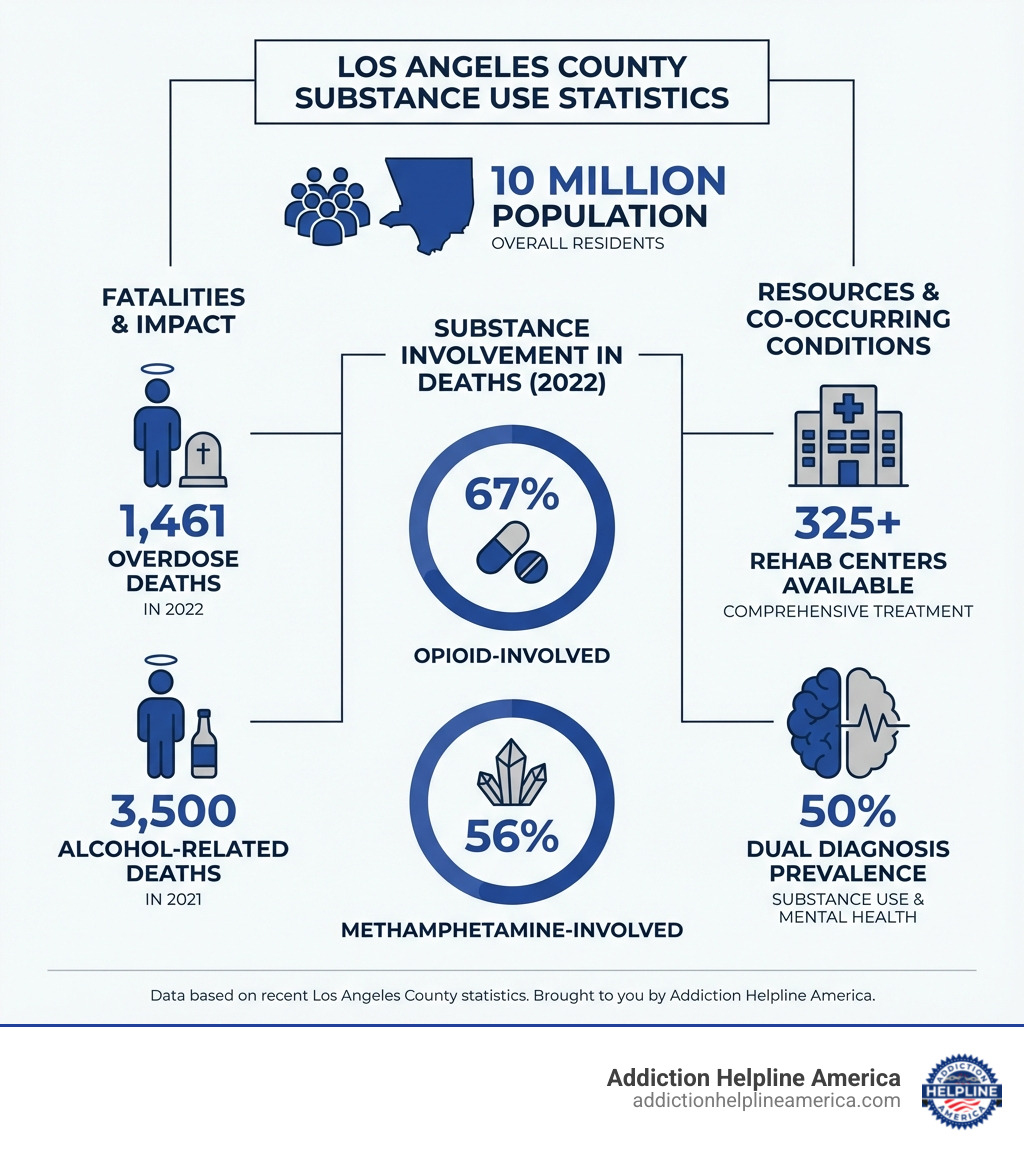
Los Angeles County is home to over 10 million people, and the impact of substance use is significant. In 2022, there were 1,461 drug overdose deaths in the county, with opioids involved in 67% of cases and methamphetamine in 56%. Alcohol-related deaths accounted for 3,500 lives lost in 2021. These statistics represent real people—friends, family members, colleagues—who needed help.
The good news? Recovery is possible. Los Angeles offers a robust network of treatment resources, from state-licensed facilities with 141 treatment beds to 373 recovery bridge housing beds across 34 county facilities. Whether you need medically-supervised detox, residential treatment, outpatient care, or specialized dual diagnosis services, help is available.
At Addiction Helpline America, we’ve dedicated our work to connecting individuals and families with life-saving Drug & Alcohol Rehabs in Los Angeles California that match their unique needs and circumstances. Our 24/7 helpline has guided thousands through the overwhelming process of finding appropriate treatment, insurance verification, and taking that crucial first step toward recovery.
Understanding the Need for Rehab in Los Angeles
Recognizing the signs and symptoms of drug and alcohol addiction is the first critical step toward seeking help. Addiction is a complex disease, not a moral failing, and it impacts every aspect of an individual’s life, from health and relationships to work and legal standing. In a vibrant, busy city like Los Angeles, the pressures and accessibility of substances can exacerbate these challenges.
Signs and symptoms of addiction can manifest both physically and behaviorally. These might include:
- Behavioral changes: Increased secrecy, neglecting responsibilities, engaging in risky behaviors, sudden financial problems, or a loss of interest in hobbies once enjoyed.
- Physical indicators: Changes in appearance, unexplained weight loss or gain, frequent illness, dilated or constricted pupils, or tremors.
- Psychological symptoms: Increased anxiety, depression, irritability, paranoia, or mood swings.
- Continued use despite negative consequences: The individual keeps using the substance even when it causes problems at home, work, or with their health.
- Withdrawal symptoms: Experiencing physical and mental discomfort when attempting to stop or reduce substance use.
Los Angeles, unfortunately, faces its share of specific drug trends. We know that in 2022, opioids were involved in a staggering 67% of drug overdose deaths in Los Angeles County, highlighting a severe ongoing opioid crisis. Methamphetamine was also a significant factor, involved in 56% of overdose deaths the same year. Beyond illicit substances, alcohol remains a pervasive issue, contributing to 3,500 deaths in Los Angeles County in 2021. These statistics underscore the urgent need for accessible and effective Drug & Alcohol Rehabs in Los Angeles California.

The Reality of Co-Occurring Disorders
One crucial aspect of addiction treatment that we often encounter is the presence of co-occurring disorders, also known as dual diagnosis. This refers to situations where an individual struggles with both a substance use disorder and a mental health disorder simultaneously. Research indicates that approximately 50% of people with substance use disorders also have co-occurring mental health disorders. This connection is vital because one condition can significantly impact the other, making integrated treatment essential for lasting recovery.
Common mental health conditions that can co-occur with addiction include:
- Anxiety disorders: Generalized anxiety, panic disorder, social anxiety.
- Depression: Major depressive disorder, persistent depressive disorder.
- Bipolar disorder: Characterized by extreme mood swings.
- Post-Traumatic Stress Disorder (PTSD): Often stemming from past trauma.
For effective treatment, it’s not enough to address only the addiction or only the mental health issue. An integrated approach ensures that both conditions are treated concurrently, recognizing their interconnectedness. This holistic treatment increases the likelihood of long-term sobriety and improved mental well-being. Many Drug & Alcohol Rehabs in Los Angeles California specialize in dual diagnosis treatment, offering comprehensive care plans that tackle both aspects of an individual’s health. For more insights into this critical link, the National Institute of Mental Health provides valuable information on substance use and mental health.
Types of Drug and Alcohol Rehab Programs in Los Angeles
Los Angeles offers a wide spectrum of drug and alcohol rehab programs, designed to meet diverse needs and stages of recovery. The concept of a “continuum of care” is central to effective treatment, meaning individuals can move through different levels of support as their needs evolve. Our goal at Addiction Helpline America is to help you understand these options and find an individualized treatment plan that’s right for you or your loved one.

Medically-Supervised Detoxification
The first critical step for many individuals entering recovery is medically-supervised detoxification. This process involves safely removing substances from the body while managing often uncomfortable and potentially dangerous withdrawal symptoms. In a medical detox setting, patients receive 24/7 medical monitoring to ensure their safety and comfort. Medications may be administered to alleviate severe withdrawal symptoms and prevent complications. Medication-Assisted Treatment (MAT), which combines medication with counseling and behavioral therapies, is often initiated during detox, particularly for opioid and alcohol dependence. This initial phase is crucial, laying a safe and stable foundation for the subsequent stages of recovery.
Inpatient and Residential Treatment
Following detox, many individuals benefit from inpatient or residential treatment. These programs offer a highly structured, immersive environment where clients live at the facility for the duration of their treatment. This removes them from the triggers and distractions of their daily lives, allowing them to focus entirely on recovery.
Inpatient programs typically involve:
- Individual therapy: One-on-one sessions with a therapist to explore underlying issues, develop coping mechanisms, and process emotions.
- Group counseling: Sessions where clients share experiences and support each other, fostering a sense of community and reducing isolation.
- Holistic therapies: Activities like yoga, meditation, art therapy, and fitness to promote overall well-being.
- Educational workshops: Learning about addiction, relapse prevention, and healthy living.
This intensive, supportive community environment is ideal for those with severe addictions, co-occurring mental health disorders, or unstable home environments.
Outpatient Treatment Options
For individuals who require flexibility due to work, school, or family commitments, outpatient treatment options provide essential support while allowing them to live at home. These programs vary in intensity:
- Partial Hospitalization Programs (PHP): Often referred to as “day treatment,” PHPs offer a high level of care, typically requiring attendance for several hours a day, multiple days a week. It provides a structured therapeutic environment without the overnight stay.
- Intensive Outpatient Programs (IOP): IOPs offer a step down from PHP, with fewer hours per week but still providing significant clinical support through individual and group therapy.
- Standard Outpatient Programs: These are the least intensive, usually involving one or two therapy sessions per week. They are often used as a step-down from more intensive programs or for those with less severe substance use disorders.
Outpatient programs focus on developing coping skills, relapse prevention strategies, and integrating recovery into daily life.
Improved Rehab Experiences in Los Angeles
Los Angeles is renowned for its diverse offerings, and this extends to its Drug & Alcohol Rehabs in Los Angeles California. Beyond traditional clinical settings, many facilities focus on creating improved rehab experiences, often referred to as luxury rehabs. These centers prioritize comfort, privacy, and a holistic approach to healing.
Benefits of choosing a center with improved amenities can include:
- Comfortable amenities: Private suites, gourmet meals, and serene settings like pools, spas, gyms, and even theater rooms.
- Privacy and supportive environment: Discretion is a key feature, attracting those who value their anonymity and a tranquil setting for recovery.
- Wellness activities: Access to yoga, meditation, breathwork, and other mindfulness practices.
- Alternative therapies: Equine therapy, animal-assisted therapy, and other experiential approaches.
- Personalized attention: Often characterized by lower client-to-staff ratios, ensuring more individualized care.
Facilities like these aim to make the recovery journey as comfortable and effective as possible, integrating treatment into a client’s life rather than completely altering it. By offering high-end amenities and personalized care, they create a serene and supportive environment for healing.
Navigating the Cost of Drug & Alcohol Rehabs in Los Angeles California
The cost of drug and alcohol rehab can be a significant concern for many individuals and families. The price varies widely based on several factors, but financial worries should never deter someone from seeking life-saving treatment.
Factors influencing the cost of rehab include:
- Type of treatment: Detox is typically shorter and may have a different cost structure than inpatient or outpatient programs.
- Program duration: Longer programs, such as 60 or 90-day residential stays, will naturally cost more than shorter ones.
- Amenities and services: Luxury rehabs with private rooms, gourmet food, and extensive holistic therapies will be more expensive than basic facilities.
- Location: Facilities in prime Los Angeles areas might have higher operational costs, influencing their pricing.
While the average cost of rehab in California is approximately $56,654, this is a broad figure. For example, inpatient rehab facilities might cost around $629.49 per day without insurance, while outpatient facilities could be around $56.76 per day without insurance. These numbers highlight the importance of exploring all available financial options.
How Insurance Covers Rehab in Los Angeles
Thanks to mental health parity laws, most major health insurance plans are mandated to cover at least a portion of addiction treatment. In Los Angeles, many Drug & Alcohol Rehabs in Los Angeles California accept a variety of insurance plans, including PPO, EPO, and HMO plans.
- PPO (Preferred Provider Organization) plans: Offer more flexibility, allowing you to choose both in-network and out-of-network providers, though out-of-network costs will be higher.
- HMO (Health Maintenance Organization) plans: Typically require you to use in-network providers and get referrals for specialists.
- EPO (Exclusive Provider Organization) plans: Combine elements of both PPO and HMO, offering a network of providers but generally not requiring referrals.
It’s crucial to verify your specific insurance benefits, as coverage can vary significantly depending on your individual policy and the level of care required. Many rehab centers and services, including our team at Addiction Helpline America, can assist with a free insurance verification. Understanding your coverage is a vital step in planning for treatment. We encourage you to verify your rehab insurance coverage to understand your options.
Affordable Treatment Options for Drug & Alcohol Rehabs in Los Angeles California
Even without comprehensive insurance, or if your insurance doesn’t cover the full cost, there are still many ways to make Drug & Alcohol Rehabs in Los Angeles California more affordable:
- Sliding scale fees: Many facilities offer fees based on an individual’s income and ability to pay.
- Non-profit organizations: These centers often have lower costs and may receive government funding or donations to subsidize treatment.
- Payment assistance programs: Some rehabs offer in-house payment plans or connect clients with financing options.
- Government funding and grants: Federal and state programs exist to help individuals access treatment. Los Angeles County’s Substance Abuse Prevention and Control (SAPC) offers programs that have transformed lives and provides valuable resources for those seeking help.
- Free or state-funded rehabs: While potentially having longer waitlists, these options provide vital services to those with limited financial resources.
Never let cost be a barrier to seeking help. We can help you explore these options and find a path to recovery that fits your financial situation.
How to Choose the Right Rehab Center in LA
Choosing the right rehab center is a deeply personal decision that can significantly impact the success of your recovery journey. With over 325 alcohol and drug rehab centers in Los Angeles, the options can feel overwhelming. We recommend a careful assessment of personal needs and thorough research of facilities.
Key Factors for Choosing a Drug & Alcohol Rehab in Los Angeles California
When evaluating Drug & Alcohol Rehabs in Los Angeles California, consider the following key factors:
- Licensing and accreditation: Ensure the facility is licensed by the state of California and accredited by reputable organizations like The Joint Commission or CARF. Accreditation signifies adherence to high standards of care. Our guide to accredited rehab centers can provide more details.
- Staff credentials: Look for facilities with experienced and credentialed medical, clinical, and support staff, including doctors, therapists, and counselors.
- Evidence-based therapies: Confirm that the center uses scientifically proven treatment modalities such as Cognitive Behavioral Therapy (CBT), Dialectical Behavior Therapy (DBT), Motivational Interviewing, and trauma-informed care.
- Treatment philosophy: Does the center’s approach align with your personal values? Some focus on 12-step programs, while others offer alternative or holistic methods.
- Specialized programs: If you have specific needs, such as a co-occurring mental health disorder (dual diagnosis), require Medication-Assisted Treatment (MAT), or are part of a specific demographic (e.g., veterans, LGBTQIA+, pregnant women), seek out centers with specialized programs.
- Location and environment: Consider whether an urban, suburban, or more secluded setting would be most beneficial for your recovery. Some facilities emphasize integrating treatment into your life while offering a comfortable environment.
- Aftercare planning: A comprehensive aftercare plan is crucial for long-term sobriety. Inquire about relapse prevention strategies, sober living options, and ongoing support services.
Asking detailed questions about these factors will help you make an informed decision and find a center that can truly support your path to lasting recovery.
The Role of Aftercare and Support Groups
Recovery doesn’t end when a formal treatment program concludes. Aftercare and ongoing support are vital for maintaining sobriety and building a fulfilling life. Los Angeles offers a rich network of resources for continued support:
- Relapse prevention: Strategies and tools learned in rehab are reinforced through ongoing counseling and support.
- Sober living homes: These provide a structured, substance-free environment for individuals transitioning from residential treatment back into independent living.
- Alumni programs: Many rehab centers offer alumni networks, providing a community of support and mentorship.
- 12-Step groups: Programs like Alcoholics Anonymous (AA) and Narcotics Anonymous (NA) play a significant role in the recovery process for many. They offer peer support, shared experiences, and a structured path to ongoing sobriety. You can find local meetings through Alcoholics Anonymous and Narcotics Anonymous.
- Alternative support groups: For those who prefer different approaches, groups like SMART Recovery offer science-based self-help tools.
- Family support: Organizations like Al-Anon Family Groups and Nar-Anon provide anonymous support for families and loved ones affected by addiction.
- Specialized groups: There are also groups custom to specific addictions, such as Marijuana Anonymous, Cocaine Anonymous, and Crystal Meth Anonymous. For those with co-occurring mental health disorders, Dual Recovery Anonymous offers integrated support.
These support systems provide a sense of community, accountability, and continued guidance, which are indispensable for long-term recovery.
Frequently Asked Questions about LA Rehab Centers
We understand that seeking help for addiction often comes with many questions. Here, we address some of the most common inquiries regarding Drug & Alcohol Rehabs in Los Angeles California.
What is dual diagnosis treatment and why is it important?
Dual diagnosis treatment is an integrated approach that addresses both a substance use disorder and a co-occurring mental health disorder simultaneously. As we mentioned earlier, approximately 50% of people with substance use disorders also have mental health conditions like anxiety, depression, or PTSD. It’s important because these conditions often fuel each other; treating only one while ignoring the other significantly reduces the chances of long-term recovery. Integrated care acknowledges this connection, providing comprehensive therapy that addresses the underlying psychological issues contributing to addiction, leading to more sustainable healing and improved overall well-being.
How long does rehab typically last?
The duration of rehab varies greatly depending on the individual’s needs, the severity of their addiction, and the type of program.
- Detoxification typically lasts between 3 to 7 days, though it can extend longer in more complex cases.
- Short-term residential programs usually last less than 30 days.
- Long-term residential programs can range from 60, 90 days, or even longer, sometimes up to a year.
- Outpatient programs can continue for several months or even years, adjusting in intensity as the individual progresses.
The most effective treatment length is often determined by individual progress and clinical recommendations, focusing on what will best support lasting sobriety.
What can you do if a loved one refuses treatment?
It can be incredibly frustrating and heartbreaking when a loved one with an addiction refuses to seek help. It’s important to approach the situation with compassion, not blame. Here are some steps you can take:
- Express concern empathetically: Share your feelings about how their addiction affects you, without judgment or accusations.
- Avoid enabling behaviors: Setting healthy boundaries is crucial. This means not protecting them from the natural consequences of their actions.
- Educate yourself: Learn about addiction as a disease and the various treatment options available. This knowledge empowers you to have more informed conversations.
- Seek support for yourself: Al-Anon or Nar-Anon groups can provide invaluable support and guidance for family members.
- Consider a professional interventionist: A trained interventionist can facilitate a structured conversation, helping your loved one see the need for treatment and guiding them toward accepting help. Our complete guide to drug interventions can offer more detailed advice on this process.
It can take time for someone to gain the motivation to change, but your consistent, loving approach can make a difference.
Your Path to Recovery Starts Today
Navigating the landscape of Drug & Alcohol Rehabs in Los Angeles California can seem daunting, but you don’t have to do it alone. Recovery is a journey, not a destination, and taking that first courageous step is the most important part. Los Angeles offers a wealth of resources, from diverse treatment programs and financial assistance options to robust aftercare and supportive communities.
At Addiction Helpline America, we are here to provide free, confidential, and personalized guidance. We connect individuals nationwide with the right addiction and mental health treatment centers, ensuring you find a program that perfectly matches your unique needs. Don’t let uncertainty or fear hold you back from a healthier, happier future. Your path to recovery starts today, and we’re here to walk it with you.
For extended care drug and alcohol treatment in Los Angeles, California, and to explore your options further, please reach out to us. We are ready to help.