Understanding Addiction and Recovery in South Carolina
Drug and alcohol rehab in South Carolina offers a full continuum of evidence-based care for individuals and families facing substance use disorders.
Quick Guide to South Carolina Rehab Options:
- 130+ licensed treatment facilities across the state
- Treatment types: Medical detox, inpatient residential, outpatient programs (PHP, IOP), dual diagnosis care
- Average costs: $57,774 (varies widely; insurance often covers most expenses)
- Payment options: Private insurance, Medicaid, Medicare, military insurance, sliding-scale fees, free programs
- Specialized programs: Veterans, first responders, gender-specific, faith-based, LGBTQ+-friendly, pregnancy-safe care
- State resources: Office of Substance Use Services (OSUS), 24/7 hotlines, peer support networks
In 2022, South Carolina recorded 1,109 drug overdose deaths—a rate of 21.5 per 100,000 people. More than 450,000 residents struggle with substance use disorders, yet only about 10% receive care. Even so, recovery is achievable with the right support. State-licensed and nationally accredited providers offer everything from medically managed detox to long-term residential and flexible outpatient care.
At Addiction Helpline America, we’ve spent years connecting individuals and families to quality drug and alcohol rehab in South Carolina that matches their specific needs. Our team understands the local treatment landscape and can guide you toward accredited facilities offering evidence-based care.
This guide explains when treatment is needed, how program types differ, what costs and insurance typically cover, and how to choose a reputable facility. You’ll also find information on specialized programs, legal protections, and aftercare to support long-term recovery.
Understanding the Need for Addiction Treatment in South Carolina
Recognizing a problem is often the hardest, yet most crucial, first step toward healing. Substance use disorder (SUD) is a complex medical condition that affects millions of Americans—and South Carolina is no exception.
Recognizing the Signs of Substance Use Disorder
Common indicators that treatment may be needed include:
- Loss of control: Using more or longer than intended; unable to cut back despite trying
- Neglecting responsibilities at work, school, or home due to substance use
- Increased tolerance: Needing more of the substance to feel the same effects
- Withdrawal symptoms when reducing or stopping use; alcohol/benzodiazepine withdrawal can be dangerous and needs medical supervision
- Ongoing relationship or social problems linked to substance use
- Giving up hobbies and activities once enjoyed
- Behavioral and physical changes: Mood swings, secrecy, changes in sleep/appetite, bloodshot eyes, dilated pupils
- Psychological indicators: Anxiety, depression, paranoia, or persistent guilt/shame
If these signs resonate with your experience or that of a loved one, you are not alone—and help is available.
The Scope of Addiction in the Palmetto State
- Over 450,000 South Carolina residents struggle with substance use-related issues
- In 2022, the state recorded 1,109 drug overdose deaths (21.5 per 100,000), with opioids as a primary driver
- Alcohol misuse remains significant, with 15.4% of adults reporting binge drinking; alcohol-related crashes account for roughly 30% of traffic fatalities annually
- Young adults (18–25) are especially impacted by alcohol and opioid use
The South Carolina Department of Behavioral Health and Developmental Disabilities (BHDD) Office of Substance Use Services (OSUS) ensures a “menu of treatment options” through state-licensed, nationally accredited providers. See SC Opioid Epidemic – State & County Statistics.
Navigating the Types of Drug and Alcohol Rehab in South Carolina
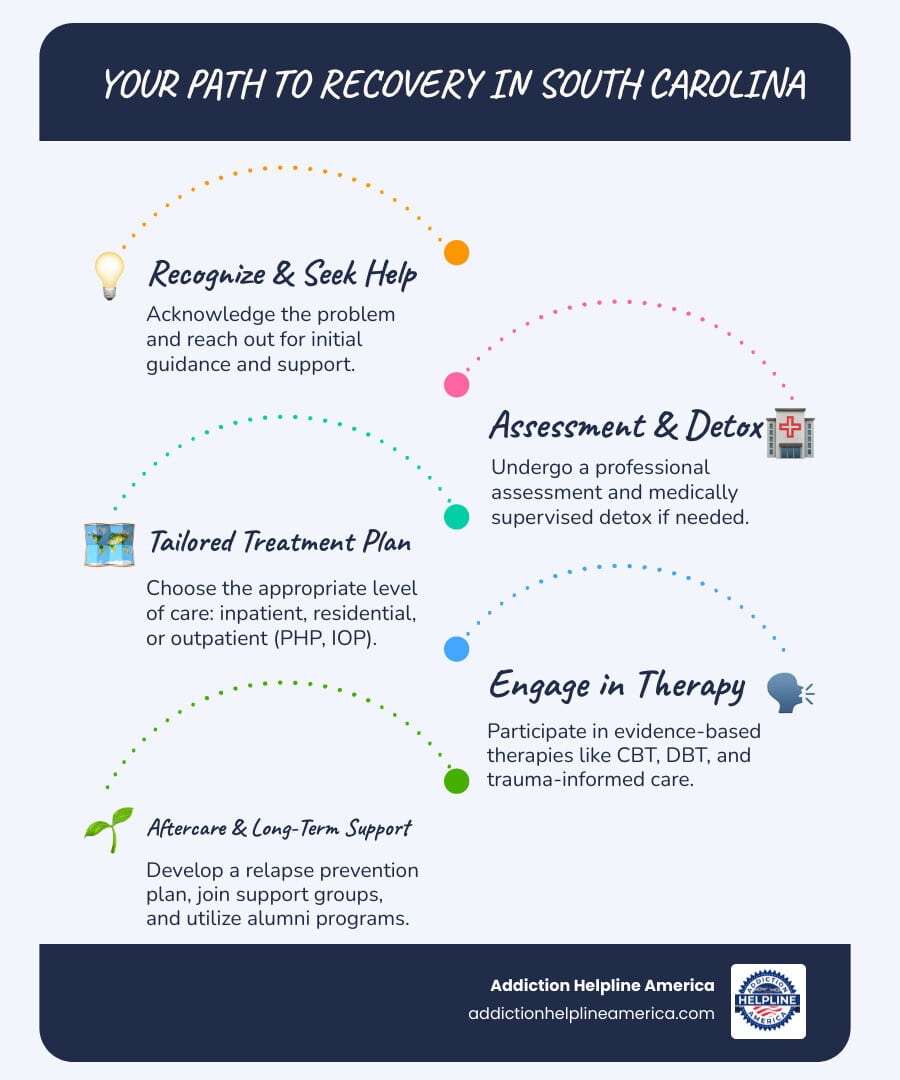
Effective drug and alcohol rehab in South Carolina follows a continuum of care custom to each person’s needs, the severity of the disorder, and any co-occurring mental health conditions.
Core levels of care:
- Medical Detox: Inpatient stabilization to manage withdrawal safely (typically 3–10 days)
- Inpatient/Residential: Live-in, 24/7 structured care (often 30–90+ days)
- Partial Hospitalization (PHP): Day treatment, home at night (multiple days per week, several hours/day)
- Intensive Outpatient (IOP) and Outpatient (OP): Fewer hours per week; flexible therapy and support while maintaining daily responsibilities
Medical Detoxification: The First Step to Safety
- Clinician-supervised withdrawal management is critical, especially for alcohol and benzodiazepines
- Medications may reduce discomfort, cravings, and complications
- Detox prepares individuals for therapy and longer-term treatment—detox alone is not treatment
Inpatient and Residential Treatment Programs
- 24/7 structure with individual/group therapy, psychoeducation, and recovery skills practice
- Typical length: 30–90 days (varies based on progress and clinical needs)
- Best for severe addictions, co-occurring disorders, or unstable home environments
Outpatient Treatment Options: PHP, IOP, and General Outpatient
- PHP: Intensive therapy by day; return home in the evening (some programs offer optional lodging)
- IOP: Several sessions per week to balance treatment with work/school
- OP: Weekly therapy or groups; often used as a step-down level or for milder SUD
Specialized Treatment Programs in South Carolina
- Dual diagnosis (co-occurring mental health conditions)
- Veterans and first responders (trauma-informed)
- Gender-specific and faith-based options
- Pregnancy-safe and LGBTQ+-affirming care
The goal is a right-sized plan that adapts as needs change.
Understanding the Need for Addiction Treatment in South Carolina
Seeking help for SUD is a sign of strength. Recovery often begins with an honest look at how substances are affecting your health, relationships, and responsibilities—and then taking the next step to get support.
The Scope of Addiction in the Palmetto State
- More than 450,000 residents face substance use-related issues; only about 1 in 10 receive care
- In 2022, South Carolina reported 1,109 overdose deaths (21.5 per 100,000); opioids (including fentanyl) remain the primary driver
- Alcohol misuse (e.g., 15.4% of adults reporting binge drinking) contributes to significant public health and safety harms
Effective April 28, 2025, Act No. 3 of 2025 established the BHDD, consolidating the Offices of Intellectual and Developmental Disabilities, Mental Health, and Substance Use Services. OSUS coordinates a comprehensive menu of licensed, accredited treatment options. Explore state and county trends at SC Opioid Epidemic – State & County Statistics.
Navigating the Types of Drug and Alcohol Rehab in South Carolina
Finding the right drug and alcohol rehab in South Carolina means matching the level of care to your needs. Treatment is individualized and may include several steps along the continuum.
Medical Detoxification: The First Step to Safety
- 24/7 monitoring and medications to manage withdrawal safely
- Especially important for alcohol and benzodiazepines
- A bridge to therapy and ongoing treatment—not a standalone cure
Inpatient and Residential Treatment Programs
- Live-in, highly structured care with therapy, skill-building, and wellness activities
- Often lasts 30–90 days; duration is based on clinical progress
- Helpful for severe SUD, co-occurring disorders, or unstable environments
Outpatient Treatment Options: PHP, IOP, and General Outpatient
- PHP (day treatment): Multiple days per week, several hours per day; return home at night; some programs offer optional lodging
- IOP: Fewer therapy hours per week to allow work or school participation
- OP: Weekly therapy/groups as maintenance or step-down care
Specialized Treatment Programs in South Carolina
- Dual diagnosis care for co-occurring mental health disorders
- Veterans and first responder programs (trauma-informed); the U.S. Department of Veterans Affairs offers Substance Use Disorder (SUD) programs in South Carolina
- Gender-specific, faith-based, pregnancy-safe, and LGBTQ+-affirming programs
Key Therapies and Finding a Quality South Carolina Rehab Center
The heart of any effective drug and alcohol rehab in South Carolina is its therapeutic approach. Evidence-based therapies commonly include:
- Cognitive Behavioral Therapy (CBT) to change unhelpful thoughts and behaviors
- Dialectical Behavior Therapy (DBT) for emotion regulation, mindfulness, and relationships
- Motivational Interviewing (MI) to resolve ambivalence about change; BHDD OSUS promotes MI for early intervention
- Trauma-informed care that recognizes and treats the impact of trauma
- Holistic supports (e.g., yoga, meditation, art or nature-based activities)
- Relapse-prevention planning and Wellness Recovery Action Plans (WRAP)
How to Find a Reputable Drug and Alcohol Rehab in South Carolina
- Accreditations and licensure: Look for The Joint Commission or CARF accreditation, and state licensure
- Evidence-based care: CBT, DBT, Medication-Assisted Treatment (MAT), and integrated services
- Qualified staff: Licensed therapists, physicians, psychiatrists, nurses, and peer specialists
- Individualized treatment plans custom to your goals and clinical needs
- Full continuum of care and strong discharge planning/aftercare
- Patient reviews and testimonials for insight into compassion and outcomes
What to Look for in a Dual Diagnosis Program
- Integrated treatment for SUD and co-occurring conditions (anxiety, depression, PTSD, bipolar disorder)
- Access to psychiatric evaluations and medication management
- Therapies that address both mental health and addiction, including trauma-informed care
The Importance of Aftercare and Relapse Prevention
- Ongoing therapy or groups; alumni programs and peer recovery support
- Sober living homes for structured, substance-free housing
- Support groups like AA, NA, or SMART Recovery; find local options via Embrace Recovery SC
- Personalized relapse-prevention plans and community resources such as South Carolina 211
Costs, Insurance, and Legal Considerations for Rehab in SC
Navigating costs can feel daunting, but financial barriers should not prevent access to care. The average cost of rehab without insurance in South Carolina is $57,774, but coverage and assistance options can reduce out-of-pocket expenses significantly.
Paying for Drug and Alcohol Rehab in South Carolina
- Private insurance: Many centers accept Cigna, UnitedHealthcare, Aetna, Blue Cross Blue Shield, Humana, and others (confirm your specific benefits)
- Medicaid (Healthy Connections): Covers services like detox, MAT, inpatient, and outpatient; learn more at Healthy Connections Medicaid
- Medicare: Covers eligible inpatient and outpatient mental health and SUD treatment
- Military insurance (TRICARE) and VA benefits: Coverage for service members, retirees, families, and veterans
- Sliding-scale fees: Income-based adjustments are available at many facilities
- State-funded programs and grants (e.g., SAMHSA block grants via OSUS/DAODAS) expand access to low- or no-cost care
- Non-profit, faith-based programs, Indian Health Service units, and FQHCs can provide additional low-cost options
Legal Protections and Resources for South Carolinians
- Good Samaritan Law: Protections for those seeking help during an overdose emergency—see Good Samaritan
- DUI laws and penalties: South Carolina imposes strict penalties; learn more at DUI penalties in South Carolina
- Marijuana possession: Penalties vary by offense; see South Carolina Code of Laws Unannotated Title 44 – Health
- Family and Medical Leave Act (FMLA): Eligible employees can take job-protected leave for addiction treatment
Frequently Asked Questions about South Carolina Rehab
We’ve answered common questions to help you move forward with confidence.
Will I lose my job if I go to rehab in South Carolina?
Generally, no. The Americans with Disabilities Act (ADA) and Family and Medical Leave Act (FMLA) offer important protections. FMLA allows eligible employees to take up to 12 weeks of unpaid, job-protected leave for treatment; see FMLA: Frequently asked questions.
How long does addiction treatment typically last?
- Detox: A few days to about a week
- Inpatient/Residential: Commonly 30–90 days
- Outpatient (PHP/IOP/OP): Several weeks to months, depending on need
- Aftercare: Ongoing support (therapy, peer groups, sober living) as long as helpful
Are there free or low-cost rehab options in South Carolina?
Yes. Options include state-funded programs via OSUS/DAODAS, SAMHSA grants, sliding-scale fees, non-profit/faith-based programs, and community health providers. For local support and referrals, try South Carolina 211.
Conclusion: Your Path to Recovery Starts Today
South Carolina offers robust, evidence-based options for drug and alcohol rehab—and recovery is possible. If you or a loved one is struggling, taking the first step is courageous and life-changing.
Addiction Helpline America provides free, confidential, and personalized guidance to help you find the right program for your needs, preferences, and budget.