Understanding Your Options for Drug and Alcohol Rehab in New York
Drug and alcohol rehab in New York offers a comprehensive range of treatment options for individuals and families facing substance use disorders. Whether you need immediate detox, inpatient care, or outpatient support, New York has resources to help.
Quick Guide to New York Rehab Options:
- State-Operated Centers: 12 OASAS Addiction Treatment Centers across NY offering individualized care
- Inpatient Programs: Typically 28-30 days with 24/7 medical supervision
- Outpatient Services: Flexible treatment while living at home
- Detox Duration: Most complete detox within 5-7 days
- Cost: Many facilities accept insurance; state-funded options available for those who cannot pay
- Specialized Care: Programs for adolescents, older adults, co-occurring disorders, and specific populations
- 24/7 Access: Emergency admissions available at hospital-based centers
Why This Matters Now
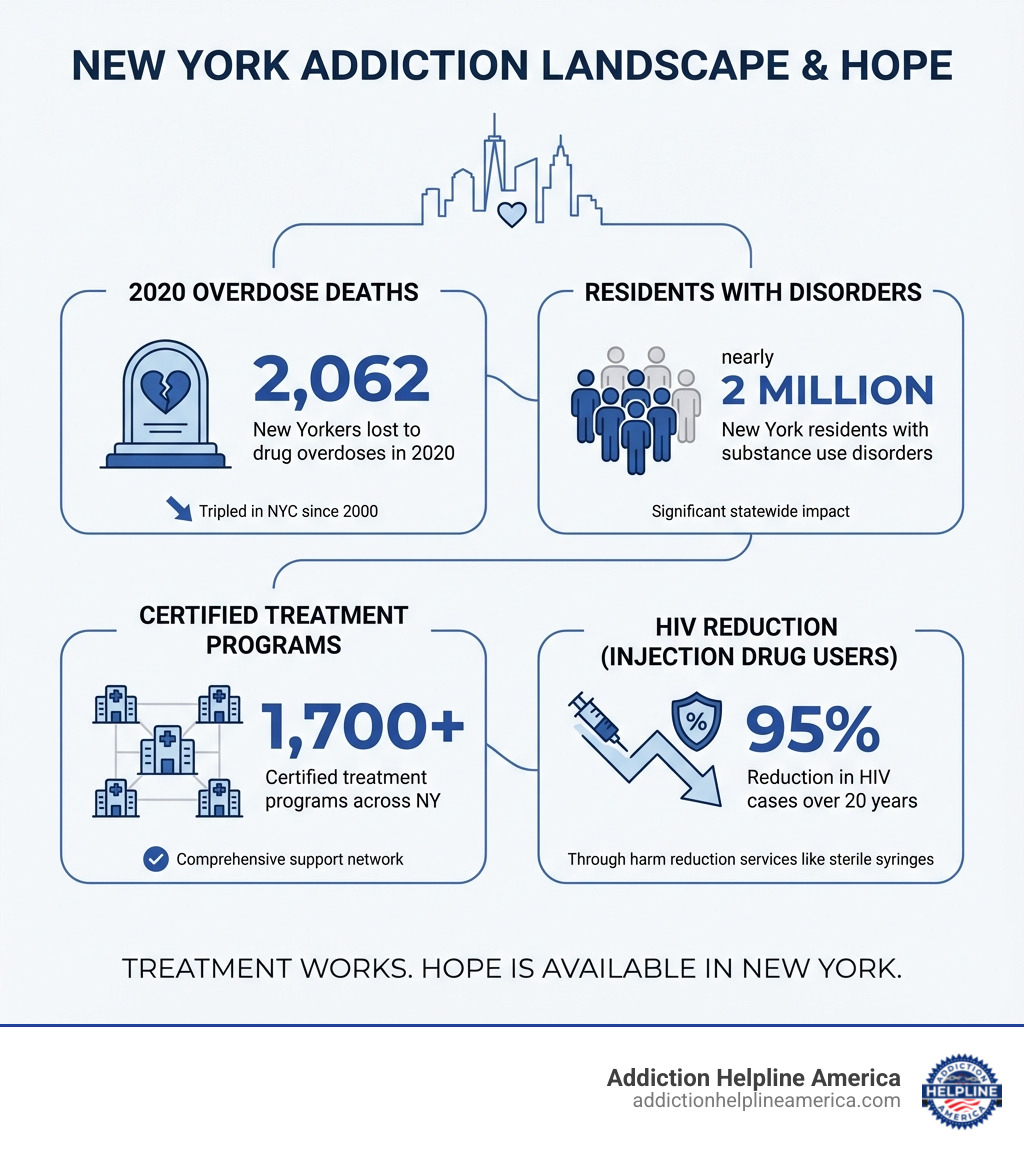
New York faces a serious addiction crisis. More than 20 million Americans struggle with substance use disorder, and in 2020 alone, 2,062 New Yorkers died from drug overdoses. The number of overdose deaths in New York City more than tripled between 2000 and 2020. Nearly two million New York residents currently have substance use disorders.
But there’s hope. New York has built one of the most comprehensive addiction treatment systems in the country. The state operates and oversees over 1,700 certified treatment programs. Access to harm reduction services like sterile syringes has helped reduce new HIV cases among injection drug users by 95% over the last 20 years.
Treatment works. Whether you’re seeking help for yourself or a loved one, understanding your options is the first step toward recovery.
At Addiction Helpline America, we connect individuals struggling with addiction to effective drug and alcohol rehab in New York that matches their unique needs. Our team of addiction specialists provides confidential, compassionate guidance 24/7 to help you steer treatment options and take the first step toward recovery.
The State of Addiction in New York: An Overview
New York faces significant challenges with substance use disorders. Like the rest of the nation, where over 20 million people struggle with addiction, the state is heavily impacted. In 2020 alone, over 2,000 New Yorkers died from drug overdoses, and overdose deaths in NYC more than tripled between 2000 and 2020. The opioid crisis is particularly severe, with overdose deaths involving opioids surging over 360% from 2010 to 2021. Alcohol also poses a major public health issue, contributing to thousands of deaths annually. With nearly two million residents affected by substance use disorders, the need for effective drug and alcohol rehab in New York is urgent. Fortunately, the state has developed a robust system of support and treatment to address this crisis.
How New York State Supports Addiction Recovery
The New York State Office of Addiction Services and Supports (OASAS) leads the state’s recovery efforts. It operates 12 Addiction Treatment Centers (ATCs) and certifies over 1,700 other treatment programs, ensuring high standards of individualized, person-centered care. To help residents find care, OASAS provides an online directory to locate certified programs by county: Find Addiction Treatment. New York also assists with navigating insurance through the CHAMP program and ensures OASAS-funded providers cannot deny services based on inability to pay, removing financial barriers to treatment.
Understanding Harm Reduction Services in NY
New York is a leader in harm reduction, offering services to reduce the negative consequences of drug use. Key initiatives include:
- Naloxone Access: This life-saving opioid overdose reversal medication is widely available, sometimes through 24/7 public health vending machines that also offer fentanyl test strips.
- Syringe Service Programs (SSPs): These programs provide sterile syringes and other supplies, which has helped reduce new HIV cases among injection drug users by 95% over 20 years.
- Overdose Prevention Centers (OPCs): As the first state with publicly recognized OPCs, New York provides safe, supervised spaces for drug use, preventing overdoses and connecting people to care.
- Drug-Checking Services: With dangerous substances like fentanyl and xylazine contaminating the drug supply, these services allow individuals to test their drugs to reduce overdose risk.
A Guide to Drug and Alcohol Rehab in New York Treatment Programs

When considering drug and alcohol rehab in New York, it’s important to understand the different levels of care available. Treatment is not one-size-fits-all, and a comprehensive plan often involves a combination of approaches to address the mind, body, and spirit.
New York’s treatment landscape offers a continuum of care, from intensive inpatient settings to flexible outpatient options, all designed to equip individuals with the skills needed for long-term recovery.
Inpatient vs. Outpatient: Which is Right for You?
Choosing between inpatient and outpatient treatment depends on the severity of the addiction, co-occurring disorders, and an individual’s support system.
| Program Type | Duration | Intensity | Living Situation | Ideal Candidate |
|---|---|---|---|---|
| Inpatient (Residential) | 28-90 days (often 28) | High (24/7 structured care) | Live at facility | Severe addiction, unstable home environment, co-occurring disorders, need medical detox |
| Partial Hospitalization Programs (PHP) | Several hours/day, 5-7 days/week | High | Live at home or sober living | Transition from inpatient, strong home support, need intensive therapy without 24/7 supervision |
| Intensive Outpatient Programs (IOP) | Several hours/day, 3-5 days/week | Medium | Live at home or sober living | Less severe addiction, stable home environment, step-down from PHP, need structured support |
| Outpatient Programs | 1-2 hours/day, 1-3 days/week | Low | Live at home | Early stages of addiction, strong support system, maintaining recovery after higher levels of care |
Inpatient rehab offers a 24/7 therapeutic environment where patients live at the facility. This immersive setting is ideal for those with severe addictions or unstable home environments, as it removes outside triggers and provides constant support. Care includes medical stabilization, various therapies, and educational sessions.
Outpatient rehab provides flexibility, allowing individuals to live at home while attending treatment. This ranges from standard outpatient (a few hours a week) to more structured options like Intensive Outpatient Programs (IOP) and Partial Hospitalization Programs (PHP). These programs are suitable for those with strong support systems who need to maintain work or family commitments. Telehealth services are also increasingly available.
Key Phases of Treatment: Detox and Rehabilitation
Treatment typically involves two key phases:
Detoxification is the first step, where addictive substances are safely cleared from the body under medical supervision. This process manages withdrawal symptoms, which can be severe, and usually lasts 5-7 days. Medical oversight is critical, especially for alcohol and benzodiazepine withdrawal.
Following detox, the rehabilitation phase begins. This stage addresses the root causes of addiction and teaches coping skills for a sober life. Lasting 28 days or more, rehab includes individual and group therapy, medical care, relapse prevention training, and family involvement. The goal is to build a strong foundation for lasting recovery.
Specialized Services for a Personalized Recovery
Many New York facilities offer specialized services for a more personalized recovery:
- Co-occurring Disorders (Dual Diagnosis): Integrated programs treat both substance use and mental health conditions like depression or anxiety simultaneously, which is crucial for better outcomes.
- Medication-Assisted Treatment (MAT): This approach uses FDA-approved medications (like buprenorphine for opioid use disorder) alongside therapy to reduce cravings and support recovery.
- Demographic-Specific Programs: Treatment can be custom for groups such as adolescents, older adults, men, or women, addressing their unique challenges.
- Peer-Based Services: Individuals with lived recovery experience offer invaluable guidance and support as peer specialists.
- LGBTQ+ Friendly Programs: These provide a safe, affirming environment for members of the LGBTQ+ community to address their specific needs in recovery.
The Path to Recovery: From First Call to Lasting Sobriety

Starting on the path to recovery for drug and alcohol rehab in New York can feel overwhelming, but understanding the process can provide clarity and hope. It begins with an evaluation, moves through admission, and includes planning for aftercare.
Starting Your Journey: The Evaluation and Admission Process
The first step is a comprehensive evaluation by a multidisciplinary team of medical and mental health professionals. They will assess your physical health, substance use history, and any co-occurring conditions to create a personalized treatment plan. Admission procedures vary, with some hospital-based units offering 24/7 emergency access, while others have specific walk-in hours. It’s always best to call a facility or a helpline first to understand the process. A confidential self-assessment can also be a helpful starting point to gauge your needs before making a call.
The Role of Family and Medical Support in Treatment
Addiction affects the entire family, so their involvement is highly encouraged. Many New York rehab programs offer family therapy and education to help loved ones heal and learn to provide healthy support, which is critical for long-term sobriety. Medically, treatment is comprehensive, addressing addiction as a chronic brain disease. It involves medical stabilization during detox and ongoing psychiatric care for co-existing conditions, ensuring all aspects of a person’s health are treated.
Aftercare: Building a Foundation for Long-Term Success
Recovery is a lifelong journey that continues after a formal program ends. Aftercare planning is essential for long-term success. Before discharge, a plan is created that includes referrals for ongoing therapy, medical follow-ups, and support groups. Relapse prevention skills, learned during treatment, help individuals manage triggers and cravings.
New York offers many resources for continuing care, including:
- Peer Specialists and Family Support Navigators for ongoing guidance.
- Recovery Centers for community-based, sober activities and support.
- Support groups like Alcoholics Anonymous (AA) New York, Narcotics Anonymous (NA) New York, and SMART Recovery, which provide a vital sense of community.
Top 10 Drug & Alcohol Rehabs in NY: A Detailed Look
Choosing the right drug and alcohol rehab in New York is a personal decision. Key factors include the level of care needed, specialized programs, accreditations (from bodies like CARF or the Joint Commission), and payment options. Below are examples of the types of high-quality facilities and services available across New York, showcasing the range of options.
1. Addiction Helpline America – New York Partner Centers
We partner with a network of New York facilities that prioritize integrated mental health care. Our partners use evidence-based practices, offer comprehensive inpatient and outpatient services, and focus on treating co-occurring disorders to ensure a personalized, effective care plan.
2. Serenity Path Recovery Center
This type of center offers a holistic approach in a supportive environment. They typically provide medically monitored detox followed by structured inpatient and intensive outpatient (IOP) programs, often with a low staff-to-patient ratio for individualized attention.
3. Metropolitan Behavioral Health Services
Hospital-affiliated units like these provide a strong medical infrastructure, ideal for complex cases. They often feature 24/7 admissions, medically supervised detox, and a multidisciplinary team to handle severe medical or psychiatric comorbidities in a secure setting.
4. Hope & Wellness Recovery Center
These centers are known for comprehensive programs for co-occurring mental health conditions. They provide a range of outpatient services, from partial hospitalization to less intensive options, often integrating advanced clinical care and personalized strategies for long-term relapse prevention.
5. OASAS-Certified Addiction Treatment Centers
Operated by the state, these 12 centers serve all New York residents and provide individualized, person-centered care. They emphasize aftercare planning and offer specialized services, including for problem gambling and co-occurring disorders. You can Find a state-certified treatment program on the OASAS website.
6. Fresh Start Recovery Center
This type of center often specializes in medically supervised withdrawal in a safe, comfortable environment. They follow detox with comprehensive inpatient rehab that integrates wellness activities and focuses heavily on relapse prevention and aftercare planning.
7. Upstate Retreat Recovery
Often located in serene, rural settings, these centers provide dedicated inpatient programs. They may offer specialized tracks for certain populations, like professionals, and incorporate strong family programs as a cornerstone of their holistic treatment philosophy.
8. Community Wellness Outpatient
This type of center focuses on specialized outpatient treatment for diverse populations, including adolescents and adults. Beyond substance use, they may address other behavioral health issues like eating disorders or gambling, with integrated mental health services for dual diagnosis care.
9. Coastal Care Programs
These facilities provide a full continuum of care, from partial hospitalization (PHP) and intensive outpatient (IOP) to standard outpatient services. They are often strong proponents of Medication-Assisted Treatment (MAT) and may offer specialized programs for young adults.
10. Urban Medical Recovery Center
As a hospital-based facility in a major city, this type of center offers the security and resources of a large healthcare institution. They provide medically supervised inpatient and outpatient programs, including Opioid Treatment Programs (OTP), serving a diverse urban population with complex needs.
Frequently Asked Questions about New York Rehab
Navigating addiction treatment can bring up many questions. We’re here to provide clear, helpful answers to some of the most common inquiries about drug and alcohol rehab in New York.
How much does drug and alcohol rehab in new york cost?
The cost of drug and alcohol rehab in New York varies widely depending on the level of care. While inpatient programs can cost tens of thousands of dollars, outpatient services are generally less expensive. However, cost should not be a barrier to treatment. Options to pay include:
- Insurance: Most health insurance plans cover addiction treatment. We can help you verify your benefits.
- State-Funded/Free Rehab: New York has state-funded options, and OASAS-funded providers cannot deny services based on inability to pay.
- Payment Plans & Sliding Scales: Many facilities offer payment plans or adjust fees based on income.
Our team can help you explore all financial options to find affordable care.
Will I lose my job if I go to rehab in New York?
Federal laws protect your employment when you seek treatment for a substance use disorder. The Americans with Disabilities Act (ADA) prevents employers from firing you for attending rehab, and the Family and Medical Leave Act (FMLA) may allow you to take unpaid, job-protected leave. Additionally, HIPAA laws ensure your treatment remains confidential. While most residential programs require you to be free from work distractions, your job is protected. It’s wise to discuss leave options with your HR department beforehand.
How do I choose the right drug and alcohol rehab in new york?
Choosing the right drug and alcohol rehab in New York is a critical decision. Consider these factors:
- Your Specific Needs: A professional assessment can help determine the severity of addiction and any co-occurring mental health disorders.
- Level of Care: Decide between inpatient (residential) care for a structured environment or outpatient care for more flexibility.
- Accreditation: Look for facilities accredited by CARF or the Joint Commission, which indicates high standards.
- Payment Options: Verify your insurance coverage and ask about state funding, payment plans, or sliding scale fees.
- Location: Decide if you prefer a local facility or one further away from potential triggers.
- Specialized Programs: Check if a center offers services you need, such as MAT, dual diagnosis care, or programs for specific demographics (e.g., adolescents, LGBTQ+).
This process can be overwhelming. Addiction Helpline America offers free, confidential guidance to help you find a program that matches your unique needs.
Take the First Step Towards a Healthier Future
The journey to recovery from substance use disorder is a testament to human resilience and hope. We want you to know that addiction is a treatable disease, and a healthier, more fulfilling life is within reach. The comprehensive network of drug and alcohol rehab in New York offers a diverse array of services, from cutting-edge harm reduction strategies to individualized, long-term recovery support.
Taking the first step can be the hardest, but you don’t have to do it alone. Our team at Addiction Helpline America is here to provide the personalized guidance you need, connecting you to the best resources and treatment centers in New York. We believe everyone deserves a chance at recovery, and we’re committed to helping you find the path that’s right for you.
Reach out to us today. Let us help you steer the options, understand your rights, and take that crucial first step towards lasting sobriety. Your future self will thank you.
Find the right drug and alcohol rehab in New York for your needs