
Why Understanding Treatment Options Matters
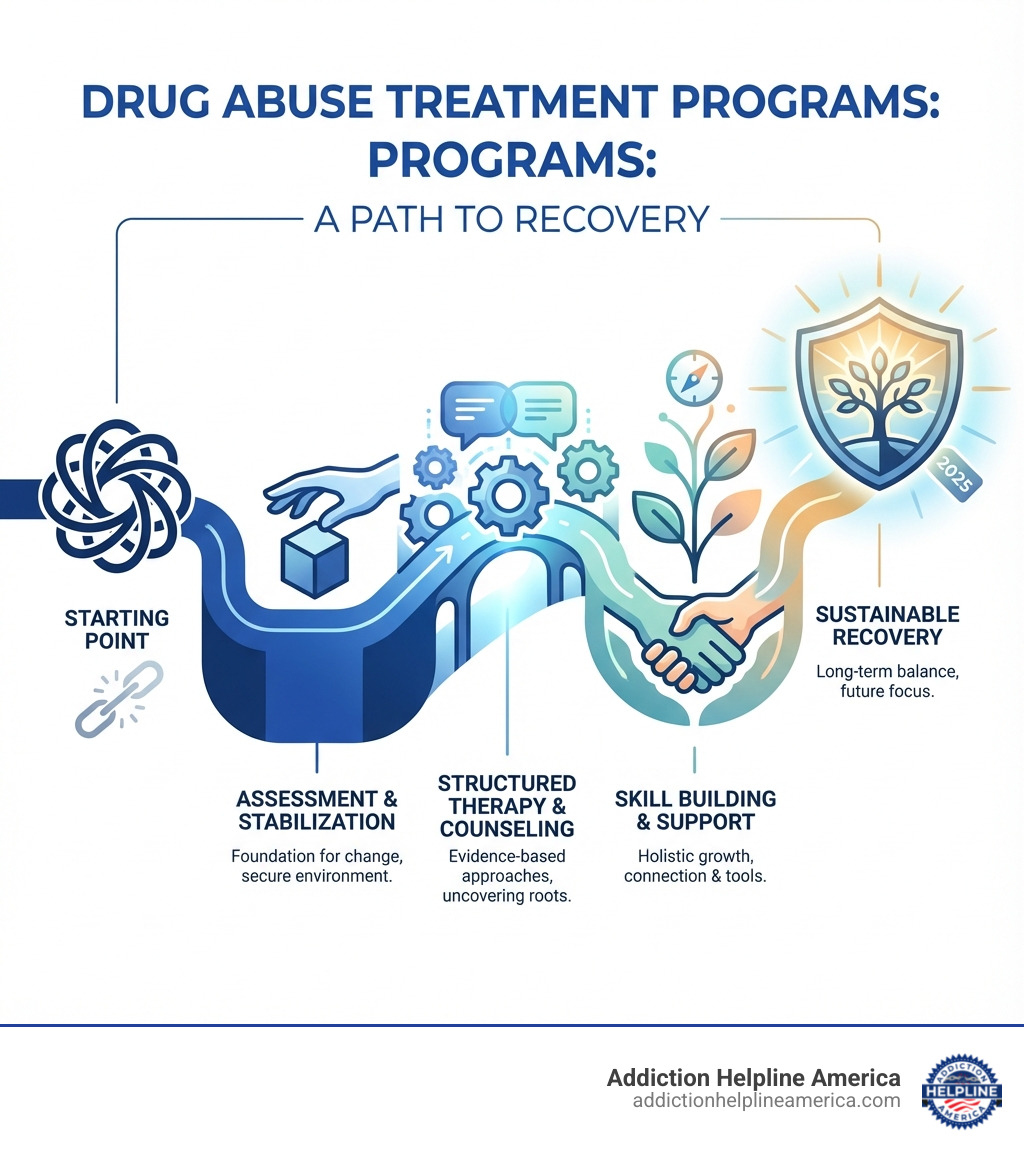
Drug abuse treatment programs are specialized services designed to help individuals overcome substance use disorders. These programs vary in intensity and setting and are customized to meet individual needs. Key types range from medical detoxification and 24-hour inpatient care to flexible outpatient programs, often incorporating evidence-based behavioral therapies, Medication-Assisted Treatment (MAT), and peer-led support groups.
If you’re overwhelmed by where to start, you’re not alone. In 2022, 29.6 million Americans aged 12 or older had a substance use disorder, yet only a fraction received treatment. The gap between those struggling and those getting help is enormous.
Addiction is not a moral failing; it’s a chronic, treatable disease that changes the brain. Like diabetes or heart disease, it requires professional treatment. The good news is that recovery is possible, and effective programs exist to help you reclaim your life.
Taking the first step—seeking information—is often the hardest part. This guide will walk you through what drug abuse treatment programs are, how they work, and how to find the right one for you.
At Addiction Helpline America, we’ve helped thousands connect with programs that meet their needs. Our team offers free, confidential guidance to help you find the right drug abuse treatment programs for your situation. Call us 24/7 at 844-561-0606.
Understanding Substance Use Disorder (SUD)
Before diving into treatment options, it’s crucial to understand what a Substance Use Disorder (SUD) is. An SUD is a treatable, chronic disease affecting a person’s brain and behavior, leading to an inability to control the use of a substance. It’s a medical condition, not a moral failing, and understanding this is key to reducing the stigma that prevents people from seeking help. In 2022, 29.6 million people aged 12 or older were diagnosed with an SUD, highlighting the issue’s prevalence from Alabama to Wyoming.
What is a Substance Use Disorder?
The diagnosis of an SUD is based on criteria in the Diagnostic and Statistical Manual of Mental Disorders (DSM-5). It’s not just about using a substance, but the pattern of use and its negative impact. Key criteria include:
- Impaired Control: Using more of a substance than intended, being unable to cut down, and experiencing intense cravings.
- Social Impairment: Failing to fulfill obligations at work, school, or home, and giving up important activities due to use.
- Risky Use: Using substances in hazardous situations or despite knowing it causes physical or psychological problems.
- Pharmacological Criteria: Developing tolerance (needing more for the same effect) and experiencing withdrawal symptoms when stopping.
These symptoms can range in severity and affect people from all walks of life.
The Link Between SUD and Mental Health
The relationship between SUD and mental health is deeply intertwined. In 2022, 7.1 million adults had both an SUD and a mental illness, known as a “dual diagnosis” or co-occurring disorders. Common co-occurring conditions include depression, anxiety, PTSD, and bipolar disorder.
Treating these conditions separately is often ineffective. For example, someone using alcohol to self-medicate anxiety will struggle to stay sober if the anxiety isn’t also addressed. Effective drug abuse treatment programs offer integrated care, treating both the SUD and the mental health condition simultaneously for better, more sustainable outcomes.
Exploring the Different Types of Drug Abuse Treatment Programs
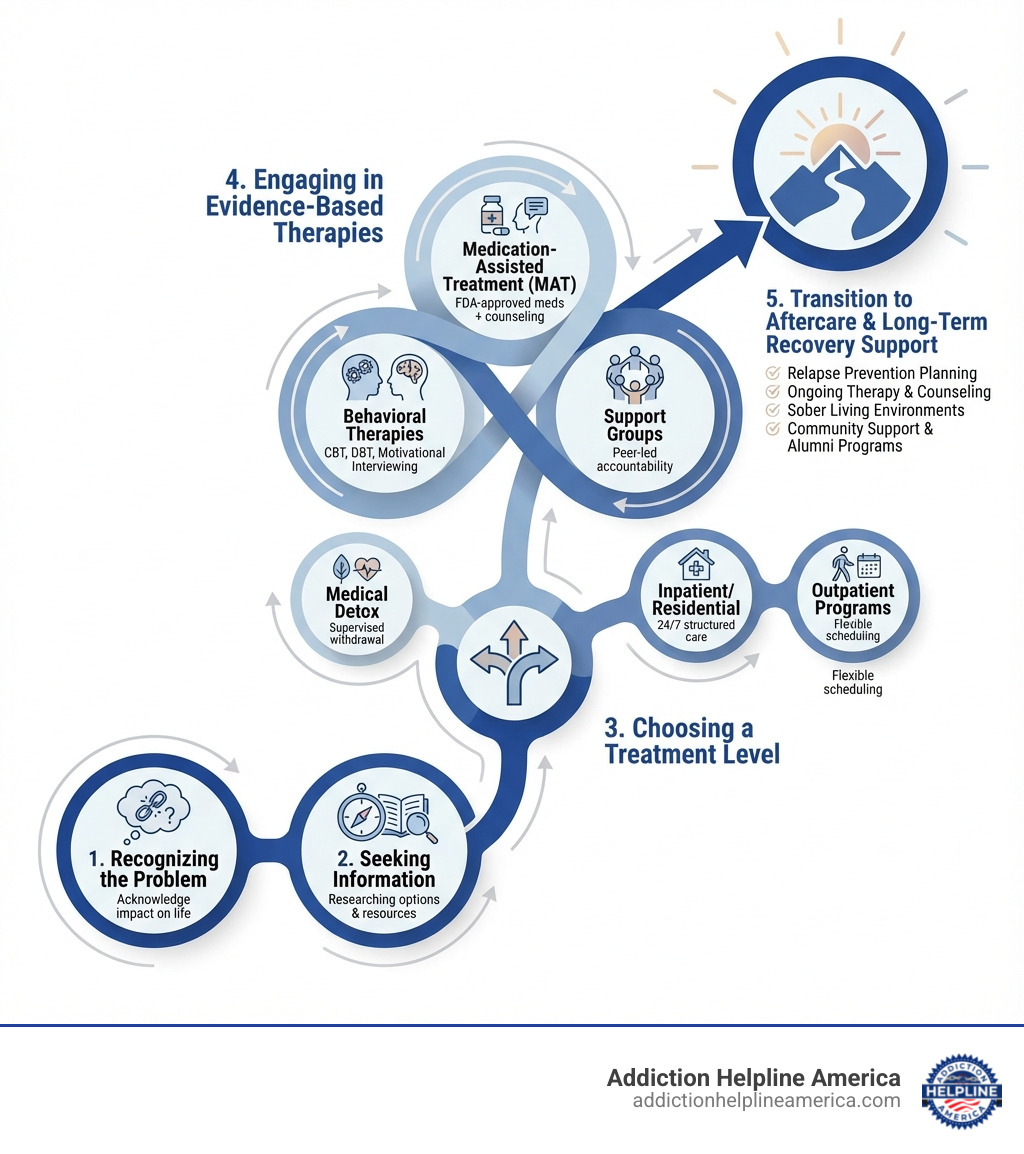
There is no one-size-fits-all solution for addiction; instead, effective treatment relies on a “continuum of care.” This range of services is customized to an individual’s needs and evolves as they progress in recovery, ensuring they receive the right level of support.

Treatment Settings: Finding the Right Level of Care
Matching an individual to the right setting is crucial for effective treatment.
-
Medical Detoxification: Often the first step, this is supervised withdrawal management in a safe environment. It manages potentially dangerous withdrawal symptoms from substances like alcohol, opioids, or benzodiazepines.
-
Inpatient/Residential Treatment: These programs provide 24-hour care in a therapeutic environment, away from daily triggers. Lasting 30-90 days or more, they are ideal for those with severe SUDs or co-occurring mental health issues who need high levels of supervision.
-
Outpatient Programs (OP): Outpatient treatment allows individuals to live at home while attending therapy. Intensity varies:
- Partial Hospitalization Programs (PHP): The most intensive outpatient care, involving treatment for several hours a day, 5-7 days a week.
- Intensive Outpatient Programs (IOP): A step down from PHP, requiring at least 9 hours of weekly attendance, focusing on relapse prevention and coping skills.
- Standard Outpatient Programs (OP): The least intensive option (less than 9 hours weekly), suitable for milder SUDs or as a step-down from more intensive care.
-
Telehealth Options: Many drug abuse treatment programs now offer remote counseling and therapy, increasing accessibility for those in rural areas or with mobility challenges.
Here’s a quick comparison of inpatient versus outpatient programs:
| Feature | Inpatient/Residential Programs | Outpatient Programs (IOP/PHP) |
|---|---|---|
| Living Situation | Live at the treatment facility | Live at home, attend treatment sessions |
| Care Intensity | 24/7 supervision and structured environment | Structured sessions, but return home daily |
| Duration | Typically 30-90+ days | Varies, from weeks to months, based on intensity |
| Medical Support | On-site medical staff, often includes detox | Medical support arranged, detox usually separate |
| Flexibility | Limited flexibility, highly structured | Allows for work, school, and family obligations |
| Cost | Generally higher due to 24/7 care | Generally lower than inpatient |
| Ideal For | Severe SUDs, co-occurring disorders, relapse risk | Milder SUDs, stable home environment, step-down care |
Key Components of Effective Substance Use Disorder Treatment
Effective programs share core components to address the complex nature of addiction.
- Behavioral Therapies: These are cornerstones of treatment.
- Cognitive Behavioral Therapy (CBT): Teaches coping skills to manage cravings and prevent relapse by changing harmful thought patterns.
- Dialectical Behavior Therapy (DBT): Focuses on emotional regulation, distress tolerance, and mindfulness, effective for co-occurring conditions.
- Motivational Interviewing (MI): A client-centered style that strengthens an individual’s motivation for change.
- Individual Counseling: One-on-one sessions to explore the root causes of addiction and develop personal coping strategies.
- Group Therapy: Fosters peer support and a sense of community, reducing feelings of isolation.
- Family Therapy: Helps heal relationships, improve communication, and educate family members on how to support their loved one’s recovery.
- Holistic Approaches: Therapies like yoga, meditation, and art therapy that promote overall well-being.
- Aftercare Planning: Creating a personalized plan for continued support after formal treatment ends, which is critical for long-term success.
The Role of Evidence-Based Practices in Recovery
Effective drug abuse treatment programs use evidence-based practices (EBPs)—methods that have been scientifically researched and proven to work. This ensures that care is based on what science shows is most effective, leading to better outcomes and the best chance at lasting recovery.
Medication-Assisted Treatment (MAT) Explained
MAT is a key EBP that combines FDA-approved medications with counseling and behavioral therapies, particularly for Opioid Use Disorder (OUD) and Alcohol Use Disorder (AUD). MAT helps to:
- Reduce intense cravings
- Manage withdrawal symptoms safely
- Prevent relapse by stabilizing brain chemistry
Key medications include Buprenorphine and Methadone for OUD, and Naltrexone for both OUD and AUD. MAT is a comprehensive approach addressing the biological and psychological aspects of addiction. For more information, you can explore Medication-Assisted Treatment (MAT) | SAMHSA.
The Importance of Support Groups and Community Programs
Long-term recovery is often strengthened by strong support systems. Support groups and community programs offer peer support, reduce isolation, and foster a sense of belonging and accountability.
Some widely recognized support groups include:
- Alcoholics Anonymous (AA): A fellowship for individuals with alcohol use problems.
- Narcotics Anonymous (NA): A community for people recovering from drug use, with thousands of weekly meetings.
- SMART Recovery: A science-based program for recovering from substance use disorder.
For families and loved ones, resources like Al-Anon, Nar-Anon Family Groups, and the Community Reinforcement and Family Training course are invaluable. These groups are essential for maintaining a healthy recovery lifestyle.
How to Find and Pay for a Treatment Program
Finding the right drug abuse treatment programs can feel overwhelming, but you don’t have to do it alone. At Addiction Helpline America, we provide free, confidential guidance to connect you with a program from our network, whether you’re in California or Alaska. For a detailed guide, visit: Learn more about finding a rehab center.
For immediate, personalized assistance, call our free, confidential helpline at 844-561-0606.
Finding a Drug Abuse Treatment Program That Meets Your Needs
The first step is a professional assessment to identify the type and severity of the SUD and any co-occurring conditions. When choosing a program, consider individual needs like age and gender, the specific substance used, and whether the program offers integrated treatment for co-occurring disorders. Also, research the program’s philosophy and staff credentials.
Questions to ask a potential treatment center:
- What types of evidence-based therapy do you offer?
- Do you offer medication-assisted treatment (MAT)?
- How do you address co-occurring mental health disorders?
- What is the staff-to-patient ratio and the typical program duration?
- What is included in the cost, and what are the payment options?
- What aftercare support do you provide?
- Are your staff licensed and credentialed?
For nationwide listings, use resources like SAMHSA’s National Helpline and FindTreatment.gov. You can also Find treatment programs near you.
Navigating the Cost of Treatment and Finding Resources
Cost should not be a barrier to getting help. Many options can make treatment affordable:
- Insurance Coverage: The Mental Health Parity and Addiction Equity Act (MHPAEA) requires most health plans to cover SUD services. We can help you understand your benefits. See Mental Health and Addiction Insurance Help (HHS).
- State-Funded Programs: Many states offer publicly funded treatment for those who qualify based on income.
- Grants & Financial Aid: Some centers offer scholarships or financial aid.
- Sliding Scale Fees: Facilities may adjust fees based on income.
- Free or Low-Cost Options: Community health centers, found via the Health Center Locator (HRSA), often provide low-cost services.
Explore our guide on Insurance and payment options for addiction treatment for more details. Our helpline at 844-561-0606 can also help you explore these financial options.
The Journey of Recovery: Before, During, and After Treatment
Recovery from a Substance Use Disorder is a continuous journey of change through which individuals improve their health, live self-directed lives, and reach their full potential. This process is supported by effective drug abuse treatment programs and ongoing commitment.
How to Prepare for Treatment and Support a Loved One
Preparing for treatment involves practical and emotional steps.
For the Individual Seeking Treatment:
- Plan Logistics: Arrange for time off work, childcare, and transportation.
- Prepare Mentally: Acknowledge the challenges ahead and be ready to engage honestly. Prepare a list of substances used and questions for your provider.
- Talk to a Professional: Discuss your substance use with your primary care provider for guidance and referrals.
For Families and Loved Ones:
- Educate Yourself: Learn about SUDs and the recovery process.
- Set Healthy Boundaries: Refuse to enable substance use while still offering support for treatment.
- Communicate with Empathy: Express your concerns without judgment.
- Get Involved: Participate in family therapy sessions if offered.
- Seek Your Own Support: Groups like Al-Anon, Nar-Anon, and the online Community Reinforcement and Family Training program are invaluable resources for family members.
Life After Formal Treatment: Strategies for Maintaining Recovery
Completing a formal treatment program is the beginning of a lifelong journey. Long-term strategies are essential to prevent relapse.
- Relapse Prevention Planning: A personalized plan developed during treatment to identify triggers and coping strategies.
- Aftercare Programs: Continued group or individual therapy to support the transition back to daily life.
- Sober Living Homes: A supportive, drug-free housing option that bridges the gap between residential treatment and independent living.
- Continued Therapy: Ongoing therapy to address new challenges and reinforce coping skills.
- Developing Healthy Coping Skills: Learning new ways to manage stress and emotions without substances, such as through mindfulness, exercise, or hobbies.
- Building a New Life: Recovery is about building a fulfilling life through education, employment, healthy relationships, and meaningful activities.
Frequently Asked Questions about Drug Abuse Treatment Programs
How long does a drug abuse treatment program last?
The duration of a drug abuse treatment program varies based on individual needs, the severity of the addiction, and any co-occurring mental health disorders. There is no single timeline. Programs can last 30, 60, or 90 days, while some long-term models extend to six months or more. The most effective approach is a continuum of care, where an individual moves between different levels of intensity as their needs evolve.
Is my information kept confidential during treatment?
Yes. Confidentiality is a cornerstone of treatment, protected by strict federal laws like the Health Insurance Portability and Accountability Act (HIPAA) and 42 C.F.R. Part 2. These regulations protect your privacy and generally require your written permission before your identity or treatment records can be disclosed. This allows you to seek help without fear of stigma. Limited exceptions exist for medical emergencies or to protect safety.
What happens if I relapse after treatment?
Relapse is a common part of recovery from a chronic disease and is not a sign of failure. It is an opportunity to learn and adjust your treatment plan. If a relapse occurs, it’s crucial to identify what led to it and modify your recovery strategy with your support team. Immediately re-engage with your support network—therapist, sponsor, or support groups—to get back on track. Don’t let shame prevent you from seeking help again. Resilience is built by navigating these challenges, and we are here to help you find support at any stage of your journey.
Your First Step Towards a New Life
You’ve taken a significant step by educating yourself about drug abuse treatment programs. This knowledge is a powerful tool in reclaiming your life or helping a loved one find healing. Recovery is not just a possibility; it’s a reality for millions, from the mountains of Colorado to the coasts of Florida. Treatment works, and a life free from addiction is within reach.
At Addiction Helpline America, we believe that reaching out for help is the most important step. We are dedicated to providing free, confidential, and personalized guidance to connect you with the right drug abuse treatment programs from our extensive network. Our compassionate team is available 24/7 to help you steer the path to recovery.
Don’t let stigma or uncertainty hold you back. Hope and healing are waiting.