Why Finding the Right Domestic Violence Support Matters Now
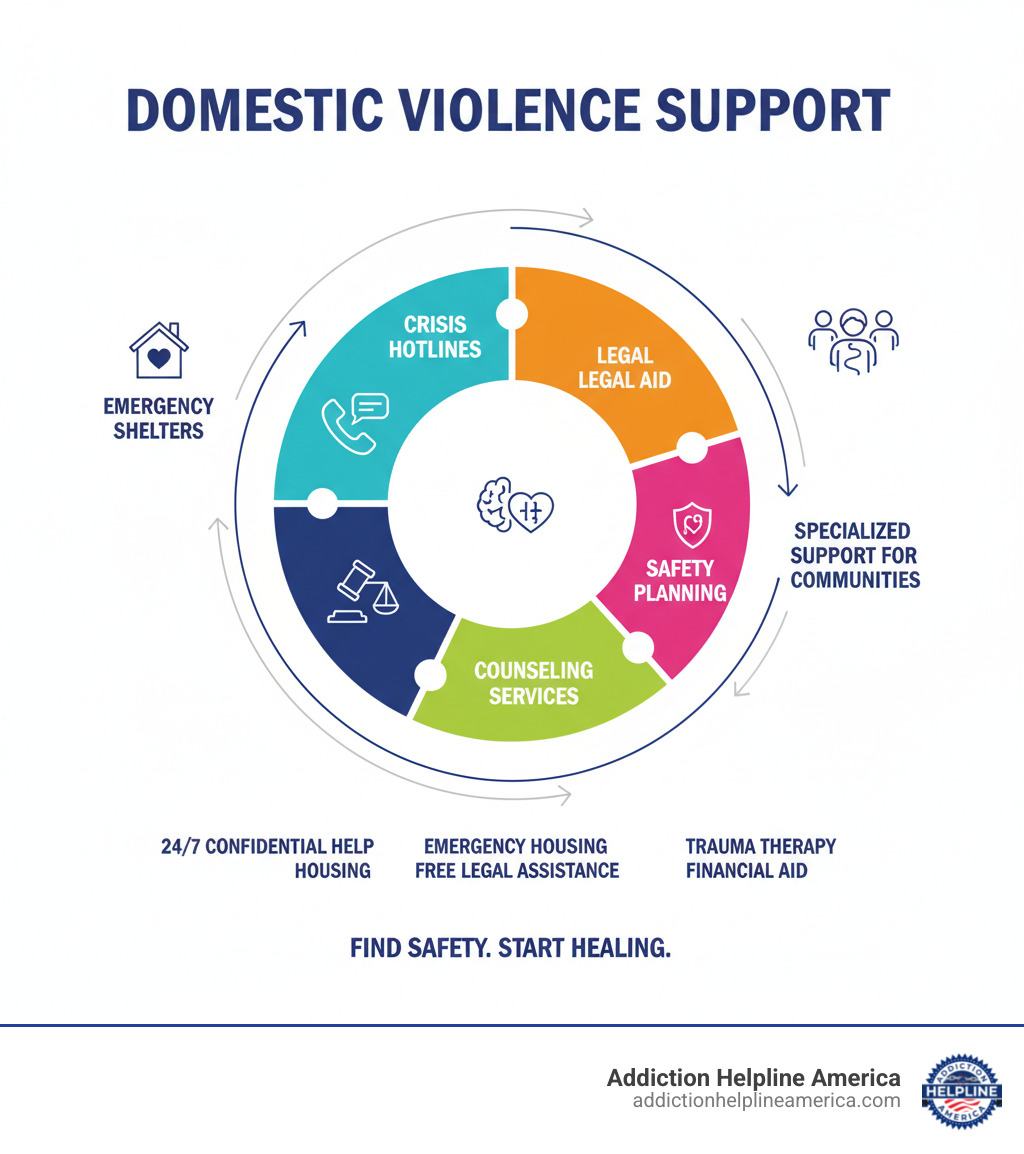
Domestic violence support is available 24/7 through confidential helplines, emergency shelters, legal services, and counseling programs designed to help you find safety and begin healing.
Immediate Help:
- Call 911 if you’re in immediate danger.
- National Domestic Violence Hotline: 1-800-799-SAFE (7233) – Available 24/7 via phone, chat, or text.
- Crisis Text Line: Text START to 88788.
- 211 Helpline: Dial 211 to connect with local resources.
Seeking help when you’re experiencing abuse—or when addiction complicates an already dangerous situation—requires tremendous courage. Domestic violence is more complex than many realize. You might minimize what’s happening or feel trapped. Approximately 25% of women and 14% of men experience domestic violence from a partner, and the connection between abuse and addiction creates additional barriers to getting help.
This guide exists to make finding support easier. You’ll find immediate crisis resources, safety planning strategies, and specialized help.
At Addiction Helpline America, we understand that recovery often involves addressing both domestic violence and substance use challenges. Our team provides confidential, compassionate guidance 24/7 to help you connect with the resources you need for lasting safety and recovery.
Explore more about domestic violence support:
Understanding Domestic Violence and Recognizing the Signs
Domestic violence—or intimate partner violence (IPV)—is a pattern of behaviors one person uses to gain power and control over a partner. It’s a web that tightens over time, not just isolated incidents. The abuse can manifest in several ways:
- Physical abuse: Hitting, slapping, kicking, choking, or using weapons. Even a shove is part of a larger intimidation strategy.
- Emotional and psychological abuse: Constant criticism, name-calling, humiliation, and gaslighting (making you doubt your reality). This chips away at your self-worth.
- Financial abuse: Controlling your access to money, preventing you from working, or running up debt in your name to create financial dependency.
- Sexual abuse: Any sexual contact without clear consent, including coercion or pressure, even within a marriage.
- Digital abuse: Demanding passwords, monitoring your phone or social media, tracking your location, or using technology to harass you.
The Power and Control Wheel is a concept that illustrates how abusers use various tactics—like intimidation, isolation, and blaming—to maintain control. Recognizing these patterns is the first step toward getting domestic violence support.
How to Identify an Unhealthy Relationship
Figuring out if your relationship is unhealthy is confusing, but certain warning signs are common in abusive dynamics:
- Isolation: Your partner makes it difficult to see friends and family, creating distance from your support system.
- Extreme jealousy: They constantly accuse you of cheating without reason and become enraged by innocent interactions.
- Controlling behavior: They dictate what you wear, who you see, and how you spend money, making you feel like you need permission for basic things.
- Threats and intimidation: This includes threats to harm you, themselves, your children, or pets. It can also be subtle, like a menacing look or blocking your exit.
- Gaslighting: They deny events happened, call you “too sensitive,” and twist situations to make you feel like you’re the problem, causing you to doubt your own perception.
- Monitoring your activities: They check your phone, read your messages, track your location, or demand your passwords.
- Belittling and humiliation: They insult you, mock your intelligence, or make cruel “jokes” to tear down your self-esteem.
If you recognize these signs, know that what you’re experiencing is real and not your fault. At Addiction Helpline America, we understand that domestic violence and substance use often co-occur. Our team provides confidential support to help you find resources for safety planning, addiction treatment, or both.
Immediate Steps and Safety Planning
Your safety is the top priority. If you are in immediate danger, call 911. For times when you aren’t in immediate danger but feel unsafe, a safety plan is your roadmap to staying as safe as possible.
- Identify a safe place: Know where you can go quickly, like a trusted friend’s home or a local domestic violence shelter.
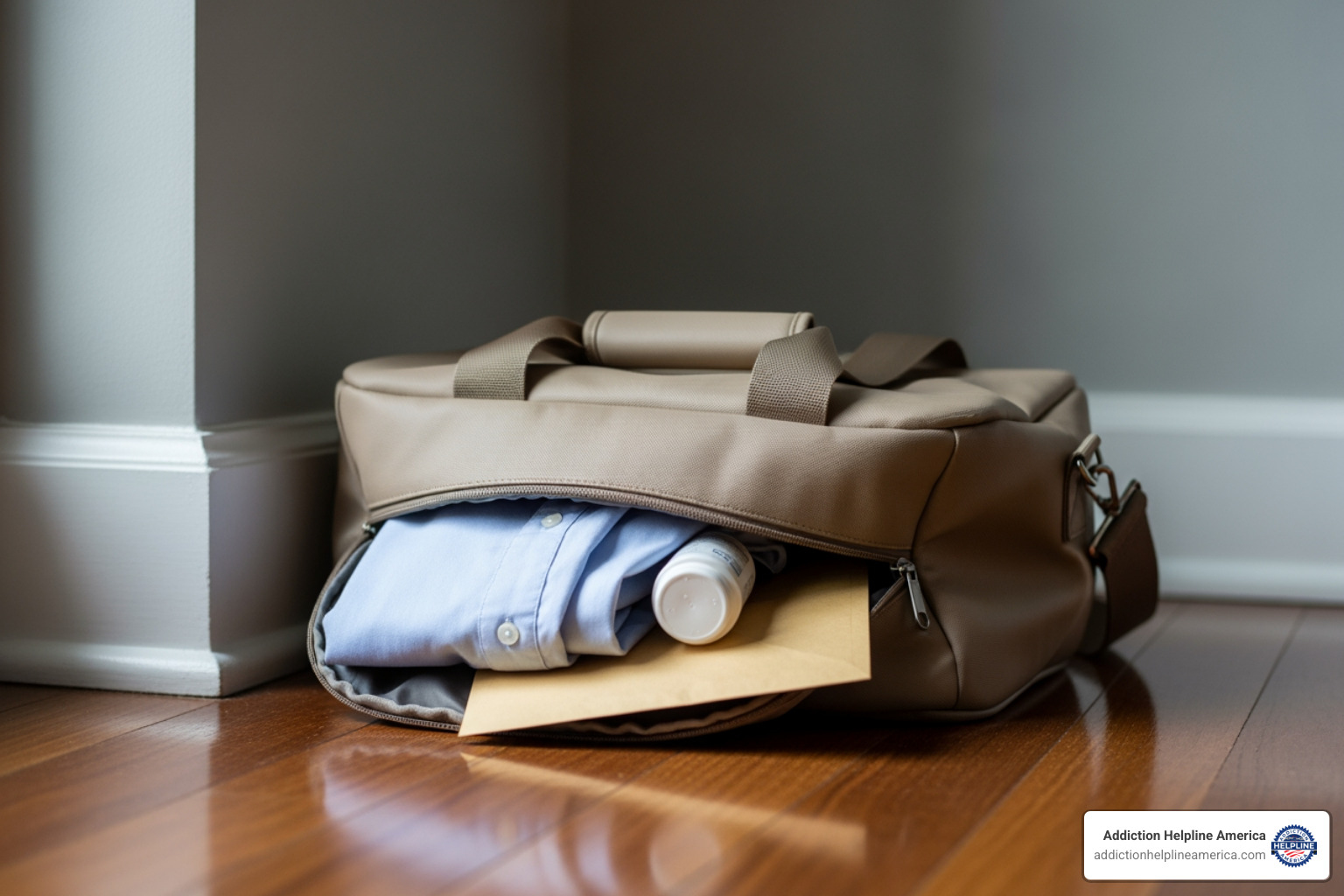
- Prepare a “go-bag”: Keep a bag hidden with essentials. Include important documents (ID, birth certificates, social security cards), medications, a change of clothes, cash, and a spare phone. If you can’t hide a bag, store copies of documents with a trusted person.
- Create a code word: Share a secret word or phrase with trusted contacts that signals you need help immediately.
- Memorize emergency numbers: Know the National Domestic Violence Hotline (1-800-799-SAFE (7233)) and a local shelter’s number. Save them in your phone under an innocent name like “Pizza Place.”
Creating a Personalized Safety Plan
Your safety plan should be unique to your situation. The goal is to create a practical plan you can use when stress is high.
- At home: During an argument, stay in rooms with exits. Avoid kitchens or closets where you could be trapped. If you have children, teach them a code word that means they should go to a neighbor’s or call for help.
- In public: If you encounter your abuser, move toward crowded areas. Enter a store and tell an employee you feel unsafe.
- Preparing to leave: This is often the most dangerous time. Quietly gather important documents, medical records, and financial statements. Secure a small emergency fund and plan your transportation.
- Review your plan: Regularly update your safety plan. Practice what you’ll do, like a fire drill, so you can act quickly under stress.
The National Domestic Violence Hotline offers free help to create a detailed, personalized safety plan. Seeking domestic violence support is about creating a sustainable plan for your future.
Protecting Your Digital Privacy When Seeking Help
Abusers often monitor their partner’s devices, so protecting your digital privacy is essential when looking for help.
- Use private browsing: Use “incognito mode” on your phone and computer when researching resources to prevent searches from being saved in your history.
- Clear your history: Regularly clear your browser history, cache, and cookies.
- Use a safe device: The safest option is a computer or phone your abuser can’t access, like one at a public library or a trusted friend’s house.
- Be cautious on social media: Turn off location services, review privacy settings, and consider deactivating your accounts if you’re planning to leave.
- Create a private email: Make a new email account that your abuser doesn’t know about. Use it only for communicating with support services and access it only from safe devices.
- Assume you’re being monitored: If you suspect spyware, trust your gut. Only use devices you know are completely safe.
Taking these precautions is a crucial step in protecting yourself while you seek the domestic violence support you deserve.
Finding Domestic Violence Support and Resources
Knowing where to turn for domestic violence support can feel overwhelming, but help is available right now. Confidential helplines operate 24/7, allowing you to connect via phone, text, or online chat whenever you feel ready. The advocates are trained to listen, believe you, and help you explore your options without judgment.
Key Helplines and Resources
Here are key national resources that provide domestic violence support, as well as help for related mental health and addiction challenges.
- National Domestic Violence Hotline: Call 1-800-799-SAFE (7233), chat on their website, or text “START” to 88788. They help with safety planning and local referrals.
- 211: Dial 211 for a comprehensive directory of local social services, including shelters, food assistance, and treatment programs.
- National Teen Dating Abuse Helpline (loveisrespect.org): Call 1-866-331-9474 or text LOVEIS to 22522 for support custom to young people.
- StrongHearts Native Helpline: Call 1-844-7NATIVE (762-8483) for culturally-specific support for Native Americans and Alaska Natives.
- The Deaf Hotline: Offers 24/7 support via video phone at 855-812-1001.
- RAINN (Sexual Assault Hotline): Call 1-800-656-HOPE (4673) or use their online chat.
- Crisis Text Line & 988 Lifeline: For immediate mental health crises, text HOME to 741741 or call/text 988.
- Trans Lifeline: Call 1-877-565-8860 for peer support for trans individuals.
At Addiction Helpline America, we recognize that domestic violence and substance use are often linked. Our team provides free, confidential guidance 24/7 to help you find treatment programs that address both issues together.
Finding Local Shelters, Legal Aid, and Counseling
National helplines can connect you with local resources for hands-on, long-term support.
- Shelters and Housing: Start with 211 or the National Domestic Violence Hotline’s local provider directory to find emergency shelters and transitional housing. Shelters often provide counseling, childcare, and other support services.
- Legal Aid: Many domestic violence programs have legal advocates who can help with restraining orders, custody, and divorce. They can connect you with free or low-cost legal services.
- Counseling: Local agencies offer individual and group therapy for survivors, focusing on trauma, PTSD, anxiety, and depression.
Each state has its own network of resources. For example, Alabama residents can find help through DomesticShelters.org, while Alaska has a comprehensive shelter directory. Arizona offers support through the Department of Economic Security, and Arkansas has Women & Children First. California’s Partnership to End Domestic Violence maintains an extensive resource list, and you can find programs through state coalitions in Colorado, Connecticut, and Delaware. Connecting with these local providers is key to rebuilding your life.
Specialized Support and Long-Term Healing
Healing from domestic violence is a journey that looks different for everyone. Specialized domestic violence support exists to meet you where you are, with resources that understand your unique situation. Long-term healing is about more than just physical safety—it’s about reclaiming your sense of self.

Custom Domestic Violence Support for Diverse Communities
Abuse affects all communities, but the barriers and support needed can vary. Specialized resources exist to meet these unique needs.
- Men: Societal stereotypes can create shame and silence for male survivors. Your experience is valid, and help is available through national hotlines and some local support groups.
- Youth and teens: Dating violence has unique dynamics. The National Teen Dating Abuse Helpline (loveisrespect.org) offers custom support at 1-866-331-9474 or by texting LOVEIS to 22522.
- Indigenous Peoples: The StrongHearts Native Helpline at 1-844-7NATIVE (762-8483) provides culturally competent support that understands the historical trauma and specific challenges Native communities face.
- Older adults: Elder abuse can involve physical limitations, financial dependence, or cognitive challenges. Your local 211 or Adult Protective Services (APS) can connect you with senior-specific resources.
- LGBTQ+ individuals: Survivors may fear discrimination or being “outed.” The Trans Lifeline at 1-877-565-8860 offers peer support for trans people, and many local DV organizations are becoming more inclusive.
- Individuals with disabilities: Dependence on an abuser for care creates extreme difficulty in leaving. The Deaf Hotline provides 24/7 support via video phone at 855-812-1001, and local agencies can offer specialized advocacy.
The Link Between Domestic Violence, Mental Health, and Addiction
Domestic violence, mental health, and addiction are often intertwined. Living through abuse can lead to long-term trauma.
- Trauma and PTSD: Survivors commonly experience flashbacks, severe anxiety, and Post-Traumatic Stress Disorder (PTSD). Treating this trauma is critical for healing.
- Co-occurring Depression and Anxiety: The constant stress of abuse takes a profound toll, often resulting in depression and anxiety that can persist even after leaving.
- Substance Use: Many survivors use drugs or alcohol to cope with the pain and fear. This creates a dual diagnosis, where both trauma and addiction need to be addressed.
Integrated treatment is essential for holistic recovery. You can’t fully heal from one issue without addressing the other. Trauma-informed care recognizes that symptoms are survival responses, not character flaws. Therapies like CBT and EMDR are highly effective for survivors.
At Addiction Helpline America, we specialize in connecting people with treatment centers that offer integrated care for co-occurring disorders. We are committed to helping you find programs that address every aspect of your well-being, creating a foundation for lasting safety and healing.
How to Support a Loved One Experiencing Abuse
Watching a loved one in an abusive relationship is difficult. Supporting a survivor isn’t about rescuing them, but standing beside them as they find their own path to safety. Leaving is complex and dangerous, so your role is to be a steady, non-judgmental presence.
- Start the conversation sensitively. Find a private moment and express your concern without being accusatory. Try, “I’m worried about you, and I’m here if you need to talk.”
- Listen without judgment. When they open up, just listen. Don’t interrupt with advice or ask, “Why do you stay?” Your calm, accepting presence is a powerful gift.
- Believe them and validate their experience. Say it out loud: “I believe you. This is not your fault.” Your belief is a lifeline that counters the abuser’s manipulation.
- Offer specific, practical help. Instead of a vague “Let me know if you need anything,” offer concrete support: “Can I help you look up domestic violence support resources?” or “Would you like me to hold a go-bag for you?”
- Respect their decisions. They may leave and return multiple times. It often takes several attempts to leave for good. Your job is to keep the door open and let them know, “Whatever you decide, I’m still here for you.”
- Help them create a safety plan. Work with them to identify safe places, memorize emergency numbers (like the National Domestic Violence Hotline at 1-800-799-SAFE), and develop a code word for emergencies.
- Educate yourself. Learn about the dynamics of abuse, like the Power and Control Wheel, to be a more patient and effective supporter.
Supporting a survivor is emotionally taxing, so take care of yourself, too. At Addiction Helpline America, we can help connect your loved one with programs that address both trauma and any co-occurring substance use through integrated, trauma-informed care.
Conclusion
Domestic violence support is available for you right now. People are ready to answer your call, text, or chat. They will believe you and help you find a path to safety.
Reaching out for the first time takes incredible courage. We see you, and we understand your fear. You are here, seeking a way forward, and that is a powerful step.
Recovery is a journey, not a straight line. Some days will be harder than others, and that’s okay. Healing happens one day at a time. If you are also struggling with addiction or mental health challenges, it’s important to address these issues together. Integrated treatment that sees all of you is key.
At Addiction Helpline America, we specialize in connecting people with treatment centers that understand this complexity. Our team provides free, confidential guidance 24/7 to help you find a recovery program that fits your unique situation. We are here to listen without judgment and help you explore your options.
You deserve safety, healing, and a life free from fear. You are not alone.