
Why Financial Barriers Shouldn’t Stop Your Recovery Journey
Detox without insurance is not only possible—it’s a path thousands of Americans take every year to begin their recovery. Here’s what you need to know right away:
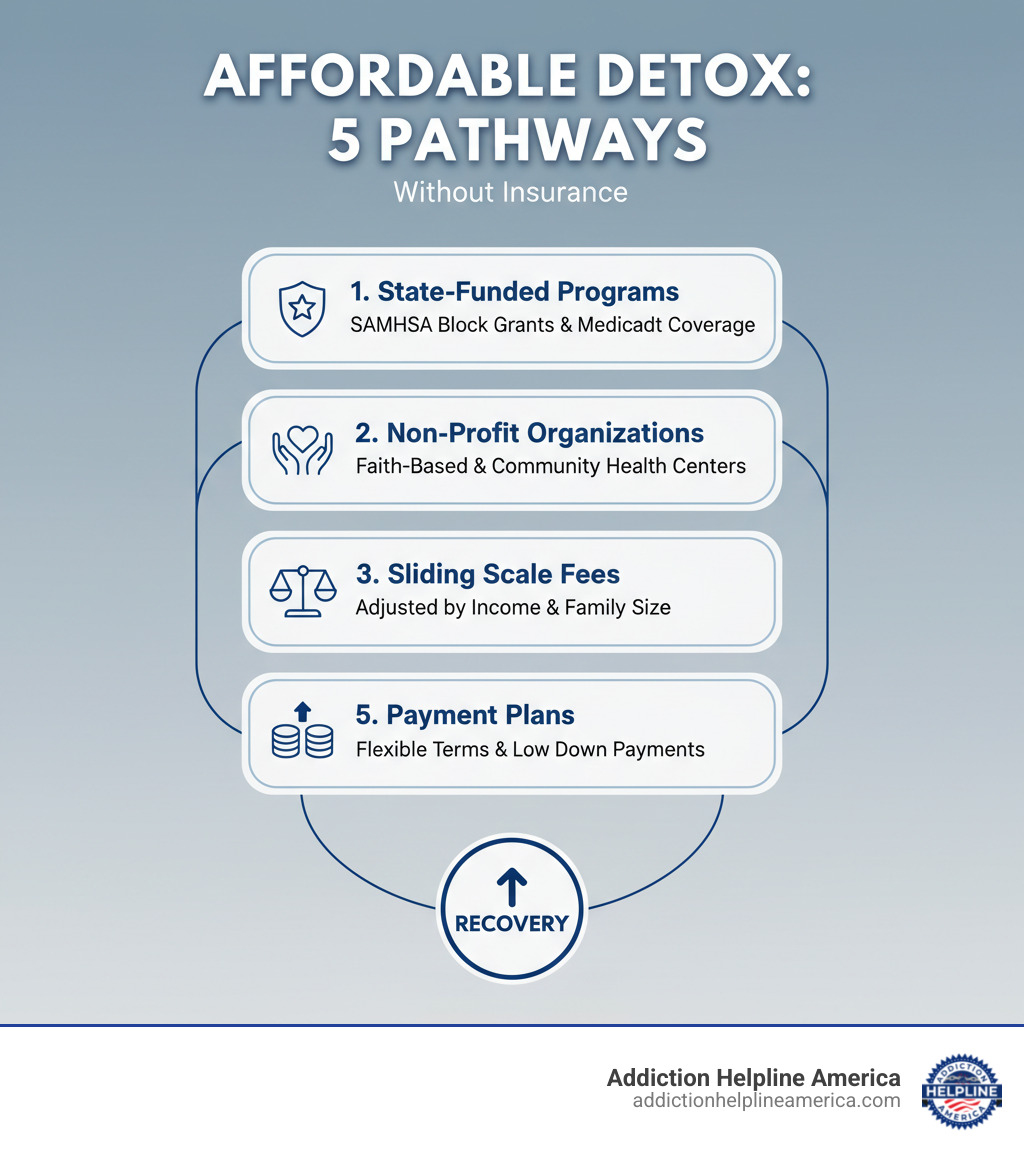
Quick Answer: 5 Ways to Access Detox Without Insurance
- State-Funded Programs – Free or low-cost services through government grants and Medicaid
- Non-Profit Organizations – Faith-based and community programs offering free treatment
- Sliding Scale Fees – Costs adjusted based on your income (as low as $10 per session)
- Grants and Scholarships – Federal and facility-specific financial aid
- Payment Plans – Flexible monthly payments with no credit check required
The numbers are stark: in 2022, of the 54.6 million Americans who needed substance use treatment, only 13.1 million received it. Cost remains the single biggest obstacle between someone struggling with addiction and the help they need.
But you don’t need insurance to get quality detox care. State-funded programs, community health centers, and flexible payment options exist for people in your situation. While medical detox can cost $250 to $800 per day, there are legitimate pathways to access these services at little to no cost.
Many people simply don’t know these free and low-cost options exist, or they worry that free programs offer substandard care—which is a myth when dealing with accredited facilities.
At Addiction Helpline America, we connect individuals and families to accessible addiction treatment, including specialized guidance on navigating detox without insurance. Our team works daily to match people with programs that fit their circumstances.
This guide walks you through every option, from finding state-funded detox centers to negotiating payment plans. You’ll learn what questions to ask, what documentation you need, and how to access treatment quickly.
Basic detox without insurance vocab:
Understanding the Cost and Feasibility of Detox Without Insurance
Worrying about how to pay for addiction treatment without insurance is normal. Many believe it’s impossible, but getting detox without insurance is more achievable than you might think. The most important step is to seek help regardless of your financial situation. While cost is a significant barrier for many, numerous pathways exist to overcome it.
Can You Go to Detox Without Insurance?
Yes, absolutely. It’s a common myth that you need health insurance to access life-saving detox services. This misconception often prevents people from seeking help. The truth is, many programs are designed specifically for people without insurance, offering various forms of financial assistance. Your health and recovery are what matter most, and your financial situation shouldn’t prevent you from getting the care you deserve.



What Are the Average Costs of Detox?
Understanding the typical costs of detox without insurance can help you plan. Prices vary significantly based on the program type, duration, location, and services included.
Here’s a breakdown of average costs:
Inpatient Detox Programs: You stay at the facility for treatment. A 30-day program can cost between $5,000 and $30,000. Luxury facilities can be more, while standard programs often fall in the $15,000 to $25,000 range.
Outpatient Detox Programs: You live at home and attend treatment during the day. Basic outpatient options can cost $1,000 to $5,000. More intensive programs, like an Intensive Outpatient Program (IOP) or Partial Hospitalization Program (PHP), may cost $1,400 to $10,000 for a month.
Daily Detox Cost: The average daily cost for medical detox is typically between $300 and $800.
Factors that influence these prices include:
- Location: Costs differ between states and cities.
- Substance: Different substances require different levels of medical care, affecting the price.
- Program Length: Shorter programs generally cost less.
- Amenities: Facilities with private rooms, gourmet meals, or holistic therapies will cost more.
- Medical Needs: The level of medical support and medication required will impact the total cost.
Free and Low-Cost Detox Program Options

Affordable care for detox without insurance exists. It often involves looking beyond private facilities to community resources, government initiatives, and charitable organizations designed to provide essential services regardless of your ability to pay.
Finding State-Funded Programs for Detox Without Insurance
State-funded detox programs are a lifeline for those with limited income or no insurance. They receive funding from federal grants, such as those from the Substance Abuse and Mental Health Services Administration (SAMHSA), and state Medicaid programs. This allows them to offer services for free or at a very low cost.
To qualify, you generally need to prove state residency, your income status, and your legal U.S. presence. Your addiction severity will also be assessed to confirm an immediate need for care. These are standard procedures to ensure help goes to those who need it most.
How to find these programs:
- SAMHSA National Helpline: Call 1-800-662-HELP (4357). This is a confidential, 24/7 helpline for treatment referrals and information.
- SAMHSA’s FindTreatment.gov: An excellent online, confidential tool to search for substance use and mental health treatment facilities across the U.S.
- State Agencies: Contact your state’s mental health or substance abuse agency. SAMHSA maintains a directory of these agencies, which can provide specific information on local programs.
Be aware that state-funded programs can have waiting lists due to high demand. It’s important to apply as soon as possible. Priority is often given to vulnerable groups like pregnant women or veterans, so always ask if any priority considerations apply to you.
Non-Profit and Community-Based Organizations
Beyond state funding, many non-profit and community-based organizations offer free or low-cost detox without insurance. These groups, including local charities, community health centers, and faith-based organizations like the Salvation Army, provide compassionate care, often with less bureaucracy. They may offer scholarships or other financial assistance.
Feeling overwhelmed? Our team at Addiction Helpline America can connect you to the right addiction and mental health treatment centers from our vast network. We offer free, confidential guidance to help you find these non-profit and community-based options in your area.
State-Funded vs. Private Detox Centers
Understanding the differences between state-funded and private detox centers can help you choose the best path for your detox without insurance. Both aim to provide safe, effective care, but they differ in their approach.
Here’s a quick comparison:
| Feature | State-Funded Detox Centers | Private Detox Centers |
|---|---|---|
| Average Cost | Little to no cost for those who qualify. | Can be quite expensive, ranging from $5,000 to $30,000+ per month. |
| Wait Times | Might have waiting lists due to high demand. Priority often goes to specific vulnerable groups. | Generally offer quicker admission, sometimes even immediate, if you can pay. |
| Amenities | Tend to be basic and functional. The focus is on essential medical care and counseling, often with shared rooms. | Can range from comfortable to very luxurious. Expect private rooms, gourmet meals, holistic therapies, and recreational activities. |
| Included Therapies | Provide comprehensive care, including medical detox, counseling, and group therapy. May refer you elsewhere for very specialized services. | Offer a wide array of therapies in-house, such as individual, group, and family therapy, plus specialized treatments like MAT (Medication-Assisted Treatment). |
While state-funded programs may have fewer amenities and potential wait times, they provide the quality medical supervision and support needed for a safe detox. The most important factor, regardless of the path you choose, is to ensure the facility is accredited and offers medically supervised detox.
Navigating Financial Assistance and Payment Options
If a free program isn’t available or suitable, other financial options can make detox without insurance possible. Proactive planning and clear communication with admissions staff are key.
How Sliding Scale Fees Make Detox Affordable
A sliding scale fee system makes treatment accessible by adjusting the cost based on an individual’s financial situation. This ensures quality care remains within reach, regardless of income.
- How it Works: The system considers your income and number of dependents. Someone with a lower income pays significantly less for the same services, sometimes as little as $10 per session.
- Documentation Needed: To qualify, you’ll typically need proof of income (pay stubs, tax returns), documentation of dependents, and information on other financial obligations.
- How to Ask: When contacting a treatment center, simply ask if they offer a sliding scale payment system. Many centers have financial counselors to discuss your situation.
Payment Plans, Grants, and Scholarships for Detox
When you can’t pay upfront, various forms of financial aid can cover the cost of detox without insurance.
- In-House Financing (Payment Plans): Many rehab centers offer payment plans, allowing you to spread the cost over several months (e.g., 6-24 months), sometimes with a low down payment. Always ask facilities about their in-house financing.
- Federal Grants (SAMHSA): SAMHSA provides block grants to states, which are distributed to treatment facilities to offer reduced-cost or free services. Contact your state’s substance abuse agency (via SAMHSA’s directory) to find facilities that receive these grants.
- Treatment Scholarships: Some treatment centers and non-profit organizations offer scholarships to cover some or all of the cost. Research centers directly and ask about their scholarship programs. Be prepared to provide documentation of financial need.
- How Addiction Helpline America Can Assist: Our navigators can help you identify facilities that offer payment plans, connect you with state agencies for grant information, and assist in finding centers that provide scholarships, simplifying your search for detox without insurance.
The Detox Process and Post-Detox Planning
Getting through detox is the first chapter of recovery. Understanding what happens during detox and planning for what comes next can make the journey less frightening, especially when navigating detox without insurance.
What to Expect During the Detox Process
Detox can be challenging, but you don’t have to go through it without proper medical care. Accredited facilities, whether free or private, follow protocols to keep you safe.
Medical supervision during detox is essential. Withdrawal from substances like alcohol and benzodiazepines can be dangerous without monitoring. Trained medical staff will watch your vital signs and manage symptoms, often with medication, to make the process as comfortable as possible.
Withdrawal symptoms vary depending on the substance, duration of use, and your health. They can range from mild, flu-like symptoms to more intense challenges. Medication-assisted treatment (MAT) is often used to ease symptoms and help your body adjust more gently.
Most people complete the acute detox phase within 5 to 10 days, though some programs extend to 30 days for additional stabilization. The timeline depends on your individual needs.
A common worry is that facilities offering detox without insurance provide lower quality care. This is a myth for accredited centers. Facilities certified by The Joint Commission or CARF must meet the same high standards for medical safety and staff qualifications, regardless of cost. The main differences are typically in amenities (e.g., private vs. shared rooms), not in the quality of medical supervision.
What Are My Next Steps After Detox Without Insurance?
Completing detox is a major accomplishment, but it’s the first step, not the finish line. The real work of recovery—addressing underlying issues and building a sober life—happens next. A solid aftercare plan is crucial for lasting recovery.
Quality aftercare is accessible without insurance or a large budget:
- Support Groups: Groups like Alcoholics Anonymous (AA) and Narcotics Anonymous (NA) are completely free and available in nearly every community. They offer invaluable peer support and a sense of belonging.
Outpatient Counseling: Many community health centers and state-funded programs offer individual or group therapy on a sliding scale, with some sessions costing as little as $10-$20. An intensive outpatient program (IOP) offers more structure while you live at home.
Sober Living Homes: These are drug- and alcohol-free residences where you live with others in recovery. They provide a supportive, substance-free environment during the vulnerable early months of sobriety. Costs vary, with some being income-based.
Addiction Helpline America helps you plan for what comes next. Our team can connect you with aftercare resources that fit your situation. You can also find the best detox centers near you that integrate aftercare planning.
Special Resources for Veterans and Other Groups
Certain groups may have access to specialized resources that can make finding detox without insurance easier.
Veterans: The U.S. Department of Veterans Affairs (VA) offers comprehensive substance use treatment. If a local VA facility has a waitlist, you may be eligible for community care programs at non-VA facilities, with the VA covering the costs.
Pregnant Women: Most state-funded programs give pregnant women priority access, which can dramatically reduce wait times. Be sure to mention this when you call.
Other Populations: Individuals with dependent children, those involved in the criminal justice system, or people experiencing homelessness may also qualify for priority access or dedicated funding. Always ask about special eligibility criteria.
Frequently Asked Questions about Detox Without Insurance
It’s natural to have questions when navigating something as critical as finding detox without insurance. Here are answers to some of the most common concerns.
How can I quickly find a free detox center near me?
When you need help quickly, here are the best ways to find a free detox center:
- SAMHSA’s FindTreatment.gov: This confidential government tool is the best starting point. You can filter search results by location to show facilities offering free or low-cost services.
- National Helplines: The SAMHSA National Helpline at 1-800-662-HELP (4357) offers 24/7 confidential referrals. The 988 Suicide & Crisis Lifeline can also guide you to local resources.
- Local Health Departments: Your county or state health department can provide directories and direct referrals to state-funded or community-based detox centers.
- Addiction Helpline America: Our navigators provide personalized assistance, connecting you to options in our network that match your financial and clinical needs.
Is the quality of care different at a free detox center?
This is a common concern, but it’s largely a myth that free detox centers offer inferior care. Here’s why:
- Accreditation Matters: Many free or low-cost facilities are accredited by organizations like The Joint Commission or CARF. This means they meet high standards for medical safety, staff qualifications, and treatment protocols.
- Focus on Essentials: The main difference is usually in amenities (e.g., private rooms, gourmet meals), not in the core medical safety or effectiveness of the detox. Accredited centers of all price points provide qualified medical professionals to manage withdrawal safely.
- Staff Qualifications: Reputable facilities employ qualified medical and therapeutic staff. Your safety and well-being are the top priority in any accredited center.
Can I be denied treatment if I can’t pay?
The answer depends on the facility and the urgency of your situation.
- Emergency Rooms (ERs): By law, ERs must provide stabilizing care for life-threatening withdrawal symptoms (like seizures) regardless of your ability to pay. They cannot turn you away in an emergency.
- Private Treatment Centers: As businesses, private centers may deny non-emergency admission if you cannot arrange payment. However, many are willing to work with you on payment plans or financial aid, so it’s always worth asking.
- State-Funded Programs: These programs exist specifically for individuals who cannot afford private care. While they have eligibility requirements and may have waiting lists, their mission is to provide detox without insurance to those who would otherwise be denied care due to cost.
If one facility cannot accommodate you, don’t lose hope. Other options are available. Persistence is key, and resources like Addiction Helpline America can help you explore all avenues.
Conclusion
We hope this guide has shown you that cost or a lack of insurance doesn’t have to be a barrier to the help you deserve. Finding detox without insurance is absolutely possible, and it’s a brave first step toward a healthier future.
Recovery is a journey with many different paths. We’ve covered several options, from state-funded programs and non-profits to sliding scale fees, grants, and payment plans. These resources are available to help you get the care you need.
You have the power to take this first step. Every recovery story begins with a single decision. Let this guide be your roadmap, showing you that real solutions are available.
At Addiction Helpline America, we believe everyone deserves a chance to heal. We’re here to be your confidential guide, helping you sort through these options to find a program that fits your unique needs. Don’t let cost keep you from the life you’re meant to live.
Ready to talk? Take that first step today.
Contact our 24/7 addiction and rehab hotlines for free guidance.