The First Step to Recovery in the Volunteer State
Detox centers in Tennessee provide the critical medical supervision and support needed to safely manage withdrawal from drugs or alcohol—and they could be the lifeline you or your loved one needs right now.
Quick Facts About Tennessee Detox Centers:
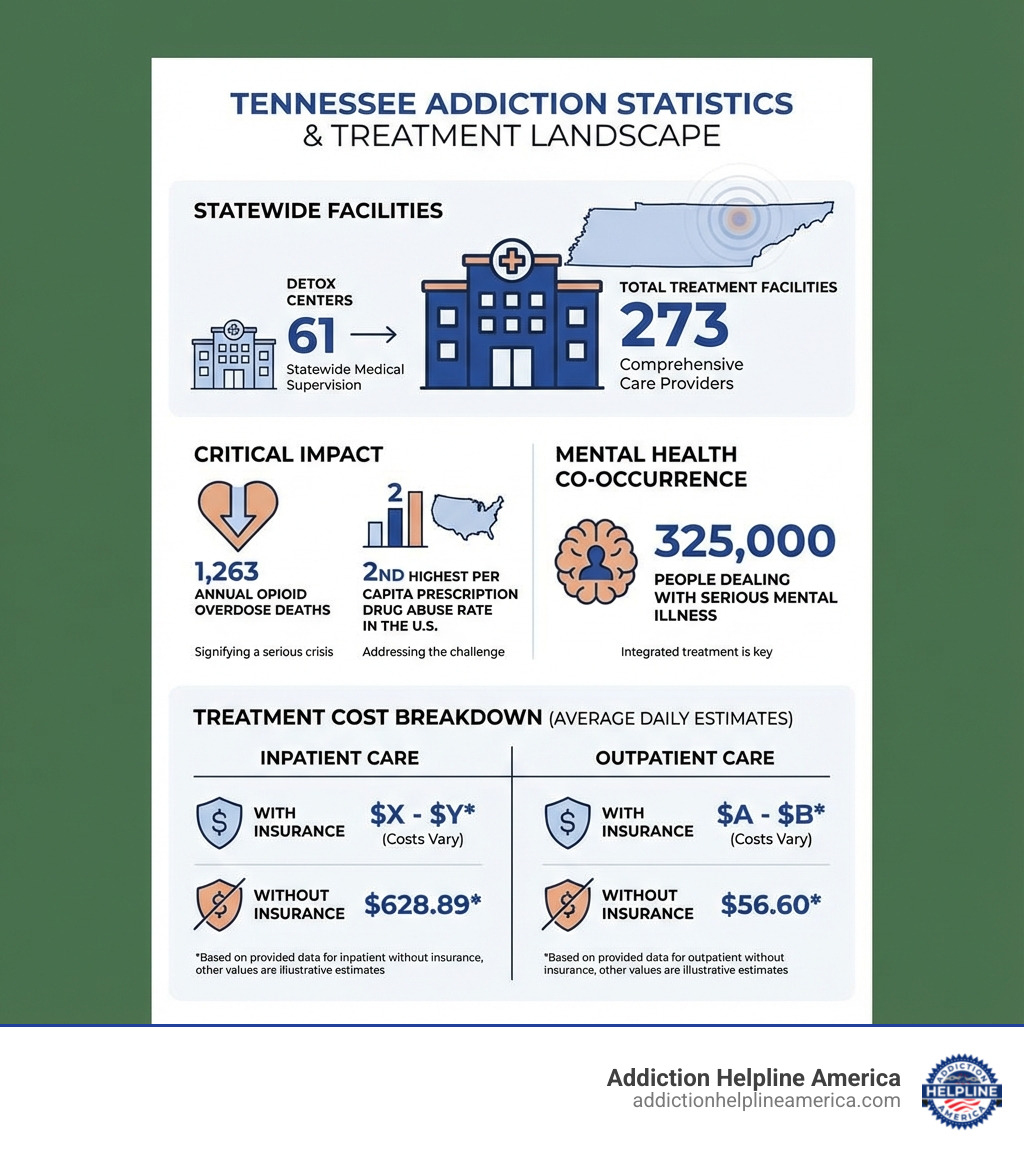
- 61 drug and alcohol detox centers operate across Tennessee
- 12 hospital programs offer inpatient detox services
- 13 facilities provide outpatient detox options
- Average inpatient cost: $628.89 per day without insurance
- Average outpatient cost: $56.60 per day without insurance
- Major hubs: Nashville, Memphis, Knoxville, Chattanooga, and Clarksville
- Call 844-561-0606 for free, confidential help finding the right detox center
Tennessee continues to battle a significant addiction crisis, with opioid-related overdoses being a major concern. The state has one of the highest rates of prescription drug abuse in the nation.
But there is hope.
Medical detox is the first critical step toward lasting recovery. It’s where you safely remove harmful substances from your body under professional supervision, manage withdrawal symptoms with evidence-based treatments, and prepare for the next phase of healing.
This guide will walk you through finding the right Tennessee detox center, understanding costs and insurance, and starting the journey to recovery from alcohol, opioid, or other substance use disorders.
At Addiction Helpline America, we’ve helped thousands of families steer the overwhelming process of finding addiction treatment, including connecting them with quality detox centers in Tennessee that offer the medical supervision and compassionate care essential for safe withdrawal. Our 24/7 helpline provides free, confidential guidance to help you take that crucial first step toward recovery.
If you or a loved one is struggling with addiction right now, call Addiction Helpline America at 844-561-0606 for immediate, confidential support.
Detox centers in tennessee terms explained:
Why Medical Detox is the Critical First Step
Quitting certain substances cold turkey can be dangerous and is often unsuccessful. Medical detox provides a safe, supervised environment to manage withdrawal, making it a critical first step toward recovery. It’s the process of safely removing drugs or alcohol from the body under the supervision of licensed medical professionals.
At a medical detox center, you receive 24/7 medical monitoring to ensure your safety and comfort as your body adjusts. Professional staff at detox centers in Tennessee manage withdrawal symptoms, which can range from uncomfortable to life-threatening, using evidence-based treatments and medication. This combination of medical and psychological support provides a solid foundation for the journey ahead.

The benefits of medically supervised detox are clear: it reduces the risk of serious complications, eases withdrawal symptoms, and significantly increases the likelihood of successfully completing detox and transitioning to further treatment. It’s a safe, controlled environment where healing can truly begin.
Speak with our specialists at Addiction Helpline America (844-561-0606) to learn more about safe detox options.
Signs It’s Time to Seek Help
It can be hard to admit when you or a loved one needs help, but recognizing the signs is the first courageous step. Here are some indicators that it might be time to consider a detox program:
- Increased Tolerance: You need more of the substance to achieve the same effect.
- Withdrawal Symptoms: You experience physical or psychological discomfort (e.g., nausea, tremors, anxiety, insomnia) when you try to reduce or stop using.
- Failed Attempts to Quit: You’ve tried to stop or cut back multiple times without success.
- Neglecting Responsibilities: Your substance use interferes with work, school, family, or other important obligations.
- Continued Use Despite Negative Consequences: You keep using even after experiencing problems with your health, relationships, or legal standing.
- Health Problems: You’re experiencing new or worsening physical or mental health issues directly related to your substance use.
If any of these signs resonate, please know that help is available.
The Medical Detox Process Explained
The medical detox process is designed to be as safe and supportive as possible, guiding you through withdrawal and preparing you for long-term recovery. It typically involves several key stages:
- Initial Assessment: Upon admission, a medical team conducts a thorough physical and psychological evaluation to create a personalized detox plan.
- Stabilization Phase: During stabilization, you’ll undergo withdrawal under constant medical supervision. Medications are often used to manage symptoms and cravings, such as preventing seizures during alcohol detox or reducing discomfort during opioid withdrawal. Benzodiazepine withdrawal involves a careful tapering schedule.
- Medication-Assisted Treatment (MAT): MAT combines FDA-approved medications (like Buprenorphine or Naltrexone) with counseling. It’s highly effective for opioid and alcohol withdrawal, helping to normalize brain chemistry, reduce cravings, and support long-term recovery.
- Transition to Further Treatment: Detox is the first step. Once you are stable, the team helps you transition to the next level of care, such as residential or outpatient treatment, to address the root causes of addiction.
For a deeper dive into why this initial phase is so crucial, you can find More info about the importance of detox.
Unsure if detox is right for you? Call 844-561-0606 for a confidential assessment. Our team at Addiction Helpline America is here to listen and guide you.
Types of Detox Programs and Levels of Care in Tennessee
Addiction treatment isn’t one-size-fits-all, and neither is detox. The American Society of Addiction Medicine (ASAM) outlines different levels of care to ensure individuals receive the appropriate intensity of treatment based on their needs. In Tennessee, you’ll find a variety of programs designed to meet these diverse requirements.
- Inpatient Detox (Medically Managed Intensive Inpatient): This is the highest level of care, offering 24/7 medical supervision in a hospital setting. It’s for individuals with severe addiction or complex medical needs. Our research shows there are 12 hospital programs in Tennessee offering inpatient detox.
- Residential Programs: Residential programs provide 24-hour care in a non-hospital setting. They offer a structured, drug-free environment with therapy and support, preparing individuals for a return to daily life. There are 62 residential facilities in Tennessee.
- Outpatient Detox: Outpatient detox is for those with mild withdrawal symptoms and a strong support system. It allows you to live at home while attending regular appointments for medical monitoring. Tennessee has 13 facilities with outpatient detox.
- Partial Hospitalization Programs (PHP): Often called “day treatment,” PHP offers structured therapy during the day while you live at home. It’s a step down from residential care but more intensive than standard outpatient programs.
- Intensive Outpatient Programs (IOP): IOPs provide flexible therapy schedules, allowing you to maintain work or school commitments. It’s less intensive than PHP but offers robust support for those in early recovery.
- Medication-Assisted Treatment (MAT): As mentioned earlier, MAT combines FDA-approved medications with counseling to treat opioid and alcohol use disorders. It reduces cravings and withdrawal, improving the chances of successful recovery across all levels of care.
Understanding these levels of care, as defined by the American Society of Addiction Medicine (ASAM), is essential for finding the right fit. Our team at Addiction Helpline America can help you steer these options.
For personalized guidance on the right level of care, call our 24/7 helpline at 844-561-0606. We’re here to help you find the best path forward.
Finding the Right Detox Centers in Tennessee
Choosing the right detox center is a personal decision, and finding the right fit is crucial for your recovery journey.

A center’s treatment philosophy, staff qualifications, and environment all impact your success. Look for a facility that offers evidence-based practices in a healing atmosphere.
Let Addiction Helpline America help you find the best fit—call 844-561-0606 today. Our specialists understand the nuances of different programs and can connect you with the ideal detox centers in Tennessee.
What to Look for in Detox Centers in Tennessee
When exploring detox centers in Tennessee, here’s a checklist of what to consider to ensure you’re choosing a high-quality, reputable facility:
- Accreditations and Certifications: Ensure the center is accredited by The Joint Commission (JCAHO) or the Commission on Accreditation of Rehabilitation Facilities (CARF), which signifies high standards of care.
- Tennessee Department of Mental Health and Substance Abuse Services (DMHSAS) Licensing: Verify the facility is licensed by the state. You can check with the Tennessee Department of Mental Health and Substance Abuse Services (DMHSAS) for licensing information.
- Staff-to-Patient Ratio: A low staff-to-patient ratio ensures more personalized attention during the vulnerable detox phase.
- Evidence-Based Therapies: Look for centers using proven therapies like Cognitive Behavioral Therapy (CBT), Dialectical Behavior Therapy (DBT), and Motivational Interviewing.
- Dual-Diagnosis Capabilities: If you have a co-occurring mental health disorder (like anxiety or depression), find a center with dual-diagnosis capabilities. Our research shows that 172 Tennessee rehab providers treat both substance use disorders and co-occurring mental disorders.
- Aftercare Planning: A quality center provides a strong aftercare plan for continued support and relapse prevention after detox.
How Detox Centers in Tennessee Address Specific Addictions
Reputable detox centers in Tennessee have specialized protocols to address a wide range of addictions safely and effectively:
- Alcohol Detox Protocols: Alcohol withdrawal can be dangerous. Detox centers use medications like benzodiazepines to manage symptoms and ensure safety.
- Opioid and Heroin Detox (MAT with Buprenorphine/Naltrexone): For opioid and heroin detox, many Tennessee centers use Medication-Assisted Treatment (MAT) with Buprenorphine or Naltrexone. This approach reduces cravings and withdrawal symptoms, improving recovery outcomes.
- Benzodiazepine Tapering Schedules: Abruptly stopping benzodiazepines is risky. Medical detox involves a slow, supervised tapering schedule to minimize withdrawal and prevent seizures.
- Stimulant (Cocaine, Meth) Detox Support: Stimulant withdrawal can cause severe depression and cravings. Detox centers offer a safe, supportive environment and medications to manage these symptoms.
No matter the substance, medical supervision is key to a safe and successful detox. To explore specialized treatment options custom to your needs, you can Find specialized treatment centers in Tennessee through our comprehensive directory.
For help finding specialized detox, call Addiction Helpline America at 844-561-0606. Our experts can connect you with centers equipped for your specific addiction.
Standard vs. Luxury Detox Facilities
When considering detox centers in Tennessee, you’ll find a spectrum of options, from standard facilities focused on essential medical care to luxury centers offering a more upscale experience. Both aim for safe detox, but they differ in amenities and environment.
| Feature | Standard Detox Centers in Tennessee | Luxury Detox Centers in Tennessee |
|---|---|---|
| Focus | Provides essential medical supervision, safety, and a structured environment for withdrawal. | Offers all the services of a standard facility plus high-end amenities for greater comfort. |
| Amenities | Basic but functional, often with shared rooms and common areas. | Private rooms, gourmet meals, and holistic therapies (e.g., yoga, massage). |
| Cost | More affordable, often covered by insurance or state funding. | Significantly more expensive, often requiring private pay. |
| Privacy | Typically shared rooms and group-focused therapy. | Private rooms and a higher degree of personal privacy are standard. |
| Staff-to-Client Ratio | Generally a higher patient-to-staff ratio. | Lower patient-to-staff ratio, allowing for more individualized attention. |
Unsure which type is right for you? Call 844-561-0606 for expert advice.
Paying for Detox: Costs and Insurance in Tennessee
Cost is a major concern when considering detox. Let’s break down the costs and payment options for detox centers in Tennessee.
The average cost for a person in Tennessee who seeks substance abuse treatment is about $56,600. However, this is a broad average for overall treatment, not just detox. Detox-specific costs vary significantly.
- Inpatient Detox: For a 30-day inpatient stay, the cost can average around $628.89 per day without insurance. This covers 24/7 medical supervision, medication, therapy, and accommodation.
- Outpatient Detox: A 30-day outpatient program without insurance is significantly less, averaging about $56.60 per day. This allows you to live at home while attending daily treatment.
The cost of detox depends on:
- Level of Care: Inpatient programs are more expensive due to round-the-clock medical attention and amenities.
- Program Length: While detox typically lasts 5-10 days, more severe cases or complex withdrawals might require longer stays, increasing the total cost.
- Amenities: Luxury facilities, with their private rooms, gourmet meals, and extensive holistic therapies, will naturally cost more than standard centers.
- Location: Costs can vary slightly between different cities and regions within Tennessee.
How Does Insurance Coverage Work?
Fortunately, insurance coverage for detox services has improved significantly. Federal laws require most health plans to cover addiction treatment.
- Mental Health Parity and Addiction Equity Act (MHPAEA): The Mental Health Parity and Addiction Equity Act (MHPAEA) requires insurers to cover substance use treatment at the same level as other medical care.
- Affordable Care Act (ACA): The Affordable Care Act (ACA) mandates that most health plans cover substance use disorder services and prevents lifetime or annual caps on these essential benefits.
Verifying Your Insurance Benefits: Verifying your insurance benefits is a crucial first step, as plans vary. We can help you steer this process.
We can verify your insurance and explain your options—call 844-561-0606 now. Our team at Addiction Helpline America will work with your insurance provider to understand your unique benefits and out-of-pocket costs.
Free and Low-Cost Detox Options
Cost should not prevent you from seeking help. If you lack insurance or funds, consider these free or low-cost options in Tennessee:
- State-Funded Programs: The Tennessee Department of Mental Health and Substance Abuse Services (TDMHSAS) offers state-funded programs that provide free or reduced-cost treatment.
- Substance Abuse Prevention and Treatment Block Grant (SAPT Block Grant): The federal SAPT Block Grant funds nearly 75 providers across Tennessee, offering affordable care.
- Sliding Scale Fees: Many non-profit and public detox centers in Tennessee offer sliding scale fees, adjusting costs based on your income.
- Non-Profit Organizations: Charitable organizations and community health centers often provide low-cost or free treatment services, especially for underserved populations.
- Free Rehabs in Tennessee: Free rehabs are available. Explore your options in our guide: Free Rehabs in Tennessee.
Don’t let cost be a barrier, call 844-561-0606 to explore your options. Our compassionate team at Addiction Helpline America is dedicated to helping you find an affordable path to recovery.
Life After Detox: Continuing Care and Family Support
Detox is a vital first step, but it’s not the end of the recovery journey. Lasting sobriety requires ongoing support and therapy to address the root causes of addiction.
The transition from detox to the next level of care is critical to prevent relapse. Detox centers in Tennessee will help you plan this transition, which could involve:
- Residential Treatment: A structured, inpatient program where you live at the facility and engage in intensive therapy, counseling, and peer support.
- Outpatient Programs: Less intensive than residential, these allow you to live at home while attending scheduled therapy sessions and groups. Options include Partial Hospitalization Programs (PHP) and Intensive Outpatient Programs (IOP).
- Sober Living Homes: These provide a supportive, drug-free environment for individuals transitioning from more intensive treatment back into independent living.
For help planning your next steps after detox, call Addiction Helpline America at 844-561-0606. We can connect you with resources for a seamless transition into continuing care.
Long-Term Recovery Support Services
Long-term recovery depends on continuous support. Quality detox centers in Tennessee integrate aftercare planning from the start to provide you with tools for sobriety:
- Aftercare Planning: A personalized plan for ongoing therapy, support groups, and healthy living.
- Alumni Programs: Alumni networks offer a community and ongoing connection with peers in recovery.
- Support Groups (AA, NA, SMART Recovery): Peer-led groups like AA, NA, and SMART Recovery provide free, accessible support and shared experience.
- Individual and Group Therapy: Ongoing therapy helps address the root causes of addiction and develop coping skills.
- Relapse Prevention Strategies: Learn to identify triggers, build coping skills, and create a strong support network to prevent relapse.
Examples of centers with strong aftercare programs often emphasize ongoing connection, even after you leave their physical premises. They understand that recovery is a marathon, not a sprint.
Connect with long-term support—call 844-561-0606 for resources. Addiction Helpline America can help you find aftercare programs and support services that fit your needs.
How Families Can Support a Loved One
Addiction affects the whole family. Supporting a loved one through detox and recovery requires patience, understanding, and self-care. Here’s how you can help:
- Educating Yourself on Addiction: Learn about addiction as a disease, not a moral failing, to respond with empathy and understanding.
- Participating in Family Therapy: Family therapy, offered by many detox centers in Tennessee, helps improve communication and heal relationships.
- Setting Healthy Boundaries: Establish and enforce clear, healthy boundaries to protect your well-being and support your loved one’s recovery.
- Offering Encouragement Without Enabling: Provide encouragement and support, but avoid enabling behaviors that shield your loved one from the consequences of their actions.
- Finding Support for Yourself (Al-Anon, Nar-Anon): You need support, too. Groups like Al-Anon and Nar-Anon offer community and coping tools. The Substance Abuse and Mental Health Services Administration (SAMHSA) also offers a wealth of resources for families. You can Find resources for families on their website.
Need family support resources? Call us at 844-561-0606. We can connect you with family therapy options and support groups in Tennessee.
Frequently Asked Questions about Tennessee Detox Centers
We understand you likely have many questions when considering detox. Here are some of the most common ones we hear regarding detox centers in Tennessee.
How long does detox typically last in Tennessee?
Detox duration varies by substance, addiction severity, and individual health. General timelines are:
- Alcohol detox typically lasts 3-7 days, but severe cases can extend longer.
- Opioid detox can range from 5-10 days, though post-acute withdrawal symptoms (PAWS) can linger for weeks or months.
- Benzodiazepine detox often involves a much slower tapering process, potentially taking several weeks or even months to complete safely.
- For stimulants like cocaine or meth, acute withdrawal is often 3-7 days, focusing on managing psychological symptoms.
The medical team at the detox center will determine the appropriate length of stay, ensuring your safety and comfort throughout the process.
What is the admissions process like?
The admissions process at reputable detox centers in Tennessee is designed to be simple and confidential. Here’s a general overview:
- Initial Phone Call and Screening: Your journey begins with a confidential phone call to a helpline like ours at Addiction Helpline America to assess your needs.
- Insurance Verification: We help you verify your insurance coverage and understand your benefits.
- Clinical Assessment: The detox center’s clinical team conducts an in-depth assessment to create your personalized treatment plan.
- Travel Arrangements: Once accepted, arrangements can be made for your safe travel to the facility.
- Admission to the Facility: Upon arrival, you’ll complete paperwork and begin your medically supervised detox.
The entire process is kept confidential, respecting your privacy and dignity. Our goal at Addiction Helpline America is to make this process as smooth and stress-free as possible for you and your family.
Start your confidential admissions process by calling 844-561-0606. We’re here 24/7 to guide you.
Can I lose my job for going to detox?
Many people fear losing their job for seeking treatment, but federal laws offer protection. Addiction is a recognized medical condition, and taking care of your health is a priority.
- Family and Medical Leave Act (FMLA): If you are eligible, FMLA allows you to take up to 12 weeks of unpaid, job-protected leave for medical reasons, including substance abuse treatment. Your health benefits are maintained during this time.
- Americans with Disabilities Act (ADA): The ADA protects individuals in recovery from addiction against discrimination and may require employers to provide reasonable accommodations.
It’s always advisable to communicate with your Human Resources department to understand your company’s specific policies and your rights.
Your Path to Recovery Starts Now
Taking the step to seek help for addiction is one of the bravest decisions you can make. The journey from detox to lasting recovery is a significant one, but it’s a path that leads to a healthier, more fulfilling life.
This guide has covered the importance of medical detox, the various types of detox centers in Tennessee, how to find the right fit, and how to steer the financial and insurance aspects of treatment. We’ve also highlighted the critical importance of continuing care and family support.
Detox is just the initial phase. The real work of recovery continues through therapy, support groups, and building a new, sober life. You don’t have to figure it all out alone.
At Addiction Helpline America, we are passionate about connecting individuals and families with the resources they need. We provide free, confidential guidance to help you find the right recovery program from our vast network of trusted facilities. Our specialists are available 24/7, ready to listen and help you steer your options toward a brighter future.
Explore Tennessee addiction treatment centers to begin your recovery journey today.