
Why Faith-Based Recovery Offers Hope for Lasting Freedom
Christian alcohol rehab is a specialized addiction treatment program that integrates biblical teachings, prayer, and spiritual guidance with evidence-based therapies to help individuals overcome alcohol dependency while strengthening their relationship with Christ.
Quick Overview: What Makes Christian Alcohol Rehab Different
- Spiritual Foundation: Combines traditional clinical treatment with Bible study, prayer, worship, and pastoral counseling
- Holistic Healing: Addresses body, mind, and spirit—not just the physical addiction
- Built-in Community: Recovery alongside others who share your faith and values
- Evidence-Based Success: Studies show spirituality provides an “unshakeable feeling of strength” and significantly contributes to life satisfaction in recovery
- Proven Results: Some programs report 87% of participants remain drug and alcohol-free for a year after completion
- Affordable Options: Many faith-based centers operate as non-profits, offering scholarships and sliding-scale fees
If you or someone you love is struggling with alcohol addiction, you’re not alone. The path forward can feel overwhelming—but faith can be your anchor. Many people find that Christian alcohol rehab offers something secular programs don’t: a spiritual framework that addresses the deep void addiction creates, while providing evidence-based medical care and therapy.
“Mirror Lake changed my life. The connection I felt with the staff, facility and myself made me take a hard look at what I wanted out of my life.” – Program Graduate
This isn’t just about getting clean. It’s about rebuilding your life on a foundation of grace, forgiveness, and redemption through Christ. Whether you’re looking for yourself or a loved one, finding the right faith-based program doesn’t have to be complicated.
At Addiction Helpline America, we’ve helped thousands of individuals and families steer the journey to recovery, connecting them with compassionate, Christ-centered treatment options including Christian alcohol rehab programs nationwide. Our mission is to provide the confidential guidance and resources you need to take that critical first step toward healing.
Christian alcohol rehab terminology:
Understanding the Foundation of Faith-Based Recovery

At its heart, Christian alcohol rehab offers a unique approach to overcoming addiction by centering the recovery journey on spiritual growth and a relationship with Jesus Christ. While traditional rehab programs focus heavily on psychological and medical interventions, Christian programs integrate these evidence-based practices with biblical principles, prayer, and community. This isn’t just about sobriety; it’s about healing the whole person—mind, body, and spirit.
Many individuals struggling with addiction describe a spiritual void, a deep longing that alcohol or drugs temporarily filled. Christian alcohol rehab addresses this directly, helping individuals to surrender to a higher power and find true fulfillment in God. Concepts of forgiveness and redemption are central, offering a path to release shame and guilt, which are often powerful drivers of addiction. As one program states, “When those in the ministry submit themselves to the Lord, they lose the desire to numb themselves with drugs or alcohol.” This spiritual awakening is seen as foundational to long-term sobriety, helping individuals not just to stop drinking, but to rebuild their lives on a new, Christ-centered foundation.
Here’s how Christian alcohol rehab features complement evidence-based therapies:
- Spiritual Focus: Daily Bible study, prayer, and worship services provide a framework for understanding addiction through a Christian lens, offering divine strength and guidance. This complements therapeutic modalities by providing a deeper sense of purpose and meaning.
- Pastoral Counseling: Counseling sessions with Christian counselors or chaplains integrate faith into personal struggles, offering biblical perspectives on coping mechanisms and life challenges. This works alongside individual and group therapy to address underlying issues.
- Bible Study: In-depth study of scripture, often using resources like the Life Recovery Bible, helps individuals apply biblical truths to their recovery journey. This reinforces cognitive restructuring techniques by offering a spiritual truth to counter negative thought patterns.
- Forgiveness and Redemption: Programs emphasize God’s grace and forgiveness, helping individuals process past mistakes and find self-acceptance. This is crucial for trauma recovery and reducing the shame often associated with addiction.
- Community: Living and recovering alongside fellow believers provides a supportive environment, fostering accountability and healthy relationships. This improves the benefits of group therapy and builds a lasting support network.
What is Christian Alcohol Rehab and How Does it Differ?
Christian alcohol rehab is a specialized form of addiction treatment that distinctly weaves Christian faith into every aspect of the recovery process. Unlike secular programs that might acknowledge spirituality broadly, Christian rehab explicitly focuses on the teachings of Jesus Christ, the Bible, and a personal relationship with God.
The primary difference lies in its spiritual foundation. While many excellent traditional programs provide comprehensive care, Christian alcohol rehab integrates scripture, Christ-centered principles, and pastoral counseling directly into the therapeutic approach. This means that alongside evidence-based therapies like Cognitive Behavioral Therapy (CBT) or Dialectical Behavior Therapy (DBT), residents will engage in activities such as:
- Daily devotional time and prayer
- Group and individual Bible studies
- Worship services and spiritual mentorship
- Discussions on how faith can empower recovery and prevent relapse
The goal is not just abstinence, but a complete spiritual change. It’s about finding freedom through Christ and becoming an “asset to their family, church, friends, employers, schools, and society.” This creates a unique community of believers who support each other through their shared faith, offering a powerful sense of belonging and purpose often missing in addiction. To explore more about faith-based options, check out our guide on Faith-Based Rehab Centers.
Core Principles: Healing the Body, Mind, and Spirit
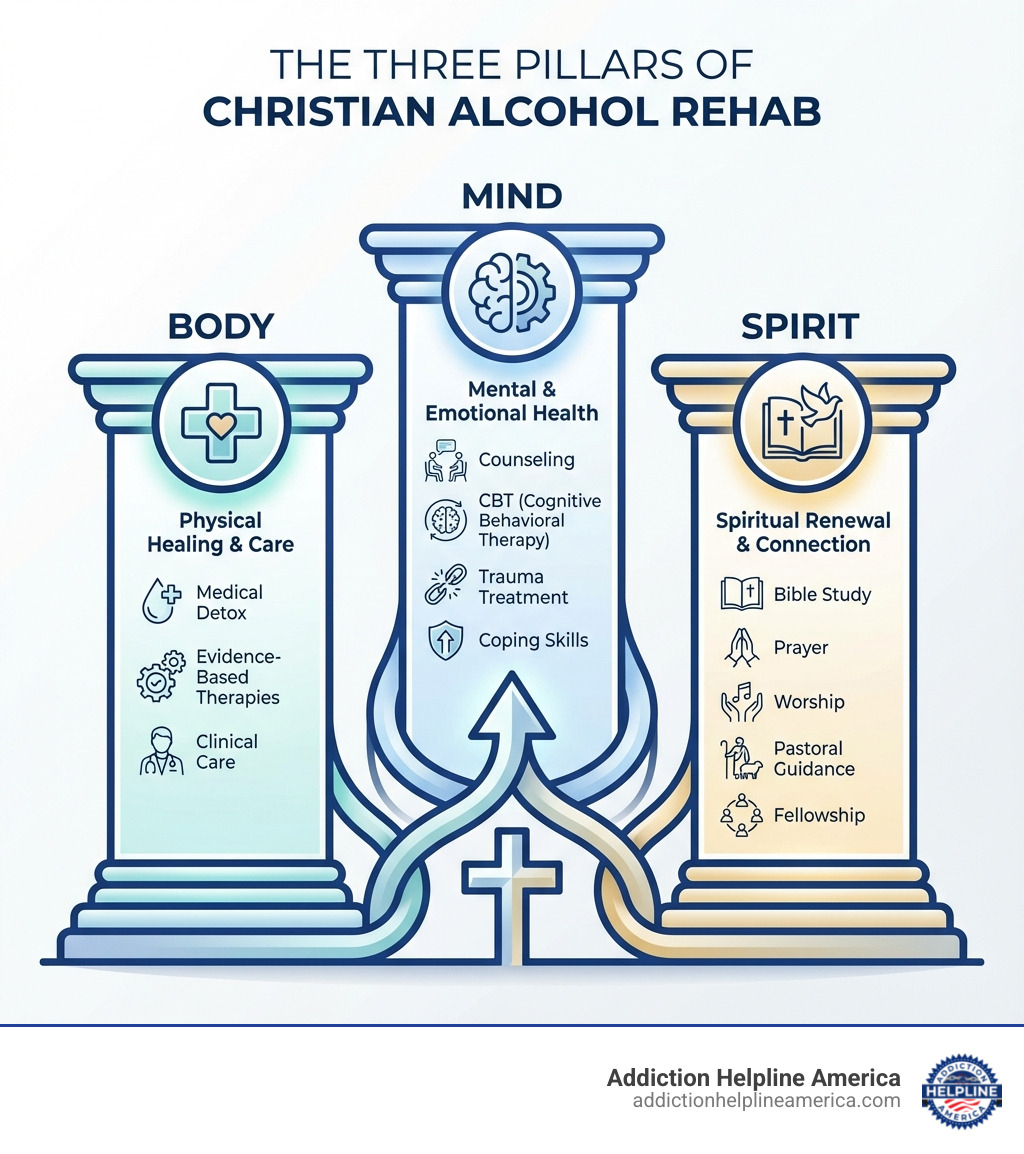
The core philosophy of Christian alcohol rehab is a holistic approach to healing, recognizing that addiction impacts an individual’s entire being. It’s not just a physical or psychological problem; it’s a spiritual one too. Therefore, treatment must address the body, mind, and spirit simultaneously.
- Body: This involves medical care, often including supervised detox, and addressing any physical health issues related to alcohol use. Programs integrate evidence-based therapies to teach coping skills and healthier behaviors.
- Mind: This focuses on psychological healing through individual and group counseling, addressing underlying trauma, mental health conditions, and destructive thought patterns.
- Spirit: This is where Christian rehab truly shines. Programs offer biblical discipleship, helping individuals understand their identity and value in Christ. They emphasize grace and forgiveness, allowing individuals to release past burdens and build a new life rooted in spiritual principles. This spiritual rebuilding provides a moral compass and an “unshakeable feeling of strength” that helps sustain long-term recovery.
The belief is that by finding their value in Christ and embracing God’s grace, individuals can overcome the destructive cycles of addiction and rebuild their lives on a solid, spiritual foundation.
The Proven Benefits of Integrating Faith into Recovery
For many, integrating faith into recovery isn’t just comforting; it’s profoundly effective. Research supports the positive impact of spirituality on addiction recovery outcomes. One study found that a significant majority of participants credited spirituality for providing them with an unshakeable feeling of strength. This strength applied to their perceived ability to recover from drugs, as well as their sense of safety and protection during each phase of recovery. Another study, examining the role of spirituality and religion in the cases of several individuals in recovery, found that maintaining a higher power in conjunction with other positive factors, significantly contributed to their overall satisfaction with their lives.
The benefits of choosing a faith-based approach to Christian alcohol rehab extend beyond mere statistics:
- Reduced Shame and Guilt: Christian programs emphasize God’s forgiveness and redemption, helping individuals shed the heavy burden of shame and guilt that often fuels addiction. This is a powerful antidote to negative self-perception.
- Built-in Support Community: Recovering alongside others who share your Christian faith creates a strong, empathetic support network. This camaraderie combats loneliness and provides encouragement, fostering a healthy network of peers for long-term sobriety.
- Sense of Purpose and Hope: Connecting with a higher power provides a renewed sense of purpose and meaning in life, offering hope for a future free from addiction. This spiritual connection acts as a powerful buffer against triggers.
- Lowered Anxiety and Positive Coping Skills: Studies suggest that religious involvement can lead to lower levels of anxiety, improved resilience, optimism, and improved coping mechanisms. These spiritual practices provide healthy alternatives to self-medicating with alcohol.
- Impressive Success Rates: While individual results vary, some Christian programs report remarkable outcomes. For instance, one program states that “87% of the men who complete our 9-month program and continue in our sober living aftercare community have been drug and alcohol-free for a year.” This demonstrates the tangible positive impact of a faith-integrated approach.
For more scientific insights into the role of spirituality in recovery, you can refer to scientific research on spirituality in recovery.
5 Painless Ways to Find the Right Program

Finding the right Christian alcohol rehab program can feel like a daunting task, but it doesn’t have to be. We understand that each individual’s journey is unique, and finding a program that aligns with your spiritual beliefs and personal needs is crucial for lasting recovery. We believe in making informed choices, and we’re here to guide you through the process. Here are five painless ways to steer your options and find the perfect fit.
1. Connect with Your Local Church and Spiritual Leaders
Your local church and spiritual leaders can be invaluable resources in your search for Christian alcohol rehab. Pastors, ministers, and elders often have a deep understanding of local and regional faith-based programs, and they may even have personal connections or recommendations. Many churches offer their own support groups or ministries specifically for addiction recovery, providing a safe and trusted environment to begin your journey. They can offer spiritual guidance, prayer, and mentorship, helping you feel supported from the very start. Don’t underestimate the power of your existing spiritual community – they are often eager to help those in need find healing and restoration.
2. Use the Addiction Helpline America Directory and Support Services
We pride ourselves on being a comprehensive resource for individuals seeking addiction treatment. Our online directory and support services offer personalized, confidential guidance to connect you with the right Christian alcohol rehab program from our vast network nationwide. We understand the nuances of different faith-based programs and can help you identify those that best fit your specific needs, whether you’re looking for an inpatient program in Kentucky or an outpatient option in California. Our goal is to simplify your search, providing you with custom options and answering your questions every step of the way. For a deeper dive into how we can assist, explore our Addiction Help Online: Ultimate Guide.
3. Verify Insurance and Explore Affordable Options for Christian Alcohol Rehab
Concerns about cost should never be a barrier to seeking help. Many Christian alcohol rehab centers are non-profit organizations, which often allows them to offer treatment at a significantly lower cost than traditional facilities. Some even provide scholarships, grants, or operate on a sliding-scale fee structure based on income.
It’s also important to understand your insurance coverage. Thanks to the Affordable Care Act (ACA) and the Mental Health Parity and Addiction Equity Act (MHPAEA), addiction and mental health treatment are considered essential health benefits, meaning most health insurance plans will cover at least a portion of the cost. While some non-profit religious institutions may not accept insurance directly, many traditional rehabs that offer faith-based programming do. We can help you verify your insurance benefits and explore all available affordable options, including free support resources. Learn more about how to access support without financial strain in our Free Addiction Support: Complete Guide.
4. Research Treatment Modalities and Program Structures
Christian alcohol rehab programs come in various formats, each designed to meet different needs. Understanding these modalities will help you choose the most suitable path:
- Medical Detox: Often the first step, medical detox provides 24/7 supervised care to safely manage withdrawal symptoms. This is crucial for physical stabilization before engaging in deeper therapeutic work.
- Inpatient vs. Outpatient:
- Inpatient (Residential) Rehab: This involves residing at the facility, offering round-the-clock care and a highly structured environment. It’s ideal for those needing intensive support and removal from triggers.
- Partial Hospitalization Programs (PHPs): PHPs offer intensive treatment during the day, allowing individuals to return home or to sober living at night.
- Intensive Outpatient Programs (IOPs): IOPs provide flexible treatment, typically several hours a day, a few days a week, allowing individuals to maintain work or family responsibilities.
- Standard Outpatient Programs: These offer the most flexibility, with fewer hours of treatment per week, suitable for those with strong support systems or as a step-down from more intensive care.
- Program Duration: Some Christian programs, like those associated with Adult & Teen Challenge, emphasize long-term recovery, often recommending a year or more to “rid the addict of their addiction for life, build new attitudes, and change their lifestyles.”
- Evidence-Based Therapies: Most reputable Christian alcohol rehab programs integrate proven therapies such as:
- Cognitive Behavioral Therapy (CBT): Helps identify and change negative thought patterns and behaviors.
- Dialectical Behavior Therapy (DBT): Focuses on emotional regulation, distress tolerance, and interpersonal effectiveness.
- Motivational Interviewing: Aids in resolving ambivalence about recovery.
- EMDR Therapy: Specialized treatment for processing trauma.
- Faith-Based Therapies: These are unique to Christian rehab and include:
- Daily Bible study and scripture application.
- Regular worship services and prayer.
- Pastoral or spiritual counseling.
- Faith-based 12-Step programs, which, though not exclusively Christian, often align with Christian principles of surrendering to a higher power.
For a broader understanding of different treatment approaches, refer to our guide on Alcohol Rehab Options.
5. Ask Key Questions and Look for Success Stories
When choosing a Christian alcohol rehab, ask informed questions to ensure the program meets your needs. Don’t hesitate to inquire about:
- Accreditation: Look for accreditation from recognized bodies like the Joint Commission or CARF (Commission on Accreditation of Rehabilitation Facilities). These indicate adherence to high standards of quality and care.
- Staff Qualifications: Ensure that clinical staff are licensed and experienced in addiction treatment, and that spiritual counselors or chaplains are ordained or appropriately qualified.
- Co-occurring Disorder Treatment: Many individuals struggling with alcohol addiction also face mental health challenges like depression, anxiety, or trauma. A good program will offer integrated dual diagnosis treatment.
- Aftercare Planning: Long-term sobriety depends on robust aftercare. Ask about relapse prevention strategies, sober living options, continued spiritual support, and community reintegration plans.
- Testimonials and Success Rates: While individual results are never guaranteed, hearing success stories and seeing reported outcomes can be very encouraging. Programs like Men of Nehemiah proudly share that “87% of the men who complete our 9-month program and continue in our sober living aftercare community have been drug and alcohol-free for a year.”
What to Expect During and After a Christian Alcohol Rehab Program
The recovery journey in a Christian alcohol rehab is a transformative experience, guiding individuals through structured days and preparing them for a life of lasting sobriety grounded in faith. It’s a journey of healing, growth, and spiritual renewal.
A Typical Day: Integrating Therapy, Prayer, and Fellowship
Life in a Christian alcohol rehab program is typically structured, offering a balance of therapeutic activities, spiritual development, and community engagement. While specific schedules vary, a common day might look like this:
- Morning Devotions: The day often begins with prayer, scripture reading, and reflection to set a spiritual tone.
- Individual Counseling: One-on-one sessions with a licensed therapist or Christian counselor to address personal issues, triggers, and progress.
- Group Therapy: Sessions where residents share experiences, gain support from peers, and learn coping strategies in a faith-based context.
- Bible Study: Dedicated time for in-depth study of the Bible, applying its teachings to addiction and recovery.
- Worship Services: Regular attendance at chapel services or church, fostering a sense of spiritual community and praise.
- Educational Workshops: Learning about the science of addiction, relapse prevention, and healthy living from a Christian perspective.
- Community Chores: Engaging in daily tasks that promote responsibility, teamwork, and a sense of contribution to the living environment.
- Recreational Activities: Incorporating healthy leisure activities, often in a serene, natural setting, to promote physical and mental well-being.
- Fellowship Activities: Opportunities for informal interaction and bonding with fellow residents, building supportive relationships.
This integrated approach ensures that residents are continually nurturing their spiritual, emotional, and physical health, fostering a holistic path to recovery.
Addressing Co-Occurring Disorders and Underlying Trauma
Many individuals struggling with alcohol addiction also experience co-occurring mental health disorders such as depression, anxiety, or PTSD, and have often experienced underlying trauma. Reputable Christian alcohol rehab programs recognize the importance of treating these dual diagnoses concurrently. They employ trauma-informed care, integrating evidence-based psychological principles with faith-based interventions.
This means that while a program might offer traditional therapies like CBT or EMDR (Eye Movement Desensitization and Reprocessing) for trauma, these are often delivered by Christian counselors who can also incorporate spiritual healing and forgiveness into the process. The aim is to treat the whole person, understanding that spiritual wounds can contribute to mental health struggles, and vice-versa. As the National Institute on Drug Abuse emphasizes, effective treatment must address all aspects of an individual’s life. For further reading on comprehensive treatment, refer to Principles of drug addiction treatment: a research-based guide.
Building a Foundation for Lifelong Sobriety
Recovery is not just about completing a program; it’s about building a foundation for lifelong sobriety. Christian alcohol rehab programs are deeply committed to equipping individuals for sustainable, long-term recovery through comprehensive aftercare planning and ongoing support.
Key elements include:
- Relapse Prevention Strategies: Developing personalized plans to identify triggers and implement healthy coping mechanisms, often reinforced by spiritual practices.
- Aftercare Programs: Continued support through alumni groups, follow-up counseling, and structured check-ins.
- Sober Living Homes: Providing a transitional living environment that maintains structure and accountability in a faith-based setting.
- Church Involvement: Encouraging active participation in a local church community to maintain spiritual growth and a strong support network.
- Rebuilding Relationships: Counseling and family therapy, often guided by Christian principles, help individuals mend strained relationships and build healthier connections.
- Finding New Purpose: Programs often include vocational training or educational support. For example, some programs boast “100% job placement upon graduating our program,” helping individuals reintegrate into society with a renewed sense of purpose and self-sufficiency.
This holistic, faith-centered approach helps individuals not only stay sober but also rebuild their lives and relationships, becoming productive and spiritually fulfilled members of their communities.
Frequently Asked Questions about Christian Recovery Programs
Do you have to be a Christian to attend a faith-based rehab?
This is a common and important question! While Christian alcohol rehab programs are rooted in Christian principles, many are open to individuals of all faiths, or even no faith, who are seeking a spiritual component to their recovery. Most programs will not discriminate or mandate conversion. Instead, they offer a welcoming environment where Christian beliefs are central to the curriculum and spiritual guidance is provided. The expectation is often a willingness to engage with these principles and explore a relationship with a higher power, rather than adherence to a specific denomination. Programs aim to foster an environment where individuals can draw strength from their faith, whatever it may be, while respecting personal beliefs.
How do Christian programs handle the medical aspects of addiction?
Reputable Christian alcohol rehab programs understand that alcohol addiction is a complex illness with significant medical components. Therefore, they integrate comprehensive medical care alongside spiritual healing. This typically includes:
- Medically Supervised Detox: For individuals with severe alcohol dependency, a safe and comfortable medical detox is often the first step. This ensures physical stabilization under the care of medical professionals who can administer medications to manage withdrawal symptoms.
- Evidence-Based Therapies: Christian rehabs use many of the same proven therapeutic modalities as secular programs, such as CBT, DBT, and individual and group counseling, often delivered by licensed clinicians who also share a faith perspective.
- Licensed Clinicians: Programs employ qualified medical doctors, nurses, and therapists to address the physical and psychological aspects of addiction.
The approach is holistic: treating the physical illness of addiction while nurturing the spiritual and emotional well-being of the individual. This integrated care provides the best chance for comprehensive healing. For deeper insight into the physical impact of alcohol, read our article on Alcohol and an Addictive Drug.
Are Christian rehab programs successful?
Yes, many Christian alcohol rehab programs report high success rates and have a strong track record of helping individuals achieve long-term sobriety. As highlighted earlier, some programs proudly state that “87% of the men who complete our 9-month program and continue in our sober living aftercare community have been drug and alcohol-free for a year.”
The success of these programs can be attributed to several factors:
- Spirituality as a Protective Factor: Research consistently shows that a strong spiritual foundation acts as a buffer against relapse, providing resilience and a sense of purpose.
- Renewed Sense of Hope: By emphasizing God’s grace and the possibility of a transformed life, these programs instill a powerful sense of hope that is critical for sustained recovery.
- Strong Community Support: The fellowship among believers creates a built-in support system that encourages accountability and provides a safe space for healing.
While success is ultimately a personal journey, the integrated approach of Christian alcohol rehab offers a powerful combination of clinical excellence and spiritual change, leading many to lasting freedom from alcohol addiction.
Take the First Step Towards a Christ-Centered Recovery
The journey to recovery from alcohol addiction is deeply personal, and choosing a path that resonates with your core beliefs can make all the difference. Christian alcohol rehab offers a unique and powerful approach, anchoring your recovery in faith, fostering spiritual growth, and providing a supportive community alongside evidence-based clinical care.
We’ve seen countless lives transformed, rebuilt on a foundation of grace, forgiveness, and renewed purpose through Christ. If you or a loved one are struggling, you don’t have to face this alone. Hope and healing are within reach, and taking that first step towards a Christ-centered recovery can be the most important decision you ever make.
We are here to provide the confidential guidance you need to find the right program. Let us help you connect with a Christian alcohol rehab that aligns with your spiritual journey and offers the comprehensive support you deserve.