
Understanding Your Treatment Options in California
California substance abuse treatment facility options range from state-run correctional programs to private rehab centers, each serving different needs and populations. When someone searches for treatment in California, they’re often looking for accessible care that offers hope for recovery.
Quick Answer for Those Seeking Help:
- State-Run SATF (Corcoran): A male-only state prison with integrated substance abuse treatment programs—not available to the general public
- Private Treatment Centers: Inpatient and outpatient facilities across California offering medical detox, residential care, and therapy
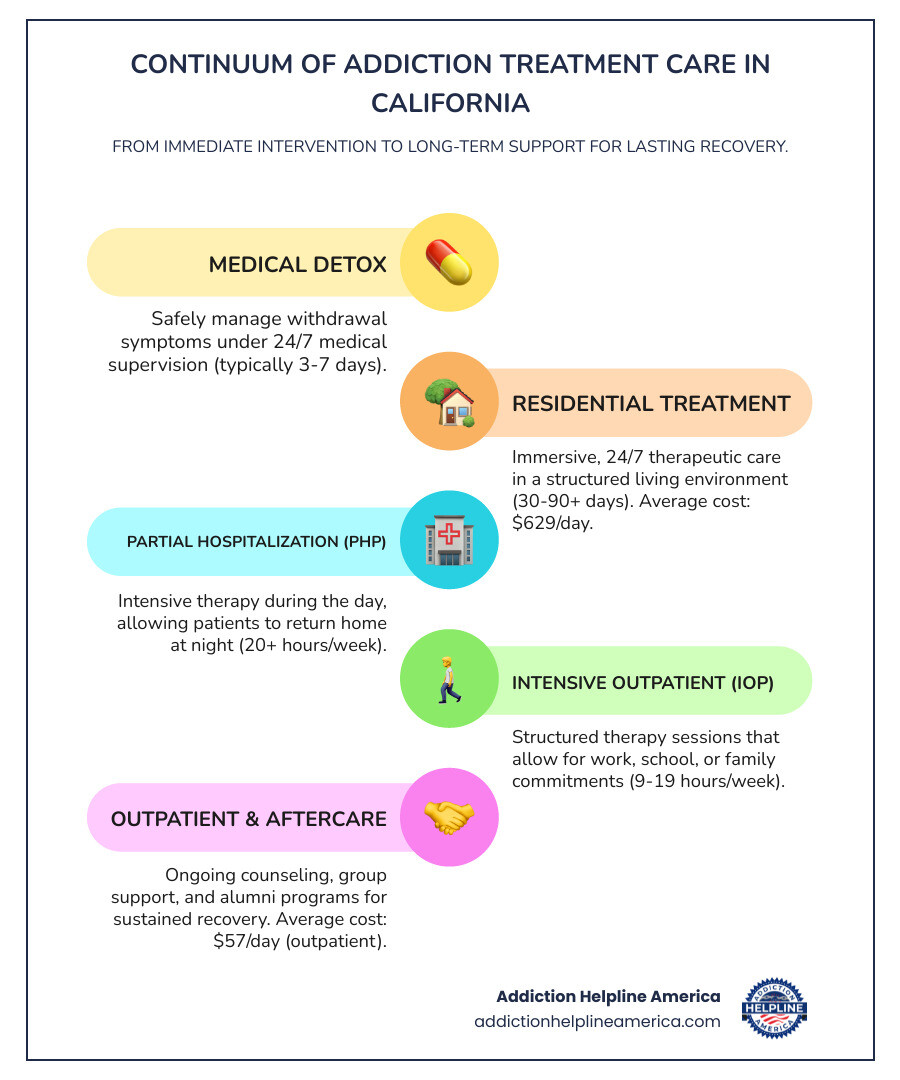
- Average Costs: $629/day for inpatient care, $57/day for outpatient (insurance often covers significant portions)
- Key Services: Medical detox, residential treatment, intensive outpatient programs (IOP), partial hospitalization (PHP), and aftercare support
- Payment Options: Private insurance, Medicaid, sliding scale fees, and state-funded programs
Many people searching for a California substance abuse treatment facility are confused about what’s actually available to them. The California Substance Abuse Treatment Facility (SATF) in Corcoran is a correctional facility—a state prison that combines incarceration with treatment for inmates. It’s not a place the general public can voluntarily enter for treatment. However, California offers hundreds of licensed treatment centers where individuals can seek help voluntarily, from medical detox to long-term residential care.
The good news? California has robust treatment resources beyond prison walls. Whether you need immediate detox services, intensive residential treatment, or flexible outpatient care, options exist across the state—from Los Angeles and San Diego to the Bay Area and beyond. Many facilities accept insurance, offer payment plans, or provide state-funded care for those who qualify.
At Addiction Helpline America, we’ve spent years connecting individuals and families across California with the right substance abuse treatment facilities for their unique situations, providing free and confidential guidance to help you steer your options and find a path to recovery. We understand that choosing a California substance abuse treatment facility can feel overwhelming, but you don’t have to figure it out alone.
A Closer Look at the State-Run California Substance Abuse Treatment Facility (SATF)

When discussing a California substance abuse treatment facility, it’s crucial to distinguish between facilities accessible to the general public and those operating within the correctional system. The California Substance Abuse Treatment Facility and State Prison (SATF) in Corcoran falls into the latter category. It’s a unique model, combining incarceration with treatment, but it is not a treatment option available for voluntary admission.
What is SATF Corcoran? Its Purpose, Location, and Population
The California Substance Abuse Treatment Facility and State Prison (SATF), sometimes referred to as Corcoran II, serves a very specific purpose within the California Department of Corrections and Rehabilitation (CDCR). Its primary mission is to protect the public by housing inmates with substance use disorders in a male-only state prison environment, ensuring they remain in custody until their scheduled release. The facility aims to employ the highest standards of ‘Correctional Professionalism’ while also offering rehabilitative programs. In fact, it has been described as the largest addiction treatment center in the world due to its focus on substance abuse within a correctional setting.
SATF is located in Corcoran, California, at 900 Quebec Avenue, Corcoran, CA 93212. Its geographical coordinates are approximately 36.053°N 119.549°W.
Regarding its capacity and population, SATF has consistently faced challenges with overcrowding, a common issue within the state’s correctional system. The facility’s design capacity is 3,424 inmates. However, official reports highlight significant overpopulation:
- As of July 31, 2022, SATF was incarcerating people at 134.4% of its design capacity, with 4,603 occupants.
- More recently, as of January 31, 2023, the population was 4,650, representing an occupancy rate of 135.8% of its design capacity.
- Historically, the problem was even more severe. In September 2007, SATF had a total institution population of 7,459, reaching an alarming occupancy rate of 217.8 percent.
This persistent overcrowding undoubtedly impacts various aspects of the facility’s operations, including the delivery and effectiveness of its treatment programs. As of July 19, 2024, Raul Morales was named the Acting Warden of the facility.
Treatment Programs and Housing Inside SATF
Despite being a prison, SATF is specifically designed to provide substance abuse treatment as a core component of its rehabilitation efforts. The facility offers a range of programs aiming to address addiction and prepare inmates for eventual re-entry into society.
The cornerstone of SATF’s substance abuse treatment programs is the “therapeutic community” model. This approach involves a structured environment where inmates actively participate in their recovery and support one another. The California Department of Corrections and Rehabilitation (CDCR) and California Correctional Health Care Services (CCHCS) jointly implemented the Integrated Substance Use Disorder Treatment (ISUDT) program at SATF. ISUDT is described as a comprehensive, evidence-based, cross-divisional program.
Key components of the treatment programs include:
- Cognitive Behavioral Interventions (CBI): These programs use evidence-based strategies to help inmates identify and change criminal thought processes and behaviors linked to substance abuse. There are different pathways within CBI:
- CBI-Intensive Outpatient: Requires 2 hours per day, 5 days per week, with a 52-week completion.
- CBI-Outpatient: Requires 2 hours per day, 3 days per week, with a 14-week completion.
- CBI-Life Skills: Requires 2 hours per day, 3 days per week, with a 29-week completion.
- Counseling: Inmates participate in at least 20 hours a week of individual and group substance abuse counseling.
- Education: Programs include addiction education, relapse prevention, living skills workshops, anger management, and conflict resolution.
Beyond substance abuse treatment, SATF also offers other rehabilitative opportunities. These include:
- Vocational Training: Programs such as auto body repair, air conditioning and refrigeration, and welding aim to equip inmates with marketable skills.
- Academic Programs: Adult Basic Education and GED preparation classes are available to improve literacy and educational attainment.
The facility provides different housing and security levels to manage its diverse inmate population. These include Level II, Level III, and Level IV housing options, indicating varying degrees of security and supervision within the prison.
History, Criticisms, and Effectiveness
SATF opened its doors in August 1997, marking a significant effort by California to integrate substance abuse treatment within its correctional system. Over the years, its operations have been subject to various reports and findings, particularly concerning its effectiveness and the quality of care provided.
Several reports from the California Office of the Inspector General (OIG) have highlighted concerns:
- A January 2003 Management Review Audit and a February 2007 Special Review into In-Prison Substance Abuse Programs both scrutinized SATF’s operations and the broader CDCR substance abuse initiatives.
- These reports, along with news articles from the San Francisco Chronicle in 2004, raised questions about medical treatment within the facility, with one report suggesting negligence in inmate deaths at Corcoran.
A major point of criticism has revolved around the actual impact of these programs on recidivism rates. While significant financial investments have been made (e.g., an annual operating budget of $230 million and 1,786 staff in fiscal year 2005–2006), studies and government reports have questioned whether the programs genuinely reduce re-offending. Some findings suggested that the effectiveness of in-prison substance abuse programs was limited, leading to calls for reform from state officials.
Despite these criticisms, the facility has housed a number of notable individuals. For instance, actor Robert Downey Jr. was incarcerated at SATF before his early release. Other notable former inmates include Cameron Hooker, convicted for kidnapping and sexual assault, and music producer Phil Spector, who served time for murder. While these individuals do not reflect on the treatment programs themselves, their presence highlights the diverse population housed within this unique correctional facility.
Beyond the Walls: Finding Hope and Healing Across California

While the SATF serves a specific population within the correctional system, a vast network of California substance abuse treatment facility options exists for anyone seeking help voluntarily. Beyond the walls of state prisons, there’s a world of hope and healing waiting for individuals ready to start on their recovery journey. These facilities are dedicated to providing compassionate, evidence-based care in supportive environments focused on long-term well-being.
Different Types of Substance Abuse Treatment Facilities in California
California is home to a diverse array of substance abuse treatment facilities, each designed to meet varying needs and stages of recovery. Understanding these options is the first step toward finding the right fit for yourself or a loved loved one.
- Medical Detox Centers: For many, the first step is safely managing withdrawal symptoms. Medical detox centers provide 24/7 supervised care, often with medication assistance, to ensure a safe and comfortable detoxification process. Facilities like Laguna Treatment Center, licensed as a Chemical Dependency Recovery Hospital (CDRH), offer medically managed withdrawal with daily medical rounds and round-the-clock nursing care.
- Inpatient/Residential Care: These facilities offer a structured, live-in environment where individuals receive intensive therapy and support away from the triggers of their daily lives. Programs typically range from 30 to 90 days, providing time for deep healing and skill-building. Examples of services in residential settings include individual and group counseling, addiction education, and holistic therapies.
- Outpatient Programs (PHP, IOP, Traditional Outpatient):
- Partial Hospitalization Programs (PHP): Often called “day treatment,” PHPs provide intensive therapy for several hours a day, multiple days a week, but allow individuals to return home or to a sober living environment at night. This offers a high level of care with more flexibility than residential treatment.
- Intensive Outpatient Programs (IOP): IOPs provide a step-down from PHP, offering fewer hours of therapy per week (typically 9-19 hours). They are suitable for individuals who need significant support but can manage daily responsibilities.
- Traditional Outpatient Programs: These offer the most flexibility, with weekly therapy sessions and support groups, allowing individuals to maintain work, school, and family commitments while receiving ongoing care.
- Sober Living Homes: These are transitional living environments that provide a safe, drug-and-alcohol-free space for individuals to practice their recovery skills and reintegrate into society after completing a more intensive program. They offer peer support and structure.
Many programs are custom-custom to individual needs, addressing not just substance use but also co-occurring mental health issues, trauma, and other underlying factors. The goal is to provide comprehensive care that promotes lasting recovery. We at Addiction Helpline America understand that navigating these options can be overwhelming. We offer free, confidential, and personalized guidance to help you find the right program from our vast network of licensed recovery centers across California. You can explore a list of non-medical alcoholism and drug abuse recovery or treatment facilities licensed and/or certified by the Department of Health Care Services (DHCS) at their official data portal: SUD Recovery Treatment Facilities.
Understanding the Cost of Rehab and Your Payment Options
The cost of substance abuse treatment is a significant concern for many individuals and families. However, it’s important not to let cost deter you from seeking help, as various payment options and financial assistance programs are available.
Based on recent statistics:
- The average cost for a person in California who seeks substance abuse treatment is $56,654.
- Inpatient rehab costs approximately $629.49 per day without insurance coverage. For a 30-day stay, this amounts to around $18,884.70.
- Outpatient rehab costs approximately $56.76 per day without insurance coverage. A 30-day program could cost around $1,702.80.
These figures can seem daunting, but it’s crucial to understand how payment options can significantly reduce out-of-pocket expenses:
- Insurance Coverage: Most private health insurance plans offer some level of coverage for substance abuse treatment. Many facilities in California are in-network with major providers such as Cigna, Aetna, Blue Cross, Blue Shield, TRICARE, Optum, First Health, Anthem Blue Cross, Kaiser Permanente, and United Healthcare. Over half of rehab facilities in California accept private insurance. We strongly recommend verifying your benefits directly with the facility or through a confidential service like ours. For example, you can check your insurance coverage for addiction treatment through links provided by facilities like Laguna Treatment Center.
- Medicaid and Medicare: For those who qualify, Medicaid (Medi-Cal in California) and Medicare can cover a substantial portion of treatment costs. Over 30% of rehab facilities in California accept Medicaid.
- Self-Payment/Cash: Over 80% of rehab facilities in California accept cash or self-payment. Even if you pay out-of-pocket, many centers offer payment plans or sliding scale fees based on your income, making treatment more accessible. More than 60% of facilities offer a sliding scale payment system.
- State-Funded Programs: California offers various state-funded programs and grants that can help cover treatment costs for eligible individuals, particularly those with limited financial resources.
At Addiction Helpline America, we understand the financial aspect of recovery can be complex. That’s why we provide free, confidential guidance to help you understand your insurance benefits, explore payment options, and connect you with facilities that align with your financial situation. Our goal is to ensure that financial barriers don’t prevent anyone from accessing the life-saving treatment they deserve.
How to Choose the Right California Substance Abuse Treatment Facility
Choosing the right California substance abuse treatment facility is one of the most important decisions you’ll make on your path to recovery. It’s about finding a program that not only addresses the physical aspects of addiction but also nurtures your mental, emotional, and spiritual well-being. We empower individuals to make an informed choice, knowing that finding a program that fits your unique needs is the first step toward a fulfilling, sober life.
Key Factors to Consider for Your Recovery Journey
When evaluating potential treatment centers, several critical factors can indicate the quality and effectiveness of the care you’ll receive:
- Accreditation and Licensing: Always look for facilities that are properly licensed by the California Department of Health Care Services (DHCS). Beyond state licensing, reputable accreditations from national bodies are a strong indicator of quality care. Key accreditations include:
- The Joint Commission (JCAHO): An internationally recognized symbol of healthcare quality and the gold standard for behavioral health care.
- Commission on Accreditation of Rehabilitation Facilities (CARF): Demonstrates a commitment to continuous quality improvement and meeting rigorous standards.
- LegitScript Certification: A marker of legitimacy for addiction treatment providers, ensuring they comply with applicable laws and regulations.
- Evidence-Based Therapies: A high-quality facility will use therapeutic approaches backed by scientific research. These include:
- Cognitive Behavioral Therapy (CBT): Helps individuals identify and change negative thought patterns and behaviors.
- Dialectical Behavior Therapy (DBT): Focuses on emotional regulation, distress tolerance, and interpersonal effectiveness.
- Motivational Interviewing (MI): A client-centered approach to elicit behavior change by helping individuals explore and resolve ambivalence.
- Seeking Safety: A present-focused therapy to help individuals attain safety from trauma and/or substance abuse.
- Psychodynamic Therapy: Explores past experiences and unconscious patterns that may contribute to addiction.
- Dual Diagnosis Capabilities: Many individuals struggling with substance abuse also have co-occurring mental health disorders (e.g., depression, anxiety, PTSD). A facility with strong dual diagnosis capabilities can treat both conditions simultaneously, which is crucial for comprehensive and lasting recovery.
- Staff Qualifications and Experience: The expertise of the treatment team is paramount. Look for centers with licensed and credentialed professionals, including physicians, registered nurses, licensed therapists (LMFTs), counselors, and case managers, often with specializations in addiction medicine. For example, facilities like Laguna Treatment Center boast a team with hundreds of years of combined experience.
- Continuum of Care: Effective recovery is a journey, not a destination. A good facility will offer a continuum of care, from medical detox and residential treatment to various outpatient programs and robust aftercare planning, including alumni support.
Navigating these factors can be complex, but we at Addiction Helpline America are here to provide comprehensive support. We can help you understand what to look for and connect you with facilities in our network that meet these high standards.
What to Look for in Top-Rated California Rehab Centers
Beyond the foundational elements, top-rated California substance abuse treatment facility options often distinguish themselves through specific qualities and offerings that improve the recovery experience:
- Individualized Treatment Plans: No two recovery journeys are identical. The best centers create personalized treatment plans that address each person’s unique needs, challenges, and goals, rather than a one-size-fits-all approach.
- Holistic and Alternative Therapies: Many top facilities integrate traditional evidence-based therapies with holistic approaches that nourish the mind, body, and spirit. These can include yoga, breath work, meditation, art therapy, equine therapy, and other wellness activities.
- Family Involvement Programs: Addiction impacts the entire family system. Top programs offer family counseling, education, and support to heal relationships and build a strong support network for the recovering individual.
- Aftercare and Alumni Support: Recovery doesn’t end when a program concludes. Strong aftercare planning, including referrals to community resources, ongoing therapy, and active alumni networks, is crucial for long-term sobriety. Some centers even offer guarantees, like Laguna Treatment Center’s “90 Day Promise,” providing complimentary treatment if a relapse occurs.
- A Safe and Supportive Environment: The physical setting and atmosphere play a significant role. Top centers provide peaceful, private, and comfortable environments conducive to healing, whether in picturesque settings or facilities with amenities like pools and exercise rooms.
- Specialized Programs: Some individuals benefit from specialized tracks, such as programs for veterans and first responders, young adults, or those with a history of multiple relapses.
We encourage you to explore your options with us. Our network includes many top-rated facilities across California, and our specialists can help you pinpoint the center that best aligns with your needs and preferences.
Frequently Asked Questions about Addiction Treatment in California
How long does rehab in California typically last?
The duration of rehab in a California substance abuse treatment facility can vary significantly, depending on the individual’s needs, the severity of their addiction, and the type of program they enter. There’s no single answer, as treatment plans are often individualized.
- Detoxification: Medical detox typically lasts 3 to 7 days, focusing on safely managing withdrawal symptoms.
- Residential/Inpatient Programs: Common lengths are 30, 60, or 90 days. For many, a 30-day program can be a good starting point, but longer stays of 60 or 90 days are often recommended for more severe addictions or those with co-occurring mental health issues, as they allow more time to develop coping skills and solidify recovery foundations. Research suggests that 60+ days are recommended for the best outcomes.
- Outpatient Programs: These offer more flexibility. Partial Hospitalization Programs (PHP) might involve 20 or more hours per week, while Intensive Outpatient Programs (IOP) typically range from 9 to 19 hours per week. Traditional outpatient care involves fewer hours, often just a few sessions per week.
The “right” length of treatment is the one that best supports the individual in achieving and maintaining long-term sobriety. Our specialists can help assess your situation and guide you toward programs with appropriate durations.
Can I lose my job for going to a substance abuse treatment facility?
The fear of job loss is a common concern that prevents many from seeking needed help. However, several federal laws offer protections for employees seeking treatment for substance use disorders:
- Family and Medical Leave Act (FMLA): If you work for a covered employer and meet eligibility requirements, FMLA allows you to take up to 12 weeks of unpaid, job-protected leave for medical reasons, including substance abuse treatment. Your job, or an equivalent one, must be available to you upon your return.
- Americans with Disabilities Act (ADA): While illegal drug use is not protected, individuals recovering from drug addiction or those with a history of addiction (who are not currently using illegal drugs) are protected under the ADA as having a disability. This means employers cannot discriminate against them and must provide reasonable accommodations.
- Confidentiality: Your treatment is confidential. Facilities are bound by privacy laws (like HIPAA) to protect your medical information.
It’s often advisable to speak with your Human Resources department to understand your company’s policies and ensure your rights are protected. Focusing on your health and recovery is a priority, and legal protections are in place to support this. If you have concerns, we can discuss them with you confidentially.
What is a “dual diagnosis” treatment center?
A “dual diagnosis” treatment center is a specialized California substance abuse treatment facility that treats individuals who have both a substance use disorder and a co-occurring mental health disorder. This is a very common scenario, as addiction and mental health issues often go hand-in-hand. For example, someone might use substances to cope with anxiety, depression, bipolar disorder, or PTSD, leading to a cycle where each condition exacerbates the other.
Key characteristics of a dual diagnosis treatment center include:
- Integrated Treatment Approach: Rather than treating addiction and mental health separately, these centers integrate care, recognizing that both conditions need to be addressed simultaneously for effective and lasting recovery.
- Specialized Staff: Treatment teams typically include psychiatrists, psychologists, and therapists who are experienced in treating both substance use disorders and various mental health conditions.
- Comprehensive Assessment: A thorough initial assessment identifies all co-occurring conditions to create a holistic treatment plan.
- Targeted Therapies: Therapies will address both the addiction and the underlying mental health issues, using approaches like CBT, DBT, and trauma-informed care.
Treating co-occurring disorders is essential for comprehensive recovery, as ignoring one can lead to relapse in the other. Many top-rated facilities in California, like Bayside Marin and Laguna Treatment Center, emphasize their dual diagnosis capabilities. Our helpline can connect you with centers specializing in integrated dual diagnosis treatment.
Your Path to a New Beginning Starts Today
Recovery is a journey, not a destination, and it’s a journey filled with hope, healing, and new possibilities. Many paths to healing exist, and finding the right one for you is a testament to your strength and courage. You are not alone in this; countless individuals have walked this path and found a new beginning. Taking the first step is often the most courageous act, and it’s one we commend.
At Addiction Helpline America, we are dedicated to helping you steer the complexities of finding the right California substance abuse treatment facility. We provide free, confidential, and personalized guidance to help you find the right program from our vast network of trusted centers. Don’t let uncertainty or fear hold you back from the life you deserve. Call us at 844-561-0606 to speak with a caring specialist who can answer your questions, verify your insurance, and connect you with immediate help.