
Finding the Right Path to Recovery
Best alcohol rehab starts with understanding that no single treatment works for everyone. Here’s what matters most when comparing your options:
- Level of care: Medical detox, inpatient (residential), partial hospitalization (PHP), intensive outpatient (IOP), or standard outpatient
- Accreditation: Look for Joint Commission or CARF accreditation
- Evidence-based treatments: Cognitive Behavioral Therapy (CBT), Dialectical Behavior Therapy (DBT), Medication-Assisted Treatment (MAT)
- Dual diagnosis capability: Treats co-occurring mental health conditions like anxiety or depression
- Insurance coverage: Most plans now cover addiction treatment as an essential health benefit
- Staff credentials: Licensed therapists, certified addiction counselors, medical professionals
- Aftercare support: Ongoing counseling, support groups, relapse prevention
Millions of adults in the United States struggle with Alcohol Use Disorder (AUD), and approximately 1 in 10 children live in a home with a parent who has AUD. The good news? Treatment works. Research shows that most people with AUD can benefit from some form of treatment, whether that’s residential rehab, outpatient programs, medication, therapy, or a combination of approaches.
The challenge isn’t finding a treatment program—it’s finding the right one for your unique situation. Your severity of addiction, physical health, mental health, living situation, and support system all play a role. Studies consistently show that lengthier treatment (90 days or more) leads to better outcomes, but the best program is the one that matches your specific needs and circumstances.
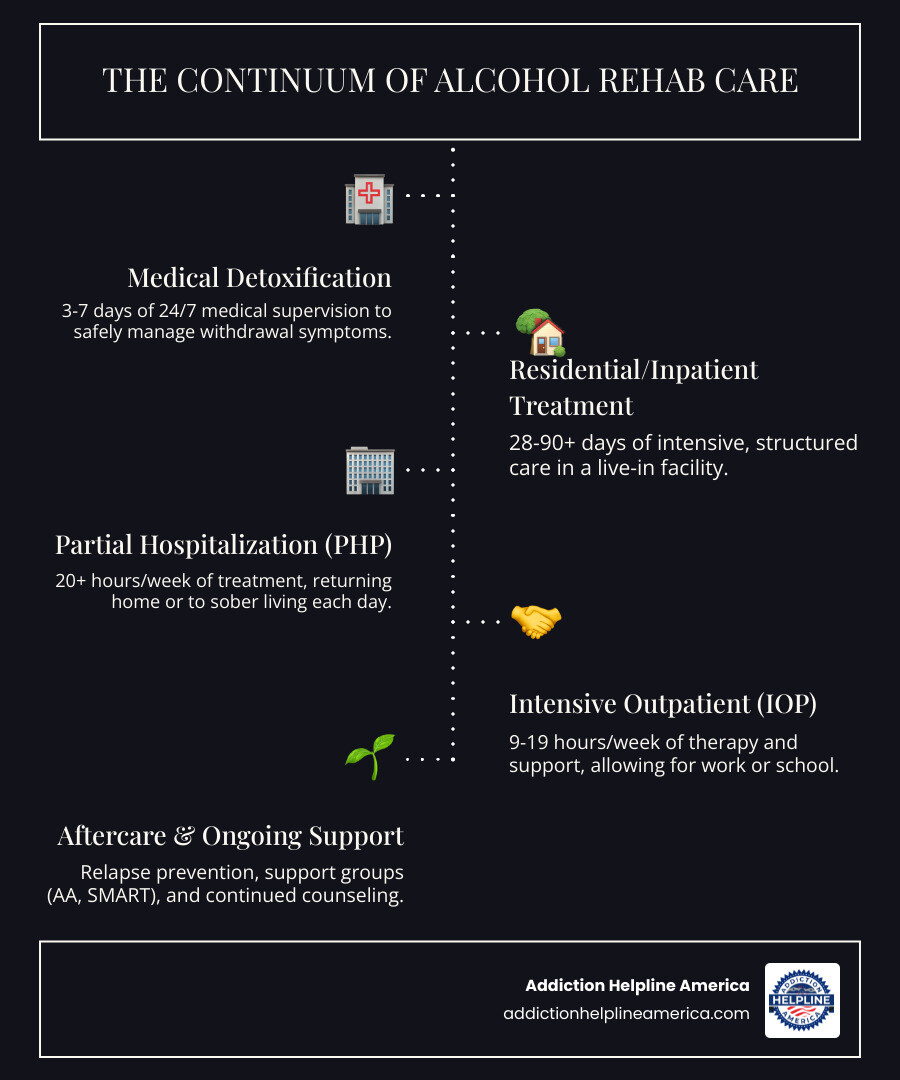
Understanding the different levels of care is crucial. Medical detox provides 24/7 supervision to safely manage withdrawal symptoms. Inpatient or residential treatment offers intensive, round-the-clock care in a structured environment. Partial Hospitalization Programs (PHP) require 20+ hours per week of treatment while you live at home. Intensive Outpatient Programs (IOP) provide 9-19 hours of weekly care. Standard outpatient treatment offers flexibility for those stable in recovery who need ongoing support.
Approximately 50% of people with substance use disorders also have co-occurring mental health disorders like anxiety or depression. This makes integrated treatment that addresses both conditions simultaneously essential for lasting recovery.
At Addiction Helpline America, we’ve guided thousands of individuals and families through the process of finding appropriate alcohol treatment that matches their unique needs and circumstances. Our free, confidential service connects you with evidence-based programs across the country that can provide the specialized care you deserve.
Understanding Alcohol Addiction and the Need for Treatment
Recognizing that you or a loved one might need help is the courageous first step toward finding the best alcohol rehab. Alcohol Use Disorder (AUD) is a medical condition characterized by an impaired ability to stop or control alcohol use despite adverse social, occupational, or health consequences. It’s not a moral failing or a lack of willpower; it’s a complex disease that requires professional treatment.
Millions of adults in the United States have AUD, and tragically, approximately 1 in 10 children live in a home with a parent who has AUD. This highlights the widespread impact of this condition, affecting not just the individual but entire families. The good news is that treatment is effective, and recovery is absolutely possible.
The Signs and Symptoms of Alcohol Use Disorder (AUD)
How do you know if alcohol use has become an addiction? The signs and symptoms of AUD can range from mild to severe, but they generally involve a pattern of problematic drinking. We understand that acknowledging these signs can be difficult, but it’s crucial for seeking help. Here are some common indicators:
- Craving alcohol: An intense urge or need to drink.
- Loss of control: Drinking more or longer than intended, or being unable to cut down or stop drinking despite wanting to.
- Negative consequences: Continuing to drink despite it causing problems with family, friends, work, or school, or leading to legal or financial issues.
- Tolerance: Needing to drink more alcohol to get the same effect.
- Withdrawal symptoms: Experiencing physical or psychological symptoms when not drinking, such as nausea, sweating, tremors, anxiety, or seizures.
- Neglecting responsibilities: Giving up or reducing important social, occupational, or recreational activities because of alcohol use.
- Hiding drinking habits: Being secretive about drinking or lying about the amount consumed.
- Risky behaviors: Engaging in dangerous activities while drinking, such as driving under the influence.
If you recognize these signs in yourself or a loved one, it’s time to consider professional help. We can guide you to resources that can provide a comprehensive assessment.
What is Dual Diagnosis and Why is it Important?
It’s common for individuals struggling with alcohol addiction to also experience co-occurring mental health conditions. This is known as a dual diagnosis. In fact, approximately 50% of people with substance use disorders also have mental health disorders. These can include anxiety, depression, bipolar disorder, PTSD, and other conditions.
Why is dual diagnosis so important in the context of finding the best alcohol rehab? When both conditions are present, they often exacerbate each other. Someone might drink to cope with anxiety, only to find their anxiety worsens over time. Or depression might make it harder to engage in recovery efforts.
Integrated treatment is key. This means addressing both the alcohol addiction and the mental health condition simultaneously within the same program. Treating one without the other significantly lowers the chances of long-term recovery. When we help you find a treatment center, we prioritize those that offer integrated care, ensuring all your needs are met for a holistic recovery.
The Spectrum of Care: What Are the Different Types of Alcohol Rehab?
The world of alcohol treatment offers a diverse spectrum of care, designed to meet varying needs and severities of addiction. Understanding these levels is crucial for finding the best alcohol rehab for you. The American Society of Addiction Medicine (ASAM) provides widely used guidelines to determine the appropriate placement, transfer, and discharge criteria across different levels of care. These range from medically intensive inpatient services to flexible outpatient options, with the ability to “step down” or “step up” in intensity as your recovery progresses.
We understand that navigating these options can feel overwhelming, but we’re here to help you understand what types of alcohol treatment are available.
Medical Detoxification: The First Step
For many individuals with moderate to severe Alcohol Use Disorder (AUD), the very first step in recovery is medical detoxification, often referred to simply as “detox.” This is a crucial phase because suddenly stopping alcohol consumption can lead to dangerous and even life-threatening withdrawal symptoms.
Medical detox provides medically supervised withdrawal in a safe and controlled environment. During this time, medical professionals offer 24/7 monitoring and administer medications, such as benzodiazepines, to manage withdrawal symptoms, reduce discomfort, and prevent complications like seizures or delirium tremens. The typical duration for detox can range from 3 to 7 days, depending on the individual’s history of alcohol use and the severity of their withdrawal. This foundational step ensures physical stabilization before engaging in further therapeutic work.
Inpatient vs. Outpatient Programs: Which is Right for You?
Once medically stable, individuals can transition to various levels of care. The most common distinction is between inpatient and outpatient programs. The best alcohol rehab often involves a combination or progression through these, custom to your needs.
| Feature | Inpatient (Residential) Rehab | Outpatient Rehab |
|---|---|---|
| Structure | Highly structured, 24/7 care, live at facility | Flexible, live at home, attend sessions |
| Cost | Generally higher due to accommodation and round-the-clock care | Generally lower, no accommodation costs |
| Intensity | Intensive, immersive, constant support and supervision | Varies (IOP, PHP, standard outpatient), less constant supervision |
| Flexibility | Limited, removed from daily life stressors and triggers | High, allows continuation of work/school/family responsibilities |
| Success Rates | Often better short-term abstinence, higher completion rates for some | Effective for those with strong support systems and less severe addiction |

Inpatient (Residential) Treatment: This involves living at a treatment facility for a set period, typically 28 to 90 days or even longer. It offers an immersive, substance-free environment with round-the-clock medical care, therapy, and support. This is often recommended for individuals with severe AUD, unstable home environments, or co-occurring mental health conditions requiring intensive supervision.
Partial Hospitalization Programs (PHP): Often called “day treatment,” PHP is a step down from inpatient care. You attend treatment sessions for several hours a day, usually 5-7 days a week, but return home or to a sober living facility at night. It provides significant structure and support without requiring an overnight stay.
Intensive Outpatient Programs (IOP): IOPs offer a similar structure to PHP but with fewer hours per week, typically 3-5 days a week for a few hours each day. This allows individuals to maintain work, school, or family commitments while receiving robust therapeutic intervention.
Standard Outpatient Treatment: This is the least intensive level, involving weekly individual or group therapy sessions. It’s suitable for individuals with mild AUD, those stepping down from more intensive programs, or those needing ongoing support to maintain sobriety.
Sober Living Homes: These are structured, supportive living environments that serve as a bridge between intensive treatment and full independence. They provide a safe, drug-and-alcohol-free space where residents can reinforce recovery skills and gradually reintegrate into daily life.
Aftercare and Ongoing Support
Completing an initial treatment program is a monumental achievement, but recovery is an ongoing journey, not a destination. Effective aftercare planning is crucial for long-term sobriety and relapse prevention. The best alcohol rehab programs emphasize comprehensive aftercare support.
This often includes participation in peer support groups like Alcoholics Anonymous (AA) or SMART Recovery. These groups offer a sense of community, shared experience, and practical coping skills. Continued individual and group counseling helps reinforce learned behaviors and address new challenges. Family therapy can also be a vital component, helping to heal relationships and build a supportive home environment.
We understand that facing post-rehab stressors can be daunting, which is why we help you connect with programs that offer robust aftercare plans. These plans are custom to your progress, motivation, health assessments, and circumstances, ensuring you have the tools and support needed to maintain sobriety. For immediate assistance in exploring these options, you can always find treatment options now.
How to Find the Best Alcohol Rehab: Key Factors for Your Decision
Choosing the best alcohol rehab can feel like a daunting task, but with the right information and guidance, you can make an informed decision. We believe in empowering you with the knowledge to vet programs, ask the right questions, avoid red flags, and ultimately find personalized care that truly works.
What to Look for in the Best Alcohol Rehab Centers
When evaluating potential treatment centers, certain factors stand out as indicators of quality and effectiveness. We encourage you to prioritize these when seeking the best alcohol rehab:
- Accreditation: Reputable drug rehab centers are accredited by independent, non-profit organizations like The Joint Commission or the Commission on Accreditation of Rehabilitation Facilities (CARF). These accreditations signify that the facility meets rigorous industry performance standards and demonstrated results in patient care quality and safety.
- State Licensing: While accreditation is voluntary, state licensing is mandatory. Ensure any facility you consider is properly licensed by the state where it operates. Licensing requirements vary, so check for compliance.
- Staff Credentials: Look for a multidisciplinary treatment team composed of licensed and certified professionals. This includes medical doctors, nurses, psychiatrists, psychologists, licensed therapists (LADC, LPC, CAC, CCDP), nutritionists, and wellness specialists. Their expertise ensures comprehensive care for mind, body, and spirit.
- Evidence-Based Therapies: The most effective treatment programs rely on evidence-based practices (EBPs) – methods proven through scientific research. Examples include Cognitive Behavioral Therapy (CBT), Dialectical Behavior Therapy (DBT), Motivational Interviewing (MI), and Acceptance and Commitment Therapy (ACT). These therapies help individuals develop coping skills and address underlying issues.
- Individualized Treatment Plans: No two recovery journeys are identical. The best alcohol rehab centers create personalized treatment plans custom to your specific needs, history, and co-occurring conditions, rather than offering a “one-size-fits-all” approach.
- Low Patient-to-Staff Ratio: A lower patient-to-staff ratio often indicates more individualized attention, better support, and a higher quality of care.
- Mental Health Services: Given the high prevalence of dual diagnosis, ensure the center provides integrated mental health services to treat co-occurring disorders simultaneously.
When speaking with a potential center, don’t hesitate to ask about their success rates. Be wary of vague claims or promises of “100% success”; legitimate programs measure success using research-based methods.
The Role of Medication in Alcohol Addiction Treatment
Medication-Assisted Treatment (MAT) plays a significant role in helping individuals achieve and maintain sobriety, especially when combined with behavioral therapies. The best alcohol rehab programs often integrate MAT as part of a comprehensive treatment plan.
The medications approved for Alcohol Use Disorder (AUD) in the U.S. are non-addictive and help in different ways:
- Naltrexone: This medication reduces the urge to drink and can block the euphoric effects of alcohol. It’s available in pill form or as a monthly injectable (Vivitrol).
- Acamprosate (Campral): This helps decrease the negative physical and emotional symptoms experienced during abstinence, such as anxiety and restlessness, making it easier to maintain sobriety after detox.
- Disulfiram (Antabuse): This medication acts as a deterrent. If you consume alcohol while taking Disulfiram, it causes unpleasant physical reactions like nausea, flushing, and heart palpitations, discouraging drinking.
It’s a common misconception that taking these medications is “trading one addiction for another.” This is false; these medications are non-addictive and are designed to help manage a chronic disorder, similar to how medications manage conditions like asthma or diabetes. We can help you find programs that offer MAT, understanding its potential to significantly improve recovery outcomes.
Assessing Your Needs to Find the Best Alcohol Rehab Program
Finding the best alcohol rehab means finding the program that is the perfect fit for you. This requires a thorough self-assessment or, ideally, an assessment by a qualified clinician. The ASAM Criteria, for example, considers six dimensions to determine the appropriate level of care:
- Risk of Withdrawal: How severe are potential withdrawal symptoms?
- Physical Health: Are there any co-occurring medical conditions that need attention?
- Mental Health Status: Are there co-occurring mental health disorders like anxiety or depression?
- Readiness to Change: How motivated is the individual to engage in treatment?
- Risk for Relapse: What factors might trigger a return to drinking, and how can they be managed?
- Social/Living Situation: Does the individual have a supportive and stable environment, or is it a source of triggers?
By considering these factors, we can help you pinpoint programs that align with your unique situation, ensuring the treatment is custom to your specific needs and increases your chances of lasting recovery.
Navigating the Practicalities: Paying for Rehab and Supporting a Loved One
Beyond finding the clinical aspects of the best alcohol rehab, practical considerations like financial planning and family involvement are paramount. We understand these aspects can add to the stress, but we’re here to provide clarity and support.
Using Insurance to Pay for Alcohol Rehab
Concerns about the cost of alcohol rehab are common, but it’s important to know that help is often more accessible than you might think. The Affordable Care Act (ACA) mandates that most health insurance plans cover mental health and substance abuse services as essential health benefits. This means your insurance can significantly reduce or even eliminate out-of-pocket costs for addiction treatment.
When looking for the best alcohol rehab, always inquire about insurance coverage:
- In-network vs. Out-of-network: Facilities that are “in-network” with your insurance provider typically offer lower costs. We can help you verify your benefits and understand what your plan covers.
- Verifying Coverage: Contact your insurance provider directly or let us assist you in checking your specific plan’s benefits for alcohol treatment, including deductibles, co-pays, and out-of-pocket maximums.
- Medicare/Medicaid: Many facilities also accept government-funded insurance programs like Medicare and Medicaid, especially for medically necessary treatment provided by approved facilities.
Don’t let financial concerns deter you from seeking help. Our service is free and confidential, and we can connect you with treatment centers that work with your insurance or offer financial assistance options. Get help with your treatment plan today.
How Family Members Can Provide Support
Addiction is often called a “family disease” because it impacts everyone connected to the individual struggling with AUD. Family members play a crucial role in supporting recovery, but they also need support themselves.
Here’s how family members can contribute to finding the best alcohol rehab and supporting a loved one:
- Seek Support: Groups like Al-Anon Family Groups offer invaluable resources for family members, providing a safe space to share experiences, learn coping strategies, and understand that they are not alone. SMART Recovery Family & Friends is another excellent resource.
- Encourage Treatment: Express your concern in a non-judgmental way and encourage your loved one to seek professional help. Offer to assist them in finding resources, like calling our helpline.
- Participate in Family Therapy: Many quality rehab programs offer family therapy sessions. These sessions help heal damaged relationships, improve communication, and create a healthier home environment that supports sobriety.
- Set Healthy Boundaries: This is vital for both the family member’s well-being and the loved one’s recovery. Setting boundaries prevents enabling behavior and encourages accountability.
- Avoid Enabling: While love and support are essential, enabling behaviors can inadvertently hinder recovery. Learning the difference is crucial.
- Educate Yourselves: Understanding AUD as a disease can help family members approach the situation with empathy and knowledge.
Supporting a loved one through recovery is a challenging yet rewarding journey. Remember to take care of your own mental and emotional health throughout the process.
Frequently Asked Questions about Alcohol Rehab
We often hear similar questions from individuals and families exploring treatment options. Let’s address some of these to further clarify what to expect when seeking the best alcohol rehab.
How long does alcohol rehab last?
The duration of alcohol rehab varies significantly depending on individual needs, the severity of the addiction, and the type of program. While some programs are as short as 28-30 days, studies, including those from the National Institute on Drug Abuse (NIDA), consistently recommend that treatment last at least 90 days, and sometimes longer, for the most optimal outcomes. Longer engagement allows the brain to heal, healthy habits to form, and coping mechanisms to solidify.
It’s important to view rehab as part of a continuum of care. After completing an initial intensive program, individuals often transition to less intensive outpatient care, sober living, and ongoing aftercare support, which can last for months or even years.
How effective is alcohol rehab?
The good news is that treatment for Alcohol Use Disorder is highly effective. Regardless of how severe the problem may seem, most people with AUD can significantly reduce their drinking or achieve sustained abstinence. Recovery is absolutely possible, and millions of individuals are living fulfilling, sober lives thanks to professional treatment.
Effectiveness is influenced by several factors: the individual’s commitment, the quality of the treatment program (e.g., use of evidence-based therapies, experienced staff), the presence of integrated dual diagnosis treatment, and robust aftercare support. Relapse is a common part of the recovery process, often viewed as a setback rather than a failure, and effective programs teach individuals how to manage and learn from these experiences.
What is a typical day in rehab like?
A typical day in a residential alcohol rehab program is structured and purposeful, designed to immerse individuals in the recovery process. While schedules vary between facilities, you can generally expect:
- Morning Routine: Early wake-up, breakfast, and possibly meditation, yoga, or light exercise.
- Therapy Sessions: A significant portion of the day is dedicated to various forms of therapy. This includes individual counseling with a licensed therapist, group therapy sessions where peers share experiences and support each other, and family therapy when appropriate.
- Educational Sessions: Workshops and lectures on topics such as understanding addiction, relapse prevention, coping skills, nutrition, and healthy living.
- Holistic Activities: Many programs incorporate holistic approaches like mindfulness, art therapy, music therapy, equine therapy, or recreational activities to promote overall well-being.
- Meal Times: Structured meal times where healthy, nutritious food is provided.
- Free Time/Reflection: Designated periods for personal reflection, journaling, reading, or connecting with peers.
- Evening Activities: May include 12-step meetings, support groups, or other community-building activities.
The structured environment helps individuals focus on their recovery without the distractions and triggers of their daily lives, building new routines and healthier habits.
Conclusion: Your Path to Recovery Starts Today
Navigating the journey to sobriety and finding the best alcohol rehab for your unique situation can seem overwhelming, but you don’t have to do it alone. We’ve explored the critical aspects of understanding alcohol addiction, the diverse types of treatment available, and the essential factors to consider when making your choice. From medical detox to inpatient and outpatient programs, evidence-based therapies, the role of medication, and the importance of aftercare and family support, each element plays a vital role in successful, lasting recovery.
Recovery is a journey, not a destination, and every step taken is a step towards a healthier, happier future. Hope is always within reach, and effective treatment is available.
At Addiction Helpline America, we are dedicated to providing free, confidential, and personalized guidance to help you or your loved one find the right recovery program. We connect individuals nationwide to a vast network of addiction and mental health treatment centers, ensuring you find a program that meets your specific needs and circumstances. Taking that first step is the most important one.
Call our 24/7 helpline for personalized guidance – we’re here to help you start your path to recovery today.