Understanding Alcohol Use Disorder: What You Need to Know
Alcohol use disorder (AUD) is a medical condition characterized by an impaired ability to stop or control alcohol use despite harmful consequences to health, relationships, and daily responsibilities. “Alcohol use disorder is a chronic relapsing brain disease that includes at its core a loss of control over alcohol intake,” says Dr. George Koob, Director of the National Institute on Alcohol Abuse and Alcoholism (NIAAA).
Quick Facts About AUD:
- Definition: A chronic brain disorder affecting your ability to control drinking
- Severity: Ranges from mild (2-3 criteria) to severe (6+ criteria)
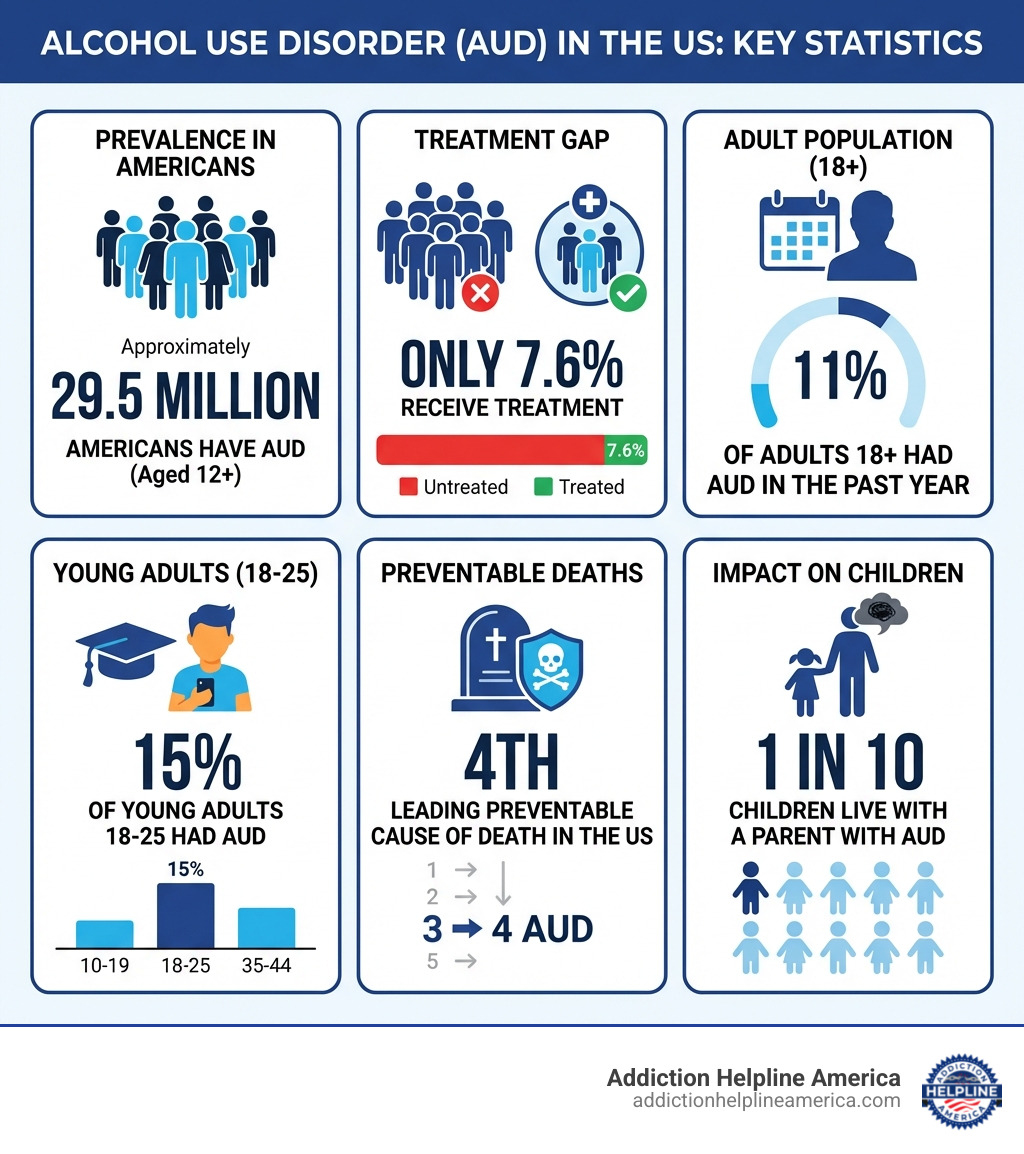
- Prevalence: Approximately 29.5 million Americans aged 12+ have AUD (Source: SAMHSA 2022 NSDUH)
- Causes: Roughly 50% genetic and 50% environmental factors
- Treatability: Evidence-based medications and therapy are highly effective
- Recovery: Lasting recovery is possible with proper support
AUD is not a moral failing or a lack of willpower. It is a recognized medical condition that can change brain chemistry over time. The encouraging news is that effective, evidence-based treatments exist, and recovery is possible at any stage of the disorder.
At Addiction Helpline America, we help individuals and families find compassionate, confidential support. Our team provides free, 24/7 assistance connecting people with appropriate treatment resources from our nationwide network. Understanding alcohol use disorder is the first step toward healing.
Learn more about alcohol use disorder:
Defining Alcohol Use Disorder: More Than Just a Habit
At its core, alcohol use disorder (AUD) is a medical condition characterized by an impaired ability to stop or control alcohol use despite negative consequences. It is a spectrum disorder encompassing conditions previously referred to as alcohol abuse or dependence.
AUD is considered a brain disorder because chronic consumption leads to lasting changes in the brain’s reward pathway. Alcohol triggers the release of dopamine, creating a reinforcing effect that leads to cravings. This neurological alteration makes it difficult for individuals to control their drinking, even when they want to.
It’s important to understand what constitutes a “standard drink” to assess consumption patterns. The National Institute on Alcohol Abuse and Alcoholism (NIAAA) provides these guidelines:
| Type of Alcohol | Standard Drink Size | Alcohol Content (approx.) |
|---|---|---|
| Regular Beer | 12 ounces | 5% |
| Malt Liquor | 8-9 ounces | 7% |
| Wine | 5 ounces | 12% |
| Hard Liquor/Spirits | 1.5 ounces | 40% |
For a scientific overview of alcohol use disorder, visit the Rethinking Drinking website.
What is Binge Drinking?
Binge drinking brings an individual’s blood alcohol concentration (BAC) to 0.08% or higher. This typically occurs when men consume 5+ drinks, and women consume 4+ drinks, within two hours. While binge drinking doesn’t automatically mean someone has AUD, it is a significant risk factor. For more information on addictive behaviors, explore our guide on the Most Common Addictions.
The Role of Genetics and Environment
Research from the National Institute on Drug Abuse (NIDA) indicates that approximately 50% of the liability for AUD is genetic, with the remaining 50% attributed to environmental influences. If you have close relatives with AUD, your risk is three to four times higher. Environmental factors that increase risk include:
- Early Age of Drinking: Starting before age 15 increases the likelihood of AUD.
- Childhood Trauma: A history of trauma can increase vulnerability.
- Mental Health Conditions: Depression, anxiety, and PTSD are strongly linked to AUD risk.
- Social Factors: Peer pressure and easy access to alcohol contribute to development.
For deeper insights into the genetic components, refer to Research on AUD genetics.
Recognizing the Signs and Symptoms of Alcohol Use Disorder
Identifying alcohol use disorder can be challenging, as denial is common. However, there are clear indicators that alcohol is impacting life and behavior.
Key indicators of AUD include:
- Cravings: An intense urge to drink alcohol.
- Loss of Control: Drinking more than intended or being unable to cut down.
- Tolerance: Needing more alcohol to achieve the desired effect.
- Withdrawal Symptoms: Experiencing shakiness, anxiety, or nausea when stopping.
- Continued Use Despite Problems: Drinking even when it damages relationships or health.
- Neglecting Responsibilities: Alcohol interfering with work, school, or home duties.
- Hazardous Use: Using alcohol in dangerous situations, like driving.
Tools like the Alcohol Use Disorders Identification Test (AUDIT) can help with self-assessment.
Diagnosing Alcohol Use Disorder
Healthcare professionals use American Psychiatric Association DSM-5 criteria to diagnose AUD based on 11 symptoms over a 12-month period:
- Mild AUD: 2 to 3 criteria.
- Moderate AUD: 4 to 5 criteria.
- Severe AUD: 6 or more criteria.
Early intervention is key. If you need support, our Drug Detox Near Me Guide can help you explore options.
Physical and Behavioral Red Flags
Beyond diagnostic criteria, family and friends often notice these red flags:
- Social Isolation: Withdrawing from activities to drink alone.
- Blackouts: Memory lapses regarding events that occurred while drinking.
- Physical Changes: Unexplained weight changes, flushed skin, or tremors.
- Mood Swings: Increased irritability, anxiety, or depression.
- Denial: Downplaying drinking or becoming defensive when confronted.
These red flags are often cries for help. Our Substance Abuse Helpline Complete Guide offers resources for addressing these issues.
The Physical and Mental Toll of Excessive Drinking
Chronic alcohol consumption takes a severe toll on nearly every organ system. According to the Centers for Disease Control and Prevention (CDC), excessive alcohol use is a leading cause of preventable death in the U.S.
Significant physical health consequences include:
- Liver Disease: Heavy drinking causes fatty liver, hepatitis, and cirrhosis.
- Pancreatitis: Inflammation of the pancreas causing severe abdominal pain.
- Cardiovascular Disease: Increased risk of high blood pressure, heart failure, and stroke.
- Gastrointestinal Issues: Gastritis, ulcers, and increased cancer risk.
- Weakened Immune System: Alcohol impairs immune cells, increasing susceptibility to infections.
- Cancer Risk: Linked to breast, esophageal, liver, and colorectal cancers.
For a comprehensive overview, the NIAAA’s Understanding Alcohol’s Adverse Impact on Health is an excellent resource.
Neurological and Cognitive Complications
Chronic alcohol use can lead to significant neurological impairments:
- Wernicke-Korsakoff Syndrome: Caused by Vitamin B1 deficiency, leading to severe memory loss.
- Peripheral Neuropathy: Nerve damage causing numbness or pain in hands and feet.
- Brain Shrinkage: Reduction in brain volume affecting memory and executive function.
- Increased Risk of Stroke: Heavy drinking increases the risk of both ischemic and hemorrhagic strokes.
If you are experiencing cognitive issues, our Mental Health Services Guide 2026 can provide support.
Co-occurring Mental Health Conditions
AUD and mental health conditions often exacerbate each other, known as a “dual diagnosis.”
- Depression: Alcohol is a depressant that can worsen or induce depressive episodes.
- Anxiety: Many use alcohol to self-medicate, but withdrawal triggers intense anxiety.
- PTSD: Individuals may turn to alcohol to cope with trauma-related symptoms.
Treating these conditions simultaneously is critical for recovery. Our Depression Treatment Centers Complete Guide offers comprehensive resources.
Path to Healing: Treatment Options for Alcohol Use Disorder
Alcohol use disorder is a treatable condition. Recovery is a unique journey, and treatment plans are often personalized. A combination of approaches often yields the best results.
Treatment typically includes:
- Medical Detoxification: Supervised detox manages dangerous withdrawal symptoms safely. See our guide on Medically Assisted Detox.
- Behavioral Therapy: Counseling helps individuals change drinking behaviors and develop coping skills.
- Interdisciplinary Care: A team approach involving doctors and therapists improves outcomes.
Evidence-Based Medications for Alcohol Use Disorder
The U.S. Food and Drug Administration (FDA) has approved three non-addictive medications to help people stop or reduce drinking. These can be used in conjunction with therapy:
- Naltrexone: Blocks the pleasurable effects of alcohol to reduce cravings.
- Acamprosate: Helps reduce the urge to drink after someone has stopped.
- Disulfiram: Creates an unpleasant physical reaction if alcohol is ingested.
Explore our article on Inpatient vs Outpatient Rehab for more information on treatment settings.
Behavioral Therapies and Counseling
Behavioral treatments are a cornerstone of AUD recovery. As noted by experts at the Mayo Clinic, a combination of medication and counseling often provides the most effective path to long-term sobriety:
- Cognitive Behavioral Therapy (CBT): Helps identify and change negative thought patterns.
- Motivational Improvement Therapy (MET): Builds motivation to change drinking behavior.
- CRAFT Model: Teaches family and friends strategies to help their loved one.
- Family Counseling: Improves communication and builds a supportive environment.
If you’re supporting a loved one, our guide on How to Help Someone With Addiction offers valuable advice.
Navigating the Journey of Long-Term Recovery
Recovery from alcohol use disorder is a continuous process involving new coping skills and lifestyle changes. While setbacks can occur, they are opportunities to strengthen resolve.
Key components of long-term recovery include:
- Relapse Prevention: Identifying triggers and practicing healthy coping mechanisms (Source: NIAAA). See How to Prevent Relapse.
- Ongoing Therapy: Reinforces learned skills and provides emotional support.
- Healthy Lifestyle: Balanced diet, exercise, and stress reduction improve resilience.
- Support Network: Connecting with family and mutual-support groups provides accountability.
Mutual-Support Groups and Community
Mutual-support groups offer peer support and a sense of belonging. They are a vital supplement to professional treatment:
- Alcoholics Anonymous (AA): A 12-step program providing a spiritual framework for recovery.
- SMART Recovery: Focuses on self-empowerment using tools based on CBT.
- Moderation Management™: For those looking to reduce consumption and make lifestyle changes.
- Al-Anon and Alateen: Support for family members and friends affected by another’s drinking.
To learn more about programs, check out What Programs Help With Addiction Recovery?.
Frequently Asked Questions about AUD
Can someone with AUD ever drink moderately again?
This depends on the individual. While some with mild AUD may successfully reduce drinking, many with moderate to severe AUD find that complete abstinence is the safest path. The brain changes associated with AUD make controlled drinking difficult without risking a relapse. Your treatment team can help determine the best goal for your recovery.
How do I know if my drinking has become a medical disorder?
If you experience cravings, find it hard to cut down, or if alcohol interferes with your responsibilities, it may be a medical disorder. A professional evaluation by a healthcare provider is the most accurate way to determine if you have alcohol use disorder.
Is alcohol withdrawal dangerous to do alone?
Yes, for heavy drinkers, stopping suddenly can be life-threatening. Withdrawal can cause seizures and Delirium Tremens (DTs), which involve confusion and hallucinations (Source: MedlinePlus). Medical supervision during detox is crucial to ensure safety and manage symptoms with medication.
Conclusion
Understanding alcohol use disorder is the first step toward addressing a condition that impacts millions. It is a complex medical condition, but it is treatable, and recovery is a reality for many.
At Addiction Helpline America, we provide personalized guidance and confidential support. We connect individuals nationwide to addiction and mental health treatment centers custom to their unique needs. Our service is free and available 24/7.
If you or a loved one are struggling, you don’t have to face it alone. Contact us today at 1-800-662-HELP (4357) to start your journey toward recovery. For broader support, our Mental Health Hotline Complete Guide is also available.