Introduction to Rehabilitation in Richmond
Rehab in Richmond VA offers a comprehensive range of treatment options for substance use disorders, mental health challenges, and co-occurring conditions. With over 22 facilities, the city provides multiple pathways to recovery through various levels of care, including medical detox, inpatient/residential, and outpatient programs.
Quick Overview of Rehab Options in Richmond VA:
- Levels of Care: Medical detox, inpatient/residential, partial hospitalization (PHP), intensive outpatient (IOP), standard outpatient, sober living
- Specialized Services: Dual diagnosis treatment, trauma-informed care, veteran programs, adolescent treatment
- Payment Options: Most major insurance plans, Medicaid/Medicare, sliding scale fees, self-pay
- Accredited Facilities: Accredited by Joint Commission, CARF, and SAMHSA
Recovery starts with understanding your options. Richmond’s centers range from comprehensive inpatient facilities to flexible outpatient programs, with specialized tracks for adolescents, veterans, and LGBTQ+ individuals. Understanding your needs is crucial, especially since Substance Use Disorder (SUD) is a medical condition that often co-occurs with mental health challenges. Many Richmond facilities specialize in dual diagnosis treatment to address both conditions simultaneously.
Treatment combines evidence-based approaches like Cognitive Behavioral Therapy (CBT) and Dialectical Behavior Therapy (DBT) with holistic options and life skills training. Whether you need medication-assisted treatment (MAT) or a program based on the 12-Step philosophy, the right fit is available.
At Addiction Helpline America, we help families find the right rehab in Richmond VA. We connect individuals with centers that match their specific needs, insurance, and recovery goals. Our team provides free, confidential guidance to help you take that critical first step.
Understanding the Landscape of Rehab in Richmond VA

Richmond, Virginia, has a comprehensive network of rehabilitation services addressing addiction, mental health, and physical recovery. We know it can be overwhelming, so we’re here to walk you through what rehab in Richmond VA actually looks like.
Types of Rehabilitation Services
Richmond’s rehabilitation community recognizes that healing takes many forms.
Addiction and mental health treatment are often integrated. Centers like Iron Bridge Recovery Center combine clinical therapy, medical support, and holistic approaches to address addiction and its underlying causes. Since about half of those with addiction also have co-occurring mental health issues like depression or PTSD, many facilities prioritize dual diagnosis treatment, addressing both conditions together for a more effective recovery.
Physical rehabilitation is available for those recovering from injuries or chronic conditions at state-of-the-science facilities like Sheltering Arms Institute and Encompass Health Rehabilitation Hospital of Richmond.
Support for veterans is particularly strong. The Hunter Holmes McGuire VA Medical Center houses some of the nation’s most specialized programs, including the Richmond Polytrauma Rehabilitation Center, one of only five of its kind, which handles severe multi-system injuries and traumatic brain injury (TBI).
If you’re exploring options beyond Richmond, you can learn more about Virginia rehab services throughout the state.
Levels of Care Explained
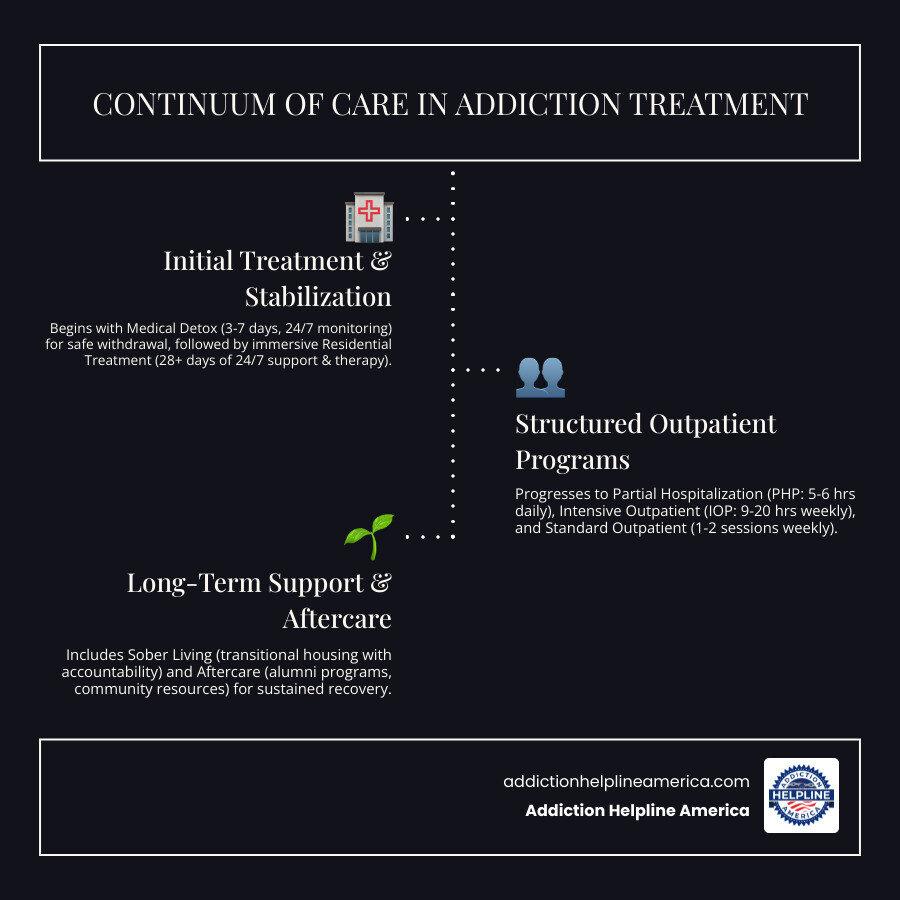
Recovery isn’t one-size-fits-all, which is why Richmond offers a full continuum of care.
Medical detox is often the first step, providing 24/7 medical supervision for safe withdrawal over 3-7 days. It stabilizes you before you begin therapeutic work.
Inpatient or residential treatment is the most intensive level, where you live at the facility for 28-90+ days. This immersive environment allows you to focus entirely on recovery, free from outside triggers.
Partial Hospitalization Programs (PHP) offer hospital-level care for 5-6 hours a day without an overnight stay, providing a structured step-down from inpatient treatment.
Intensive Outpatient Programs (IOP) provide 9-20 hours of weekly treatment while you live at home, allowing you to maintain work or family responsibilities.
Standard outpatient treatment is the most flexible option, involving 1-2 weekly therapy sessions to support ongoing recovery.
Sober living homes offer a structured, substance-free environment that bridges the gap between treatment and independent living.
Aftercare support is crucial for long-term success. Alumni programs, support groups, and continued therapy help you maintain sobriety for years to come.
At Addiction Helpline America, we understand that figuring out which level of care you need can be confusing. We’re here to help you make sense of your options and connect you with the right program.
Evaluating the Top 10 Features of Premier Richmond Rehabs

Finding the right rehab in Richmond VA is about matching a center’s features to your unique needs. Instead of a generic list, use these 10 features as a checklist to evaluate any facility you’re considering.
10 Key Features to Look For
- Accreditation and Licensing: This is non-negotiable. Look for accreditation from the Joint Commission or CARF, which are gold standards ensuring a facility meets strict benchmarks for safety and quality. You can find accredited behavioral health organizations in Virginia online. These credentials are your assurance of integrity.
- Quality of Clinical Staff: A premier center employs a multidisciplinary team of experienced therapists, psychiatrists, medical doctors, and 24/7 nursing staff. Caring, qualified professionals can make or break your recovery experience.
- Evidence-Based Treatment Philosophies: Effective programs use proven methods like Cognitive Behavioral Therapy (CBT) and Dialectical Behavior Therapy (DBT). Many also integrate the 12-Step philosophy and holistic approaches like yoga and meditation to treat the whole person.
- Personalized Treatment Plans: Your story is unique, and your treatment plan should be too. A quality rehab conducts a comprehensive assessment to create an individualized plan that addresses the root causes of your addiction.
- Specialized Programs: If you have specific needs, look for specialized tracks. This includes integrated dual diagnosis treatment for co-occurring disorders, trauma-informed care, and programs for veterans, adolescents, or young adults. For more on local support, you can learn about local mental health services.
- A Strong Continuum of Care: The best facilities provide a seamless transition through every stage of recovery, from detox to aftercare planning. This ensures you have the right level of support as your needs change.
- Family Involvement and Support: Addiction affects the whole family. Quality centers offer family therapy, educational resources, and support groups to help loved ones heal and learn how to support your recovery.
- Facility Amenities: While luxury isn’t necessary, a clean, safe, and comfortable environment is crucial for healing. Amenities like private rooms, recreational activities, or even pet-friendly options can make a significant difference.
- A Focus on Life Skills: Lasting recovery is about building a life you don’t want to escape. Look for programs that teach practical coping mechanisms and relapse prevention strategies for real-world success.
- Positive Patient Outcomes: Look for evidence of effectiveness. While success rates can be complex, patient testimonials and a focus on long-term recovery are good indicators that a program delivers on its promises.
At Addiction Helpline America, we use these criteria to help families find the right rehab in Richmond VA. We can match these features to your needs, insurance, and goals in a free, confidential call.
Navigating Your Path to Recovery in Richmond
Taking the first step is brave, but the logistics can feel overwhelming. How do you find a center? What does it cost? We’re here to clarify the path to rehab in Richmond VA.
How to Find the Right Rehab in Richmond VA
Finding the right fit is about matching a program to your unique needs.
- Start with a self-assessment. Be honest about the substances involved and any mental health struggles like depression or anxiety. This helps determine if you need dual diagnosis treatment and what level of care (inpatient, outpatient) is appropriate.
- Verify your insurance coverage. This is a critical step. Most Richmond rehabs accept major private insurance plans (BCBS, Aetna, Cigna, etc.), as well as Medicaid and Medicare. Many centers offer complimentary insurance verification to clarify your out-of-pocket costs upfront.
- Ask the right questions. Inquire about their treatment philosophy, staff qualifications, aftercare planning, and family involvement. This helps you see beyond marketing and understand the day-to-day reality of their program.
- Consider the location. Some people thrive close to their support system, while others need distance from triggers. Richmond offers both residential and outpatient settings to suit either preference. You can also explore more options in Virginia.
At Addiction Helpline America, we provide free, confidential guidance to help you steer these questions and find a rehab that matches your needs and insurance.
Costs and Payment Options for Rehab in Richmond VA
Cost is a major concern, but more payment options exist than most people realize. The cost of not getting treatment is always greater.
- Private Insurance: Thanks to federal parity laws, your insurance plan may cover a significant portion of your treatment costs.
- Medicaid and Medicare: Many facilities accept these public health insurance programs, making treatment accessible.
- Self-Pay and Financing: If you don’t have insurance, centers offer self-pay rates. Some also provide financing plans to spread the cost over time.
- Sliding Scale Fees: Some non-profit or community-based centers adjust their fees based on your income.
Don’t let cost stop you from making the first call. Treatment centers will work with you to find a financial solution.
Support Systems for Patients and Families
Recovery doesn’t happen in a vacuum. A strong support network is essential for both patients and their families. Richmond offers a compassionate community of resources that extend well beyond formal treatment.
Resources for Veterans and Community Members
Richmond provides some of the nation’s most comprehensive support for veterans. The Central Virginia VA Health Care System, anchored by the Hunter Holmes McGuire VA Medical Center, is a cornerstone of this support.
The VA’s Polytrauma System of Care is exceptional, as one of only five facilities in the country designed for severe, multi-system injuries, often co-occurring with traumatic brain injury (TBI). It offers a full continuum of care from inpatient to outpatient services. Richmond is also a regional center of excellence for amputation care.
For immediate help, veterans in crisis can call the Veterans Crisis Line by calling 1-800-273-TALK (8255), texting 838255, or by dialing 988 and pressing 1. This lifeline is staffed 24/7.
Community organizations like the McShin Recovery Resource Foundation also provide crucial recovery support services, bridging the gap between treatment and long-term sobriety. For more details on veteran-specific programs, you can find more information on residential rehabilitation.
College and Community Programs
Richmond’s universities offer robust support systems for students. Virginia Commonwealth University, Virginia Union University, the University of Richmond, and others provide confidential counseling services custom to student challenges.
Community Services Boards (CSBs), like Henrico Area Mental Health & Developmental Services and the Richmond Behavioral Health Authority, ensure that everyone has access to care, regardless of their ability to pay, often using a sliding scale.
Peer support remains a powerful tool. Richmond has active chapters of Alcoholics Anonymous (AA) and Narcotics Anonymous (NA), with meetings found through the Richmond Intergroup. These groups offer a safe, judgment-free space to share with others on the same journey.
To explore additional resources, you can learn about additional community resources.
At Addiction Helpline America, we help you connect not just with a treatment center, but with the entire ecosystem of support that fosters lasting recovery.
Frequently Asked Questions about Richmond Rehab
We know you have questions. Finding the right rehab in Richmond VA can be confusing, and getting clear answers helps. Here are the questions we hear most often.
How long does a typical rehab program last?
The length of treatment is custom to your individual needs. There is no one-size-fits-all answer.
- Medical Detox: Typically lasts 3 to 7 days for safe, medically supervised withdrawal.
- Residential Programs: Short-term programs are often 30 days, while long-term programs can extend to 60, 90 days, or more. Research shows longer stays often lead to better outcomes.
- Outpatient Programs (IOP/PHP): These programs, where you live at home, usually last 3 to 6 months, offering structured therapy several times a week.
The right program lasts as long as you need to feel confident in your recovery.
What is Medication-Assisted Treatment (MAT)?
Medication-Assisted Treatment (MAT) is a highly effective, evidence-based approach for opioid and alcohol addiction. It combines FDA-approved medications (like Suboxone or Naltrexone) with counseling and therapy.
The medications work by normalizing brain chemistry, reducing cravings, and relieving withdrawal symptoms. This allows you to focus on the psychological aspects of recovery. Despite stigma, MAT is not “trading one drug for another.” It is a medically supervised treatment proven to increase retention in treatment and save lives. Many rehab in Richmond VA facilities offer MAT.
Can I lose my job for attending rehab?
No, federal laws protect your job while you seek treatment.
- The Family and Medical Leave Act (FMLA) allows eligible employees to take up to 12 weeks of unpaid, job-protected leave for medical reasons, including substance abuse treatment.
- The Americans with Disabilities Act (ADA) protects you from discrimination and requires employers to provide “reasonable accommodations,” which can include time off for treatment.
Your treatment is also protected by strict confidentiality laws (HIPAA). You do not have to steer this alone. At Addiction Helpline America, we can help you understand your rights. Your health and future are worth protecting.
Take the First Step Towards a New Life
If you’ve read this far, you’ve already taken a courageous step. You’re seeking answers and considering a new path.
We’ve explored Richmond’s diverse rehabilitation landscape, from different levels of care to the key features of a quality program. We’ve also covered the practical steps of finding a center, navigating costs, and connecting with support systems for veterans, students, and families.
Here’s what we know to be true: Your journey to recovery is not just possible—it’s waiting for you. The most important decision is choosing a program that fits your unique needs. The “best” rehab is the one that meets you where you are.
At Addiction Helpline America, we make this process less overwhelming. We provide free, confidential, and personalized guidance to connect you with the right treatment center from our extensive network. There’s no pressure or judgment, just an honest conversation about how we can help.
You don’t have to figure this out alone. Recovery starts with a single step, and you can take it today.