
Why Online Addiction Recovery Programs Are Changing Lives
Online addiction recovery programs are virtual services connecting individuals with licensed therapists and peer support via video, phone, or messaging. These programs offer evidence-based therapies like Cognitive Behavioral Therapy (CBT) from the privacy of your home.
If you’re struggling, you are not alone—and you are not beyond help. With the right support, recovery is possible, one step at a time.
What Are Online Addiction Recovery Programs? (Definition)
Online addiction recovery programs are treatment services delivered through secure digital platforms instead of in a physical clinic or rehab center. They are designed to help with:
- Alcohol use disorder
- Opioid use disorder
- Prescription medication misuse
- Stimulant and other substance use disorders
Key types of online addiction recovery programs include:
- Virtual Intensive Outpatient Programs (IOP) – Structured treatment with multiple weekly individual and group therapy sessions.
- Individual Teletherapy – One-on-one counseling with an addiction specialist.
- Online Group Therapy – Peer support sessions led by professionals.
- Family Support Services – Virtual counseling for loved ones.
- Medication-Assisted Treatment (MAT) – Medical oversight via telehealth when appropriate.
To learn more about different treatment paths and levels of care, you can explore:
Common Signs You May Need Help (Symptoms)
You might benefit from an online addiction recovery program if you notice:
- Using alcohol or drugs more often or in larger amounts than you planned
- Failed attempts to cut back or quit on your own
- Cravings that feel hard to ignore
- Spending a lot of time getting, using, or recovering from substances
- Problems at work, school, or home because of use
- Withdrawing from friends, family, or activities you once enjoyed
- Using to cope with stress, anxiety, depression, or past trauma
If some of these feel familiar, reaching out for support is a courageous and important step—not a failure.
Why Addiction Develops (Causes)
Addiction is not a moral weakness. It is a complex medical condition influenced by:
- Genetics and family history
- Stress, trauma, or adverse childhood experiences
- Co-occurring mental health conditions like anxiety, depression, PTSD, or bipolar disorder
- Environment and peer influences
- Repeated exposure to substances that change how the brain experiences reward and stress
Our guides can help you understand these factors more deeply:
How Addiction Affects Your Life (Effects)
Without support, addiction can impact nearly every part of life, including:
- Physical health (heart, liver, brain, sleep, immune system)
- Mental health (anxiety, depression, mood changes, suicidal thoughts)
- Relationships with partners, family, and friends
- Work, school, and finances
- Self-esteem and sense of hope
The good news is that with treatment, many of these effects can be reduced or even reversed over time. Healing is possible.
How Online Programs Support Recovery (Treatment)
Online addiction recovery programs provide many of the same services as in-person care:
- Comprehensive assessments
- Individual therapy
- Group therapy and peer support
- Family sessions
- Medication management when appropriate
- Relapse prevention planning and aftercare
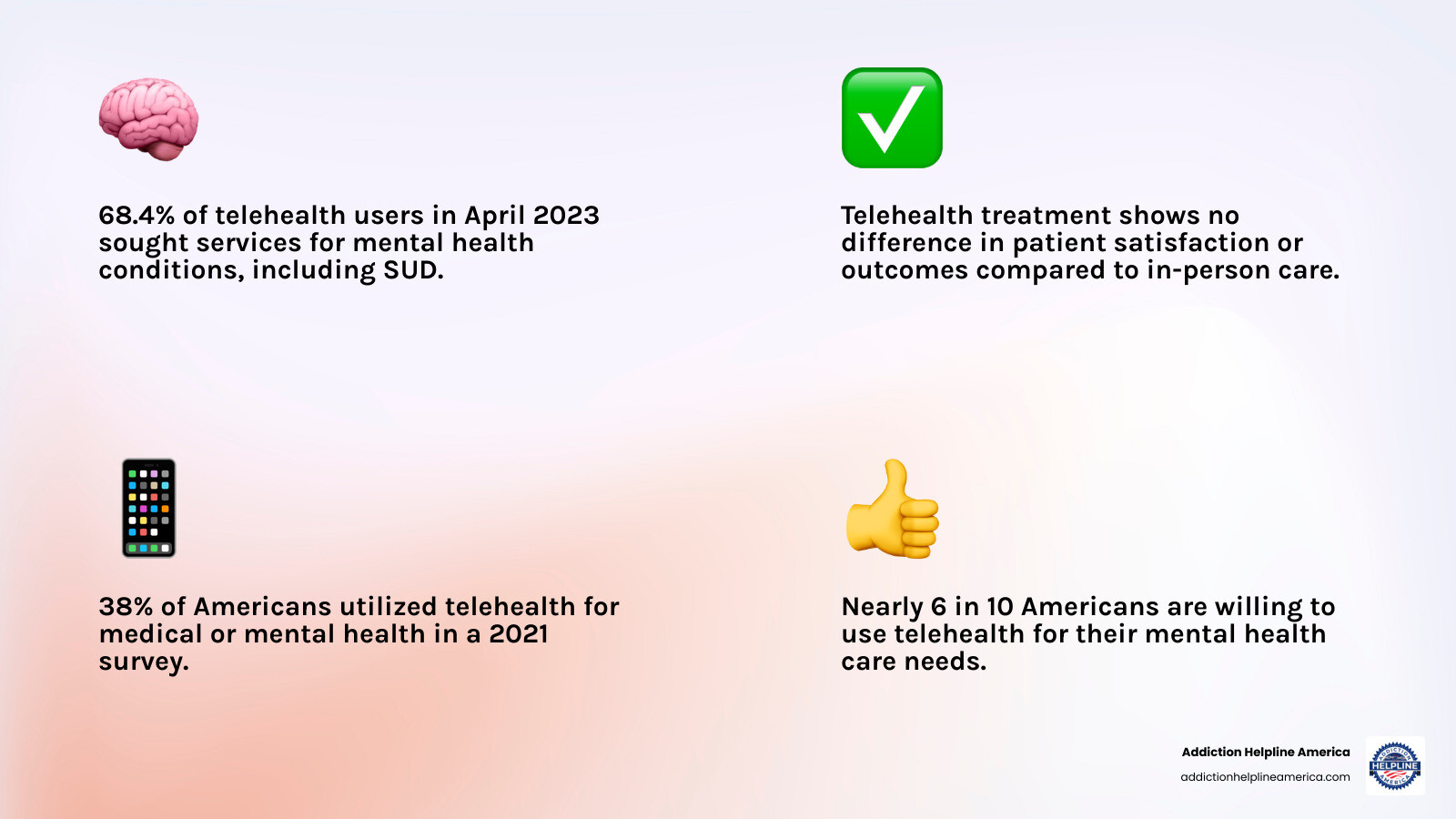
Recovery no longer requires travel or time away from work and family. Research shows that 68.4% of people seeking telehealth in April 2023 did so for mental health conditions, including substance use disorders. Studies comparing telehealth to in-person services found no difference in patient satisfaction, substance use, retention, or the therapist–patient relationship.
The shift to digital care has remained popular because it works. A 2021 American Psychiatric Association survey found that 38% of Americans have used telehealth, and nearly 6 in 10 would use it for their mental health needs.
Whether you struggle with alcohol, opioids, or other substances, online addiction recovery programs can provide structure, compassion, and tools to help you rebuild a life you feel proud of. They are especially valuable for people in rural areas, those with mobility challenges, or anyone valuing privacy and flexibility.
At Addiction Helpline America, we guide individuals toward effective treatment, including online addiction recovery programs that fit their unique needs. Our free, confidential helpline can help you understand your options and take the next step.
Call Addiction Helpline America at 844-561-0606 for free, confidential support and help finding an online program in the USA that fits your situation.
Find more about online addiction recovery programs:
If you’re unsure where to start, you don’t have to figure it out alone. Call our free and confidential Addiction Helpline America at 844-561-0606 to talk with someone who understands and can guide you toward help in the USA.
The Growing Appeal: Benefits of Virtual Recovery
The landscape of addiction treatment has evolved, with online addiction recovery programs emerging as a powerful and accessible alternative to in-person care. If you feel overwhelmed, stuck, or afraid of walking into a treatment center, online options can be a hopeful and realistic way to begin.
Why Online Programs Feel More Doable (Benefits)
A primary advantage is convenience. Attending therapy from home eliminates travel stress and the need for childcare, allowing treatment to integrate into your daily life. Accessibility is another key benefit. For those in rural areas or with mobility challenges, online programs provide specialized care that was once out of reach, ensuring geography is no longer a barrier to healing.
Our virtual rehab services show how we’re making treatment more accessible:
Many also find that virtual programs offer increased privacy. The comfort of home can foster a more open environment for discussing sensitive topics and reduce the stigma associated with seeking treatment. Research confirms this approach’s effectiveness, with studies showing telehealth for substance use disorder can be as effective as in-person therapy, with comparable patient satisfaction, retention rates, and substance use reduction.
The American Psychological Association notes that online therapy is often a more affordable and accessible choice. For less intensive care, our outpatient programs offer valuable insights:
Why Choose an Online Path?
Choosing an online path for recovery offers distinct advantages:
- No Travel Time or Costs: Save time and money by eliminating commutes.
- Comfortable Home Environment: Participating from a familiar space can reduce anxiety and improve receptiveness to therapy.
- Broader Access to Specialists: Connect with a wider network of licensed therapists, regardless of your location (within your state).
- Easier Scheduling: Flexible appointment times, including evenings and weekends, accommodate busy schedules.
For many people, these benefits make recovery feel more possible. You can begin healing while still caring for your responsibilities at home, work, or school.
Privacy and Confidentiality in a Digital Space
We understand that privacy is paramount, especially if you’re worried about others finding out you’re getting help. Online addiction recovery programs use robust measures to protect your information.
Programs use HIPAA-compliant platforms with data encryption, ensuring your sessions and communications are secure and accessible only to authorized personnel. Secure video conferencing tools ensure your sessions are private. In group therapy, participants often use only a first name, and all are required to maintain strict confidentiality, fostering a safe and trusting environment.
This means you can be open and honest about what you’re going through, knowing your journey remains personal and protected.
If you’re ready to explore whether virtual recovery is right for you, call Addiction Helpline America at 844-561-0606 for free, confidential guidance and help finding USA-based online programs that fit your life.
Navigating Your Options: Types of Online Addiction Recovery Programs
The world of online addiction recovery programs is diverse, offering a spectrum of care to meet various needs.

The primary types of online addiction recovery programs include:
- Individual Teletherapy: One-on-one counseling sessions via video, phone, or secure messaging for personalized treatment plans.
- Group Teletherapy: Facilitated group sessions connecting you with peers for mutual support and shared experiences.
- Family Support: Virtual counseling to help family members understand addiction and heal relationships.
- Medication-Assisted Treatment (MAT) via Telehealth: Virtual appointments for prescriptions and monitoring for certain substance use disorders.
This comparison can help you understand which option might be best:
| Program Type | Intensity | Structure | Best-Fit Candidate |
|---|---|---|---|
| Virtual IOP | High | Multiple weekly sessions; structured curriculum; individual & group therapy | Individuals needing significant support but not 24/7 inpatient care; those with stable home environments. |
| Individual Teletherapy | Moderate | Scheduled one-on-one sessions; flexible frequency; personalized content | Individuals seeking private, custom support; those with mild to moderate SUD; or as a step-down from higher care. |
| Online Support Groups | Low to Moderate | Peer-led or professionally facilitated; flexible attendance; focus on sharing and encouragement | Individuals seeking community, ongoing support, or supplementary resources; those in stable recovery. |
Virtual Intensive Outpatient Programs (IOP)
Virtual IOPs are a highly structured and effective online option. They offer more intensive care than traditional outpatient therapy without requiring a residential stay, making them ideal for individuals who need significant support but have a stable home environment. A virtual IOP typically involves 9-12 hours of treatment per week, combining individual therapy for personal goals and group therapy for peer support. The key difference from other online treatments is this integrated, comprehensive structure, making it a robust option for those needing more than standard outpatient services. To learn more, visit our guide: What is an IOP?.
Individual and Group Teletherapy
Individual and group teletherapy are fundamental to many online addiction recovery programs.
Individual teletherapy provides a private space for one-on-one counseling. You work with a licensed therapist to explore the root causes of addiction, develop coping strategies, and address co-occurring mental health issues. The convenience and flexible scheduling make it easier to commit to consistent care.
Group teletherapy offers the power of peer support. Facilitated by a professional, these sessions connect you with others facing similar challenges. Sharing stories and encouragement in a supportive group combats the isolation that often accompanies addiction. Virtual groups allow for a diverse mix of participants while maintaining confidentiality.
How Online Treatment Works: Technology and Therapeutic Approach
Online addiction recovery programs use modern technology to deliver effective, accessible treatment. Understanding the technology and therapeutic approaches highlights their efficacy.

At its core, telehealth for addiction relies on digital tools like secure video conferencing platforms for real-time, face-to-face interactions. Many programs also use secure messaging apps and web-based platforms for educational materials and progress tracking.
The role of licensed therapists and qualified professionals is crucial. These are the same trained professionals you would see in person, responsible for assessments, treatment plans, and providing evidence-based care custom to your needs.
Evidence-Based Therapies in a Virtual Setting
The effectiveness of online addiction recovery programs comes from using evidence-based therapies—proven approaches adapted for the digital space.
Two prominent examples are:
- Cognitive Behavioral Therapy (CBT): This therapy helps you identify and change unhelpful thinking patterns and behaviors related to substance use.
- Dialectical Behavior Therapy (DBT): DBT focuses on building skills in mindfulness, distress tolerance, emotion regulation, and interpersonal effectiveness.
Other proven techniques like Motivational Interviewing and relapse prevention are also delivered online. The goal is to equip you with coping skills and resilience for long-term sobriety, fostering lasting change. For more on comprehensive mental health support, see our guide: More info about mental health rehab.
Key Features of Effective Online Addiction Recovery Programs
When considering programs, look for these key features:
- Licensed Therapists and Qualified Professionals: Ensure the program employs credentialed experts trained in addiction and telehealth. They provide assessment, treatment planning, and therapy, upholding the same standards as in-person care.
- Integrated Care for Co-Occurring Disorders: Effective programs offer integrated treatment for co-occurring disorders like anxiety or depression, addressing both addiction and mental health simultaneously for comprehensive support.
- Community and Peer Interaction: Quality programs build community through virtual group therapy and secure forums. This peer interaction combats the isolation of addiction and fosters a supportive network.
- Regular Progress Monitoring: Regular assessments and check-ins are vital for accountability. This helps therapists tailor treatment and keeps you engaged on your recovery journey. For a comprehensive look at finding services, explore our guide: More info about finding a mental health clinic.
These features create a supportive, professional, and effective environment for digital recovery.
Is an Online Program Right for You? Making an Informed Choice
Deciding if an online addiction recovery program is the right fit is a crucial step—and it’s okay if you’re unsure. Feeling conflicted or scared about treatment is common, especially if previous attempts to quit haven’t worked the way you hoped.
Is Online Care the Right Level of Treatment? (Treatment Fit)
Consider your motivation level, as online programs require some self-discipline and willingness to engage. A stable and private home environment is also key for effective participation, as is reliable technological access.
Most importantly, assess the severity of your addiction:
- Online programs are generally most effective for mild to moderate substance use disorders.
- If you experience severe withdrawal symptoms, have a history of dangerous withdrawal, or require 24/7 medical supervision, medical detox or inpatient care is recommended first.
Our guide on the signs of addiction can help you understand your situation. You may also want to learn more about:
You don’t have to make this decision alone. A professional assessment can help you choose the safest and most supportive option.
Addressing Co-Occurring Mental Health Disorders (Causes & Effects)
Many individuals with addiction also face co-occurring mental health disorders like anxiety, depression, trauma-related conditions, or bipolar disorder, known as a dual diagnosis. These conditions can both contribute to and worsen substance use, and untreated symptoms can make recovery much harder.
Effective online addiction recovery programs are adept at addressing these complex needs by:
- Providing comprehensive assessments to identify both addiction and mental health concerns
- Developing integrated treatment plans that address both issues at the same time
- Offering access to psychiatrists for medication management
- Connecting you with therapists who specialize in dual diagnosis care
The convenience of telehealth makes it easier to attend multiple appointments, ensuring continuity of care. For guidance, explore:
Potential Challenges of Online Addiction Recovery Programs
While advantageous, it’s important to acknowledge potential challenges so you can prepare for them and still succeed:
- Lack of In-Person Connection: Some individuals may miss the nuances of face-to-face interaction that online platforms can’t fully replicate.
- Technological Barriers: An unstable internet connection or technical glitches can disrupt sessions and cause frustration.
- Distractions at Home: The home environment can be full of distractions, making it difficult to focus fully on therapy.
- Not Suitable for Severe SUD or Medical Crises: Online programs are not a substitute for the higher level of care needed for severe SUD, medical detox, or emergencies.
- State Licensing Laws: Therapists must be licensed in your state, which can sometimes limit options.
Despite these challenges, many people find that the benefits of privacy, convenience, and flexibility outweigh the drawbacks.
If you’re unsure whether online care is enough or you might need a higher level of support, call Addiction Helpline America at 844-561-0606. Our free, confidential USA-based helpline can help you understand your options and choose a path that feels safe and realistic for you.
Accessing Care: Costs, Insurance, and Finding a Program
Navigating costs and insurance for online addiction recovery programs can seem daunting, especially if finances are already strained. You deserve help regardless of your budget, and there are options that can make treatment more accessible.
Understanding Costs and Insurance (Treatment Access)
Program costs vary by service type and intensity, but online therapy is often more affordable than in-person options. Insurance coverage for telehealth has expanded across the United States, with many major insurers covering online addiction treatment. However, coverage varies by plan, so it’s important to contact your provider to verify your benefits.
Our outpatient rehab cost guide provides more financial details:
For those without insurance, many programs offer sliding scale fees based on income. Additionally, numerous free resources can complement formal treatment and provide support between sessions.
If you’re feeling overwhelmed by financial questions, you can call Addiction Helpline America at 844-561-0606 for free, confidential help understanding your options in the USA.
How to Find Reputable Online Programs
Finding a reputable program involves a few key steps:
- Vetting Providers: Look for programs that are transparent about their accreditations, licensing, and therapeutic approaches.
- Checking Credentials: Verify that therapists are licensed in your state and experienced in addiction treatment.
- Reading Reviews: Patient testimonials can offer insights into a program’s effectiveness and client experience.
- Using Trusted Directories: Use national directories and government resources to find accredited providers.
Our guide on how to choose quality treatment can help:
Free USA Government and Non-Profit Resources
Beyond paid programs, numerous USA-based free resources provide crucial support:
-
SAMHSA’s National Helpline (United States): Call 1-800-662-HELP (4357) for a free, confidential, 24/7 information and referral service for individuals and families facing mental and/or substance use disorders.
-
988 Suicide & Crisis Lifeline (United States): Call or text 988 for free, confidential emotional support 24/7 from trained crisis counselors.
-
SAMHSA’s FindTreatment.gov (United States): A confidential tool to locate treatment facilities for mental and substance use disorders across the U.S.
Additionally, many U.S.-based non-profits offer free online support resources like forums, virtual peer support groups, educational materials, and crisis hotlines that can complement our services at Addiction Helpline America.
Our own helpline is also a free USA resource. Addiction Helpline America offers free, confidential guidance to help you understand your situation and connect with appropriate online or in-person treatment.
Call Addiction Helpline America at 844-561-0606 today to discuss your options, verify what kind of help you can access, and take a hopeful step toward recovery.
Frequently Asked Questions about Online Addiction Treatment
We understand you may have questions as you explore online addiction recovery programs. Here are answers to common inquiries.
How do I know if I need online or in-person treatment?
The choice depends on your addiction’s severity, medical needs, and personal circumstances.
- Online treatment is often suitable for mild to moderate SUD, those with stable home environments, and those not requiring medical supervision for withdrawal.
- In-person treatment (inpatient/residential) is recommended for severe addiction, cases requiring medical detox, unstable home environments, or significant co-occurring crises. It provides 24/7 support.
A professional assessment is always recommended to determine the appropriate level of care. Our guide on inpatient therapy programs can provide more context.
Can I get prescriptions for addiction medication online?
Yes, telehealth can be used for Medication-Assisted Treatment (MAT) for certain substance use disorders, subject to federal and state regulations. While follow-ups and refills can often be managed via telehealth, an initial in-person visit may still be required in some cases. Always confirm the specific requirements with your provider.
What technology do I need for online rehab?
Participating in online addiction recovery programs requires basic technology:
- A stable internet connection: This is crucial for uninterrupted sessions.
- A private space: You need a quiet, confidential area to speak openly.
- A device with a camera and microphone: A smartphone, tablet, or computer will work.
Most platforms are user-friendly, but basic familiarity with your device is helpful.
Your Path to Recovery Starts with a Single Step
The journey to sobriety is deeply personal, and online addiction recovery programs represent a transformative step forward in making that journey more accessible, flexible, and supportive. If you feel ashamed, scared, or exhausted from trying to manage this alone, know that these feelings are common—and they do not define your future.
We’ve seen how these programs can help you:
- Understand the roots of your addiction
- Reduce or stop substance use safely with support
- Build coping skills to handle stress, cravings, and triggers
- Repair relationships and rebuild trust
- Restore hope, confidence, and a sense of purpose
Recovery is not just a possibility; it is a reality for millions of people in the United States, and with the right support, it can be yours too. You don’t have to have everything figured out before you reach out. Taking one small step is often enough to begin real change.
If you or a loved one is ready to explore treatment options, confidential and personalized help is available.
- Find rehabilitation services now
- Help for addicts – ultimate guide
- Addiction recovery programs near me
You are not alone. Call Addiction Helpline America at 844-561-0606 for free, confidential support and help finding USA-based online or in-person treatment that meets you where you are. Your next chapter can start with this call.