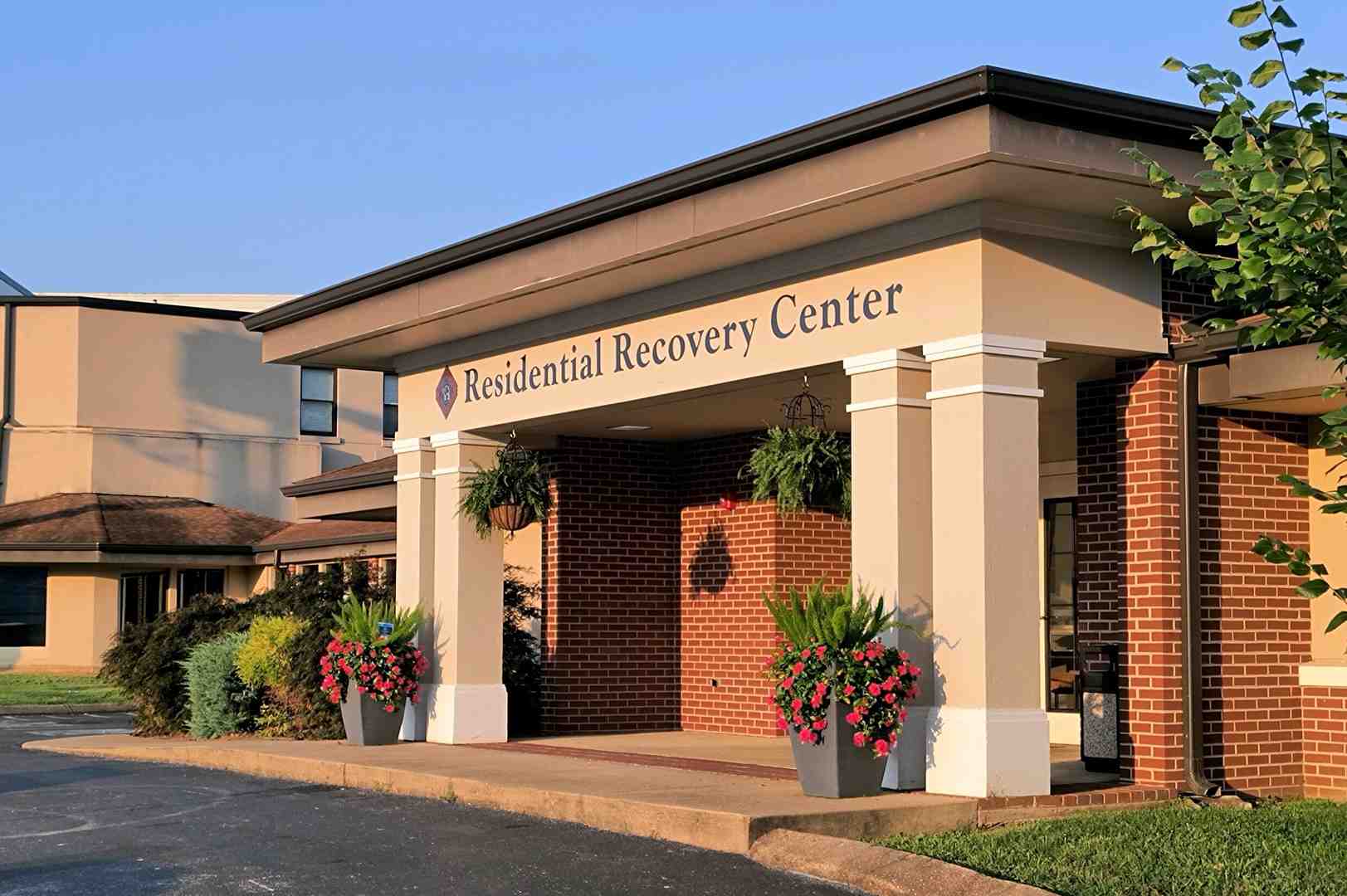

Navigating the Path to Recovery in Los Angeles
Drug Rehab Los Angeles Options include a wide range of treatment programs designed to meet different needs:
- Detox Programs – Medically supervised withdrawal management (3-7 days)
- Inpatient/Residential Rehab – 24/7 care in a structured facility (28+ days)
- Partial Hospitalization Program (PHP) – Intensive daily treatment while living at home
- Intensive Outpatient Program (IOP) – Structured therapy 3-5 days per week (3-6 months)
- Outpatient Treatment – Flexible sessions to maintain daily obligations
- Dual Diagnosis Treatment – Integrated care for co-occurring mental health conditions
- Sober Living Homes – Safe, structured housing during recovery
- Luxury/Private Rehab – High-end facilities with improved amenities and privacy
Los Angeles has one of the country’s most diverse addiction treatment landscapes. With about 1.6 million people in the greater Los Angeles area affected by substance use annually, the city has a comprehensive network of treatment centers to address this need.
Understanding when you need help is the first step. Signs it’s time to seek treatment include:
- Being unable to go a day without using drugs or alcohol
- Experiencing withdrawal symptoms when you stop
- Hiding your substance use from loved ones
- Neglecting work, school, or family responsibilities
- Continuing to use despite negative consequences
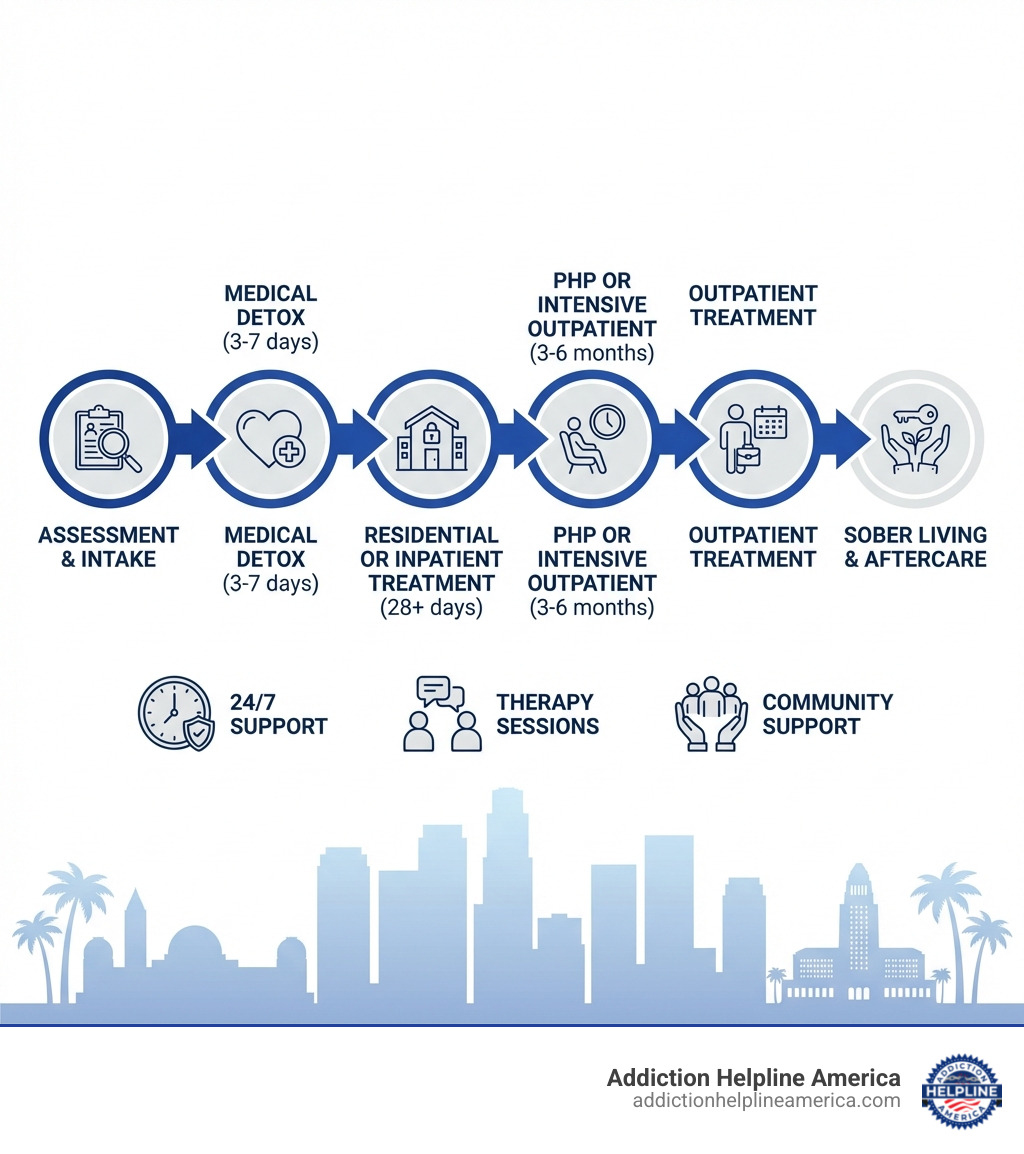
The recovery journey often begins with detox to safely manage withdrawal, followed by inpatient treatment for 24/7 support or outpatient programs that allow you to maintain daily commitments. Many people benefit from dual diagnosis treatment, as about 50% of individuals with substance use disorders also struggle with co-occurring mental health conditions like anxiety or depression.
At Addiction Helpline America, we’ve helped thousands find Drug Rehab Los Angeles Options through our free, confidential 24/7 helpline. Our team knows choosing the right treatment path is overwhelming, so we provide personalized guidance every step of the way.
Inpatient vs. Outpatient Rehab: A Detailed Comparison
Deciding between inpatient and outpatient rehab is a crucial choice on the path to recovery. Both offer valuable support but cater to different needs, lifestyles, and addiction severities. The right choice depends on factors like the intensity of your substance use disorder, your mental health, your support system, and your daily obligations.
Inpatient rehab provides an immersive, structured environment, removing you from daily triggers to focus entirely on healing. Outpatient rehab offers more flexibility, letting you maintain work, school, or family responsibilities while receiving treatment. It’s about finding the level of care that best supports your journey to lasting sobriety.
To help you understand the core differences, here’s a comparison:
| Factor | Inpatient (Residential) Rehab | Outpatient Rehab |
|---|---|---|
| Living Situation | Live at the facility 24/7 | Live at home, commute to sessions |
| Level of Supervision | High: 24/7 medical and therapeutic support | Moderate to Low: Scheduled sessions, support outside facility hours |
| Typical Duration | 28+ days, often extending to 60 or 90 days or longer | Varies: IOPs typically 3-6 months, standard outpatient ongoing as needed |
| Cost | Generally higher due to accommodation and round-the-clock care | Generally lower, as it doesn’t include living expenses |
| Ideal Candidate | Severe SUD, co-occurring mental health issues, unstable home environment, need for removal from triggers, previous treatment failures | Mild to moderate SUD, strong support system, stable home, ability to manage triggers, need to maintain daily obligations |
What is Inpatient (Residential) Treatment?
Inpatient, or residential, treatment offers a comprehensive and intensive approach to recovery. You’ll live at the rehab facility for your program’s duration, typically 28 days or more. This immersive setting provides 24/7 support, creating a focused environment where you can dedicate yourself to healing, safe from everyday triggers and stressors.
Residential treatment is particularly effective for individuals with severe substance use disorders, co-occurring mental health conditions, or anyone needing a complete change of environment. You’ll engage in a custom schedule of therapy, support groups, and wellness activities, all guided by a comprehensive staff within a supportive peer community. This model ensures every aspect of your recovery—physical, mental, and emotional—is addressed.
If you’re looking for this level of dedicated care, you can find more information about these options by visiting our page on California Addiction Treatment.
What is Outpatient Treatment?
Outpatient treatment offers a flexible yet structured path to recovery for those who need support while maintaining daily obligations. You live at home and commute to a facility for scheduled therapy sessions. This allows you to continue working, attending school, or caring for family while participating in your recovery.
Outpatient programs range in intensity, from standard care with a few weekly sessions to Intensive Outpatient Programs (IOPs) and Partial Hospitalization Programs (PHPs). These programs involve individual counseling, group therapy, and educational sessions. A key advantage is applying new coping skills in real-world situations as you learn them. Many facilities also offer virtual options, allowing you to access treatment from home via telehealth.
Outpatient treatment is also an excellent step-down option for individuals leaving residential care, helping them transition back into daily life with ongoing guidance. To learn more about how outpatient programs can fit into your life, explore our resources on Outpatient Programs in California.
Exploring Your Drug Rehab Los Angeles Options
Los Angeles offers a diverse landscape of Drug Rehab Los Angeles Options. The region has a vast network of treatment centers, each with unique approaches and care levels. The attractive climate and large, supportive treatment community make Los Angeles an appealing location for recovery.
Understanding the available programs is key to finding the right fit. With about 725,000 people in Los Angeles County needing treatment, the city’s resources are designed to address a wide spectrum of needs, from detox to long-term aftercare.
The First Step: Medically Supervised Detox
For many, the first critical step in recovery is medically supervised detox. Withdrawal from alcohol or drugs can be challenging and sometimes life-threatening. Medically supervised detox provides a safe environment where medical staff monitor vital signs and manage painful withdrawal symptoms with research-backed medications.
This initial stage safely flushes substances from your body, preparing you physically and mentally for therapy. Detox typically lasts 3 to 7 days, depending on the substance, addiction severity, and individual factors. It’s a foundational step that ensures your safety and sets the stage for successful treatment.
To understand more about this crucial first stage of recovery, you can visit our dedicated page on Detox Programs in Los Angeles.
Levels of Outpatient Care: PHP and IOP
Beyond standard outpatient treatment, Los Angeles offers more intensive options like Partial Hospitalization Programs (PHP) and Intensive Outpatient Programs (IOP). These are for individuals who need more structure than traditional outpatient therapy but do not require 24/7 supervision.
- Partial Hospitalization Programs (PHPs) offer the intensity of residential treatment, with patients attending therapy for several hours a day, five days a week, while returning home each evening.
- Intensive Outpatient Programs (IOPs) are a step down from PHP, with sessions 3-5 days per week for a few hours each day, typically lasting 3 to 6 months. This option is ideal for those transitioning from inpatient care or needing a strong therapeutic foundation while managing work or family.
Both PHP and IOP are invaluable for building coping skills and preventing relapse while balancing recovery with external responsibilities. You can find more detailed information about these structured programs on our IOP Program Costa Mesa Guide (note: while the URL is Costa Mesa, the information is relevant to PHP/IOP generally).
Specialized Drug Rehab Los Angeles Options
Los Angeles is renowned for its specialized treatment programs. Recognizing that a “one-size-fits-all” approach is rarely effective, many centers focus on personalized plans.
Among these specialized options, you’ll find:
- Luxury or High-End Rehabs: These centers offer discreet, upscale environments with premium amenities, catering to those seeking comfort and privacy.
- Holistic and Alternative Therapies: Many centers integrate traditional treatments with holistic approaches like yoga, meditation, and art therapy to heal the mind, body, and spirit.
- Dual Diagnosis Treatment: Since about 50% of people with substance use disorders also have co-occurring mental health conditions, these programs address both addiction and issues like anxiety, depression, or PTSD simultaneously.
- Gender-Specific Programs: Programs for men or women provide a safe environment to address gender-specific issues without distractions.
- Trauma-Informed Care: Recognizing the link between trauma and addiction, these programs use specialized techniques to help individuals process past traumas.
- Programs for Professionals and Seniors: Custom programs exist for professionals needing privacy and for seniors facing unique challenges.
- Family Involvement: Many programs offer family therapy and workshops to heal relationships and build a supportive home environment.
These specialized Drug Rehab Los Angeles Options help individuals find a program that resonates with their personal values, promoting more effective and lasting recovery.
Key Factors for Choosing a Rehab Center in Los Angeles
Choosing the right rehab center in Los Angeles can feel daunting, but focusing on key factors simplifies the process and helps you find a program that suits your needs. Our goal at Addiction Helpline America is to provide the guidance to make an informed decision.
When evaluating Drug Rehab Los Angeles Options, consider the following:
- Accreditation and Licensing: Look for centers accredited by organizations like the Joint Commission (JCAHO) and licensed by the California Department of Health Care Services (DHCS). These indicate high standards of care.
- Treatment Philosophy and Approach: Does the center use evidence-based therapies (e.g., CBT, DBT, MAT) or holistic methods? Does it offer specialized programs for dual diagnosis or trauma?
- Staff Credentials: Inquire about the treatment team’s qualifications, including certified chemical dependency counselors (CDC) and doctors certified by the American Society of Addiction Medicine (ASAM).
- Levels of Care Offered: Does the facility offer the level of care you need (detox, inpatient, PHP, IOP, outpatient) and a continuum of care for seamless transitions?
- Location and Environment: Consider if a local setting or traveling for rehab to remove distractions is more beneficial for you.
- Family Involvement: If family support is important, see if the program offers family therapy or support groups.
- Aftercare Planning: A robust aftercare program is crucial for long-term sobriety. Ask about relapse prevention, alumni programs, and sober living connections.
For a comprehensive guide on making this important decision, we encourage you to read our insights on How to Choose a Rehab Center in California.
Understanding Dual Diagnosis and Its Importance
One of the most critical factors when exploring Drug Rehab Los Angeles Options is whether a facility offers dual diagnosis treatment. This approach addresses co-occurring disorders, where an individual has both a substance use disorder and a mental health condition. The statistics are compelling: according to the National Institute of Mental Health, approximately 50% of people with substance use disorders have a dual diagnosis. Common co-occurring conditions include anxiety, depression, bipolar disorder, PTSD, and OCD.
The interplay is complex. Often, people use drugs or alcohol to self-medicate an untreated mental health condition. Conversely, substance abuse can worsen existing mental health problems or trigger new ones. Effective dual diagnosis treatment provides integrated care, treating both conditions concurrently. This approach is vital because treating only one condition often leads to relapse.
If you or a loved one struggles with both addiction and mental health challenges, seeking a program specializing in integrated dual diagnosis care is paramount for lasting recovery. You can learn more on our page dedicated to Dual Diagnosis Treatment Costa Mesa Guide (note: while the URL is Costa Mesa, the information is relevant to dual diagnosis treatment generally).
Finding Affordable Drug Rehab Los Angeles Options
Cost should never be a barrier to seeking help. We are dedicated to helping you explore affordable Drug Rehab Los Angeles Options.

Here’s how we can help you find treatment that fits your budget:
- Insurance Verification: We can verify your coverage to see what your plan will pay for, including inpatient and outpatient programs.
- Medicaid/Medi-Cal and Medicare: Many California facilities accept Medicaid (Medi-Cal) and Medicare, which can significantly cover treatment costs.
- Sliding Scale Fees: Some centers offer a sliding fee scale, adjusting costs based on your income.
- Financial Assistance and Payment Plans: We can connect you with centers offering financial assistance or flexible payment plans.
Addiction Helpline America provides free and confidential guidance. Our recovery experts are available 24/7 to discuss your situation, verify insurance, and explore payment options to find the right program. Contact Addiction Helpline America today for help verifying your insurance and exploring payment options.
The Role of Therapy and Aftercare
Therapy is the backbone of addiction treatment, providing tools for long-term recovery. Los Angeles rehabs offer various evidence-based therapies, including:
- Cognitive Behavioral Therapy (CBT): Helps identify and change negative thought patterns and behaviors contributing to substance abuse.
- Dialectical Behavior Therapy (DBT): Focuses on emotional regulation, distress tolerance, and mindfulness, beneficial for co-occurring conditions.
- Medication-Assisted Treatment (MAT): Combines FDA-approved medications with therapy to treat substance use disorders.
- Family Therapy: Addresses addiction’s impact on family dynamics, helping heal relationships.
- Group Therapy: Offers a supportive community to share experiences and learn from peers.
- Individual Counseling: Provides one-on-one sessions to address personal issues and develop coping strategies.
Aftercare is crucial for maintaining sobriety and preventing relapse post-treatment. Key components include:
- Sober Living Homes: Provide a safe, structured environment as you transition from intensive treatment.
- Support Groups: Participation in 12-step programs like AA and NA, or alternatives like SMART Recovery, offers ongoing peer support.
- Alumni Programs: Many rehabs offer alumni networks for continued connection and mentorship.
- Ongoing Therapy: Continuing therapy provides sustained guidance and reinforces coping mechanisms.
Aftercare ensures you don’t face post-rehab life alone and builds a foundation for a sober future. To explore more about these vital support systems, visit our page on More info about Aftercare and Sober Living in California.
Frequently Asked Questions about Los Angeles Rehab
We understand you likely have many questions when considering Drug Rehab Los Angeles Options. Here are answers to some of the most common inquiries we receive:
How long does drug rehab last?
The duration of drug rehab is personalized, depending on addiction severity, substance type, co-occurring conditions, and individual progress. There’s no one-size-fits-all answer, but here’s a general guide:
- Detox: Medically supervised detox typically lasts 3 to 7 days.
- Inpatient/Residential Rehab: These programs usually last 28 days or more, often extending to 60 or 90 days.
- Intensive Outpatient Programs (IOPs) and Partial Hospitalization Programs (PHPs): These intensive outpatient options generally last 3 to 6 months.
- Standard Outpatient Treatment: This can be an ongoing process, with individuals attending sessions as needed to sustain recovery.
The most effective plan is custom to your unique challenges and goals, with flexibility to adjust as you progress.
How do I know if I or a loved one needs rehab?
Recognizing the need for professional help is a crucial step. It can be hard to differentiate recreational use from addiction, but certain signs strongly suggest intervention is needed. You or a loved one might need rehab if you observe:
- Inability to Stop or Control Use: Despite attempts, you can’t reduce or stop using the substance.
- Withdrawal Symptoms: Experiencing physical or psychological discomfort (e.g., nausea, tremors, anxiety) when trying to stop.
- Neglecting Responsibilities: Failing to meet obligations at work, school, or home.
- Relationship Problems: Addiction harms relationships, leading to conflict or isolation.
- Hiding Use: Engaging in secretive behavior around substance use.
- Loss of Interest: Losing interest in hobbies or activities once enjoyed.
- Health Issues: Continuing use despite it causing or worsening physical or mental health problems. Addiction has a lasting, detrimental impact on brain and physical health.
- Legal or Financial Troubles: Facing legal or financial issues from substance use.
If these signs resonate, it’s a clear indication that professional help from a drug rehab in Los Angeles is warranted.
What kind of support is available after rehab?
Completing rehab is a significant achievement, but it’s the start of a lifelong recovery journey. Effective aftercare is essential to maintain sobriety and prevent relapse. Los Angeles offers many post-rehab support resources:
- Aftercare Plans: Quality rehabs help develop a personalized aftercare plan focused on relapse prevention and ongoing support.
- Sober Living Homes: These provide a structured, drug- and alcohol-free environment for individuals transitioning from inpatient care, helping them adjust to life post-treatment.
- Support Groups: Peer-led groups like Alcoholics Anonymous (AA), Narcotics Anonymous (NA), and SMART Recovery are highly encouraged. These meetings are widely available across Los Angeles and offer fellowship and strategies for staying sober.
- Alumni Networks: Many rehabs have strong alumni programs offering a network of support, mentorship, and continued engagement.
- Ongoing Therapy: Continuing individual or group therapy provides sustained guidance and reinforces coping skills learned in treatment.
- Case Management: Some programs offer case managers to help coordinate ongoing recovery needs.
This comprehensive aftercare network ensures you have continuous support as you rebuild your life in sobriety.
Take the First Step Towards a New Life Today
The journey to recovery is a testament to strength, courage, and hope. Choosing the right Drug Rehab Los Angeles Options is a profound step toward reclaiming your life from the grip of addiction. You don’t have to walk this path alone.

At Addiction Helpline America, we believe in healing and long-term sobriety for everyone. Our mission is to provide free, confidential, personalized guidance, connecting you with the best treatment programs from our trusted network. We understand treatment nuances and can help you weigh options, from dual diagnosis to affordable care and choosing between inpatient and outpatient settings.
If you or a loved one is ready to take the first step toward a new life, we are here to help, 24/7. Let us guide you to the best support and care available in Los Angeles.